
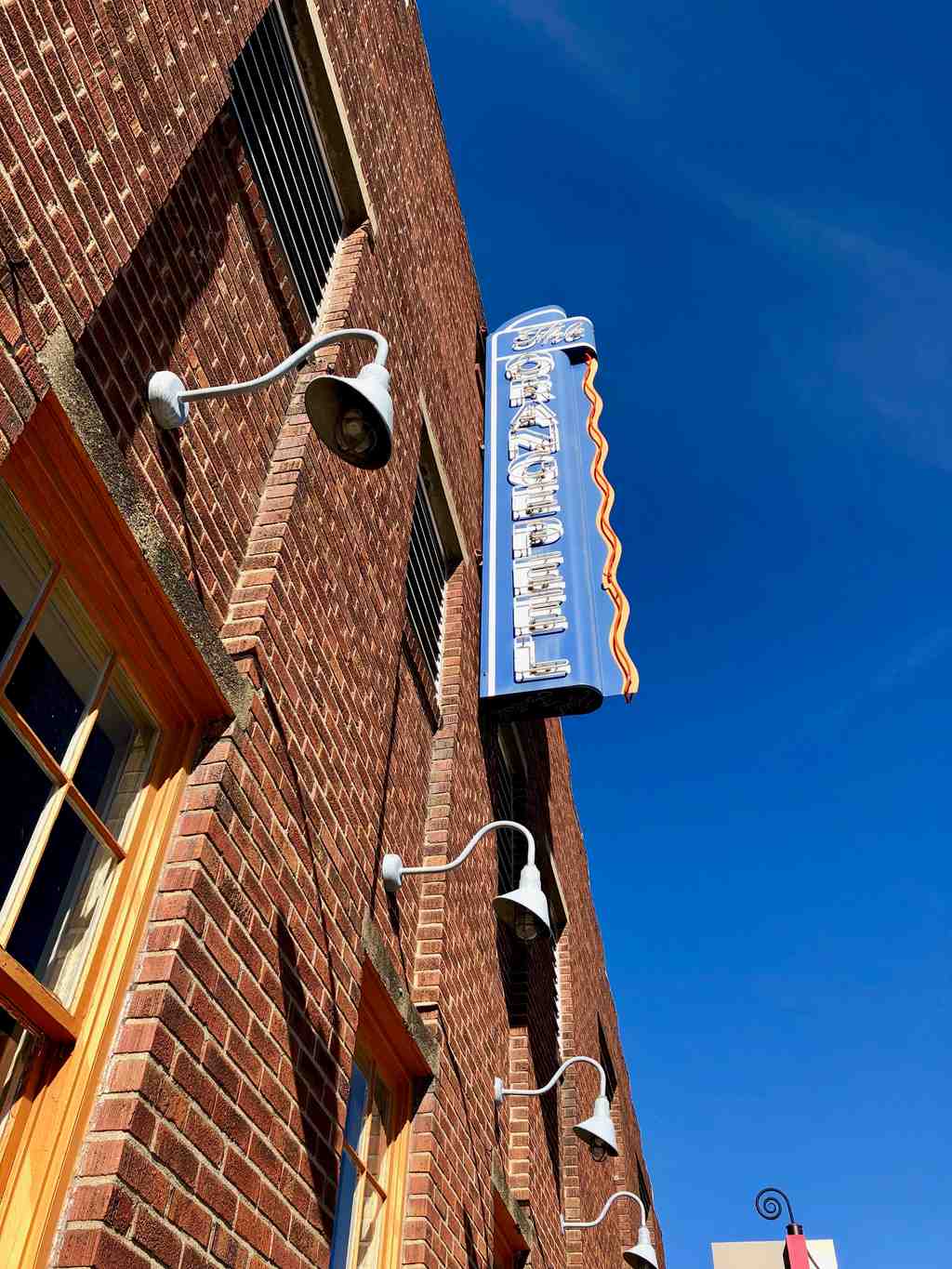
On your right is a low brick building with a broad rectangular front and a tall vertical Orange Peel sign marking the entrance.
The Orange Peel has never looked like a palace, and that is part of its charm... it feels like a place that saved its grandeur for the inside. Behind this straightforward facade at one hundred one Biltmore Avenue, Asheville kept reinventing the same address. First came Skateland Rollerdome from nineteen fifty to nineteen sixty-two. Then a bowling alley called Biltmore Lanes. Then the Jade Smith Cabaret Club. Then, in the nineteen seventies, this address became the original Orange Peel.
That first Orange Peel mattered deeply. It drew young African Americans from across Asheville, and it gave them a place that felt fully their own. The house band had the unforgettable name Bight, Chew and Spit... and the club welcomed acts like The Commodores and The Bar-Kays. D-Js from W-B-M-U-F-M, one of the few Black-owned radio stations in the country, spun disco and funk here too. This was not just nightlife. It was community, style, and belonging, all pulsing under one roof.
Then the music stopped. The building sat vacant for years, and for a while it served as an auto parts warehouse. That kind of ending can feel final... but here, it was only an intermission.
In two thousand two, former New Orleans club owners Jack and Lesley Groetsch brought the name back. With support from Asheville philanthropist Julian Price's company, Public Interest Projects, they reopened it as The Orange Peel Social Aid and Music Club on the twenty-fifth of October, two thousand two. “Social aid” is a New Orleans tradition, a way of saying a club should help knit people together, not just entertain them. In its early years, the new Orange Peel tried to honor the older one by hosting events for the last graduating class of Stephens-Lee High School slash South French Broad High School.
If you want a closer look at the sign, glance at your screen... it became a kind of promise when the club returned, and Rolling Stone later praised The Orange Peel as one of the country’s standout music venues in two thousand eight.
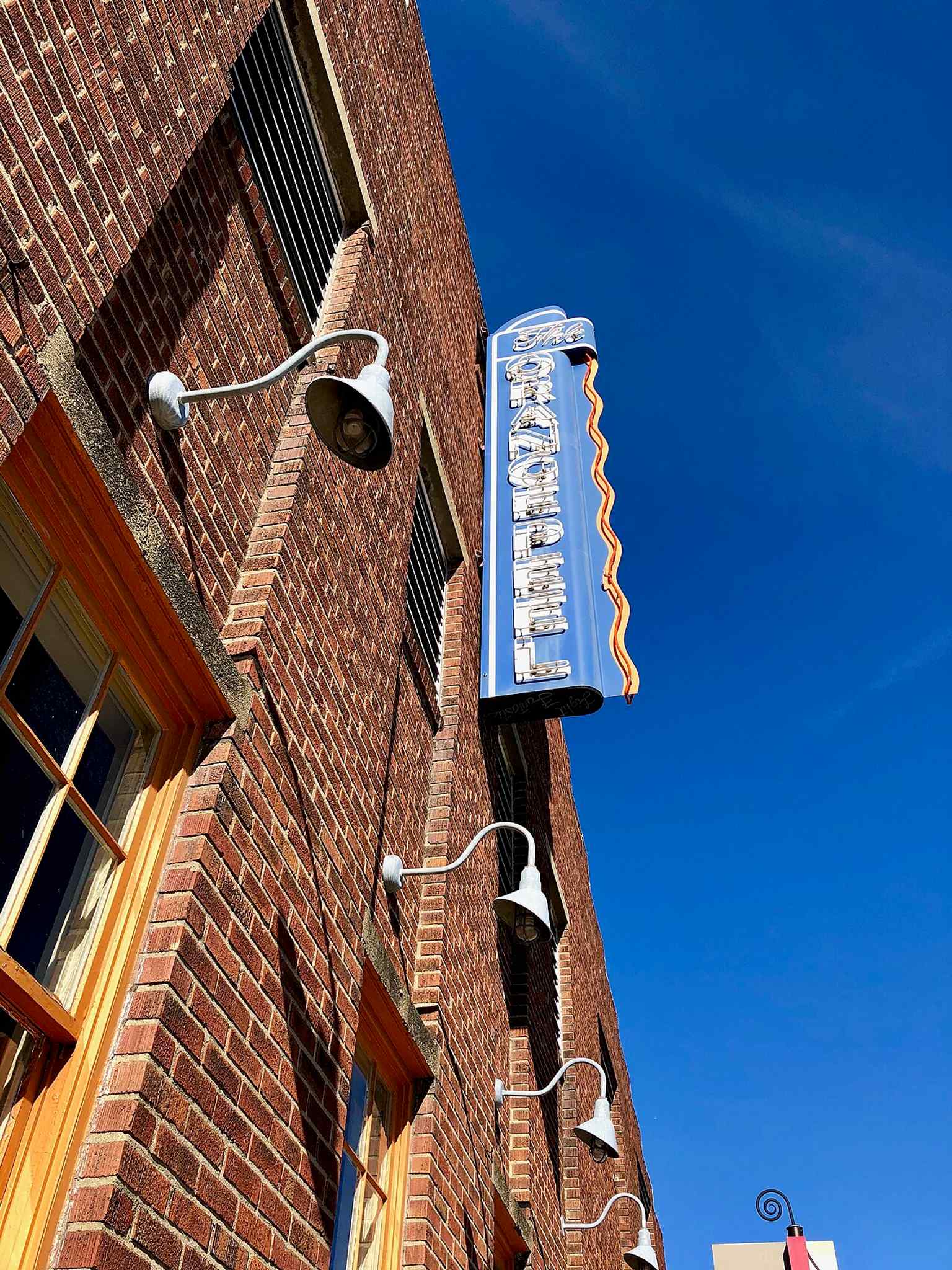
Inside, the room holds about one thousand fifty people, small enough to feel personal and big enough to shake with energy. Bob Dylan played here in two thousand four. The Smashing Pumpkins did a multi-night run in two thousand seven. The Beastie Boys came in two thousand nine. Lauryn Hill, Luke Combs, Moogfest crowds, local artists downstairs at Pulp, even comedy nights and Annie Rauwerda in twenty twenty-three... this place keeps making room for different kinds of voices.
This doorway reminds Asheville that music venues can carry memory as faithfully as any monument. When you're ready, head on toward St. Matthias for our final stop.





.jpg)