
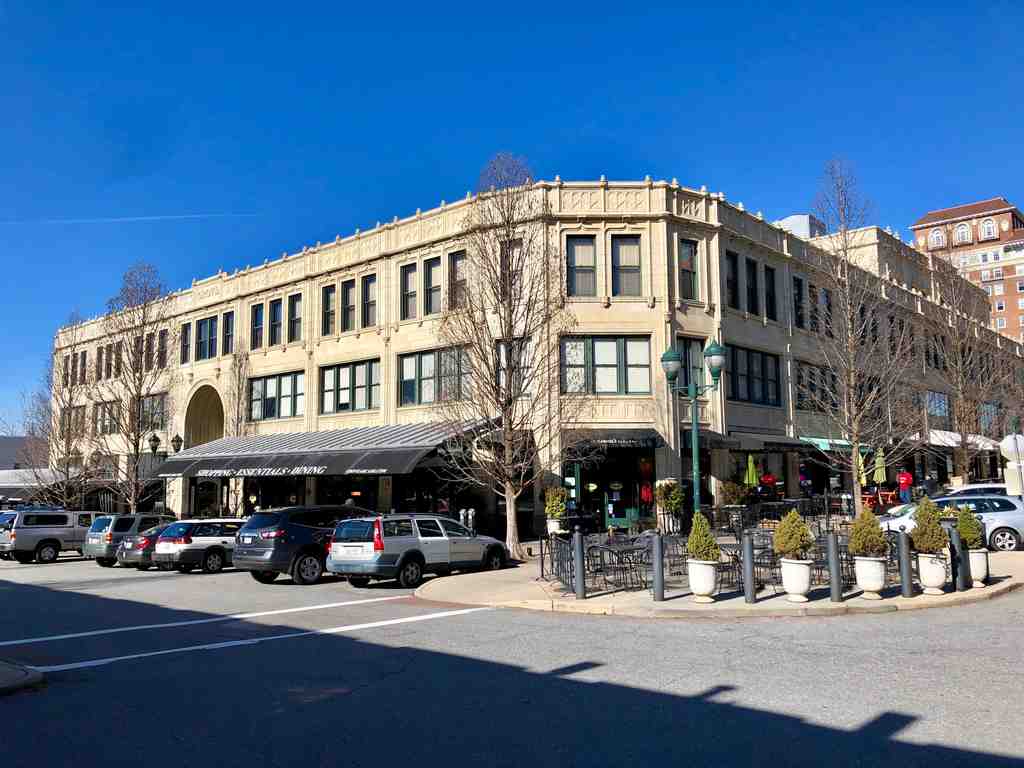
In front of you rises a pale stone-and-terracotta building with rounded corners, stepped upper stories, and carved winged lions set into the north side.
This is Grove Arcade, and it carries the confidence of Asheville in the late nineteen twenties right on its face. E. W. Grove wanted what he called a classy look for a modern palace of commercialism... and he got it. Between nineteen twenty-six and nineteen twenty-nine, builders gave him a full city block of steel frame and reinforced concrete, dressed in Tudor Revival and Late Gothic Revival details. Those styles borrowed from older Europe, so the building feels both grand and a little theatrical, like history put on its Sunday coat.
Look closely and you can read its unusual shape: a long lower block with rounded corners, then upper floors that step back in tiers. It was meant to anchor a skyscraper that never rose above it. Even so, the Arcade became one of America’s first indoor shopping malls. That dream changed in nineteen forty-three, when the federal government took over. Later, the National Climatic Data Center worked here until nineteen ninety-five.
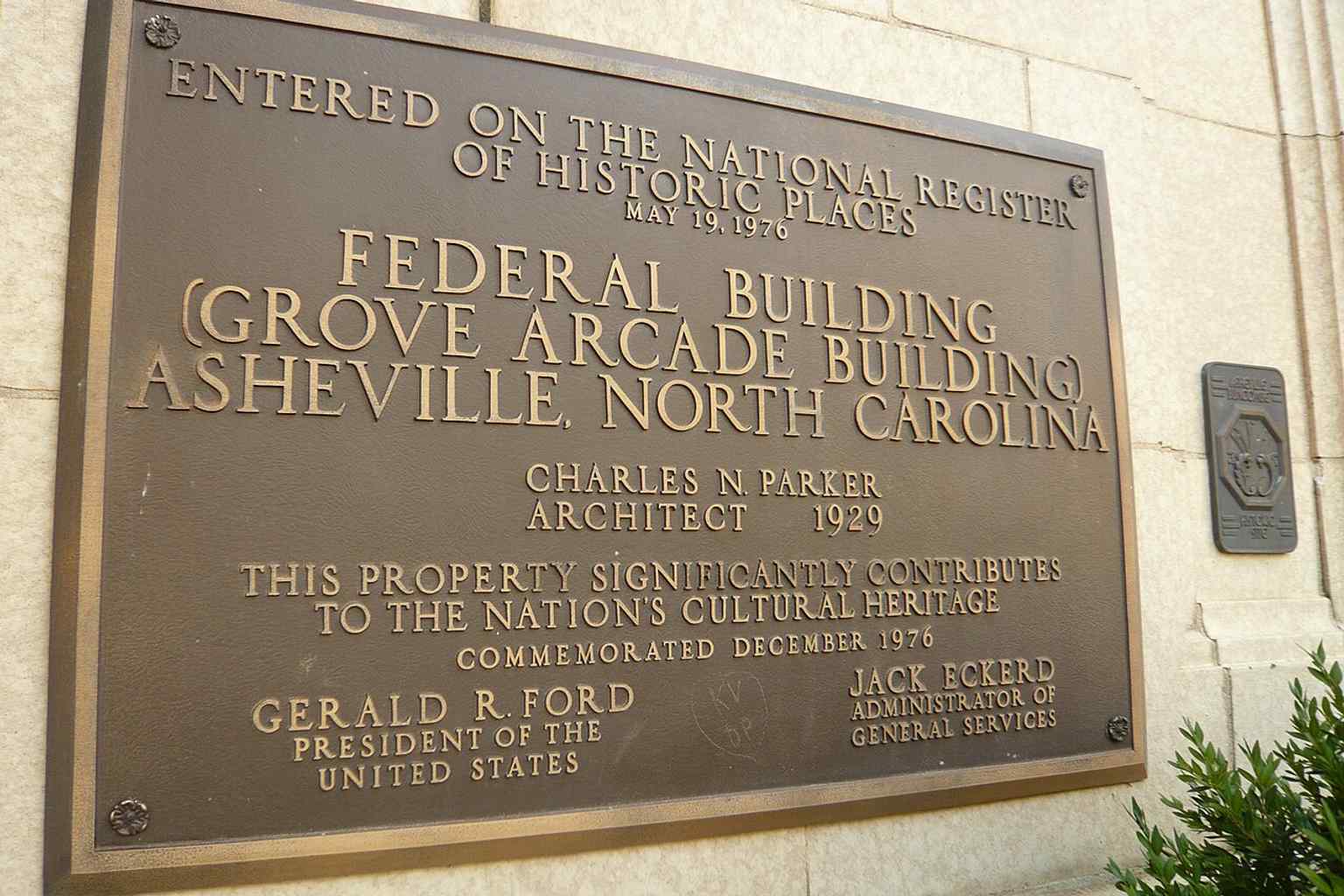
The plaque in the photo marks its place on the National Register of Historic Places in nineteen seventy-six. Asheville reclaimed the building in nineteen ninety-seven, signed a one hundred ninety-eight-year lease with a preservation foundation, restored it over five years, and reopened it in two thousand two with shops, offices, and homes above.
If you want to step inside later, it generally opens from nine to seven most days, and ten to five on Sunday. Grove Arcade still feels like a city gathered under one roof. When you’re ready, continue on and let the next landmark tell you its own quiet story.





