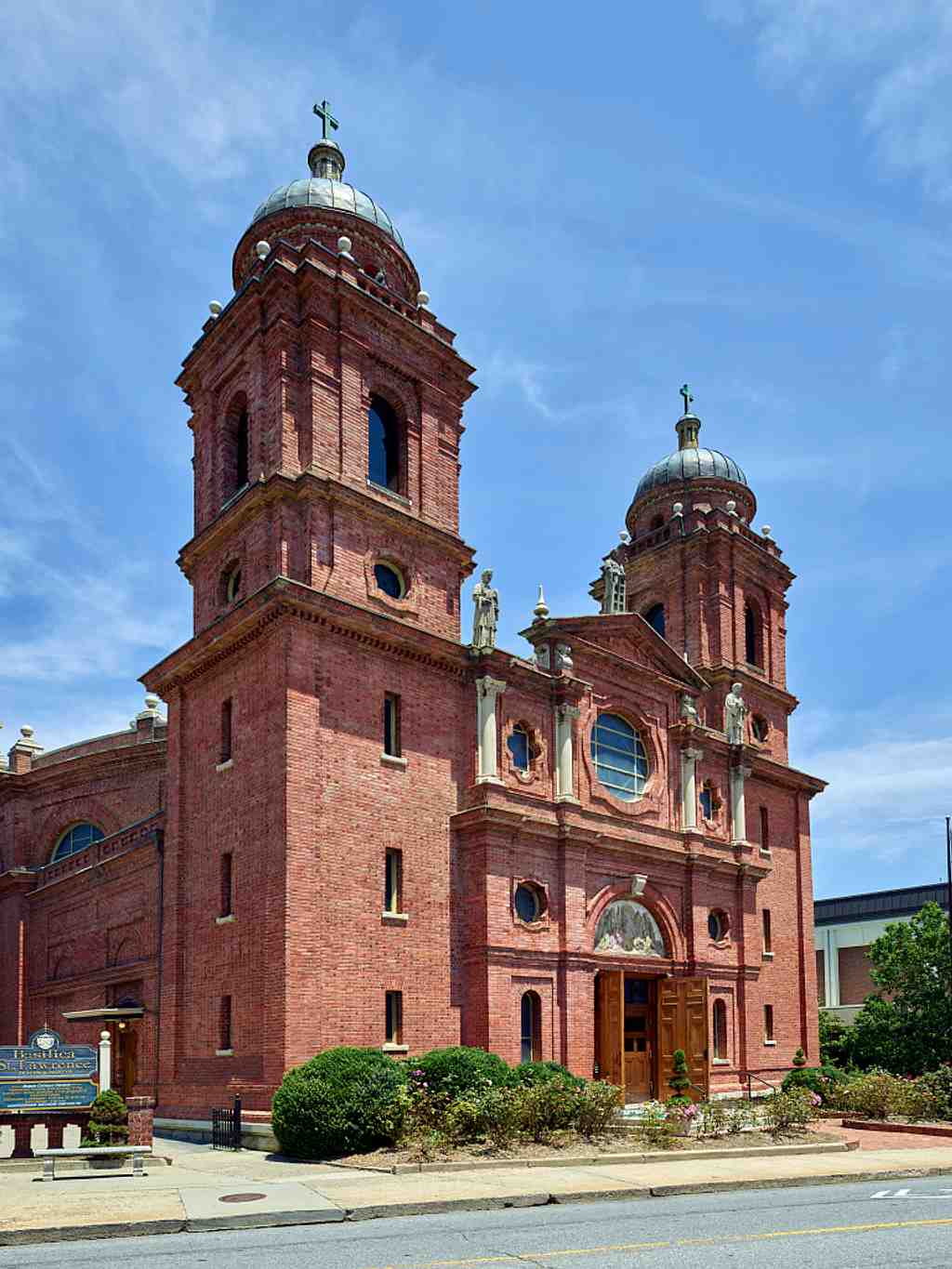
On your right, look for the tan brick church with a broad arched entrance, twin square towers, and a great rounded dome lifting behind the front façade.
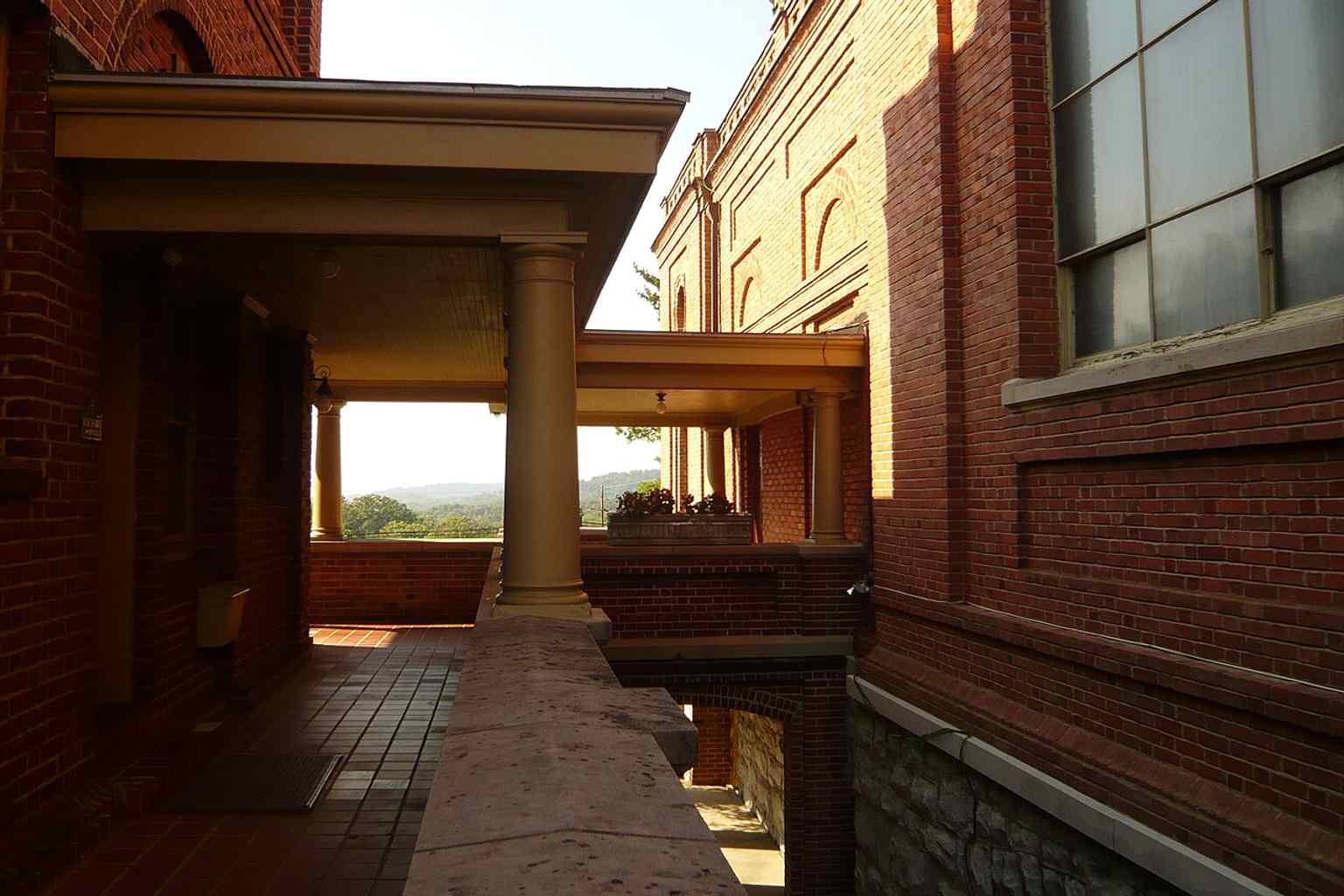
This is the Basilica of Saint Lawrence, one of Asheville’s quiet astonishments. From the street, it feels grounded and sturdy, but it was also an act of daring. In nineteen oh five, the Spanish architect Rafael Guastavino worked with architect R. S. Smith and Asheville’s Catholic community to shape this Spanish Renaissance Revival church. Guastavino did not just want beauty here... he wanted boldness. He crowned the church with an elliptical dome, meaning an oval-shaped dome, and that dome is widely said to be the largest freestanding elliptical dome in North America. No forest of interior supports, no hidden steel cage doing all the work for you... just engineering, nerve, and extraordinary skill.
That dome took its inspiration from a basilica in Valencia, Spain, tying this mountain city to Guastavino’s own homeland. And the building kept gathering meaning over time. In nineteen ninety-three, Pope John Paul the Second named it a minor basilica, a special honor the Catholic Church gives to a church of particular importance. It remains the only basilica in western North Carolina.
What I love most is that this place is impressive for reasons both spiritual and deeply human. The National Park Service called it nationally significant in twenty ten, not mainly for religion, but for its architectural and engineering distinction. In other words, even people who never step inside can stand here and feel that someone reached for greatness.
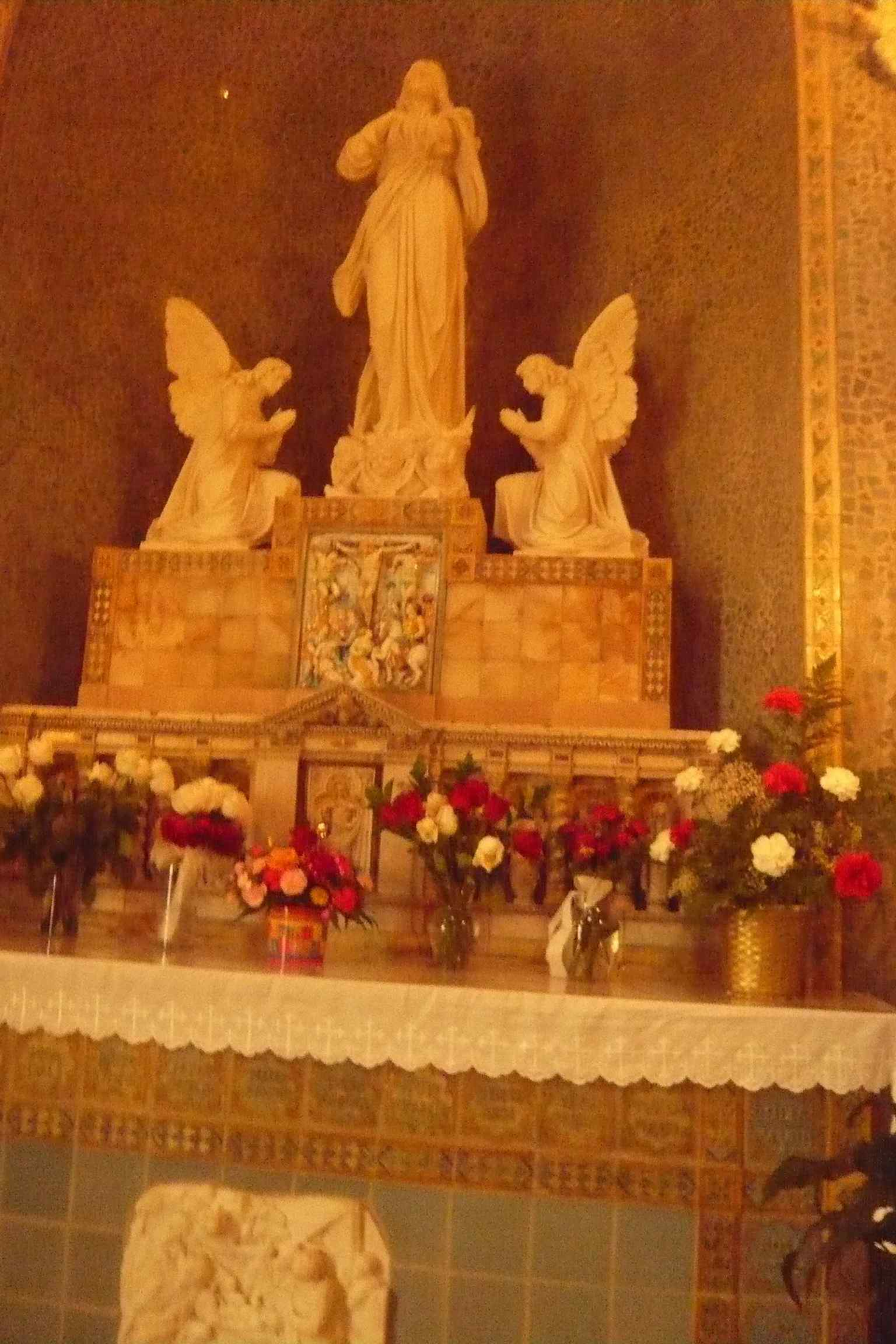
And inside... it becomes even more tender. The high altar glows with Tennessee marble. Statues of saints arrived from Italy through the Daprato Statue Company. Above the altar, a Spanish wood carving shows the Virgin Mary and John the Apostle mourning at the crucifixion. Behind them, the whole back wall blooms with colored terra cotta figures of the Four Evangelists and the archangels Michael and Raphael. For a glimpse of that soaring interior, check the dome photo; from below, it feels like the whole church is opening its hands above you.
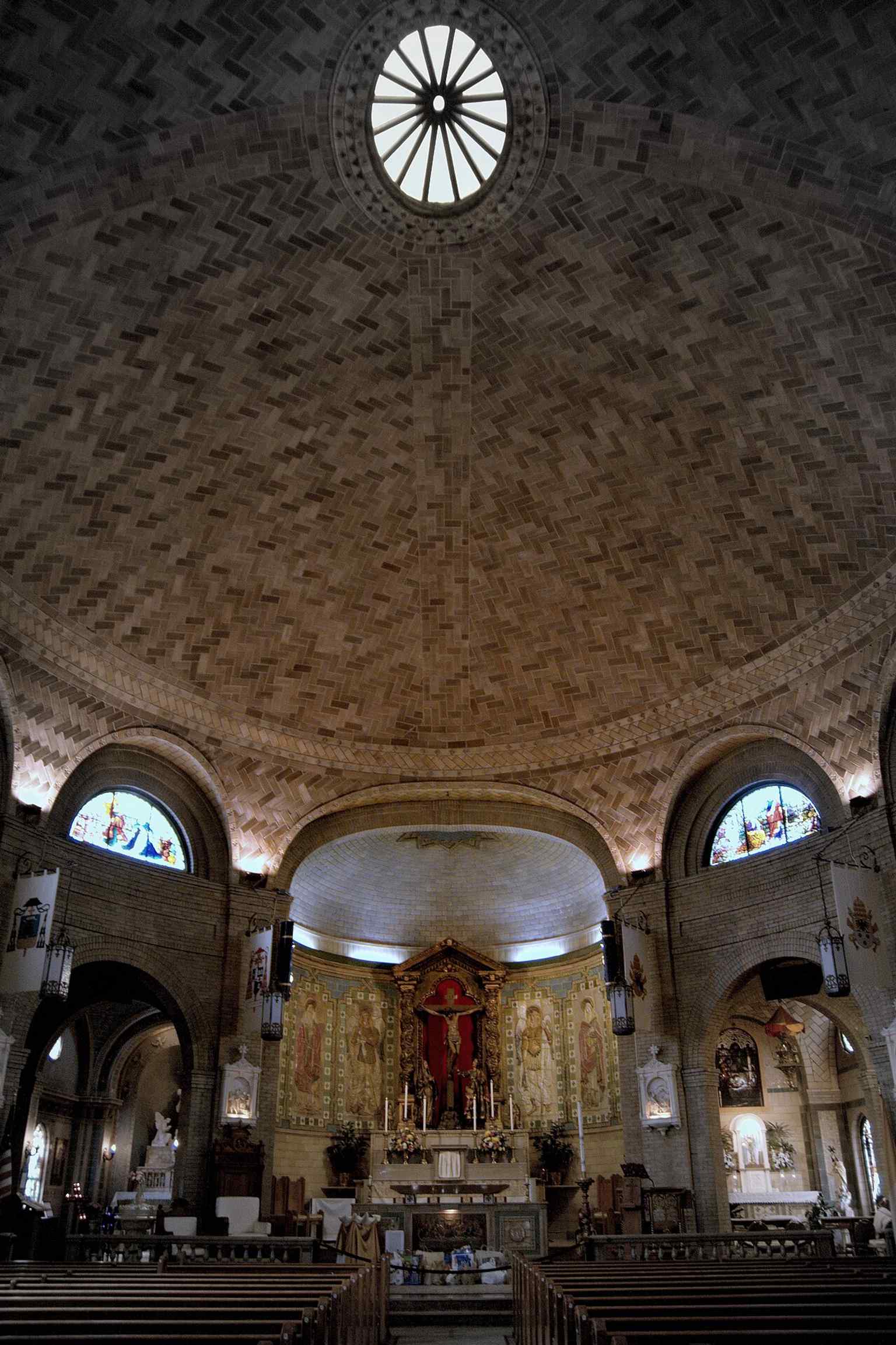
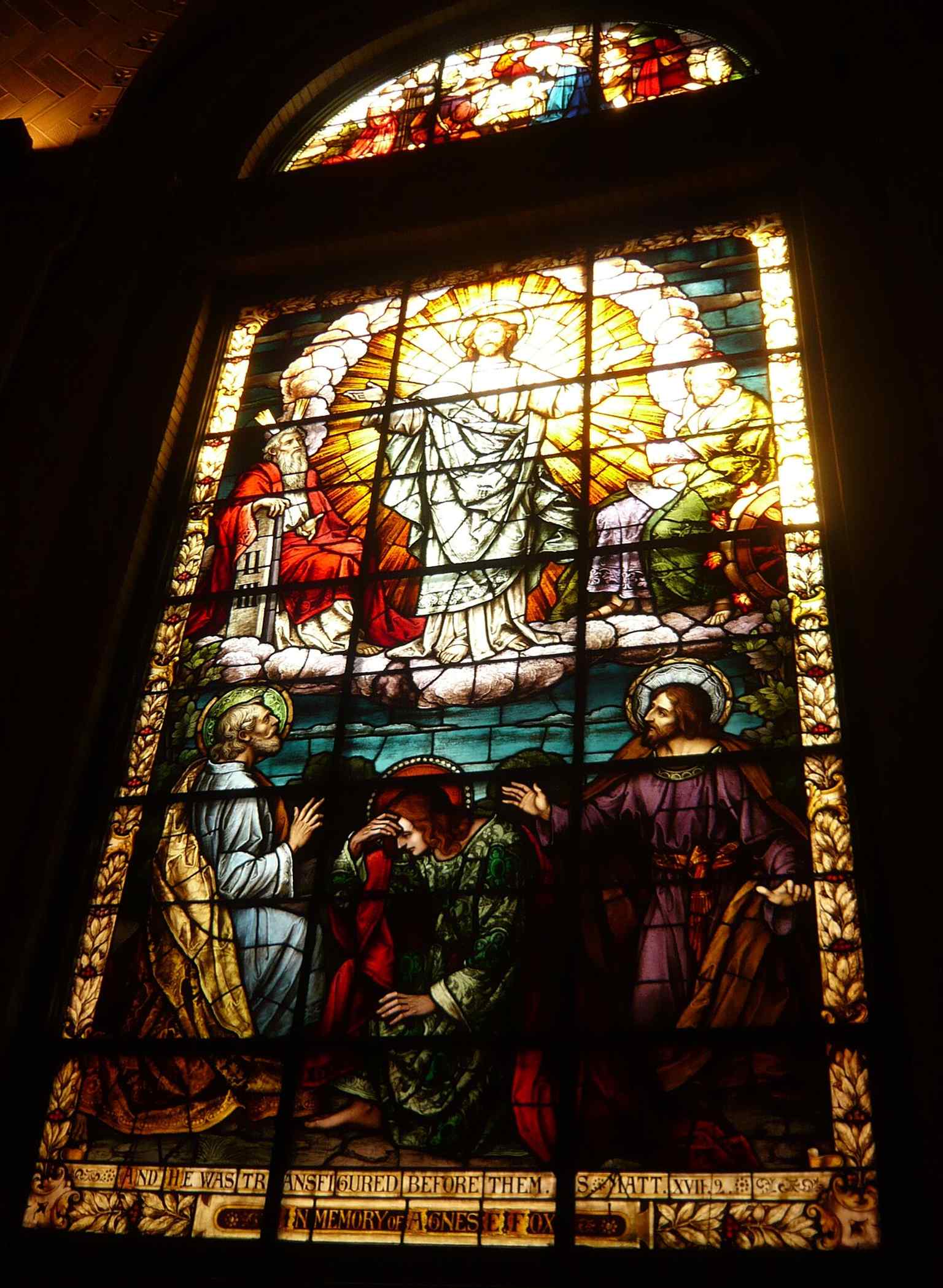
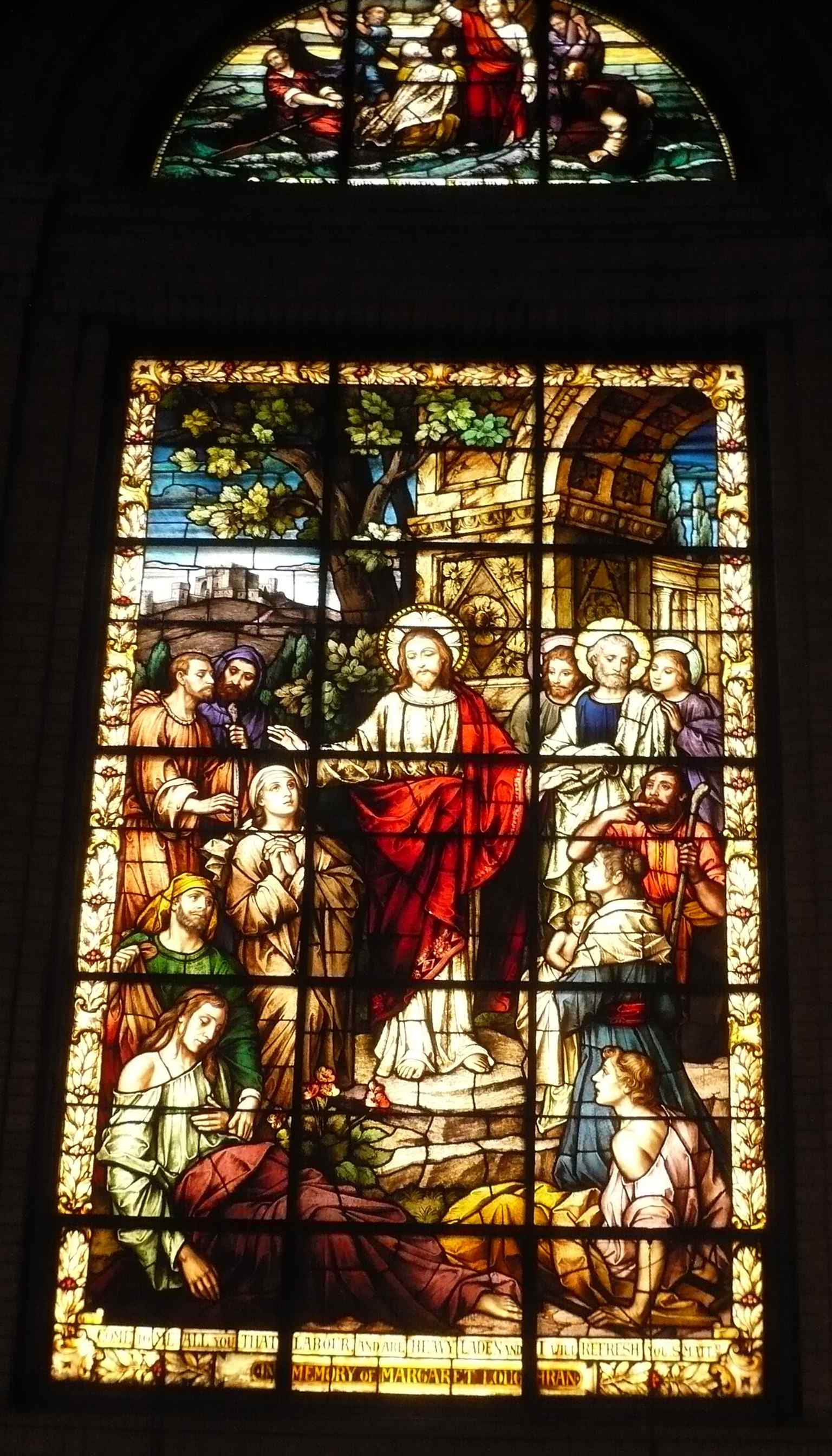
The stained glass adds another layer of storytelling. Many windows came from Munich, Germany, and they unfold scene after scene: the Annunciation, the Nativity, the Wedding at Cana, Christ calming the storm, the Resurrection. Off to one side, the Chapel of Our Lady holds a marble Marian altar, carvings of women saints, and even Guastavino’s crypt nearby, as if the architect never quite left his masterpiece.
But this old beauty is also fragile. By twenty twenty-four, the basilica faced water leaks, falling masonry, and a copper dome at the end of its life, with restoration expected to take years and cost many millions. If you want, check the before-and-after image to see the rare sight of this church wrapped in repair instead of simply admired.
This place holds prayer, craft, and courage in the same steady breath.
When you’re ready, continue on and let that great unseen dome travel with you.