
On your right, Harrah’s Cherokee Center carries the big, practical face of a working civic building... but its story is really about Asheville refusing to let downtown fade away. In July of nineteen sixty-eight, city leaders approved a plan to grow this site into a true civic center, adding an arena, meeting rooms, and exhibition space beside Thomas Wolfe Auditorium. At the time, suburban development and malls were pulling energy away from the city center, and Asheville needed a place that could call people back together.
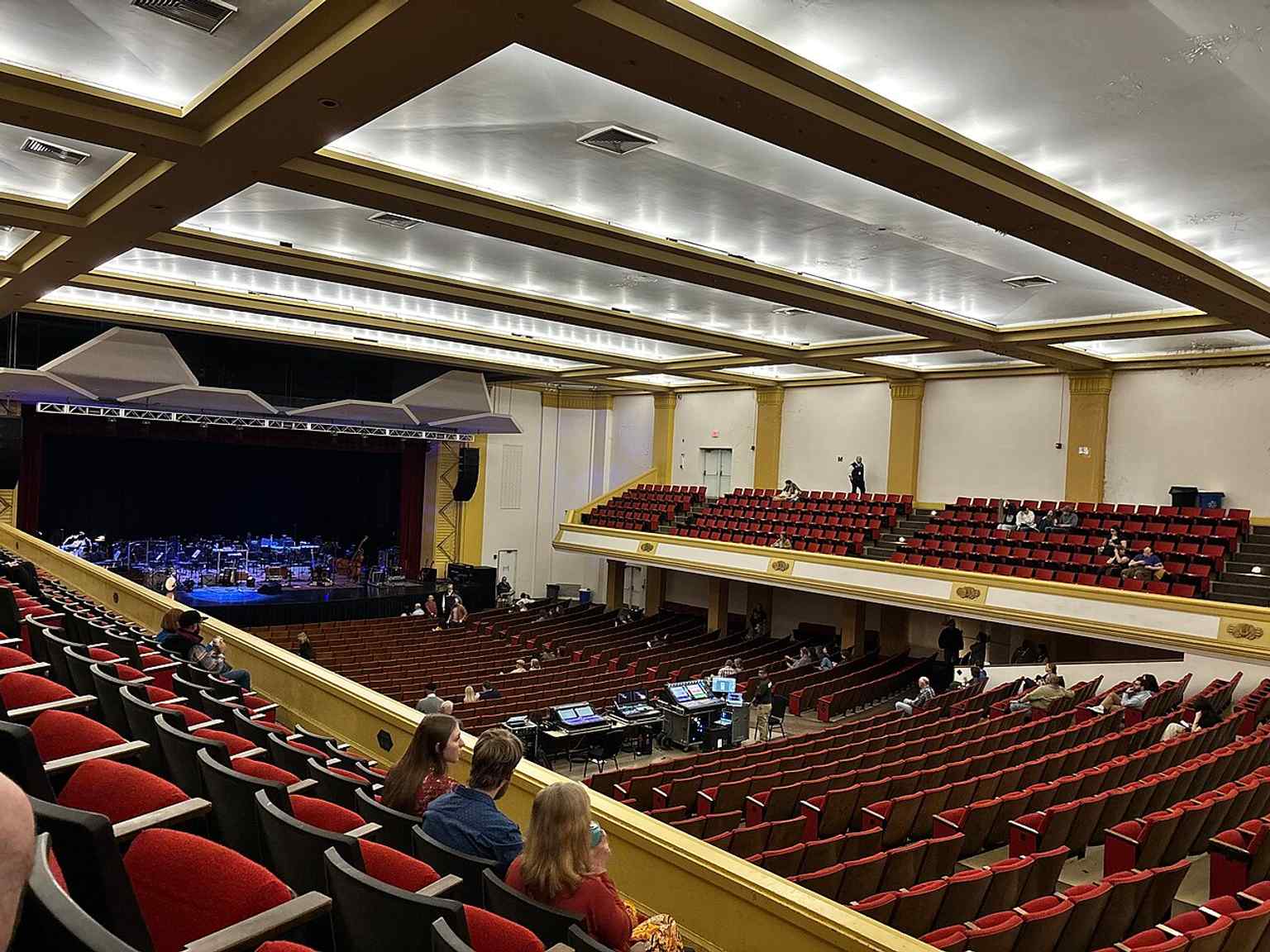
That idea opened its doors in nineteen seventy-four as the Asheville Civic Center Complex. Since then, this one address has held an astonishing range of human moments: basketball games, hockey nights, banquets, graduations, rallies, concerts, and the kind of big communal gatherings that make strangers feel, for a little while, like neighbors. The main arena, now called the ExploreAsheville.com Arena, holds seven thousand, six hundred seventy-four people. Tucked beside it is the older heart of the complex, Thomas Wolfe Auditorium, a horseshoe-shaped theater first opened in January of nineteen forty as part of the Works Progress Administration, a New Deal program that put people to work during the Great Depression. If you want a peek inside that elegant curve of seats and stage, the photo captures the auditorium’s graceful curve.
This place has absorbed a lot of Asheville memory. The Asheville Altitude played basketball here before moving to Tulsa in two thousand and five. Hockey fans cheered for the Asheville Smoke and later the Asheville Aces. Wrestling thundered through the building too, including World Championship Wrestling events and a memorable Monday Nitro, when the N-W-O clashed with Ric Flair’s Four Horsemen. Pearl Jam played here during the Vote for Change tour in two thousand and four. Serena and Venus Williams came for a Fed Cup tie in two thousand and eighteen. A film crew turned the arena into a make-believe Mexico airport for Masterminds, even dressing it with palm trees. And on the first of January, twenty twenty-five, All Elite Wrestling brought Fight for the Fallen here, with proceeds helping people affected by Hurricane Helene in Asheville.
The name changed with the decades, from Asheville Civic Center to U-S Cellular Center, and then to Harrah’s Cherokee Center in twenty twenty. But the deeper question never really changed: what should Asheville do with an aging but beloved gathering place? Renovation debates have stretched on for years, including plans for a living roof and major upgrades to Thomas Wolfe Auditorium.
If you ever need venue information, public office hours generally run Tuesday through Friday from ten in the morning to four in the afternoon.
This is one of Asheville’s great community rooms, where the city keeps meeting itself.
When you’re ready, keep walking and let the next stop open another corner of Asheville’s story.





