AudaTours logoAudaTours

Stop 11 of 16

The Greek Theatre

On your left, the Greek Theatre opens like a hillside deciding to become a stage. Before the stone, before the columns, before anyone called it monumental, this was simply a rough bowl in the land... a place people loved to gather. Since eighteen ninety-four, students had already been coming here for the annual Senior Extravaganza, when the site was known as Ben Weed’s Amphitheater. Berkeley did not invent the tradition here. It inherited it, then gave it marble and ceremony.

That matters. So much on this campus began as an argument between use and design, between what people were already doing and what the university wanted to make official. President Benjamin Ide Wheeler saw this natural hollow and pushed hard to turn it into something lasting. William Randolph Hearst paid for it. John Galen Howard drew it as his first university building, a declaration of the campus he imagined. And Julia Morgan assisted on the design so closely that some historians later wondered whether she may have designed the Greek herself. Even here, authorship refuses to sit still.

Howard looked back to Epidaurus in ancient Greece, an open-air theater famous for its perfect bowl and remarkable acoustics. He first imagined something even grander than what you see: caryatids, which are sculpted female figures used as columns, a double colonnade, marble cladding, room for about ten thousand people. Fundraising pulled the dream back to earth. What rose in nineteen oh three was still splendid, but more honest too... Berkeley learning, even early on, that ideals usually arrive through compromise.

If you want, take a quick look at the before-and-after image in the app; the old bare hillside and the later tree-framed theater make that long transformation easy to feel.

The finished place kept the shape of the hill and let architecture catch up to a beloved habit. Nineteen rows of concrete benches sweep down in a semicircle. At the bottom sit twenty-eight carved stone chairs near the stage. Across the front, Doric columns - the plain, sturdy Greek kind - hold a classical façade that feels both formal and surprisingly open, as if the whole structure knows it still belongs to the landscape.

Look at the sketch on your screen if you’d like; Howard’s first drawing shows just how much bigger, and more ornate, he wanted this dream to be.
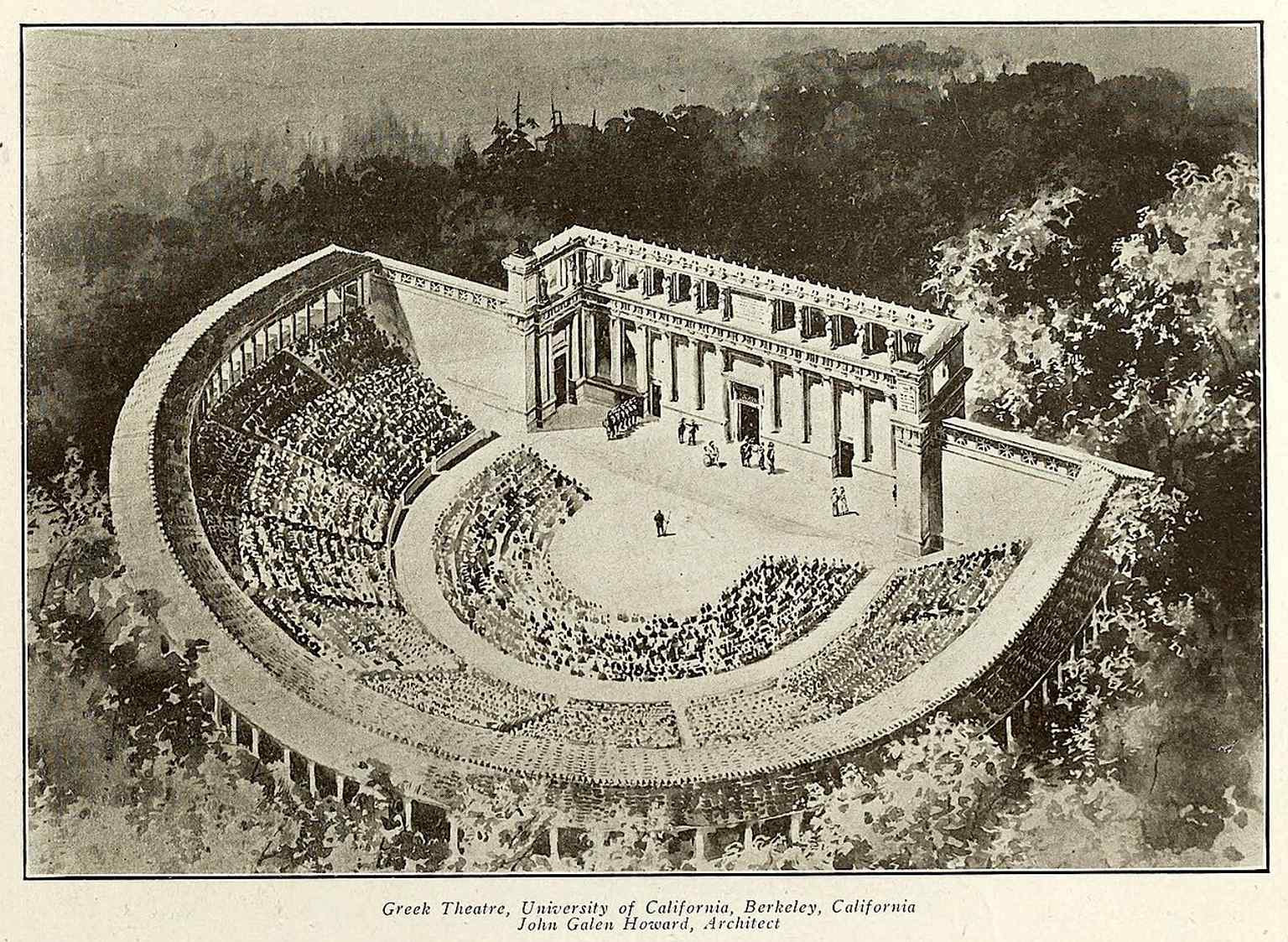
John Galen Howard’s original sketch reveals the grander early vision for the theatre, including the colonnade and formal garden that were later scaled back.
John Galen Howard’s original sketch reveals the grander early vision for the theatre, including the colonnade and formal garden that were later scaled back.Photo: John Galen Howard, Wikimedia Commons, Public domain. Cropped & resized.

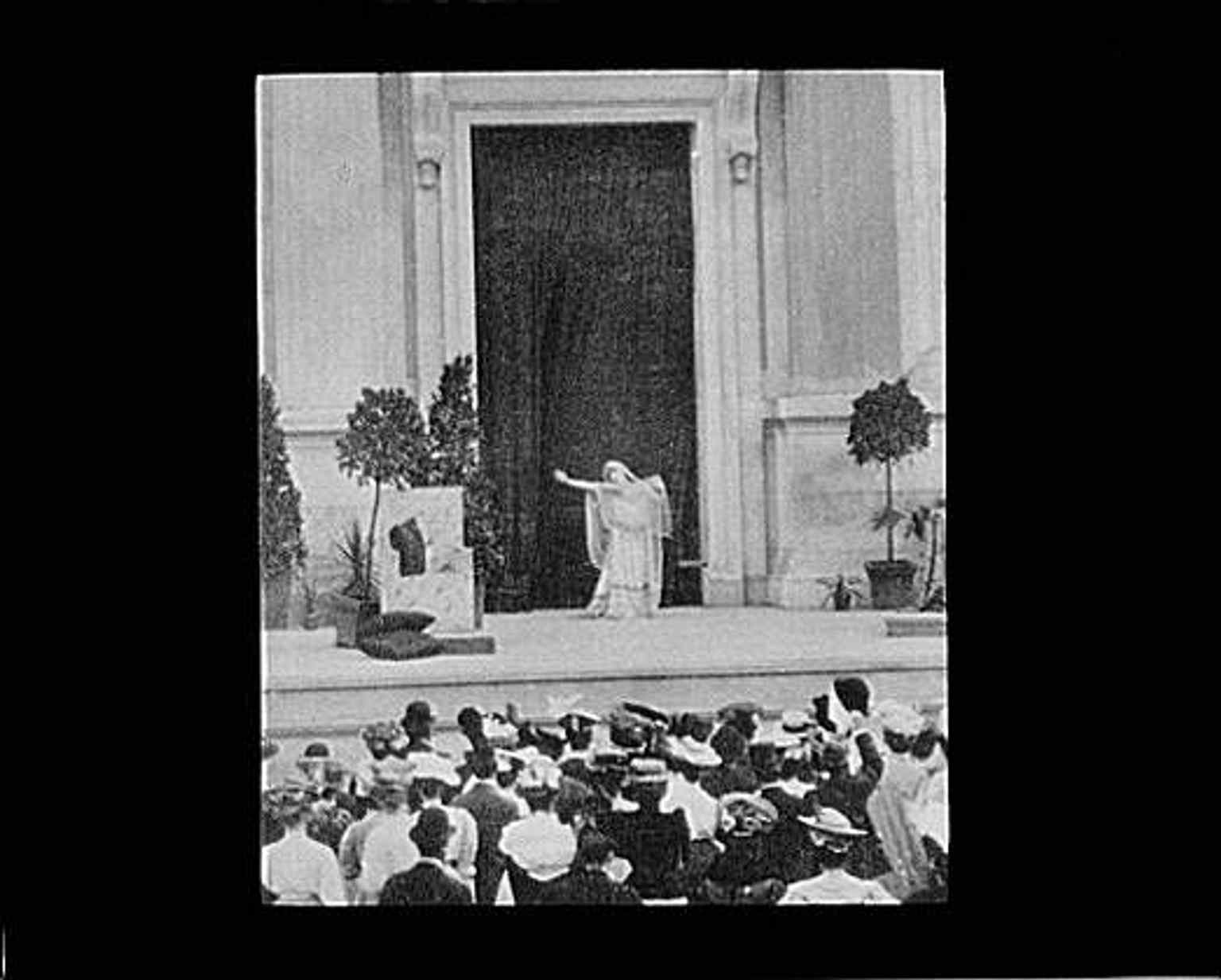
And then people filled it with their own meanings. Even before construction fully ended, President Theodore Roosevelt came in May of nineteen oh three to address graduates here. The formal opening followed that September with Aristophanes’ The Birds, performed by students. Sarah Bernhardt appeared as Phaedre soon after, proving this was not just a campus stage but an international one. Later came the Grateful Dead, twenty-nine times by nineteen eighty-nine. Mario Savio was dragged off this stage by police during the Free Speech Movement, and the crowd’s outrage helped force the university to loosen its grip on speech. In nineteen eighty-five, Bishop Desmond Tutu spoke here during the anti-apartheid protests, turning performance space into moral pressure.

Even the structure kept changing. A backstage basement arrived in nineteen fifty-seven. Then, in two thousand twelve, engineers hid four reinforced concrete columns inside the original fabric after discovering dangerous seismic weakness. Preservation here never meant freezing anything in place. It meant helping the old bowl keep receiving new voices.

That may be the real Berkeley gift: it knows how to turn a gathering into a spectacle without taking the gathering away. When you’re ready, Bowles Hall is about a four-minute walk from here.
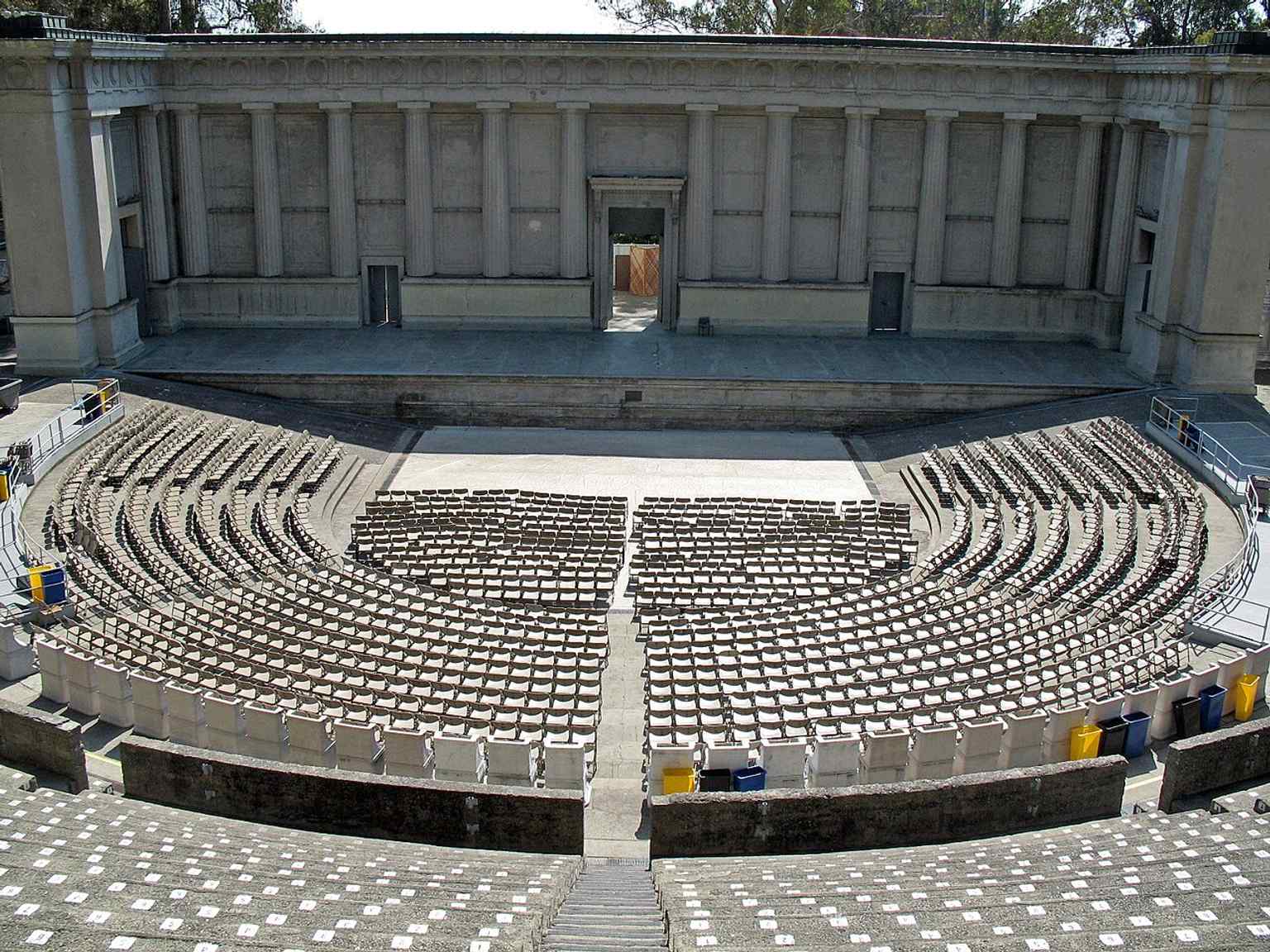
A clean modern view of the open-air Greek Theatre bowl, the 8,500-seat venue that rises from Berkeley’s hillside amphitheater.
A clean modern view of the open-air Greek Theatre bowl, the 8,500-seat venue that rises from Berkeley’s hillside amphitheater.Photo: Sanfranman59, Wikimedia Commons, CC BY-SA 3.0. Cropped & resized.
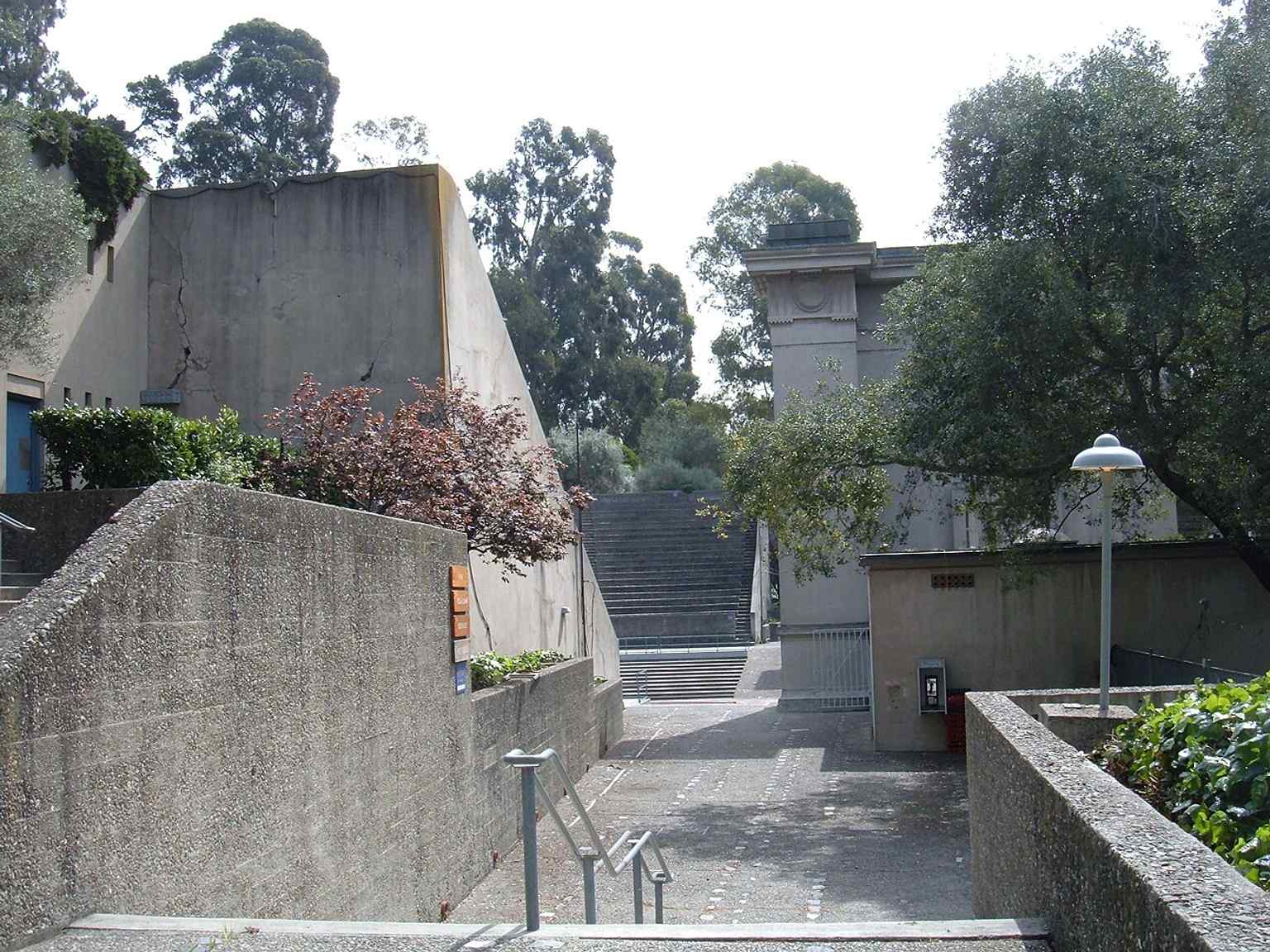
The west entrance and classical façade show the Doric-columned stage side of the theatre, built to echo an ancient Greek amphitheater.
The west entrance and classical façade show the Doric-columned stage side of the theatre, built to echo an ancient Greek amphitheater.Photo: BrokenSphere, Wikimedia Commons, CC BY-SA 3.0. Cropped & resized.
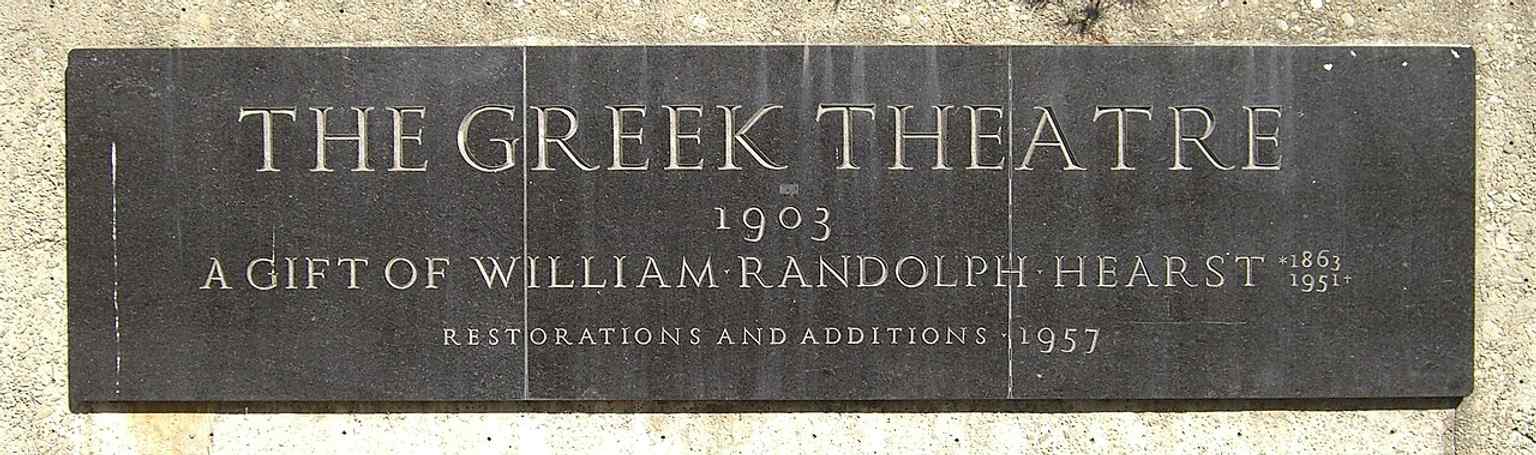
The entrance sign identifies the landmark by its familiar local name, the Greek Theatre, long associated with UC Berkeley events and concerts.
The entrance sign identifies the landmark by its familiar local name, the Greek Theatre, long associated with UC Berkeley events and concerts.Photo: Unknown, Wikimedia Commons, CC BY-SA 4.0. Cropped & resized.
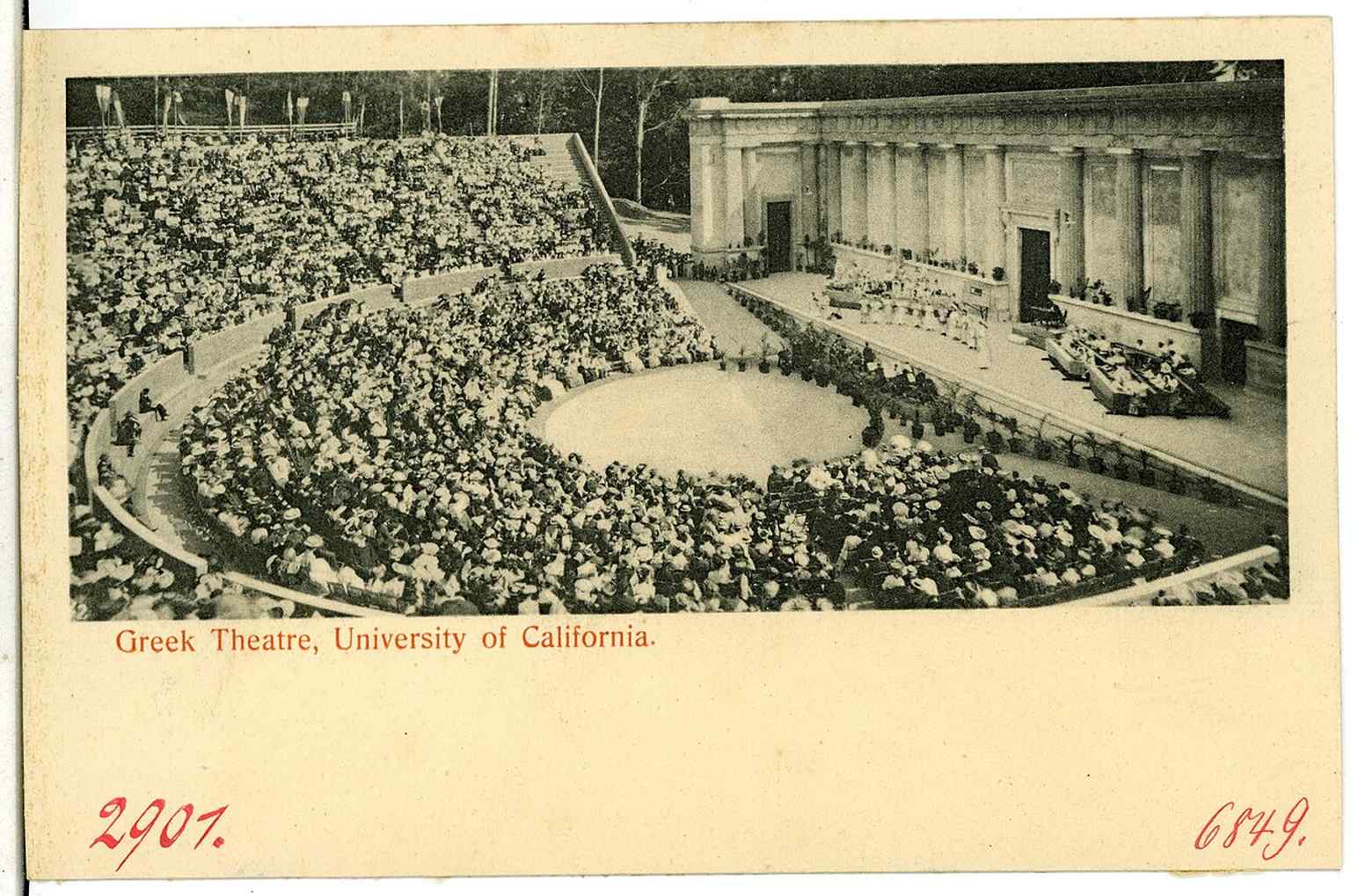
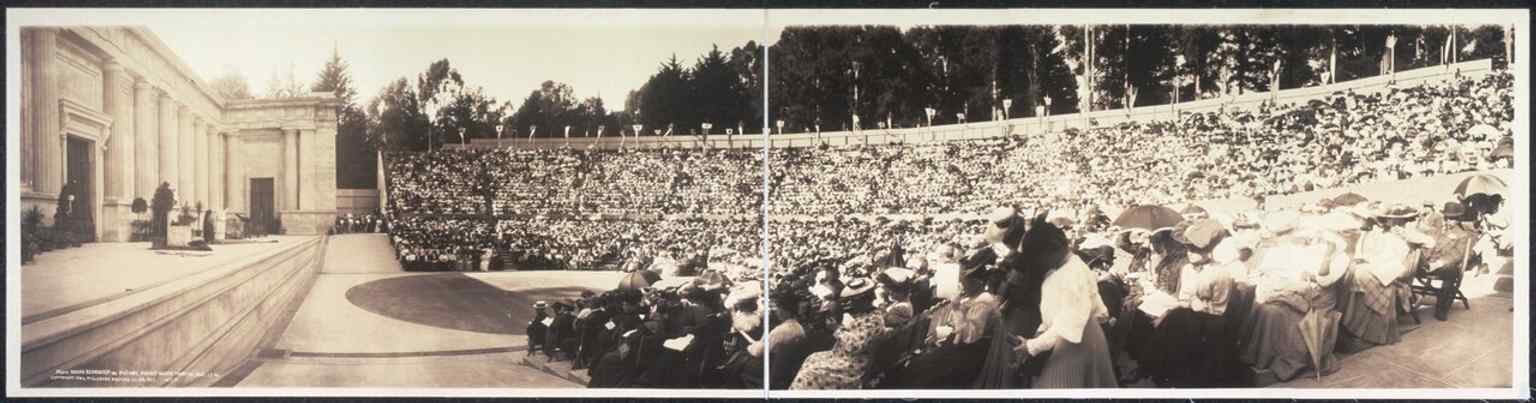
A 1905 postcard view captures the Greek Theatre soon after completion, just after it opened with student performances in 1903.
A 1905 postcard view captures the Greek Theatre soon after completion, just after it opened with student performances in 1903.Photo: Brück & Sohn Kunstverlag Meißen, Wikimedia Commons, CC0. Cropped & resized.
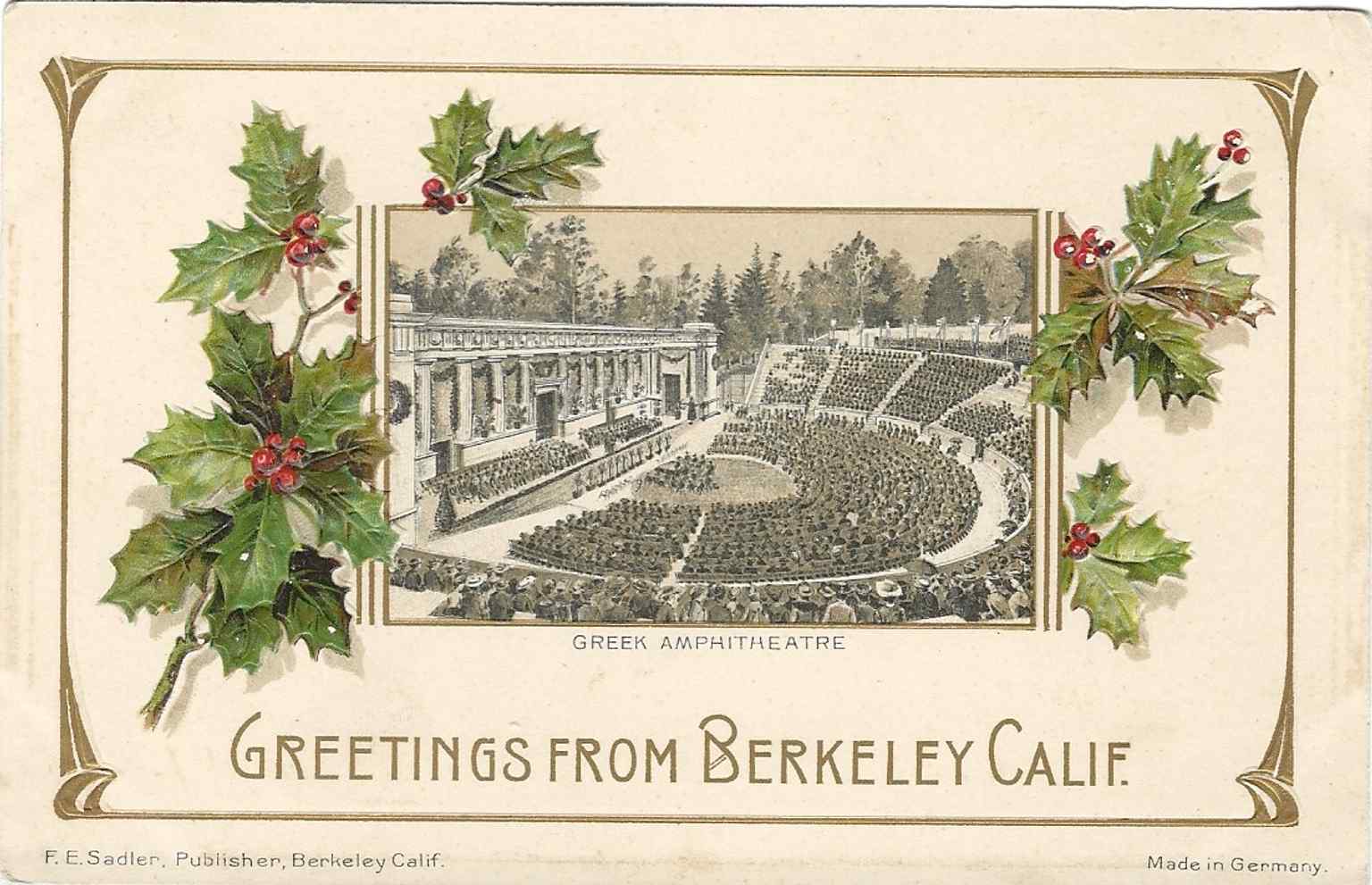
An early postcard labeled ‘Greek Amphitheatre’ shows how Berkeley promoted the venue in the first decades of the 20th century.
An early postcard labeled ‘Greek Amphitheatre’ shows how Berkeley promoted the venue in the first decades of the 20th century.Photo: M. Rieder, Wikimedia Commons, Public domain. Cropped & resized.
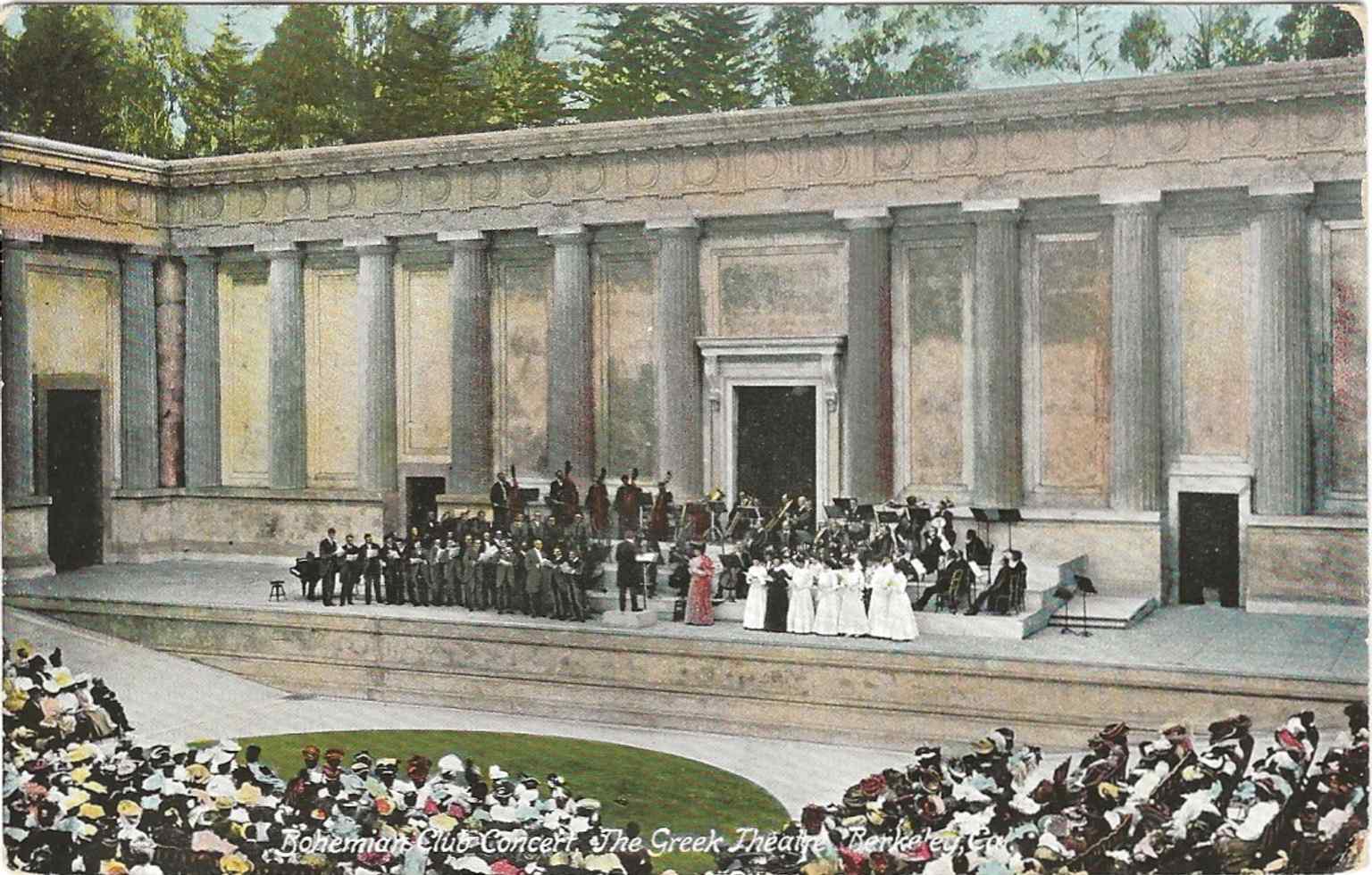
This ca. 1910 postcard of the Greek Theatre reflects its early reputation as a scenic campus amphitheater for concerts and gatherings.
This ca. 1910 postcard of the Greek Theatre reflects its early reputation as a scenic campus amphitheater for concerts and gatherings.Photo: M. Rieder, Wikimedia Commons, Public domain. Cropped & resized.
Sarah Bernhardt performing at the Greek Theatre in 1906 highlights the venue’s early role as a stage for internationally famous artists.
Sarah Bernhardt performing at the Greek Theatre in 1906 highlights the venue’s early role as a stage for internationally famous artists.Photo: Unknown, Wikimedia Commons, Public domain. Cropped & resized.
Another 1906 Bernhardt performance image, showing how quickly the theatre became a major cultural venue after opening.
Another 1906 Bernhardt performance image, showing how quickly the theatre became a major cultural venue after opening.Photo: SiefkinDR, Wikimedia Commons, CC BY-SA 4.0. Cropped & resized.
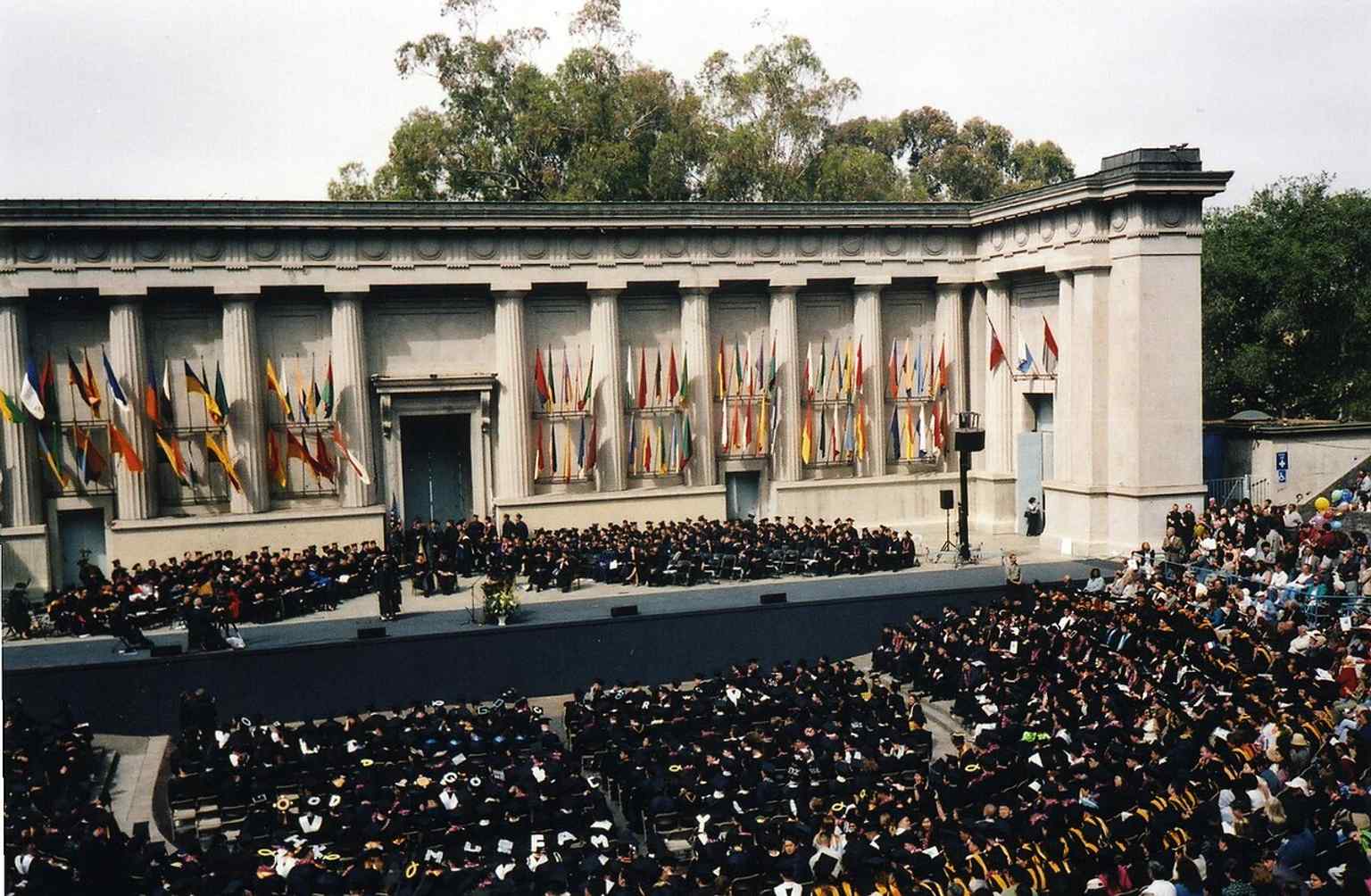
A graduation ceremony at the Greek Theatre, one of the long-running UC Berkeley traditions hosted in this open-air bowl.
A graduation ceremony at the Greek Theatre, one of the long-running UC Berkeley traditions hosted in this open-air bowl.Photo: Andris at English Wikipedia, Wikimedia Commons, Public domain. Cropped & resized.
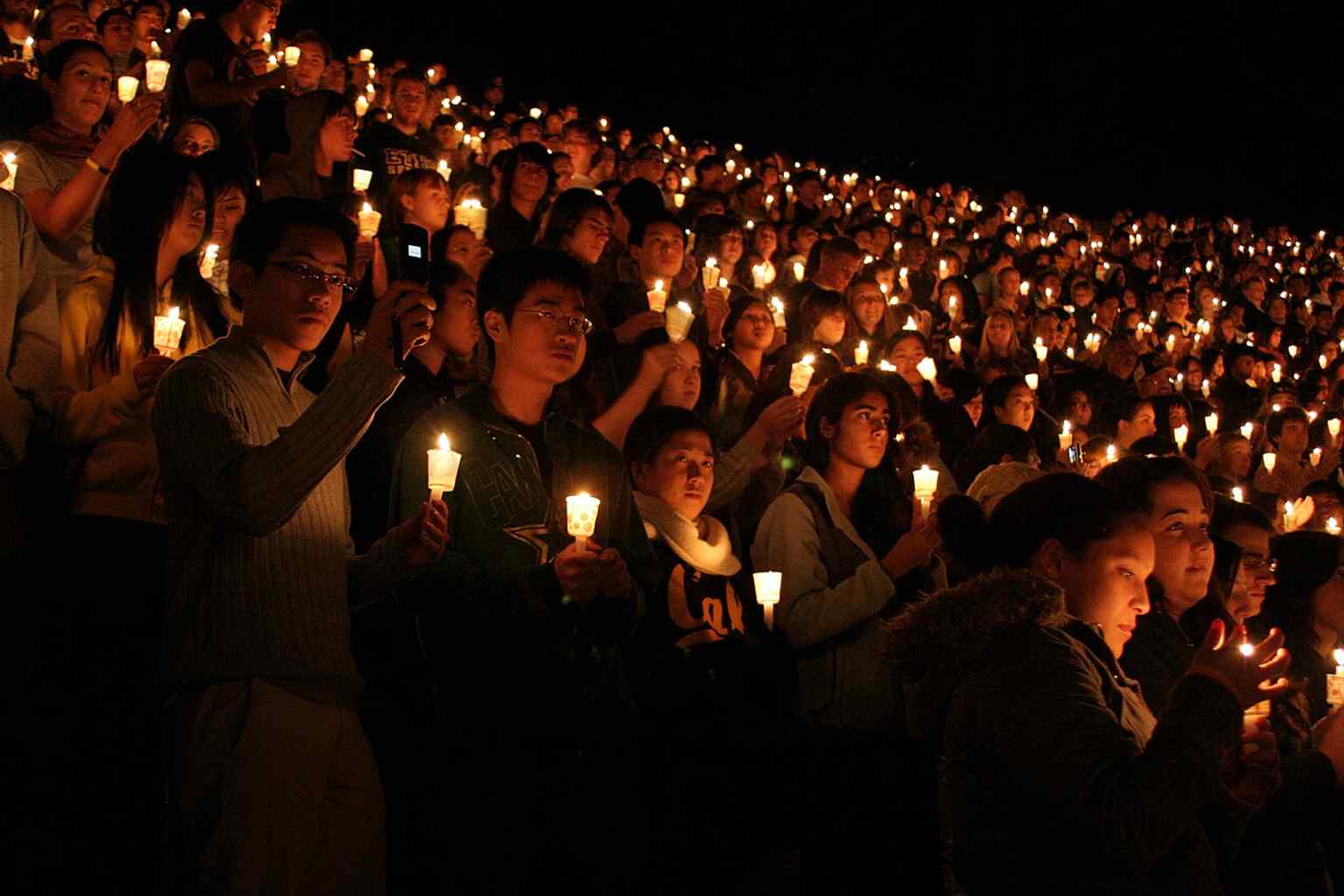
Students and alumni gathering for the Big Game bonfire recall the Greek Theatre’s role in major campus traditions and rally events.
Students and alumni gathering for the Big Game bonfire recall the Greek Theatre’s role in major campus traditions and rally events.Photo: Monica's Dad, Wikimedia Commons, CC BY-SA 3.0. Cropped & resized.
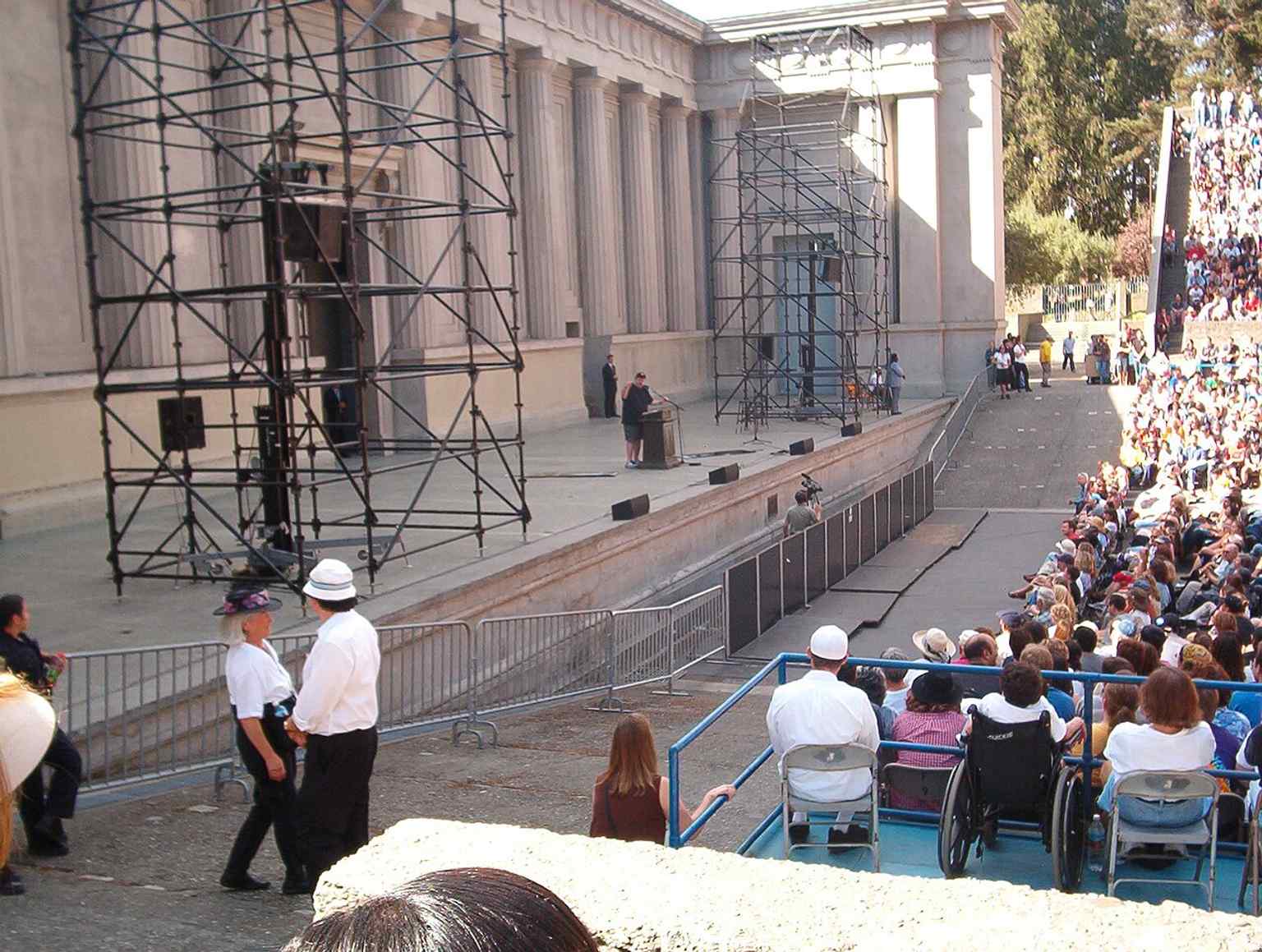
Michael Moore addressing a packed Greek Theatre shows the venue’s continued use for major public talks and campus gatherings.
Michael Moore addressing a packed Greek Theatre shows the venue’s continued use for major public talks and campus gatherings.Photo: DirectorG at en.wikipedia, Wikimedia Commons, Public domain. Cropped & resized.
arrow_back Back to Berkeley Audio Tour: Echoes of Genius and Legends
Loved by travellers

Thousands of tours started.
Plenty of opinions.

4.8 across the App Store and Google Play. Here's a few we keep coming back to.

starstarstarstarstar
This was a solid way to get to know Brighton without feeling like a tourist. The narration had depth and context, but didn't overdo it.
Christoph
Christoph
Brighton Tour
starstarstarstarstar
Started this tour with a croissant in one hand and zero expectations. The app just vibes with you, no pressure, just you, your headphones, and some cool stories.
download Get the app

Pop your headphones in.
Step outside.

Free to download. Tours in every city. Start in 60 seconds — no account, no card.

Download on the App StoreGet it on Google Play
starstarstarstarstar_half
4.8
AudaTours app icon
headphones
~ 4 min until your first tour starts
public
1,000+ cities worldwide
all_inclusive
AudaTours
Unlimited

Every tour. Every city. One subscription.

3101 tours2271 cities138 countries50+ languages