AudaTours logoAudaTours

London Audio Tour: Royals, Relics & Hidden Gems of Victoria Trail

Audio guide20 stops

A golden angel gleams above the traffic, watching as centuries of secrets slip through London’s heart. The world may know Buckingham Palace and its parades but just around each corner in Victoria lie layers of royal drama, scandal, and unbreakable tradition waiting to be found. Stroll at your own pace on this self-guided audio tour, exploring grand memorials, hidden stables, and forgotten alleys most travelers simply overlook. Which palace wall shook during a bombing as royalty refused to hide? What bizarre creatures guard Queen Victoria in marble and why did a mysterious “boy” keep sneaking into royal bedrooms? When did rebellion sweep even the royal horses into mutiny within the shadow of the throne? Wander between gold-tipped gates and secret courtyards where history rises all around you. Follow hidden stories from spectacle to uprising and see London’s iconic centre anew—with every step, the past rushes beside you. Let curiosity lead you closer. Begin your discovery beneath that gilded angel now.

Tour preview

map

About this tour

  • schedule
    Duration 60–80 minsGo at your own pace
  • straighten
    4.3 km walking routeFollow the guided path
  • location_on
  • wifi_off
    Works offlineDownload once, use anywhere
  • all_inclusive
    Lifetime accessReplay anytime, forever
  • location_on
    Starts at Victoria Memorial, London

Stops on this tour

  1. To spot the Victoria Memorial, just look for a dazzling golden angel perched high atop a giant, gleaming white marble monument-right in front of Buckingham Palace at the end of…Read moreShow less

    To spot the Victoria Memorial, just look for a dazzling golden angel perched high atop a giant, gleaming white marble monument-right in front of Buckingham Palace at the end of The Mall. Now, as you’re standing here, take it all in-this monument isn’t just another statue; it’s something like London’s crown jewel of tributes! At nearly 25 meters tall and weighing more than 2,300 tonnes, the Victoria Memorial is absolutely unmissable. Crowds have gathered here for over a century, from cheering Olympic athletes to singing along at royal jubilees. But let’s rewind the clock a bit, and I’ll tell you how this marble marvel landed at the heart of London. Picture it: Queen Victoria, the steadfast monarch who ruled over the British Empire for more than six decades, has just passed away. The city is buzzing with ideas for the grandest tribute. King Edward VII, her son, wants something monumental-something to make Londoners’ jaws drop even if they’re just popping out for a pint! So, in 1901, a secret committee is set up. They debate, they deliberate, and then, after keeping everyone in suspense, they finally announce the decision: the memorial will stand right here, outside Buckingham Palace, the very doorstep of royal power. Money pours in not only from across Britain but from as far as Australia and New Zealand. People even send donations from the West Coast of Africa-talk about teamwork! With enough cash collected, they’re able not just to build this enormous monument but also have plenty left over to spruce up the entire Palace frontage. That’s right-they managed to give Buckingham Palace a facelift in just 13 weeks. I’m not saying they worked fast, but if they had a “Royal Makeover” TV show, it’d be over by the first ad break! The memorial you’re looking at took years to complete-from the selection of Sir Thomas Brock as sculptor, to its partial reveal in 1909, to the grand unveiling in 1911 by King George V and Germany’s own Wilhelm II (both Queen Victoria’s grandsons-that’s one family reunion I wouldn’t want to host). Sir Thomas Brock even got knighted after everyone saw his handiwork. That’s how to get ahead in your field-quite literally, if you work with statues! Now, feast your eyes on the details. Up top, Winged Victory in gold, striking her pose like she’s ready for a selfie with all London behind her. Below her, statues of Constancy with a compass, and Courage holding a mighty club. Eagles with wings wide open represent Empire, and right at the front sits Queen Victoria herself, facing toward the city she shaped. Brock wanted you to see her as just and true, so her marble companions are Truth and Justice, carved from blocks so big, each could flatten a parade of corgis. Closer to the ground, look for the four corner statues-there’s Peace with her olive branch, Progress with a flaming torch, and both Agriculture and Manufacture, which were actually gifts from New Zealand. (Maybe they ran out of sheep?) And dotted about, mermaids, mermen, and even a hippogriff pop up-subtle reminders that Britain’s fortune once sailed on the high seas. But the Victoria Memorial hasn’t just stood quietly watching over the Mall. In 2002, during the Golden Jubilee, jets of water shot 40 feet high and fireworks painted London’s sky for over fourteen minutes, with music echoing from the palace gates. In 2012, crowds packed in for the Diamond Jubilee Concert, while Olympic athletes paraded past this spot in a parade so packed, a million fans cheered them on. The Red Arrows soared overhead, and you could almost hear the roar vibrating in your bones. Though it has witnessed moments of protest and unrest-like the night of the "Million Mask March"-the Victoria Memorial has always bounced back, a marble and bronze symbol of resilience, much like London itself. So, while you stand beneath Winged Victory and all her marble friends, close your eyes for a second. Imagine the clatter of horse-drawn carriages, the cheers from royal crowds, the sizzle of fireworks, and the kind, powerful presence of a Queen gazing forever towards her city. That’s the story you’re standing in the middle of right now. Welcome to London-where history always has something extra up its sleeve…and often, a lion or two!

    Open dedicated page →
  2. Buckingham Palace
    2

    Buckingham Palace

    Take a look straight ahead and you’ll see a grand, grey-and-cream stone palace with a golden-tipped black iron fence, long rows of windows, and a British flag waving proudly above…Read moreShow less

    Take a look straight ahead and you’ll see a grand, grey-and-cream stone palace with a golden-tipped black iron fence, long rows of windows, and a British flag waving proudly above the entrance. Alright, traveler, you’ve just arrived at Buckingham Palace-perhaps the most famous address in all of London, and, if you listen carefully, you might even hear the faint rustle of royal secrets in the breeze! Imagine standing here hundreds of years ago, this spot was not much more than marshy ground with a winding river below your feet. Back in the 18th century, Buckingham Palace wasn’t even a palace-it was just Buckingham House, built for the Duke of Buckingham and Normanby. It found its way into royal hands because King George III wanted a cozy private home for his wife, Queen Charlotte. They called it The Queen’s House, which sounds quaint-until you realize their “house” was so big you’d need a map just to find the kitchen! Now, as you look across the forecourt, picture all the moments that have shaped this iconic symbol. In 1837, Queen Victoria moved in as the first reigning monarch to call this place home, trading the drafty old palaces for these bright, opulent halls. But not everything went smoothly; the palace originally had such smoky chimneys and poor ventilation that people joked the only thing being crowned was your lungs! Luckily, Prince Albert (Victoria’s beloved) stepped in and made sure everything ran spick and span-including the staff, who were apparently a bit too relaxed before his arrival. The palace kept growing, like a royal cake that never stops getting more layers. Original architects John Nash and Edward Blore added wings, courtyards, and-most famously-the East Front, the side you’re facing now. This is where the royal family waves to cheering crowds from that famous balcony. The palace itself boasts 775 rooms, a swimming pool, a cinema, and even its own doctor’s surgery-so if you ever catch a cold while admiring the gold gates, you know where to go! Buckingham Palace has seen joy and sorrow. During both World Wars, the royal family stayed here, enduring bombing raids alongside their people. Imagine the thunderous sound in 1940 as a bomb destroyed the chapel while King George VI and Queen Elizabeth were inside. The King and Queen calmly inspected the damage, refusing to hide-a moment that sparked a powerful bond with the nation. On VE Day, the palace balcony overflowed with celebration, the royal family waving to seas of joyful faces celebrating peace at last. Art lovers would be delighted to know there’s enough masterpieces inside to rival any world-class museum, including works by Rembrandt and Vermeer. In the Chinese-inspired rooms, carved dragons and nodding mandarins keep silent watch as golden chandeliers twinkle above. Guests throughout history have wandered these halls for everything from dazzling costume balls to nerve-wracking state banquets-imagine knighthoods, tiaras, and the strange but true tradition of debutantes balancing ostrich feathers as they curtsied backwards across the floor. And then there’s the garden-London’s largest private garden, with 42 acres and even a hidden lake. It’s played host to tennis matches, garden parties with thousands of guests, and more than a few mischievous ducks. If you listen, you might just hear the gentle splash of the palace fountain on a summer's day. But it hasn’t always been all crowns and crumpets: more than a few adventurous souls tried to sneak in and say hello to the Queen, like the mysterious “boy Jones” who broke in three times in the 1800s. Let’s hope today’s guards are a bit more alert! Today, Buckingham Palace is not just a royal residence-it’s the stage on which the nation’s stories unfold, from times of mourning to wild celebration. Nearly every year, visitors are treated to the Changing of the Guard: boots thump on the stone, a band belts out a tune, and those famous hats bob in perfect rhythm. Whether you dream of royal banquets or just a great photo with the balcony behind you, this is where history meets spectacle-and your journey through Victoria, London marches on! Yearning to grasp further insights on the interior, court ceremonies or the garden and surroundings? Dive into the chat section below and ask away.

    Open dedicated page →
  3. In front of you, you’ll spot a grand, sandy-colored gateway topped by a large clock, with two stone figures perched on pillars beside black iron gates-just walk towards the…Read moreShow less

    In front of you, you’ll spot a grand, sandy-colored gateway topped by a large clock, with two stone figures perched on pillars beside black iron gates-just walk towards the majestic archway at the center to discover the Royal Mews. Welcome to the Royal Mews-where the Queen’s horses always seem to have the right of way, and the carriages are shinier than a freshly-polished crown! Imagine yourself stepping back in time, the gentle clip-clop of hooves echoing down the cobblestones, the air thick with the scent of hay and the soft murmur of stable hands at work. This is no ordinary stable. Since the 1820s, the Royal Mews has been the nerve center for all things equestrian and carriage-related for Buckingham Palace. But if you hop into the way-back machine, you’ll find the story actually begins not here, but up by Charing Cross, in a place where in 1377, royalty didn’t keep horses, but hawks. And why ‘Mews’? Well, it comes from the French word "muer," which means to molt-this used to be where the royal hawks came for a feather makeover, not a horse haircut! Only after Henry VIII’s stables burned down in 1534 did he move the horses in, keeping the old name just to confuse future historians. The Mews evolved over time, with riot and revolution swirling outside its gates. In 1820, even the Guards themselves mutinied here, rattling sabers in support of a queen spurned by her husband. Imagine the tension in the air: angry shouts, the metallic scrape of swords, and the thunder of boots on flagstones. It’s like something out of a blockbuster-except this was real royal drama, right where you stand now. When George IV transformed Buckingham Palace into the ultimate “fixer-upper,” the Royal Mews trotted down here, right into the palace grounds, with designs by the famous John Nash. By then, the Mews was like its own bustling little village: stables on one side, coach houses on the other, and accommodation for everyone from the Crown Equerry to the families of the grooms. There was even a Royal Mews School for the children-proving the royals know early start times aren’t just for the horses. Here, you’ll find some of the grandest rides this side of the monarchy-gold-trimmed state coaches used for coronations, jubilees, and, on really special days, trips to Tesco (just kidding-but imagine the fuss at the carwash). The dazzling Gold State Coach, the glass coach, the Irish State Coach, and regal landaus, barouches, phaetons, and the legendary state sledge, all lovingly maintained and, remarkably, still in use today. And before you think it’s all strictly “Downton Abbey with horses,” don’t forget the royal motorcars! Edward VII ushered in the age of engines here, installing a hot water-heated, lantern-lit garage. Now, you’ll discover everything from classic Rolls-Royces and Bentleys in royal claret, to gleaming Jaguars and eco-friendly vehicles. The five main state cars have no number plates, just royal swagger. They say if those Bentleys could talk, they’d probably ask for a knighthood. If you stand here long enough, you might just spot the Windsor Greys or Cleveland Bays-descendants of the horses that used to pull state carriages for centuries-being exercised in full regalia. Their majestic manes blowing in the wind, you can practically hear the orchestral soundtrack swelling as they pass by. Behind these regal gates, more than just tradition is kept alive. Today, the Royal Mews is still a living workplace: stables for about 30 horses, beautifully maintained carriages, flats for coachmen, grooms, and chauffeurs, and-no fooling-a compost bin, because all that royal manure gets recycled straight to the palace gardens. Even the most prestigious horses know: reduce, reuse, regality. It really is a place where the past and present trot along side by side. So listen out for the soft whickers and creak of carriage wheels next time there’s a royal procession. You’ll know the magic began, and still lives on, right here at the Royal Mews!

    Open dedicated page →
Show 17 more stopsShow fewer stopsexpand_moreexpand_less
  1. Victoria Palace Theatre
    4

    Victoria Palace Theatre

    Buy tour to unlock all 24 tracks
    Look for a striking white and ornate classical building with a golden statue of a ballerina perched right at the top of its central tower, standing proudly in the shadow of modern…Read moreShow less

    Look for a striking white and ornate classical building with a golden statue of a ballerina perched right at the top of its central tower, standing proudly in the shadow of modern glass skyscrapers-if you see “Victoria Palace” carved above the entrance, you’ve found it! Welcome to the Victoria Palace Theatre! Pause for a moment and soak in the vibrant energy-the buzz of Victoria Street, the anticipation humming in the air. Now, let’s take a little journey together, starting not under those dazzling lights, but in a far more humble place: imagine a noisy pub, horses whickering in the nearby stables, the clink of glasses, and music drifting from an upstairs room. That’s how this story began, right above the Royal Standard Hotel back in 1832. It wasn’t exactly Broadway-or even West End-yet there it was, a cozy performance room atop a bustling tavern. John Moy, who ran the pub, saw potential and soon built it out into Moy’s Music Hall, a hotspot for locals and travelers after a long day on Victorian streets. By 1863, the venue changed hands and became the revamped Royal Standard Music Hall. Time marched on, and just as London’s face was changing with the grand new Victoria Station rising nearby, so did this old music hall. In 1886, as steam trains and posh hotels made Victoria a focal point of comings and goings, the old Royal Standard was knocked down and replaced by a far grander music hall-the seeds of the iconic theatre right in front of you today. Now, fast-forward to 1911. The clatter of hooves had faded, and the area boomed with modernity. That's when a visionary called Frank Matcham-Britain’s theatre-building superstar-stepped in to design the spellbinding palace you see now. You’re looking at the last London theatre Matcham ever designed, an extravaganza that cost a cool £12,000-a king’s ransom in those days! The pièce de résistance? A clever, sliding roof that slid open at interval, letting crowds cool off under the summer stars. Imagine top hats, evening gowns, and laughter tumbling out onto the street. The Victoria Palace quickly became known for spectacle and song. The theatre stuck close to its music hall roots with variety shows and even a few “so-bad-they’re-good” productions-like “Young England” in 1934, which was meant to be an earnest salute to heroism and Boy Scouts, but wound up a riotous, unintentional comedy. Audiences would turn up just to shout out lines with the cast. Picture nearly the whole crowd joining in as the scoutmistress announces, “I must go and attend to my girls’ water!” Fifty people echoing back-it brought the house down every night. But the Palace kept evolving, never content to sit still. The 1930s and '40s saw dancing, singing and musicals-most famously, “Me and My Girl,” which had people across Britain doing the Lambeth Walk after hearing it broadcast live for the first time by the BBC. Comedians, jugglers, even a world champion table tennis pro graced this stage. Can you see it? The ping pong ball whizzing through the spotlight, audience members leaping onstage, everyone roaring with laughter. After the war, things didn’t slow down. The “Crazy Gang” revues from 1947 through 1962 cemented the theatre’s wild, anything-can-happen spirit. Over the years, the Victoria Palace welcomed stars like Elizabeth Taylor (imagine the dazzle of her London stage debut!) and the long-running “Buddy - The Buddy Holly Story,” which rocked these walls for an astonishing 13 years. Of course, change is part of any great story. The original gilded ballerina statue atop the theatre was taken down during WWII for safe-keeping, but it vanished into thin air-and for decades, the Palace’s crown was bare. It wasn’t until 2006 that a replica returned, leaping and twirling above the city once more. Today, this glimmering venue is perhaps best known as the London home of “Hamilton,” the smash-hit musical that draws crowds from around the world. But beneath the modern buzz is a legacy of laughter, music, and resilience-each brick and balustrade soaked in the stories of generations. So the next time you pass by and hear applause inside, just remember: you’re not just walking past a theatre. You’re listening in on a 200-year-old conversation, where every show is part of a great, ongoing adventure. Now, ready for our next stop? Yearning to grasp further insights on the notable productions, recent productions or the nearby tube stations? Dive into the chat section below and ask away.

    Open dedicated page →
  2. Westminster Cathedral
    5

    Westminster Cathedral

    Buy tour to unlock all 24 tracks
    Standing before you is Westminster Cathedral-a bold and unique sight with its towering striped red-and-white brickwork and the tall campanile to your left, unmistakable among the…Read moreShow less

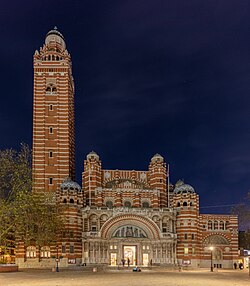
    Standing before you is Westminster Cathedral-a bold and unique sight with its towering striped red-and-white brickwork and the tall campanile to your left, unmistakable among the more traditional-looking London buildings. Now, take a deep breath-and maybe a step back to soak in the vastness, because this is the largest Roman Catholic church in all of England and Wales. The story of Westminster Cathedral is as vibrant as its stripes. Imagine it’s the late 1800s: Catholic life in England is coming out of the shadows, and a grand vision takes root. The land here had a less-than-holy past, once holding the infamous Tothill Fields Bridewell prison! But with Cardinal Wiseman’s dream and his successor Cardinal Manning’s determination, things were about to get divine. When architect John Francis Bentley came on the scene, he dared not follow the usual Gothic trends. Instead, he crafted a neo-Byzantine masterpiece almost entirely from brick, with not a hint of steel reinforcement. Talk about brickwork bravado! The result: a church that looks as though it was imported from Istanbul-or maybe Mars, if Martians love brick stripes. On 29 June 1895, the foundation stone was blessed in pomp and pageantry. Picture a swirling procession of Benedictines, Franciscans, Jesuits, Passionists, Dominicans, Redemptorists-if you were collecting clergy trading cards, you’d have hit the jackpot. Choirs sang out under the open sky, a moment alive with excitement and a bit of nervous tension. Construction finished in 1903, just after Bentley’s death, leaving the new cathedral as his grand final act. The seating inside could swallow up 2,000 people, yet Westminster Cathedral isn’t just enormous; it’s dazzling with colorful marble and mosaics. At the altar, a white marble baldacchino glistens with gold and pearl, held high by columns from as far away as Greece and Norway. The interior is still a work in progress-mosaics have been added over the years, each one telling a new piece of the story. Some sparkle with blues and silvers; others are vibrant and rich. Rumor has it the mosaic committee had more debates than a flock of squabbling pigeons. This holy haven saw Queen Elizabeth II herself visit not once but twice. The first time, in 1977, she admired a flower show. But in 1995, she returned on St Andrew’s Day to actually attend Choral Vespers-in a Roman Catholic service, no less. Even popes have graced this space: Pope John Paul II led a service here in 1982, and Pope Benedict XVI followed suit in 2010. Meanwhile, in 2021, Prime Minister Boris Johnson tied the knot here in a quiet pandemic-era wedding. Now, that’s a venue with range! The building is stuffed with mysteries and odd touches-did you know inside, one of the chapels is decorated almost entirely in a Victorian funereal style? Or that the Stations of the Cross here are regarded as sculptor Eric Gill’s finest work? Then there’s the choir-hidden behind the high altar-singing Renaissance masterpieces in a tradition sparked by Sir Richard Runciman Terry, who once revived whole eras of forgotten music, earning the place the nickname “The Drome.” Fiction has found its way here too: the cathedral survived as the last working church in a dystopian London in the novel "Lord of the World," and its campanile made a cameo in Hitchcock’s "Foreign Correspondent." And if you think the sound inside now is impressive, picture an orchestra of a hundred and a choir of two hundred testing the acoustics shortly after completion. So as you gaze up at those never-ending stripes and the imposing central arch, imagine the thousands of stories-from popes and queens to prisoners and priests-woven into this living, ever-changing shrine. Westminster Cathedral, with its mosaic marvels, echoes of choirboys, and stripes that seem to march up toward the London sky, has found triumph, drama, and a few laughs right here on these hallowed bricks. Exploring the realm of the architecture, mosaics or the music? Feel free to consult the chat section for additional information.

    Open dedicated page →
  3. location_on
    6

    Westminster Chapel

    Buy tour to unlock all 24 tracks
    To spot Westminster Chapel, look for a grand brick building on the corner with a tall square tower and rows of arches and windows-just across from the intersection, its big,…Read moreShow less

    To spot Westminster Chapel, look for a grand brick building on the corner with a tall square tower and rows of arches and windows-just across from the intersection, its big, ornate façade faces the street, so you can’t miss it. Right, you’ve made it to Westminster Chapel! Take a deep breath and soak it all in-the warmth of old brick, the stately arches, and that rather proud, towering steeple that stands like a sentry just off Victoria Street. If the walls could talk, they’d tell you stories echoing all the way back to 1840, when a group of spirited Londoners decided to build a chapel right here on Buckingham Gate. The building you see before you? That’s version two, opened in 1865 because the original just couldn’t fit all the enthusiastic souls squeezing in every Sunday. Imagine the sound of hundreds of footsteps echoing off those stone steps as eager congregants filed in for worship. Back in the 19th century, big hats and bustling carriages outside were the norm. The air was often filled with the clang and clatter of city life, but once you stepped inside, another world awaited-a nearly oval-shaped auditorium, big enough for 1,500 people back in the day, with sweeping galleries as if designed for grand performances. There’s a rather quirky architectural touch: a high platform for the Communion Table and, even higher, a large pulpit-rumor has it, one of the largest pulpits in any church building, perfect for preachers determined to be heard! Over the years, Westminster Chapel saw some rather big characters take charge-among them, Reverend Samuel Martin, who started in the mid-1800s and spent more than three decades in the pulpit, and G. Campbell Morgan, who was so beloved that he actually returned to the chapel twice. They were joined by the likes of John Henry Jowett, and, of course, the famed Martyn Lloyd-Jones, who thundered from that mighty pulpit for nearly thirty years. There’s a bit of drama in the mix too. Under Lloyd-Jones, Westminster Chapel said goodbye to its old Congregational roots and joined forces with the fiery Evangelical Fellowship, imagining itself a prophetic lighthouse for all of London. Right behind you, picture a swirl of church life-students whispering about next week’s Life Group in homes dotted all across the city, and Sunday services brimming with heartfelt singing, spirited prophecy, and sermons aiming not just to inform, but to inspire a whole city. Sometimes, if you listen closely on a Sunday, you can almost hear the distant sound of the pipe organ-a mighty beast built by the legendary Henry Willis, the so-called “Father Willis”-filling the air with beautiful music. It was even expanded in the 1920s, getting bigger to match the chapel’s growing ambitions. But Westminster Chapel isn’t just about Sundays. It’s a hive of life and compassion. Twice a year, it hosts the Alpha course-a very British way to explore the mysteries of life with dinner and deep chat. Meanwhile, the Westminster Foodbank operates from within these historic walls, buzzing with volunteers and visitors alike, handing out hope one bag of groceries at a time. If you wandered in on a weekday, you might meet students planning retreats or preparing laughter-filled events, carrying on a tradition of fellowship that’s nearly two centuries old. Imagine the hum of conversation and the occasional clatter as food parcels are packed. Of course, great chapels attract great thinkers too. In 1958, John Murray himself delivered a lecture here, exploring mysteries like “The Heavenly, Priestly Activity of Christ.” You’d be forgiven for feeling a little awed standing here, knowing the same doors once opened to such voices. This building has style too-Lombard Romanesque Revival, thank you very much. Check out those red and yellowish bricks, the central porch with three arches welcoming all comers, and the tower that reaches skyward, topped by a later addition with a lighter hue, just in case the architects wanted to keep you guessing. Through crises, leadership changes, and sweeping cultural shifts, Westminster Chapel has held to its promise-to be a family, a voice, a beacon. Even today, if you visit on a Sunday morning at 11 o’clock, there’ll be smiles waiting at the door, voices rising in worship, and that ages-old message ringing out: welcome, whoever you are. You’re standing not just in front of a church but in the presence of nearly two centuries of hope, debate, music, and mission-a place where history and heart come together. Now, shall we stroll along and see what the next corner of London has in store? If you're curious about the activities, pastors or the architecture, the chat section below is the perfect place to seek clarification.

    Open dedicated page →
  4. location_on
    7

    Broadway, London

    Buy tour to unlock all 24 tracks
    Look ahead for a giant, cream-colored fortress-like building with tall windows and art deco details that sweeps around the corner, dominating the street-it’s almost impossible to…Read moreShow less

    Look ahead for a giant, cream-colored fortress-like building with tall windows and art deco details that sweeps around the corner, dominating the street-it’s almost impossible to miss as you stand outside on Broadway. Welcome to Broadway! No, not the musical one in New York, but the street in Westminster that’s seen more secrets than a magician’s hat. As you stand here with traffic bustling and Londoners dashing by, picture this stretch as the backstage of British power. Right in front of you, imagine spies slipping in and out of 54 Broadway-that’s where MI6, yes, James Bond’s real-life colleagues, once watched the world through twitching curtains. Not far off, the Metropolitan Police ran the city from New Scotland Yard at number 10. Meanwhile, snooze, and you might walk right past the old hideout for Falkland Islands officials at number 14 or the Equal Opportunities Commission at 36, fighting for fairness with every thump of their gavel (okay, maybe just every click of their pen). There’s even a history of high drama-a car bomb was once defused outside number 1, while chaos broke out elsewhere in London. Broadway is a place where the air buzzes with stories of invention, justice, and the odd dash of cloak-and-dagger mystery. But no need to worry today-the only thing ticking now is the crossing signal! Ready to keep exploring London’s secrets with me?

    Open dedicated page →
  5. location_on
    8

    55 Broadway

    Buy tour to unlock all 24 tracks
    To spot 55 Broadway, look ahead for a huge, pale stone building shaped like a giant cross with a central tower wrapped in tall windows and crowned by a bold clock-you can’t miss…Read moreShow less

    To spot 55 Broadway, look ahead for a huge, pale stone building shaped like a giant cross with a central tower wrapped in tall windows and crowned by a bold clock-you can’t miss it rising above St James’s Park tube station. Now, pause for a moment and imagine London nearly a century ago-no towering glass skyscrapers yet, the air buzzing with trams and the clang of workmen’s tools. Right in front of you, 55 Broadway was unveiled in 1929 and instantly stole the show as the tallest office block in London. Built with crisp Portland stone that gleams grey-white in the city’s moody light, it’s a bit like a grand, jagged wedding cake, stacked and stepped back all the way up to its clock-topped crown. When it opened, it didn’t just get Londoners talking; architect Charles Holden even won a swanky RIBA medal for it-fancy that! But this wasn’t just a pretty face. Designed as headquarters for the Underground Electric Railways Company-yes, the folks who’d eventually bring us the vast London Underground-you can almost feel the heartbeat of London passing right beneath your feet. The ground floor now houses a shopping arcade, sparkling with art deco hints, but back then it was a flurry of London Transport offices, helpful clerks, and even a travel info hub for confused commuters. Don’t forget: the whole building straddles St James’s Park tube station, with its huge wings literally sitting on top of the train tunnels-talk about a building with feet in both worlds! Now, if you notice the shape of the upper floors, like a cross or “cruciform”-no, not just for style points. Charles Holden wanted sunlight to pour into every office. He thought sunlight was good for paperwork-and for keeping grumpy staff at bay! The design became so iconic that it inspired more buildings across the city, including the famous Senate House in Bloomsbury. Let’s add some art to this adventure! If you look up, a bit above the sixth floor, each wall is topped with carved stone reliefs, “the four winds.” Well actually, eight winds-they doubled up! Imagine London’s top avant-garde sculptors of the day, chiseling away at this very stone. On the north and east sides, you’ll find Jacob Epstein’s most infamous work: Day and Night. Back in the 1920s, these modernist sculptures were considered so shocking-let’s just say the figures didn’t leave much to the imagination-that newspapers howled for their removal. The outrage was so fierce, one company director offered to pay for the sculptures to be taken down! It all got so heated that Frank Pick, the company’s boss, even offered to resign. Instead, poor Mr. Epstein, the sculptor, had to shave off a little extra stone from one of the figures-1.5 inches, right from the statue’s manhood-to “tone things down.” Ah, British modesty. For decades, this building was the bustling home of London Transport, and later, Transport for London. Imagine busy office workers in sharp suits darting to and fro and a dining room on the 10th floor-complete with sparkling cutlery, hushed business deals, and four roof gardens boasting some of the freshest city air around. There’s even a story of one garden being dedicated to the wife of a managing director, who lobbied hard for a splash of greenery on high. Then, the winds of change blew. By the 2000s, TfL moved out, and in 2020, it was announced that 55 Broadway would become a luxury hotel. Picture the old boardroom reimagined as a swanky penthouse-a place where you might bump into a reality TV crew filming another episode of Rise and Fall! 55 Broadway stands tall here on Broadway, a quiet sentinel overlooking decades of London’s stories-full of sunlight, secret scandals, and just the occasional bit of well-mannered outrage. So, as you gaze up at those weathered stone towers, remember: sometimes, even the grandest buildings can shock, delight, and change with the times. Shall we wander on and see what other stories Victoria has in store?

    Open dedicated page →
  6. location_on
    9

    Birdcage Walk

    Buy tour to unlock all 24 tracks
    Directly ahead, you’ll spot Birdcage Walk as a long, straight street lined with tall, slender trees on both sides, with black lampposts standing like sentinels along the way-just…Read moreShow less

    Directly ahead, you’ll spot Birdcage Walk as a long, straight street lined with tall, slender trees on both sides, with black lampposts standing like sentinels along the way-just look down the avenue where the branches arch overhead and people stroll under the open sky. Now, as you stand here, imagine you’ve traveled back in time-no noisy cars, just the flutter of wings and the ruffle of feathers on the breeze! Birdcage Walk gets its name from the days when it was home to the royal aviary, filled with exotic birds belonging to none other than the king himself. Picture King James I strutting around, showing off his collection of rare and colorful creatures, or maybe King Charles II, who loved birds so much he made the aviary even grander when St. James’s Park was first laid out. Famous diarists like Samuel Pepys and John Evelyn came to marvel at the sights-think of Pepys, perhaps nervously dodging a parrot’s sharp beak or jumping at the sound of a squawking cockatoo! Back then, only the royal family and the Duke of St Albans, who carried the grand title of Hereditary Grand Falconer (talk about a job with feathers in your cap), could take their carriages down this street. Everyone else had to watch from afar! It wasn’t until 1828 that mere mortals like us were allowed to stroll along here. And don’t get me started on Storey’s Gate-the man it’s named for, Edward Storey, was actually in charge of all the king’s birds! Imagine the pressure if one small budgie flew away… Birdcage Walk has seen runners, too-from Olympians in 2012 to thousands pounding the pavement during the London Marathon each year. So as you look down this tree-lined path, close your eyes for a second and listen: Can you hear the flutter of wings, the echo of royal carriages, and the collective heartbeat of marathon runners from across the centuries? Quite an upgrade from a simple birdcage, wouldn’t you say? Keep your eyes peeled-you never know what kind of history might swoop by next!

    Open dedicated page →
  7. location_on
    10

    Queen Anne's Gate

    Buy tour to unlock all 24 tracks
    Look straight ahead for a symmetrical street lined on both sides by tall, elegant brick townhouses with white window frames and grand doorways-the meticulous, historic Queen…Read moreShow less

    Look straight ahead for a symmetrical street lined on both sides by tall, elegant brick townhouses with white window frames and grand doorways-the meticulous, historic Queen Anne’s Gate is right in front of you! Welcome to Queen Anne’s Gate, a street so stately and storied that it barely needs to close its doors to whispers of secrets from centuries past-yet every one of those splendid doorways along the brick and stucco terraces might just have something to say if you listen closely. Take a deep breath and let these rows of red brick and creamy stonework transport you to the London of powdered wigs and quill pens, when the only thing faster than the carriages rattling over cobblestones was the gossip darting from window to window. The air here is heavy with history-so heavy, in fact, that if you walk slowly enough, you might just bump into a politician chasing after his top hat or an admiral dreaming up new naval tactics over tea! This street owes its grand ambitions to the era of Queen Anne herself, at the turn of the 18th century. Imagine, back in 1704-5, permit was granted to build Queen Square on what later would become the western end of Queen Anne’s Gate, while Park Street took root in the east. For years, these two halves were divided by a wall, stubborn as a pair of rivals in a period drama. The wall wasn’t just any old barrier-it proudly displayed a statue of Queen Anne herself, carved from solid Portland stone and still with us today. In 1874, the wall came tumbling down and the two streets united in name and fortune, thanks to a bit of Victorian urban planning and, I like to think, a neighborly handshake or two. Look around, and you’re seeing what some experts have called “the best of their kind in London.” That’s right-architectural heavyweights Simon Bradley and Nikolaus Pevsner insisted that the early 18th-century houses here were unmatched, not just for their “insistent verticality”-meaning their tall, elegant look-but also for those fabulous doorways, intricately carved with foliage and mysterious figureheads. I like to imagine what those figures would say if they could speak. “Did you see who moved in at number 16? Oh, the naval secrets!” Life on Queen Anne’s Gate has always been a parade of powerful and peculiar characters. At number 20, for example, Lord Palmerston was born-the man who’d go on to become Palmerston the Prime Minister, no less! And just across the way, Sir Edward Grey, the Foreign Secretary when World War I broke out, called number 3 his home, probably pacing those wooden floors as he thought deeply about peace and war. Lord Haldane, a key Cabinet member and champion for army reform, lounged at number 28. And if philosophers are more your type, John Stuart Mill-the thinker who practically invented modern liberalism-lived at number 40. Can you smell the debates wafting through the air? Perhaps with a hint of pipe tobacco. But wait, this is also the street of spies and adventure. Mansfield Smith-Cumming, founder of MI6, had his headquarters right here at number 21. Rumor has it there once was a secret tunnel leading from his house-imagine all those hush-hush meetings and code words being whispered under the very pavement you’re standing on. And if you fancy a bit of naval heroics, Admiral “Jacky” Fisher, the visionary behind Britain’s modern navy, lived at number 16. There’s even a blue plaque reminding you just who used to hatch world-changing plans in these stately rooms. Not every story here is about government or intrigue, though. For a while, number 26 was home to a certain rock star-yes, Sting and his partner Trudie Styler-proof that this street doesn’t just belong to the history books. And at number 34, St Stephen’s Club welcomed members with grand dining rooms and even grander scandals. Of course, Queen Anne’s Gate changed with the times. Its private chapel at number 50 morphed over the years from a place of prayer, to a school, to a police institute, and then to offices-before eventually making way for the shiny glass of the Ministry of Justice. As with all of London, reinvention is as much a tradition as any stone or statue. So as you stand here on this distinguished boulevard, look up at all those towering windows and elaborate doorways. Picture the great and the good rushing out to Parliament, philosophers pausing to ponder in the sunlight, spies ducking into the shadows, and a rock star hurrying in before the paparazzi spot him. Queen Anne’s Gate isn’t just a street-it’s the spine of a living novel, with every house a new chapter. And who knows? You might just catch a whisper from one of its past residents as you stroll on by.

    Open dedicated page →
  8. location_on
    11

    Methodist Central Hall, Westminster

    Buy tour to unlock all 24 tracks
    To spot Methodist Central Hall Westminster, look for the enormous domed roof crowned with a golden orb and lantern, rising above a grand, ornate stone facade directly across from…Read moreShow less

    To spot Methodist Central Hall Westminster, look for the enormous domed roof crowned with a golden orb and lantern, rising above a grand, ornate stone facade directly across from Westminster Abbey. Now, as you stand here, let me take you on a whirlwind through Methodist Central Hall’s extraordinary past. Imagine bustling London around 1910: horse-drawn carts clattering by, the fresh scent of coal smoke in the air, and right here, blueprints for a towering dream. Funded by the "Million Guinea Fund"-yes, that’s a million guineas from a million Methodists-the building rose where the Royal Aquarium and Imperial Theatre once stood, replacing music halls and laughter with purpose and vision. The idea was simple but bold: Why not build a place for prayer, for protest, for parties, for pretty much anything that helped make the world a better place? A “roof for open-air preaching,” they said, but what a roof! If roofs could talk, this one would sing. Just picture the original plans: two small towers facing the Abbey, never built-apparently, some locals thought they’d show up poor Nicholas Hawksmoor’s famous towers just next door. At least nobody started a flat-pack furniture war over it! Instead, what we got in 1911 is a mighty stone shell draped in baroque flair and topped by a dome so big, it’s only the second largest of its type in the world. Step close and you’ll see angels in the spandrels, carved by Henry Poole, gazing down-maybe to keep everyone in line, maybe just because they liked the view of Tothill Street. This place isn’t just pretty, though-it’s lived multiple lives. Step through the history and you’ll hear echoes of debate and drama. In 1914, suffragettes gathered here, their voices rising under the arches, demanding the right to vote. In 1946, the world watched as the very first United Nations General Assembly filled the hall. Imagine translation headphones, the low hum of delegates from around the earth, and a promise of peace hovering in the air like dust in sunlight. In fact, to thank the Methodists, the UN repainted this place in gentle blue-a peaceful color for a world that needed a breather. Music’s had a spot in the action, too-Andrew Lloyd Webber’s Joseph and the Amazing Technicolor Dreamcoat had its first ever public show here! Picture a young Webber family on stage: Andrew, his father at the organ, his brother Julian with the cello, piano keys tinkling as the air vibrates with hopeful applause. Oh, and let’s not forget football: the Jules Rimet Trophy, the FIFA World Cup, was nabbed right from under everyone’s noses in 1966-gone for a thrilling, mysterious seven days before reappearing, the culprit never caught. Clearly, football fever isn’t just for the pitch. Politicians, campaigners, and even the occasional world leader have paced these halls. Gandhi, Winnie Mandela, and Mikhail Gorbachev all sent their words echoing off those cavernous walls. Sometimes, the debates were less about peace and more about policy-the Central Hall’s seen everything from railway crash inquiries to the controversial “Halt Immigration Now!” rally. If these stone walls could gossip, what stories they’d tell! There’s more: from its role as a Methodist spiritual heart to its cameo in the film Suffragette, from art gallery to conference centre to occasional source of Methodist nervousness (just imagine the fuss when it applied for a license to serve alcohol in 2005!), the Methodist Central Hall has always stood proudly at the crossroads-not just of Tothill Street and Storeys Gate, but of faith, politics, music, and social change. So give that great dome a good look and hear the buzz of a thousand meetings, the sighs of artists and activists, and maybe, just maybe, the faint echo of a football crowd or a suffragette’s battle cry. What a roof! And what a fantastic place to stand, whether you’re here for a conference, a service, or just to take in history from the very stones under your feet.

    Open dedicated page →
  9. location_on
    12

    Dean's Yard

    Buy tour to unlock all 24 tracks
    To spot Dean’s Yard, look straight ahead for a large, open, grassy quadrangle surrounded by historic stone school buildings, with students lounging and playing games on the…Read moreShow less

    To spot Dean’s Yard, look straight ahead for a large, open, grassy quadrangle surrounded by historic stone school buildings, with students lounging and playing games on the lawn. Welcome to Dean’s Yard-imagine you’re standing in the middle of a peaceful green oasis, shielded from the bustle of central London, where the shouts of schoolboys and the click-clack of footballs fill the air. You might hear laughter echoing off the weathered walls of Westminster School’s historic buildings, see clusters of students sprawled out reading, or even witness an impromptu match that could rival the Premier League-after all, these folks claim they invented the modern game! But this spot is much older than any playground-it's a surviving piece of the ancient precincts that once sprawled around Westminster Abbey. Centuries ago, this yard was much smaller, cramped next to dormitories and granaries (think Hogwarts with stricter house rules). Imagine the smell of stored grain mixing with the whisper of ancient secrets as monks carried out their daily tasks. Look around: to the south, Church House stands-a respectable conference center today, but once held up by stones that bore witness to centuries of schoolboy mischief and churchly wrangling. East and west, more school buildings, past and present, with the Choir School's voices sometimes drifting through the air. To the north, just through that flanking archway, you’re steps from the Abbey’s offices and the Deanery, which once kept more order than a strict headmaster. Speaking of order, this yard was once a literal sanctuary-if you were in trouble with the law, dashing into these grounds could save your skin! Some who escaped in here weren’t just dodging school detentions-think fugitives, outlaws, and those on the run from a very stern judge. The Abbot had his own prison, and so did the city constables-imagine what dinnertime must’ve been like, with those two rival lock-ups just meters apart. Even Charles II had to smooth things over here after a bailiff harassed a scholar’s friend. The King’s pardon is proudly displayed inside Westminster School, proof that justice in Dean’s Yard could be wild and unpredictable. And if you wandered a little north, you’d find Thieving Lane, where thieves were marched straight to jail-no chance for a last-minute sanctuary plea! So drink in the atmosphere. Dean’s Yard is not just a green quad; it's a stage for hundreds of years of drama-full of games, whispers of old sanctuary laws, royal pardons, and perhaps a lingering ghost or two waiting for the next match to kick off. Now, shall we press on and see what other stories the streets of Victoria hold?

    Open dedicated page →
  10. location_on
    13

    Dean's Yard

    Buy tour to unlock all 24 tracks
    Look for an open courtyard surrounded by charming brick buildings and leafy trees, with a grand stone archway in front of you, and a tall Gothic tower rising in the…Read moreShow less

    Look for an open courtyard surrounded by charming brick buildings and leafy trees, with a grand stone archway in front of you, and a tall Gothic tower rising in the background-you're standing right at Little Dean's Yard. Alright, time to let your imagination travel back in time! Picture yourself standing where monks once hurried about in their long robes, and where some of the cleverest schoolchildren in England have tried, for centuries, to sneak an extra treat from the tuck shop. This is no ordinary yard-this is the beating heart of Westminster School, tucked away from the busy London streets. Feel the coolness of the old stone beneath your feet. That stone path running through the middle? It marks the original way monks used to march from their dormitories to their prayers-back before the yard was paved. The entrance you just passed through was actually once the monks’ bathroom! Don’t worry, it’s much more dignified now, with its elegant stone arch designed by Lord Burlington. Once, if you dared to look closely at the bricks on the north side, you’d see scratches and grooves-left behind by generations of mischievous students, scraping their coins while waiting for sweets. On the east, peer over towards College Garden. Hard to believe, but it’s the oldest cultivated garden in all of England, once the medicine and herb patch for sickly monks. If you’re up for a ghost story, imagine the shadows of ancient monks in the so-called "Dark Cloister" nearby, that mysterious archway that leads to the Abbey and the school’s gym-where the echoes of history meet the bounce of a football. And there’s Ashburnham House, crafted by Chippy Jones-okay, his proper name was Inigo, but with a name like that, you know he brought a bit of artistic flair! And don’t miss those elegant Georgian buildings on the south, home to staff and lucky students. Even Christopher Wren, the superstar architect, got involved here-though, in a classic twist, his design was rejected for the College, and Lord Burlington, ever so polite, got the job. Standing here, you’re surrounded by centuries of secret schoolboy plotting, brilliant minds, and a dash of daring mischief-a little mystery, a little magic, and a whole lot of history, all in one quiet corner of London.

    Open dedicated page →
  11. Poets' Corner
    14

    Poets' Corner

    Buy tour to unlock all 24 tracks
    Right in front of you, you’ll see a stone wall filled with beautifully carved busts and monuments of famous poets-just look for the striking, life-sized sculpture of William…Read moreShow less

    Right in front of you, you’ll see a stone wall filled with beautifully carved busts and monuments of famous poets-just look for the striking, life-sized sculpture of William Shakespeare, surrounded by other literary legends, to spot Poets’ Corner! Welcome to the legendary Poets’ Corner, one of the most storied spots inside Westminster Abbey! Let’s imagine we’re opening an ancient book, each page rustling with stories of wit, glory, and, occasionally, a little scandal. The stone around you almost seems to whisper with voices from the past. Back in 1400, the first resident of Poets’ Corner wasn’t buried here for being a famous writer-no, Geoffrey Chaucer, the father of English poetry, actually got his spot because he was Clerk of Works for the Palace of Westminster. Turns out, sometimes it’s not what you write, but who you know! It wasn’t until 1556 that Chaucer’s remains were moved and an impressive tomb was crafted by Nicholas Brigham, planting the seed for a tradition that would bloom across centuries. Soon after, in 1599, Edmund Spenser-another poetic superstar-joined the literary neighborhood, and from there, burial or commemoration in this little nook became the highest honor for those who have shaped British culture with nothing but ink and imagination. But don’t think every famous writer found an easy welcome. Take Lord Byron, who wowed the world with his poetry and shocked it with his wild lifestyle. He died in 1824, yet his memorial didn’t appear until 1969-talk about making a grand entrance, fashionably late! Then there’s Shakespeare, the Bard himself: buried far away in Stratford-upon-Avon in 1616, but finally immortalized here with a monument over a century later in 1740. Sometimes, even the greatest must wait their turn! But it was never just poets-some deans, canons, and even the legendary Thomas Parr (said to have lived to 152!) lie nearby, their stories tangled among the literary giants. Not everybody wanted the honor of a stone inscription, though. Samuel Butler’s epitaph, written by Samuel Wesley, pokes a little fun at the whole thing-proof that even death can have a sense of humor. Still, a few, like actress Kitty Clive, were denied a spot. One Dean of Westminster famously grumbled that if they let every dramatist in, the Abbey would become a “Gothic Green Room!” I suppose even literary fame can be a bit dramatic. As you look around, you’ll see that memorials come in every shape and size: some are simple stone slabs on the floor, carved with a beloved name; others are grand, like Shakespeare’s statue, or elegant tablets and busts. There are even group tributes, like the joint memorial for the Brontë sisters-commissioned in 1939 but unveiled almost a decade later thanks to a certain world war. Space is precious here, so when they began running out of floor and wall, it was time for a creative twist. Now, a stained glass window keeps the tradition alive, each pane holding a name-so far, only six have been inscribed, with room for more storytellers yet to come. In 2010, Elizabeth Gaskell took her place in the glass, ensuring that the corner keeps growing, quietly and beautifully. And don’t overlook the memorial stone to the sixteen poets of the First World War. Unveiled on Armistice Day in 1985, etched with the haunting words of Wilfred Owen: “My subject is War, and the pity of War. The Poetry is in the pity.” It’s a powerful reminder that in every age, poetry gives voice to those who might be lost to time. There are a few quirks, too-Ben Jonson, another legend, requested only an “eighteen inch square” for a grave, and so was buried upright elsewhere in the Abbey. His memorial still found its way here, though: “O Rare Ben Johnson,” it reads-not bad for a man standing up in his own grave! Sometimes, wall tablets have even been moved just to discover hidden medieval paintings beneath. As you stand among these stone legends, imagine the gatherings: authors debating over tea, actors reciting verses, the very air buzzing with inspiration and mischief. Here, you don’t just see history-you feel it all around you, a living web of stories in stone. And remember, every time a new name is added, the Abbey throws a little ceremony with readings and laughter-because stories, after all, are meant to be shared. If you listen closely, maybe you’ll catch a bit of poetic magic lingering on the air. Now, don’t get stage fright-onward to our next stop! Exploring the realm of the memorial types, burials or the royal ballet? Feel free to consult the chat section for additional information.

    Open dedicated page →
  12. Westminster Abbey
    15

    Westminster Abbey

    Buy tour to unlock all 24 tracks
    Across the street, towering above the crowds, you can spot Westminster Abbey by its two grand, pointy-topped towers and the endless rows of stone statues and carvings that greet…Read moreShow less

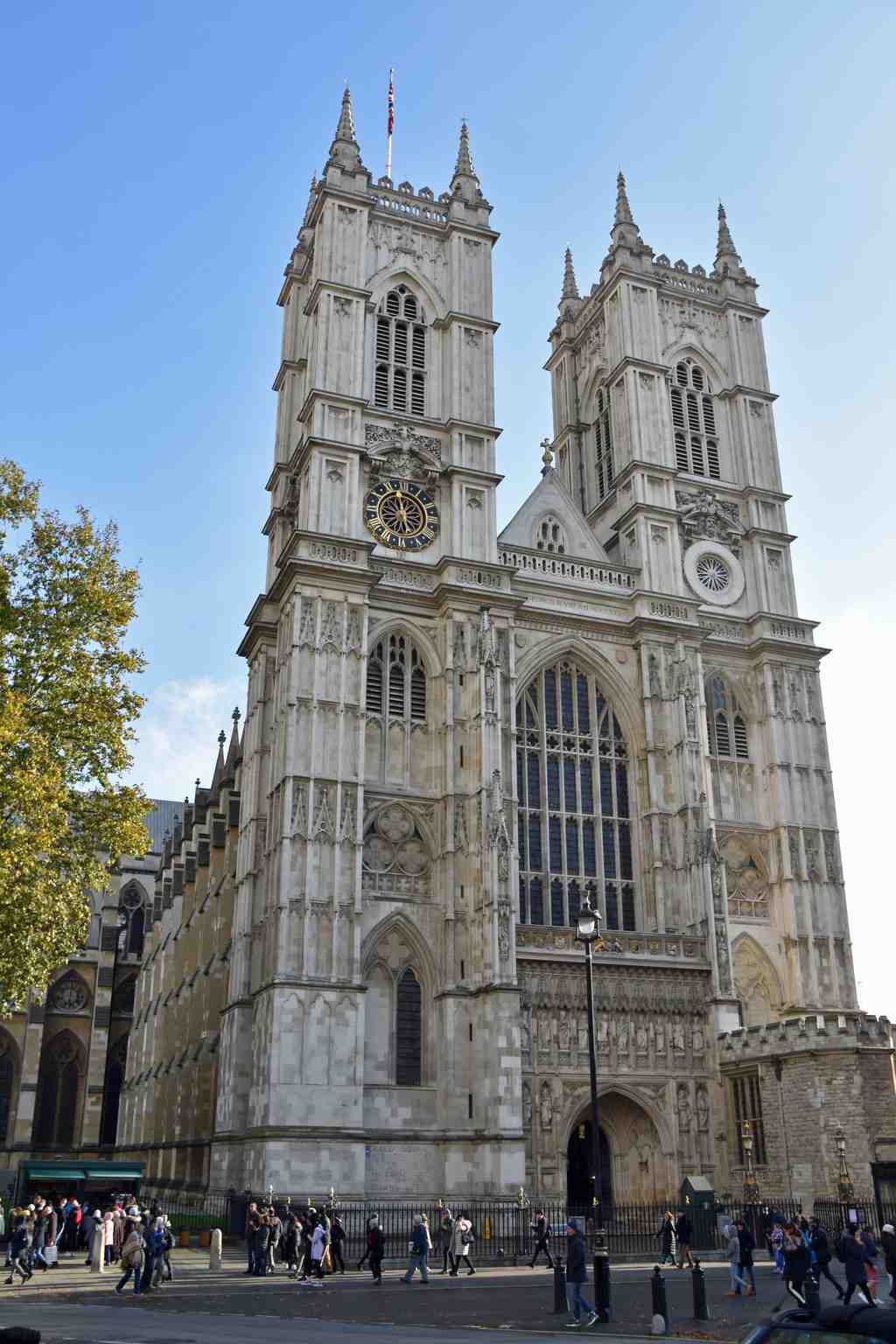
    Across the street, towering above the crowds, you can spot Westminster Abbey by its two grand, pointy-topped towers and the endless rows of stone statues and carvings that greet you above the main doors. Here you stand before one of the most legendary buildings in all of London-Westminster Abbey! Picture yourself as a humble visitor hundreds of years ago, gazing up at stone towers so tall you’d have to crane your neck to see the fluttering Union Jack at the top. This place is not just a church; it’s the beating heart of British history, a stage for kings, queens, musicians, poets, and, well, the odd politician or two! The Abbey has been at the center of royal life since 1066. Kings and queens have come here, nervous and excited, to be crowned, to marry, and sometimes, to be buried for eternity. In fact, eighteen monarchs are here still. There's something magical in knowing that, from William the Conqueror to Queen Elizabeth II, the greatest and most infamous rulers have all had their big royal moments just beyond these heavy wooden doors. But it wasn’t always this grand. Imagine wandering here in the mist 1,000 years ago, when the Abbey’s origins were a bit of a mystery-a few monks, some simple buildings, and at least one legend about a fisherman and a vision of Saint Peter! The story goes, that’s why Thames fishermen would bring a tasty salmon each year, as thanks for their good luck. “Here’s your salmon, good sirs!” You can almost smell the river and wet stone. The first impressive version of the church was built by Edward the Confessor, who is buried inside. Out of love for Saint Peter-and the hope he’d be remembered-Edward ordered it to be England’s finest stone building. But the Abbey you see today started in the 13th century, when King Henry III decided he wanted something bigger, grander, and oh-so-Gothic. He poured in more money than you can imagine, and the result became the true jewel you see now, its arches reaching toward the heavens, pointed like clasped hands in prayer. The Abbey became the scene of wondrous events and a few dramatic mishaps. Imagine men in dusty clothes, stonecutters and glaziers by the hundreds, working day in and day out, sometimes even arguing over which saint was luckiest. Later kings finished what Henry started, adding more naves, chapels, and towers (because why let the French have the prettiest cathedrals?). And when Henry VII wanted a show-stopping tomb, he built a vast, glittering chapel at the east end that a famous writer described as “the wonder of the world.” The Abbey is a storeroom of stories, like a huge diary carved in stone. During the wild days of the Reformation, monks raced to hide sacred bones and treasures before Henry VIII’s men could take them away. Relics were smuggled, and statues melted down for gold. The Abbey even became a cathedral for a moment and then, with a swirl of royal drama, ended up as what it is today-a “royal peculiar,” answerable only to the king or queen, not the bishop. Look closely and you might spot ancient scars-fire damage from World War II when bombs shook the night and flames tore the roof away. But like a stubborn old lion, the Abbey survived. Today, it is protected as a UNESCO World Heritage Site, visited by millions, and still used for royal weddings, coronations, and funerals. Step inside, and your footsteps may echo next to authors like Charles Dickens, soldiers from long-forgotten wars, kings, queens, and the mysterious Unknown Warrior, who lies under a slab of black marble with poppies scattered in his honor every year. Did you know over 3,300 famous souls are buried here, from Isaac Newton and Stephen Hawking to composers, poets, and politicians? Someone once called it a “National Valhalla”-Britain’s very own hall of heroes. So, pause for a moment here on the street, take in the sharp spires, the detailed statues, and the windows that have watched over so much. Imagine all the voices, music, laughter, and solemn prayers that have filled this space for nearly a thousand years. Westminster Abbey isn’t just a building; it’s the memory of a nation, wrapped in stone and whispering its stories across the centuries. For further insights on the architecture, artworks and treasures or the burials and memorials, feel free to navigate to the chat section below and inquire.

    Open dedicated page →
  13. Royal Institution of Chartered Surveyors
    16

    Royal Institution of Chartered Surveyors

    Buy tour to unlock all 24 tracks
    To spot the Royal Institution of Chartered Surveyors, look for a grand red and cream-bricked building with large arched windows and three bold purple flags labeled "RICS" waving…Read moreShow less

    To spot the Royal Institution of Chartered Surveyors, look for a grand red and cream-bricked building with large arched windows and three bold purple flags labeled "RICS" waving proudly out front, just beyond the leafy branches overhead. Alright, let’s dive into the curious world of RICS, right here where London’s ambition and history collide! Imagine you’re standing on these cobbled street edges in 1868, horse-drawn carriages rattling by as 49 determined surveyors gather at the Westminster Palace Hotel nearby. They are fed up with chaos in land, property, and construction-wages disputed, boundaries blurred, and not a decent ruler between them! Their solution? To create a society devoted to setting things straight-literally and figuratively. Thus, the Institution of Surveyors was born, with John Clutton as its very first president (and fun fact, he founded Cluttons, the property firm still around today). Back then, surveyors were a quirky breed: part scientist, part diplomat, and part detective, sniffing out the secrets of land deals and building plans. Fast-forward to 1881-Queen Victoria approves, and they’re granted a Royal Charter. Imagine the celebratory toasts echoing in these very halls! The group took up headquarters right here at Great George Street, drawn up under this rather stately brickwork, as Victorian London bustled all around. By 1947, after earning the grand-sounding title of Royal Institution of Chartered Surveyors, RICS was officially royal-complete with a coat of arms in 1967. With a shield of blue and silver, you half expect a surveying knight to pop out and challenge someone to a duel over square footage. RICS became a lighthouse for professional standards, guiding thousands of surveyors in land, construction, property, and real estate management. These folks don’t just count bricks; they shape the physical world! Over the decades, RICS didn’t just stop at UK borders. Today, with over 113,000 members spanning nearly 150 countries and regional offices as far as Hong Kong, Australia, and Brazil, this once-cozy London club became a global force-setting the gold standard for measuring everything from skyscrapers to tiny terraces. In partnership with giants like the UN and World Bank, RICS tackled questions like: "How do we measure office space fairly in Moscow and Mumbai-without anyone arguing over who gets the corner window?" Their answer? International property measurement standards! (Honestly, it’s more thrilling than it sounds.) Of course, not everything here has been as smooth as polished marble. In recent years, the clattering of footsteps in these corridors wasn’t just surveyors at work-there was drama! Governance scandals rocked the upper floors. Reports went missing, directors were ousted, and a crisis of confidence led to the resignations of the entire top brass in 2021. Picture a boardroom filled with tense faces and spilt tea while the world’s property professionals nervously checked their inboxes. But, just as any wise surveyor would do, RICS called for new blueprints: sweeping reforms, more transparency, and a focus on serving both members and the public. An overhaul was demanded, and in 2022, a thorough review declared it’s time for transformation-no more dusty traditions slowing them down! Throughout all this, RICS has never lost its sense of service. From championing apprenticeships for young surveyors, offering guidance on everything from pub valuations to climate-friendly building standards, to supporting Lionheart, its charitable fund for surveyors in need, this institution is much more than brick and stone. Standing here, you’re on the front line of global progress-the place where rules for the world’s most valuable assets are shaped and challenged every year. So next time you see an estate agent arguing about ‘valuation methodology,’ give them a wink. They’re carrying on a tradition started by a handful of clever Victorians right here-just, hopefully, with fewer moustaches. Ready to take stock of the next landmark? Let’s keep wandering through this neighborhood of ambition, innovation, and occasionally, a bit of British drama. For further insights on the coat of arms, membership or the governance, feel free to navigate to the chat section below and inquire.

    Open dedicated page →
  14. The Supreme Court of the United Kingdom
    17

    The Supreme Court of the United Kingdom

    Buy tour to unlock all 24 tracks
    Take a look behind you… no, not at the squirrel trying to steal someone’s biscuit! I mean this grand, imposing structure right before you: the Supreme Court of the United Kingdom.…Read moreShow less

    Take a look behind you… no, not at the squirrel trying to steal someone’s biscuit! I mean this grand, imposing structure right before you: the Supreme Court of the United Kingdom. Right now, you’re standing outside Middlesex Guildhall, in the heart of Westminster, where the country’s most important legal battles are waged-not with swords and shields, but with sharp wits and eloquent barristers. Picture this: a chilly autumn morning in 2009, Parliament Square bustling with tourists and civil servants, when, with a flourish of legal paperwork rather than a royal trumpet fanfare, the Supreme Court officially opened its doors. For centuries, the highest legal decisions were made inside the House of Lords-which meant the judges, then known as “Law Lords,” were crouched on the legislative side of the fence. It was all together a bit cozy-too cozy, in fact. Lawmakers were lawmakers, but they also played umpire on the rules they’d written. It was a bit like asking the chef to write the review for his own cooking! But the call for true independence-justice for justice’s sake-grew too loud to ignore. Enter the mighty Supreme Court: a separate, transparent, publicly accessible body ready to lay down the law, and even pose for the occasional selfie with a gawking tourist out front. The building you see was once the Middlesex Quarter Sessions House, where local criminals were handed their fate. Then it was turned into a Crown Court. In classic British fashion, the old council chamber became the biggest courtroom. So, even though the matters debated inside might seem larger than life, don’t be surprised if the biggest echo in there still belongs to an aged wooden floorboard. Today, the Supreme Court is the final destination for civil cases across the UK-whether the dispute started in Scotland, Wales, England, or Northern Ireland. It even deals with the trickiest criminal cases from most of those lands, and if you listen closely, you might hear the distant sound of legal bickering drifting in from Edinburgh or Cardiff. Giving everyone a fair crack at justice, the Supreme Court brings together twelve justices-judges hailing from across the four nations. Imagine the most formal family reunion, with each member fiercely defending their home’s traditions! But remember: Britain doesn’t have a written constitution like the United States or India, where judges can tear up laws. Here, Parliament’s word is law-Supreme Court justices can’t overturn what lawmakers decide. They can, however, give a stern look and declare when something seems incompatible with human rights. Think of it as your granny telling you off for not washing your hands. They can’t force you, but you’d be silly not to listen! And oh, the cases they’ve seen! From government secrets to historic showdowns: like HM Treasury v Ahmed, the very first case in 2009, all about the mysterious powers Parliament handed to government ministers. Fast forward to the famous Miller/Cherry case in 2019, which had to do with Boris Johnson’s eyebrow-raising decision to suspend Parliament before Brexit. There were eleven justices hearing arguments that could make even the best legal minds break a sweat, and somewhere in the air you could almost feel the tension snap like a rubber band. They’ve even settled issues close to the national heart. In 2022, the court ruled that Scotland couldn’t call a new independence referendum without Westminster’s blessing-a decision that sent shockwaves through political circles and proved that even in the land of bagpipes and shortbread, the law of London reigns supreme. A final flourish-this court’s exquisite badge! It’s not just a symbol, but a story: the Greek omega for finality, the Libra scales for justice, and flowers for all the UK’s corners-a rose for England, leek for Wales, flax for Northern Ireland, and a thistle for Scotland. And don’t forget those special carpets designed by Sir Peter Blake-yes, that’s the mastermind behind The Beatles’ Sgt. Pepper album cover! Imagine crossing the threshold here and treading on a piece of pop-art history. So, as you stand here, imagine the weight of decisions shaping millions of lives, the quiet drama within those walls, and the ongoing dialogue between law and democracy. And don’t worry, you don’t have to wear a wig-but if you fancy yourself a future Supreme Court justice, you may want to practice your “serious face.” Just try not to trip on the ancient steps! Seeking more information about the jurisdiction and powers, panels and sittings or the administration? Ask away in the chat section and I'll fill you in.

    Open dedicated page →
  15. location_on
    18

    Jewel Tower

    Buy tour to unlock all 24 tracks
    To spot the Jewel Tower, just look for a tall, sturdy, three-storey stone building with rugged walls and arched windows standing on its own-you’ll see it framed by the remains of…Read moreShow less

    To spot the Jewel Tower, just look for a tall, sturdy, three-storey stone building with rugged walls and arched windows standing on its own-you’ll see it framed by the remains of an old moat, with a flag poking up from the roof. Alright, imagine yourself back in the shadowy corners of medieval London. It’s the year 1366, and this squat stone tower before you is brand new, fresh out of the royal planner’s book-built for King Edward III’s most glittering and personal treasures! Now, in those times, kings didn’t just stash their expensive plates and sparkling jewels for show; Edward used his treasures almost like a savings account-one ornate plate to fund a war, a golden goblet as a political bribe, maybe the odd jewel for a royal “I’m sorry.” And here’s the twist: the tower was hidden away in the most private area of the Palace of Westminster, hemmed in by a moat directly linked to the River Thames. Picture a team of nearly two dozen stonemasons, plus carpenters and workers, unloading boat after boat of stone, timber, tiles, and enough locks to make any medieval locksmith blush. All this for a stone vault so fancy that a historian called it “an architectural masterpiece.” Picture the air cool and slightly damp, with the faint, musty tang of old stone and river water. For nearly 150 years, it was like the king’s secret safe, closely guarded by the Privy Wardrobe-an elite crew whose job was to guard, log, and deliver the king’s favorite bits and bobs, whether to a faraway battlefield or a dinner table in Westminster. When Henry VIII’s court moved to Whitehall after a fire, the tower’s glory dimmed. But don’t feel too badly for the old Jewel Tower-the monarchy still used it as a high-class storage closet, stashing everything from royal chess sets to linen, and, I kid you not, walking sticks. It became a “lost and found” of royal oddities. As centuries turned, the tower’s role shifted. The House of Lords realized, perhaps with a sigh, that they had far too many documents to keep track of, so the Jewel Tower became a record office-think of it as the world’s oldest filing cabinet. Extensive renovations followed; iron doors were installed, and brick vaulting lined the rooms, all to protect against the ever-present threat of fire. You know bureaucrats take their paperwork seriously when they spend more on security than on the royal linens! The tower wore many hats in its time. Once, it even doubled as the home of the parliamentary clerk, who no doubt spent chilly winters huddled next to a freshly added fireplace, paperwork stacked higher than the turkey at Christmas. By the 18th century, the tower had split into different zones, with new windows punched through by less-adventurous renovators and stone ceilings installed to keep the records safe-even if the moat was now more mud than monster. Fast forward to the 19th century and the tower’s neighbors disappeared beneath urban expansion. Remarkably, the Jewel Tower avoided being toasted twice when in 1834 most of the Palace of Westminster burned down; the thick-walled little vault weathered the flames far better than a marshmallow at a campfire. From then on, people mistook it for having housed the actual Crown Jewels-oops, wrong “jewels”, but who could blame them? In the Victorian era, the tower took on the role of keeper of weights and measures. Imagine scientists bustling through, carefully weighing glass vials, comparing yardsticks, and testing scales-until London’s increasing traffic had the whole building quaking like jelly on a carriage ride. The 20th century brought bombs and bureaucracy. An incendiary device during World War II caused major roof damage, but postwar caretakers saw to its restoration, mixing old with new and making the tower safe for curious modern adventurers like you. It finally opened its doors to visitors, and all the awkward houses and stables that had swallowed it up over time were knocked down to reveal this stoic medieval survivor. Even the moat was briefly filled again-for old time’s sake. Inside, the thick walls still whisper of its shifting purposes-from treasure chest to government strongbox, from scientific lab to historic museum. Today, you’ll find the rooms filled with stories from the past, historic measuring cups, medieval carvings, even an Iron Age sword. The Jewel Tower may be small, but it has survived fires, floods, political chaos, and London traffic-earning its place as one of Westminster’s oldest and toughest “hidden gems”-pun entirely intended! And just think, you never know what secrets lie behind these thick stone walls…or how many locks Edward III would approve of!

    Open dedicated page →
  16. Sinfonia Smith Square
    19

    Sinfonia Smith Square

    Buy tour to unlock all 24 tracks
    To spot Smith Square, look straight ahead at the open square surrounded by elegant, old brick buildings with tall windows, some of which have cars parked right in front and the…Read moreShow less

    To spot Smith Square, look straight ahead at the open square surrounded by elegant, old brick buildings with tall windows, some of which have cars parked right in front and the spires of Westminster peeking up behind. Now, let’s step right into the heart of political London-Smith Square! Take a deep breath; you might just inhale centuries of scheming, secret deals, and a whiff of very posh coffee. This quiet looking square, tucked just 250 metres from the Palace of Westminster, is anything but dull. It’s been home to political parties, powerful lobbyists, and even a few daring dreams. Most of the time, your eyes will be caught by St John’s, Smith Square, a striking Baroque church that dominates the centre. But don’t be fooled-inside, it’s no longer where people came to say their prayers (unless, perhaps, they were praying for a concert ticket). The church is now an incredible concert hall, and sometimes, if you’re lucky, you can hear the faint notes of a cello escaping through its walls. Walk a little slower. Feel how everything here almost whispers its secrets. Offices all around the square have housed some of the most powerful movers and shakers in Britain-folks who wanted to influence policies, shape laws, or occasionally just find the best seat near the window. Back in the 20th century, Smith Square was the beating heart of British politics. Imagine the Labour Party and Conservative Party, side by side, their headquarters filled with people dashing from room to room, plotting the next big win (or frantic excuse for a loss). You could almost hear the muffled shouts and typewriters clacking through the brick walls. Look to Number 1. Sir John Smith, a true-blue Conservative MP, called this place home. Fancy neighbors! But number 5 has a tale a touch darker and a lot more dramatic-William Thomas Stead, a journalist with nerves of steel, lived here before meeting his end on the Titanic. Yes, you heard right: Titanic. Smith Square wasn’t always kind to its dreamers. Head to Number 36 and imagine the wildest, most glamorous Art Deco party-the house there was designed by Sir Edwin Lutyens and has been called one of London’s most important Art Deco interiors. Rumor has it, a sculpture named “Scandal” once caused as much gossip as any politician inside these walls. So soak up the atmosphere, enjoy this oasis of political drama and jazzy history, because in Smith Square, if these bricks could talk, you’d never hear the end of it. Ready for the last stop? Let’s waltz over to Smith Square Hall!

    Open dedicated page →
  17. Sinfonia Smith Square
    20

    Sinfonia Smith Square

    Buy tour to unlock all 24 tracks
    Right ahead of you, looming at the end of Smith Square, you'll spot an impressive Baroque building with four tall corner towers that spring up like the feet of a giant marble…Read moreShow less

    Right ahead of you, looming at the end of Smith Square, you'll spot an impressive Baroque building with four tall corner towers that spring up like the feet of a giant marble table-just look straight towards the grand steps and the cluster of white pillars under a forest of skinny trees. Now, take a good look at Smith Square Hall, though not long ago folks around here would’ve called it St John’s Smith Square. Don’t let its stately columns and dignified towers fool you: its story is packed with quirks, catastrophes, and a knack for transformation that would make any magician jealous. Our tale kicks off in the early 1700s, back when London church politics were almost as dramatic as its theatre scene. The Whigs, who’d been running things for years, got booted out by the Tories-who were so alarmed at the “Church in Danger!” they rallied Parliament to build fifty new churches to save the city’s soul. And what better way to fund such piety? Why, by taxing coal coming into London. So every warm London fireplace helped pay for this building and its kin. Enter Thomas Archer-the sort of architect who didn’t get his start on blueprints, but rather by hob-nobbing with royalty. A well-mannered gent with a hefty fortune, Archer was better known in courtly circles, reportedly even running the gambling at Queen Anne’s court. But what really sets this building apart is its completely bonkers origin story. Legend has it, Archer went to Queen Anne herself to ask what she wanted her new church to look like. Possibly fed up, the Queen simply upended her footstool and snapped, “Like that!”-leaving Archer to dream up a church with four great towers at the corners, just like the legs of the Queen’s flipped footstool. It’s not just a witty story-locals started calling it “Queen Anne’s Footstool,” and gawkers throughout history have been equal parts amused and confused. Novelist Charles Dickens memorably described it as a “petrified monster... on its back with its legs in the air.” Some might say it’s out of place in this cozy square of red-brick and white-windowed houses, but that’s half its charm-its baroque swagger challenges you to a stare-down from every angle. Of course, the building’s life as a church was anything but peaceful. The interior was gutted by fire in 1742, struck by lightning in 1773, and by 1815 its towers needed serious shoring up. And then came World War II: on a single night in May 1941, firebombs rained down and turned the church into a ghostly shell open to the sky. Want a chill? There’s even a handwritten account of that fateful night hanging inside-scribbled memories of chaos, smoke, and London’s darkest hours. For more than twenty years, the ruins stood here-haunted by pigeons and echoes until a heroic lady named Lady Parker of Waddington raised the funds to resurrect it. By 1969, the doors opened as a concert hall, the grand organ returned, and music once again rang through its whitewashed arches. Its crypt, by the way, never housed burials like so many other London churches. Instead, it stored barrels of wine and beer for much of the 18th and 19th centuries-talk about spirits of a different kind! These days, newly named Smith Square Hall and now under the wing of Sinfonia Smith Square, this place is all about music. Its acoustics are so good even the BBC got involved, broadcasting concerts from here because not even the thundering London Underground spoils the sound. Inside, you’ll find Corinthian columns, open spaces, and a calm pale light-a world away from the bustling city or any notion of a “monster on its back.” Down in the crypt (now the Footstool Restaurant), the ancient vaults still hunch under the weight of Archer’s wild vision. And fittingly, to this day, the hall doesn’t rely on government funds; it survives through music, generosity, and a collective love for its eccentric, indestructible elegance. So, as you stand in the square, listen for an echo of centuries-thundering organs, wartime sirens, the tickle of a royal footstool, and maybe, if you linger long enough, the faint applause of Londoners who’ve never quite figured out if this place is quirky, grand, or just uniquely itself. And after all, isn’t that the very heart of London? If you're curious about the rectors of st john's, smith square, architecture or the restoration as a concert hall, the chat section below is the perfect place to seek clarification.

    Open dedicated page →

Frequently asked questions

How do I start the tour?

After purchase, download the AudaTours app and enter your redemption code. The tour will be ready to start immediately - just tap play and follow the GPS-guided route.

Do I need internet during the tour?

No! Download the tour before you start and enjoy it fully offline. Only the chat feature requires internet. We recommend downloading on WiFi to save mobile data.

Is this a guided group tour?

No - this is a self-guided audio tour. You explore independently at your own pace, with audio narration playing through your phone. No tour guide, no group, no schedule.

How long does the tour take?

Most tours take 60–90 minutes to complete, but you control the pace entirely. Pause, skip stops, or take breaks whenever you want.

What if I can't finish the tour today?

No problem! Tours have lifetime access. Pause and resume whenever you like - tomorrow, next week, or next year. Your progress is saved.

What languages are available?

All tours are available in 50+ languages. Select your preferred language when redeeming your code. Note: language cannot be changed after tour generation.

Where do I access the tour after purchase?

Download the free AudaTours app from the App Store or Google Play. Enter your redemption code (sent via email) and the tour will appear in your library, ready to download and start.

verified_user
Satisfaction guaranteed

If you don't enjoy the tour, we'll refund your purchase. Contact us at [email protected]

Checkout securely with

Apple PayGoogle PayVisaMastercardPayPal

AudaTours: Audio Tours

Entertaining, budget-friendly, self-guided walking tours

Try the app arrow_forward

Loved by travelers worldwide

format_quote This tour was such a great way to see the city. The stories were interesting without feeling too scripted, and I loved being able to explore at my own pace.
Jess
Jess
starstarstarstarstar
Tbilisi Tour arrow_forward
format_quote This was a solid way to get to know Brighton without feeling like a tourist. The narration had depth and context, but didn't overdo it.
Christoph
Christoph
starstarstarstarstar
Brighton Tour arrow_forward
format_quote Started this tour with a croissant in one hand and zero expectations. The app just vibes with you, no pressure, just you, your headphones, and some cool stories.
John
John
starstarstarstarstar
Marseille Tour arrow_forward

Unlimited Audio Tours

Unlock access to EVERY tour worldwide

0 tours·0 cities·0 countries
all_inclusive Explore Unlimited