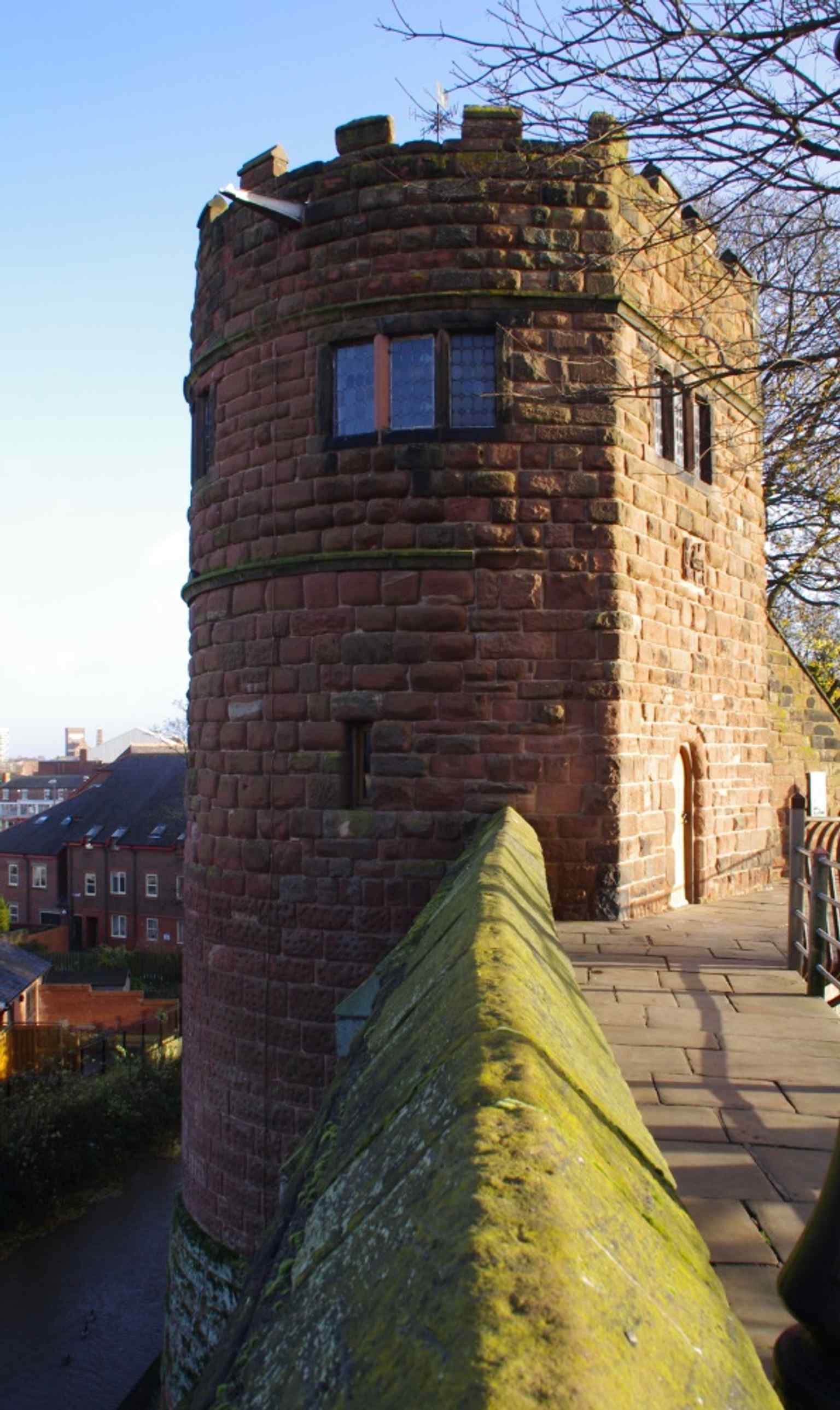
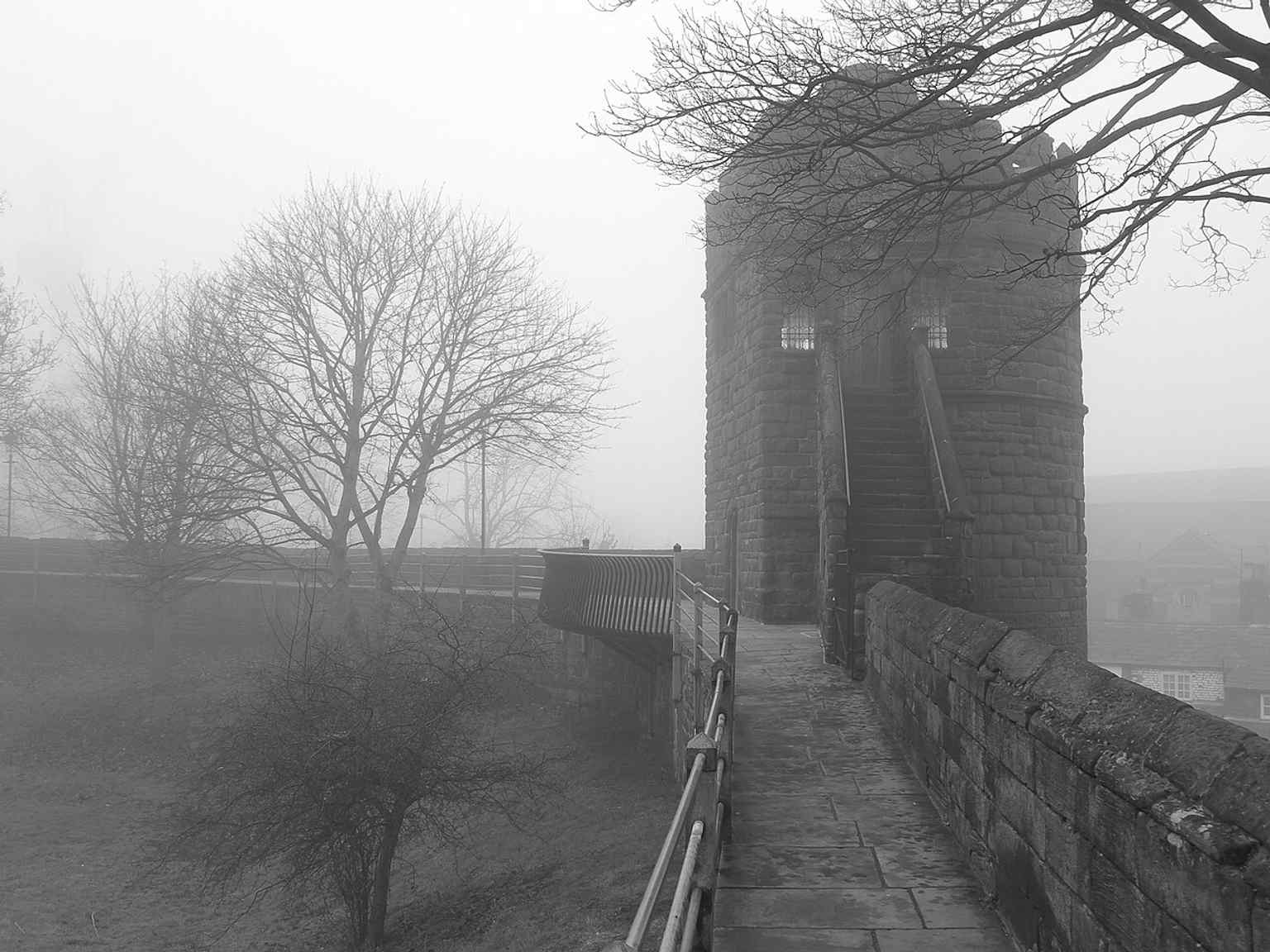
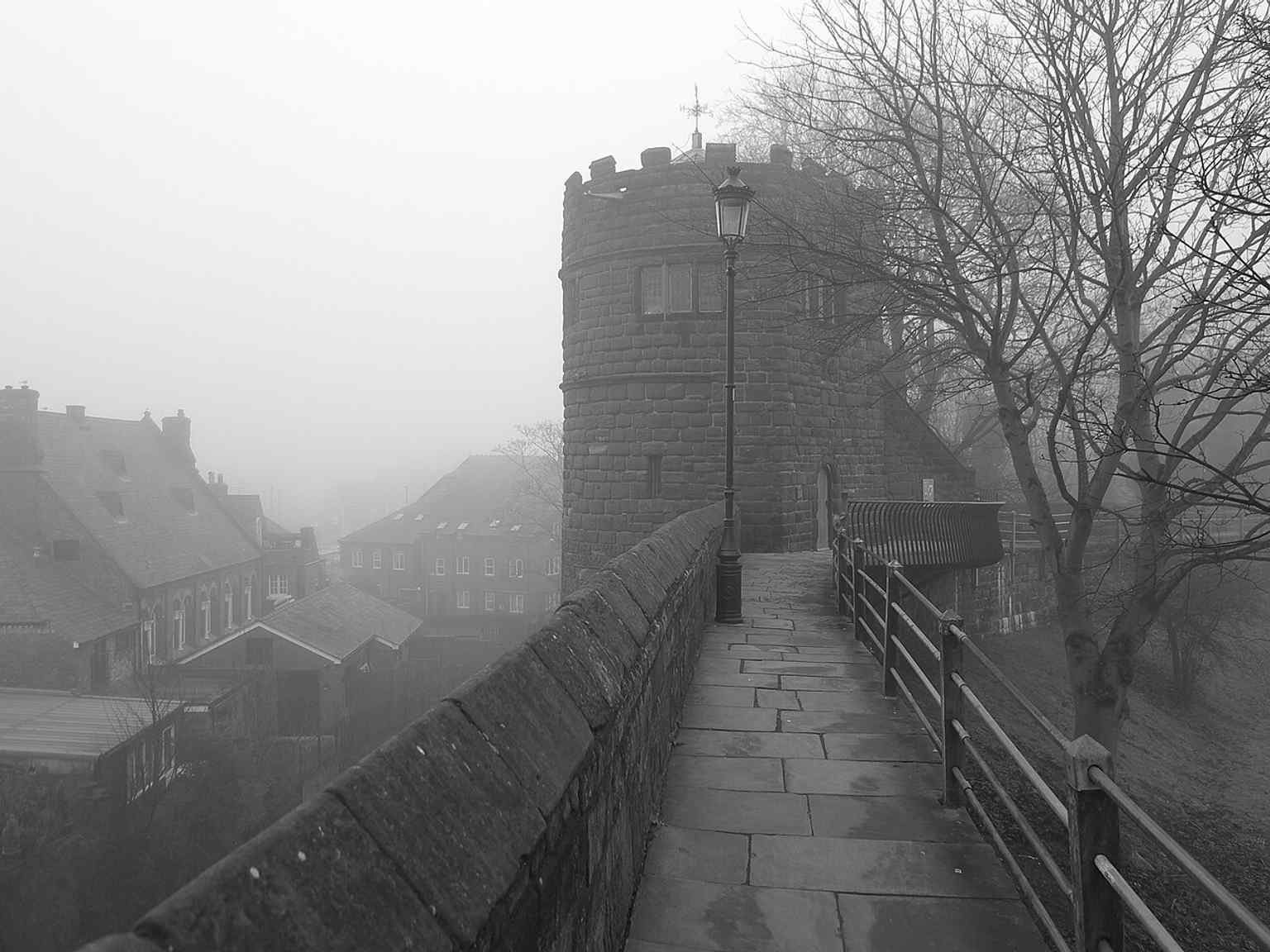
Look for the red sandstone half-round tower built into the wall, topped by a steep slate roof and marked by the carved phoenix plaque above the doorway.
This is Phoenix Tower, though it has also answered to Newton Tower and, with a certain royal swagger, King Charles’ Tower. Its story likely begins in the thirteenth century, but the detail that really sticks is over the door: in sixteen thirteen, two Chester guilds, the Painters and Stationers and the Barbers and Chandlers, repaired the place after it had fallen into rough shape and even lost the lead from its roof. They set that phoenix plaque here as a calling card for the Painters’ emblem... tasteful branding, seventeenth-century style.
During the siege of Chester in sixteen forty-five, the tower carried a gun on each storey and took damage in the fighting. A plaque claims King Charles the First stood here on the twenty-fourth of September, watching his troops lose at Rowton Heath. Historians are not entirely convinced. One argues the king more likely watched from Chester Cathedral, partly because a captain beside him was reportedly killed by a stray shot. That does rather sharpen the debate.
By the eighteen hundreds, the city leaned into the royal legend and promoted the tower as a tourist sight, even after it had grown shabby. If you fancy it, have a look at the before-and-after image in the app; it neatly shows how the tower shifted from stark Victorian lookout to polished heritage landmark.
It is usually only open on Saturdays and Sundays from eleven fifty-nine A-M to five P-M. For a small tower, it has had a remarkably eventful life.
Take your last look at the phoenix, and when you’re ready, we can continue on to the Water Tower.