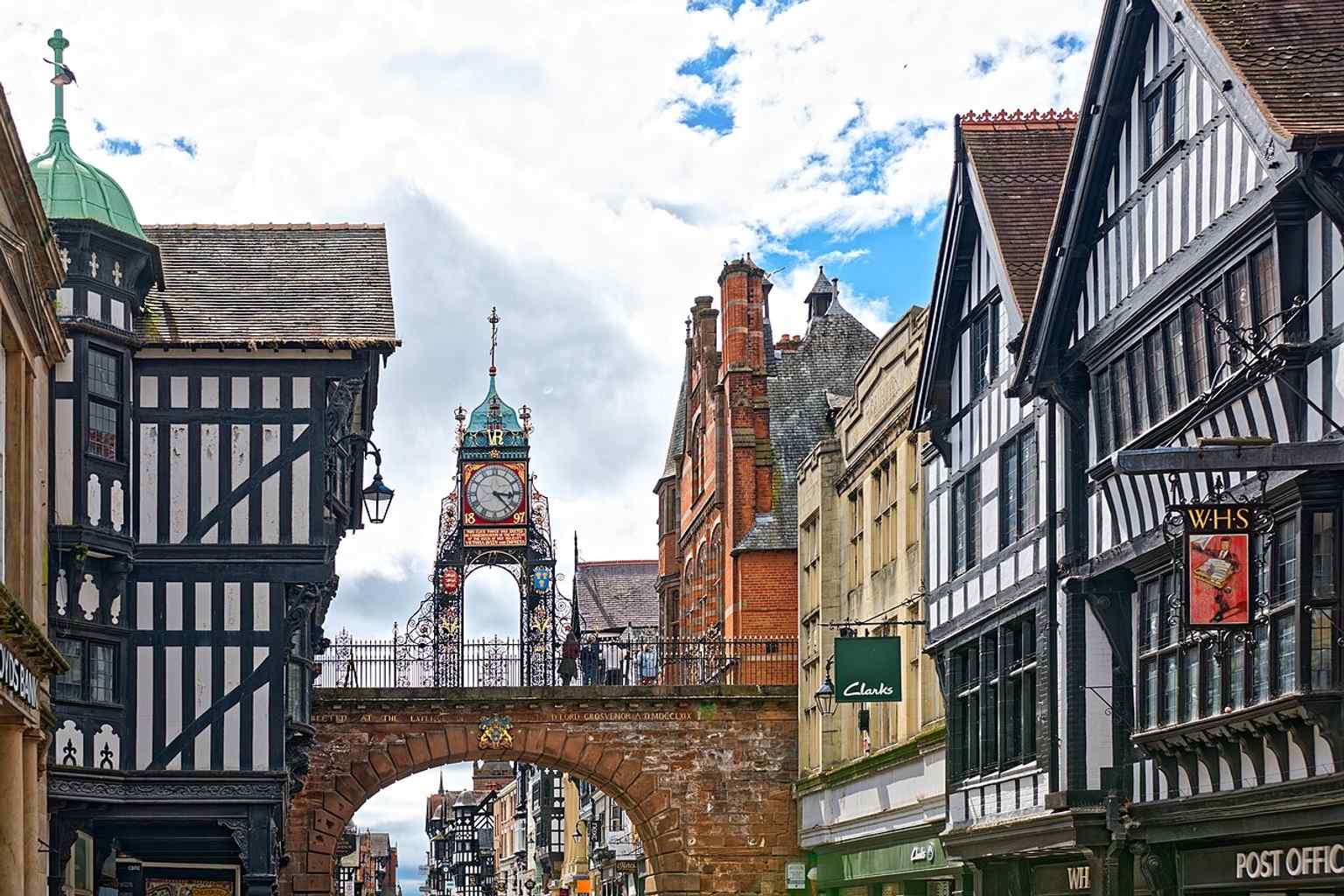
Ahead of you is a red sandstone gateway with one broad central arch, two smaller side arches, and a delicate iron clock tower above it capped by a copper dome.
This is Eastgate, and Chester has been using this spot as an entrance for an absurdly long time. Long before the clock turned it into a local celebrity, this was the eastern gate of the Roman fortress of Deva Victrix, founded around the year seventy-four or seventy-five. The road through here ran toward Manchester and then across the Pennines to York, so this was never some decorative little opening in a wall. It was the front door for soldiers, traders, carts, gossip, and trouble.
The first Roman gate stood with a timber tower guarding it. Around the second century, the Romans upgraded to stone, because empires do love making things heavier. Later, in the medieval period, Chester replaced that Roman gate with a much taller fortress-like gateway, probably in the early fourteen hundreds, with corner turrets that may have borrowed ideas from Caernarfon Castle. Excavations even uncovered part of one flanking turret in pale cream sandstone, which stood out against Chester’s usual red stone like someone turning up to a black-tie dinner in beige.
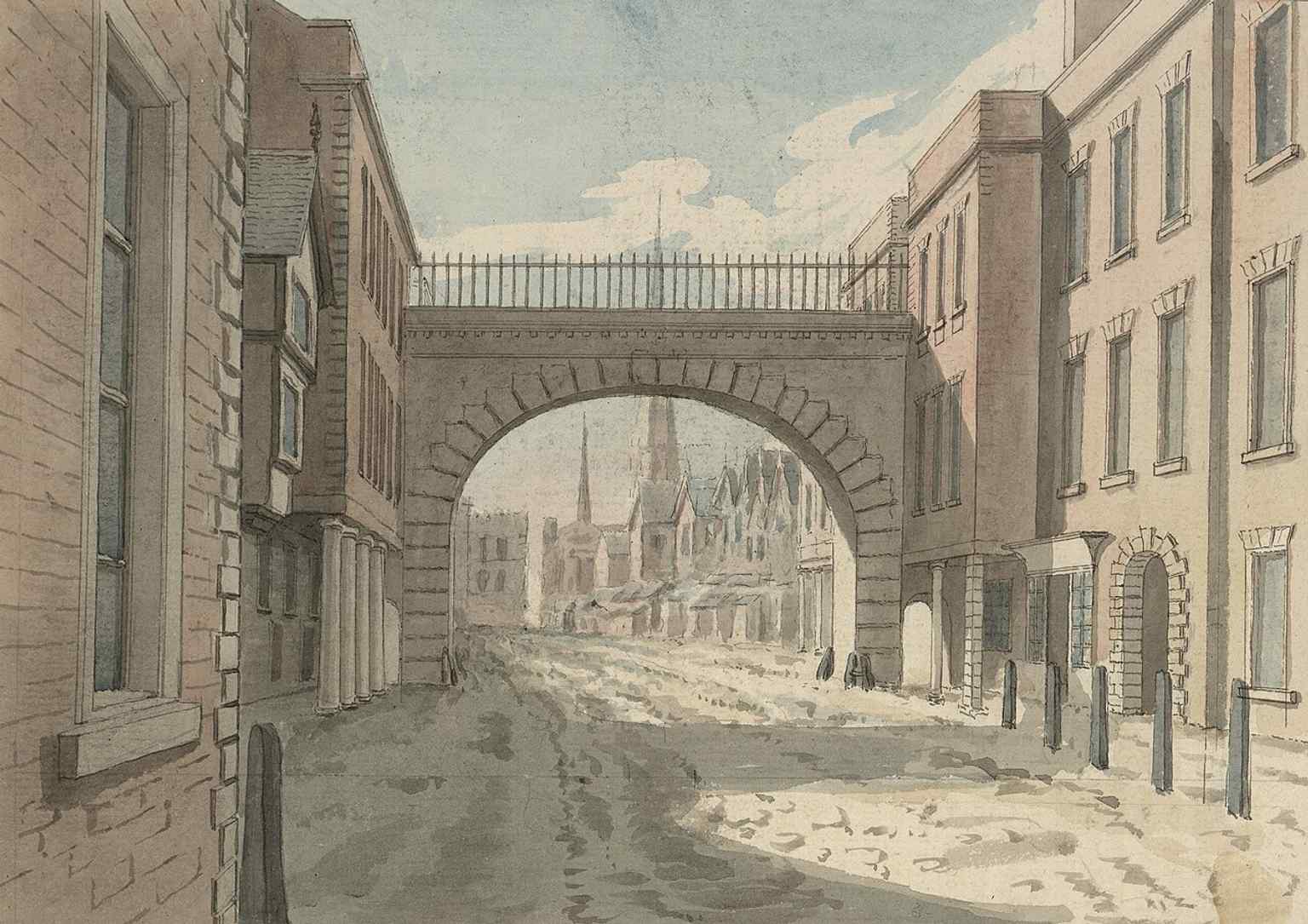
What you see now belongs to a different age entirely. In seventeen sixty-eight, when city walls had stopped being useful for defense and started becoming pleasant walkways, the old medieval gate had become a traffic nuisance. So Richard Grosvenor, the first Earl Grosvenor, paid for a new gateway, and his surveyor, Mister Hayden, designed this elegant three-arched version in red sandstone. Look at the big central arch and the two smaller side arches: it is practical, balanced, and just grand enough to remind you that Chester enjoyed doing infrastructure with style.
If you could examine the stone closely, you’d find coats of arms carved into the keystones and long Latin-heavy inscriptions recording mayors, patrons, and dates. The city was not shy about credit.
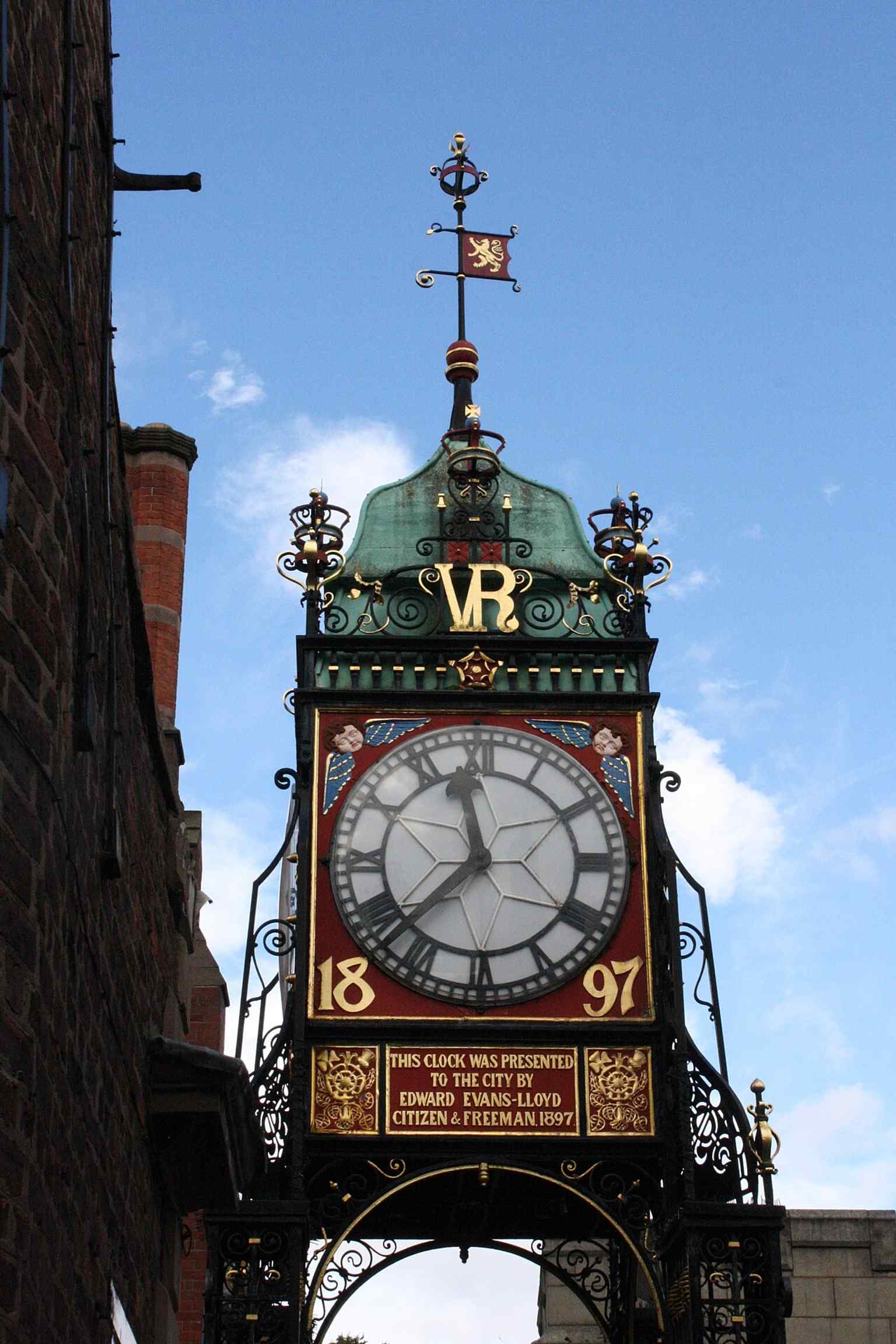
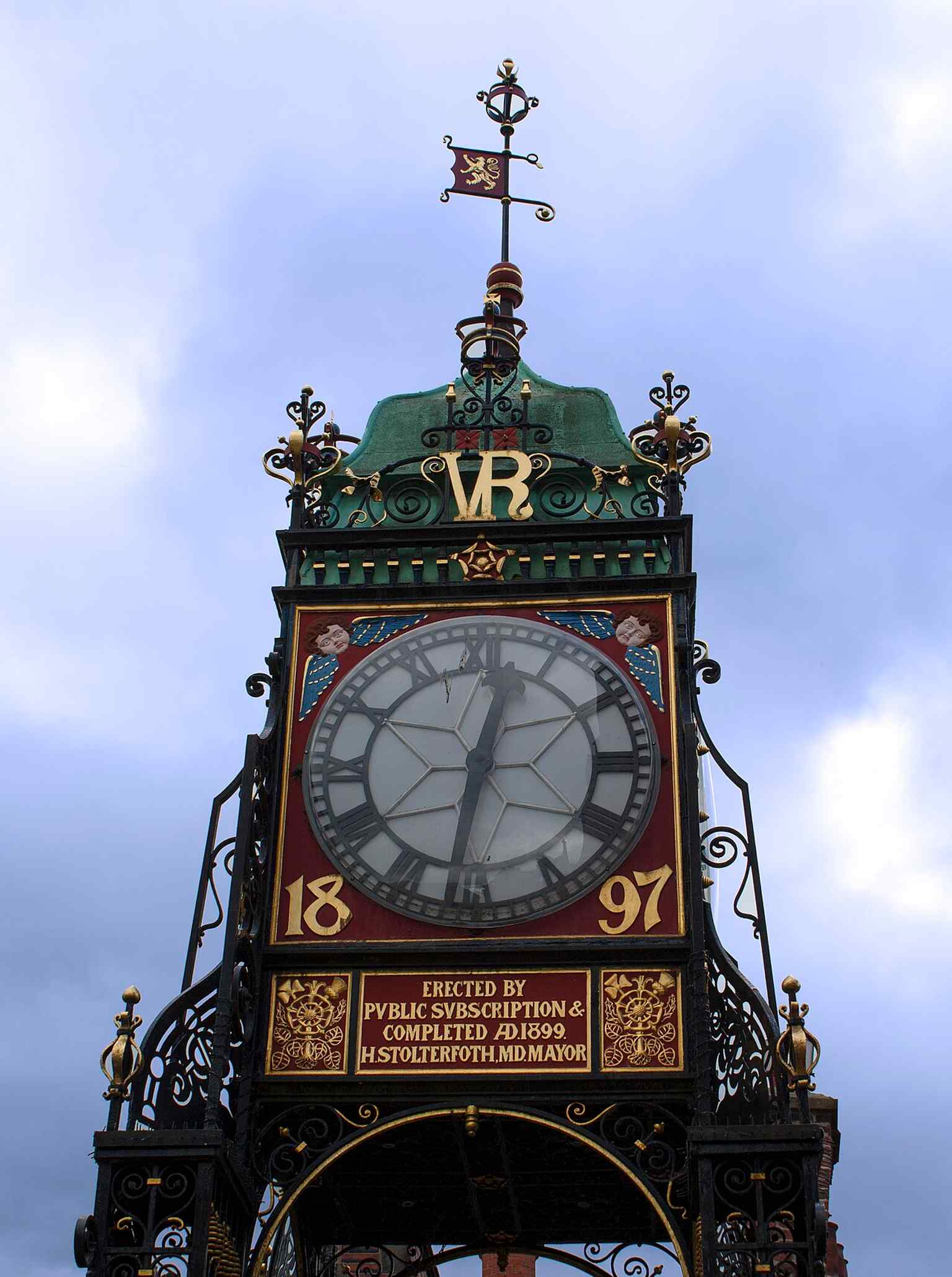
Then came the flourish on top. In the late eighteen nineties, Chester wanted a memorial for Queen Victoria’s diamond jubilee. Architect John Douglas first designed a stone tower that would have cost one thousand pounds, about a hundred and fifty thousand pounds today, but a model showed it would steal too much daylight from nearby buildings. So he pivoted to something lighter: this openwork iron pavilion carrying a clock on all four sides. Its mechanism came from J. B. Joyce and Company of Whitchurch, and for decades a technician traveled here every week just to wind it. Efficient? Not especially. Admirably committed? Absolutely.
Take a quick look at the comparison in the app if you like; the cameras and street scene change, but Eastgate Clock barely blinks.
And if you want a closer view of the ironwork, the detail image on your screen shows Douglas’s airy design beautifully.
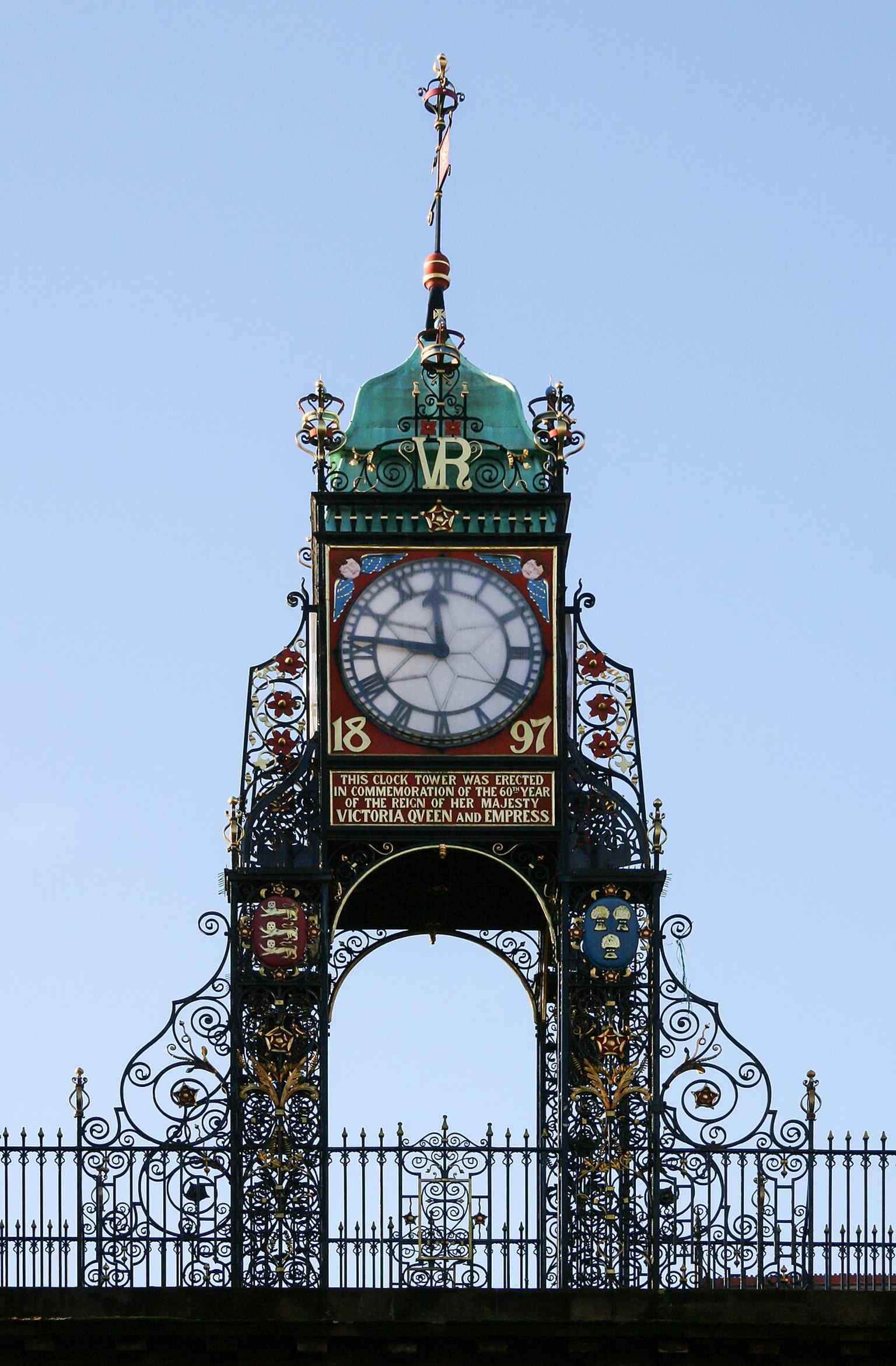
The clock opened on the twenty-seventh of May, eighteen ninety-nine, Queen Victoria’s eightieth birthday. It carries gilded dates, the initials V-R for Victoria Regina, and that lovely copper ogee cupola - an S-curved roof shape - above. After souvenir hunters stole the clock hands, the city finally glazed the faces in nineteen eighty-eight, which is one way to say, politely, enough of that. It is often described as one of England’s most photographed clocks, which is not a bad silver medal.
Fittingly for a city gate that never quite stopped being useful, Eastgate is open twenty-four hours a day, every day.
For all its Victorian flair, this is still Chester’s ancient front door.
When you’re ready, we can head on to the next stop.