
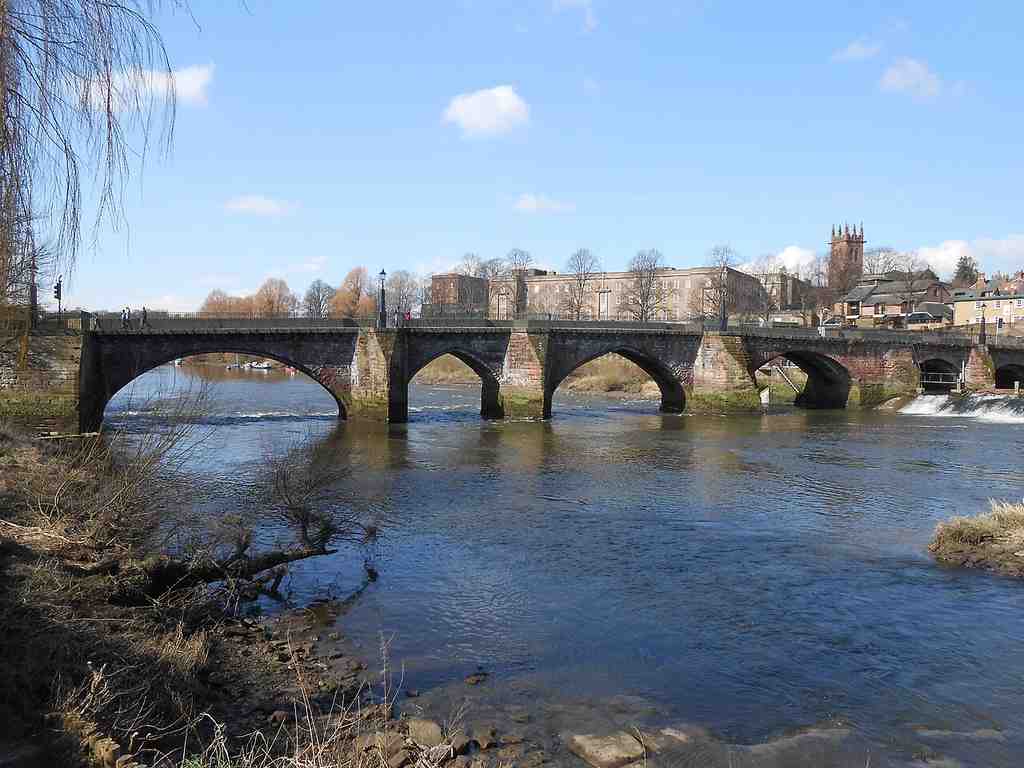
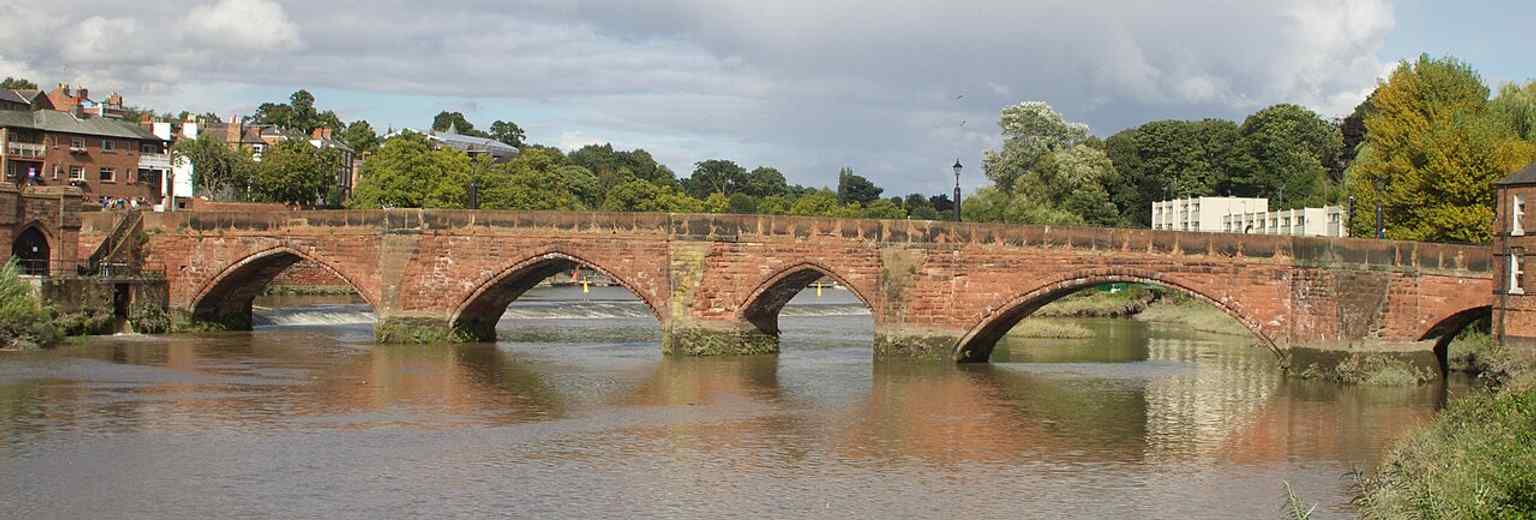
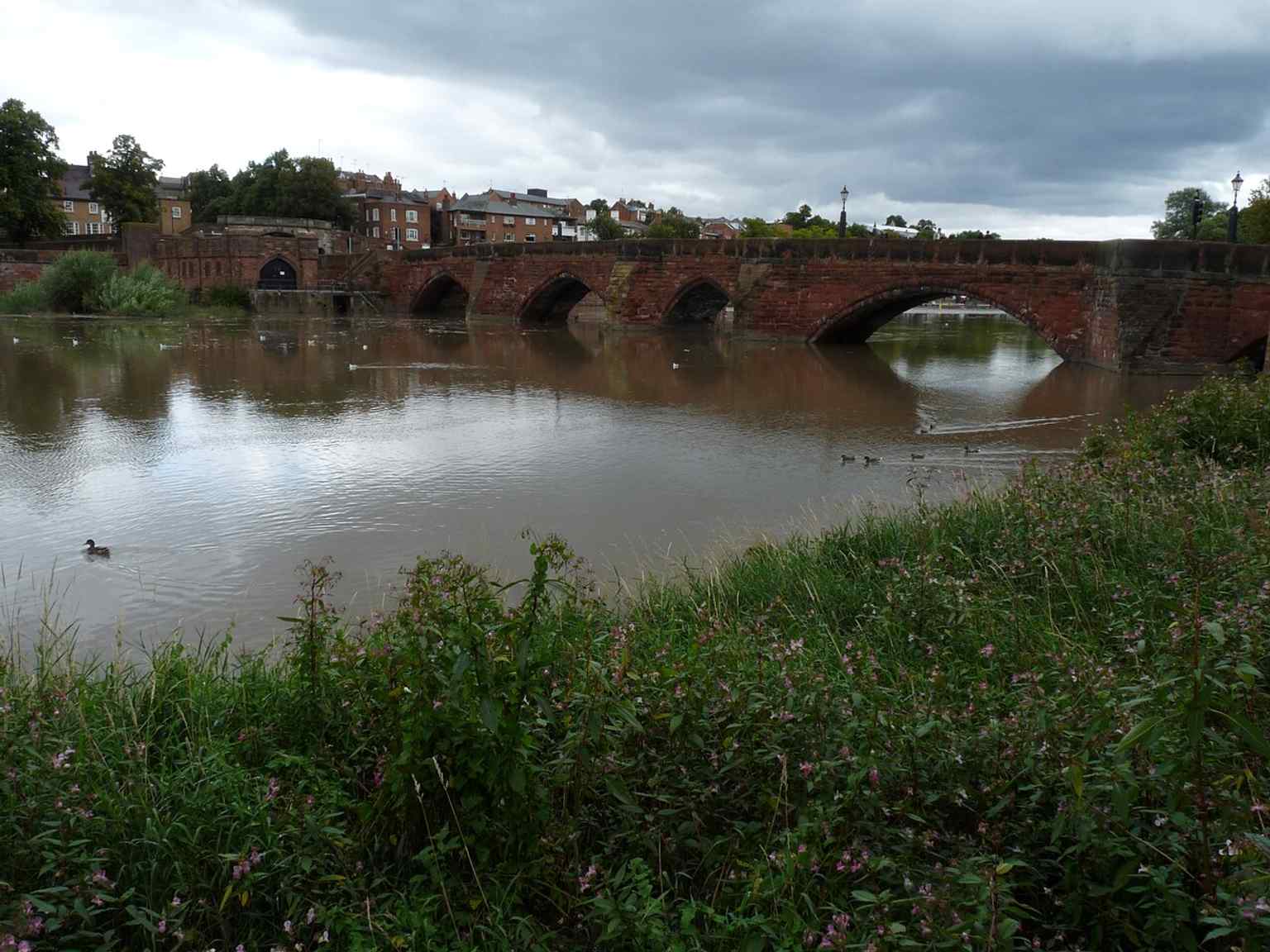
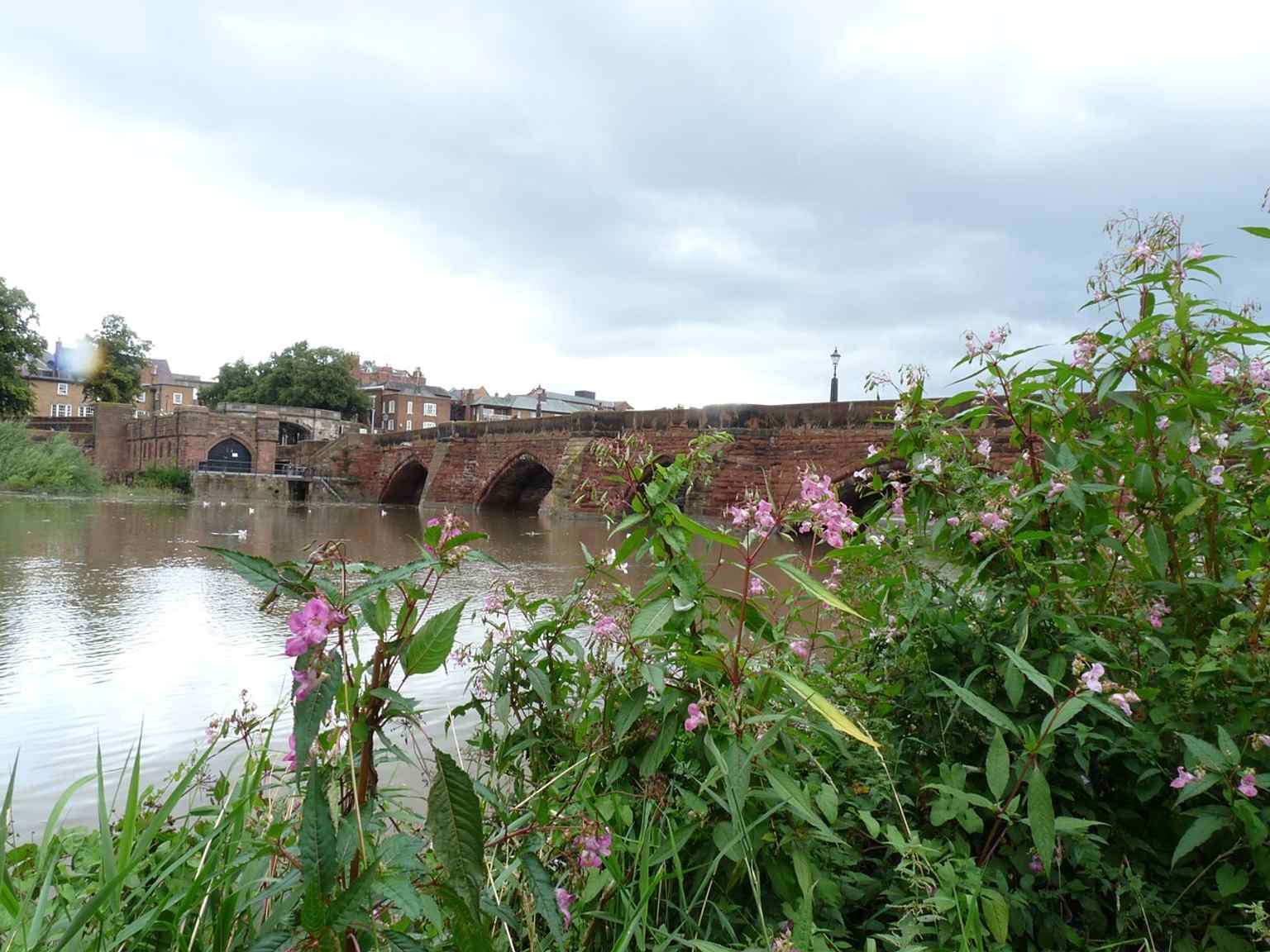
On your right, look for a low red sandstone bridge with seven uneven arches and sturdy triangular cutwaters projecting into the River Dee.
This is the Old Dee Bridge, the oldest bridge in Chester, and it has earned every wrinkle. The Romans first established a crossing here, probably with stone piers carrying a timber roadway. By the time Queen Ethel-flaed of Mercia ruled, between nine eleven and nine eighteen, that Roman bridge had vanished and people relied on a ferry instead... which is a polite way of saying the infrastructure situation had gone downhill.
By ten eighty-six, the Domesday Book records a bridge here again, and the Provost of Chester Castle could call up one man from every hide of land in Cheshire to help rebuild the city walls and the bridge. Medieval local government had a very direct way of recruiting volunteers. A causeway led to the crossing, and a manuscript says Hugh d'Avranches, the first Earl of Chester, also arranged watermills here on the Dee.
The river kept testing the bridge. In twelve seventy-nine to twelve eighty, floodwater swept away the timber superstructure. Repairs followed, then more repairs, and in thirteen fifty-seven Edward the Black Prince ordered Chester's mayor and citizens to rebuild their section "with all speed." The great late medieval rebuilding that followed gave us most of the bridge you see now.
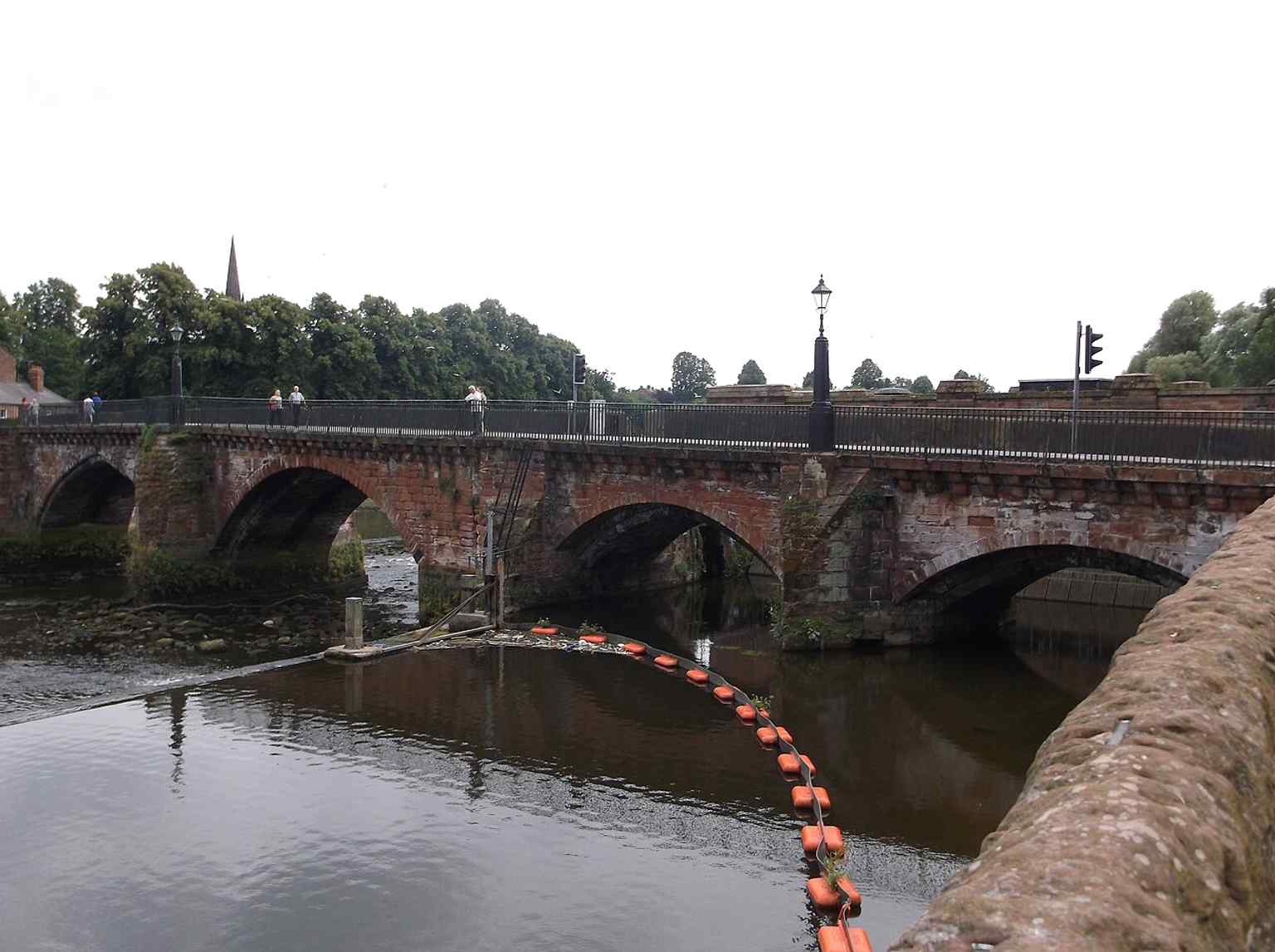
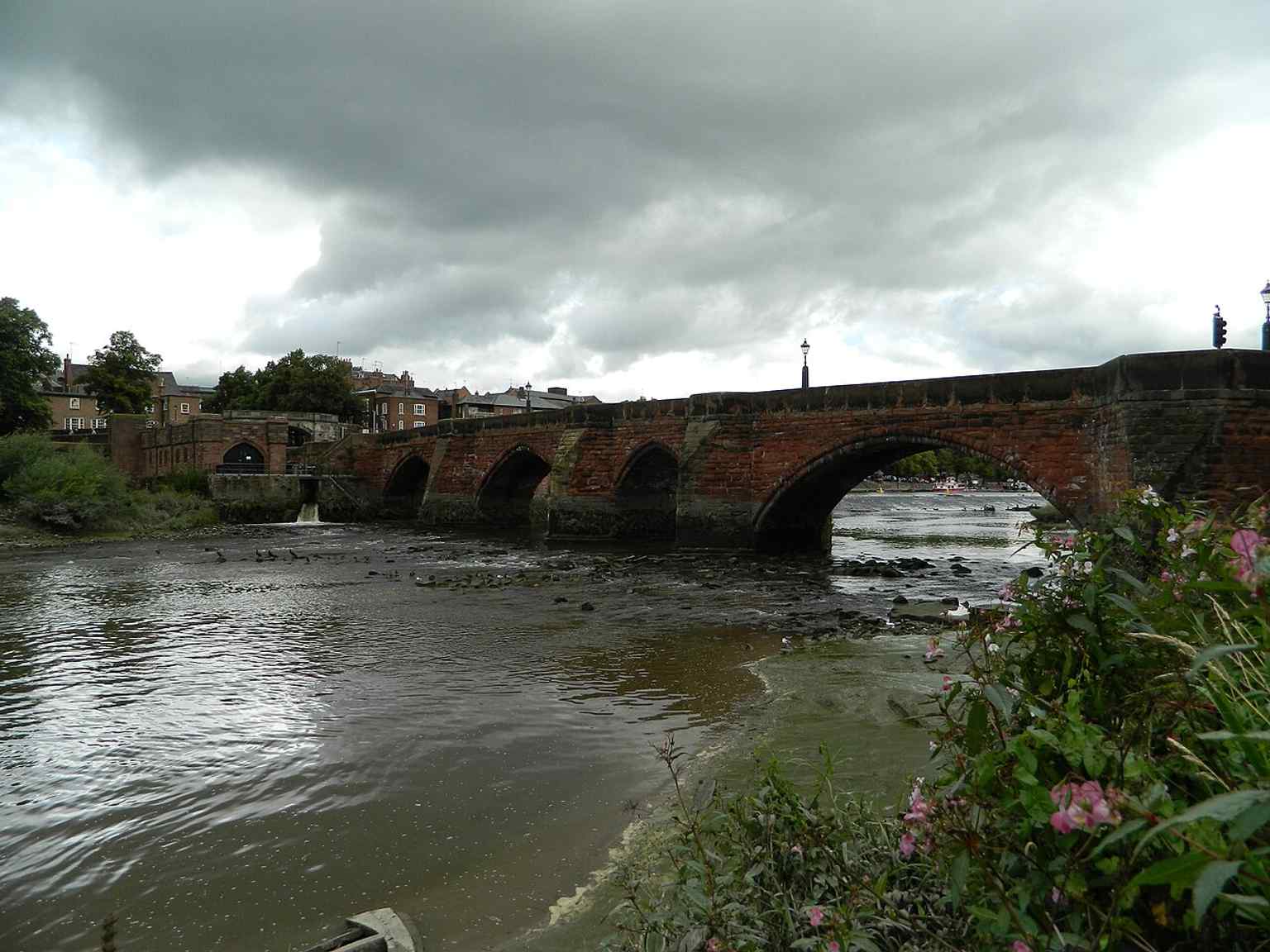
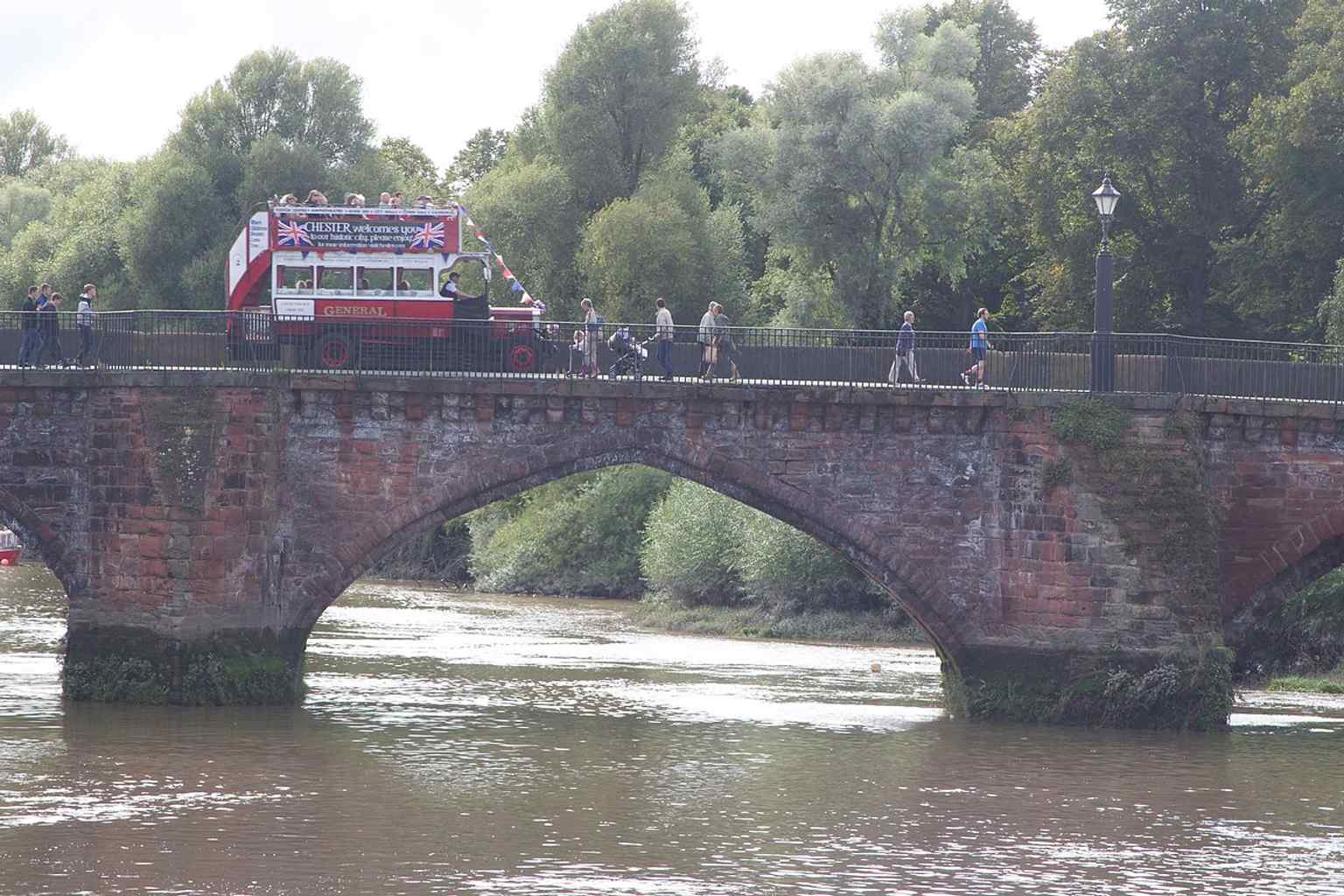
Look closely and you are seeing local red sandstone shaped into arches of different sizes. The two northern arches once crossed the leat, a man-made channel feeding the mills, and the southernmost arch replaced a medieval drawbridge. A defensive gatehouse stood on the bridge from around thirteen ninety-nine to fourteen oh seven, until people demolished it in seventeen eighty-one. Then Thomas Harrison widened the bridge in eighteen twenty-five and eighteen twenty-six, adding a footway on the upstream side before the newer Grosvenor Bridge took some of the pressure off.
If you want, have a quick look at the comparison image in the app; the bridge barely changes, while the riverside scene around it shifts noticeably. If you glance at the detail photo on your screen, the stonework shows just how practical and hard-wearing this late medieval rebuild really is.
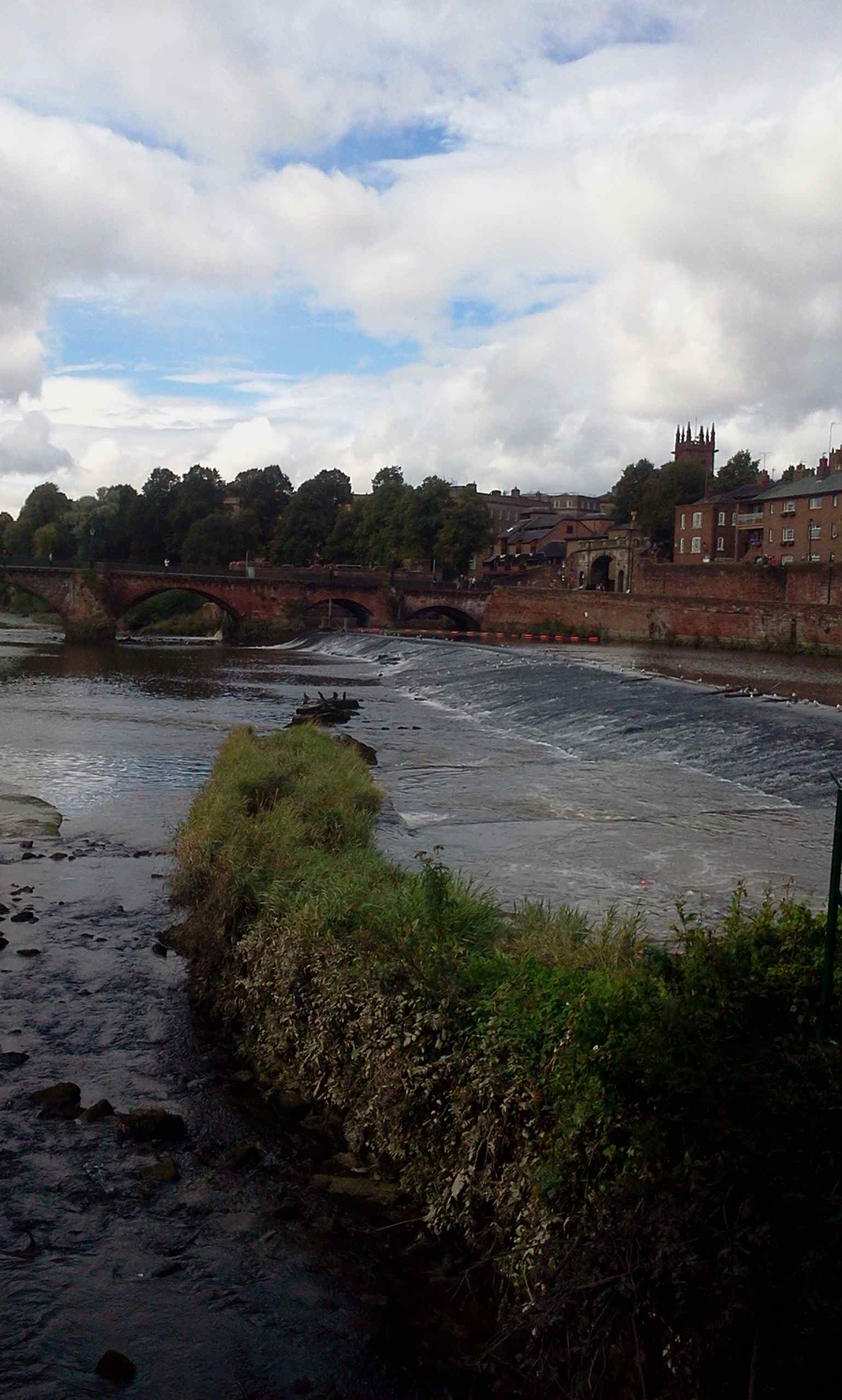
It is protected both as a Grade One listed building and as a scheduled monument, and the crossing stays open all day, every day. For all the rebuilding, it still does the same job with admirable stubbornness.
Take a moment by the river, and when you're ready, we can continue on to Chester Castle.






.JPG)


