In front of you is a pale sandstone gateway shaped like a classical temple, with a heavy flat-topped entablature resting on widely spaced Doric columns and flanked by two lodge-like wings.
This is Chester Castle... though the first thing it shows you is not medieval menace, but Thomas Harrison’s grand eighteenth-century confidence. Very Chester, really: even the fortress arrives dressed for court.
The story starts in about ten seventy, when Hugh d’Avranches, the second Earl of Chester, planted a Norman castle here on high ground above the River Dee. The first version was a motte-and-bailey fort, meaning a raised mound with enclosed yards around it, and it probably had a wooden tower. Wood, of course, burns, rots, and generally behaves like wood. So in the twelfth century they replaced it with stone, including the Flag Tower, and they built the gateway tower now called the Agricola Tower.
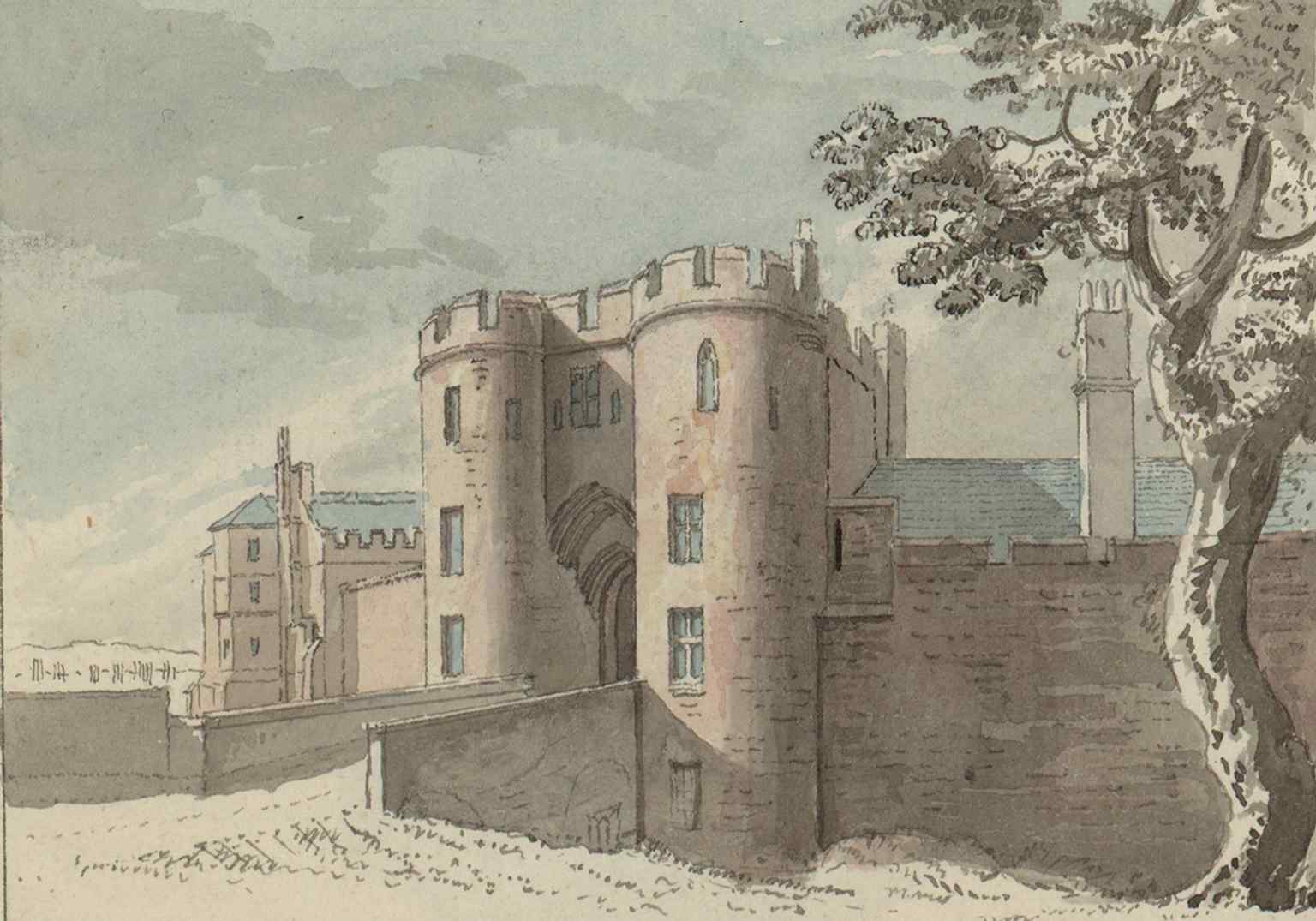
That tower carried more than soldiers. On its first floor sits the chapel of Saint Mary de Castro, with Norman details still surviving inside, and later conservation uncovered early thirteenth-century wall paintings showing the Visitation and miracles of the Virgin Mary. If you glance at your screen, the Norman core survives best in the motte and Halfmoon Tower, which give you a feel for the older castle tucked behind the neoclassical front.
The fortress grew tougher under Henry the Third and Edward the First. Builders added an outer bailey, a larger defended enclosure, then a new gate with two half-drum towers and a drawbridge over a moat eight meters deep. They also created royal chambers, stables, and a new chapel. So this place was not just a fort. It was a small machine for power.
It could also be a machine for misery. Prisoners held here included Richard the Second, Eleanor Cobham, and Andrew de Moray, one of the heroes of Stirling Bridge. Outside the gate stood the Gloverstone, where condemned criminals passed from castle authority to city authority before execution. Medieval bureaucracy could be alarmingly efficient.
During the Civil War, Royalists held Chester Castle, and Parliamentary forces battered at it in sixteen forty-three, then again in sixteen forty-five, before the whole city endured siege. After that, the castle served as a prison, a court, and a tax office. By the late eighteenth century, the prison had become so grim that the reformer John Howard publicly condemned it. That criticism pushed change. Harrison designed a new prison, finished in seventeen ninety-two, then reshaped the site with this monumental entrance, a new Shire Hall, barracks, and armoury. Architectural historian Nikolaus Pevsner later called it one of the strongest Greek Revival monuments in England, which is a learned way of saying Harrison went all in.
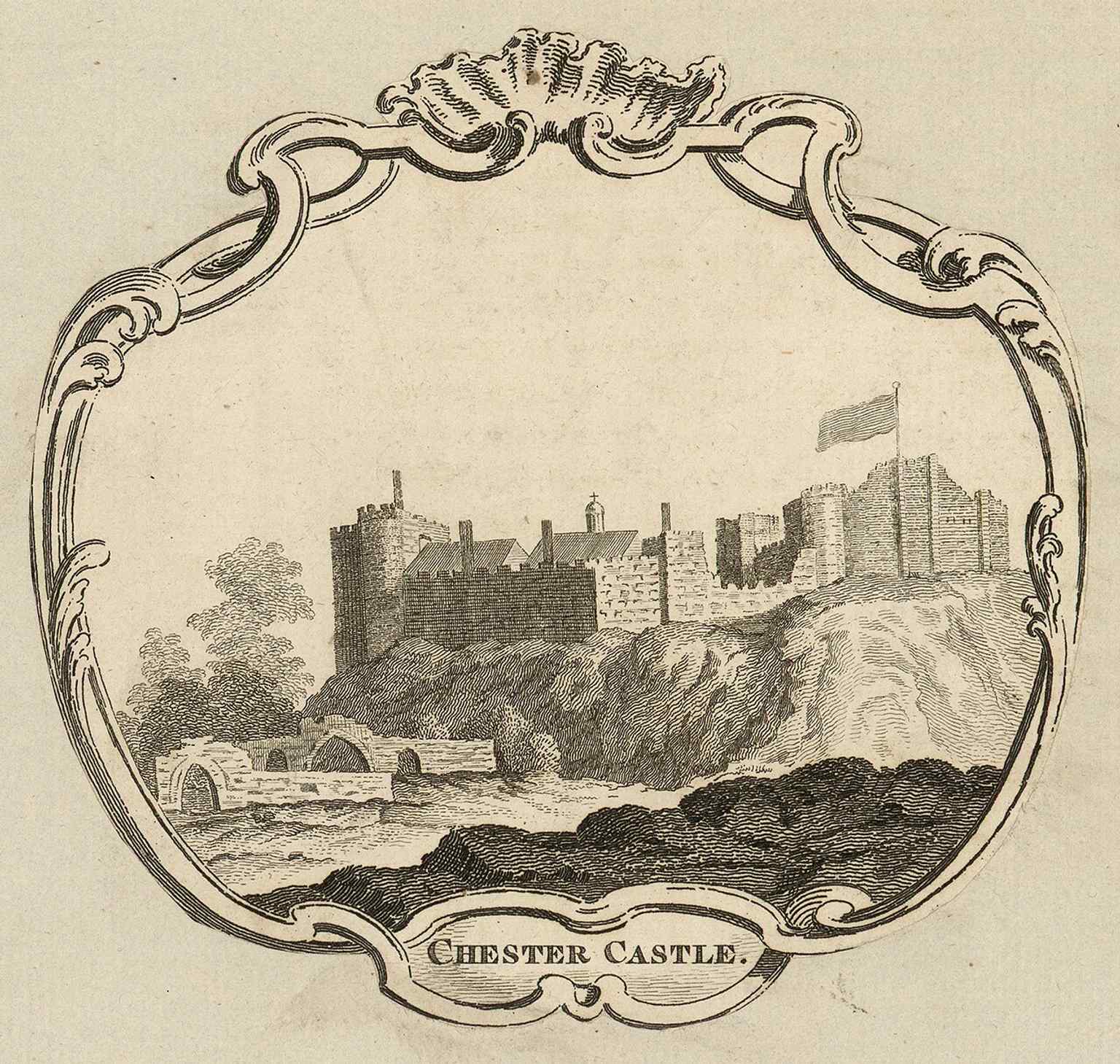
If you want a sense of the lost medieval bulk, have a look at the old engraving on your phone. Much vanished, but not the authority. The former Shire Hall now houses the Crown Court, and the old barracks hold the Cheshire Military Museum. In the nineteenth century the castle became the depot for the Cheshire Regiment, and in nineteen twenty-five the chapel in the Agricola Tower was reconsecrated for regimental use.
So Chester Castle has worn many uniforms: Norman stronghold, royal prison, courthouse, barracks, museum. It turns out power likes good real estate.
If you plan to go inside the visitor areas, they usually open only on Saturdays and Sundays, from eleven in the morning until three in the afternoon.