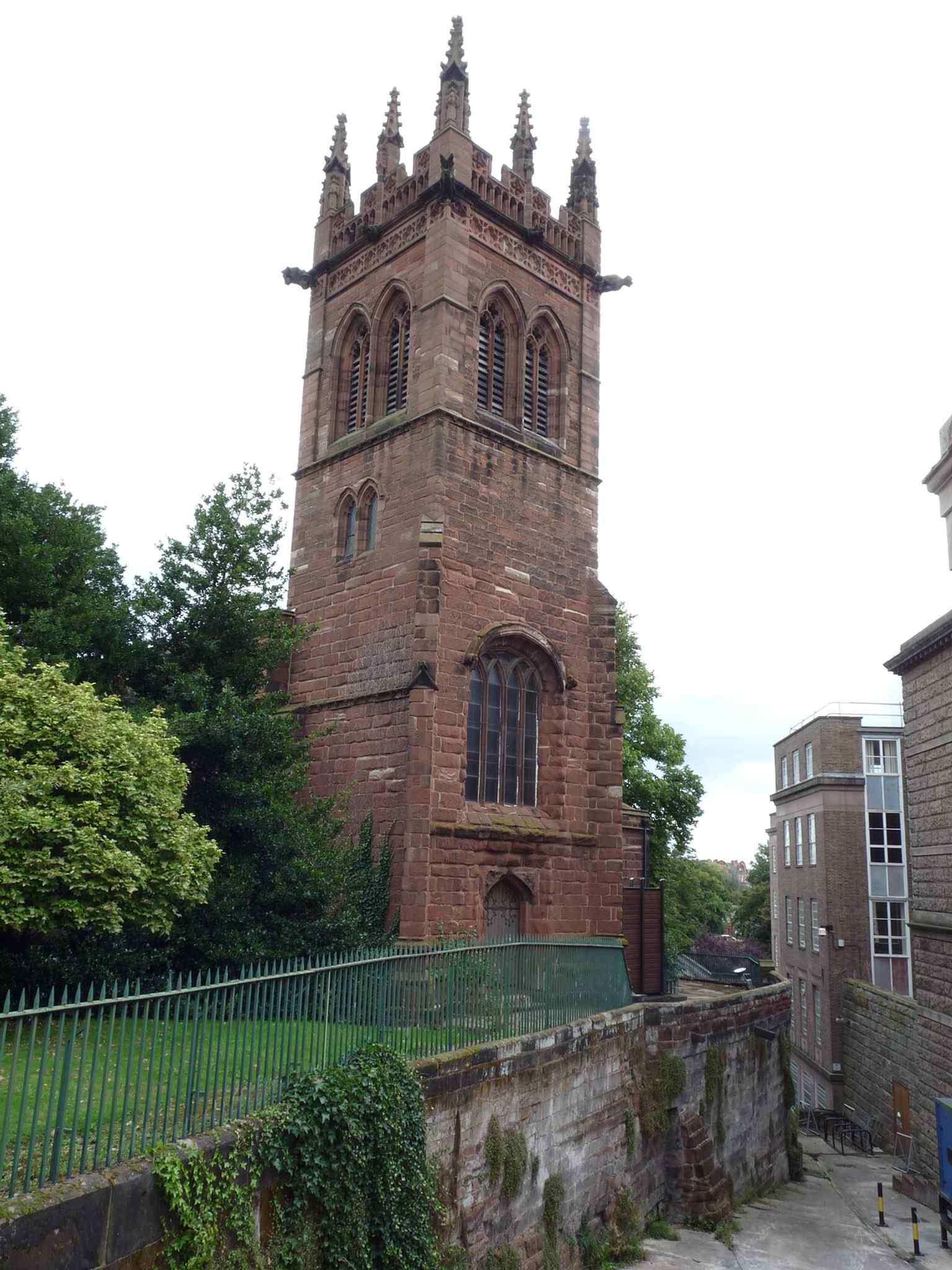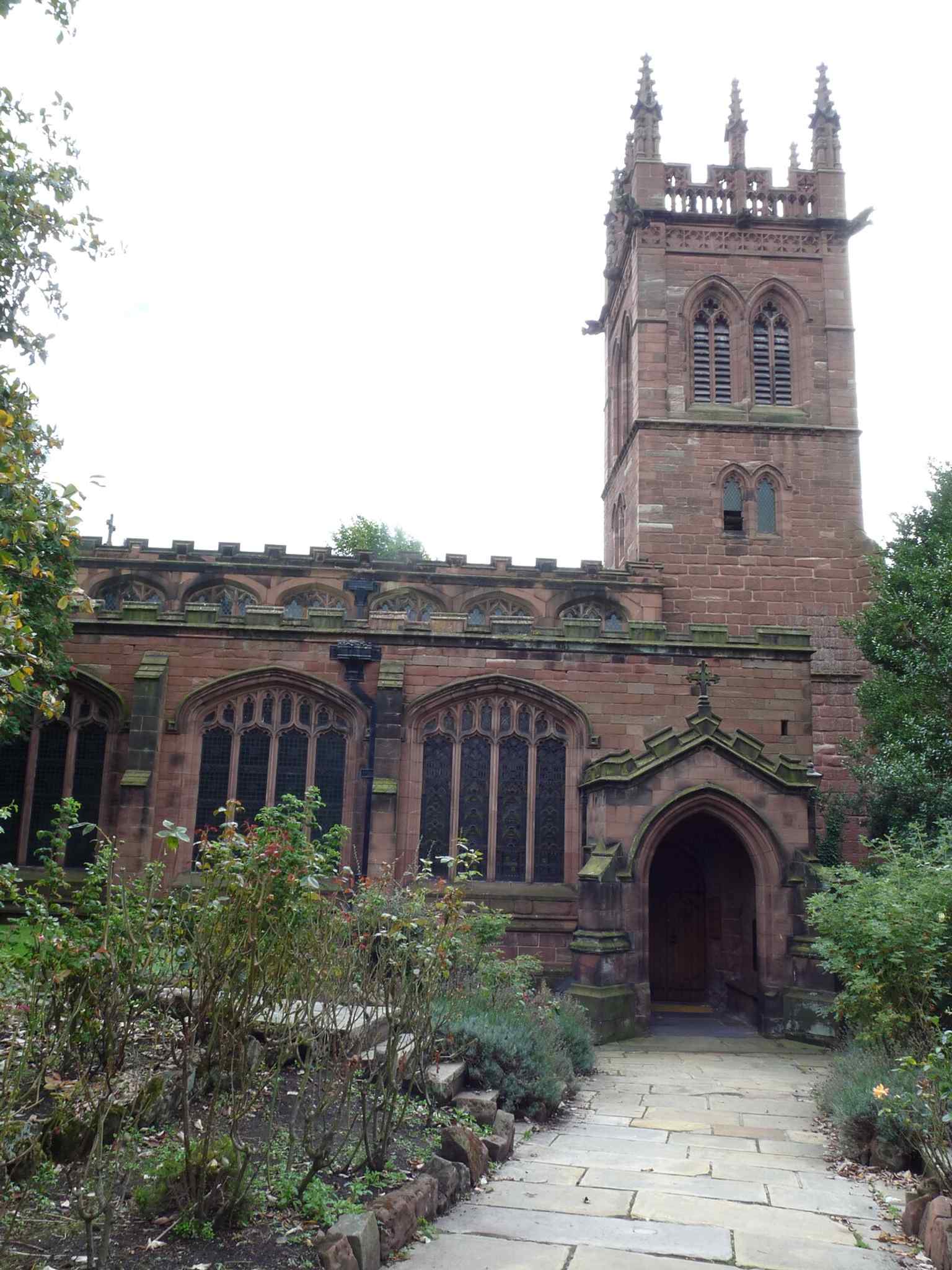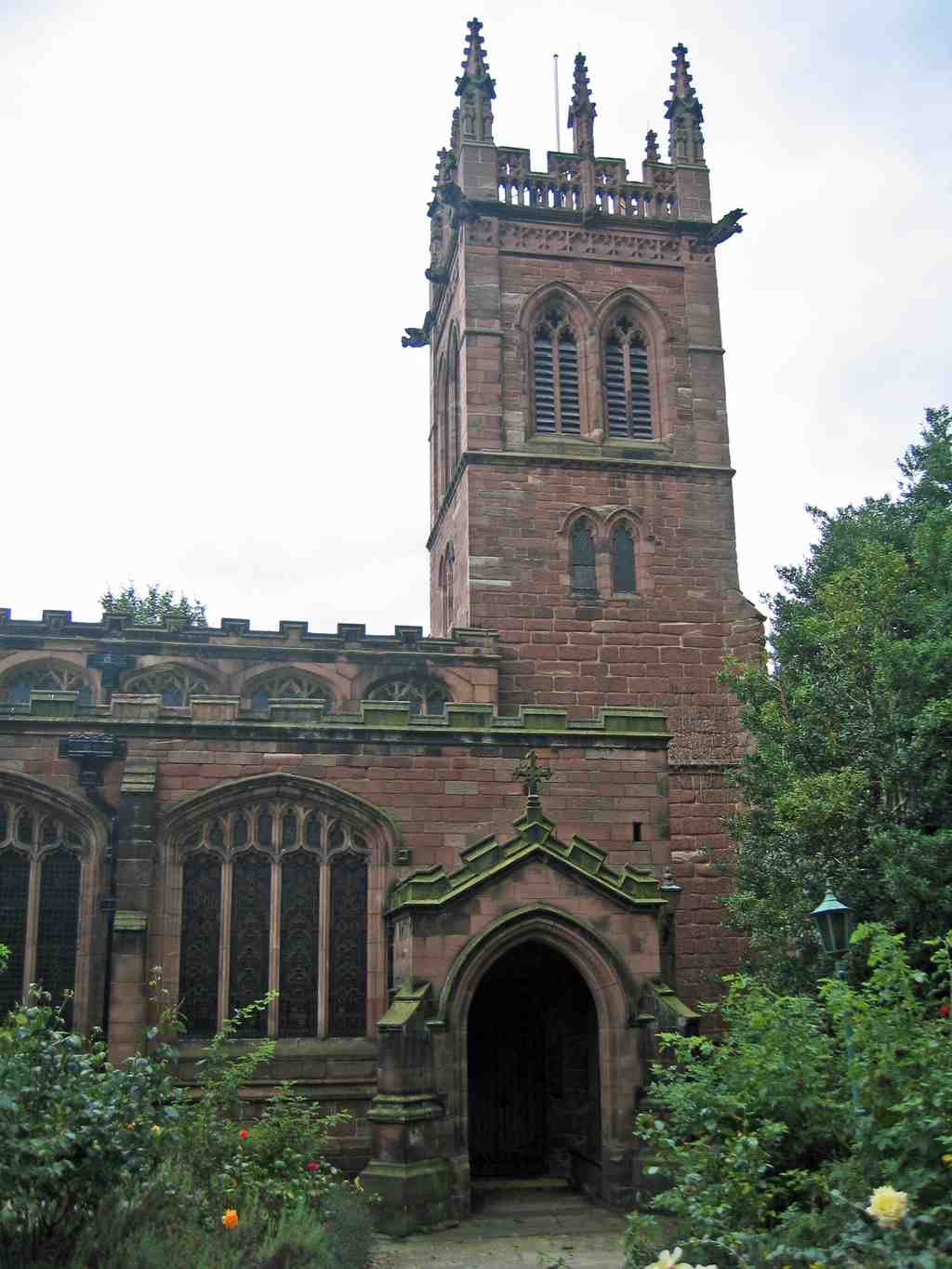
On your right is a red sandstone church with a square three-stage tower, a line of clerestory windows above the main roof, and a sturdy two-storey porch built into its side.
This is St Mary’s Creative Space, once St Mary-on-the-Hill, a church perched above the narrow lane that drops toward the River Dee and tucked right beside Chester Castle. The first church here served the castle in Norman times, but most of what you see now grew in the fourteenth and fifteenth centuries. So yes... it has been adapting for a very long time.
The building took some hard knocks. In the Civil War, damage in sixteen forty-five weakened the south chapel, which finally collapsed in sixteen sixty-one. People rebuilt it in sixteen ninety-three. Then, during the Jacobite rising of seventeen forty-five, Lord Cholmondeley had the top stage of the tower demolished to clear a line of fire. Nothing says “sacred architecture” quite like military practicality.
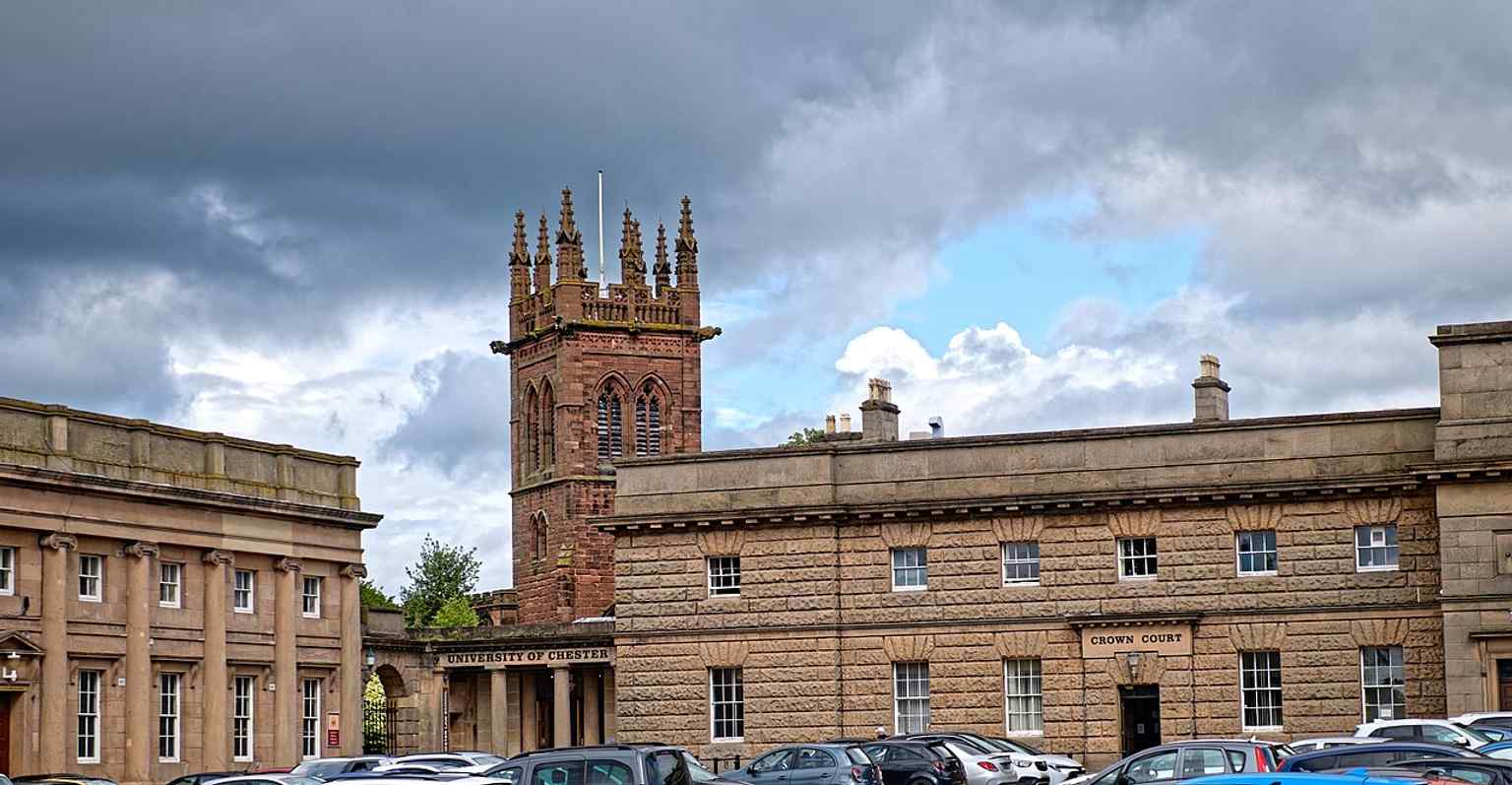
If you glance at your screen, the wider view shows just how tightly this church and the castle share the ridge line. Later restorers tried to steady and dignify the place again: James Harrison worked on it in the eighteen sixties, J. P. Seddon followed in the eighteen nineties, and the north porch was rebuilt in memory of Randle Holme the Third, from Chester’s famous family of heraldic artists and record-keepers.
Inside, the pews and furnishings are gone, because the church closed in nineteen seventy-two and became an educational center in the nineteen seventies. Now it hosts concerts, exhibitions, and performances, with Chester Music Society and Theatre in the Quarter keeping the old building very much alive. And it still carries its past: seventy-two monuments and cenotaphs survive inside. One of the strangest belongs to Philip Oldfield, a barrister who died in sixteen sixteen; his effigy lies above, while a skeleton mirrors his pose below... subtle, it is not. You can see that monument on your phone here.
It’s a fine Chester habit: when a church can no longer serve one community, it finds another.
Take a look at the stonework, and when you’re ready, we can continue on to the Old Dee Bridge.