

Chelmsford Audio Tour: Historic Treasures and Urban Gems Audio Tour
Beneath Chelmsford’s tranquil skyline, secrets of power and play linger just steps from the modern bustle. Uncover them on this self-guided audio tour where every quiet courtyard and striking spire hides stories most visitors walk past. What dramatic conflict once unfolded right at the edge of the County Cricket Ground? Whose ambitions shaped the Diocese of Chelmsford in ways still felt today? And which unlikely Cathedral detail sparked a local scandal that whispers through the city even now? Follow winding streets through shadows and sunlight, from sacred halls to historic battlegrounds. Watch Chelmsford reveal itself in bursts of drama and dazzling detail as centuries collide around you. This is not just a stroll—it’s a journey into the heart of an unexpected city. The keys to Chelmsford’s mysteries are yours for the taking. Begin, and see what others never notice.
Tour preview
About this tour
- scheduleDuration 70–90 minsGo at your own pace
- straighten3.2 km walking routeFollow the guided path
- location_onLocationChelmsford, United Kingdom
- wifi_offWorks offlineDownload once, use anywhere
- all_inclusiveLifetime accessReplay anytime, forever
- location_onStarts at Chelmsford Civic Centre
Stops on this tour
lock_open 3 free previews · 7 unlock with purchase
Ahead of you stands a composed frontage of brown brick and pale Portland stone, with a recessed central doorway reached by steps and crowned by a curved stone panel above. This…Read moreShow less
Open dedicated page →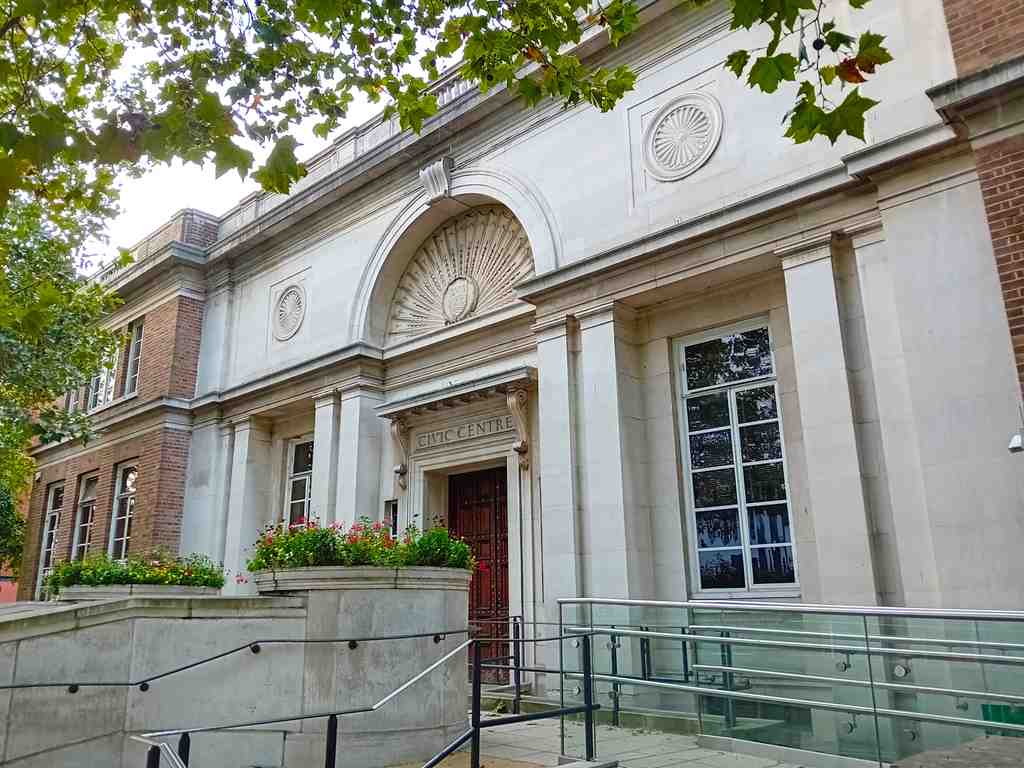
Chelmsford Civic CentrePhoto: Richard Kelly, Wikimedia Commons, CC BY-SA 4.0. Cropped & resized. Ahead of you stands a composed frontage of brown brick and pale Portland stone, with a recessed central doorway reached by steps and crowned by a curved stone panel above.
This is a rather perfect place to begin, because Chelmsford did not become itself in a straight line. Here, the urge to remember pulled against the urge to build. After the First World War, local people wanted a fitting tribute to the dead, yet their leaders also saw a chance to give the town a new public face.
For years, Chelmsford’s borough council had met in the Shire Hall, an arrangement that never quite satisfied them. Since the town became a municipal borough in eighteen eighty-eight, there had been a growing sense that it needed rooms, walls, and ceremonial spaces of its own. Places invent themselves not only through trade and population, but through the buildings where they choose to be seen.
That is why a memorial discussion became something larger. At a public meeting in December nineteen eighteen, civic leaders talked not only about a cenotaph, but about a children’s hospital, a convalescent home, housing for disabled servicemen, even a Victory Hall. By March nineteen nineteen, the idea had widened further into plans for municipal offices beside a memorial hall. Grief, you might say, opened the door, and ambition quietly stepped through it.
The search for a site turned into a long and rather telling struggle. Councillors weighed fifteen possibilities, argued over cost, and even rejected the Rainsford Lodge estate because its price, two thousand seven hundred pounds, roughly a quarter of a million pounds today, felt too steep. And hanging over it all is a question worth keeping with you: when a town decides how to honour its dead, should it raise a single monument, or reshape its whole future?
One man gives this place its human thread. Ernest John Miles, the borough engineer, drew the final war memorial when larger plans began to collapse. Fund-raising disappointed, the memorial hall idea fell away, and Miles produced a stripped-back cenotaph in Portland stone, a tomb-like monument with no body inside, carrying the names of the fallen. Vice-Admiral Sir Roger Keyes unveiled it on the eleventh of November, nineteen twenty-three. Yet even that simpler memorial came after a drama of competitions, objections, and abandoned grandeur: W. Hamilton Buchan had first won with a much richer design, complete with bronze figures of a soldier and sailor, topped by Victory herself.
If you look at the image in the app, you can see the next chapter of the story in stone. The Duke Street frontage opened in nineteen thirty-five as a public library, designed by Cordingley and McIntyre in a Neo-Georgian style, meaning a deliberate revival of the calm, balanced look of the eighteenth century. Nine bays wide, with brown brick to the sides and a formal Portland stone centre, it cost twenty-seven thousand pounds, about two million pounds in today’s money.
Then the complex kept growing. In nineteen sixty-two, the town added council offices, a council chamber, committee rooms, and an assembly hall for five hundred and eighty people, later transformed into Chelmsford Theatre. By nineteen eighty-five, even a nuclear bunker had appeared below the civic surface. And in twenty twelve, when Chelmsford won city status, this building stood at the heart of that new self-portrait.
From here, the story broadens from borough pride to county authority. Walk on to County Hall, about six minutes away, and you will see Chelmsford assembling not just memorials and facades, but the larger machinery of power.
On your left is a grand stone-faced corner building with a columned entrance, a triangular pediment above the door, and rows of neatly stacked windows rising through the…Read moreShow less
Open dedicated page →On your left is a grand stone-faced corner building with a columned entrance, a triangular pediment above the door, and rows of neatly stacked windows rising through the façade.
County Hall is where Essex taught itself to govern at a larger scale. When the Local Government Act of eighteen eighty-eight created county councils across England, Essex suddenly needed a headquarters worthy of its new responsibilities. At first, the arrangement was rather improvised: councillors held their quarterly meetings at Shire Hall in Chelmsford, but many committee meetings stayed in London because rail travel into Chelmsford was awkward for much of the county. Even authority, it seems, begins by borrowing rooms.
That could not last. Growing county business demanded permanent offices, more staff, more paper, more ceremony, and eventually more architecture. Two small offices appeared first in King Edward’s Street, but soon they felt far too modest for a county trying to organise education, roads, public services and administration on a wider map.
The intimate heart of that first serious attempt still survives in red brick. If you glance at the image on your screen, you’ll see Block D, designed by Frank Whitmore and completed in nineteen oh nine. Locals tend to notice the larger stone building first, but Whitmore’s block is the more personal clue. It carries a blue plaque in his honour, and that makes it more than office space: it becomes a reminder of the architect who helped shape civic Chelmsford. His frontage used classical language to give bureaucracy a little dignity: a fanlight, meaning the half-round glazed window above a door; Doric columns, the plain sturdy classical kind; and pilasters, which are flat columns attached to the wall rather than standing free.
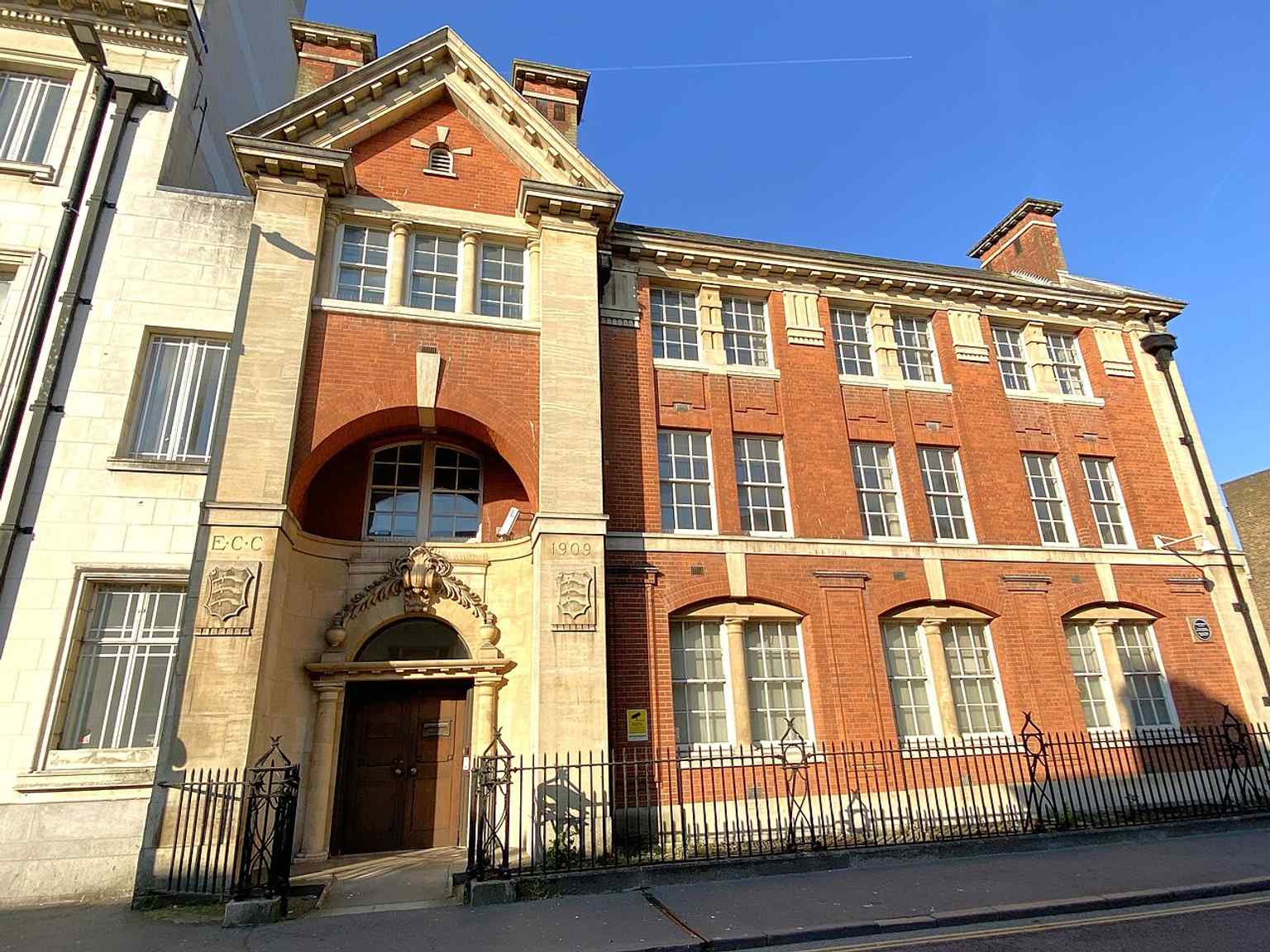
The 1909 Duke Street block, the red-brick start of County Hall designed by Frank Whitmore before later extensions were added.Photo: Richard Kelly, Wikimedia Commons, CC BY-SA 4.0. Cropped & resized. Whitmore expected the complex to grow. He even designed Block D so it could later absorb a council chamber. But in nineteen thirteen, the council flinched at the cost and chose not to build it, continuing their split life between Chelmsford and London. That hesitation tells you something about Essex at the time: ambitious, certainly, but cautious about how fast to commit.
By the late nineteen twenties, caution gave way to expansion. The council demolished the King Edward’s Street properties and raised the imposing Portland stone block you see dominating the corner, known as Block C. J. Stuart designed it, and inside, Sir William Courtauld paid for the principal ceremonial rooms: the council chamber, committee room and chairman’s room. A chamber is simply the formal meeting room where decisions are made, but this one became something grander. Henry Rushbury decorated it with maps of Essex from fifteen seventy-six and nineteen thirty-eight, portraits of notable county figures, stained glass naming former High Sheriffs, and murals ranging from Boadicea at Colchester to Samuel Pepys inspecting the navy at Harwich. In other words, the county did not only want office space. It wanted a stage on which to explain itself.
There is one detail most visitors miss. Above one of the entrances are carved swastikas, shown more clearly on your phone here. They caused alarm when people noticed them in twenty fourteen, but the carving predates Nazi use of the symbol; in the nineteen thirties, the motif was still used as an older decorative sign.
So here, in one complex, you can read Essex learning how to turn paperwork into permanence, and administration into identity. In about three minutes, we leave these secular rooms of county power and walk toward an older kind of authority altogether: Chelmsford Cathedral.
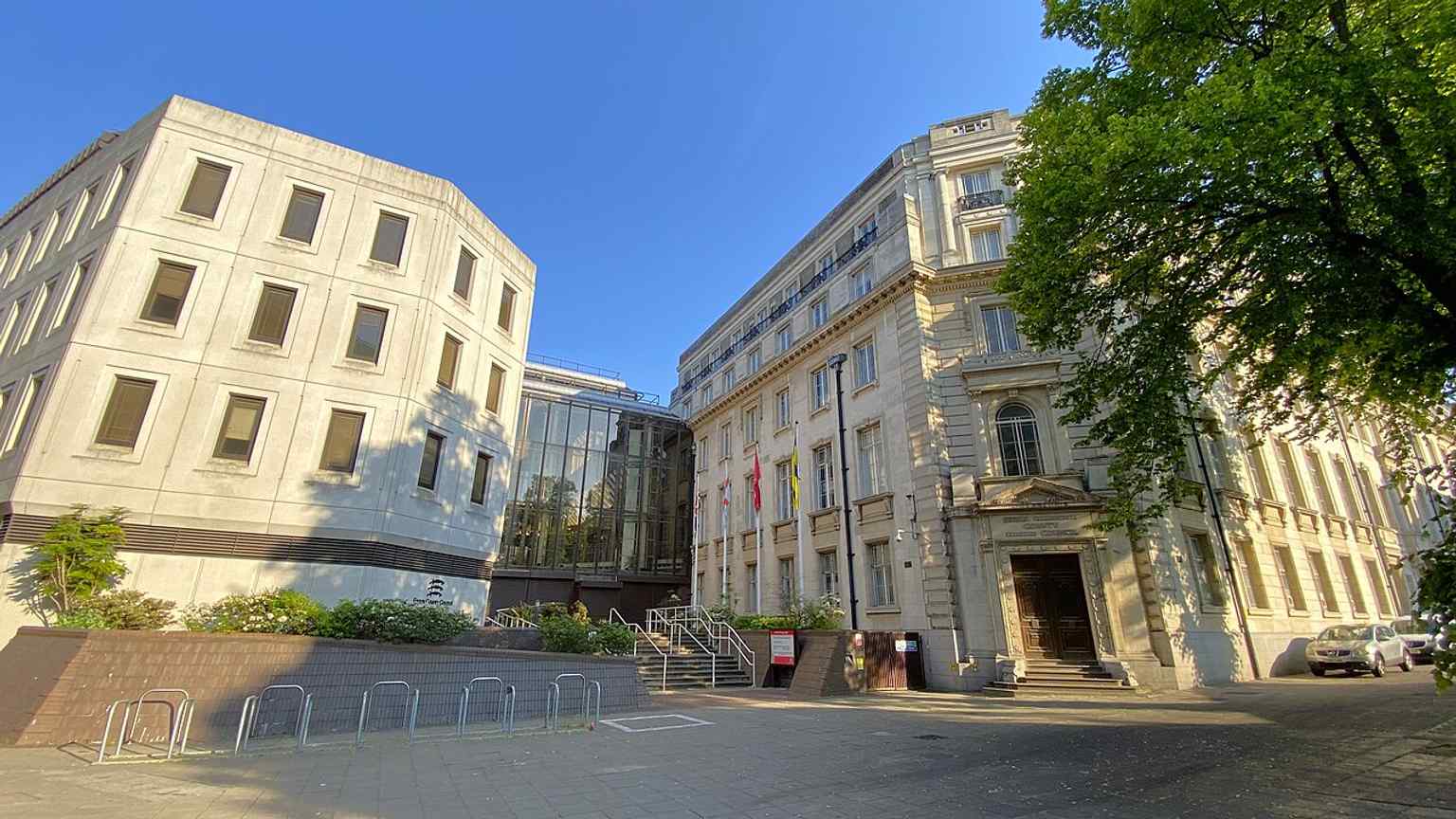
The main County Hall complex in Chelmsford, headquarters of Essex County Council and the setting for the postwar additions mentioned in the history.Photo: Richard Kelly, Wikimedia Commons, CC BY-SA 4.0. Cropped & resized. On your left, look for the long flint, stone and brick church, its square tower lifting into a slender spire, with a projecting south porch set slightly forward from the main…Read moreShow less
Open dedicated page →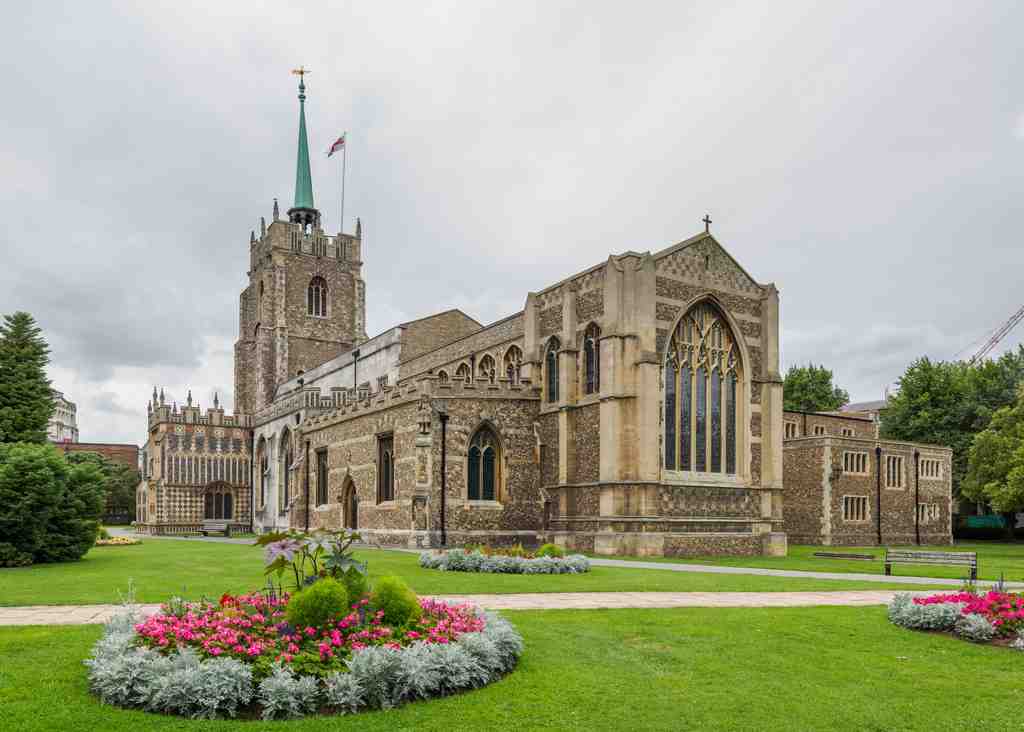
Chelmsford CathedralPhoto: Diliff, Wikimedia Commons, CC BY-SA 3.0. Cropped & resized. On your left, look for the long flint, stone and brick church, its square tower lifting into a slender spire, with a projecting south porch set slightly forward from the main wall.
At first glance, Chelmsford Cathedral seems calm, almost self-possessed. But this building has earned that poise. A church likely stood here by about twelve hundred, growing with the town itself, and the late medieval rebuilding stretched on for decades because local loyalties kept pulling in different directions. The Yorkist Bourchier family and the Lancastrian de Vere family both funded work here, and their rivalry slowed progress so badly that the project dragged on for nearly a century. If you look at the masonry image in the app, that mingling of flint, stone and brick begins to make perfect sense: not one neat campaign, but a long argument written into the walls.
A close exterior detail from the cathedral’s fabric, reflecting the centuries of rebuilding in flint, stone and brick.Photo: No Swan So Fine, Wikimedia Commons, CC BY-SA 4.0. Cropped & resized. Now let your gaze rise to the south porch and the rooflines above it. This is where the cathedral starts keeping secrets. A stone staircase inside that porch leads to an upper room above the street, and there, tucked into the medieval fabric, sits a notable library of medieval theological books and decorated manuscripts. Most people standing here never suspect that scholarship is perched just overhead, as quietly as a held breath.
The cathedral’s full dedication opens an even older door: Saint Mary the Virgin, Saint Peter and Saint Cedd. Cedd was a seventh-century missionary bishop, one of the figures who helped root Christianity across Essex long before this market-town church took shape. When the cathedral added his name in nineteen fifty-four, it reached back beyond parish records and noble feuds to claim kinship with the region’s earliest Christian life. His presence here is not decorative. It reminds you that this site belongs to a much longer spiritual map.
One man still attached to this doorway is Thomas Hooker. He served as Chelmsford’s town lecturer from sixteen twenty-six to sixteen twenty-nine, and his sermons drew such crowds that local memory never quite released him. A blue plaque near the south porch marks the spot. Then Hooker left for New England, founded Hartford in Connecticut, and became one of the figures later associated with American democracy. That is rather extraordinary: a preacher at this church carrying ideas from Essex across the Atlantic.
The building itself has survived harsher tests. In eighteen hundred, the nave, the central hall of the church, partly collapsed. County architect John Johnson rebuilt it, keeping the Perpendicular Gothic feel, the late medieval style of strong vertical lines and broad windows, but using Coade stone piers and tracery, with a plaster ceiling above. If you glance at the interior view on your screen, you can see how the rebuilt nave still holds that older rhythm, even after catastrophe and repair.
Then came nineteen fourteen, when a new regional church structure needed a cathedral, and this parish church was chosen as its seat. Later generations kept reshaping it: the south porch extension of nineteen fifty-three honoured Anglo-American friendship and the many U-S airmen stationed in Essex during the Second World War, while new art and organs inside carried the story forward.
In a moment, we’ll follow that widening reach outward to the Diocese of Chelmsford itself, just a one-minute walk away, where this church’s local history becomes a regional one. If you wish to return later, the cathedral is generally open from early morning until early evening, with a slightly earlier close on Sundays.
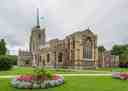
A full view of Chelmsford Cathedral, useful for the building’s long history from parish church to cathedral in 1914.Photo: No Swan So Fine, Wikimedia Commons, CC BY-SA 4.0. Cropped & resized. 
Another architectural detail that helps tell the story of the cathedral’s long medieval rebuilding campaign.Photo: No Swan So Fine, Wikimedia Commons, CC BY-SA 4.0. Cropped & resized. 
A close look at the cathedral’s exterior masonry, part of the late-medieval church that took nearly a century to complete.Photo: No Swan So Fine, Wikimedia Commons, CC BY-SA 4.0. Cropped & resized. 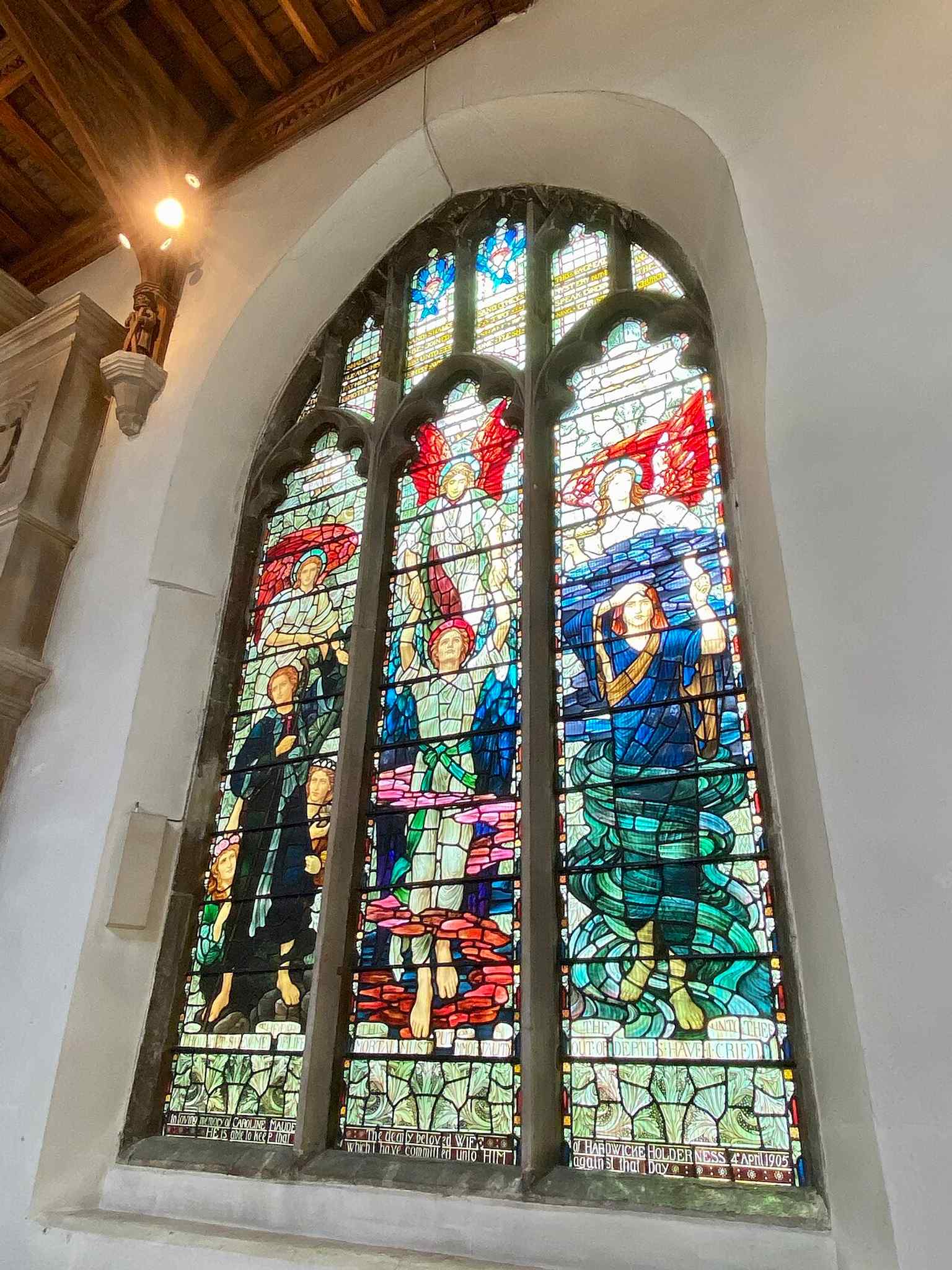
A 2023 record of the cathedral’s lived-in exterior, linking the medieval church to its present-day role as diocesan seat.Photo: No Swan So Fine, Wikimedia Commons, CC BY-SA 4.0. Cropped & resized.
Show 7 more stopsShow fewer stopsexpand_moreexpand_less
On your right, look for a restrained red-brick frontage with tall rectangular windows and a formal doorway marked by the Diocese of Chelmsford. This is not a parish church, and…Read moreShow less
Open dedicated page →
Diocese of ChelmsfordPhoto: Hogweard, Wikimedia Commons, Public domain. Cropped & resized. On your right, look for a restrained red-brick frontage with tall rectangular windows and a formal doorway marked by the Diocese of Chelmsford.
This is not a parish church, and not quite a seat of power in the civic sense either. It is something more quietly far-reaching: the administrative heart of a Church of England diocese, the place where a religious map is organised, argued over, and kept alive across a vast stretch of country and city.
Chelmsford became the centre of that map on the twenty-third of January, nineteen fourteen. This was, quite deliberately, a diocese built for a changing region. It was carved from the Diocese of Saint Albans to serve not only Essex, but also the fast-growing edge of East London, a sign that old church boundaries no longer matched the way people were actually living, moving, and building.
Its first bishop, John Watts-Ditchfield, tells you a great deal. He came here from Bethnal Green, not from some secluded rural living. That choice mattered. It hinted that Chelmsford’s new diocese would have to speak to dockland streets, expanding suburbs, railway growth, and village towers all at once. In other words, this office stood for a church trying to catch up with a region that had already begun to remake itself.
And yet the story reaches much further back than nineteen fourteen. One of the diocese’s deepest roots lies at Bradwell-on-Sea, where Saint Peter-on-the-Wall dates from about six hundred and sixty to six hundred and sixty-two. Saint Cedd sailed from Lindisfarne to bring Christianity to Essex, and that tiny chapel still casts a long shadow over this modern institution. When Adam Atkinson was announced as Bishop of Bradwell in twenty twenty-three, the diocesan team prayed there first, as if the newest chapter needed the blessing of the oldest shoreline.
The scale of the place is striking. The diocese covers around fifteen hundred square miles and serves more than three million people, with four hundred and sixty-three parishes and five hundred and eighty-eight churches. Since nineteen eighty-four it has been divided into three episcopal areas - church districts overseen by bishops - Barking, Bradwell, and Colchester. If you glance at the image on your screen, you can see that structure made visible in the installation of the area bishops in twenty fourteen.
What makes Chelmsford fascinating is that the diocese has kept stretching to fit new lives. Its territory includes Essex, but also Barking and Dagenham, Havering, Newham, Redbridge, and Waltham Forest - places shaped by regeneration, ports, airports, the Thames Gateway, and housing growth tied to the London Olympics. This is faith administered on a scale that feels almost infrastructural.
And it has not been static. In nineteen ninety-four, Ann Easter became one of the first women ordained as priests here in Chelmsford’s cathedral, after years of campaigning and service. Later, in twenty twenty-one, Lynne Cullens was welcomed as Bishop of Barking with school pupils present and even a pectoral cross designed by students. A pectoral cross, by the way, is the cross a bishop wears on the chest. Tradition here does not sit still; it keeps negotiating with the present.
That negotiation matters, because institutions grow more complex as the places they serve grow more complex. Here, spiritual jurisdiction learned to widen its reach. At the next stop, legal jurisdiction does something rather similar at Chelmsford Crown Court, only a minute away.
If you need the practical detail, these diocesan offices generally open Monday to Friday, from nine in the morning until five in the afternoon.
On your left, Shire Hall presents a pale Portland stone front with five perfectly balanced bays, three broad ground-floor arches, and a clock set inside a grand triangular…Read moreShow less
Open dedicated page →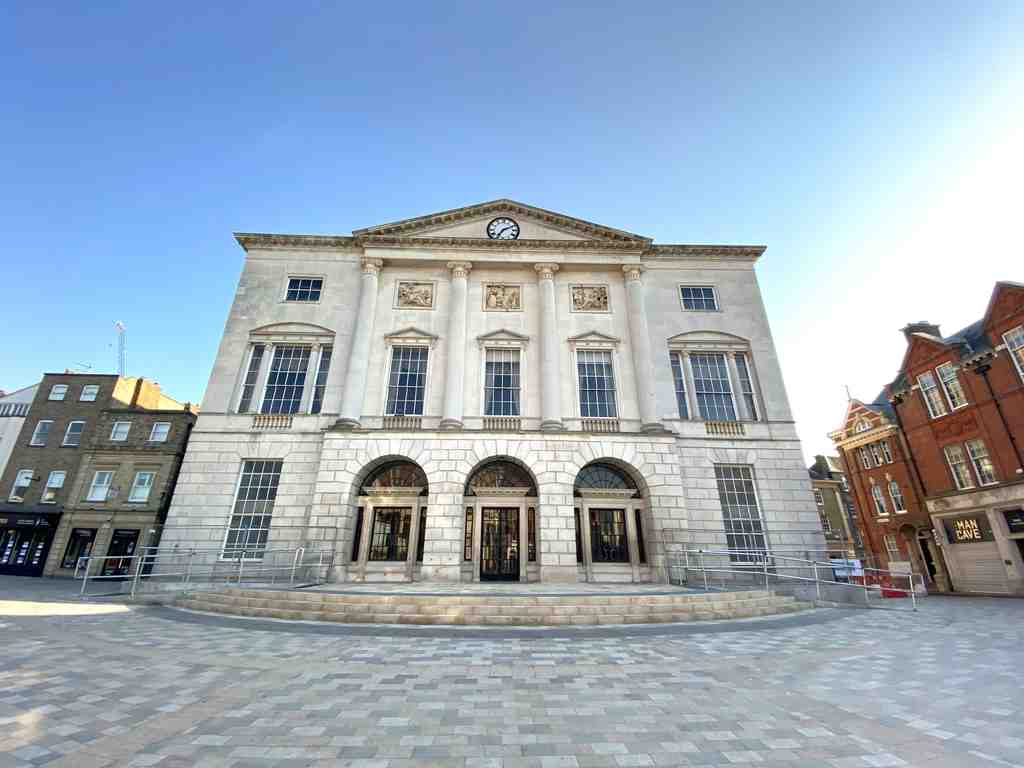
Shire Hall, ChelmsfordPhoto: Richard Kelly, Wikimedia Commons, CC BY-SA 4.0. Cropped & resized. On your left, Shire Hall presents a pale Portland stone front with five perfectly balanced bays, three broad ground-floor arches, and a clock set inside a grand triangular pediment.
This is where Chelmsford put justice on display. When architect John Johnson opened the new hall in seventeen ninety-one, he gave the county more than a courthouse; he gave it a performance set. Trials unfolded here, county business gathered here, and above it all the first-floor windows stood between Ionic columns, with carved figures of justice, wisdom, and mercy watching from overhead, as if the building itself meant to teach you how authority should look.
If you glance at the image on your screen, the symmetry becomes wonderfully clear: the projecting central section, the arches, the pediment, all arranged to impress before a single word in court was spoken. And inside, the display continued. The ground floor held a corn exchange alongside two courtrooms, while upstairs there was a large assembly room dressed with classical female figures sculpted by John Bacon and carved chimney-pieces by Charles Rossi. Law here did not hide behind plain walls. It borrowed the language of theatre, trade, and taste.
Most visitors never realise what stood here before. Shire Hall replaced the old Tudor Market Cross, and that earlier building was a strange civic hybrid: its open ground floor worked as a draughty piazza where assizes, the traveling criminal courts, and quarter sessions, the county’s regular court meetings, were heard, while corn merchants traded there on market days. In other words, justice and commerce shared the same roof, the same noise, the same crowd. Chelmsford liked to imagine progress as an upgrade, but what rose here still carried traces of that older mixture.
The neat story frays if you follow it further. In eighteen fifty-six, a crowd pushed in to attend the trial of five men accused of murder while poaching. The staircase collapsed, killing one young man and badly injuring four others. Public justice had turned into public hazard.
Then came another reinvention. In nineteen thirty-five and nineteen thirty-six, County Architect J. Stuart rebuilt the lobby, courts, picture room and stairwell with Art Deco features. Fred Spalding, who cared deeply about the building, was appalled. He said the vestibule had lost its dignity and looked more like the entrance to a modern cinema. That complaint tells you everything about Chelmsford’s habit of remaking its symbols while insisting they still meant the same thing.
From these steps, the High Sheriff of Essex, Ralph Bury, proclaimed King George the Fifth in nineteen ten. Later, county councillors met here until County Hall took over, and eventually justice itself moved to the more practical Crown Court. Shire Hall stood largely silent after the courts left, though plans now circle around bringing it back into public use.
Next, we leave this civic stage and head for the crossing that helped make such concentration of power possible: Stone Bridge, about five minutes away.
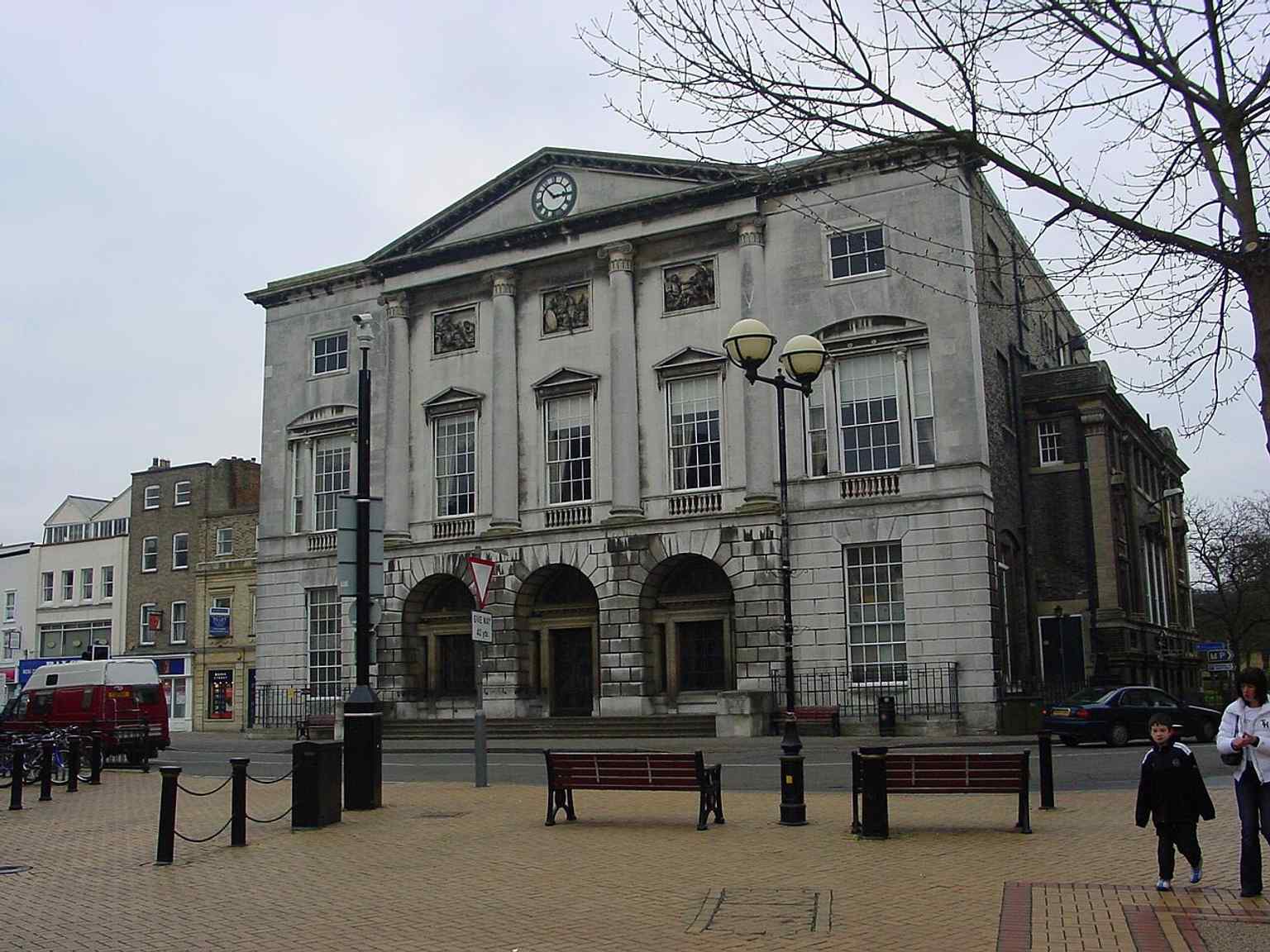
The Portland-stone courthouse front in Chelmsford’s Tindal Square, built in 1791 as a grand replacement for the old market cross sessions house.Photo: Stuart166axe at English Wikipedia, Wikimedia Commons, Public domain. Cropped & resized. 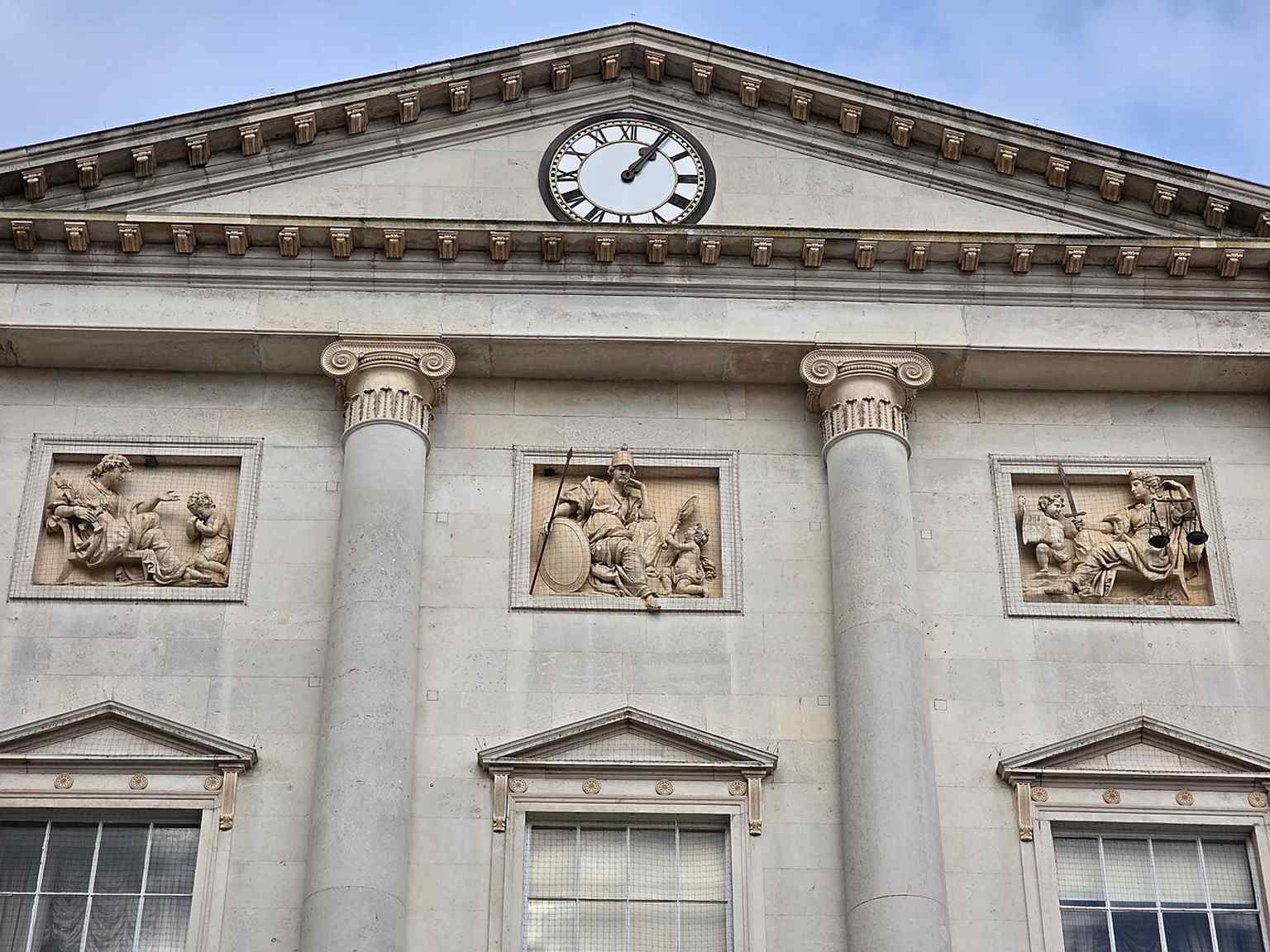
A modern view of Shire Hall’s classical façade, where Chelmsford’s county justice was once proclaimed from the steps and county meetings were held.Photo: HJ Mitchell, Wikimedia Commons, CC BY 4.0. Cropped & resized. 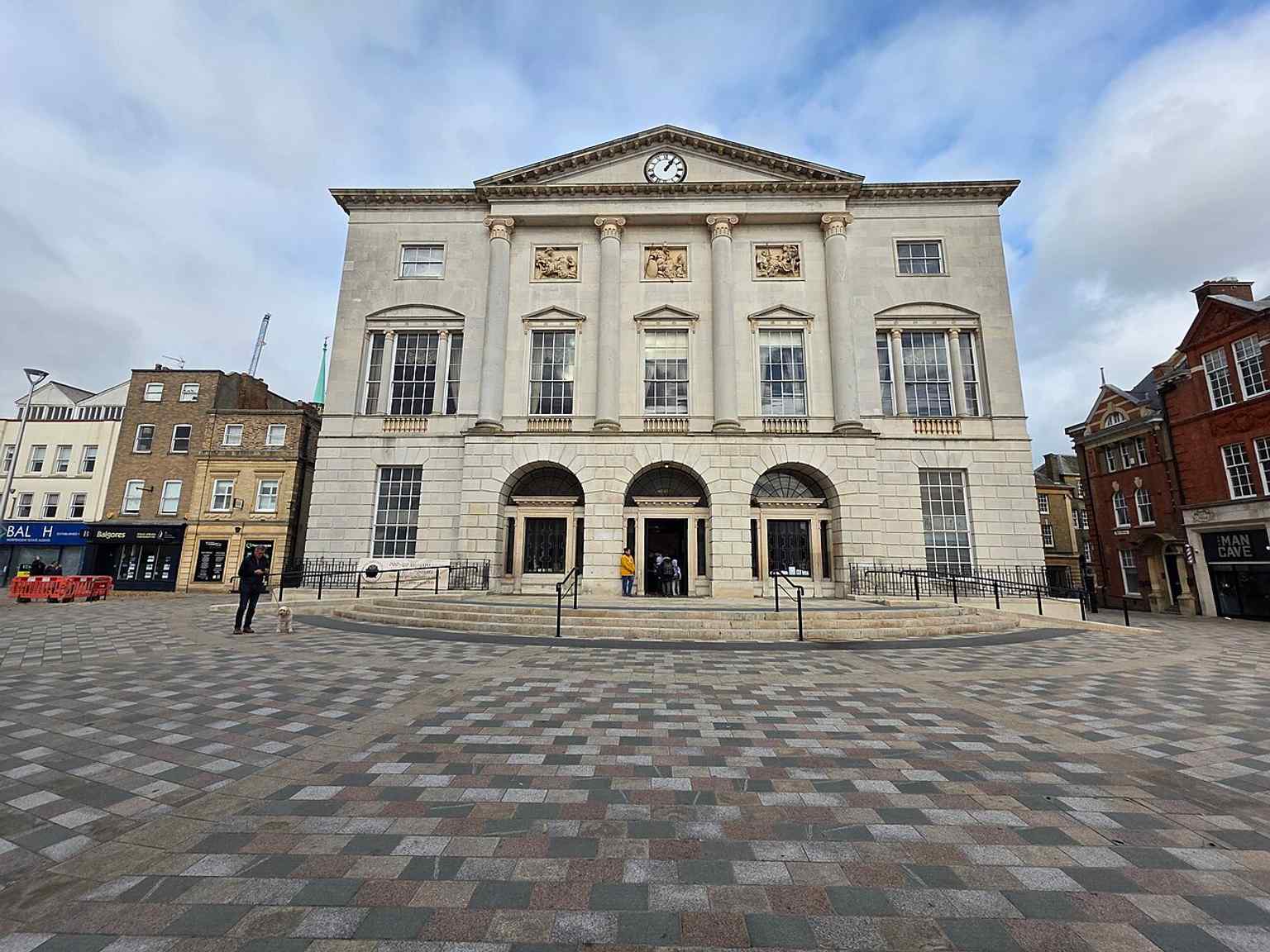
A closer look at the Shire Hall frontage, likely showing the symmetrical bays and pediment that made the building a civic showpiece.Photo: HJ Mitchell, Wikimedia Commons, CC BY 4.0. Cropped & resized. Stone Bridge looks so composed, so entirely certain of itself. Yet this crossing tells a far less tidy story. For centuries, getting across the river here meant survival for the…Read moreShow less
Open dedicated page →Stone Bridge looks so composed, so entirely certain of itself. Yet this crossing tells a far less tidy story. For centuries, getting across the river here meant survival for the town: trade, travellers, officials, all funneled through this narrow point. That is why the bridge became more than a piece of road. It turned into one of Chelmsford’s oldest civic emblems, even appearing on the borough’s coat of arms.
The present bridge began with a decision in seventeen eighty-four, when the Essex Court of Quarter Sessions ordered a replacement for an older crossing that could no longer cope with wear and traffic. They gave the work to John Johnson, the county surveyor, the same man who helped shape Chelmsford’s Georgian face elsewhere. He laid the first stone on the fifth of October, seventeen eighty-five, while a temporary bridge slightly downstream kept people moving. If you look at the close-up on your screen, you can see how elegant his solution still is.
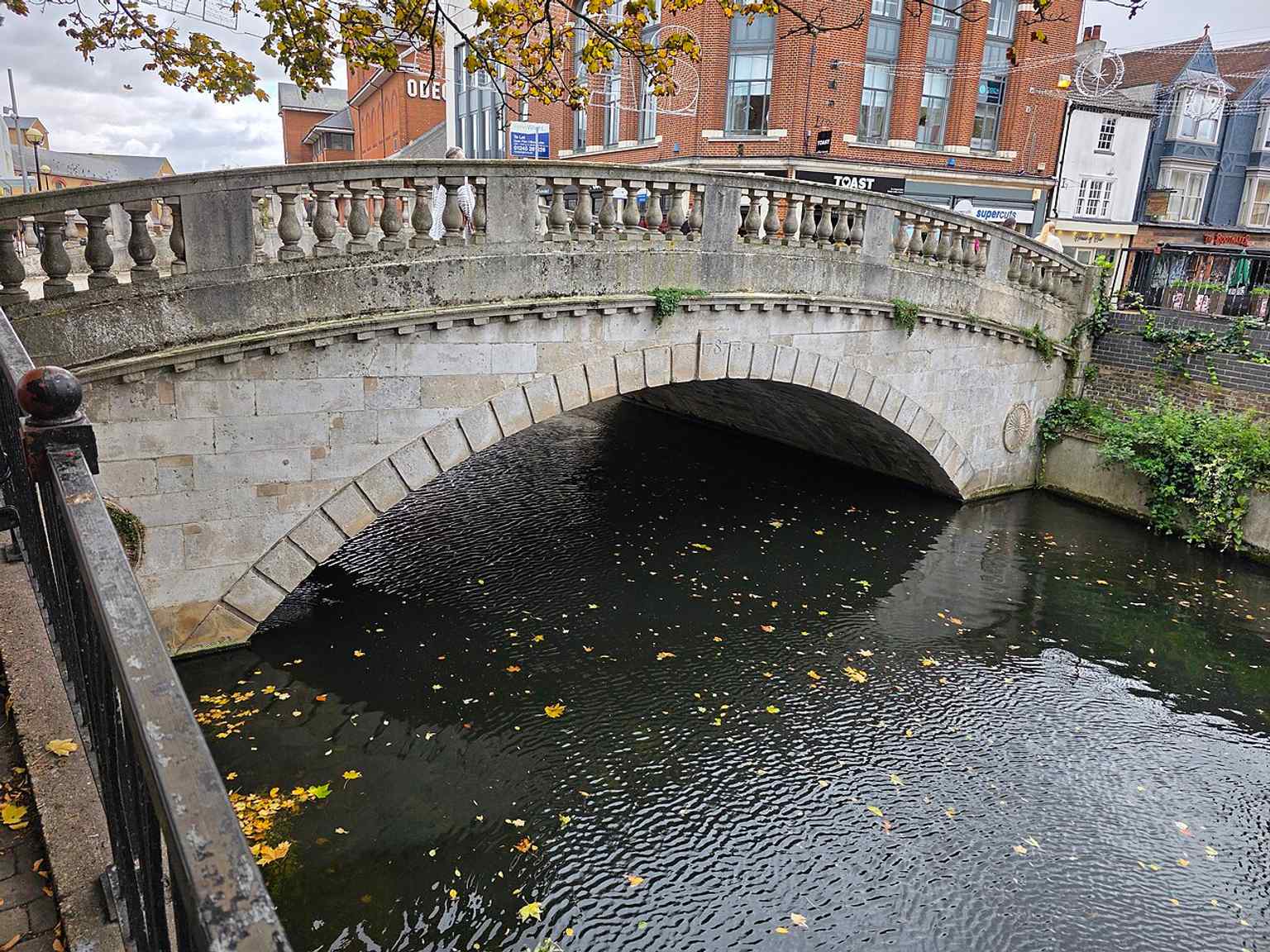
A closer look at the same bridge, useful for seeing its stonework and the elegant 18th-century structure linked to John Johnson.Photo: HJ Mitchell, Wikimedia Commons, CC BY 4.0. Cropped & resized. Now pause and study the route passing over the water. This neat bridge stands on a site with a habit of failing and returning. One earlier bridge collapsed so badly that the London to Colchester road was diverted through Writtle. In thirteen seventy-two, townspeople funded a new stone crossing for seventy-three pounds, six shillings and eight pence, a serious sum then, worth many tens of thousands of pounds now.
And even Johnson’s bridge arrived by compromise: about two hundred and forty tonnes of Dorset stone came by sea to Maldon, then by cart through Danbury to Chelmsford. Progress here was never graceful; it was hauled into place. From this threshold, we head next to Central Park, where civic memory was planted into the landscape itself.
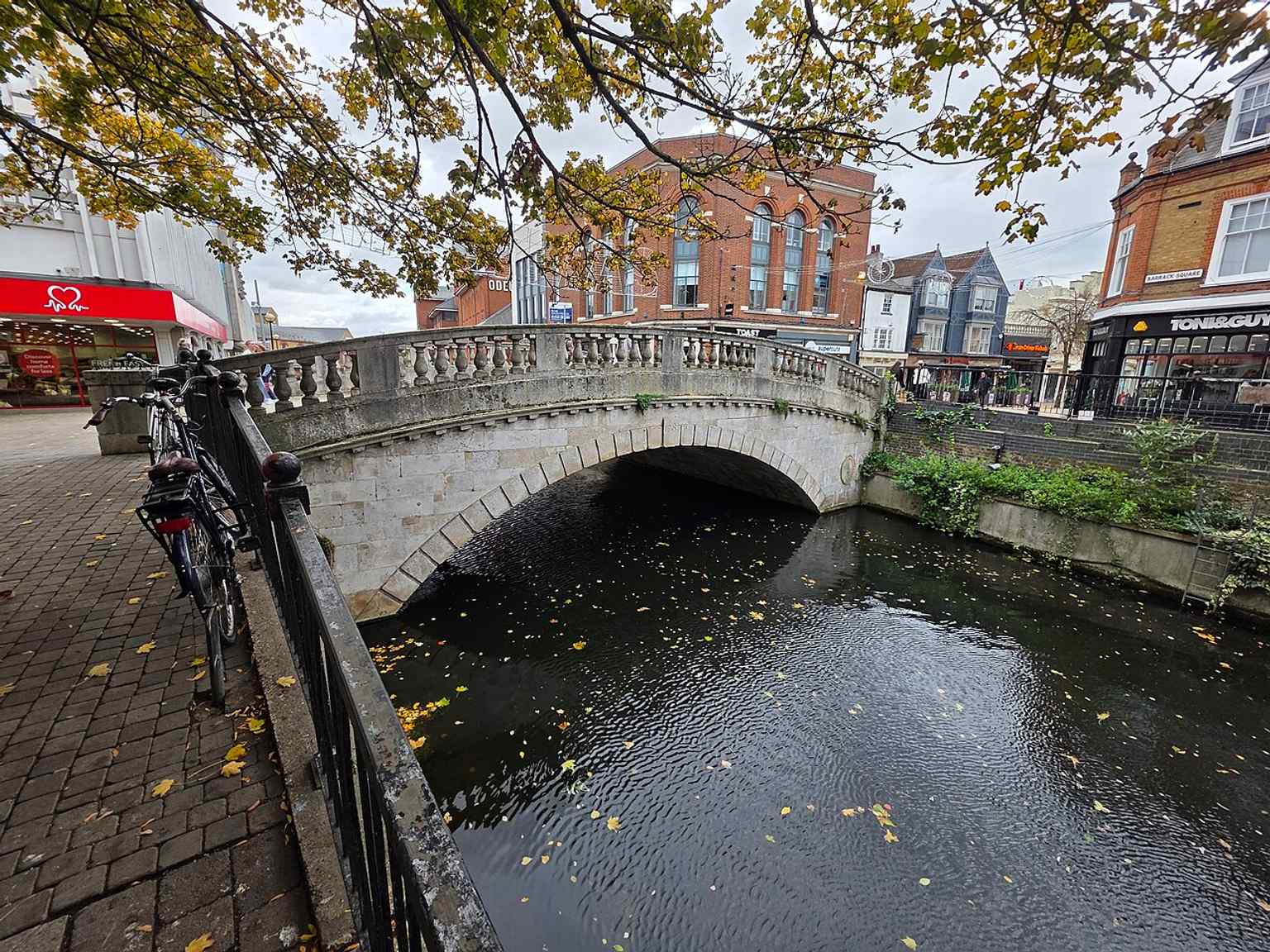
Stone Bridge on Chelmsford High Street, the Georgian replacement begun in 1785 and still carrying traffic over the River Can.Photo: HJ Mitchell, Wikimedia Commons, CC BY 4.0. Cropped & resized. On your left, Central Park opens as a broad green recreation ground, shaped by curving paths and water, with the long brick railway viaduct as its unmistakable marker. This park…Read moreShow less
Open dedicated page →On your left, Central Park opens as a broad green recreation ground, shaped by curving paths and water, with the long brick railway viaduct as its unmistakable marker.
This park looks easy, almost effortless, but Chelmsford worked rather hard to imagine it. In eighteen eighty-seven, the town considered seventeen different ideas for a Golden Jubilee memorial. One answer, in the end, was not a statue or a grand arch, but open space. After local government changed in eighteen eighty-eight, Mayor Frank Whitmore helped lay out this ground beside the River Can in eighteen ninety-four, giving a growing town somewhere to see itself in public.
It began as the Recreation Ground, and even then old ground met new purpose. The railway had already arrived in eighteen forty-two, and an eighteen-arch viaduct cut straight through the site. If you glance at the image on your screen, you can see how boldly that Victorian structure still claims its line across the park. Chelmsford never erased what came before; it kept building around it.
One of the loveliest details here is also one of the most ceremonial. From nineteen seventeen, each outgoing mayor planted an oak in November. Those trees now form an avenue: a living record of civic succession, rooted literally in the soil. Indoors, at Shire Hall, ceremony could feel theatrical. Here, it grew leaves.
There is human warmth in that story too. Cuthbert Brown, the Borough Surveyor, pressed the council to add a bowling green. When Chelmsford Bowling Club formed in nineteen oh-six, this became its first home, and Frank Whitmore returned as the club’s first president. Leisure, memory, and municipal pride all folded together.
Even wartime left its layer. Local records suggest an anti-aircraft Zed Rocket battery was here during the Second World War, with eight men on duty when it first went into action. And the park still serves the town quietly, acting as flood plain, absorbing river water to protect nearby streets and buildings.
Now that civic pride turns outward again, toward spectacle and sport. Across the river waits the County Cricket Ground, about an eight-minute walk from here. And if you linger later, this park remains open all day, every day.
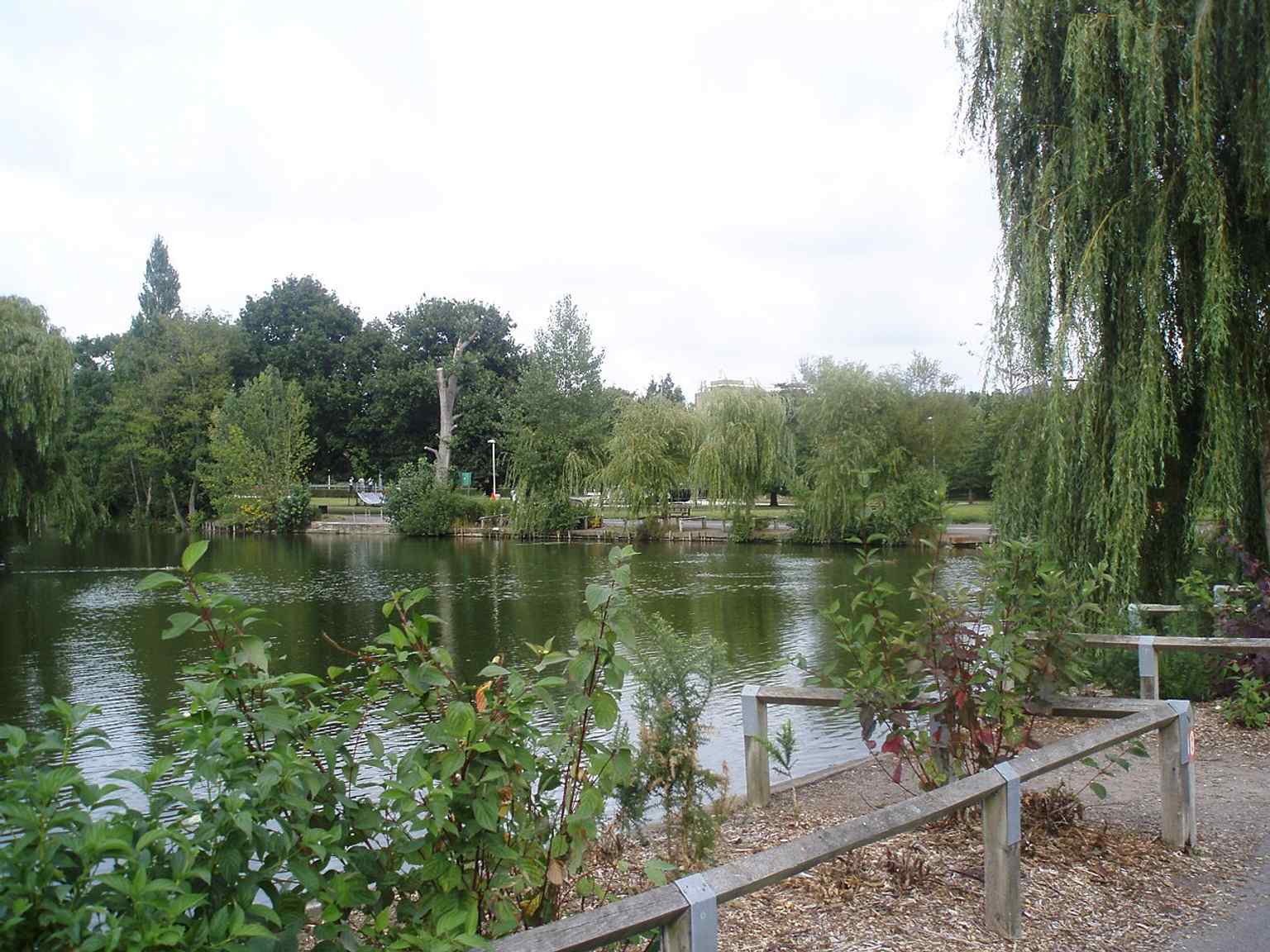
A broad view of Central Park in Chelmsford, the public green space that grew from the old Recreation Ground beside the River Can.Photo: Modesta Kolosevičiūtė, Wikimedia Commons, CC BY-SA 3.0. Cropped & resized.


Frequently asked questions
How do I start the tour?
After purchase, download the AudaTours app and enter your redemption code. The tour will be ready to start immediately - just tap play and follow the GPS-guided route.
Do I need internet during the tour?
No! Download the tour before you start and enjoy it fully offline. Only the chat feature requires internet. We recommend downloading on WiFi to save mobile data.
Is this a guided group tour?
No - this is a self-guided audio tour. You explore independently at your own pace, with audio narration playing through your phone. No tour guide, no group, no schedule.
How long does the tour take?
Most tours take 60–90 minutes to complete, but you control the pace entirely. Pause, skip stops, or take breaks whenever you want.
What if I can't finish the tour today?
No problem! Tours have lifetime access. Pause and resume whenever you like - tomorrow, next week, or next year. Your progress is saved.
What languages are available?
All tours are available in 50+ languages. Select your preferred language when redeeming your code. Note: language cannot be changed after tour generation.
Where do I access the tour after purchase?
Download the free AudaTours app from the App Store or Google Play. Enter your redemption code (sent via email) and the tour will appear in your library, ready to download and start.
If you don't enjoy the tour, we'll refund your purchase. Contact us at [email protected]
Checkout securely with 






