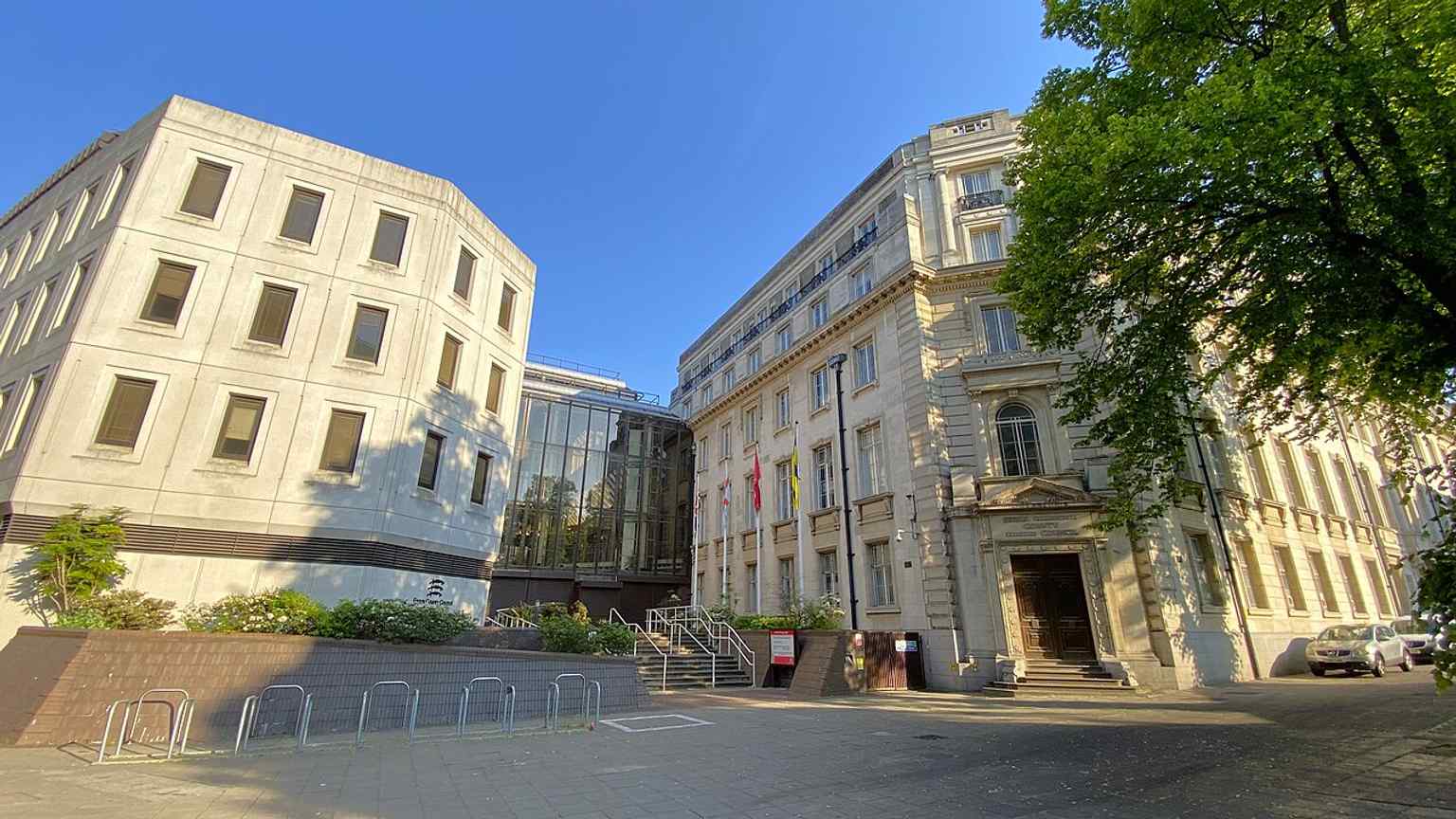
On your left is a grand stone-faced corner building with a columned entrance, a triangular pediment above the door, and rows of neatly stacked windows rising through the façade.
County Hall is where Essex taught itself to govern at a larger scale. When the Local Government Act of eighteen eighty-eight created county councils across England, Essex suddenly needed a headquarters worthy of its new responsibilities. At first, the arrangement was rather improvised: councillors held their quarterly meetings at Shire Hall in Chelmsford, but many committee meetings stayed in London because rail travel into Chelmsford was awkward for much of the county. Even authority, it seems, begins by borrowing rooms.
That could not last. Growing county business demanded permanent offices, more staff, more paper, more ceremony, and eventually more architecture. Two small offices appeared first in King Edward’s Street, but soon they felt far too modest for a county trying to organise education, roads, public services and administration on a wider map.
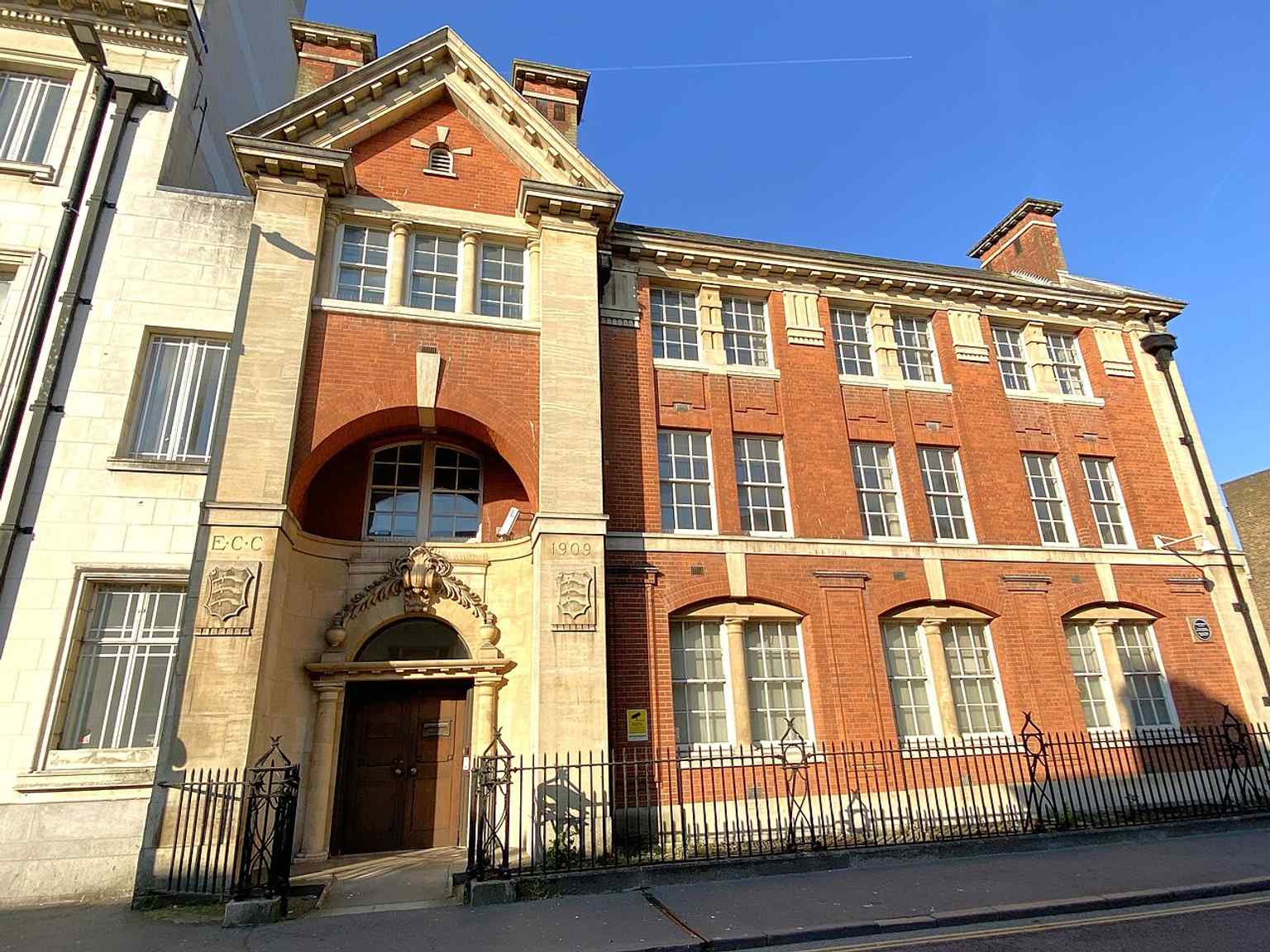
The intimate heart of that first serious attempt still survives in red brick. If you glance at the image on your screen, you’ll see Block D, designed by Frank Whitmore and completed in nineteen oh nine. Locals tend to notice the larger stone building first, but Whitmore’s block is the more personal clue. It carries a blue plaque in his honour, and that makes it more than office space: it becomes a reminder of the architect who helped shape civic Chelmsford. His frontage used classical language to give bureaucracy a little dignity: a fanlight, meaning the half-round glazed window above a door; Doric columns, the plain sturdy classical kind; and pilasters, which are flat columns attached to the wall rather than standing free.
Whitmore expected the complex to grow. He even designed Block D so it could later absorb a council chamber. But in nineteen thirteen, the council flinched at the cost and chose not to build it, continuing their split life between Chelmsford and London. That hesitation tells you something about Essex at the time: ambitious, certainly, but cautious about how fast to commit.
By the late nineteen twenties, caution gave way to expansion. The council demolished the King Edward’s Street properties and raised the imposing Portland stone block you see dominating the corner, known as Block C. J. Stuart designed it, and inside, Sir William Courtauld paid for the principal ceremonial rooms: the council chamber, committee room and chairman’s room. A chamber is simply the formal meeting room where decisions are made, but this one became something grander. Henry Rushbury decorated it with maps of Essex from fifteen seventy-six and nineteen thirty-eight, portraits of notable county figures, stained glass naming former High Sheriffs, and murals ranging from Boadicea at Colchester to Samuel Pepys inspecting the navy at Harwich. In other words, the county did not only want office space. It wanted a stage on which to explain itself.
There is one detail most visitors miss. Above one of the entrances are carved swastikas, shown more clearly on your phone here. They caused alarm when people noticed them in twenty fourteen, but the carving predates Nazi use of the symbol; in the nineteen thirties, the motif was still used as an older decorative sign.
So here, in one complex, you can read Essex learning how to turn paperwork into permanence, and administration into identity. In about three minutes, we leave these secular rooms of county power and walk toward an older kind of authority altogether: Chelmsford Cathedral.