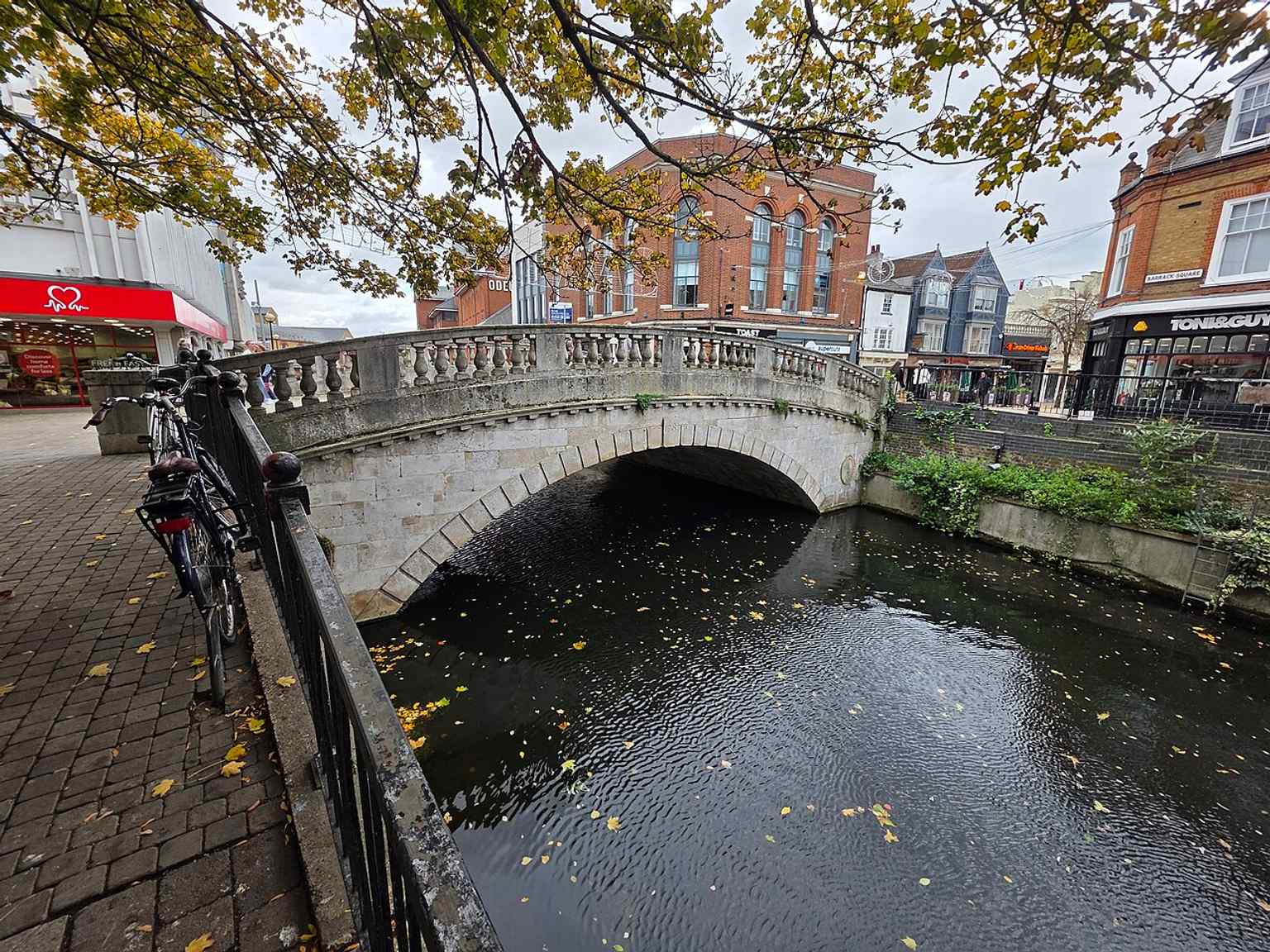
Stone Bridge looks so composed, so entirely certain of itself. Yet this crossing tells a far less tidy story. For centuries, getting across the river here meant survival for the town: trade, travellers, officials, all funneled through this narrow point. That is why the bridge became more than a piece of road. It turned into one of Chelmsford’s oldest civic emblems, even appearing on the borough’s coat of arms.
The present bridge began with a decision in seventeen eighty-four, when the Essex Court of Quarter Sessions ordered a replacement for an older crossing that could no longer cope with wear and traffic. They gave the work to John Johnson, the county surveyor, the same man who helped shape Chelmsford’s Georgian face elsewhere. He laid the first stone on the fifth of October, seventeen eighty-five, while a temporary bridge slightly downstream kept people moving. If you look at the close-up on your screen, you can see how elegant his solution still is.
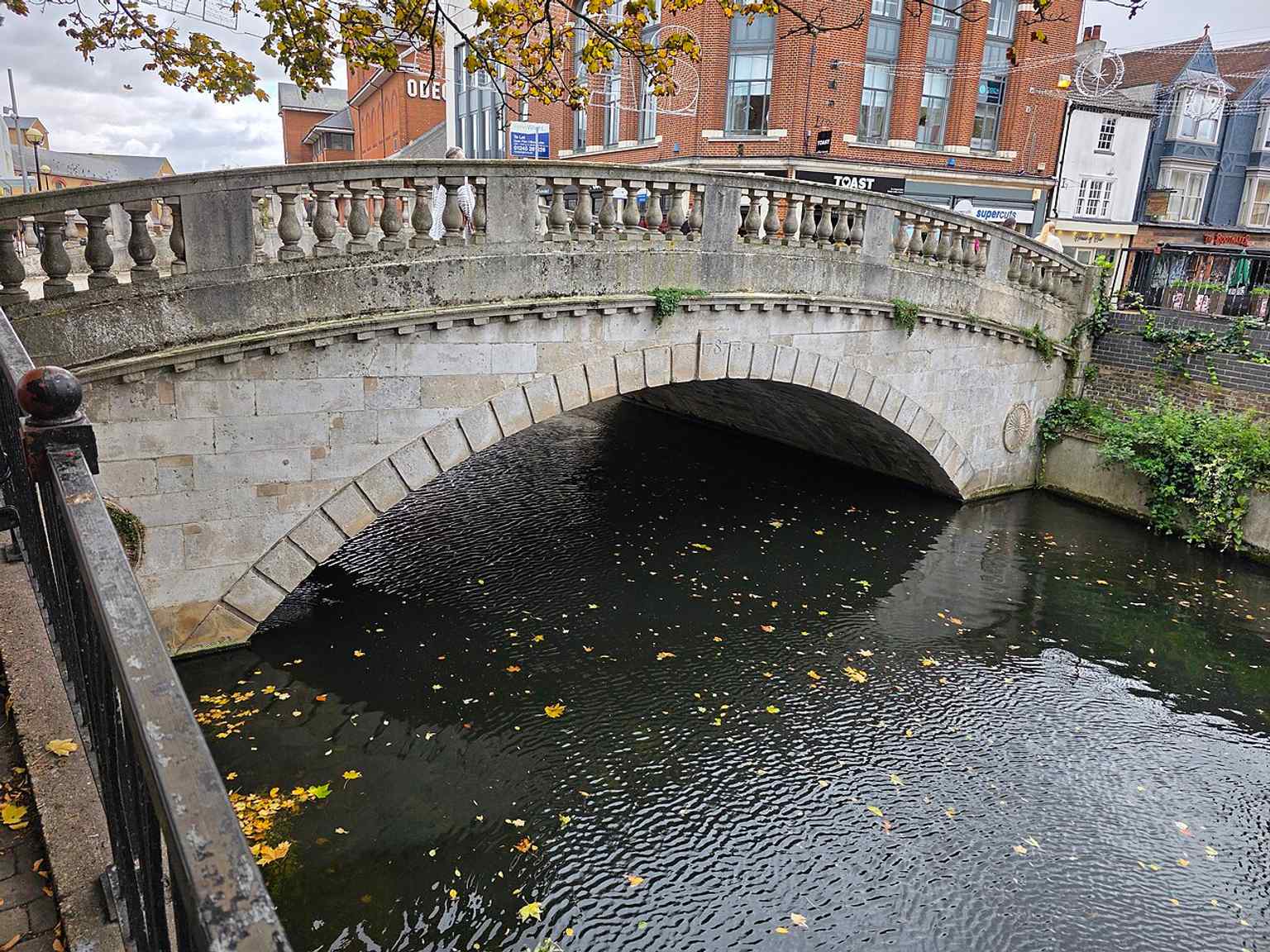
Now pause and study the route passing over the water. This neat bridge stands on a site with a habit of failing and returning. One earlier bridge collapsed so badly that the London to Colchester road was diverted through Writtle. In thirteen seventy-two, townspeople funded a new stone crossing for seventy-three pounds, six shillings and eight pence, a serious sum then, worth many tens of thousands of pounds now.
And even Johnson’s bridge arrived by compromise: about two hundred and forty tonnes of Dorset stone came by sea to Maldon, then by cart through Danbury to Chelmsford. Progress here was never graceful; it was hauled into place. From this threshold, we head next to Central Park, where civic memory was planted into the landscape itself.