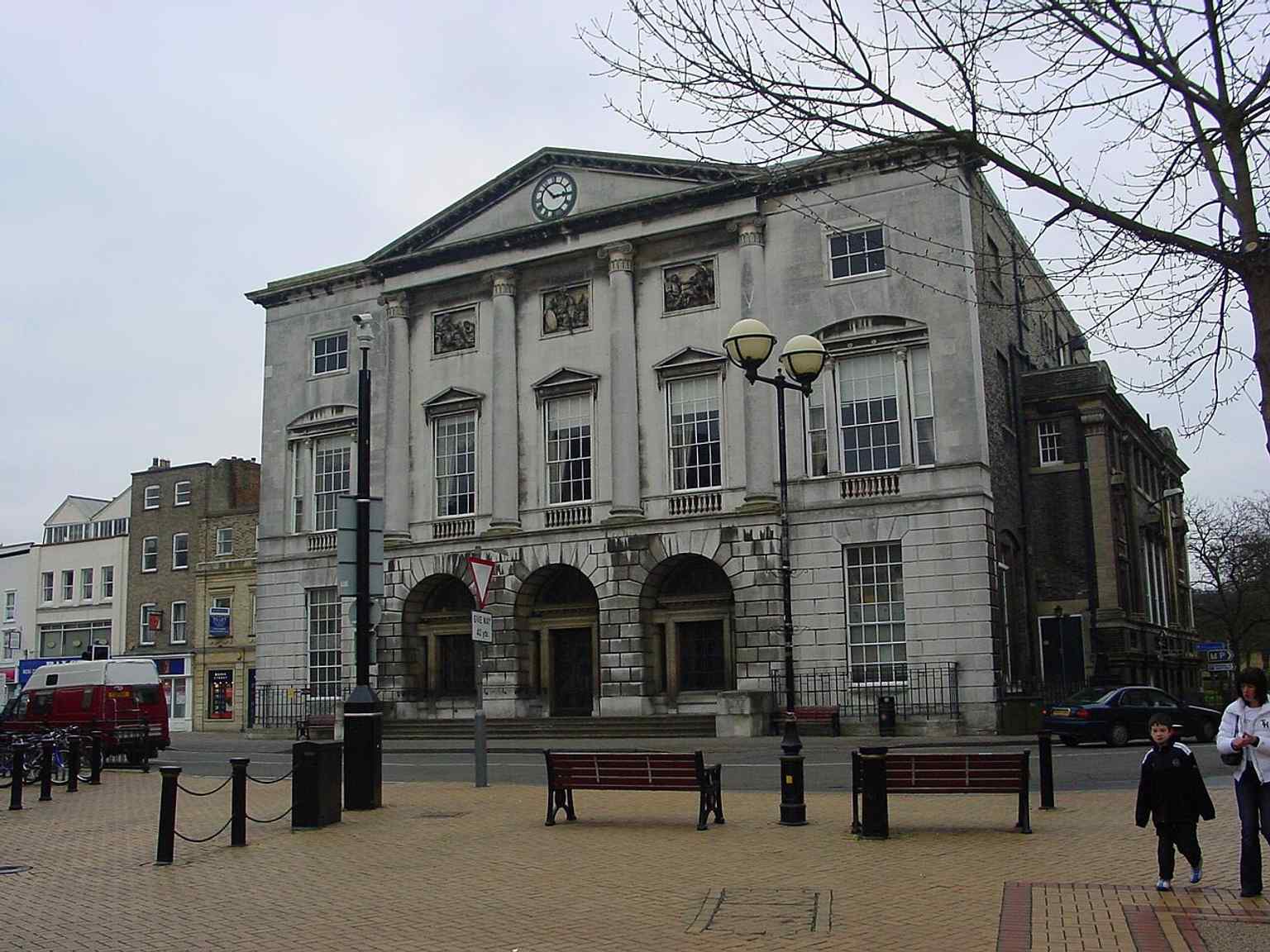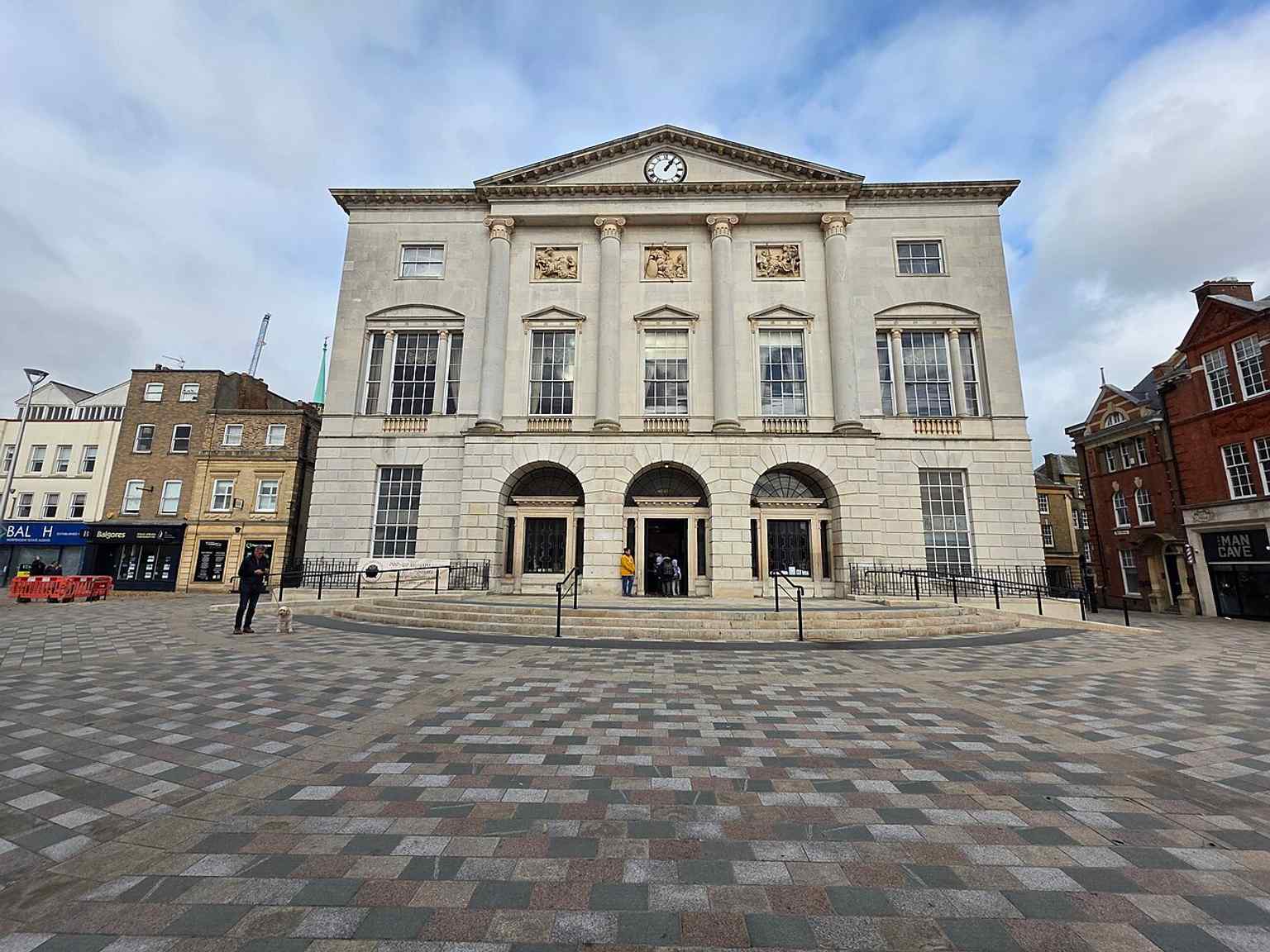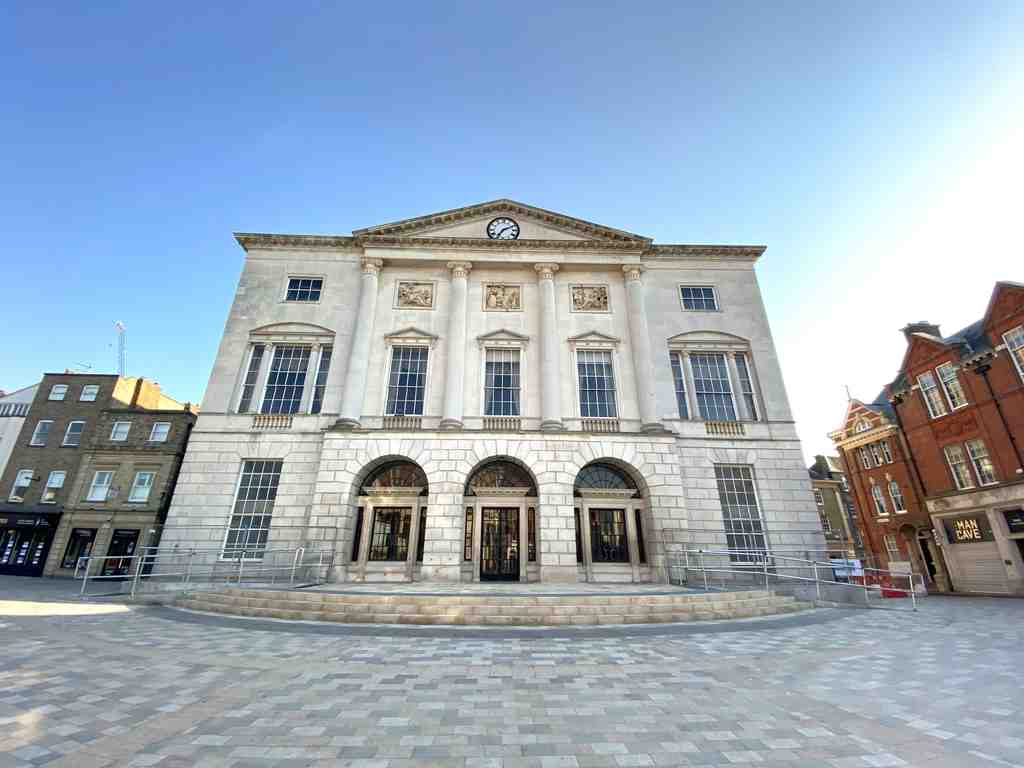
On your left, Shire Hall presents a pale Portland stone front with five perfectly balanced bays, three broad ground-floor arches, and a clock set inside a grand triangular pediment.
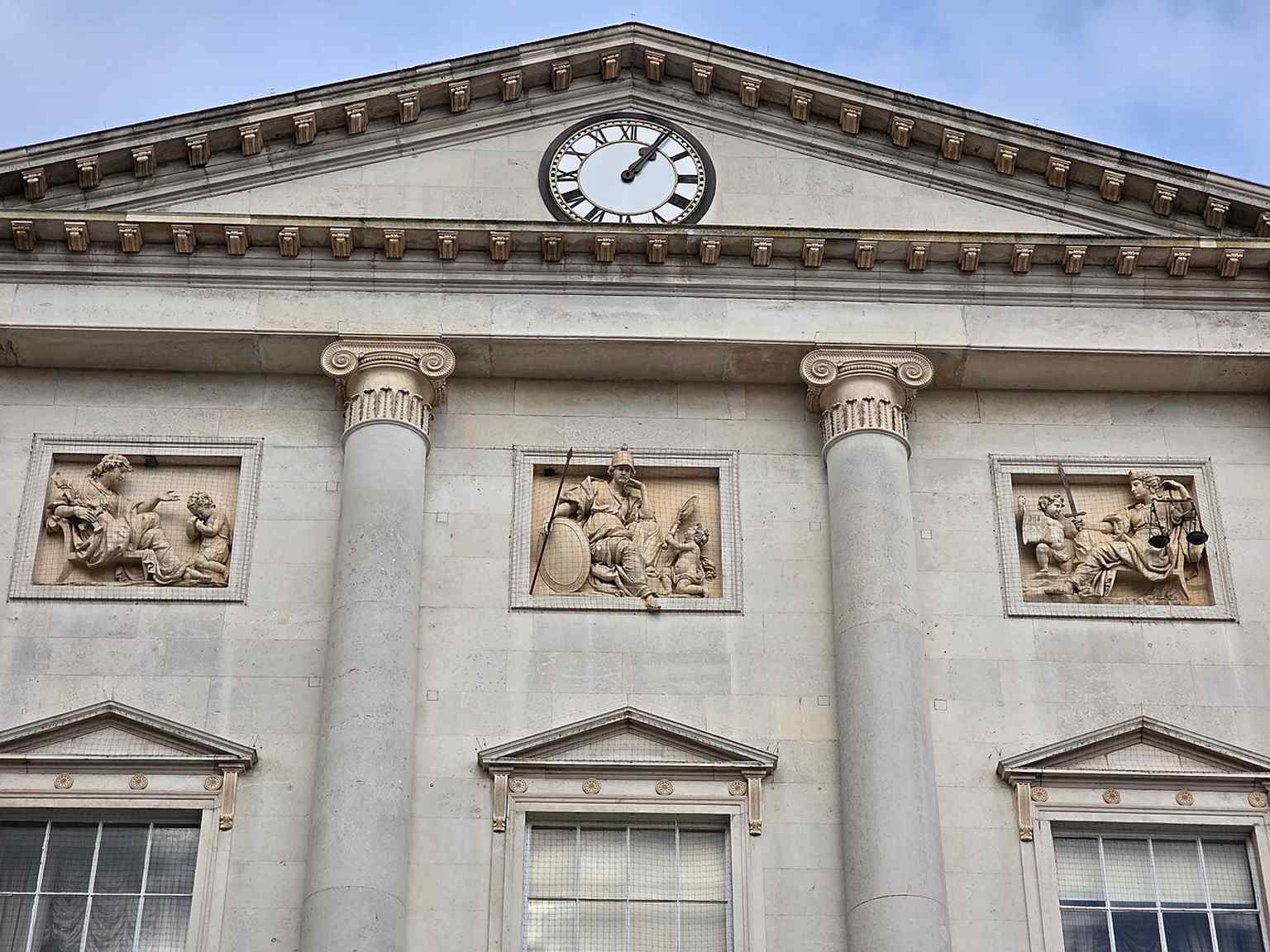
This is where Chelmsford put justice on display. When architect John Johnson opened the new hall in seventeen ninety-one, he gave the county more than a courthouse; he gave it a performance set. Trials unfolded here, county business gathered here, and above it all the first-floor windows stood between Ionic columns, with carved figures of justice, wisdom, and mercy watching from overhead, as if the building itself meant to teach you how authority should look.
If you glance at the image on your screen, the symmetry becomes wonderfully clear: the projecting central section, the arches, the pediment, all arranged to impress before a single word in court was spoken. And inside, the display continued. The ground floor held a corn exchange alongside two courtrooms, while upstairs there was a large assembly room dressed with classical female figures sculpted by John Bacon and carved chimney-pieces by Charles Rossi. Law here did not hide behind plain walls. It borrowed the language of theatre, trade, and taste.
Most visitors never realise what stood here before. Shire Hall replaced the old Tudor Market Cross, and that earlier building was a strange civic hybrid: its open ground floor worked as a draughty piazza where assizes, the traveling criminal courts, and quarter sessions, the county’s regular court meetings, were heard, while corn merchants traded there on market days. In other words, justice and commerce shared the same roof, the same noise, the same crowd. Chelmsford liked to imagine progress as an upgrade, but what rose here still carried traces of that older mixture.
The neat story frays if you follow it further. In eighteen fifty-six, a crowd pushed in to attend the trial of five men accused of murder while poaching. The staircase collapsed, killing one young man and badly injuring four others. Public justice had turned into public hazard.
Then came another reinvention. In nineteen thirty-five and nineteen thirty-six, County Architect J. Stuart rebuilt the lobby, courts, picture room and stairwell with Art Deco features. Fred Spalding, who cared deeply about the building, was appalled. He said the vestibule had lost its dignity and looked more like the entrance to a modern cinema. That complaint tells you everything about Chelmsford’s habit of remaking its symbols while insisting they still meant the same thing.
From these steps, the High Sheriff of Essex, Ralph Bury, proclaimed King George the Fifth in nineteen ten. Later, county councillors met here until County Hall took over, and eventually justice itself moved to the more practical Crown Court. Shire Hall stood largely silent after the courts left, though plans now circle around bringing it back into public use.
Next, we leave this civic stage and head for the crossing that helped make such concentration of power possible: Stone Bridge, about five minutes away.