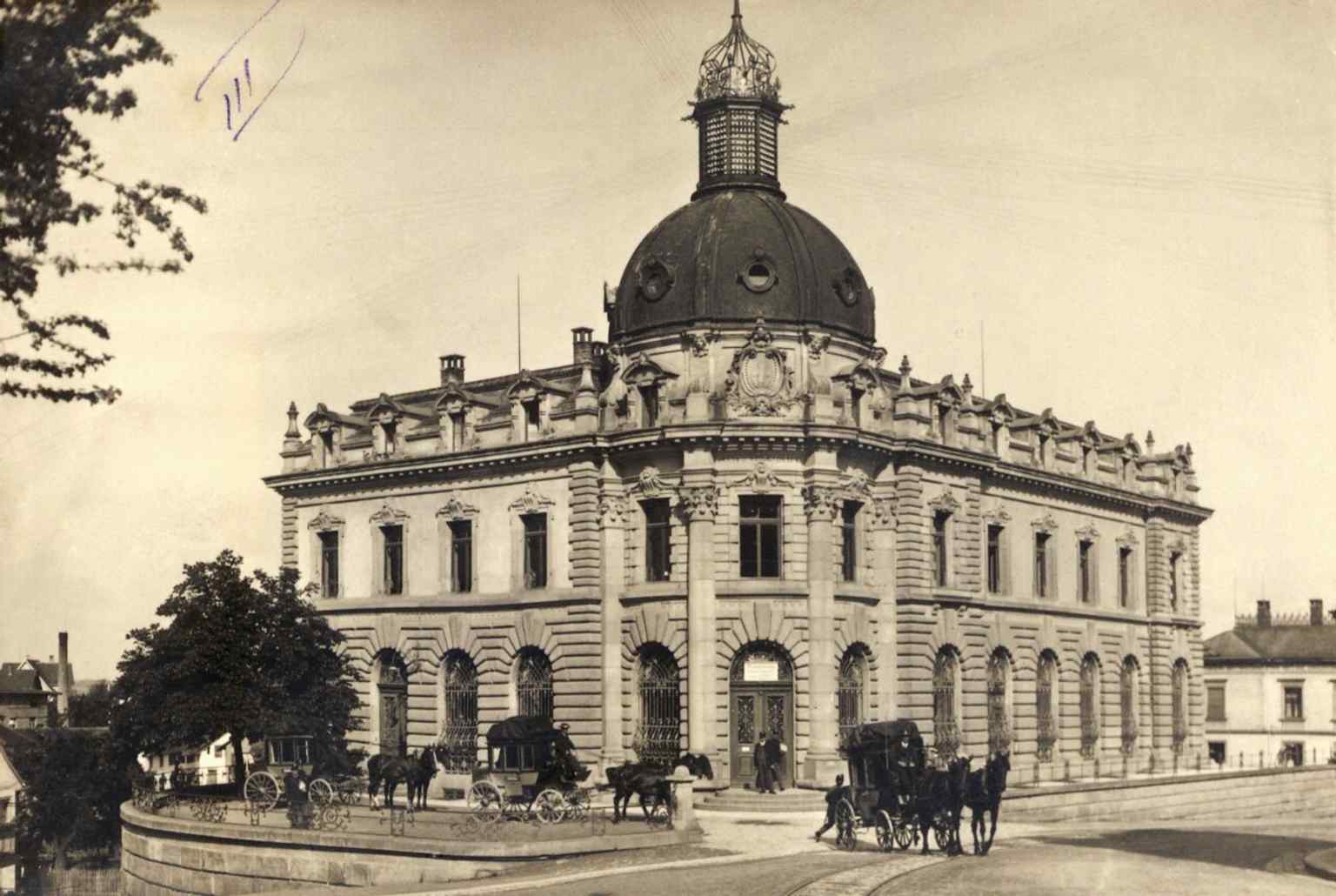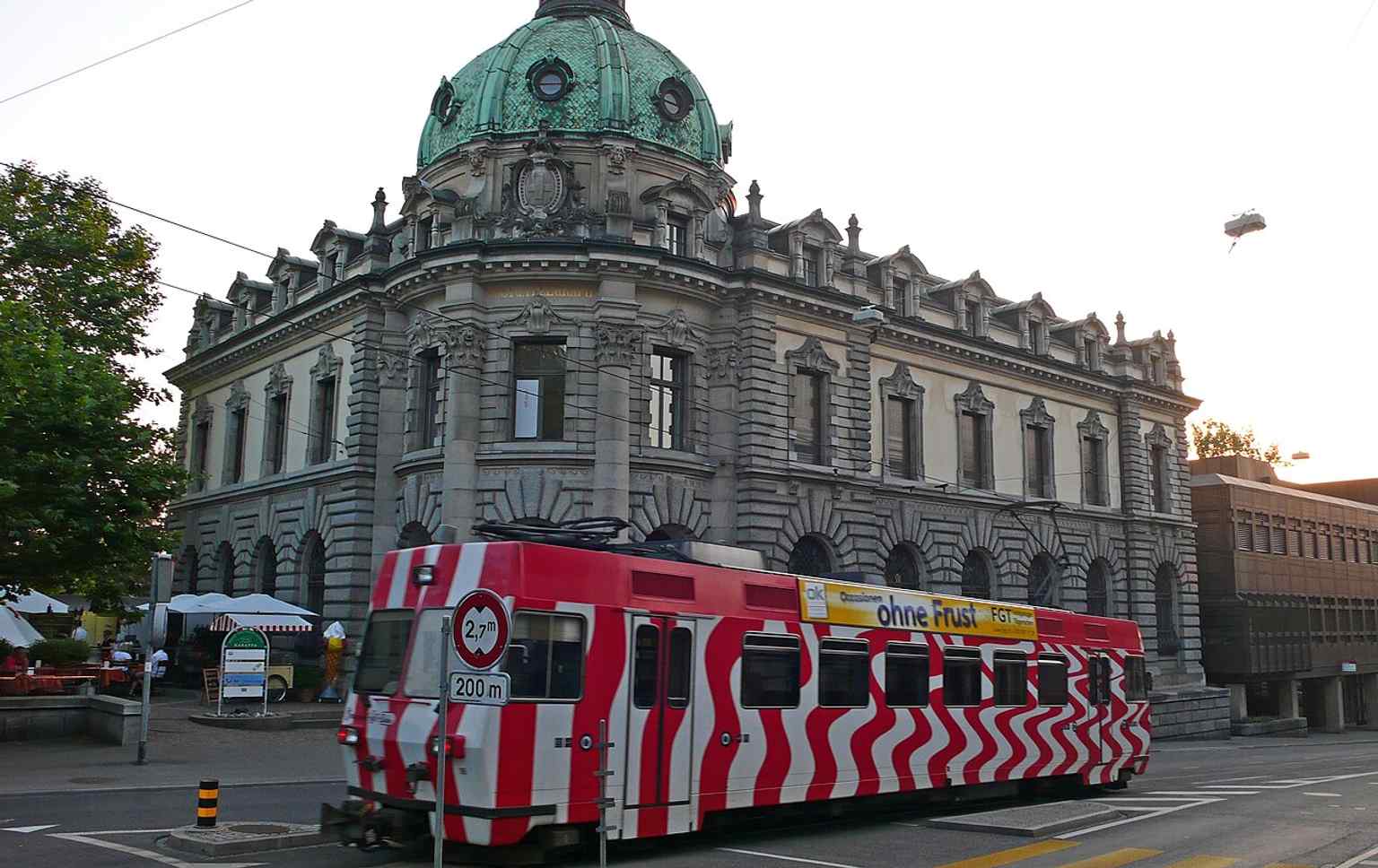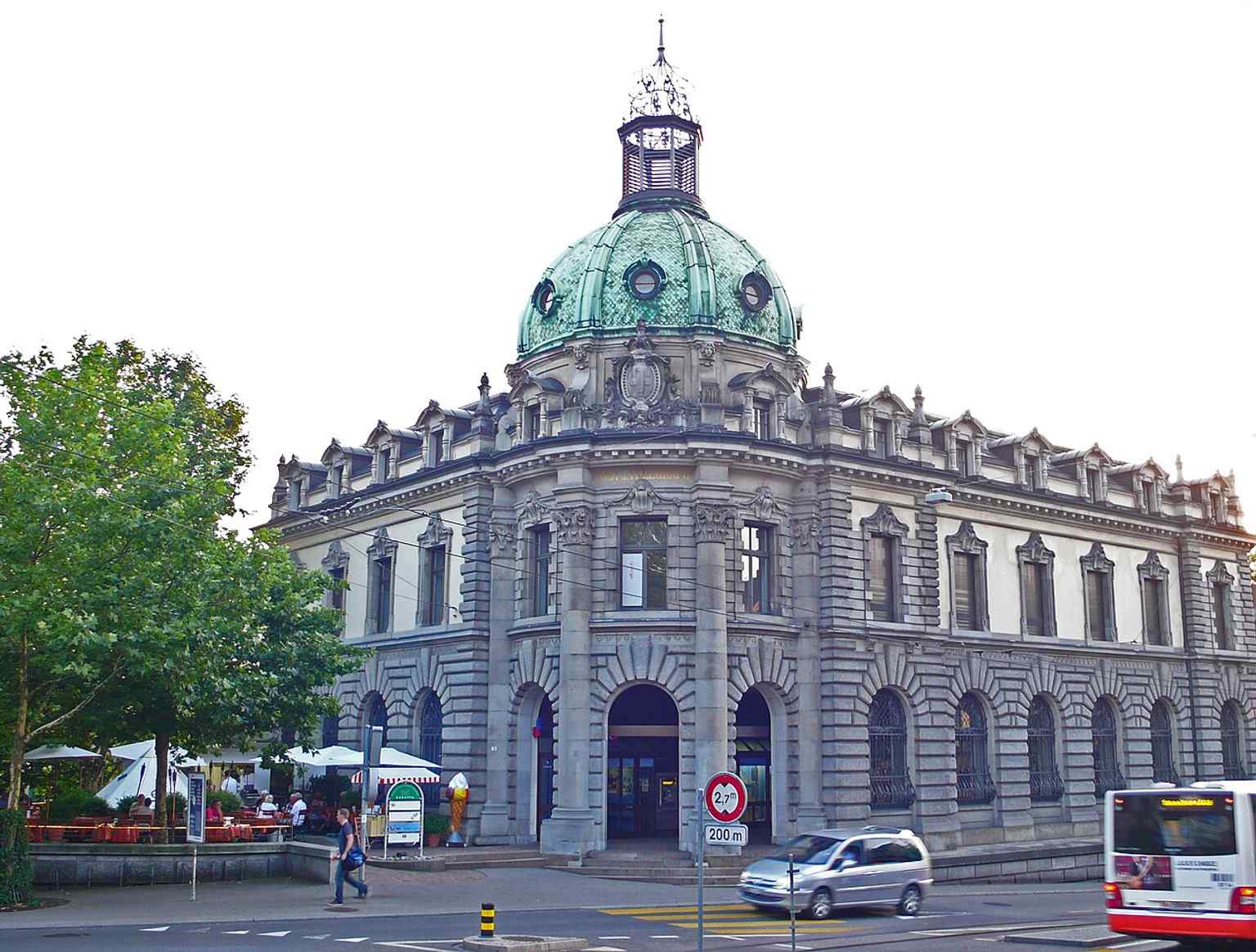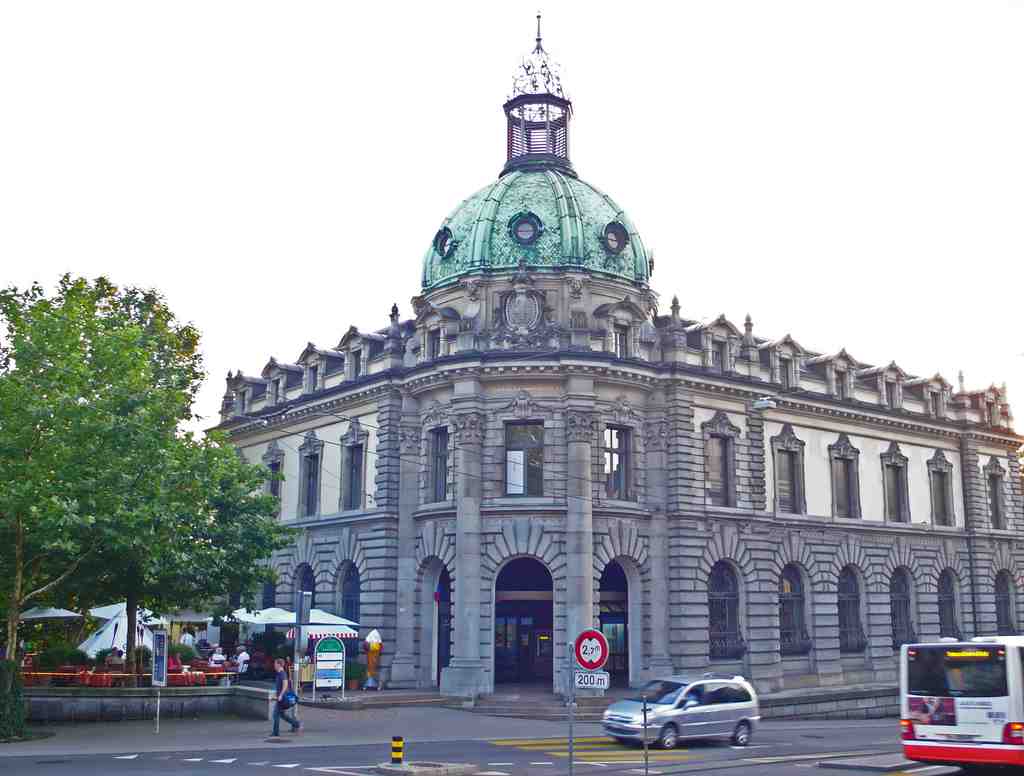
On your left stands a pale stone-and-stucco building with two uneven wings, a rounded corner dome tower, and a lantern-like crown rising above Löwenplatz.
This is Frauenfeld’s Main Post Office, and it tells the story of how a town learned to make itself legible far beyond its own streets. The communications revolution here did not begin in a purpose-built monument at all. It began in coaching inns: a postal receiving point opened at the Gasthof Kreuz in seventeen ninety, then the first official post office moved into the Krone in eighteen oh seven, and by the end of the nineteenth century the old arrangement could no longer keep up.
So in eighteen ninety-eight, the federal government opened this new post house. For the first time, letter post, telegraph, telephone, and passenger mail all worked under one roof. The ground floor handled the public. Upstairs, the wires and switching equipment did their quiet, exacting work. By then telephony had already arrived in town: on the fifteenth of June, eighteen ninety, the first telephone exchange opened at the Goldener Hirschen, and it connected just sixteen subscribers. Sixteen voices, and then the network began to spread.
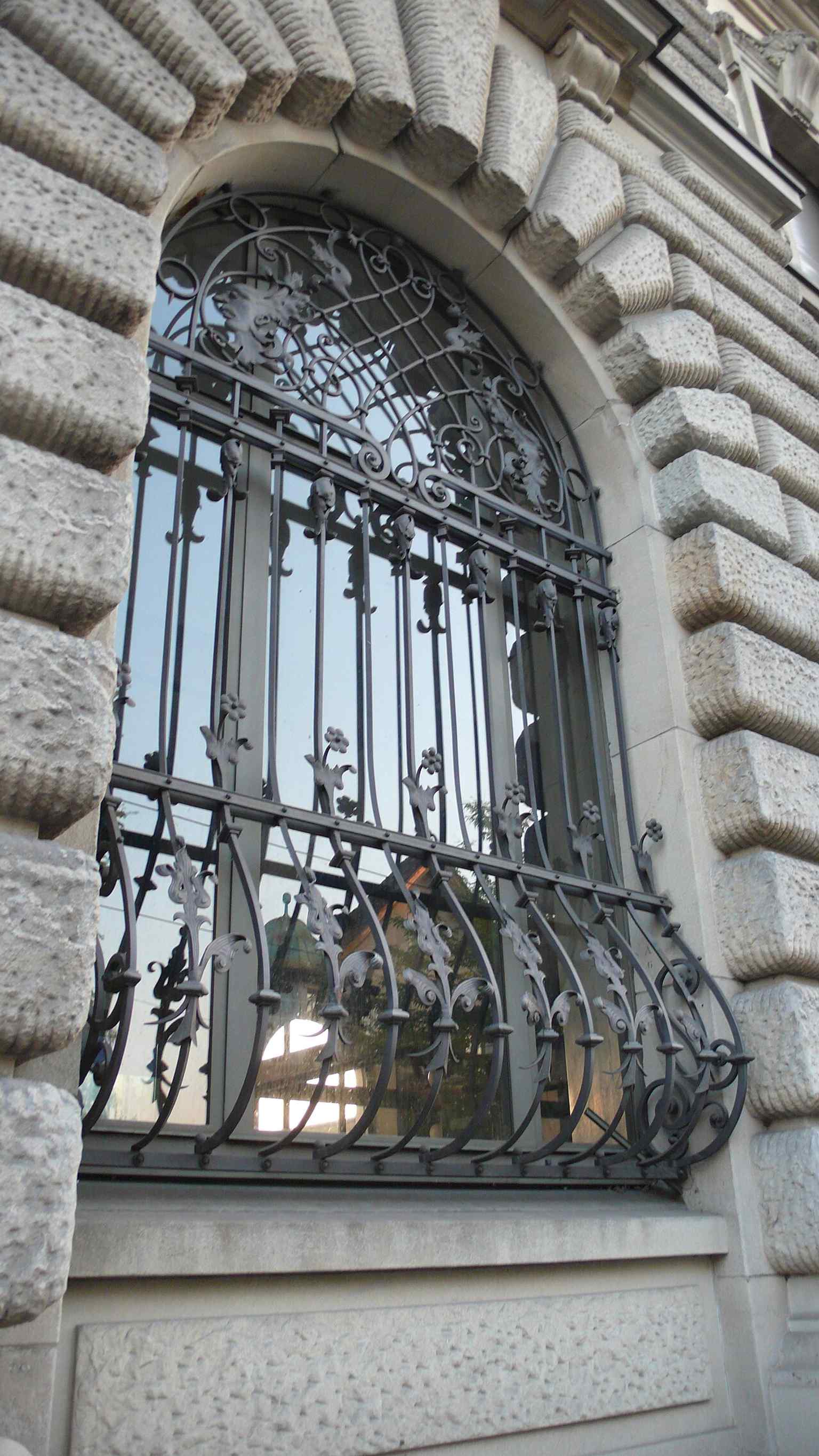
The architect was Theodor Gohl, one of the federal building administration’s leading designers, who came to Frauenfeld after earlier posts in Winterthur and Saint Gallen. He gave the town more than a service building. He designed a civic signal: a grand post office with a corner dome tower that anchors this raised site where the streets fall away on both sides. The richly decorated exterior told citizens that administration could also have presence, dignity, and style.
Yet the real drama was always in the unseen systems. In that sense, this place shares a secret with the Baliers: different technology, same hidden logic. Water once powered work through channels and control; here, messages moved by timetables, clerks, cables, and coded signals.
A photograph from nineteen oh five shows women and children by the roadside with baskets in hand while a Frauenfeld-Wil-Bahn steam train passes in front. The building was never aloof. It sat right inside the town’s daily circulation of errands, travel, and trade. If you glance at the before-and-after image, you’ll see horse-drawn postal traffic yield to modern streets while the historic building remains unmistakably itself. Its dome even carried the town’s technology on its head: first a wire support for telephone and telegraph lines, then a flagpole in nineteen twenty-eight. When restorers rebuilt the lantern in nineteen eighty-one, they first got the proportions wrong, then cut it back to the proper historic height. Later additions came and went, and in twenty eighteen a new Z-shaped building wrapped around the old core so Gohl’s façade could be read clearly again rather than swallowed by extensions.
In a few minutes, we leave this public engine of connection and turn toward a quieter kind of influence, where family memory and devotion shaped the town just as powerfully: the Rüpplin chaplaincy, about four minutes away. If you need practical matters, the branch generally opens Monday to Friday from eight until six-thirty, Saturday until noon, and closes on Sunday.