
Donostia Audio Tour: A Seaside Tapestry of San Sebastián
Beneath the elegant façade of San Sebastián beats a heart filled with secrets, whispered scandals, and the echo of political intrigue. Each ornate balcony and riverside palace has a story far wilder than its gilded exterior suggests. Stroll at your own pace with this self-guided audio tour. Uncover powerful tales hiding in plain sight as you move from the glittering Hotel María Cristina to the iconic Teatro Victoria Eugenia and through the storied Ayuntamiento. Why did revolutionary plans once unfold behind those grand hotel walls? Who vanished beneath the theatre’s velvet curtains on opening night? And what strange agreement was sealed under an unremarkable lamplight outside city hall? Let footsteps guide you through shifting eras, shadowy deals, and forgotten celebrations. Hear San Sebastián’s real past breathing behind its regal mask as you wander from one revelation to the next. Dive in—there is much more to this city than beauty alone.
Tour preview
About this tour
- scheduleDuration 90–110 minsGo at your own pace
- straighten3.8 km walking routeFollow the guided path
- location_on
- wifi_offWorks offlineDownload once, use anywhere
- all_inclusiveLifetime accessReplay anytime, forever
- location_onStarts at Atocha Stadium
Stops on this tour
lock_open 3 free previews · 11 unlock with purchase
Look for a broad paved square enclosed by pale apartment blocks in a curved, stadium-like ring, the buildings themselves preserving the footprint of the vanished ground. Stand…Read moreShow less
Open dedicated page →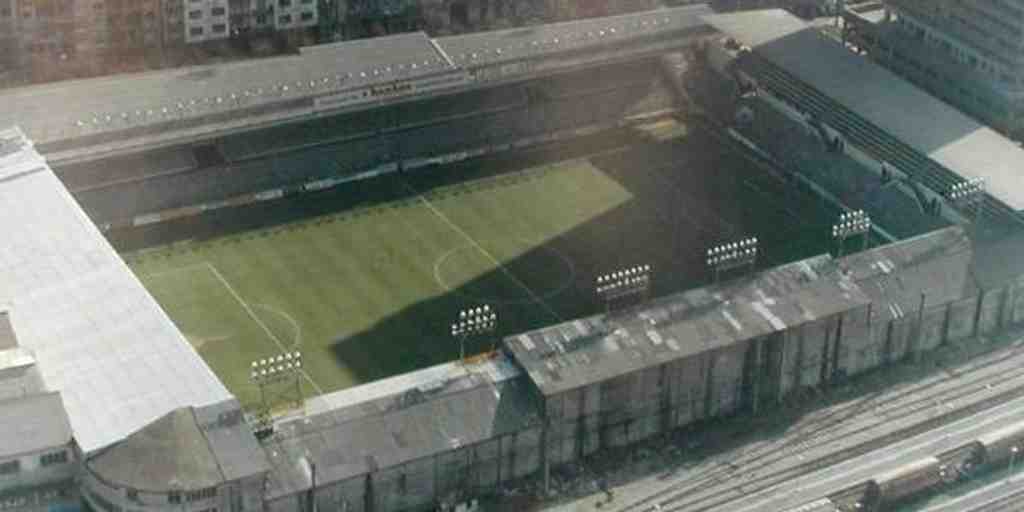
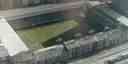
Atocha StadiumPhoto: InakiZaldua, Wikimedia Commons, CC BY-SA 4.0. Cropped & resized. Look for a broad paved square enclosed by pale apartment blocks in a curved, stadium-like ring, the buildings themselves preserving the footprint of the vanished ground.
Stand here a moment, and this open space begins to tighten. From the fourth of October, nineteen thirteen, until nineteen ninety-three, this was Atocha, Real Sociedad’s old football stadium, wedged so tightly into the Eguía neighbourhood that the city seemed to press right up against the touchline. It opened with a draw against Athletic Club, three goals each, and the first goal came from the visiting striker Pichichi. A lively beginning, you might say, and Atocha rarely cared for modesty after that.
The ground rose on the site of the San Sebastián Cycling Club velodrome, a banked cycling track. That change matters. A city that had rebuilt itself after the great fire of eighteen thirteen kept doing the same sort of thing here: one public ritual giving way to another, old damage and old habits folded into a new stage. Even before the first whistle, this place belonged to a city that knew how to start again without pretending nothing had stood before.
The crowd here did not simply attend. It acted. Atocha held roughly twenty-six thousand seven hundred people, and the stands sat so close to the pitch that opponents felt watched, judged, and, quite often, slightly hunted. Behind the goals many supporters stood packed together with no seats at all. If you imagine a front row almost at the edge of the grass, would that closeness feel exhilarating, unsettling, or both?
If you glance at the image on your screen, the aerial view makes the compression obvious. Everything was cramped, hemmed in by neighbouring buildings. Even the pitch had a secret: it was not a true rectangle but a trapezoid, about a metre shorter at one end than the other. Football found a way, anyway.
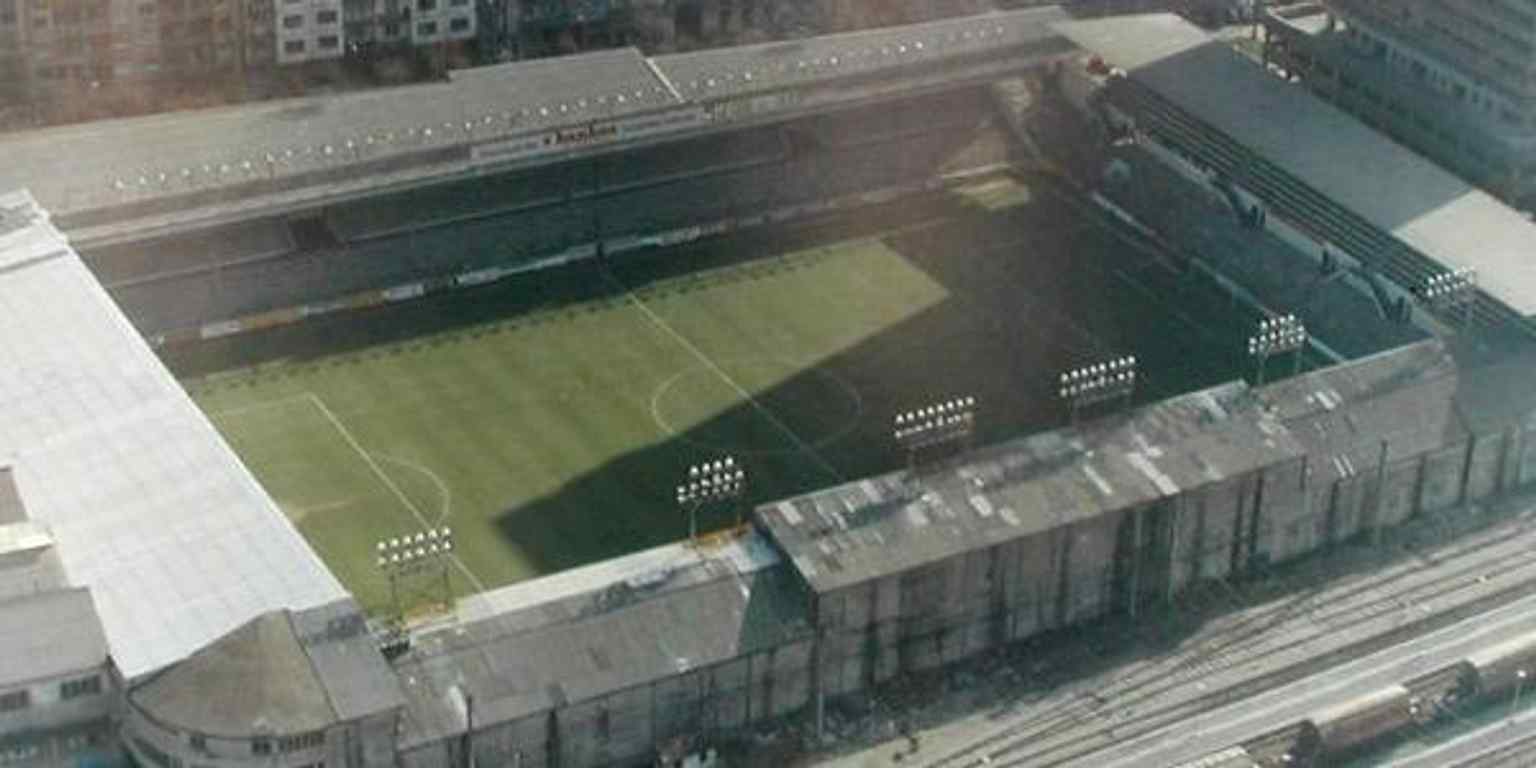
An aerial view of the Atocha site that helps show the stadium’s footprint and how tightly it was embedded in the city.Photo: InakiZaldua, Wikimedia Commons, CC BY-SA 4.0. Cropped & resized. One of the people who knew this place best was Amadeo Labarta, a former Real Sociedad player who became its caretaker. For forty years, he and his wife Sabina lived inside the stadium in a small flat above the ticket booths. Think of that: not merely working at Atocha, but sleeping within its walls, hearing it breathe. Labarta gained a mischievous reputation as well. More than one story claims he watered the most delicate parts of the pitch rather generously before visitors arrived, just to make life awkward.
Atocha carried great nights. In nineteen seventy-nine, Real nearly overturned a three-nil defeat to Inter Milan by winning two-nil here, falling short by a single goal on aggregate. In nineteen eighty-three, it hosted the first leg of Real’s first European Cup semi-final, a one-all draw with Hamburg before a full house. Yet the very intensity that made Atocha beloved also made it obsolete. The old stands aged, modern safety and competition rules demanded more space and better facilities, and this site simply could not stretch.
The final official goal here came from Oceano Andrade da Cruz on the thirteenth of June, nineteen ninety-three, in a three-one win over Tenerife. After the move to Anoeta, the old ground served briefly for rugby training, then builders cleared it for housing. But the city did not let the memory drift off. The curve remains in the buildings around you, and in twenty eleven this square took the name Plaza Campo de Atotxa to pin the old ground back onto the map.
And there was one more echo: from the nineteen sixties, a supporter named Patxi Alcorta fired rockets to tell fishermen offshore the score, one for an away goal, two for a Real goal. That is San Sebastián in miniature, really: a crowd so forceful it could reach the sea.
The stadium has gone, but the collected force of the people who filled it has not. We’ll carry that energy onward to the Trinquete de Gros, about an eight-minute walk from here.
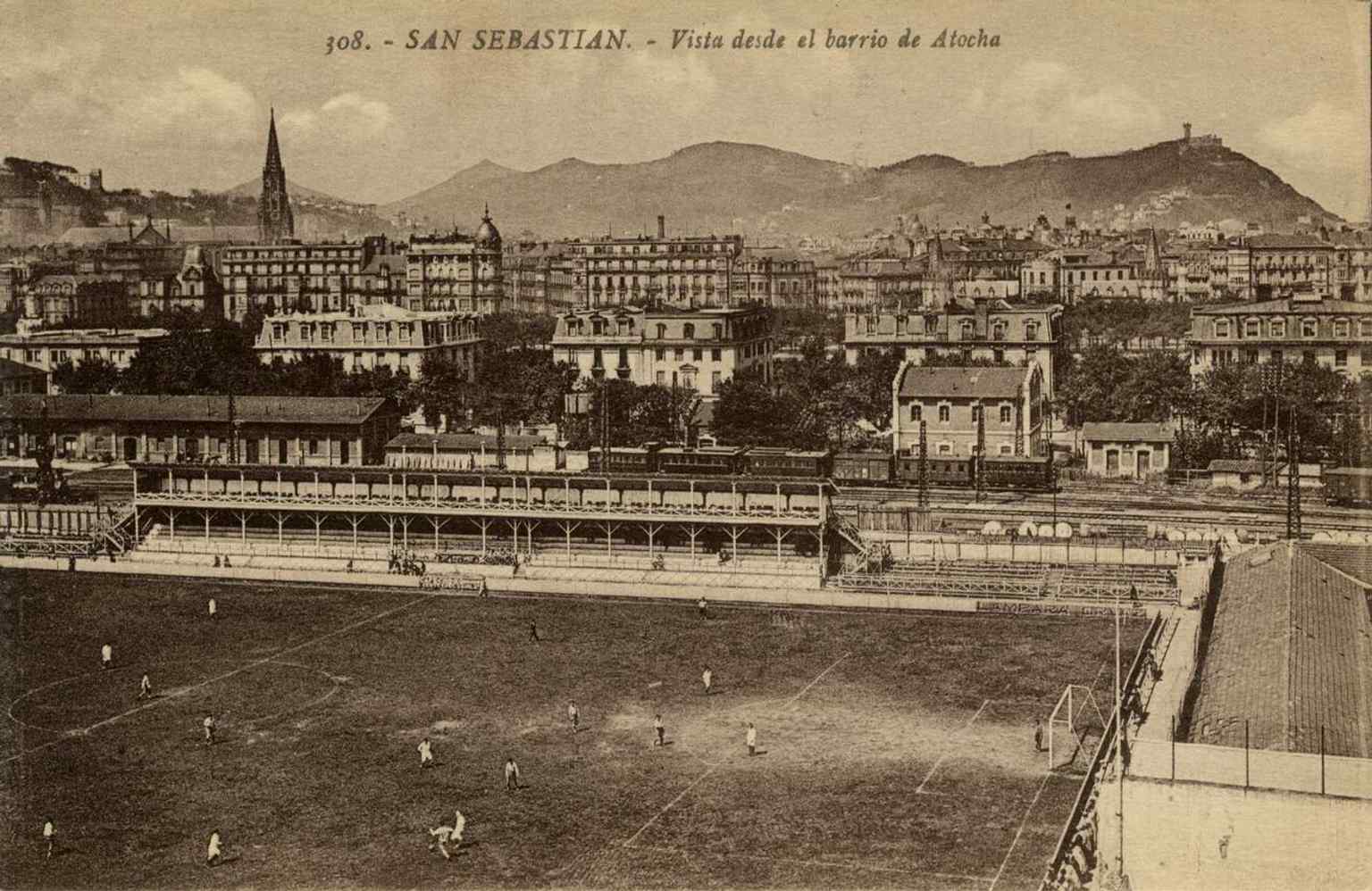
A modern view of the Atocha site in Donostia, where the old stadium once stood before the 1993 move to Anoeta.Photo: Koldo Mitxelena Kulturuneko Liburutegia, GFA, Wikimedia Commons, CC BY-SA 3.0. Cropped & resized. 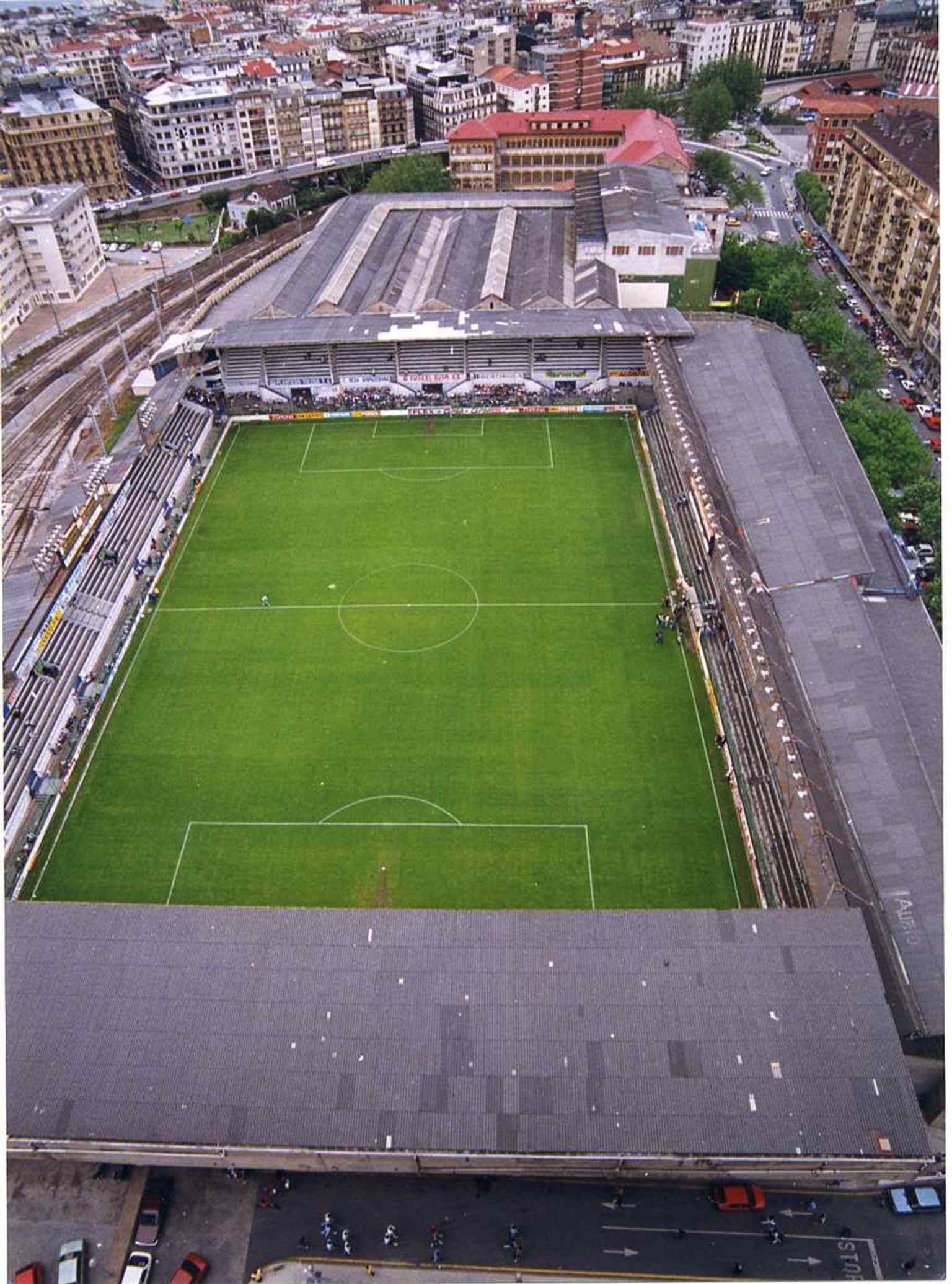
Seen from the neighboring tower, this view recalls the stadium’s unusual, compressed layout — even its pitch was famously a trapecio.Photo: InakiZaldua, Wikimedia Commons, CC BY-SA 4.0. Cropped & resized. 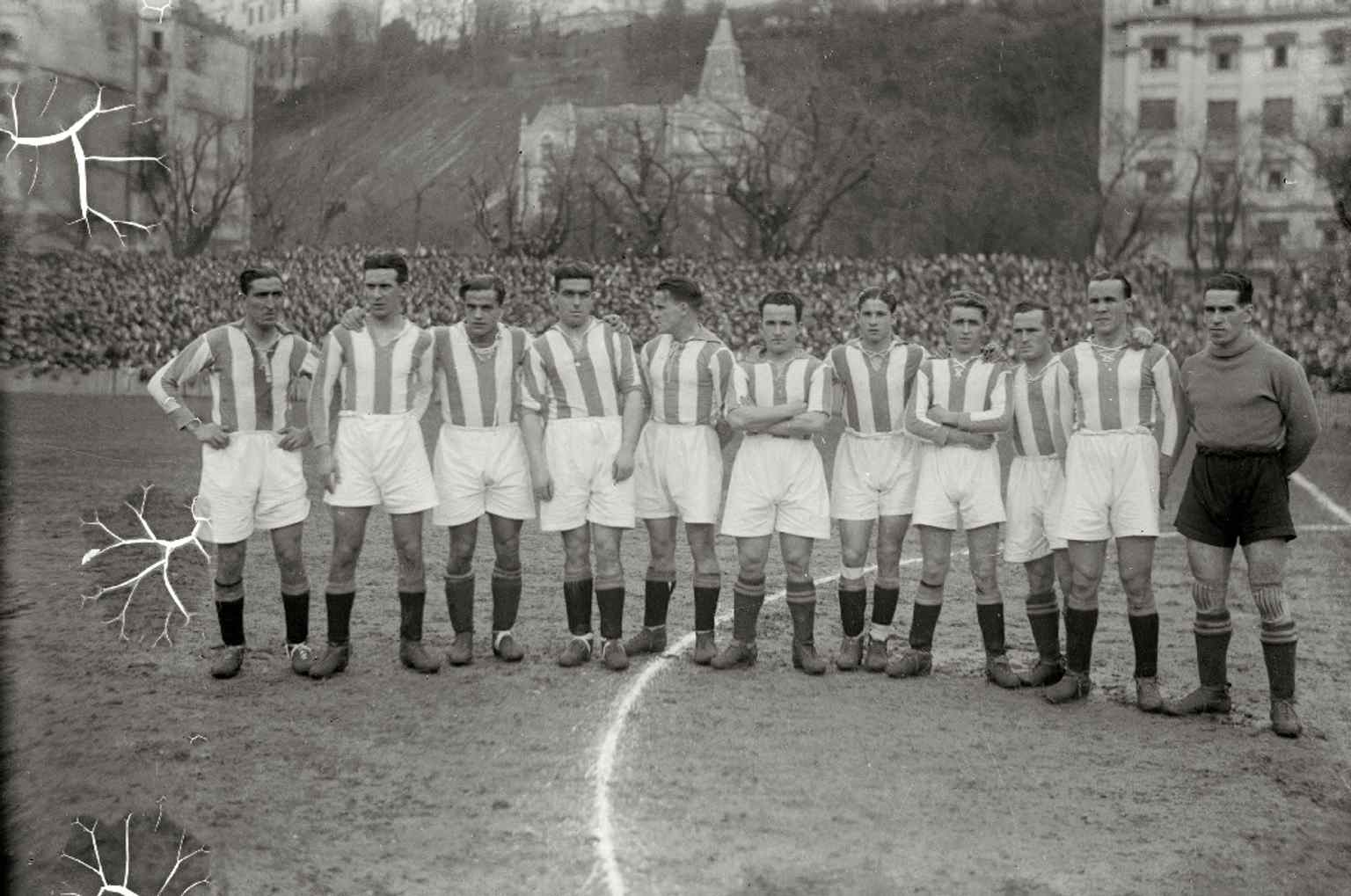
A 1932 Real Sociedad lineup on the Atocha pitch, capturing the stadium as the club’s home for most of the 20th century.Photo: Pascual Marín, Wikimedia Commons, CC BY-SA 3.0. Cropped & resized. 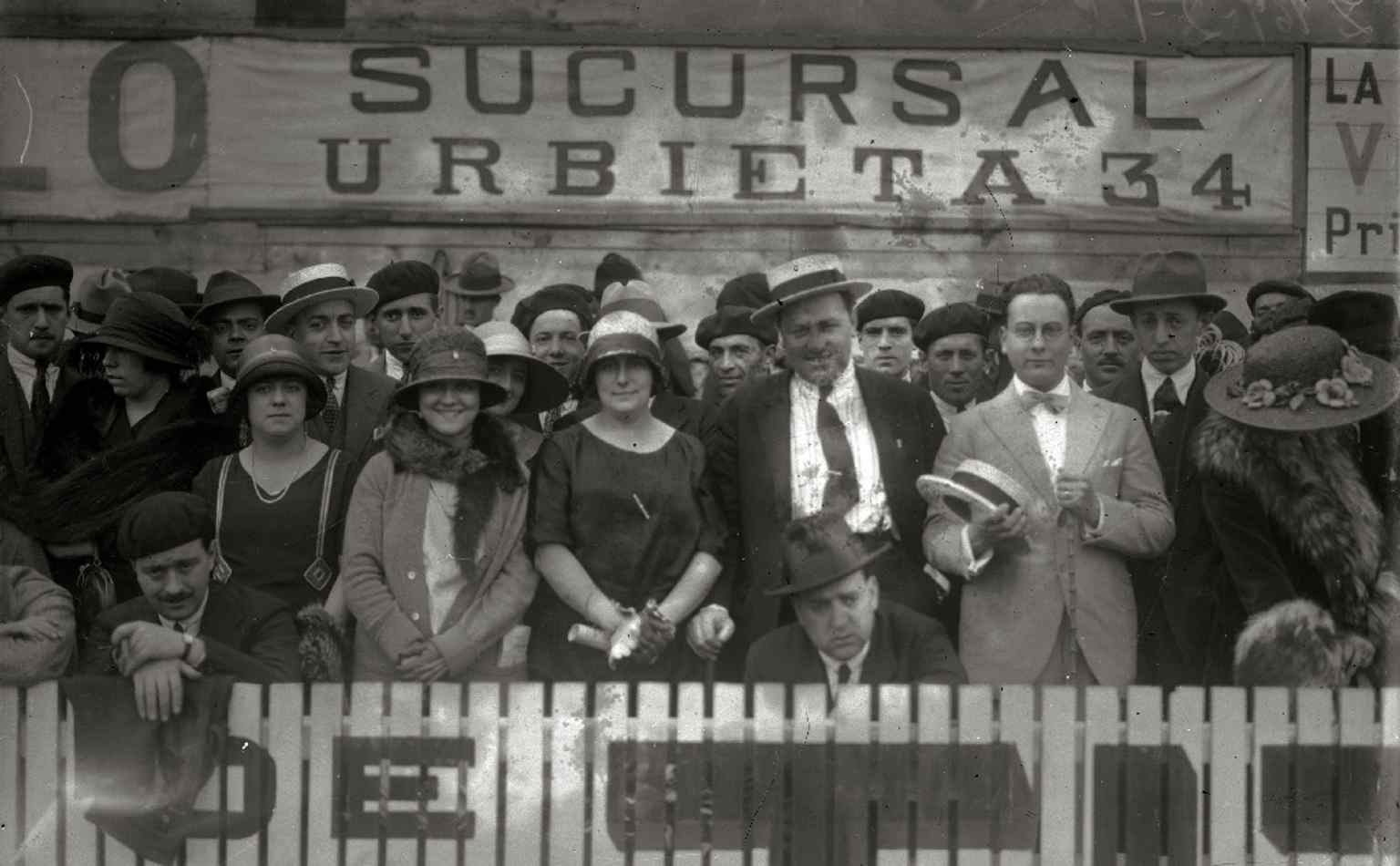
Scenes from the 1924 Spanish Cup final at Atocha, showing the ground hosting major national football events.Photo: Ricardo Martín, Wikimedia Commons, Public domain. Cropped & resized. 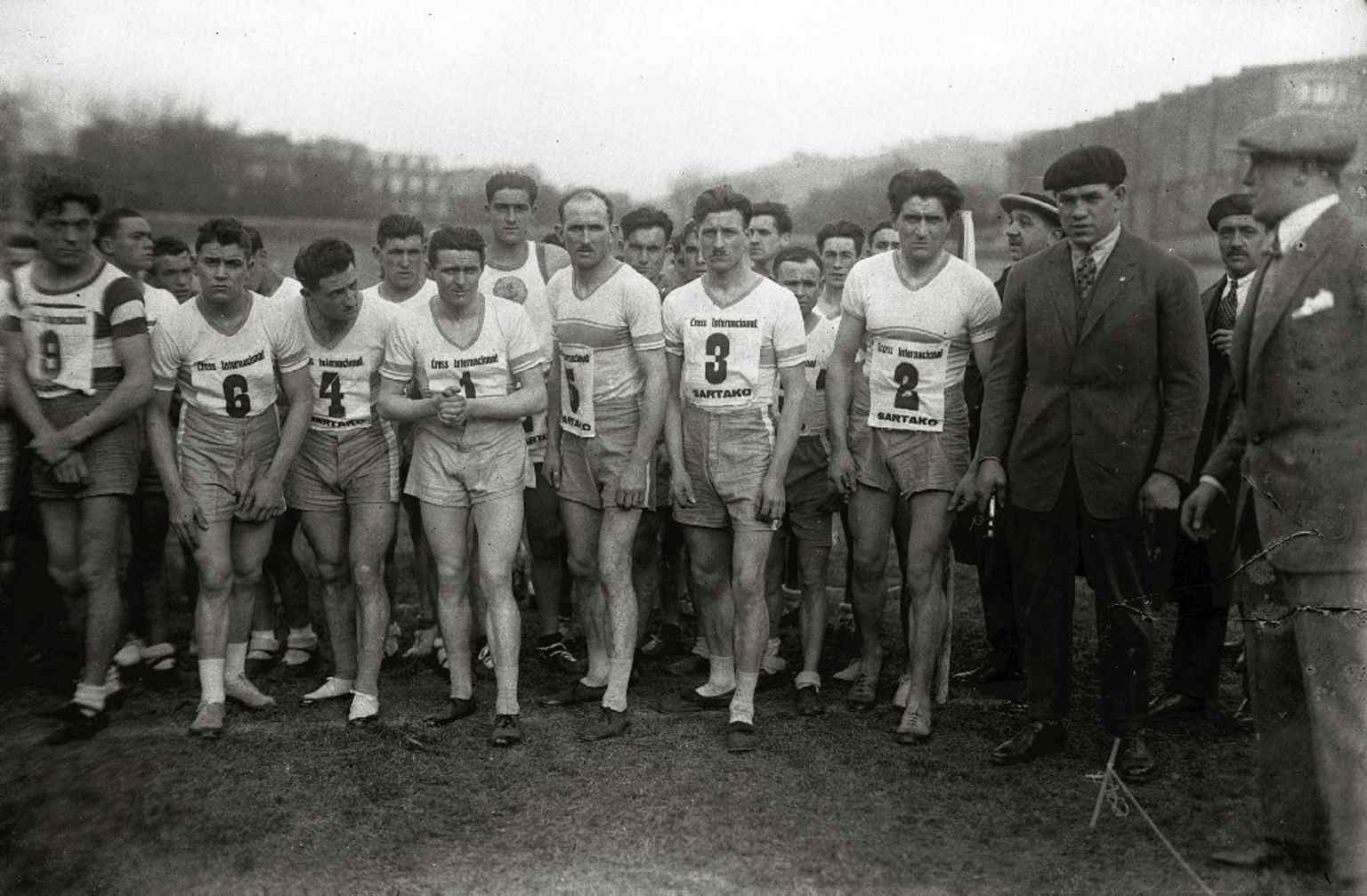
Paulino Uzcudun at Atocha in 1925, evidence that the stadium was also used for major sporting spectacles beyond football.Photo: Pascual Marín, Wikimedia Commons, CC BY-SA 3.0. Cropped & resized. 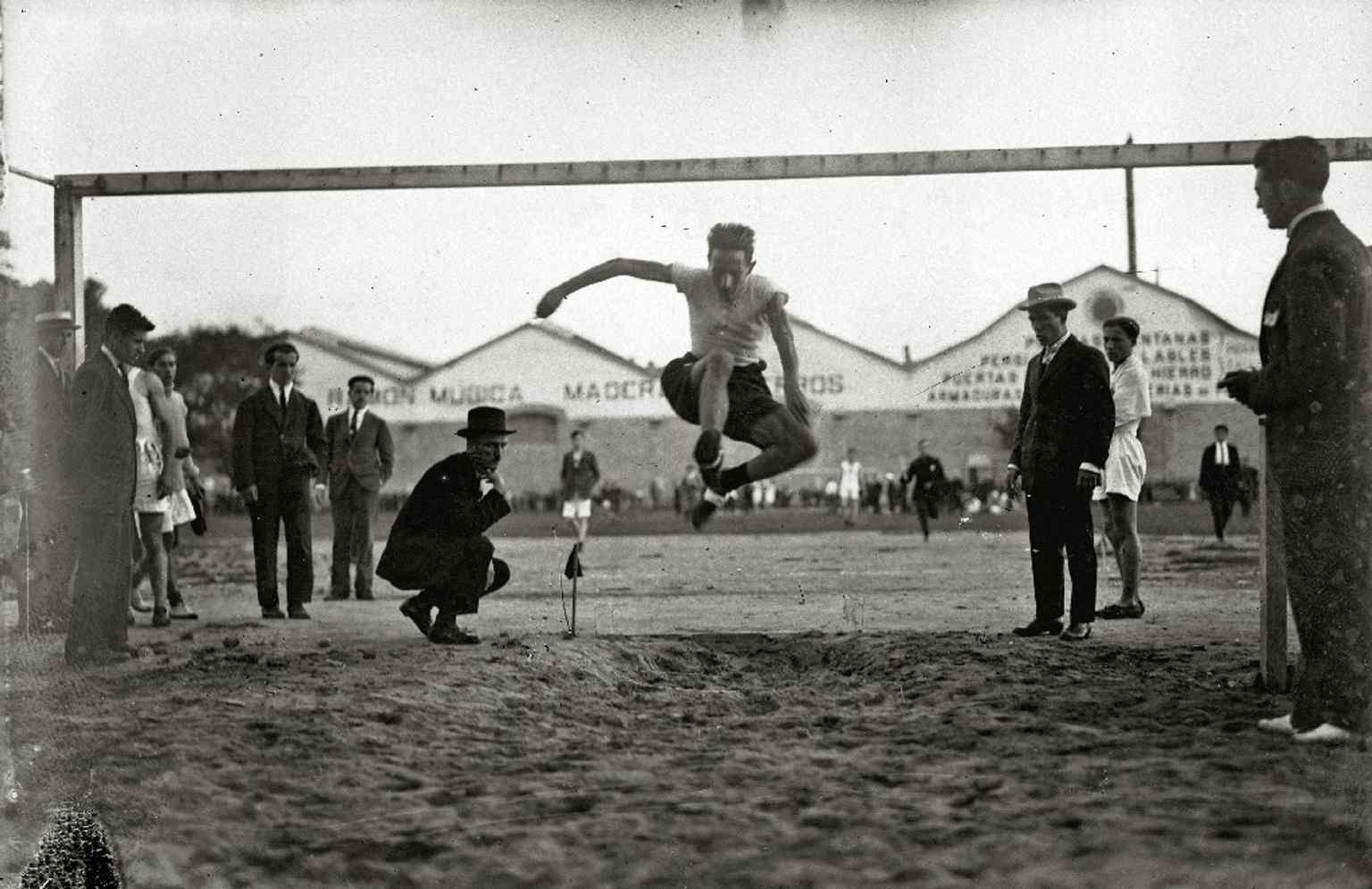
Athletics at Atocha in 1917, highlighting how the field served multiple sports in its early decades.Photo: Ricardo Martín, Wikimedia Commons, Public domain. Cropped & resized. 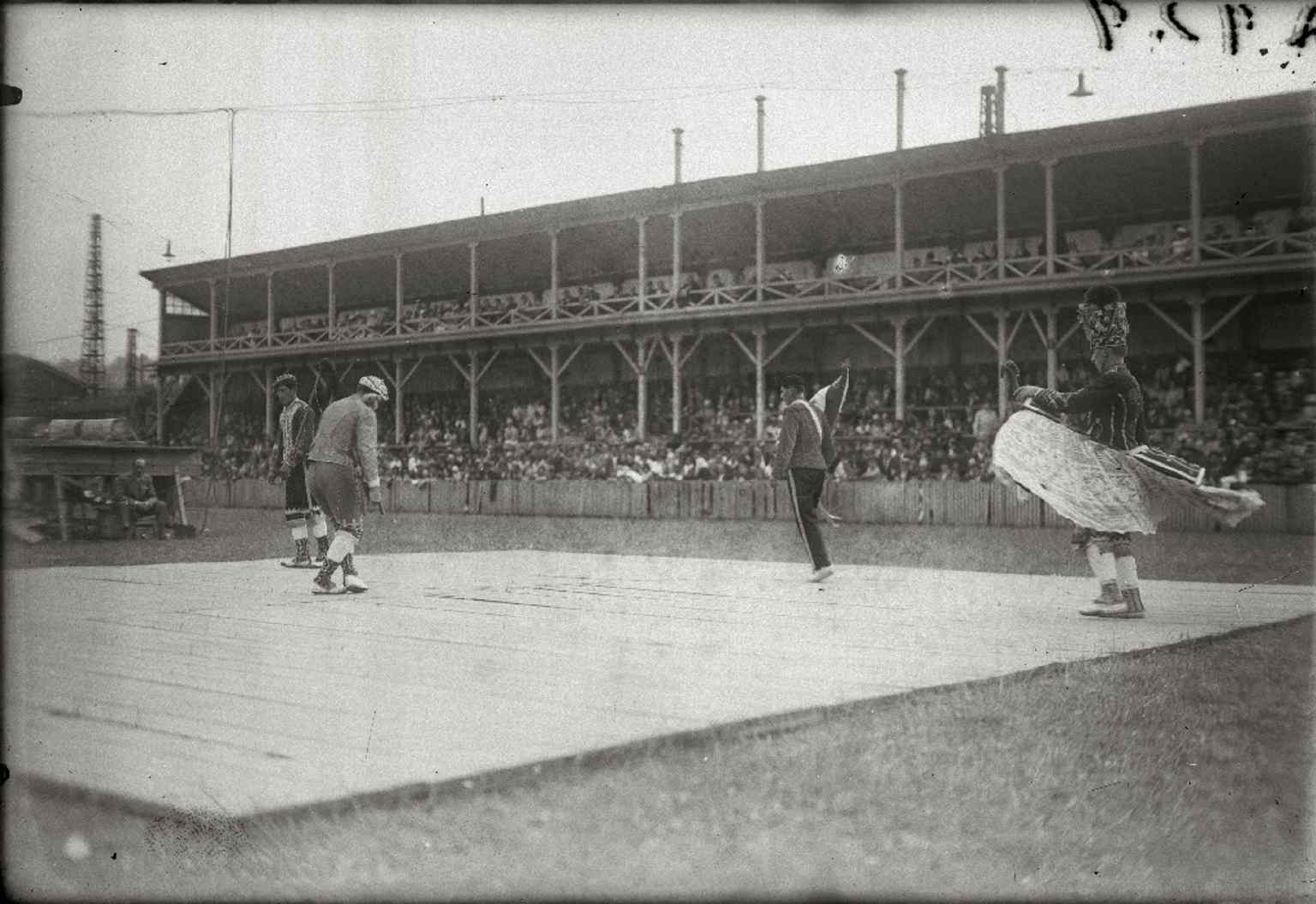
Basque dances at Atocha in 1929, a reminder that the stadium was a civic space as well as a football ground.Photo: Pascual Marín, Fondo Marín, Wikimedia Commons, CC BY-SA 4.0. Cropped & resized. 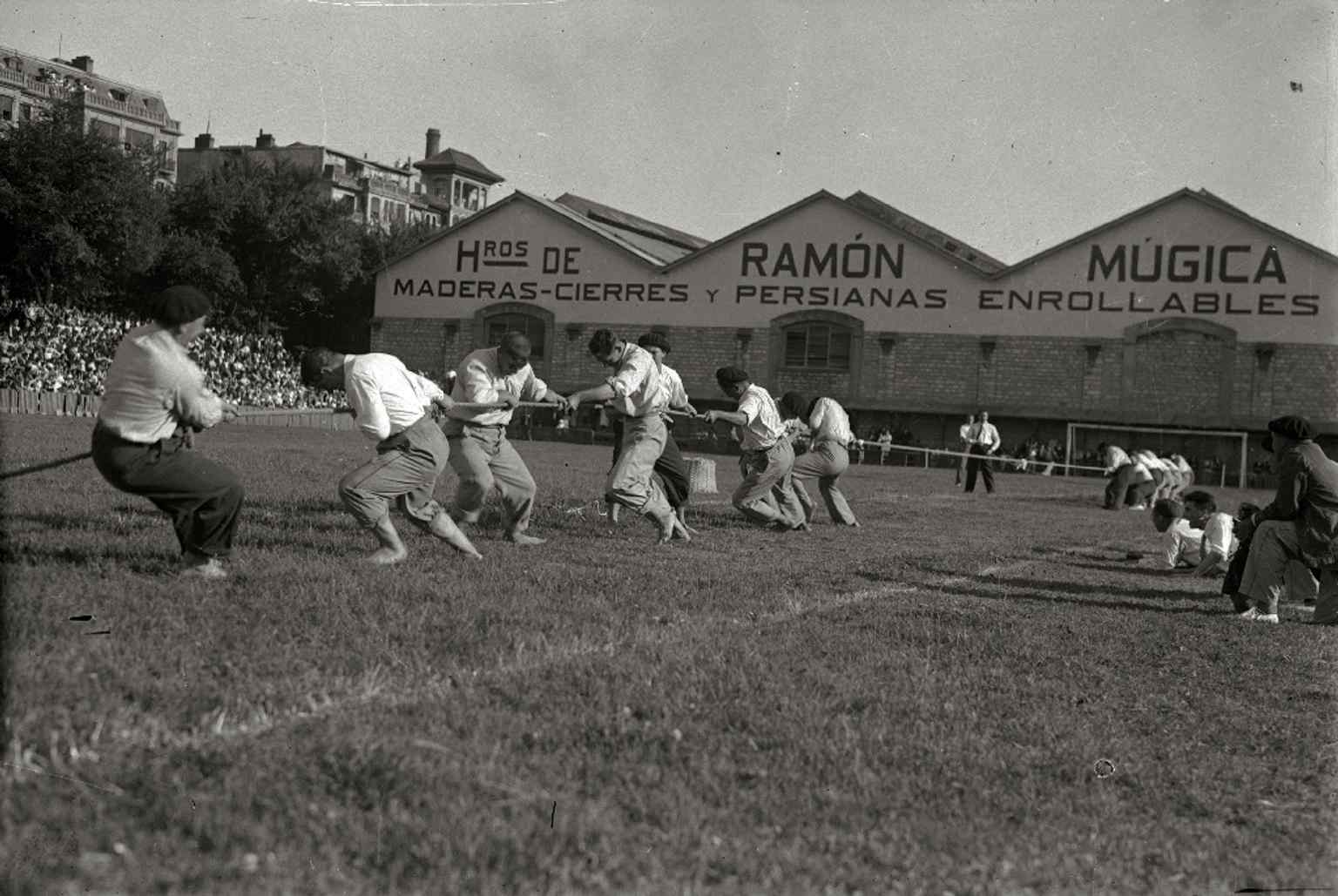
A 1932 tug-of-war competition at Atocha, showing the stadium’s role in popular Basque sporting culture.Photo: Pascual Marín, Wikimedia Commons, CC BY-SA 3.0. Cropped & resized. 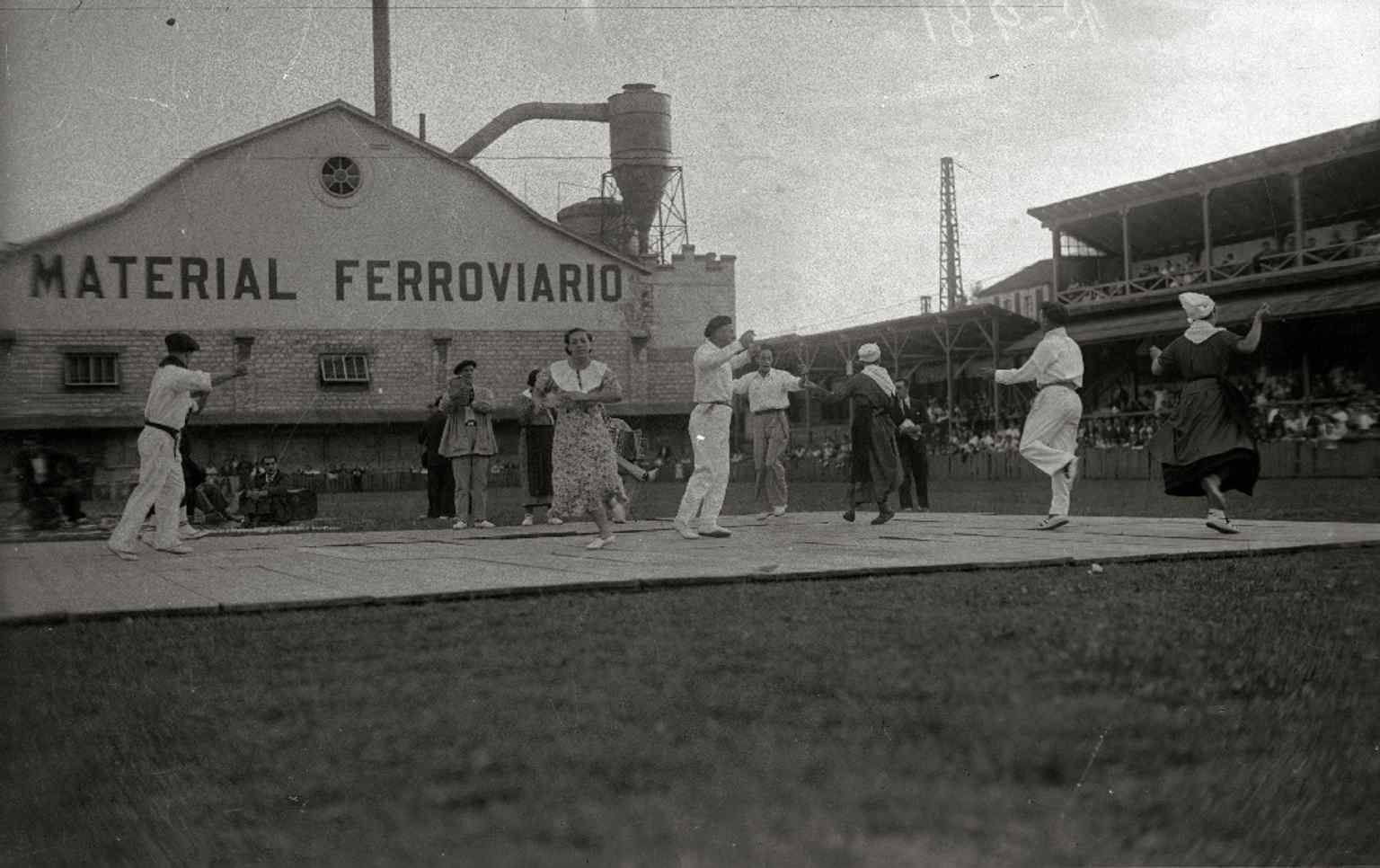
A 1935 Basque festival at Atocha, another example of the stadium hosting community celebrations, not just matches.Photo: Pascual Marín, Wikimedia Commons, CC BY-SA 3.0. Cropped & resized. 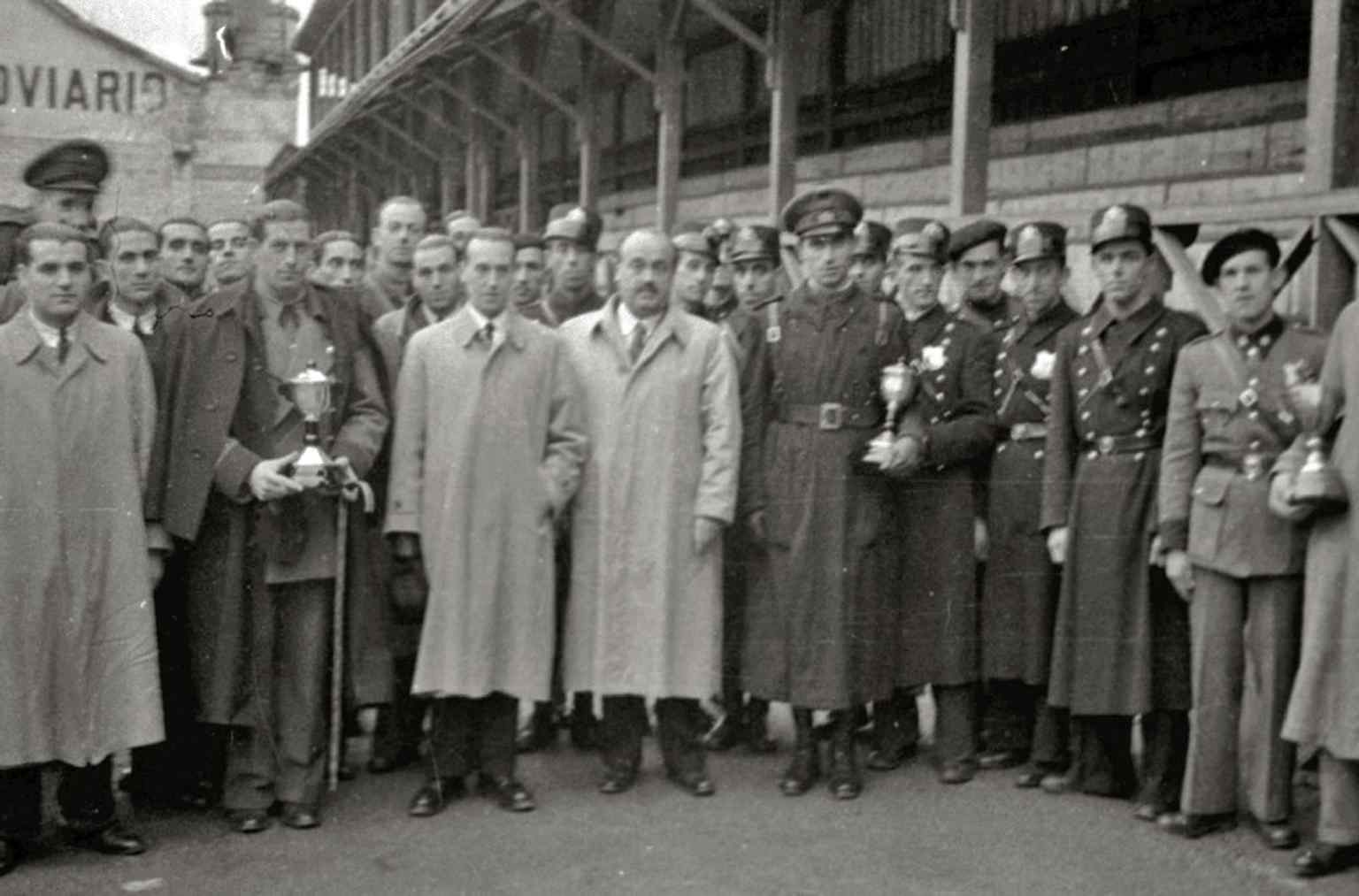
Local authorities gathered at Atocha in 1942, reflecting the stadium’s importance as a public landmark in San Sebastián.Photo: Pascual Marín, Wikimedia Commons, CC BY-SA 3.0. Cropped & resized. 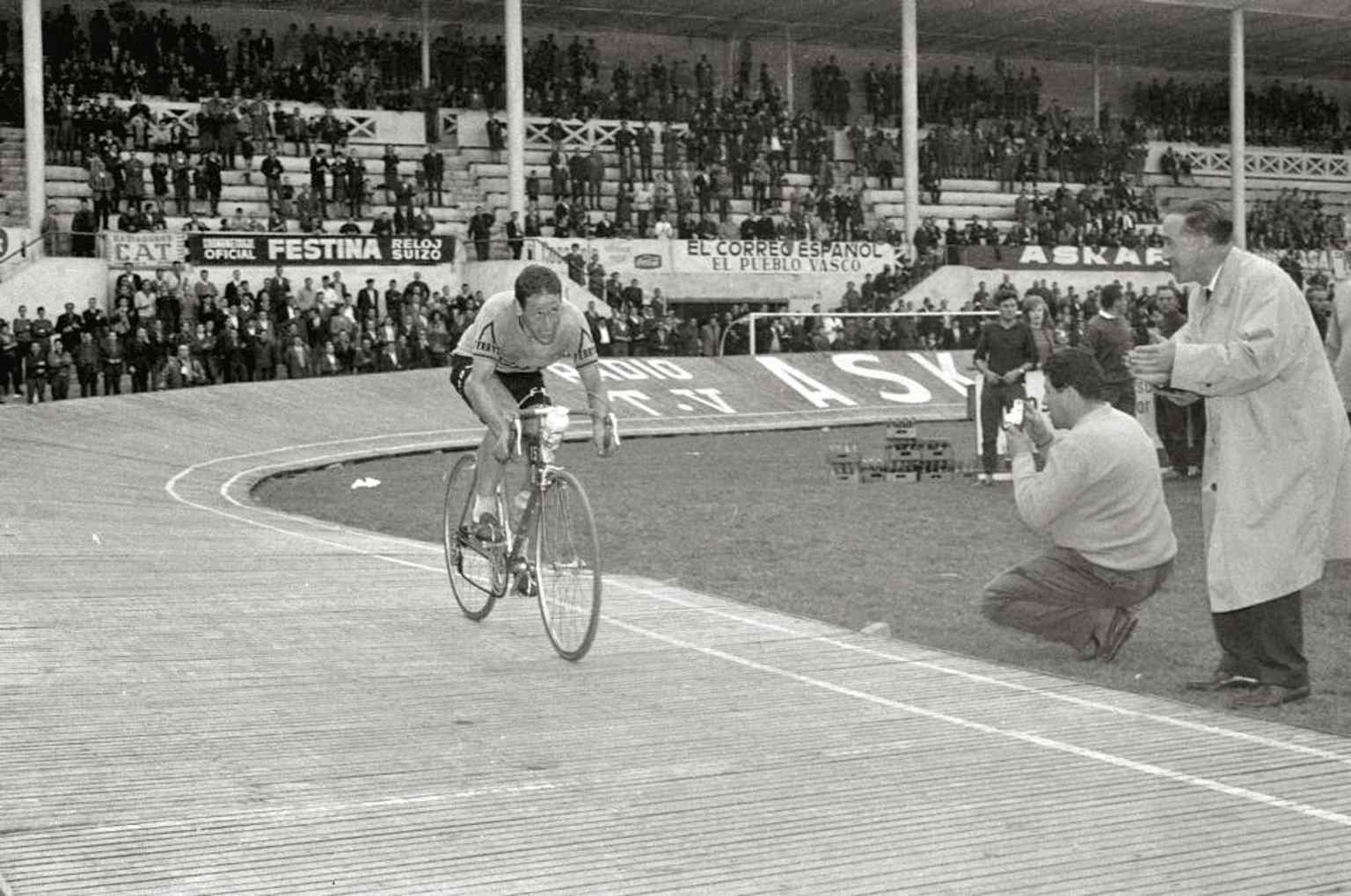
A 1963 cycling race held inside Atocha — one of the many non-football events staged in the old ground.Photo: Paco Marí, Wikimedia Commons, CC BY-SA 3.0. Cropped & resized. 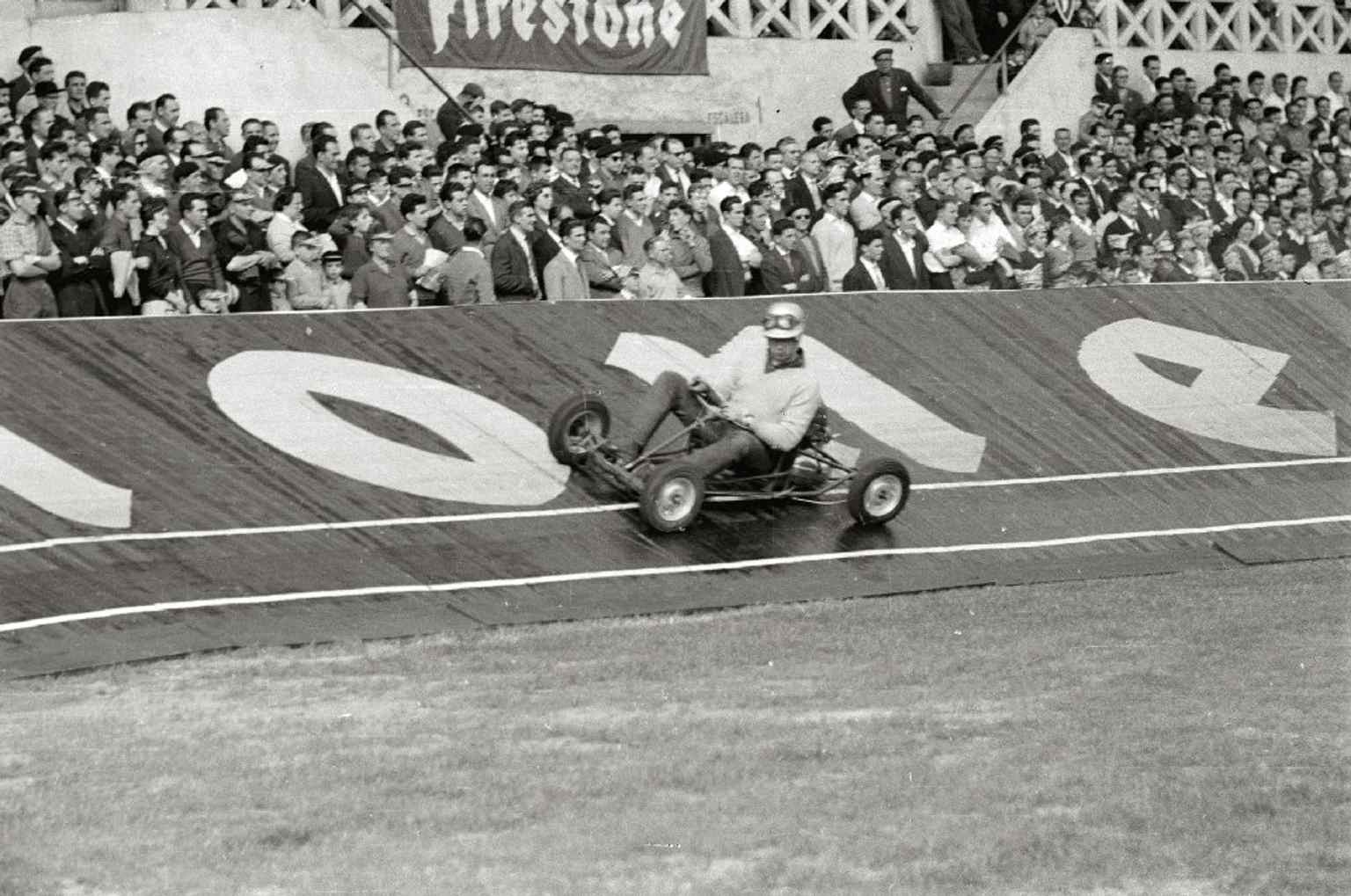
Karting in Atocha in 1965, a striking example of how the pitch was repurposed for unusual sporting events.Photo: Paco Marí, Wikimedia Commons, CC BY-SA 3.0. Cropped & resized. On your right, look for a plain plaster-and-stone street front with rectangular ground-floor openings and rows of residential windows above; behind that ordinary face sits the…Read moreShow less
Open dedicated page →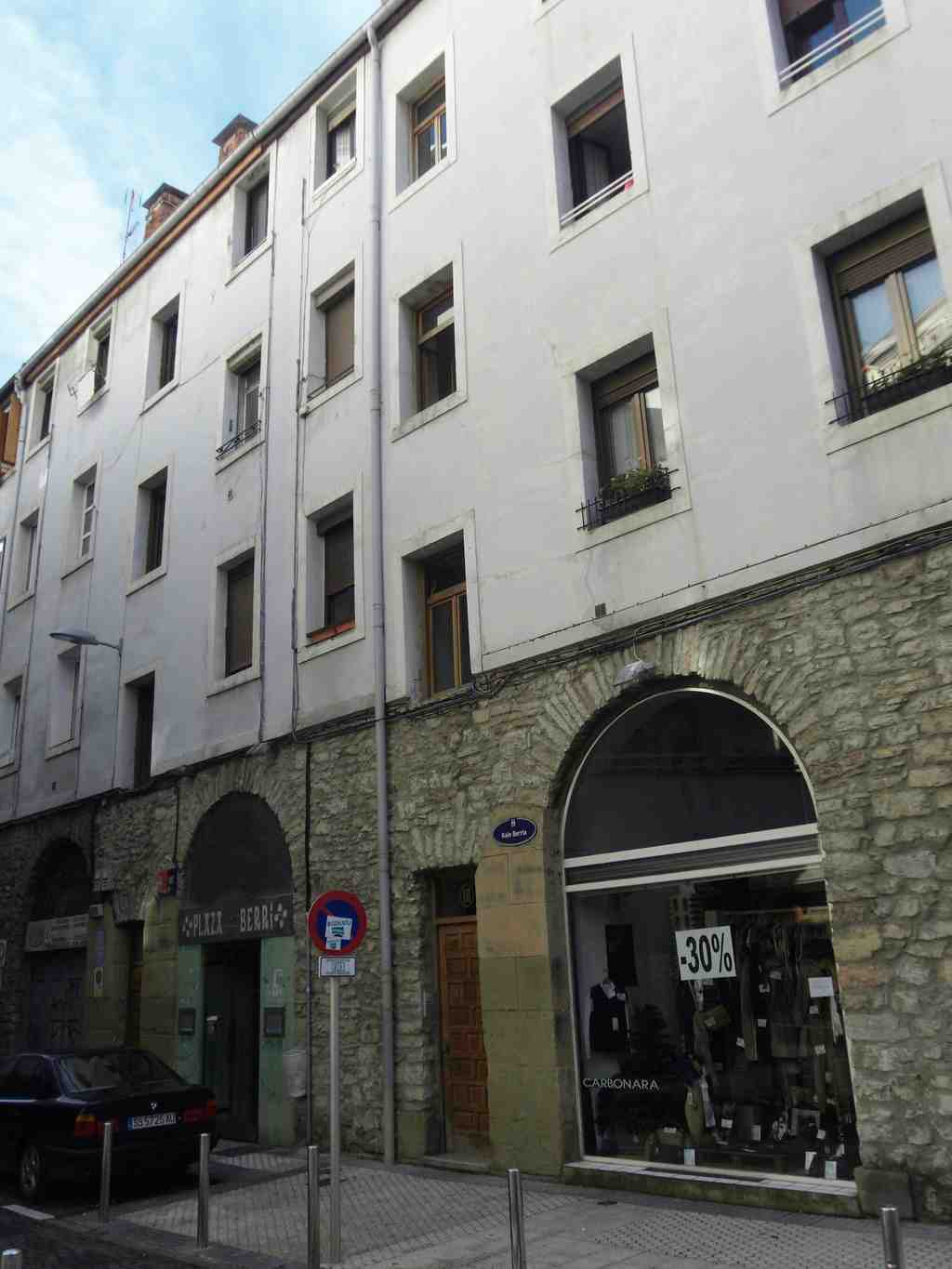
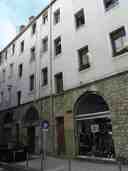
Gros RatchetPhoto: Josu Goñi Etxabe, Wikimedia Commons, CC BY-SA 3.0. Cropped & resized. On your right, look for a plain plaster-and-stone street front with rectangular ground-floor openings and rows of residential windows above; behind that ordinary face sits the Trinquete de Gros.
Gros has a habit of hiding its older lives indoors. Behind everyday facades like this one, whole chapters of the neighbourhood survive out of sight, and this trinquet is one of the rare clues. A trinquet, by the way, is an enclosed court for pelota, the Basque ball game played against a main rebound wall called the frontis.
This is the oldest trinquet still standing in the Basque autonomous community, documented in eighteen eighty-four. On this side of the Bidasoa, only the one in Elizondo comes close in age, and that arrived later, in eighteen ninety-four. Yet from the street, you would never suspect such seniority. The building mixed uses in a rather clever, slightly unruly way: shops across the whole ground floor, flats above in a narrow strip along Calle Nueva and Iparragirre, and the court itself hidden behind them, raised to first-floor level over the premises below.
So while a stadium gathers a roaring public in the open, this place gathered a smaller world inside the block: players, neighbours, spectators leaning from timber balconies, and people climbing stairs that were never entirely meant for sport. The surviving layout suggests spectators even used the residents’ staircase at number sixteen, which connects to three levels of the court, including the side gallery and two long upper balconies.
Inside, the original playing space stretched roughly thirty-seven metres long and nine metres wide, rising about twelve metres to a gabled roof of wood trusses tied with iron, lit from above by a long skylight. The frontis still keeps its stone ashlar face. There was even a conical fraile, a jutting obstacle that sends the ball off at an awkward angle, showing that different forms of pelota were played here. Most visitors never realise the decisive twist came later: early in the twentieth century, someone inserted a wood-and-iron floor across the court and split the tall space into two workshop levels. That ended pelota here, yet it also preserved the shell by trapping it inside a new use.
The human trail is not all sporting. In eighteen eighty-five, Madrid’s official gazette circulated a warrant for Juan María Pacherón, known as Mar Sel, a French waiter who had lived in the Trinquete house here in Gros. Police wanted him over a homicide case and gunfire. Rather changes the atmosphere, does it not.
In two thousand and seventeen, Asier Elorriaga, Javier Prieto, and partners tried to revive the place as a restaurant, but neighbours protested over the works, a blocked emergency exit at number sixteen, and unauthorised chimneys at number twenty-two; by twenty eighteen, it had closed again, and a local paper called it the cursed trinquet.
San Sebastián often keeps its oldest stories behind doors and inner walls. When you are ready, continue about eight minutes to the Hotel María Cristina.
On your left, look for a long pale-stone façade with rows of tall rectangular windows, dark mansard roofs, and wrought-iron balconies, crowned by the name Hotel María Cristina…Read moreShow less
Open dedicated page →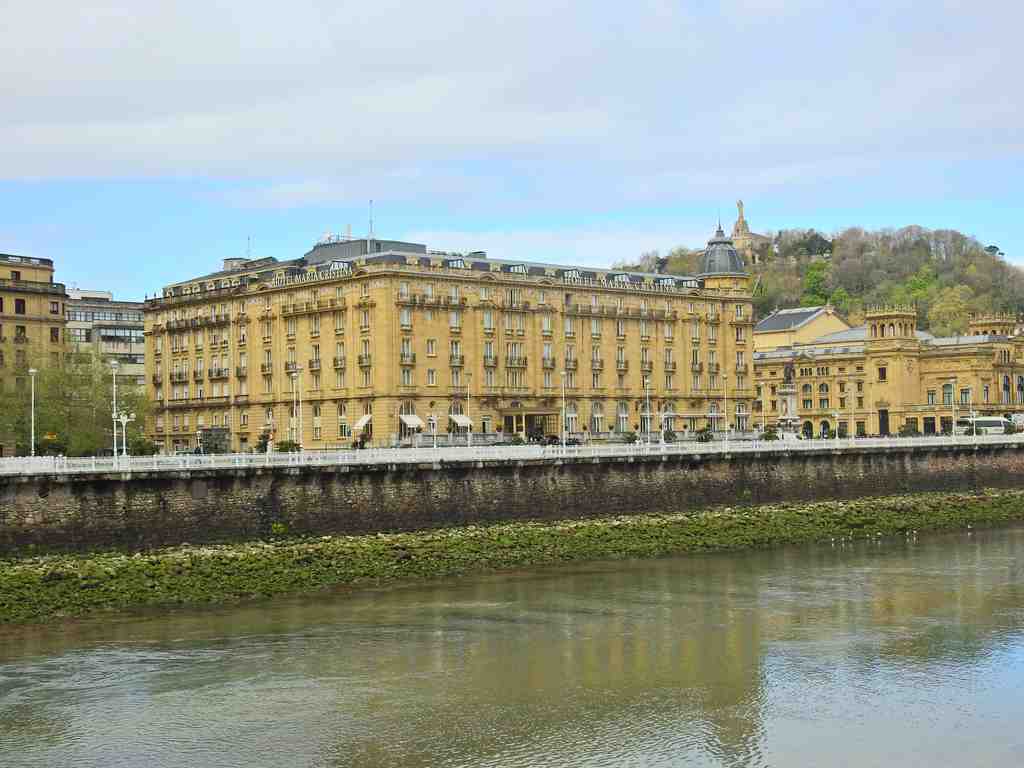
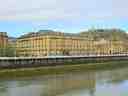
Hotel María CristinaPhoto: Rehman Abubakr, Wikimedia Commons, CC BY-SA 4.0. Cropped & resized. On your left, look for a long pale-stone façade with rows of tall rectangular windows, dark mansard roofs, and wrought-iron balconies, crowned by the name Hotel María Cristina above the entrance.
This is the moment when San Sebastián stopped behaving like a pleasant seaside town and began presenting itself, quite deliberately, to the world. Here, the city learned to perform in public through architecture: a grand hotel to receive the important visitor, a theatre beside it to display culture, and a riverfront setting broad enough for everyone to witness the entrance. It is not just a building you are looking at. It is a carefully arranged scene.
At the start of the twentieth century, San Sebastián was turning into one of the great playgrounds of the Spanish and European upper classes. The new planned expansion of the city had given it orderly streets and a distinctly French flavour, and a group of ambitious locals decided that style alone was not enough. In nineteen oh two, they formed the Society for the Promotion of San Sebastián and set themselves a clear task: give the city a luxury hotel and a major theatre, built together, as proof that it belonged among Europe’s fashionable resorts.
They chose this site in the old Zurriola gardens by the mouth of the Urumea. The city council handed over the land on one condition: after seventy years, both buildings would pass into municipal ownership. Construction began in nineteen oh nine. Charles Mewes, the architect known for several Ritz hotels in Europe, conceived the hotel; Francisco de Urcola directed the project and shaped the neighbouring theatre. Urcola matters here because he understood that these were not isolated commissions. They were a pair, a ceremonial urban partnership.
When the hotel opened in nineteen twelve, Queen María Cristina herself attended. That opening announced more than a business. It announced an era. During the Belle Époque, those decades of elegant confidence before Europe tore itself apart, San Sebastián became a meeting place for the well-heeled and well-known. Later, the hotel gathered an astonishing guest list: Trotsky, Mata Hari, Maurice Ravel, Coco Chanel, Bette Davis, Audrey Hepburn, Alfred Hitchcock, Steven Spielberg, Mick Jagger.
Then came the film festival, and the city’s performance acquired a new cast. Because the hotel stands so close to the theatre, stars could move from one to the other in a ritual procession that helped define San Sebastián’s international image. One of the people who knew that threshold best was the doorman Miguel Ángel Aldazábal. He started here in nineteen ninety and, in his first days alone, opened the door for Jerry Lewis and Peter O’Toole. In time he greeted Robert De Niro, Emma Thompson, and the Coen brothers, becoming almost part of the ceremony himself.
Yet this place has played more than one role. In July nineteen thirty-six, during the military uprising that opened the Civil War, the hotel briefly served as an improvised stronghold for right-wing sympathisers under Carrasco. In twenty twelve, it closed for nine months for a major restoration of about twenty million euros, polishing its Belle Époque character for a new century. And in twenty twenty, rooms once reserved for celebrities sheltered patients recovering from covid.
That, really, is the pattern here: the façade keeps its poise, while the city behind it keeps adapting. And just beside it stands the other half of this grand plan, the building that gave the visitors somewhere to be seen after they arrived. In about two minutes, we’ll step to the Victoria Eugenia Theatre.
Show 11 more stopsShow fewer stopsexpand_moreexpand_less
On your left, look for a pale sandstone theatre with carved balconies, tall arched windows, and sculpted busts set into its richly ornamented façade. This is the Victoria Eugenia…Read moreShow less
Open dedicated page →On your left, look for a pale sandstone theatre with carved balconies, tall arched windows, and sculpted busts set into its richly ornamented façade.
This is the Victoria Eugenia Theatre, and few buildings in San Sebastián understand spectacle quite so completely. Architect Francisco Urcola opened it in nineteen twelve, giving the city a grand cultural face in Spanish neo-Renaissance style, with the intricate, silvery stone carving of the neoplateresque tradition - a style that borrowed the richness of old royal architecture rather than the cooler French look seen on so many nearby buildings. Its exterior took inspiration from the Palace of Monterrey in Salamanca, which explains why it feels less like a simple playhouse and more like a civic palace with a curtain hidden inside.
It began, fittingly, with a touch of delicious theatre before anyone even stepped on stage. The official opening took place on the twentieth of July, nineteen twelve, yet the woman it was named for, Queen Victoria Eugenia, did not attend. San Sebastián has always appreciated a polished public moment, but locals still enjoy that small irony: the Victoria Eugenia opened without Victoria Eugenia. She arrived the following day with King Alfonso the Thirteenth and Queen Mother María Cristina, while the opening production, En Flandes se ha puesto el sol by Eduardo Marquina, had already raised the curtain with the celebrated company of María Guerrero and Fernando Mendoza.
The theatre and the Hotel María Cristina across the way belonged to the same grand ambition. In the early twentieth century, city promoters wanted San Sebastián to look elegant enough for aristocrats, wealthy visitors, and the watching world. So they built not just accommodation, but a setting: a place where society could watch itself being society.
And then history refused to remain polite. On the twenty-third of July, nineteen thirty-six, during the Spanish Civil War, republican militiamen occupied this building and fired from it toward the Hotel María Cristina, where rebel officers had taken cover. Later, Franco’s regime turned the theatre to propaganda, ending performances with the fascist anthem Cara al sol and compulsory salutes. Even here, among velvet and applause, the city’s wounds showed through.
Yet the building kept changing costume. For decades it hosted the San Sebastián International Film Festival, right up to nineteen ninety-nine. Alfred Hitchcock stood here in nineteen fifty-eight for the world premieres of Vertigo and North by Northwest, while lodging in suite four hundred and five across at the María Cristina. He became so taken with chipirones in their ink that he urged Eva Marie Saint to order them, and, being Hitchcock, also wandered off to Polloe Cemetery with a photographer in search of something suitably morbid. In nineteen seventy-seven, Harrison Ford and Carrie Fisher posed on these steps for the European premiere of Star Wars, while inside the festival audience sat in baffled silence, unsure what to make of George Lucas’s space opera. And on the twenty-second of September, nineteen eighty-nine, Bette Davis made her final public appearance here, frail but unmistakably commanding, receiving the Donostia Award in velvet, cigarette in hand, before dying in France only two weeks later.
If you glance at the before-and-after image in the app, you can see how this frontage moved from an early twentieth-century theatre setting to a thoroughly modern cultural landmark. The biggest renovation came between two thousand and one and two thousand and seven: new stage technology, better access, fewer but larger seats, and new spaces tucked below and above the main hall. Some regulars still sigh for the old entrance, with its pinks, golds, and more decorative staircase, now replaced by a rather whiter, more marble-heavy welcome. If you look at the auditorium photo on your screen, you’ll see the painted vault where Ignacio Ugarte quietly slipped architect Francisco Urcola into the allegory of the rising sun, as if the building’s creator deserved a seat in his own dream. Here, performance never quite stays behind the curtain; it spills into the pavements and squares of San Sebastián. When you are ready, Plaza de la Brecha is about a four-minute walk away.
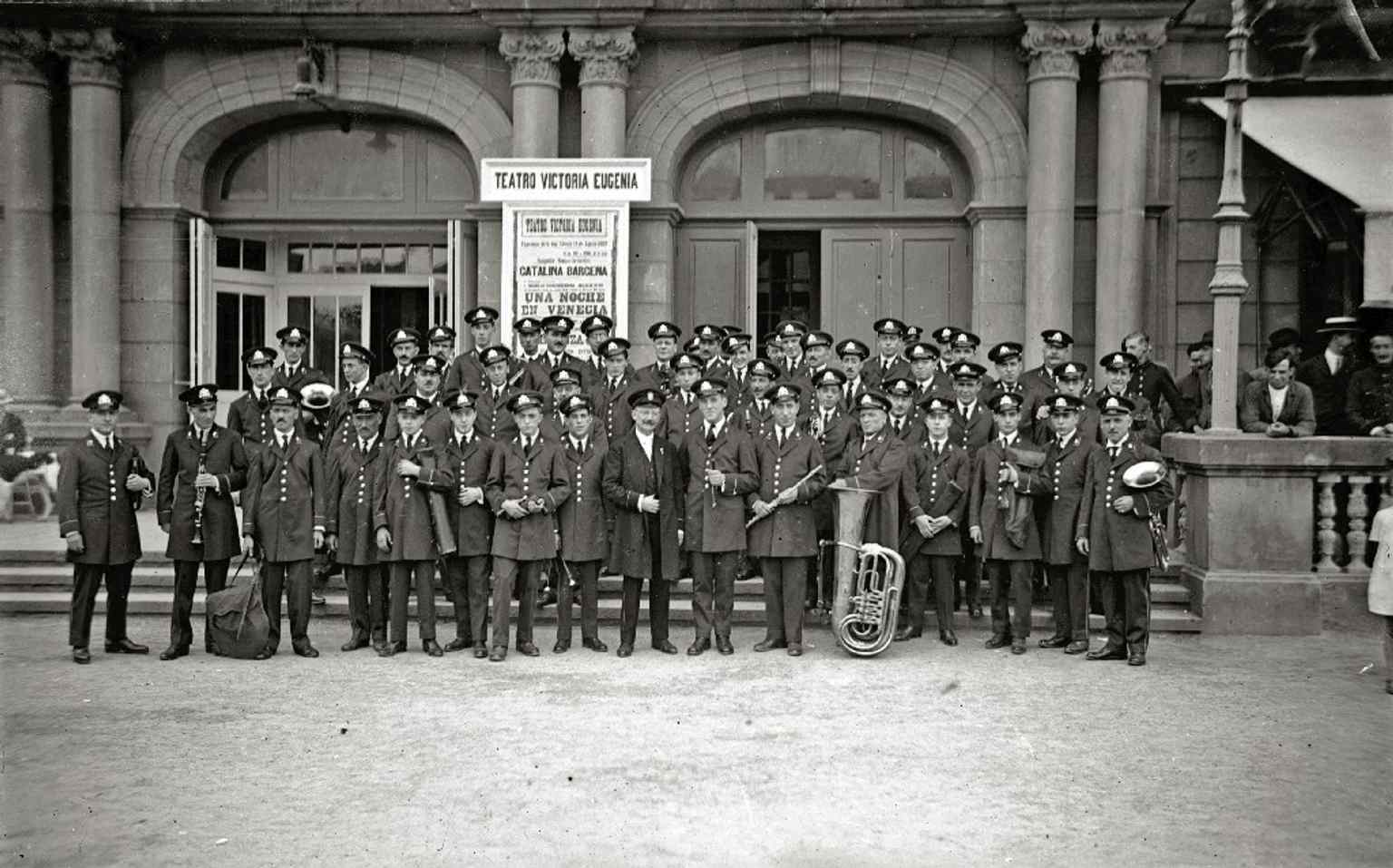
A historic black-and-white image of a band performing outside the theatre, evoking its long role in civic and musical life.Photo: Pascual Marín, Wikimedia Commons, CC BY-SA 3.0. Cropped & resized. 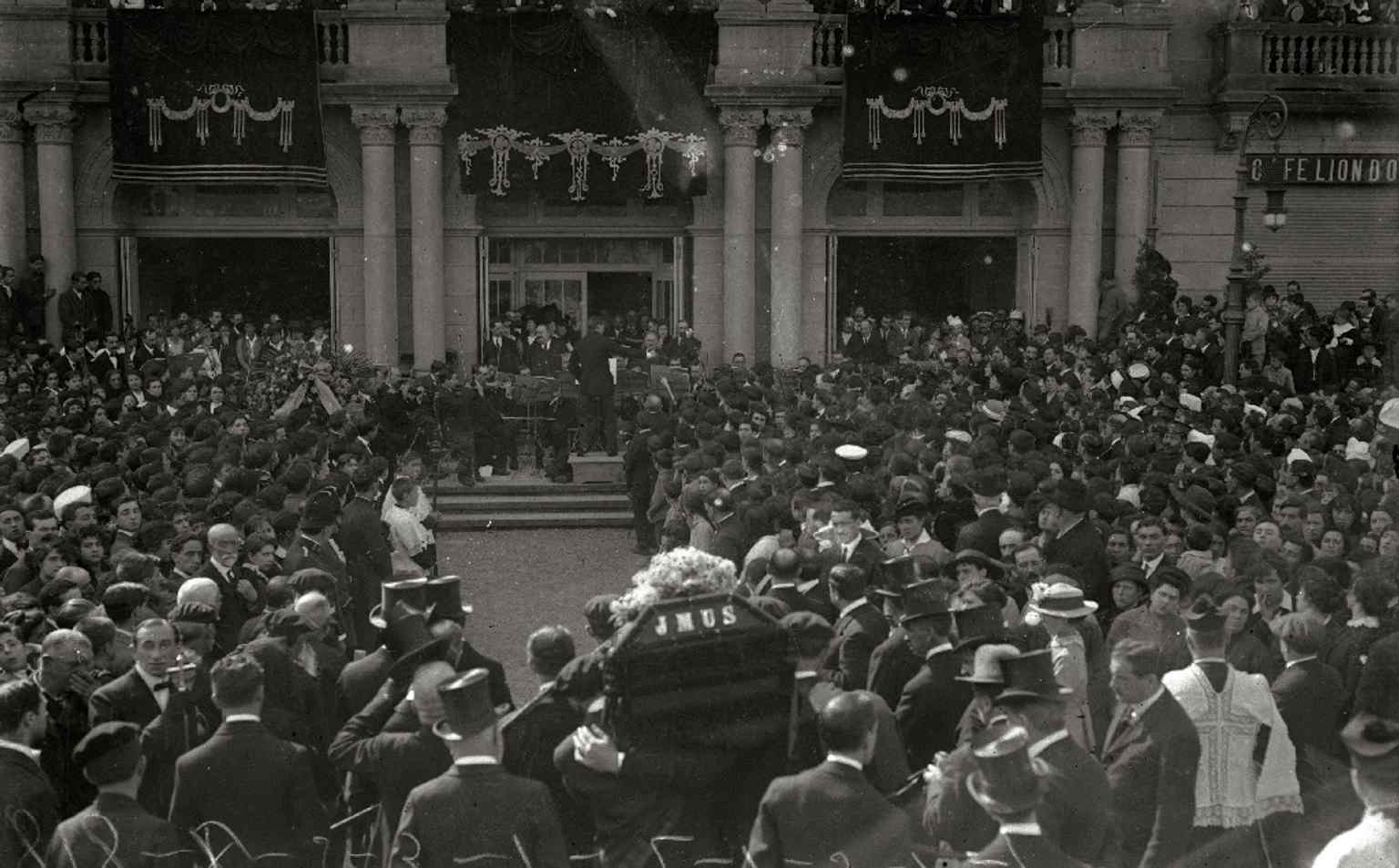
A 1915 funeral procession at the theatre entrance, showing how the building also served as a major public gathering place.Photo: Ricardo Martín, Wikimedia Commons, Public domain. Cropped & resized. 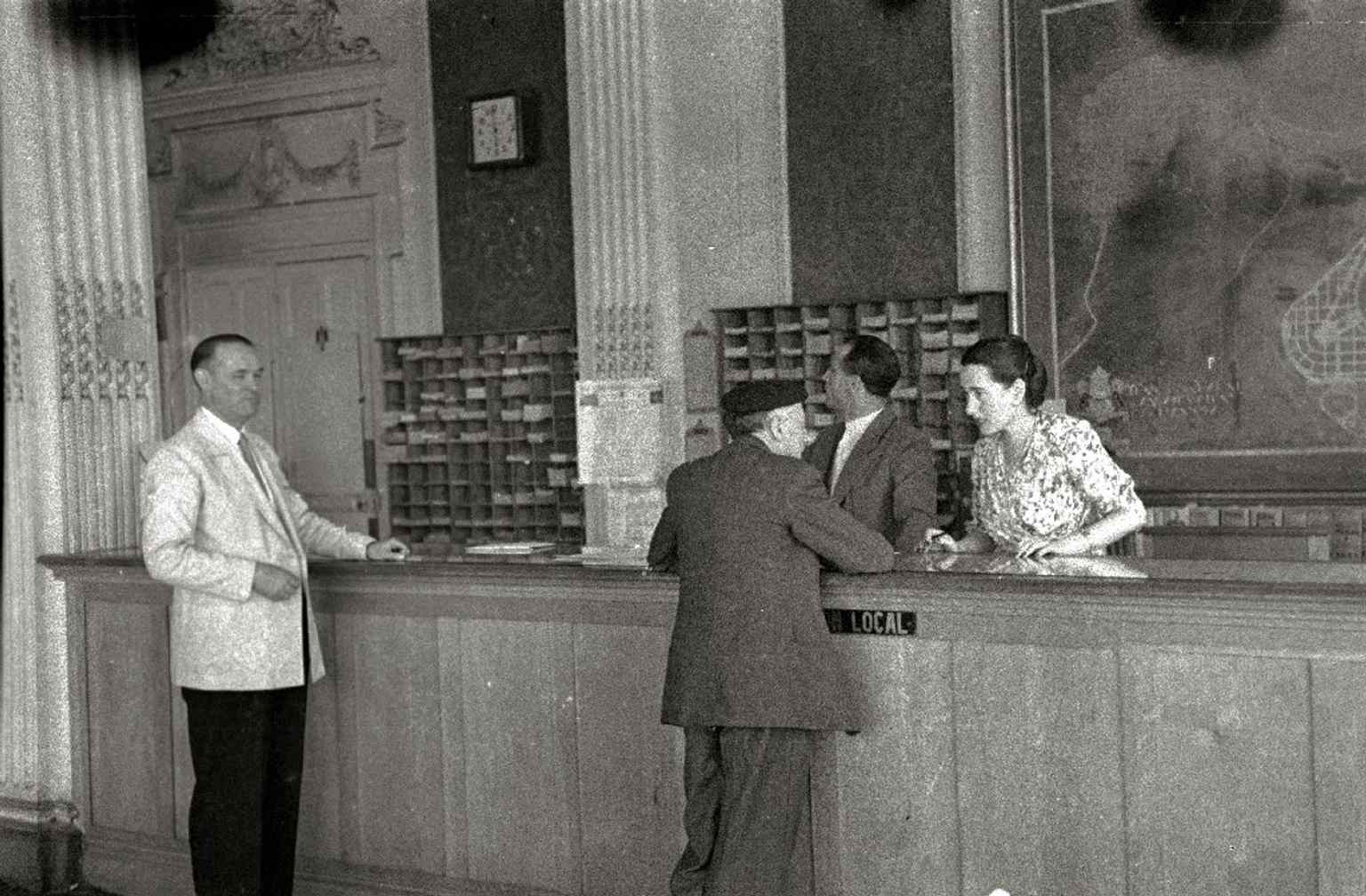
Postwar tourism offices in the theatre’s lower level, a reminder of its changing uses beyond performances.Photo: Vicente Martín, Wikimedia Commons, CC BY-SA 3.0. Cropped & resized. 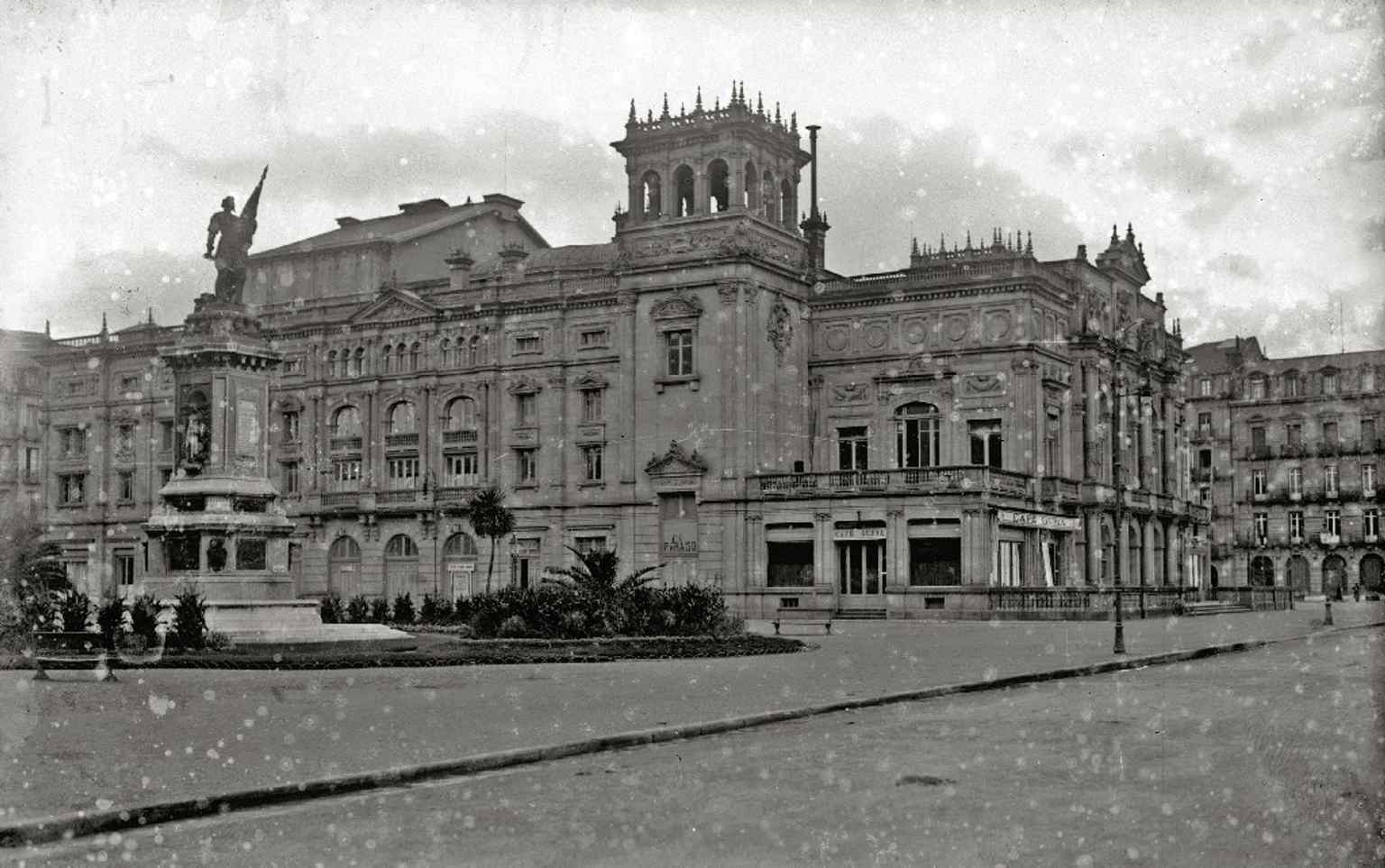
A 1946 attraction-and-tourism office in the theatre building, illustrating how the site was woven into city promotion.Photo: Vicente Martín, Wikimedia Commons, CC BY-SA 3.0. Cropped & resized. 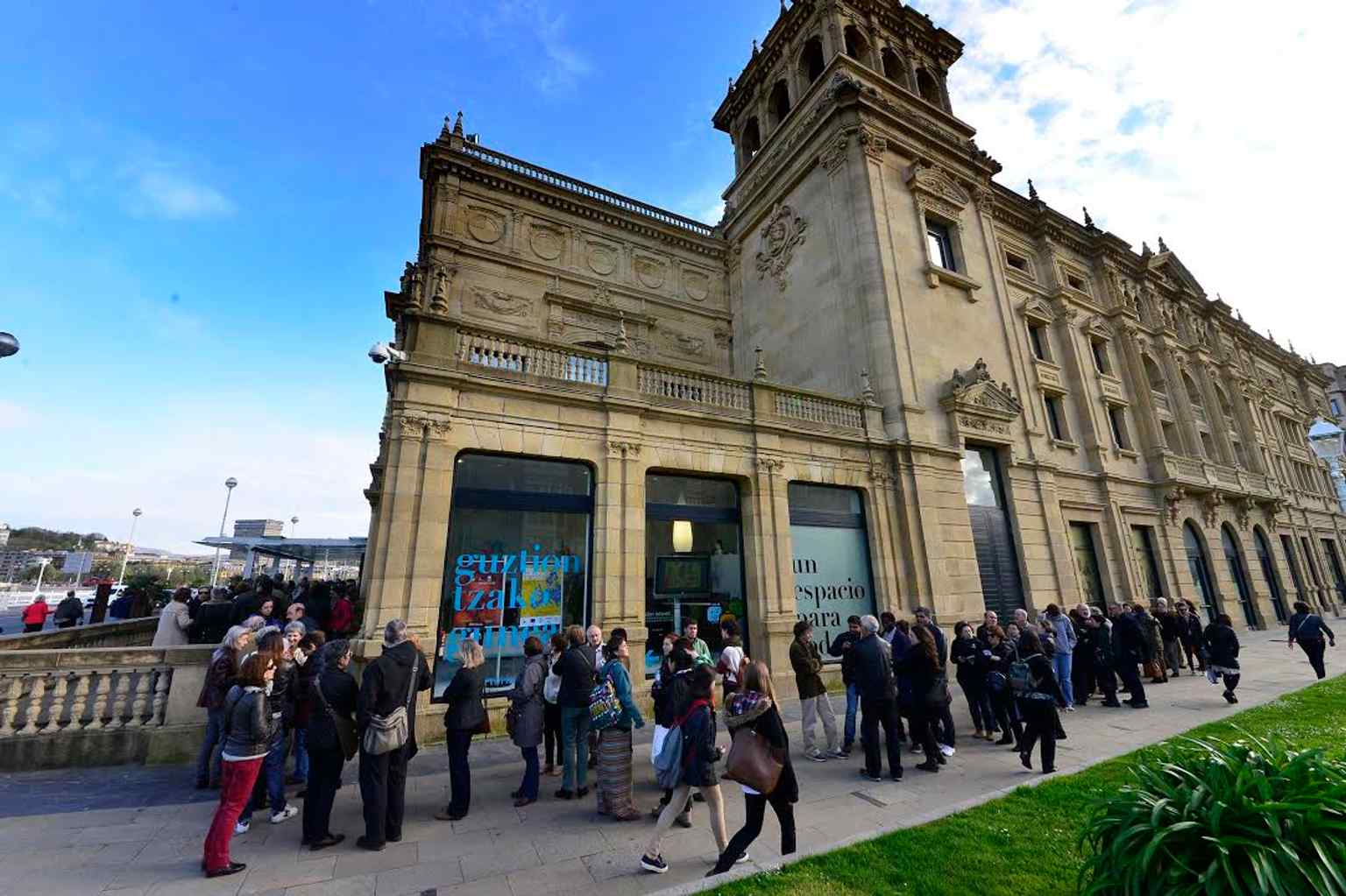
A modern exterior view that helps compare the theatre’s current appearance with its earlier, more ornamented façade.Photo: No machine-readable author provided. Generalpoteito assumed (based on copyright claims)., Wikimedia Commons, Public domain. Cropped & resized. 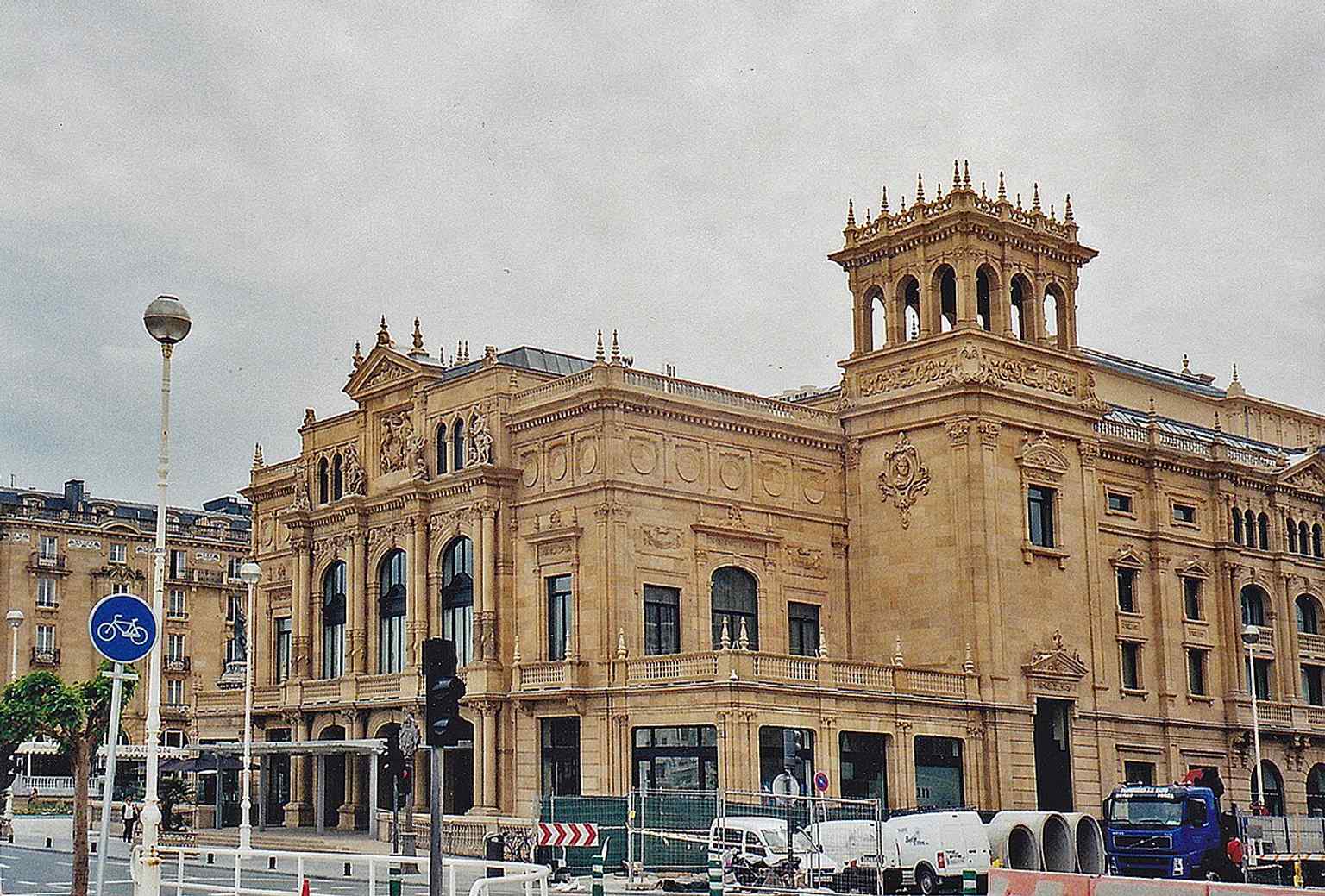
A scanned analog-era view of the theatre, adding another historical angle on this central San Sebastián landmark.Photo: SchiDD, Wikimedia Commons, CC BY-SA 4.0. Cropped & resized. On your right, look for a white, ship-like building of flat stacked levels and long horizontal windows, marked by a rounded prow-like end and a dark timber section still visible…Read moreShow less
Open dedicated page →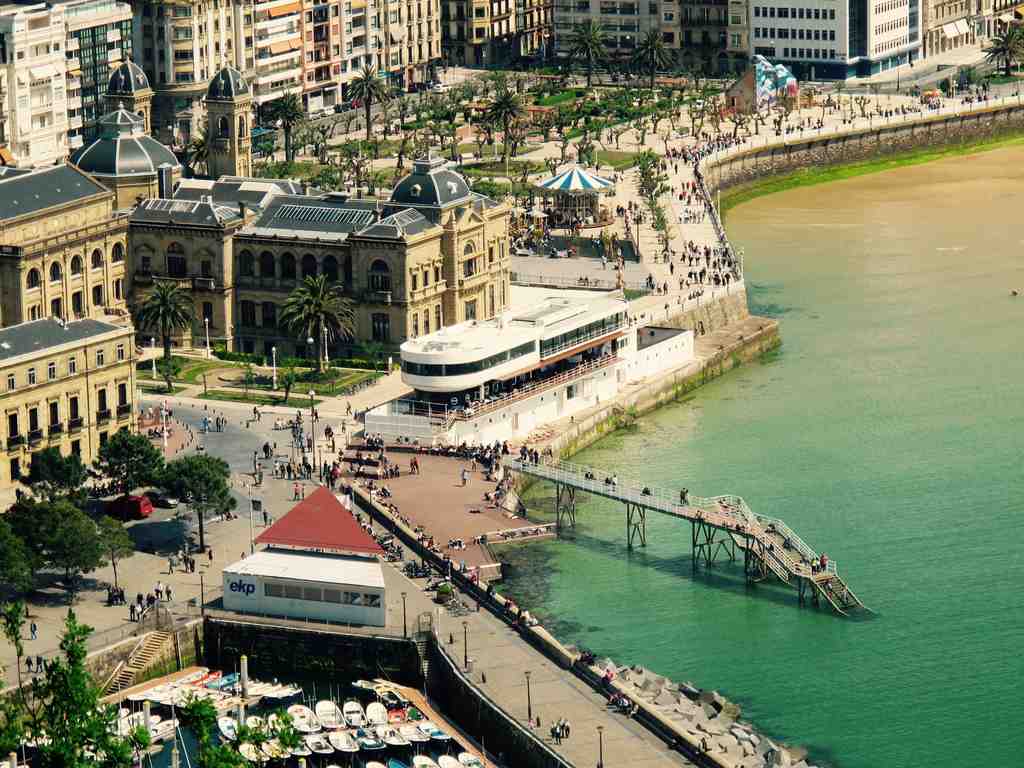
Building of the Royal Yacht Club of San SebastianPhoto: Simon Rodriguez, Wikimedia Commons, CC BY 3.0. Cropped & resized. On your right, look for a white, ship-like building of flat stacked levels and long horizontal windows, marked by a rounded prow-like end and a dark timber section still visible within the brighter exterior.
This is the Real Club Náutico, the Royal Yacht Club of San Sebastián, and it does not merely sit beside the bay; it declares a way of life organised around it. Here, the sea shaped sport, social rank, design, and even self-image. People came to sail, to race, to dine, to be seen, and to look outward over the water as though the city itself leaned toward departure.
The club began in eighteen ninety-six, long before this striking version opened in nineteen twenty-nine. Its earlier headquarters changed bit by bit in nineteen oh five and nineteen sixteen, and then expanded again in nineteen nineteen, so practically that the directors even applied for permits to move carts during the works. In other words, this was never a fantasy dropped from the sky. It grew by necessity, habit, and a very local obsession with the harbour.
The great transformation came when José Manuel Aizpurúa and Joaquín Labayen took the project in hand. Aizpurúa matters here for a very human reason: he was not an architect admiring boats from a distance. He belonged to the club, he raced here, and in nineteen thirty-one he won the European Star Class championship. So when he gave the building its nautical character, he was not borrowing a metaphor. He was drawing from muscle memory.
For years, people said this design simply copied the ideas of Le Corbusier, the famous modernist architect. Recent research has corrected that neatly. The club’s directors had already been asking for a naval look in the earlier reforms, and Aizpurúa himself told the historian Sigfried Giedion that his proposal won because it looked like a ship. Earlier versions suggested a schooner, a lighter, sportier sailing vessel. This one scales up into something grander, closer to an ocean liner.
Take a moment and study the lines. Notice the stepped volumes, the flat roofs, the rounded end, the strip of windows running almost all the way around the top floor. How much of it feels ready to cast off?
That sensation comes from careful planning. The building stands on pilotis, meaning supporting columns that lift and free the structure, and part of it rises over the old aquarium walls below. Inside, the architects chased open space: library, hall, and games room flowed into one another with curtains, low walls, furniture, and glass instead of heavy partitions. The point was simple and rather elegant: from nearly anywhere inside, the bay should remain in view.
Even the details keep up the performance. There is a long entrance stair, a semicircular stair expressed on the outside, and another exterior stair that curls around a freestanding pillar and ends beneath a circular concrete canopy, rather like a little parasol. And that dark wooden portion you can still detect against the white shell? That is the older club, preserved inside the newer ambition.
The white image people now remember was not the only one. Early on, the building wore darker tones, then creams and black joinery. Royal visits by Alfonso the Thirteenth in nineteen thirty helped fix that changing palette in photographs, almost frame by frame. Then history turned harsher. Aizpurúa, born in nineteen oh two, was executed in nineteen thirty-six, one of several brilliant Spanish modernists whose careers the war cut short.
Yet the building endured, took storm damage in two thousand and fourteen, kept its archive safe enough to pass into public hands in two thousand and twenty-two, and still faces the bay like a vessel in permanent conversation with the city. In a few minutes, at Plaza de Cervantes, we will see that maritime identity spread beyond club life into shared civic space.
Look to your left for an open paved square centred on a dark bronze monument, where the lean figure of Don Quixote and the sturdier Sancho Panza stand high on a broad…Read moreShow less
Open dedicated page →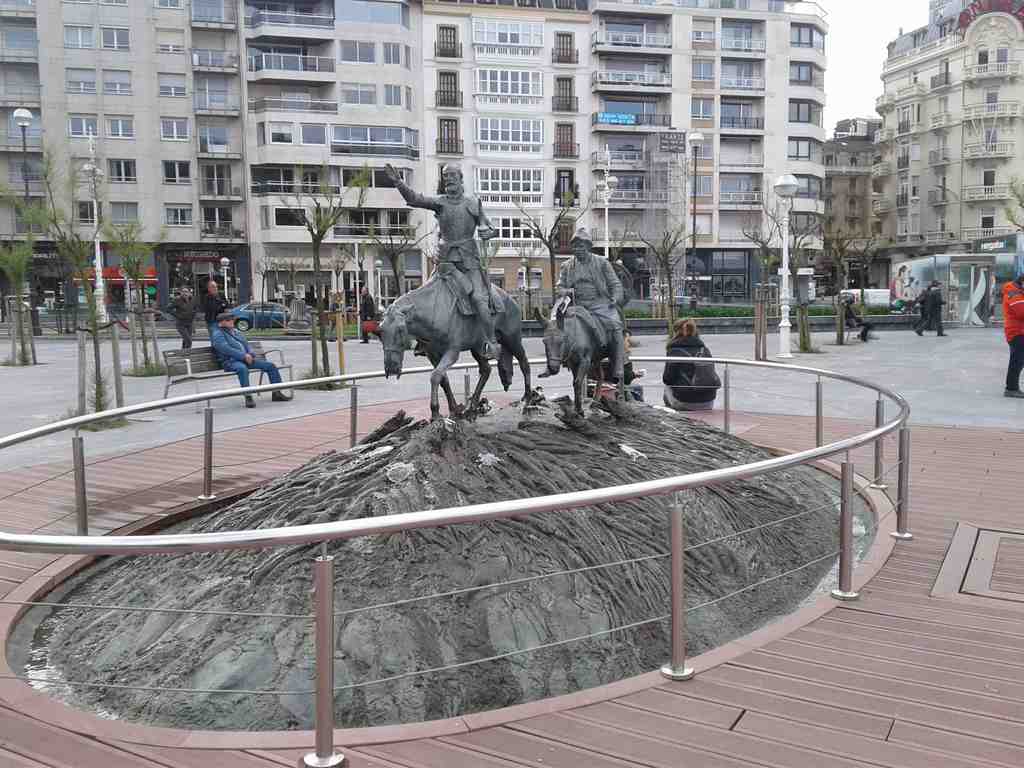
Plaza de CervantesPhoto: Remux, Wikimedia Commons, CC BY-SA 4.0. Cropped & resized. Look to your left for an open paved square centred on a dark bronze monument, where the lean figure of Don Quixote and the sturdier Sancho Panza stand high on a broad plinth.
Plaza de Cervantes does not shout for attention. It gathers it quietly. Since nineteen oh five, this square has carried the name of Miguel de Cervantes Saavedra, the novelist, poet, and playwright whose Don Quixote turned a wandering dreamer into one of the great figures of world literature. The naming came in the same year Spain marked three hundred years since the publication of Don Quixote.
What most visitors never realise is how modest this place began. Writer Serapio Múgica Zufiria described it in nineteen sixteen as little more than a discreet space with a very modest lamp dedicated to Cervantes. Not a heroic monument, not a grand civic statement. Just a lamp. That image makes the square’s later transformation rather telling.
The bronze group you see today has its own curious journey. Sculptor Lorenzo Coullaut Valera created this composition of Don Quixote and Sancho as the model that won the nineteen fifteen competition for Madrid’s great Cervantes monument in Plaza de España, unveiled in nineteen twenty-nine. Later, San Sebastián chose that same image for this square. Not everyone applauded. Some local artists protested, arguing that a work designed for another place and another moment should not simply be transplanted here.
And yet cities do this sort of thing all the time: they borrow symbols, test meanings, and then make them their own. During the Transition to democracy, on the fourth of July, nineteen seventy-six, a huge march against the far right ended here beside La Concha. A literary square became a political stage.
After the square reopened in phases in two thousand and eleven, workers set the sculpture on a new bronze base designed by Zigor García, decorated with fish from the Cantabrian Sea. That small detail matters. Even fantasy, here, must answer to the bay. In a moment, as you walk on to La Concha, you will see how imagination and spectacle open out into the real curve of the shore.
Look to your right for the wide crescent of pale sand, bordered by a stone promenade and the white iron La Concha railing that runs along the bay like a handwritten flourish. La…Read moreShow less
Open dedicated page →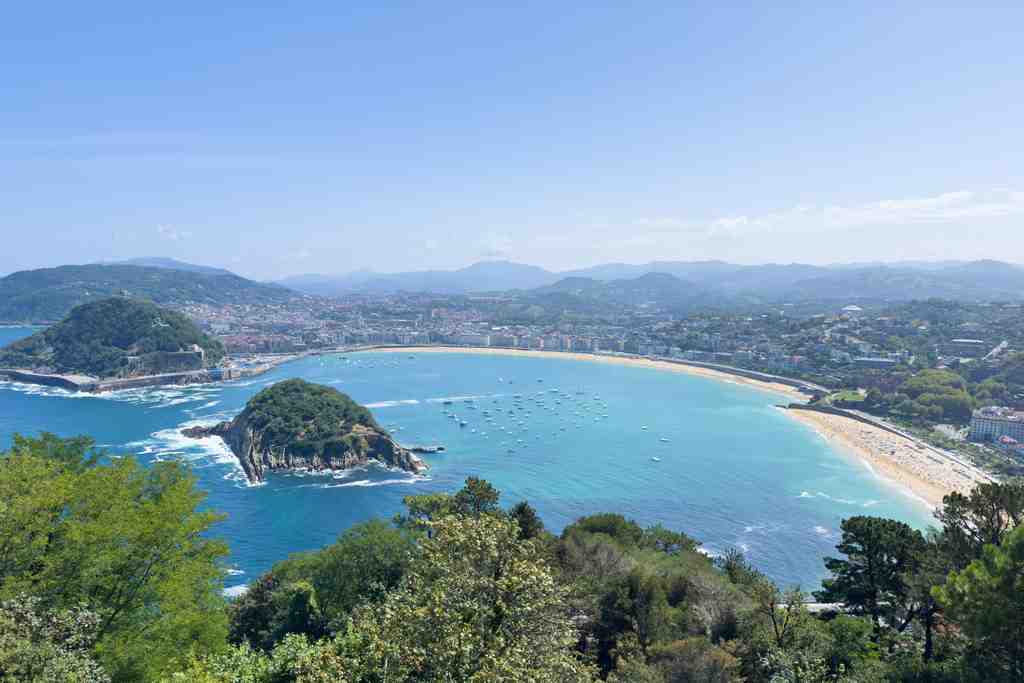
Beach of La ConchaPhoto: Kent Wang, Wikimedia Commons, CC BY-SA 4.0. Cropped & resized. Look to your right for the wide crescent of pale sand, bordered by a stone promenade and the white iron La Concha railing that runs along the bay like a handwritten flourish.
La Concha looks effortless, as if the city simply found a perfect beach and decided to admire it. In truth, San Sebastián kept shaping itself around this curve. In the nineteenth century, Queen Isabel the Second came here to bathe in the sea for her health, and that royal habit changed everything. Later, Queen María Cristina ordered Miramar Palace above the bay in eighteen ninety-three, and the shoreline became a summer stage for rank, ritual, and display.
Pause a moment and follow the sweep of the bay with your eyes, then the railing above it. You can see why people turned this place into both promenade and performance.
By eighteen seventy-nine, the water had its own annual drama: the Bandera de La Concha regattas. Traditional traineras - long rowing boats first used by fishermen - raced here with thirteen rowers and a helmsman, while the beach and promenade filled with spectators as if the whole city had taken a seat in an open-air theatre. Around nineteen ten, Juan Rafael Alday gave that theatre its signature frame with the railing you see today; if you want a closer look, there is a fine detail image in the app.
But locals know the bay has never belonged only to leisure. On the second of April, nineteen ten, the French aviation pioneer Hubert Le Blon crashed into the sea near Pico del Loro, becoming the city’s first aviation fatality. La Concha, for a moment, turned from fashionable resort into accident ground. Others followed: Elie Hanouille in nineteen fourteen, Jean Boullersin in nineteen nineteen. Even in nineteen forty-five, Léon Degrelle came down here in a German aircraft and began his long exile.
If you fancy it, glance at the before-and-after image in the app; the nineteen eighteen shoreline looks battered, not polished.
That is La Concha’s truth: beauty, applause, danger, repair. And from this exposed edge of the city, we now turn toward authority itself, at the Provincial Council of Guipúzcoa, about six minutes away.
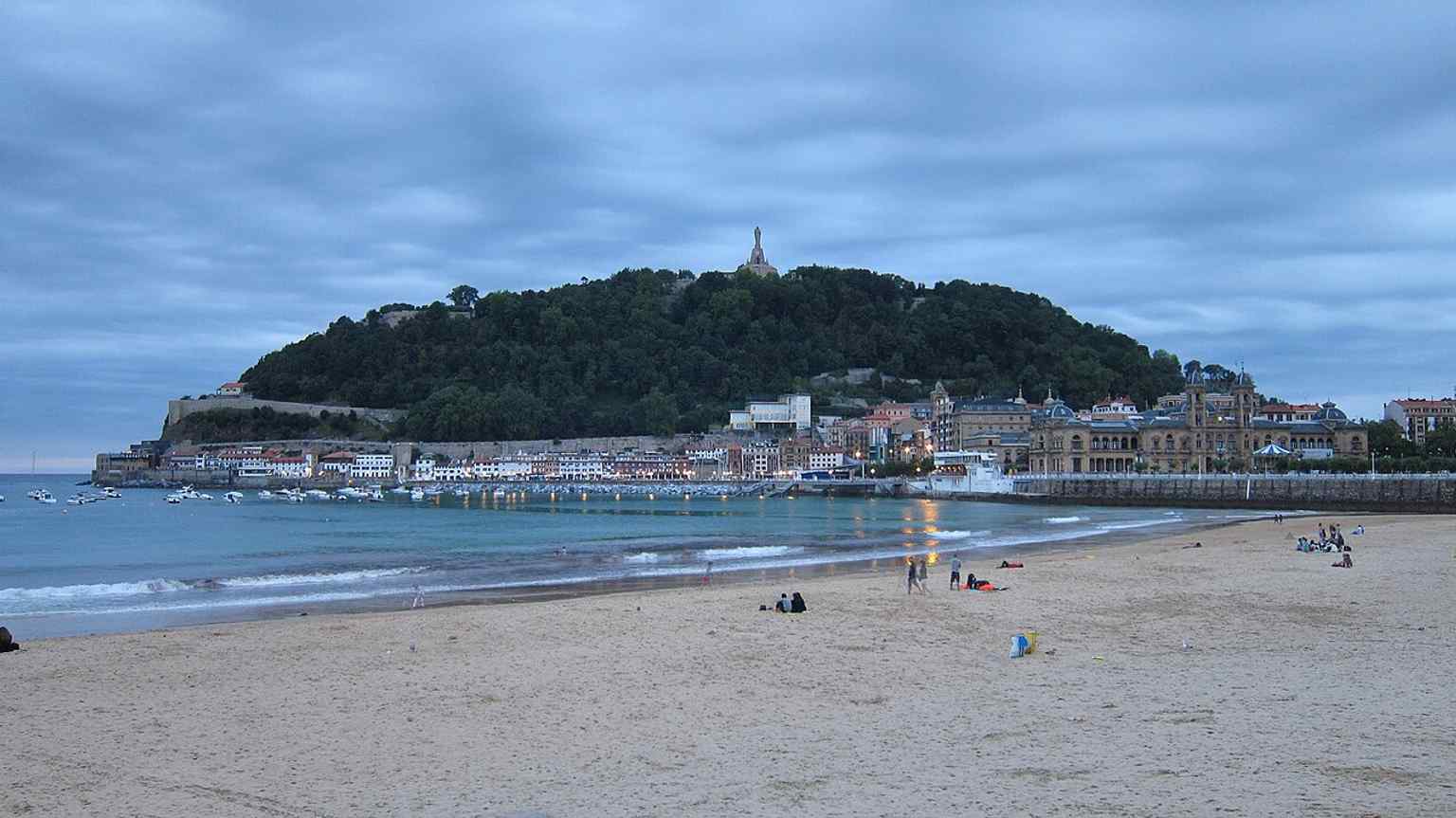
A classic panoramic look across La Concha Bay, showing the beach’s elegant urban setting and the promenade that made it a royal-era seaside resort.Photo: Carlos Cunha, Wikimedia Commons, CC BY-SA 3.0. Cropped & resized. 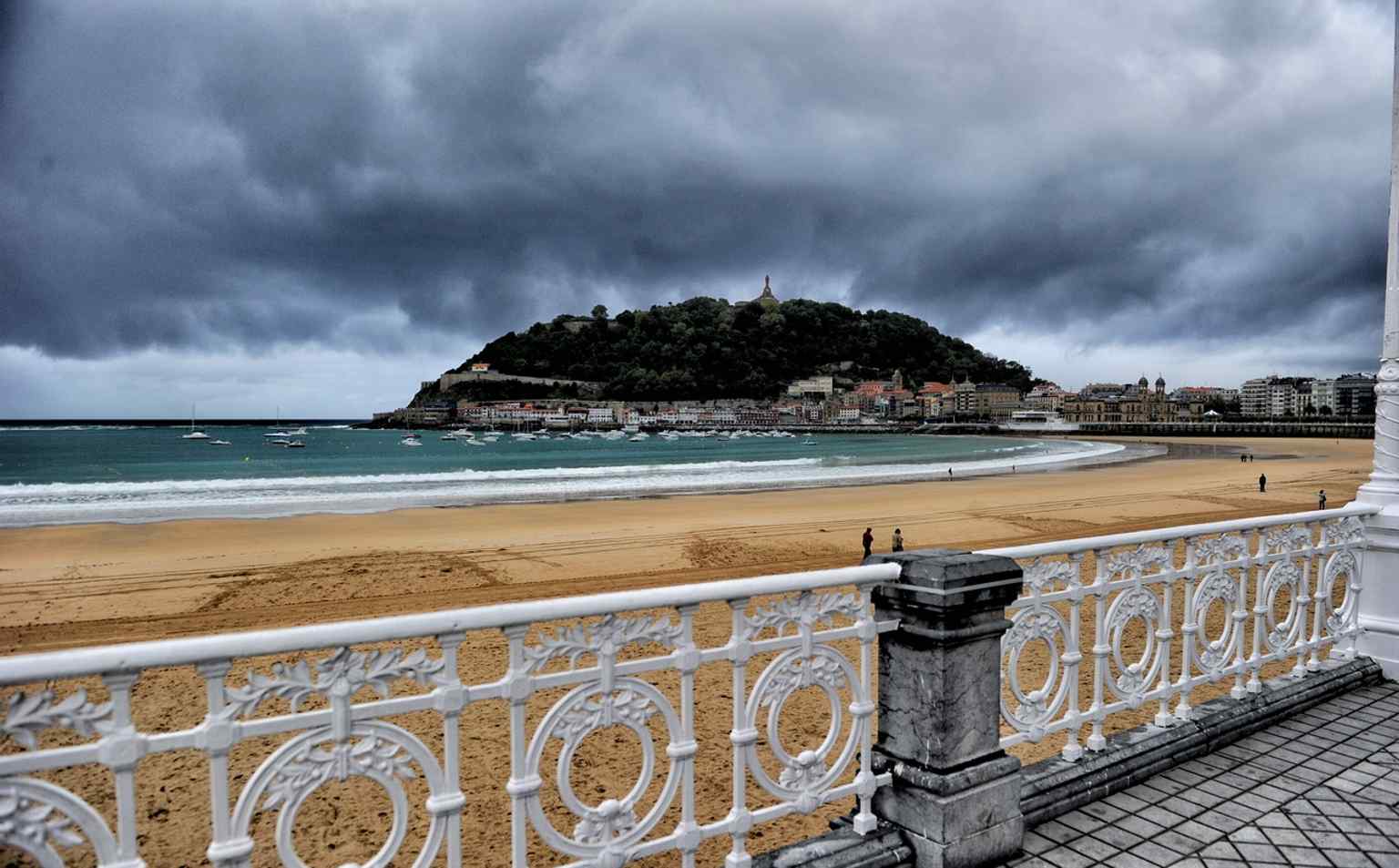
The famous La Concha railing along the promenade, installed around 1910 and now one of San Sebastián’s most recognizable waterfront symbols.Photo: Валерий Дед, Wikimedia Commons, CC BY 3.0. Cropped & resized. 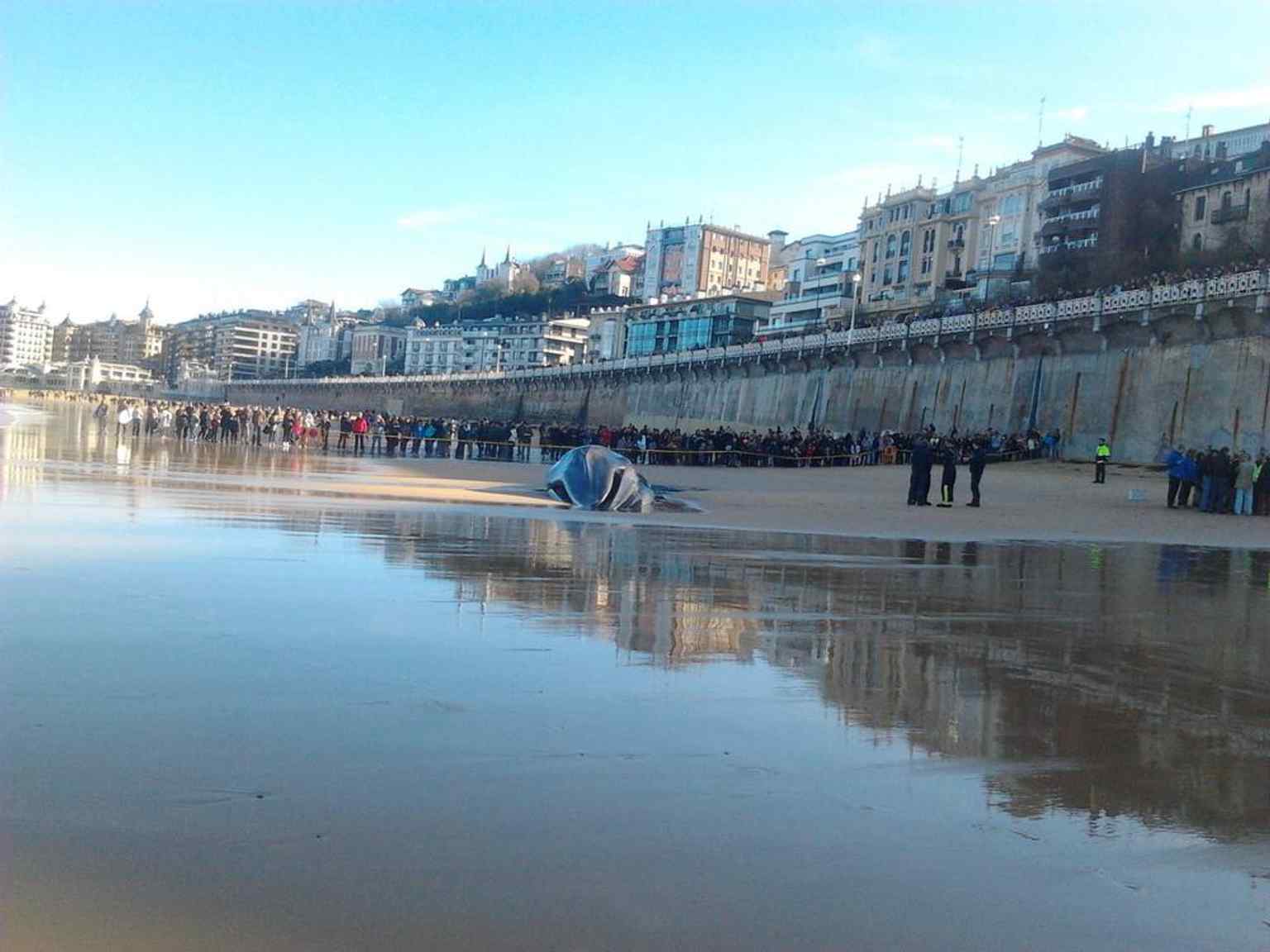
A stranded fin whale on La Concha Beach, showing how this urban shoreline can host unexpected events beyond everyday bathing and promenading.Photo: Luistxo Fernandez, Wikimedia Commons, CC BY-SA 4.0. Cropped & resized. 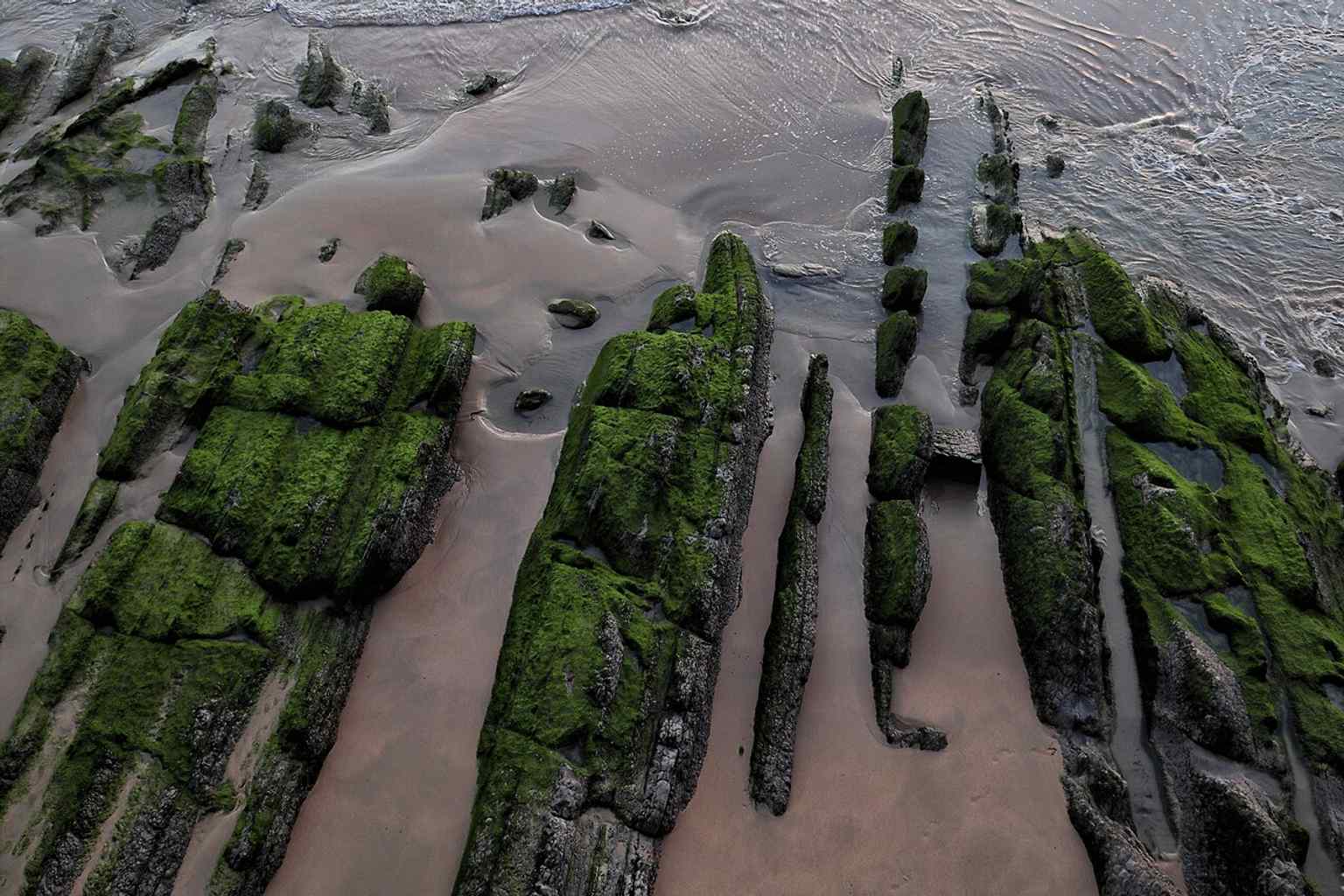
Sunrise over La Concha Beach, highlighting the broad sandy arc and shallow shoreline that changes dramatically with the tide.Photo: Javier Pérez Montes, Wikimedia Commons, CC BY-SA 4.0. Cropped & resized. 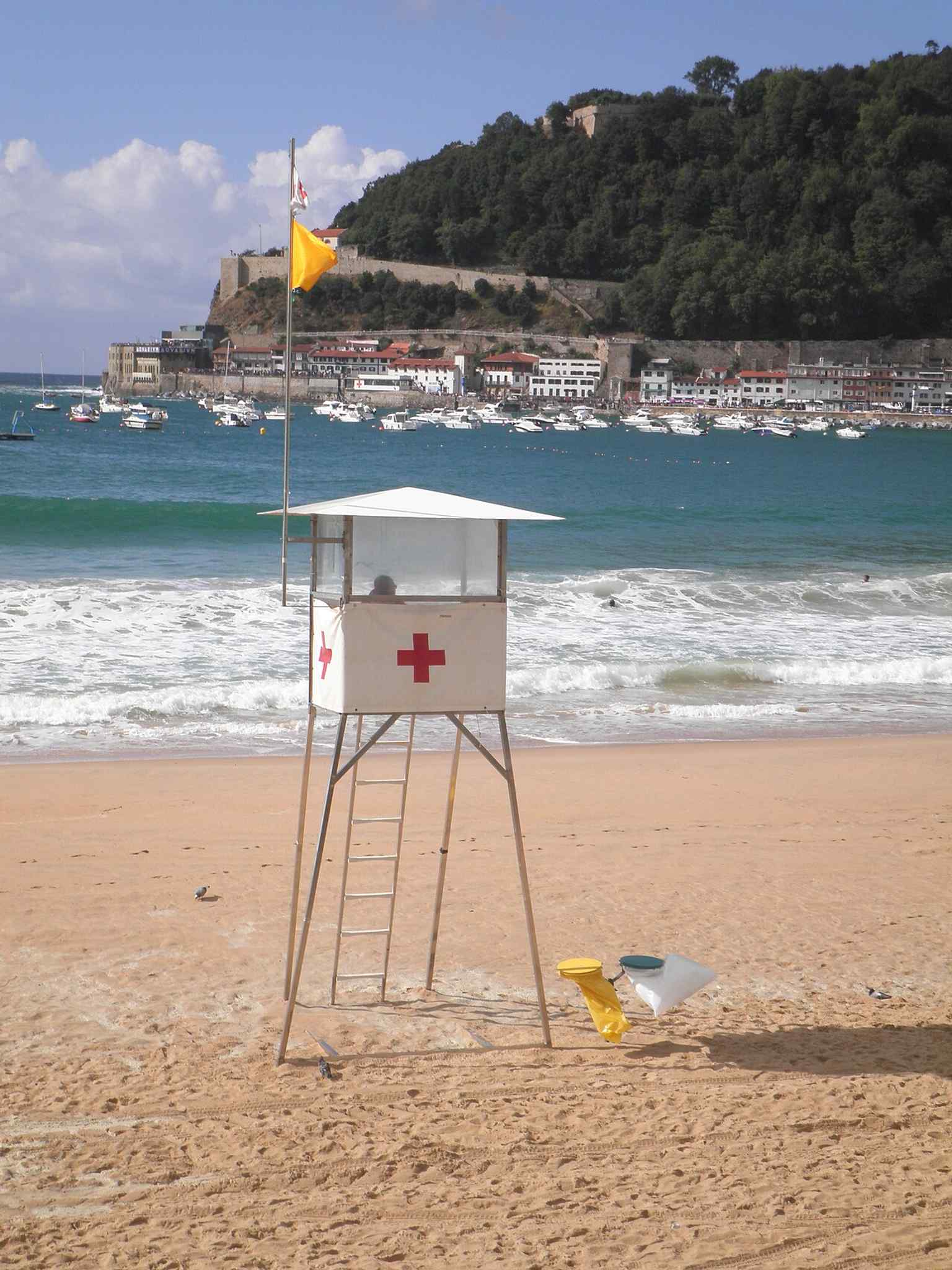
A yellow caution flag on La Concha Beach, a practical reminder that this popular urban beach is closely shaped by sea conditions and tides.Photo: Joxemai, Wikimedia Commons, CC BY-SA 3.0. Cropped & resized. 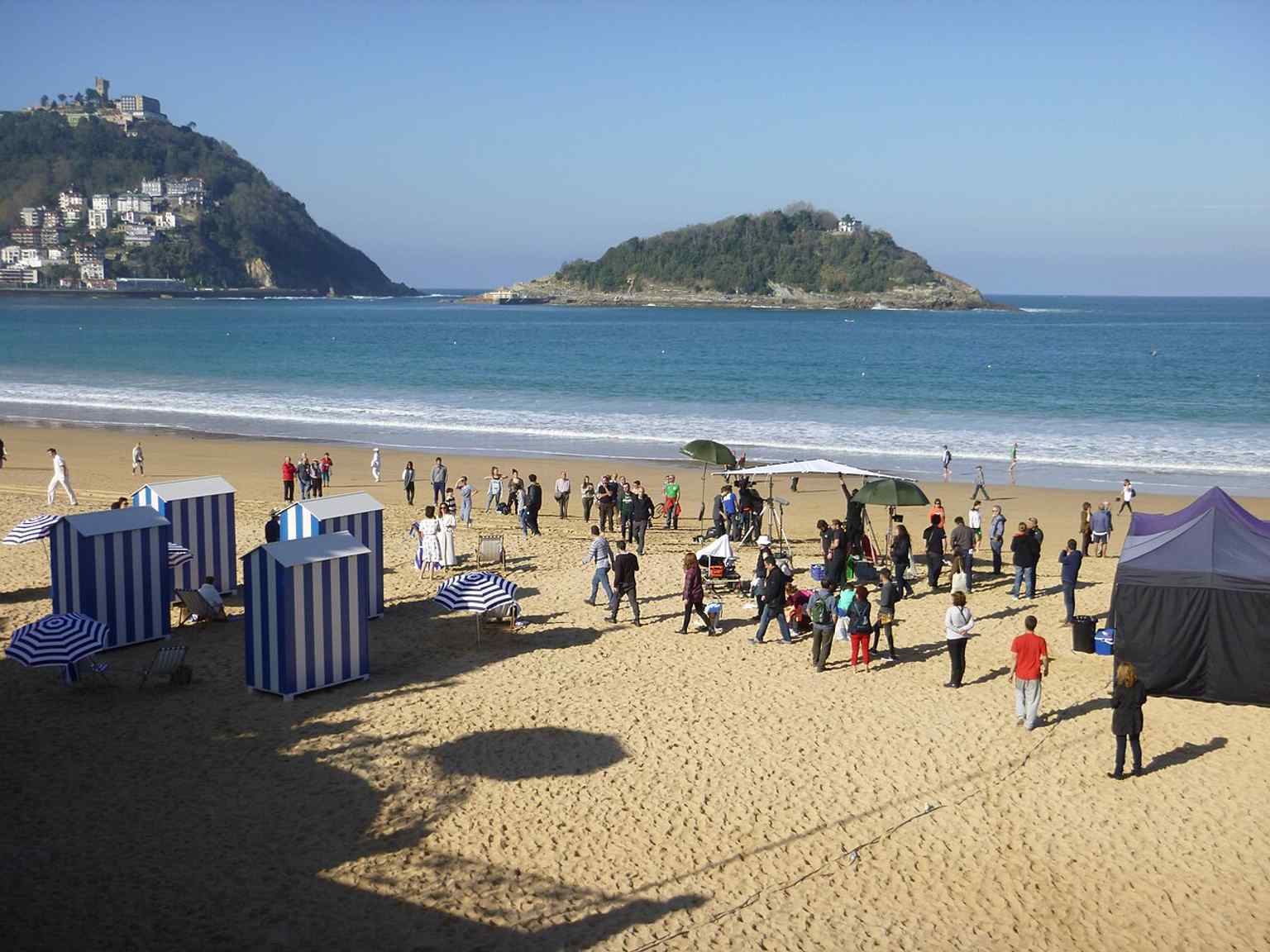
Bird footprints in the sand at La Concha, a close look at the shallow, tidal beach surface that appears and disappears with the tide.Photo: Joxemai, Wikimedia Commons, CC BY-SA 4.0. Cropped & resized. 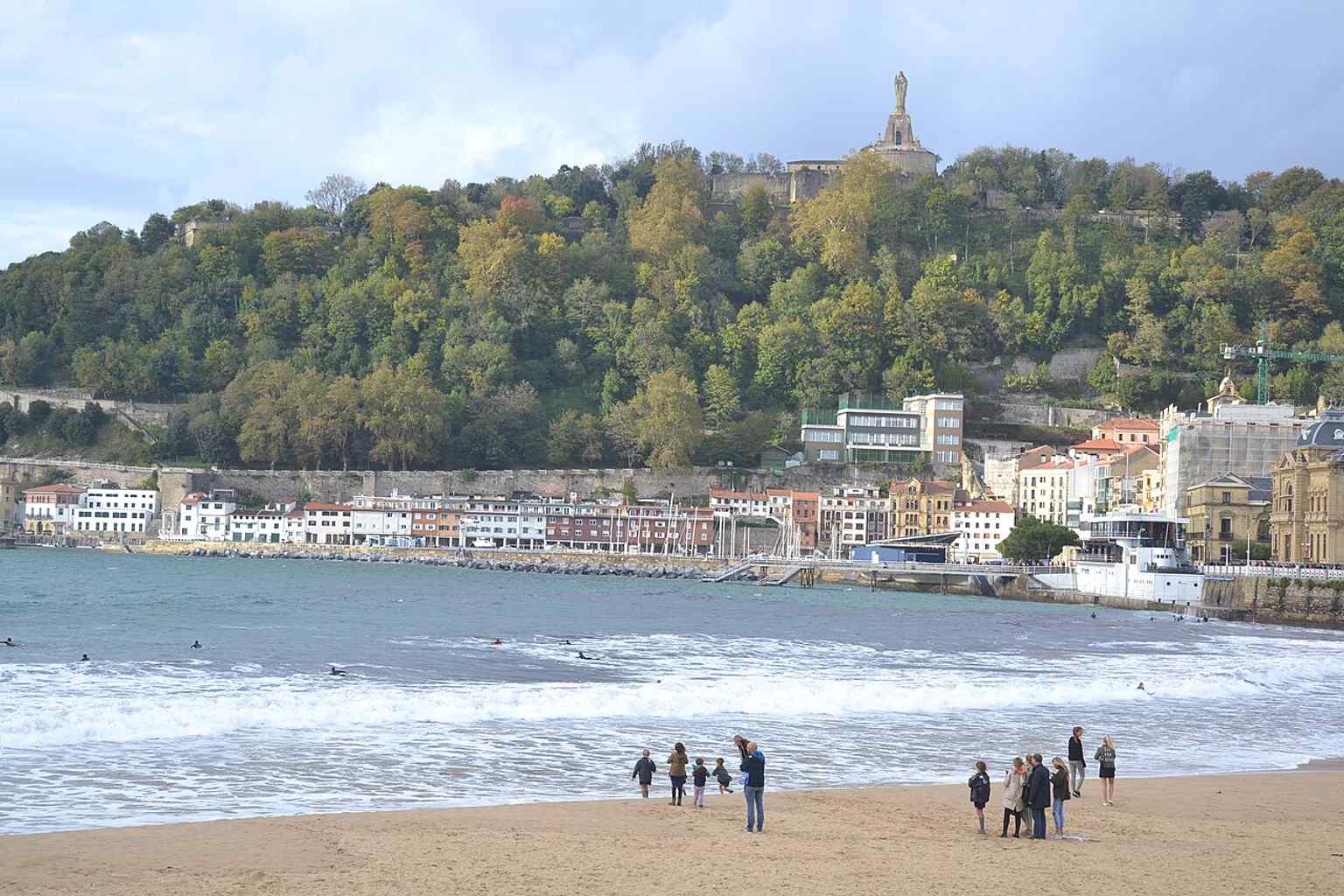
A broad daylight view of La Concha Beach in Donostia-San Sebastián, showing the long urban shoreline that has made it one of Europe’s most famous city beaches.Photo: LucasD, Wikimedia Commons, CC BY-SA 4.0. Cropped & resized. On your left stands a long pale-stone palace with a dark mansard roof and a central arched entrance crowned by the coat of arms of Gipuzkoa. This is the Provincial Council of…Read moreShow less
Open dedicated page →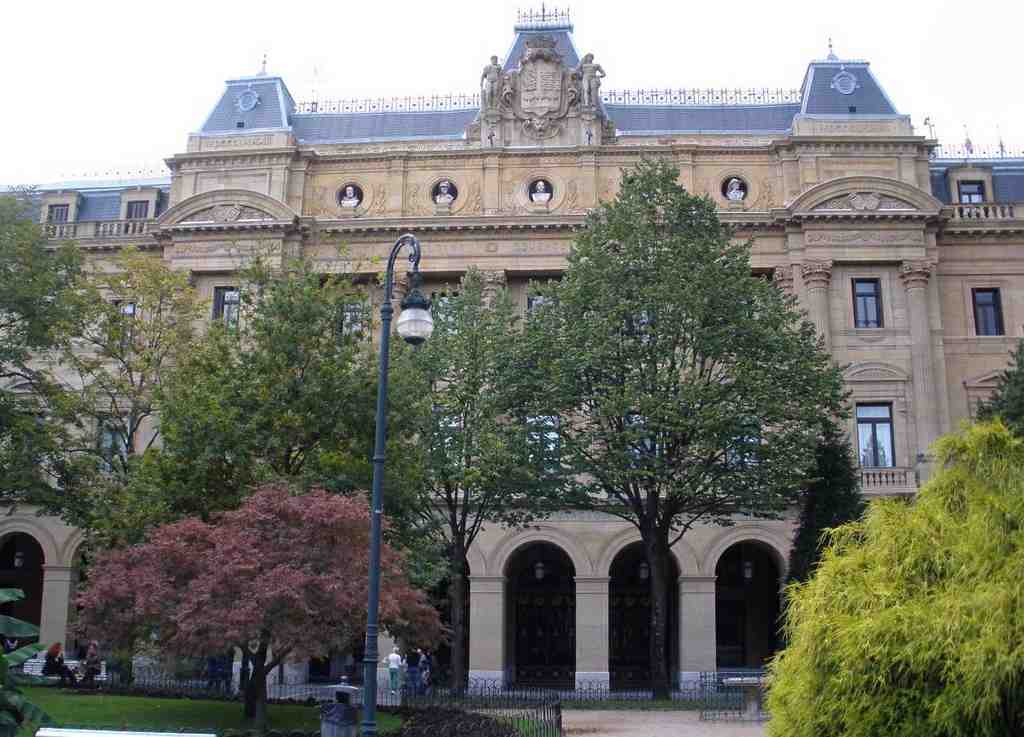
Provincial Council of GuipúzcoaPhoto: Zarateman, Wikimedia Commons, CC0. Cropped & resized. On your left stands a long pale-stone palace with a dark mansard roof and a central arched entrance crowned by the coat of arms of Gipuzkoa.
This is the Provincial Council of Gipuzkoa, the seat of the foral government. “Foral” refers to old local rights and powers, once held by the Basque territories themselves: the ability to govern certain affairs, raise taxes, and defend a measure of self-rule. In eighteen seventy-six, after those rights were abolished, the council survived, but in a diminished form, reduced to an ordinary provincial administration without fiscal or military sovereignty.
That loss matters here, because this building is not merely elegant; it is political memory in stone. José Goicoa designed it as a single grand front for three authorities at once: the Treasury in the right wing, the Civil Government in the centre, and the provincial council in the left. The council did not gain control of the whole building until nineteen fifty-eight. For decades, local and state power lived under one roof, not always comfortably.
Then came one of the building’s darkest human stories. On the fourth of October, nineteen seventy-six, Juan María de Araluce Villar, the last president before the democratic transition, left here to go home for lunch. E-T-A, the Basque separatist armed group, assassinated him nearby, along with his driver and three police escorts. His death fixed this address in the violent atmosphere of late Franco-era Gipuzkoa.
And yet the institution returned. In nineteen seventy-seven, the General Assemblies and the Foral Council were restored, and in April nineteen seventy-nine the first democratic Foral Council took shape here under Javier Aizarna, though the opening already showed political strain when six deputies from Herri Batasuna did not attend. If you glance at the images in the app, you can see how the institution now presents honours and public ceremonies rather than fear and fracture, and how it supports culture and research as part of modern self-government.
So this façade teaches a useful lesson: handsome civic buildings may hide older struggles over who truly holds power. The Town Hall, about four minutes away, carries exactly that sort of double life.
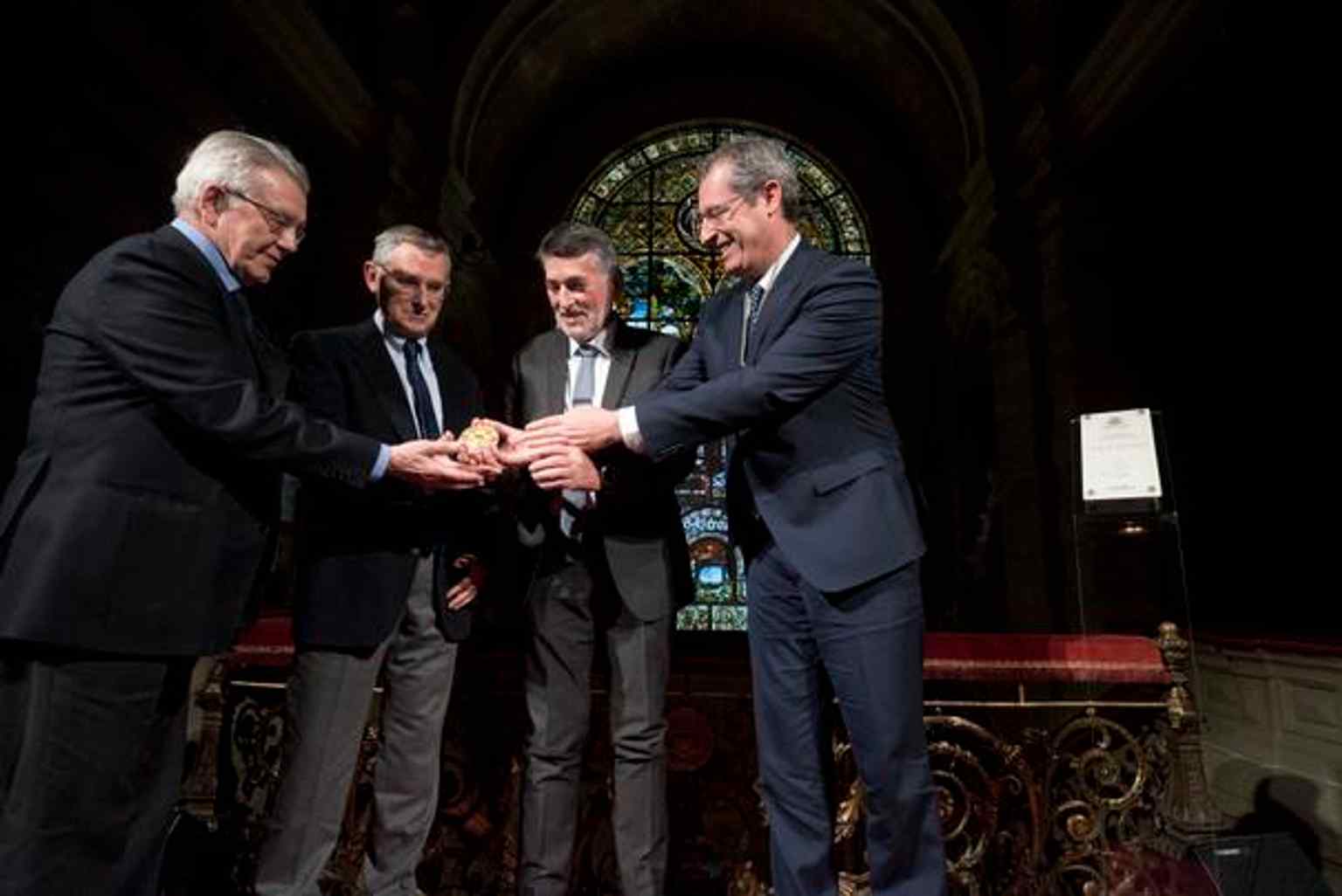
A Gipuzkoa institutional awards ceremony inside the Provincial Council context — a modern example of the Diputación General awarding the territory’s top honour.Photo: Gipuzkoako Foru Aldundia, Wikimedia Commons, CC BY-SA 4.0. Cropped & resized. 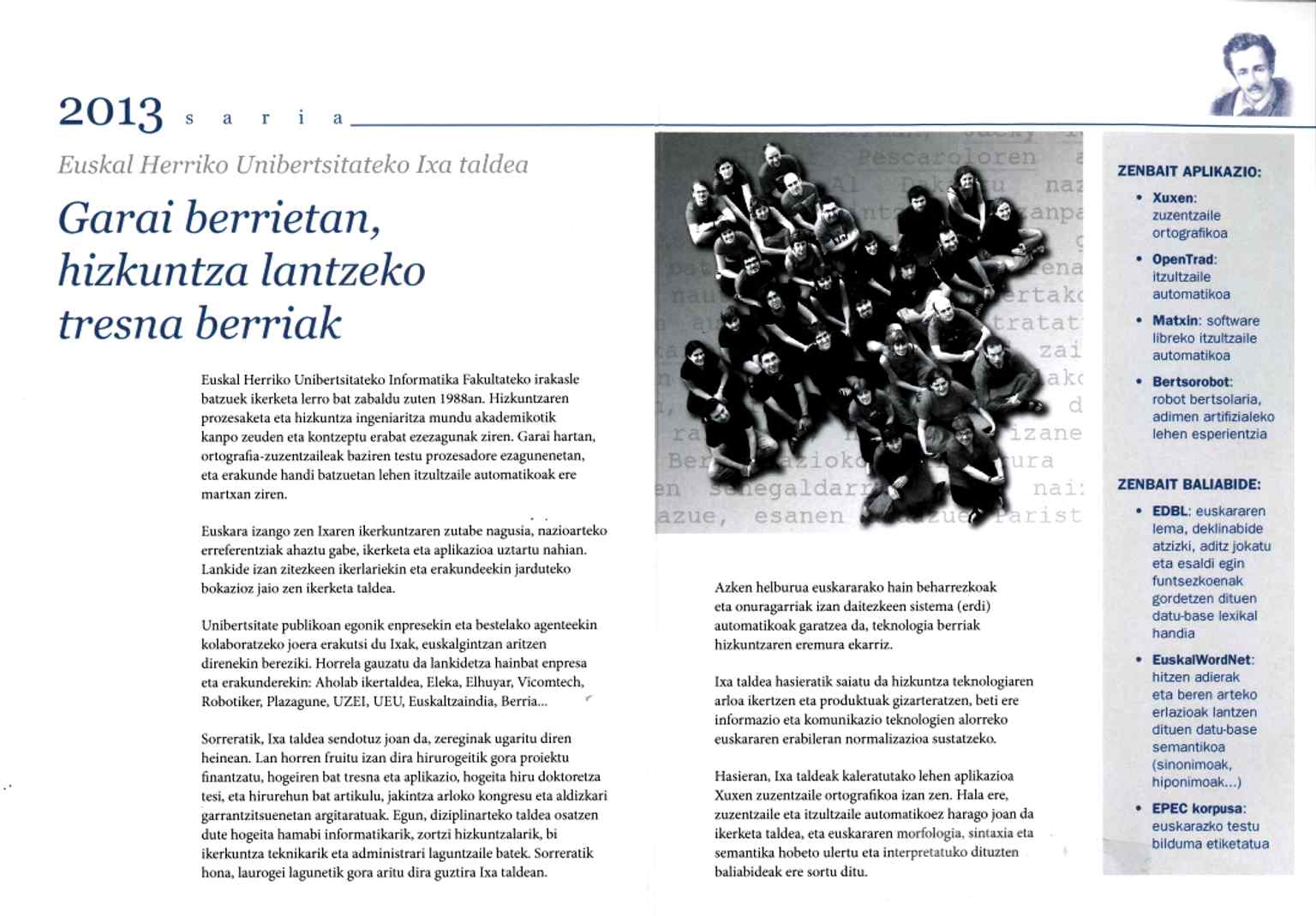
The 2013 Abadia Prize announcement from the Provincial Council, showing how the foral government supports Basque culture and research.Photo: Ksarasola, Wikimedia Commons, CC BY-SA 4.0. Cropped & resized. 
An event at the Provincial Council’s innovation forum, reflecting the institution’s contemporary role beyond administration.Photo: Gipuzkoako Foru Aldundia, Wikimedia Commons, CC BY-SA 4.0. Cropped & resized. 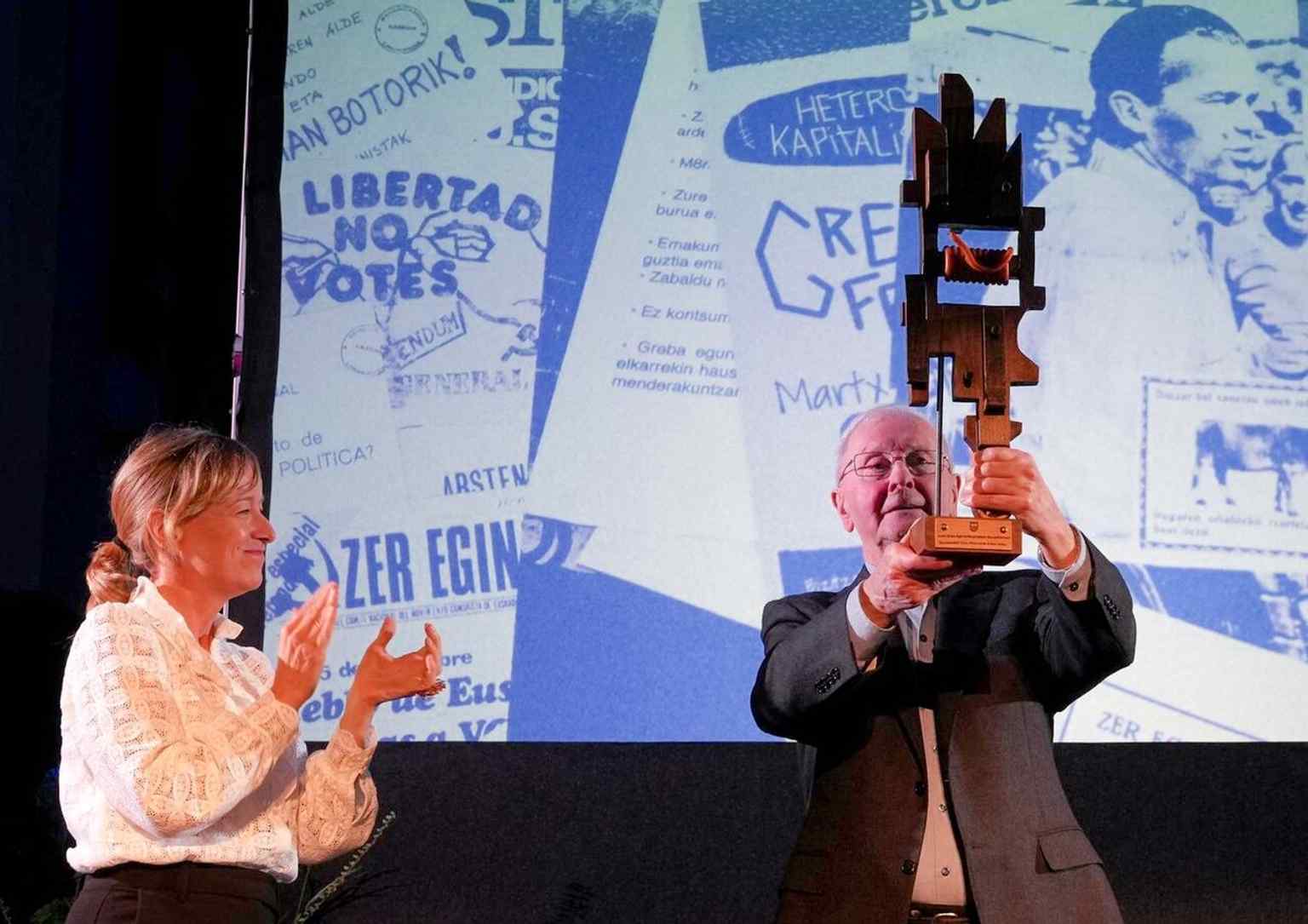
A 2024 tribute organised by the Provincial Council, a reminder that the institution still plays a prominent public and commemorative role today.Photo: Gipuzkoako Foru Aldundia (GFA), Wikimedia Commons, CC BY-SA 4.0. Cropped & resized. On your left, the Town Hall is a pale stone Belle Époque building with a long symmetrical facade, two rounded corner towers, and a central clock above the balcony. It looks…Read moreShow less
Open dedicated page →
San Sebastian City CouncilPhoto: User:Luiispaeez, Wikimedia Commons, Public domain. Cropped & resized. On your left, the Town Hall is a pale stone Belle Époque building with a long symmetrical facade, two rounded corner towers, and a central clock above the balcony.
It looks entirely respectable now. That, if anything, is part of the trick.
San Sebastián governs itself from a building that began life as the city’s casino, started in eighteen eighty-two and opened on the first of July, eighteen eighty-seven, in the Alderdi Eder gardens beside the bay. Queen María Cristina attended the inauguration, and the place quickly became one of the grand theatres of the resort city we have been tracing all afternoon: not a theatre with a stage, perhaps, but one with entrances, costumes, rules, and an audience.
In its glittering prime, locals nicknamed it Santa María de la Roulette. A teasing little joke. Those two towers reminded people of the nearby Basilica of Santa María del Coro, so the temple of chance borrowed the silhouette of a church. Inside, money flowed so freely that the casino helped fund major pieces of modern San Sebastián: the Paseo de La Concha, the Paseo Nuevo, even the Misericordia asylum. And yet the most lucrative room, the gaming hall upstairs, officially admitted foreigners only. Donostiarras were barred, supposedly to protect local morals. As you can imagine, that rule attracted more mockery than obedience.
If you glance at the historical image on your screen, you can see the building wearing its earlier identity rather proudly.
Then came the First World War, and the elegant rooms acquired another mask. Because Spain remained neutral, San Sebastián filled with aristocratic refugees, adventurers, and intelligence agents. The casino became, quite literally, a wartime nest of spies. The most famous was Mata Hari, the dancer and spy, who stayed at the nearby Hotel de Londres and slipped regularly into these salons. Local legend places her here with the journalist Enrique Gómez Carrillo, amid flirtation, champagne, and conversations that may have carried far more than gossip across Europe.
But glamour never tells the whole story. Gambling was banned in nineteen twenty-four, and the casino closed. Soon these rooms served wounded soldiers from the Rif War as a hospital. In July of nineteen thirty-six, during the outbreak of the Civil War, rebel troops and requetés - Carlist militia fighters - barricaded themselves inside. Republican militias besieged the building, and the fighting was fierce enough that local observers still point to bullet scars on the Boulevard side.
Then, one more reinvention. In nineteen forty-five, the city moved its council here. Architects Alday and Luis Jesús Arizmendi reshaped the old casino into a town hall. Arizmendi was an unusual fellow: municipal architect and chief of firefighters at the same time. His sharpest conversion came indoors, where the grand ballroom of the Belle Époque became the council chamber, the room where the city now argues over budgets and bylaws instead of dancing foxtrots.
If you look at the close-up of the clock and coat of arms, you can see how thoroughly the building learned its new role without quite forgetting the old one.
That is the pleasure of San Sebastián: appearances are rarely false, but they are often incomplete. In a moment, we’ll continue to Goicoa Palace, only about a minute away.
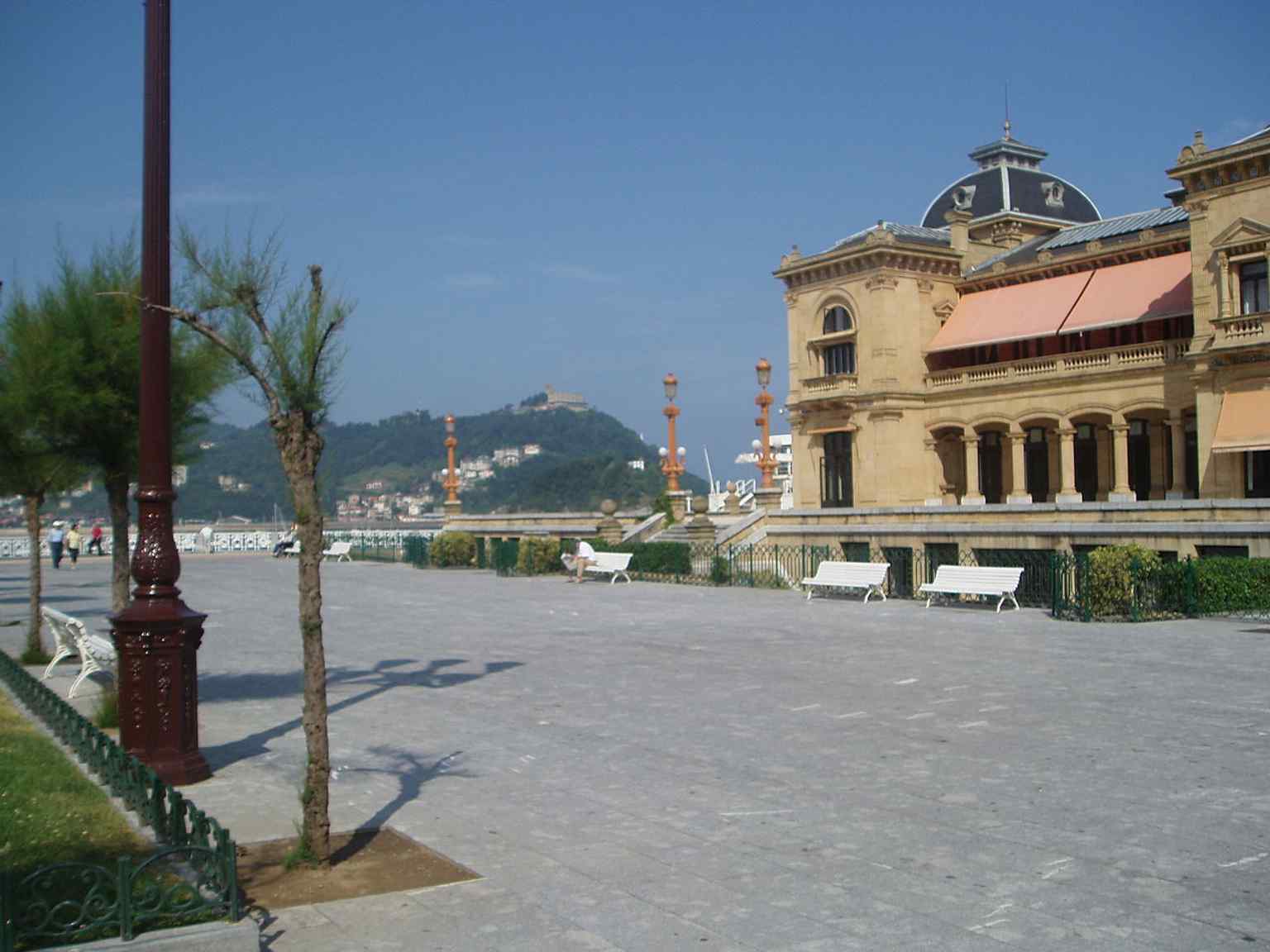
The former casino that became City Hall in 1945, standing by La Concha bay in Alderdi-Eder.Photo: Antonio de la Mano, Wikimedia Commons, CC BY-SA 3.0 es. Cropped & resized. 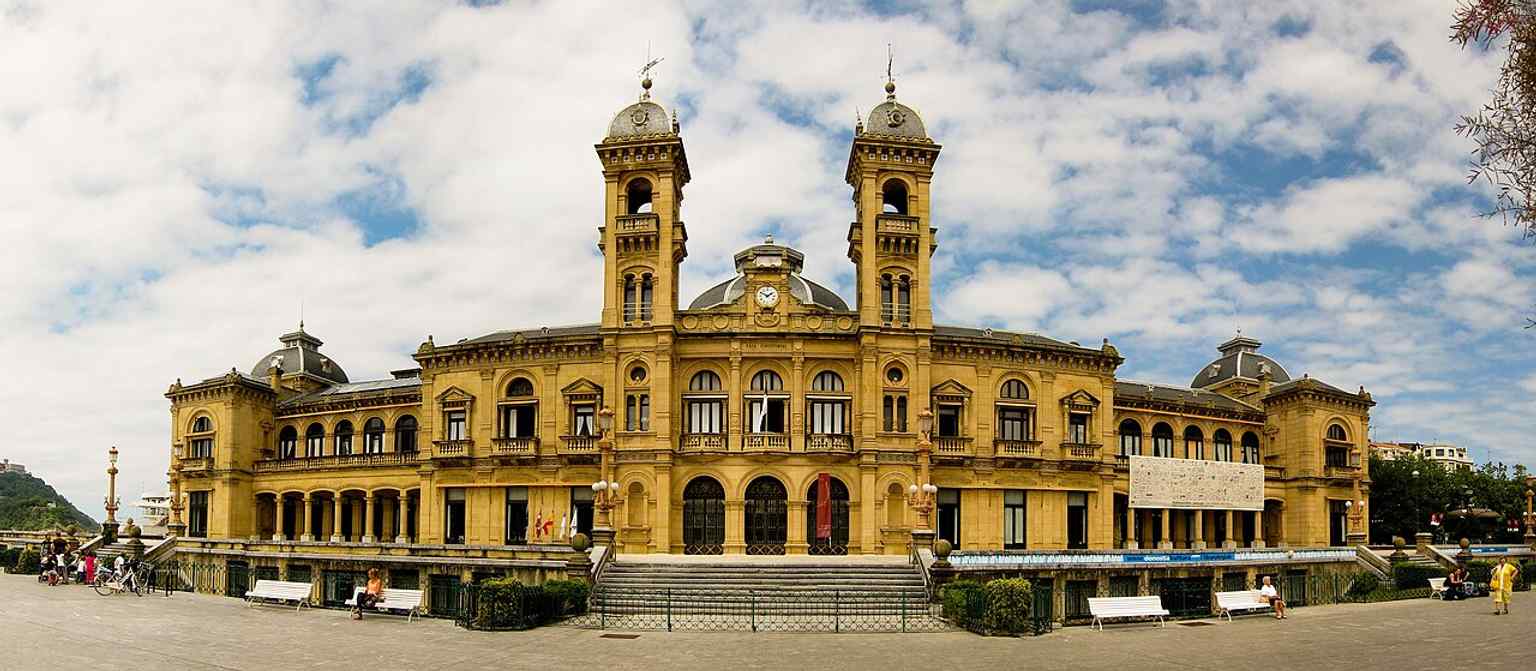
A sweeping panoramic view of the Town Hall and bay, showing why this landmark anchors the waterfront promenade.Photo: François de Dijon, Wikimedia Commons, CC BY-SA 4.0. Cropped & resized. 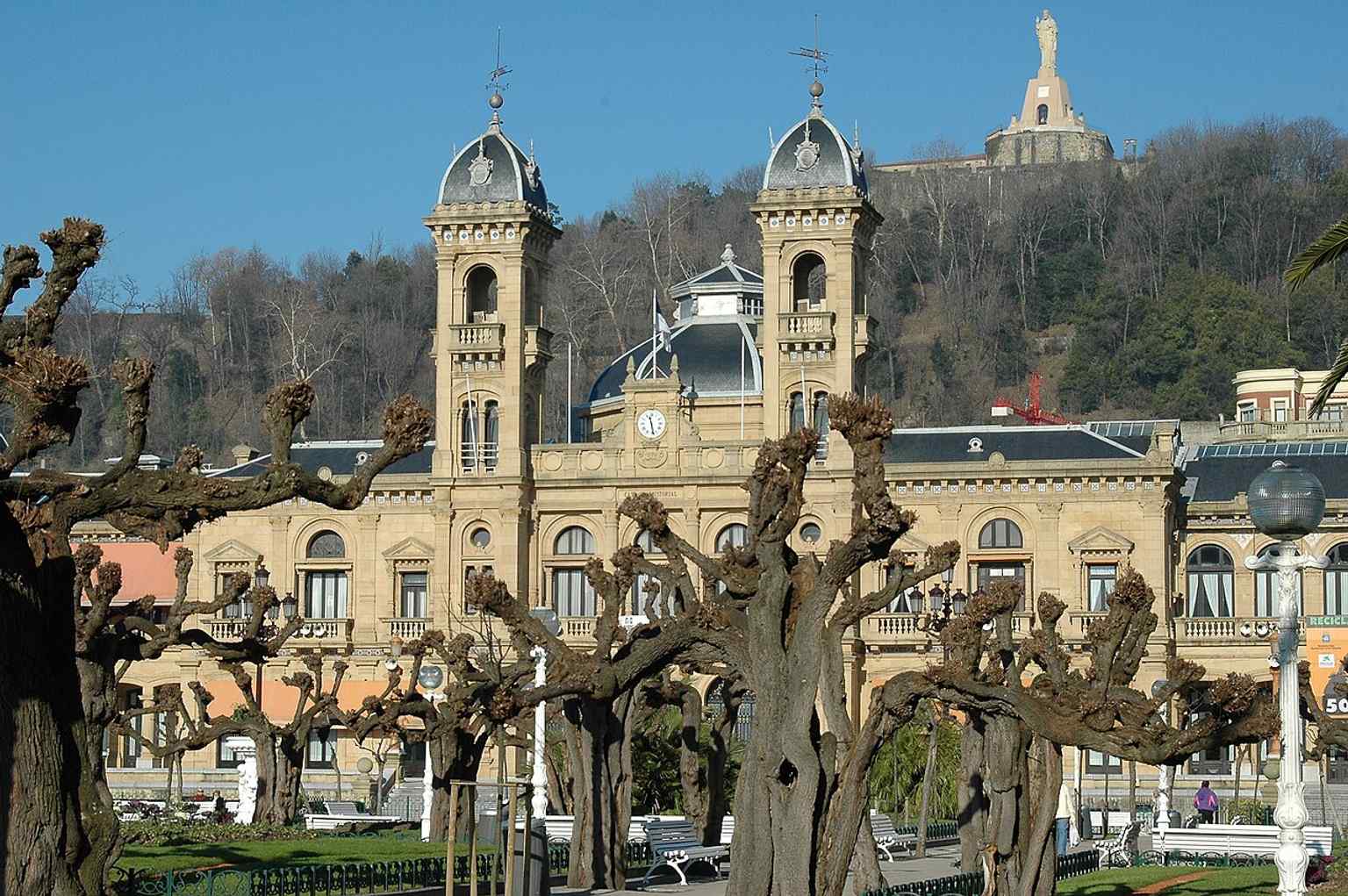
The City Hall with La Concha Bay, Mount Igueldo, and Santa Clara Island in one classic postcard view.Photo: Daniel Díez Sanquirce, Wikimedia Commons, CC BY-SA 3.0. Cropped & resized. 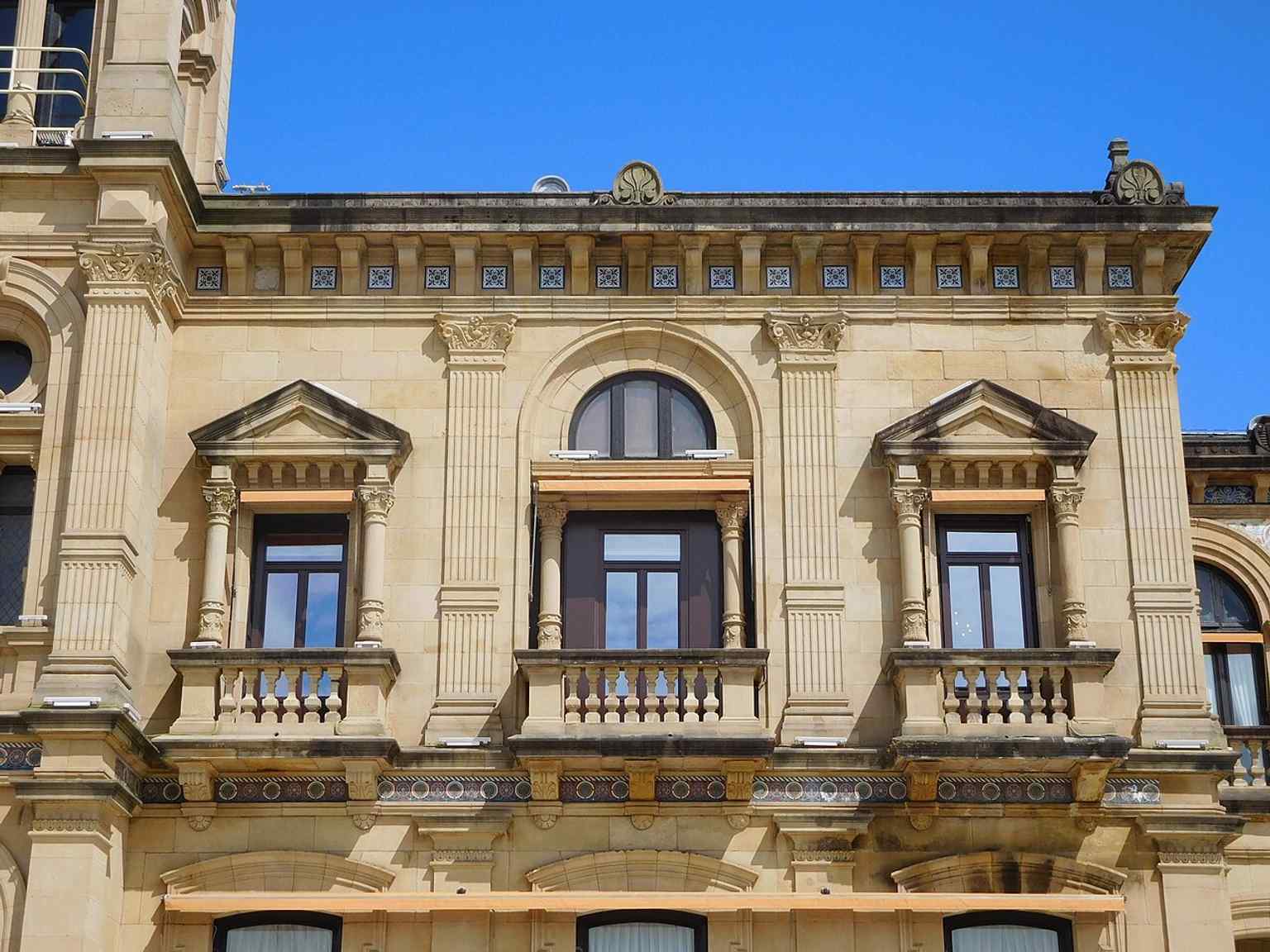
The southeastern facade of the old casino-turned-town hall, useful for seeing the building’s ornate 19th-century design.Photo: JiriMatejicek, Wikimedia Commons, CC BY-SA 3.0. Cropped & resized. 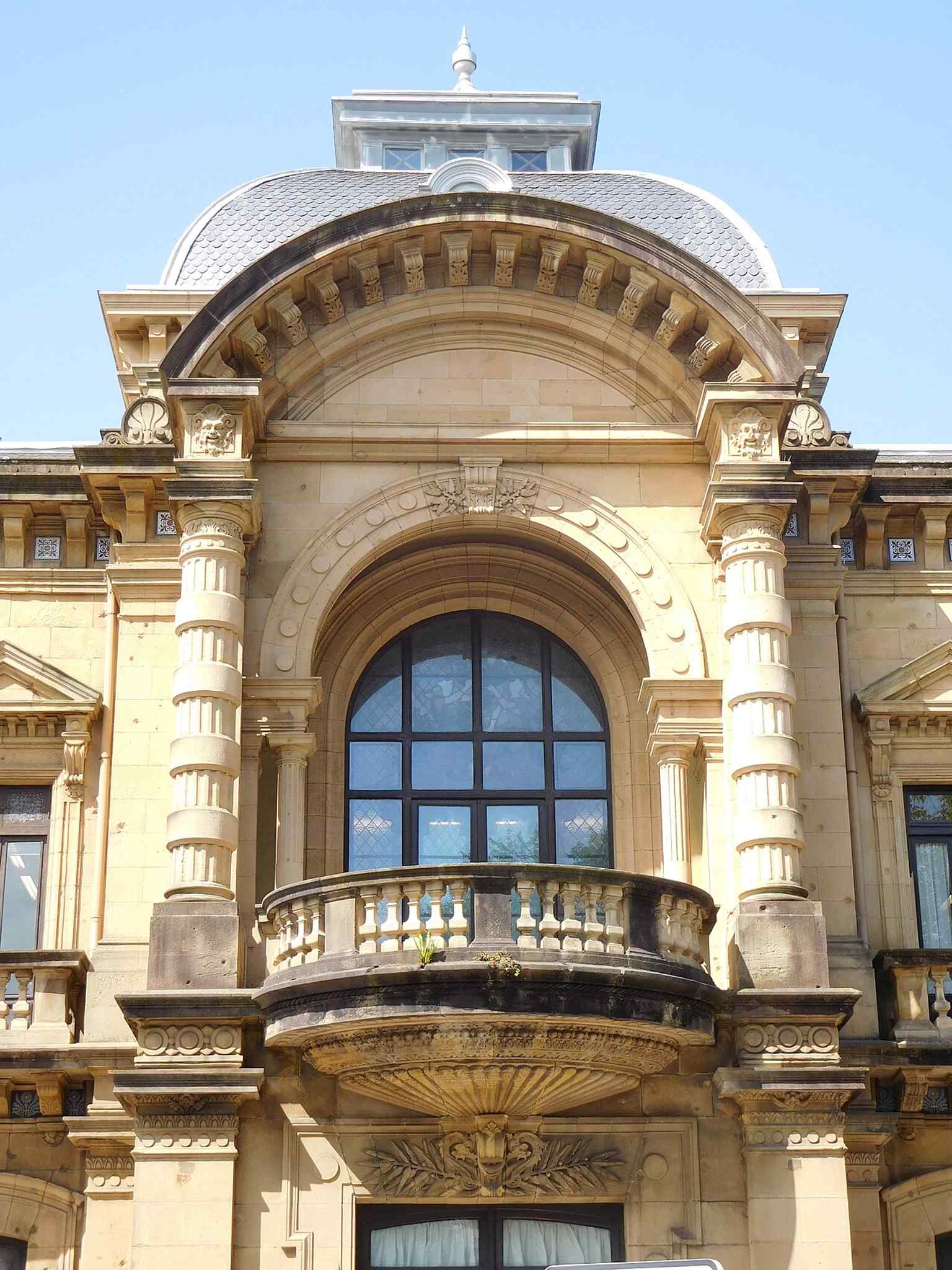
The clock and coat of arms detail on the facade, a close look at the civic identity of the building.Photo: JiriMatejicek, Wikimedia Commons, CC BY-SA 3.0. Cropped & resized. 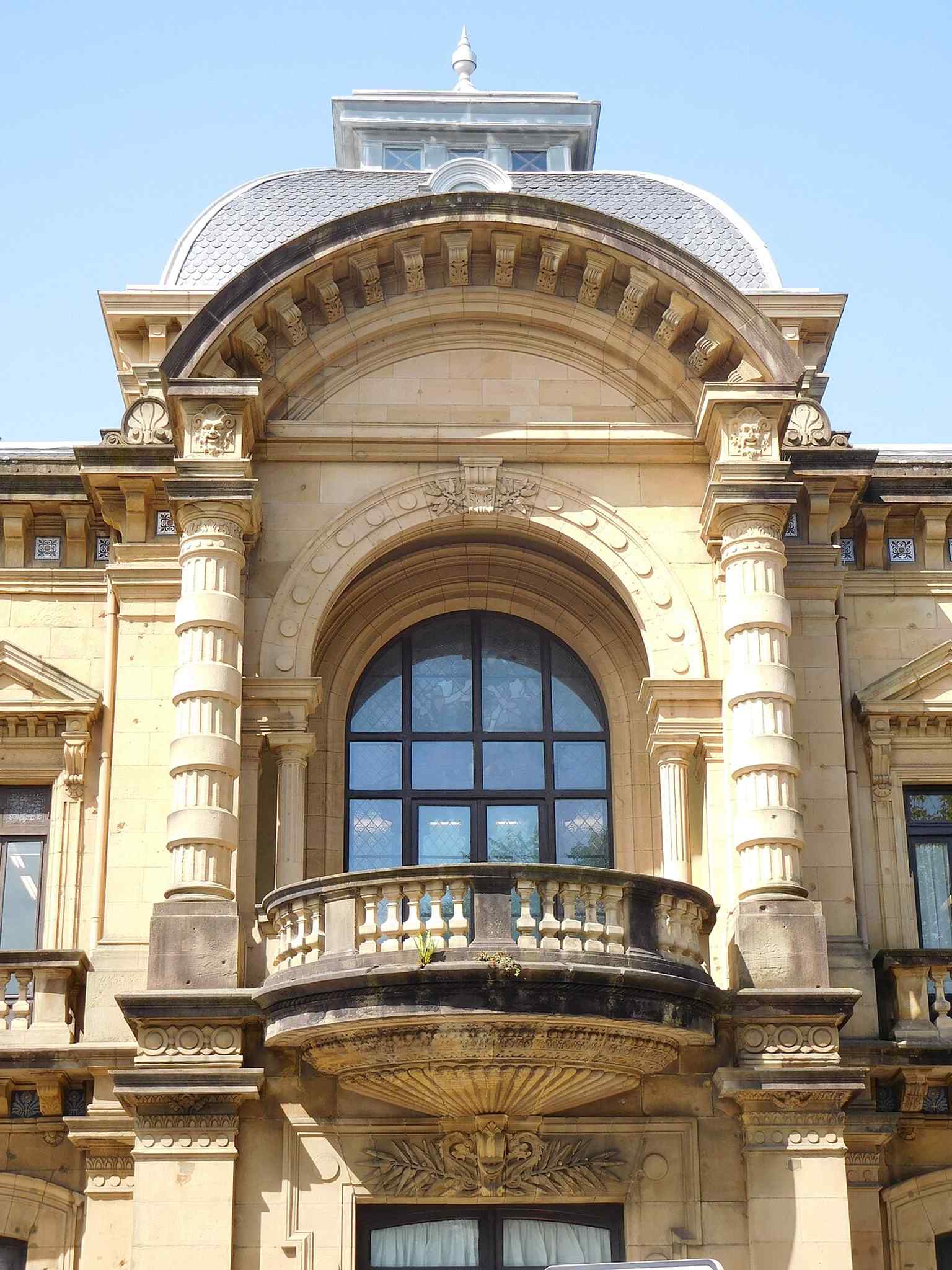
The balcony on the northeast side, one of the ceremonial edges of the former casino building.Photo: JiriMatejicek, Wikimedia Commons, CC BY-SA 3.0. Cropped & resized. 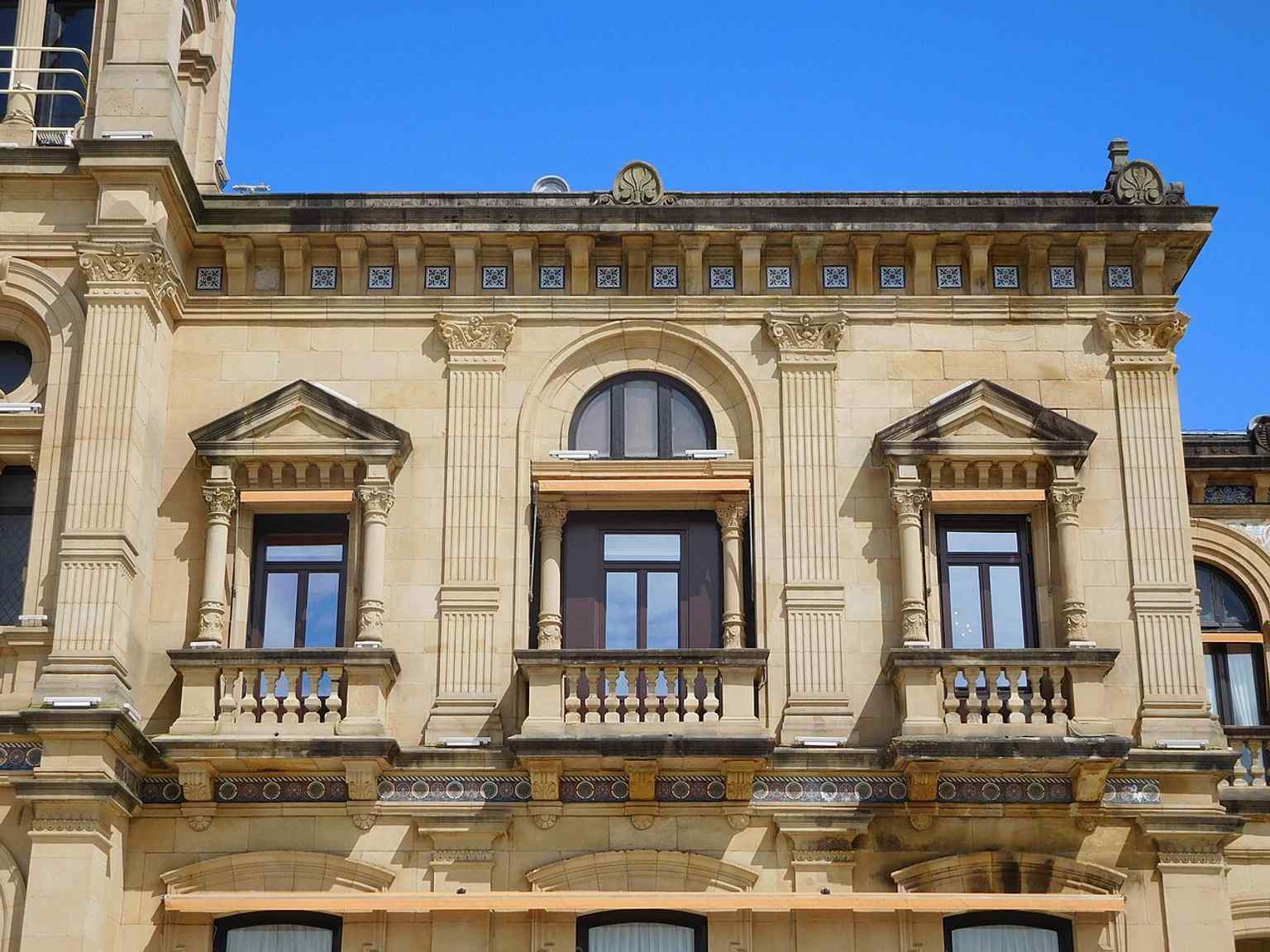
Illuminated at night, the City Hall shows a more theatrical side of the Belle Époque building.Photo: Iñaki LL, Wikimedia Commons, CC BY-SA 4.0. Cropped & resized. 
A night view of the town hall, highlighting how the old casino still dominates the waterfront after dark.Photo: Zarateman, Wikimedia Commons, CC0. Cropped & resized. 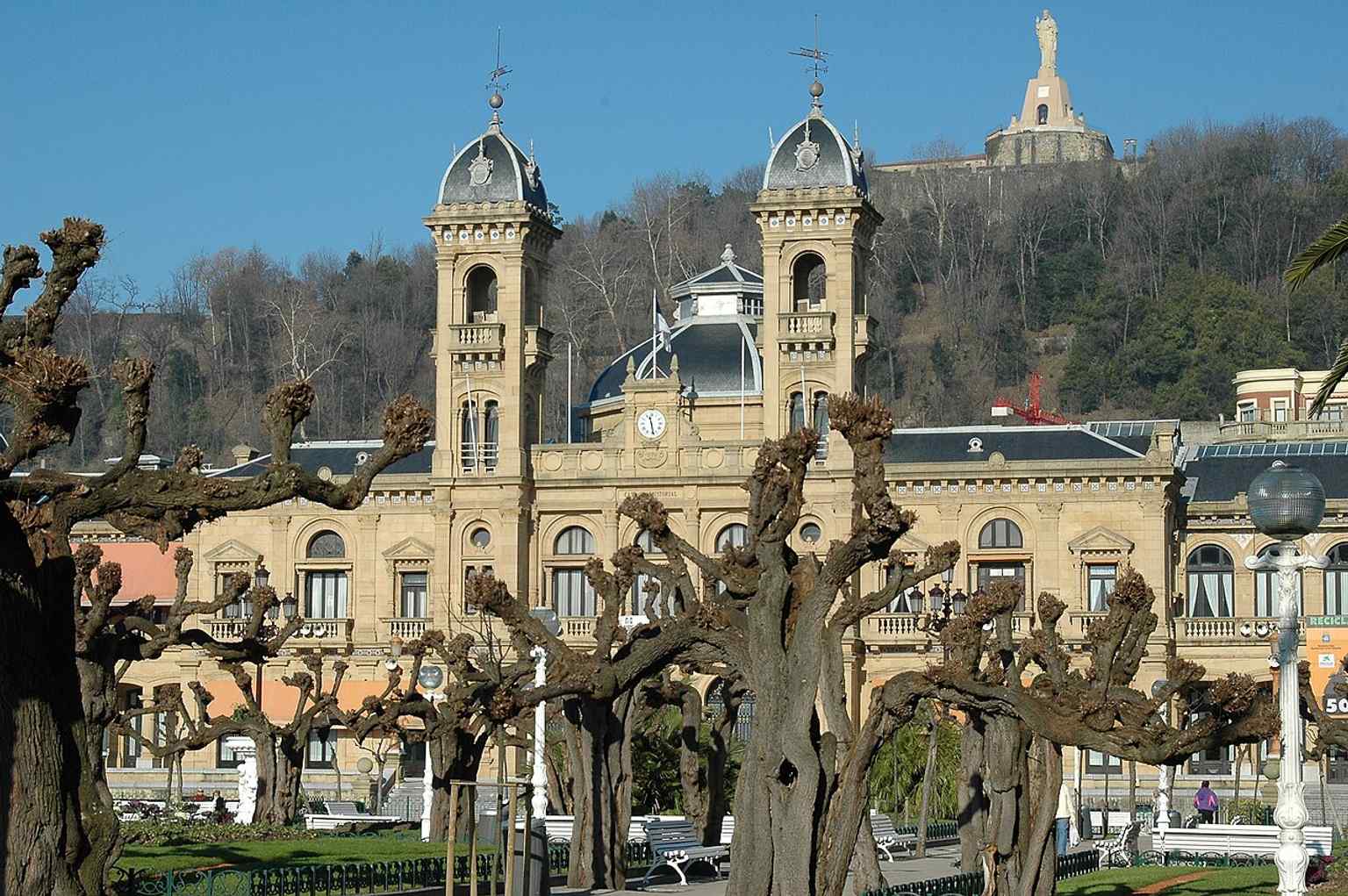
An older view labeled as the former casino, echoing the building’s life before it became the council headquarters.Photo: Enfo, Wikimedia Commons, CC BY-SA 3.0 es. Cropped & resized. 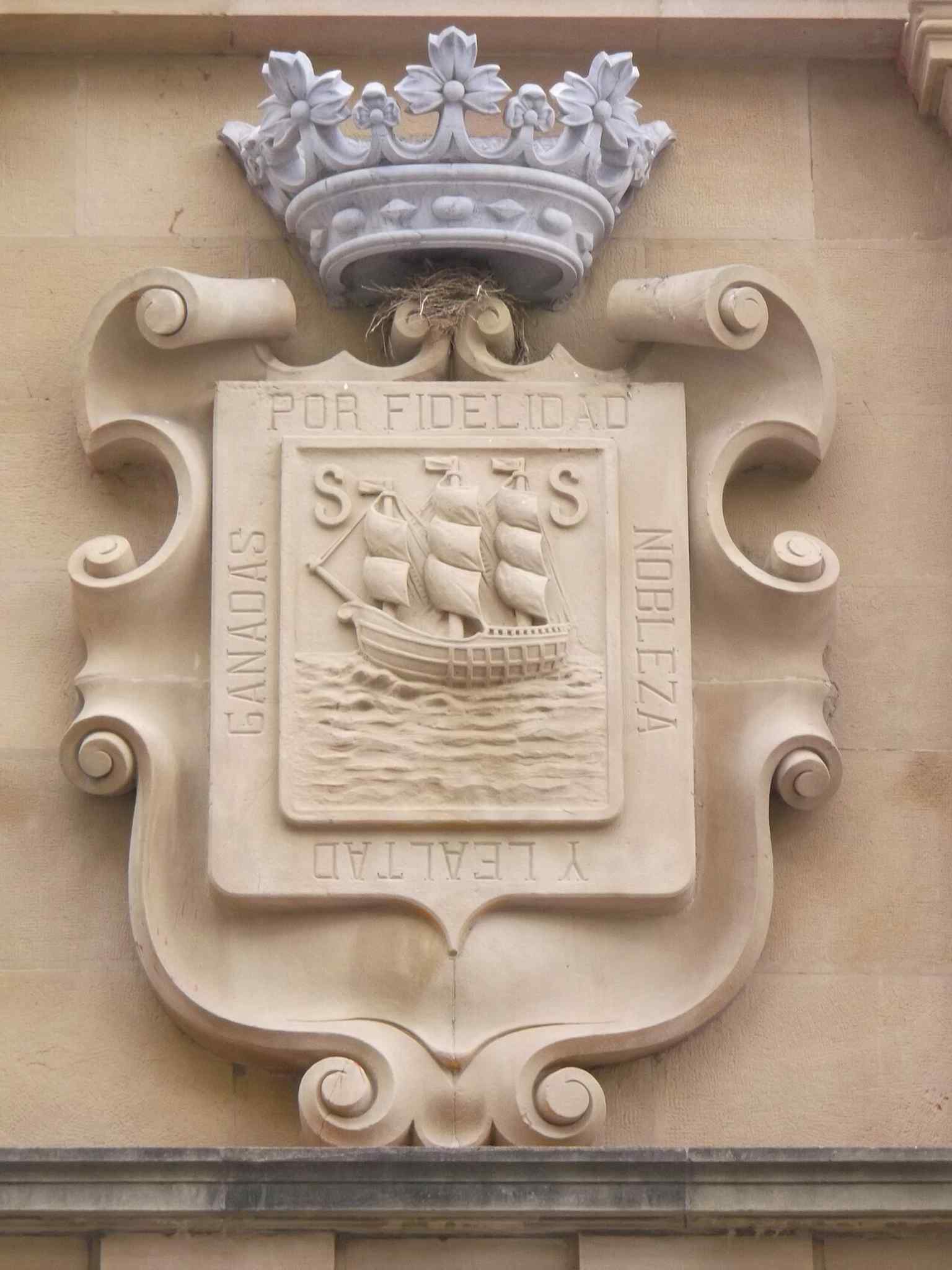
The city’s coat of arms on the old casino building, linking the grand 19th-century structure to civic power.Photo: JiriMatejicek, Wikimedia Commons, CC BY-SA 3.0 es. Cropped & resized. 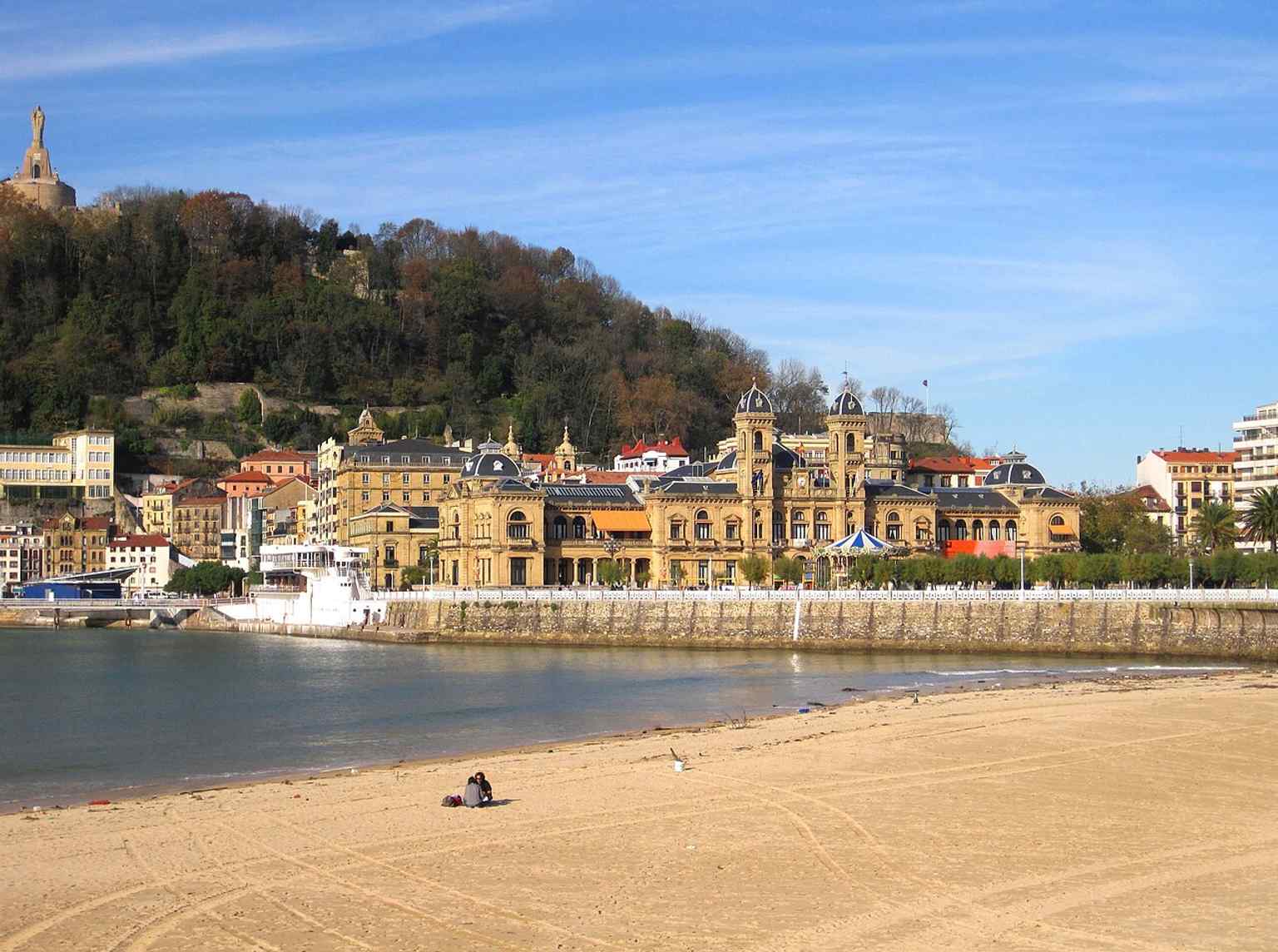
The town hall seen from La Concha beach, connecting the council building to the famous bay promenade.Photo: Roberto Chamoso G, Wikimedia Commons, CC BY-SA 3.0 es. Cropped & resized. 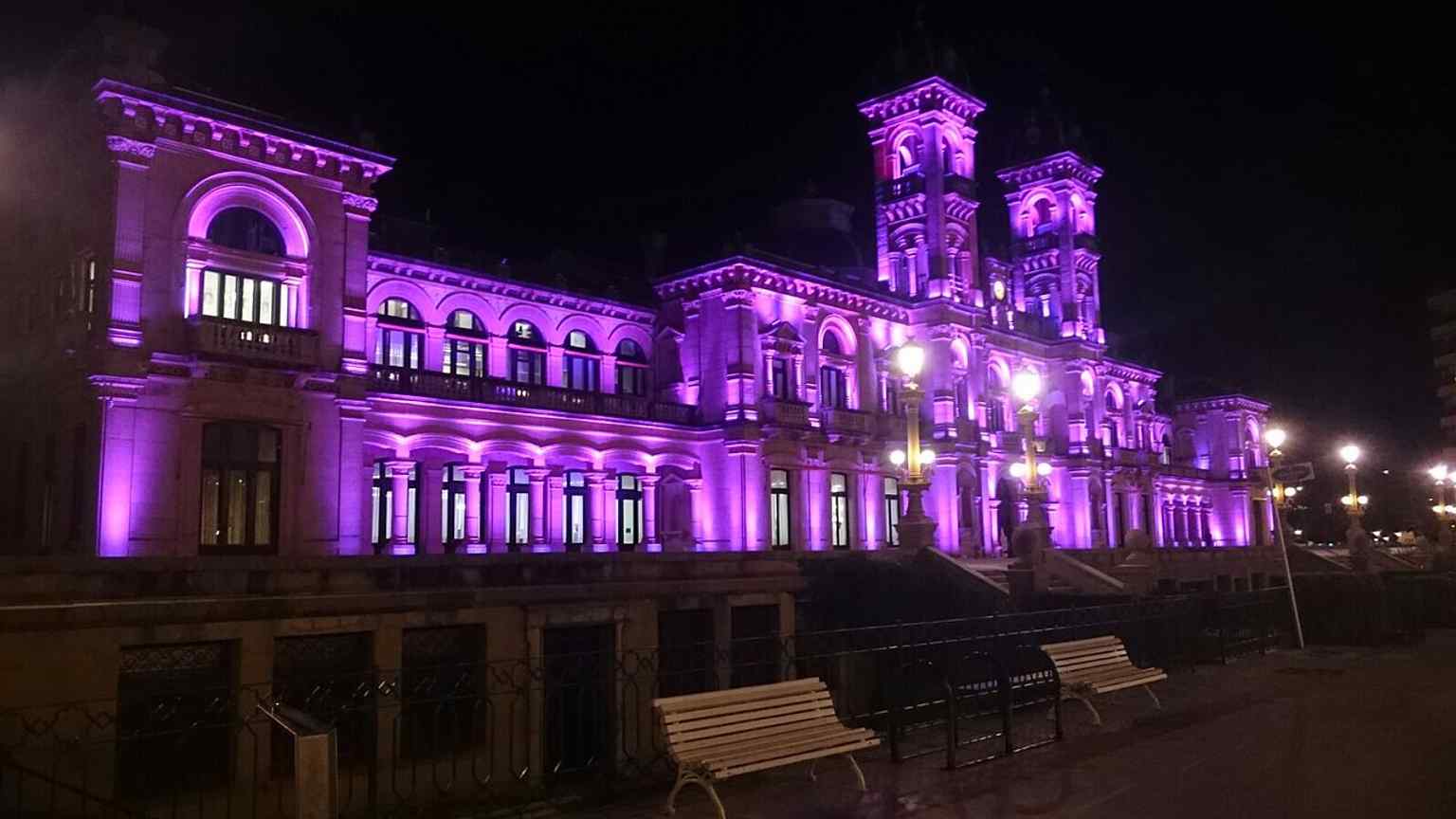
The building lit in a special civic display, showing how the town hall remains a stage for city events.Photo: Ksarasola, Wikimedia Commons, CC BY-SA 4.0. Cropped & resized. 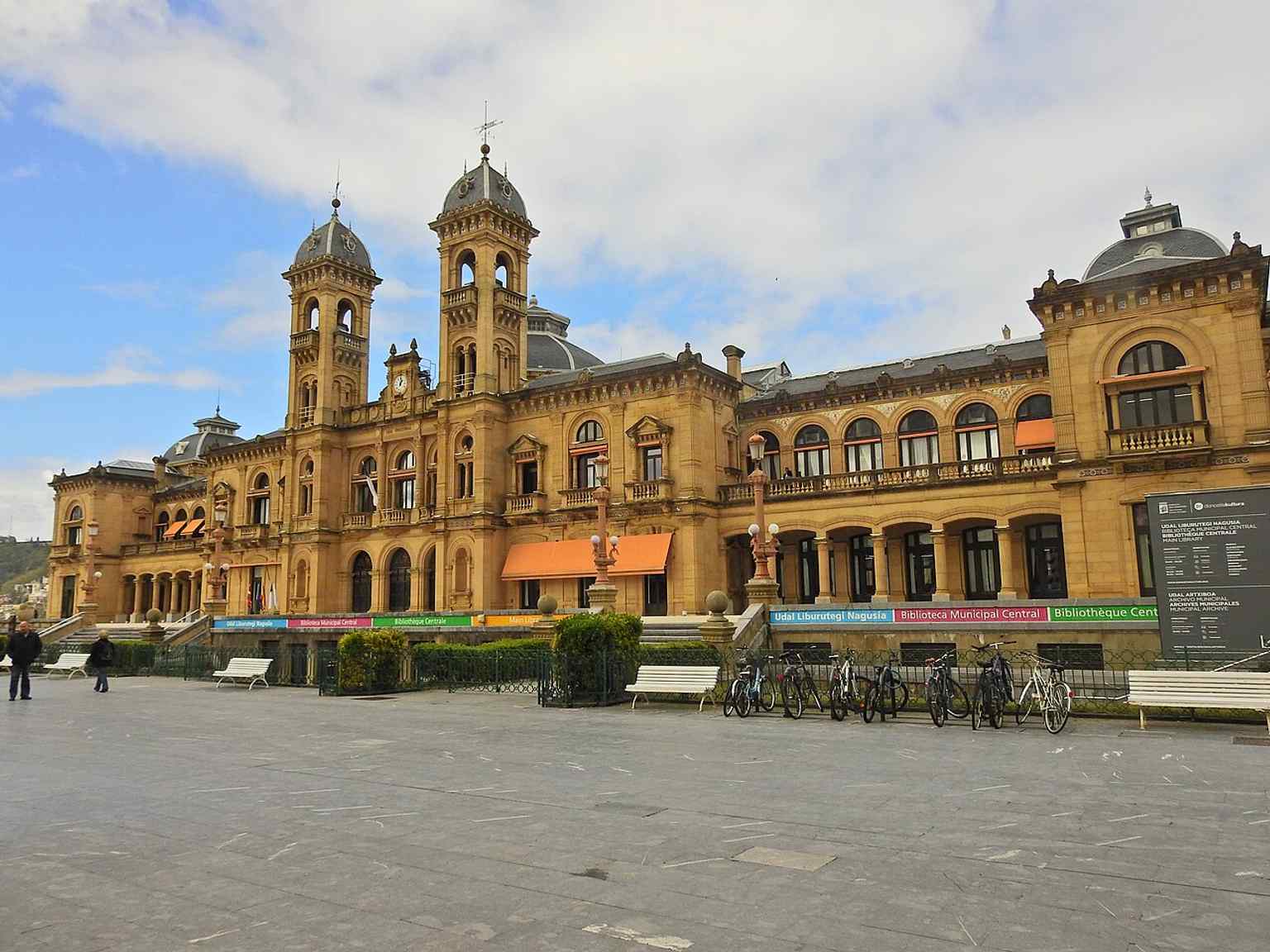
A recent full view of the Town Hall, useful for present-day orientation in the tour.Photo: Rehman Abubakr, Wikimedia Commons, CC BY-SA 4.0. Cropped & resized. 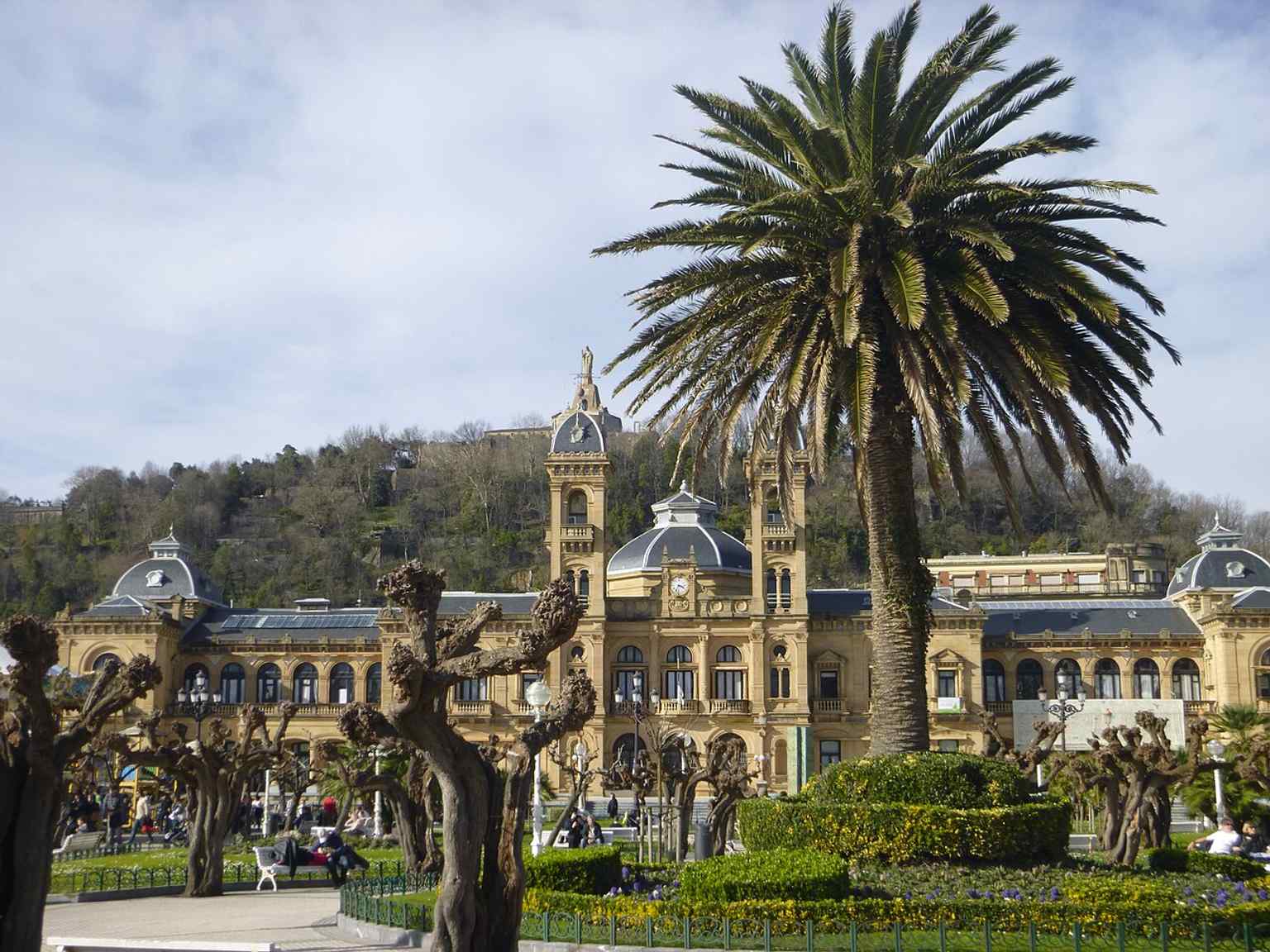
A broader view of Alderdi Eder, the landscaped setting where the former casino was built in the 1880s.Photo: Joxemai, Wikimedia Commons, CC BY-SA 3.0. Cropped & resized. On your right, look for a pale stone block with a broad rectangular façade, evenly spaced windows, and a restrained central entrance that still carries the stern posture of an…Read moreShow less
Open dedicated page →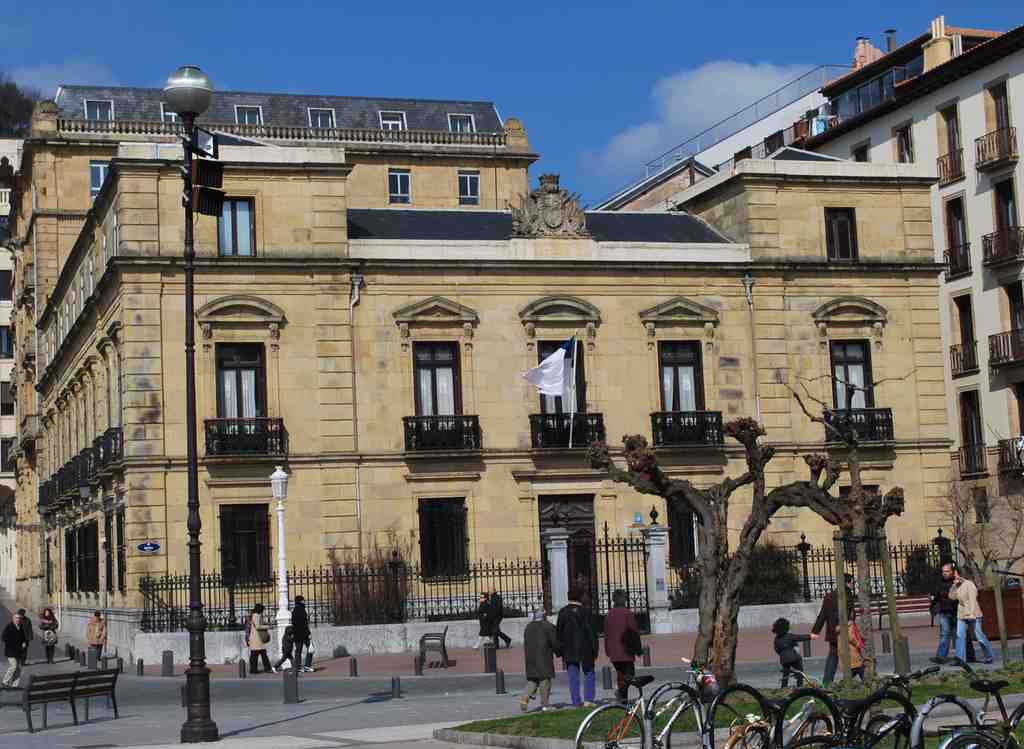
Goicoa PalacePhoto: Jean Michel Etchecolonea, Wikimedia Commons, CC BY-SA 3.0. Cropped & resized. On your right, look for a pale stone block with a broad rectangular façade, evenly spaced windows, and a restrained central entrance that still carries the stern posture of an official military building.
This is the Palacio Goicoa, although that name is already part of the story, and not quite in the way people assume. Most visitors take it at face value. Locals with a sharp memory will tell you the building’s popular name grew from repetition, not certainty: newspapers, a nineteen ninety-six architecture guide, even the city council helped spread “Goicoa,” though the project documents point instead to Captain José González of Ferrol as the author. The nickname stuck; the authorship blurred.
That slight distortion matters here, because this site has been simplifying itself for centuries. Before this palace, this was the lost defensive edge of Igentea. In the Middle Ages, a strange cylindrical tower guarded the south-west corner of San Sebastián’s walls. Much later, Juan Antonio Sáez García and Colonel Mexía searched nearby excavations in Plaza de Lasala for traces of that tower, using plans from fifteen forty-six and fifteen fifty-two preserved in Simancas. So the old name, Igentea, did not survive as folklore alone; it survived in maps, soil, and stubborn investigation.
If you glance at the image on your screen, the first photo makes the building’s military discipline easier to read: the symmetry, the ashlar stone, the lack of flourish for flourish’s sake.
In eighteen eighty-four, Colonel Paulino Aldaz Goñi ordered José González to design a new headquarters here: two principal upper floors, solid stone façades, and a plan worthy of authority. The budget came to two hundred and thirty-nine thousand two hundred pesetas, roughly around a million euros in modern terms, and approval followed in December of eighteen eighty-six. Builders worked from eighteen eighty-eight to eighteen ninety-one. Captain Juan Olavide shaped the second-floor offices and the secretary’s residence. Then the adjustments began almost at once: façade lighting in nineteen oh five, interior redecoration in nineteen oh six. The file in the General Archive of Segovia runs all the way to nineteen twenty-nine, packed with sections, carpentry details, and iron fittings. In other words, the building never stood still, even when it looked immovable.
Then came July of nineteen thirty-six. Inside these rooms, around two hundred people waited through rumour and fear. A witness recalled artillerymen being summoned in a provisions lorry because the civil governor allowed only that vehicle to move through the city. They expected an assault from newly forming militias. Colonel Carrasco, described as wavering in those first hours, later turned up dead beside the Iron Bridge over the Urumea. Polished façades do not erase such episodes; they simply fold them inward.
Later, this place changed uniforms again, housing civic services instead of military command, and a competition in two thousand and eight pushed it further toward municipal use. That is the pattern here: fortification, command, administration, memory.
In a moment, we turn toward the Main Theatre, another building that replaced earlier, less satisfactory beginnings with something more confident and public.
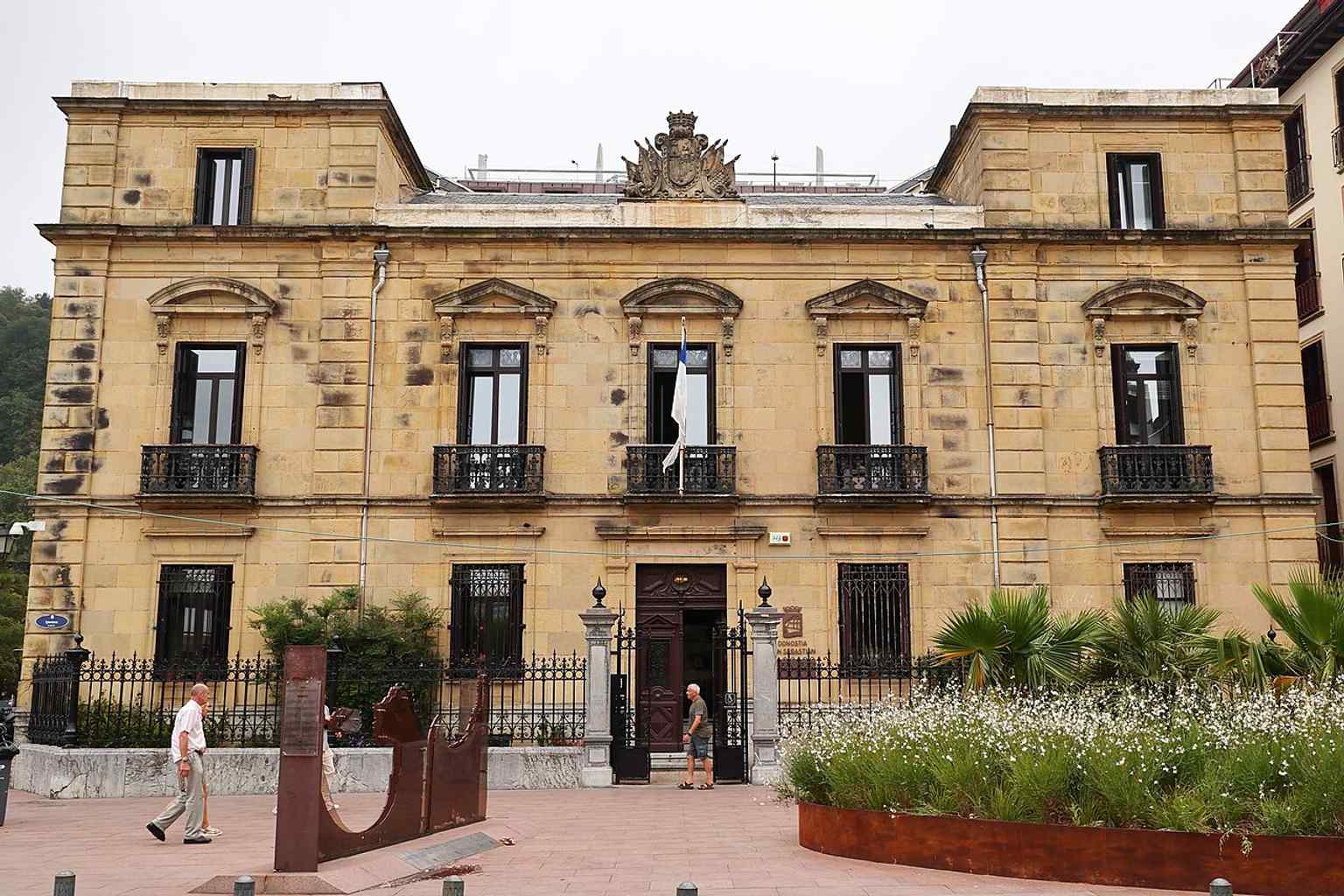
The main façade of Goicoa Palace, the former Military Government headquarters facing San Sebastián’s Old Town, where the building’s 19th-century military history still reads in its formal stonework.Photo: Javier Perez Montes, Wikimedia Commons, CC BY-SA 4.0. Cropped & resized. 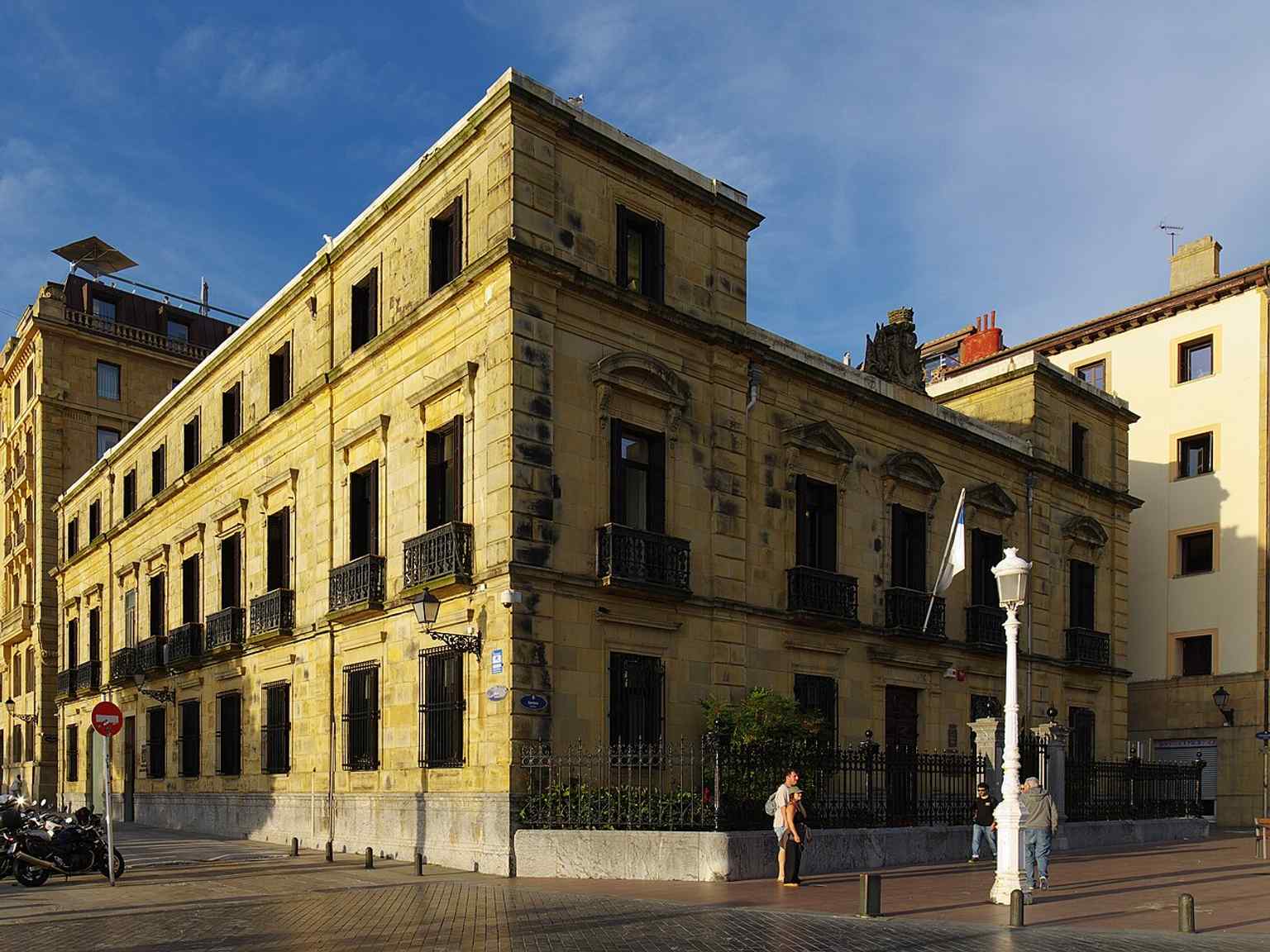
Another view of Goicoa Palace in San Sebastián, useful for showing the city-center setting of the building that later housed municipal services after its time as the Government Military office.Photo: Javier Perez Montes, Wikimedia Commons, CC BY-SA 4.0. Cropped & resized. Look for a pale stone façade with three broad arched openings, a neatly balanced classical front, and the name Teatro Principal set above the entrance. This theatre carries…Read moreShow less
Open dedicated page →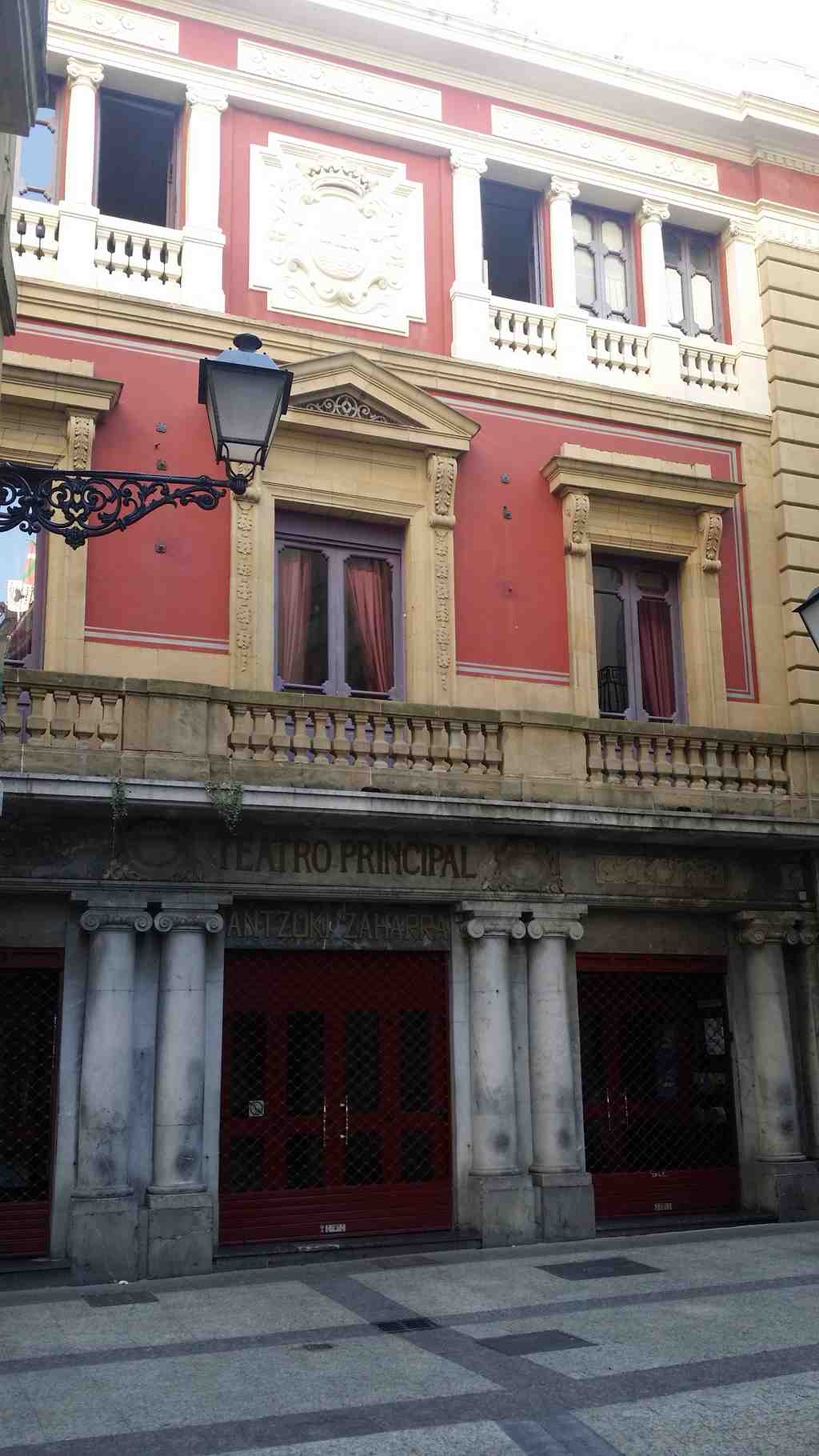
Main TheatrePhoto: Xabier Cañas, Wikimedia Commons, CC BY-SA 4.0. Cropped & resized. Look for a pale stone façade with three broad arched openings, a neatly balanced classical front, and the name Teatro Principal set above the entrance.
This theatre carries itself with modest confidence, and that suits its story rather well. Long before San Sebastián dressed culture in the grand elegance of Victoria Eugenia, the city already wanted a place to gather, watch, argue, applaud, and imagine together. In fact, one of its earliest theatres sat, from eighteen twenty-eight, inside a vault of the old wall - a cramped arched chamber with room for only about three hundred people and a stage so short that performers could hardly stride before meeting the edge of it. That detail matters. It tells you that theatre here did not begin in luxury. It began in necessity.
City leaders quickly decided that the little wall theatre was too small, too unsafe, and too remote for a growing town. So in November of eighteen forty-three, the municipal architect Joaquín Ramón Echeveste presented plans for a new theatre on this very site. Work began in eighteen forty-four, finished in eighteen forty-five, and even then the opening had to wait; the city still needed to buy the house next door to complete the plot. That practical shuffle feels very San Sebastián: culture advancing by inches, one wall at a time.
The first Principal opened in the eighteen forties and became the city’s oldest theatre. Then came repairs, fashions, and hard use. In January of eighteen eighty-three, José de Goicoa led a major interior reform. He replaced timber with more resistant materials to improve safety, pushed the stage deeper, and renewed the decoration. It helped, but not enough to save the old structure forever. By nineteen thirty, the building had deteriorated so badly that the city demolished it. A year later, Juan Rafael Alday completed the theatre you see now, giving it this restrained, classical air.
One man ties the place to flesh-and-blood memory more than any architect does: Bilintx, the poet and bertsolari - a maker of improvised Basque verse. He worked here for years, and he also lived in the theatre. During the Carlist siege, on the twentieth of January, eighteen seventy-six, a grenade burst through the window of his home here. There, in one brutal instant, performance and war collided. That is one of San Sebastián’s oldest habits: taking spaces shaped by danger, damage, and daily life, and turning them back toward shared experience.
And shared experience still defines the Principal. It seats five hundred and seventy-six people, with seven dressing rooms tucked behind the stage, and it hosts theatre, dance, music, children’s performances, and a vital strand of work in Euskera, the Basque language. From nineteen fifty-three until nineteen ninety-nine, it also served as one of the central homes of the San Sebastián International Film Festival, before that chapter shifted to the Kursaal. Even now, cinema keeps returning here through festivals and cycles like the Horror and Fantasy Week, Nosferatu, Surfilm, and Dock of the Bay.
From here, the story leans toward the harbor. In this city, public life rarely stays indoors for long; sooner or later, it spills toward the water. When you are ready, continue to Paseo del Muelle, about seven minutes away.
On your left stands the San Sebastián Aquarium, and it feels like a fitting last word for this city. So much here began with the sea as labour, danger, hunger, trade, spectacle.…Read moreShow less
Open dedicated page →On your left stands the San Sebastián Aquarium, and it feels like a fitting last word for this city. So much here began with the sea as labour, danger, hunger, trade, spectacle. This building turns that long experience into something calmer and rather finer: knowledge.
The story begins in nineteen oh three, when Albert the First of Monaco came to San Sebastián. He was not only a prince but a serious student of the sea, and his ideas helped inspire the creation, in nineteen oh eight, of the Oceanographic Society of Gipuzkoa. From that came something remarkable. In nineteen ten, the society opened a laboratory to analyse samples brought in from the water and preserve specimens. In nineteen eleven, it began publishing a quarterly bulletin on oceanography, meteorology, fishing, and restocking fish populations, the first publication of its kind in Spain. Then, in nineteen twelve, it opened a fishing school here on the harbour, when no similar school existed anywhere else in the country.
That early spirit was practical, ambitious, and deeply civic. A local figure named Vicente Laffitte carried it forward for twenty-five years as president of the society. He rarely receives the grandest applause, but without his persistence this place might have remained a fine idea discussed over papers and plans. Instead, on the twenty-second of September, nineteen twenty-five, builders laid the first stone for this Palace of the Sea on an exposed site chosen for clean seawater, though it stood open to the fiercest storms. The official inauguration came on the first of October, nineteen twenty-eight, with King Alfonso the Thirteenth and Queen Victoria Eugenia in attendance, and Laffitte there too, quietly representing years of stubborn work.
If you glance at the image on your screen, you can see the façade that grew from that ambition. Inside, generations of local children met the great whale skeleton from the nineteenth century and imagined themselves in a Jules Verne adventure. Later, the Aquarium reinvented itself again. The major reform of nineteen ninety-eight created a vast oceanarium - a giant living sea tank - holding one point eight million litres, with a three hundred and sixty degree tunnel and bull sharks that quickly became its stars. Since nineteen forty-seven, the institution has also taken the sea’s temperature every day, building the most complete marine temperature record in the Basque Country.
That, I think, is the true measure of San Sebastián. It does not simply admire the water at its edge. It watches, studies, teaches, remembers. Here, the sea becomes not only scenery, but a responsibility, and perhaps even a way of thinking.
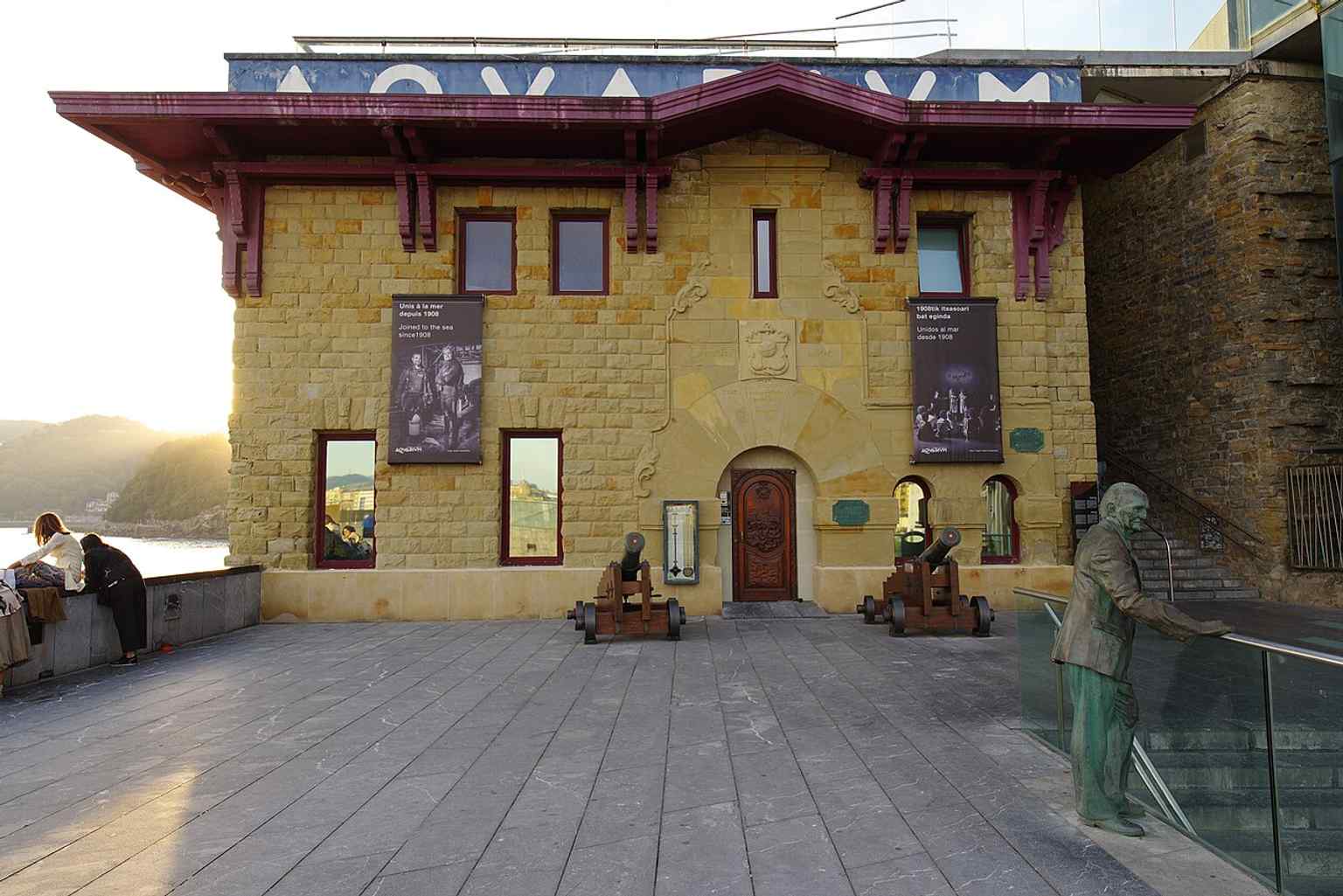
The main façade of San Sebastian Aquarium, home to one of Spain’s first museums devoted to natural sciences and oceanography.Photo: Javier Perez Montes, Wikimedia Commons, CC BY-SA 4.0. Cropped & resized.

Frequently asked questions
How do I start the tour?
After purchase, download the AudaTours app and enter your redemption code. The tour will be ready to start immediately - just tap play and follow the GPS-guided route.
Do I need internet during the tour?
No! Download the tour before you start and enjoy it fully offline. Only the chat feature requires internet. We recommend downloading on WiFi to save mobile data.
Is this a guided group tour?
No - this is a self-guided audio tour. You explore independently at your own pace, with audio narration playing through your phone. No tour guide, no group, no schedule.
How long does the tour take?
Most tours take 60–90 minutes to complete, but you control the pace entirely. Pause, skip stops, or take breaks whenever you want.
What if I can't finish the tour today?
No problem! Tours have lifetime access. Pause and resume whenever you like - tomorrow, next week, or next year. Your progress is saved.
What languages are available?
All tours are available in 50+ languages. Select your preferred language when redeeming your code. Note: language cannot be changed after tour generation.
Where do I access the tour after purchase?
Download the free AudaTours app from the App Store or Google Play. Enter your redemption code (sent via email) and the tour will appear in your library, ready to download and start.
If you don't enjoy the tour, we'll refund your purchase. Contact us at [email protected]
Checkout securely with 






%20-%20Fondo%20Mar%C3%ADn-Kutxa%20Fototeka.jpg)
%20(1%20de%2018)%20-%20Fondo%20Car-Kutxa%20Fototeka.jpg)
%20-%20Fondo%20Mar%C3%ADn-Kutxa%20Fototeka.jpg)
%20-%20Fondo%20Car-Kutxa%20Fototeka.jpg)

%20-%20Fondo%20Mar%C3%ADn-Kutxa%20Fototeka.jpg)
%20-%20Fondo%20Mar%C3%ADn-Kutxa%20Fototeka.jpg)
%20-%20Fondo%20Mar%C3%ADn-Kutxa%20Fototeka.jpg)
%20-%20Fondo%20Mar%C3%ADn-Kutxa%20Fototeka.jpg)
%20-%20Fondo%20Mar%C3%ADn-Kutxa%20Fototeka.jpg)
%20-%20Fondo%20Mar%C3%ADn-Kutxa%20Fototeka.jpg)
%20-%20Fondo%20Car-Kutxa%20Fototeka.jpg)
%20-%20Fondo%20Car-Kutxa%20Fototeka.jpg)
%20-%20Fondo%20Car-Kutxa%20Fototeka.jpg)


.jpg)
.jpg)


%20de%20San%20Sebasti%C3%A1n.jpg)


