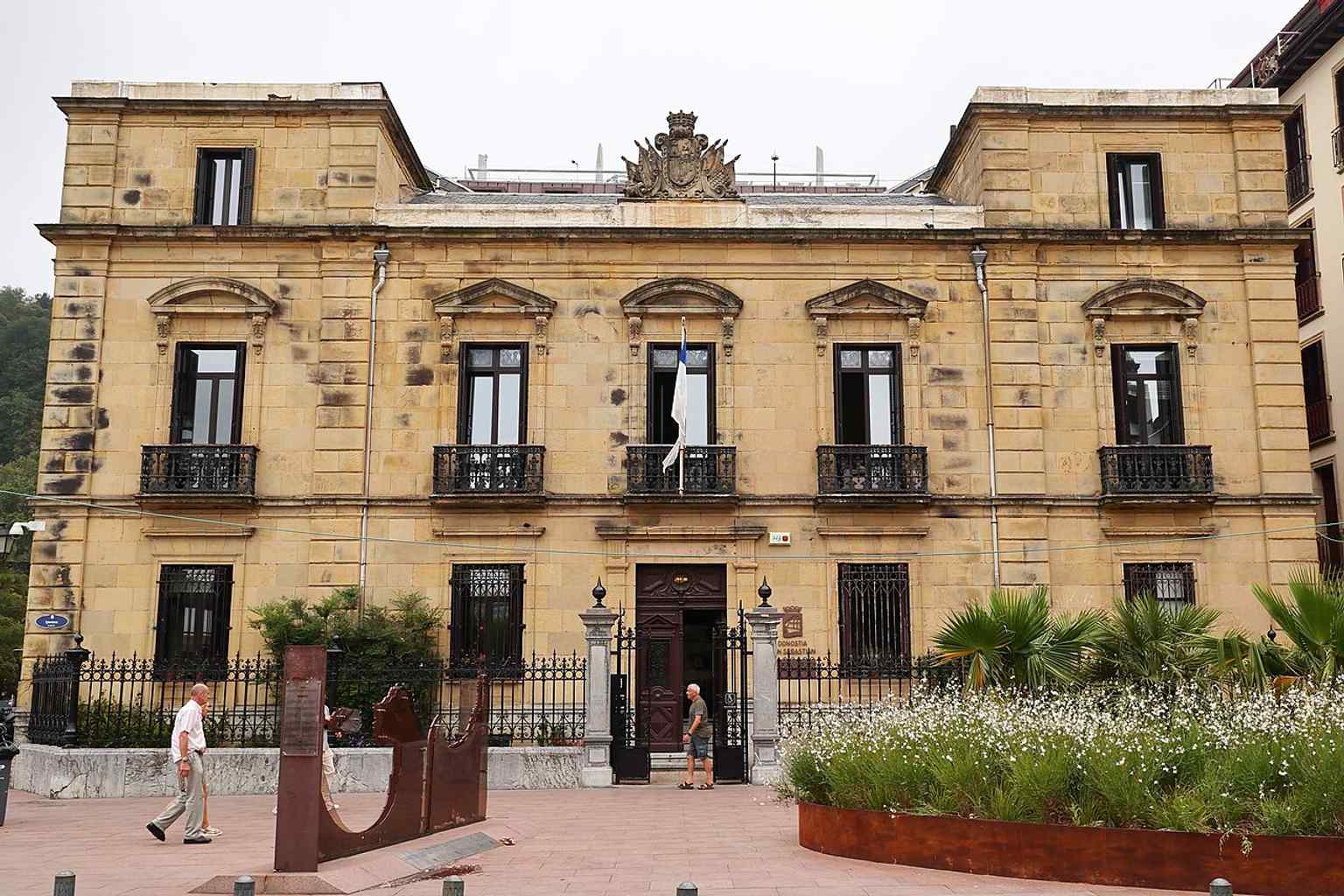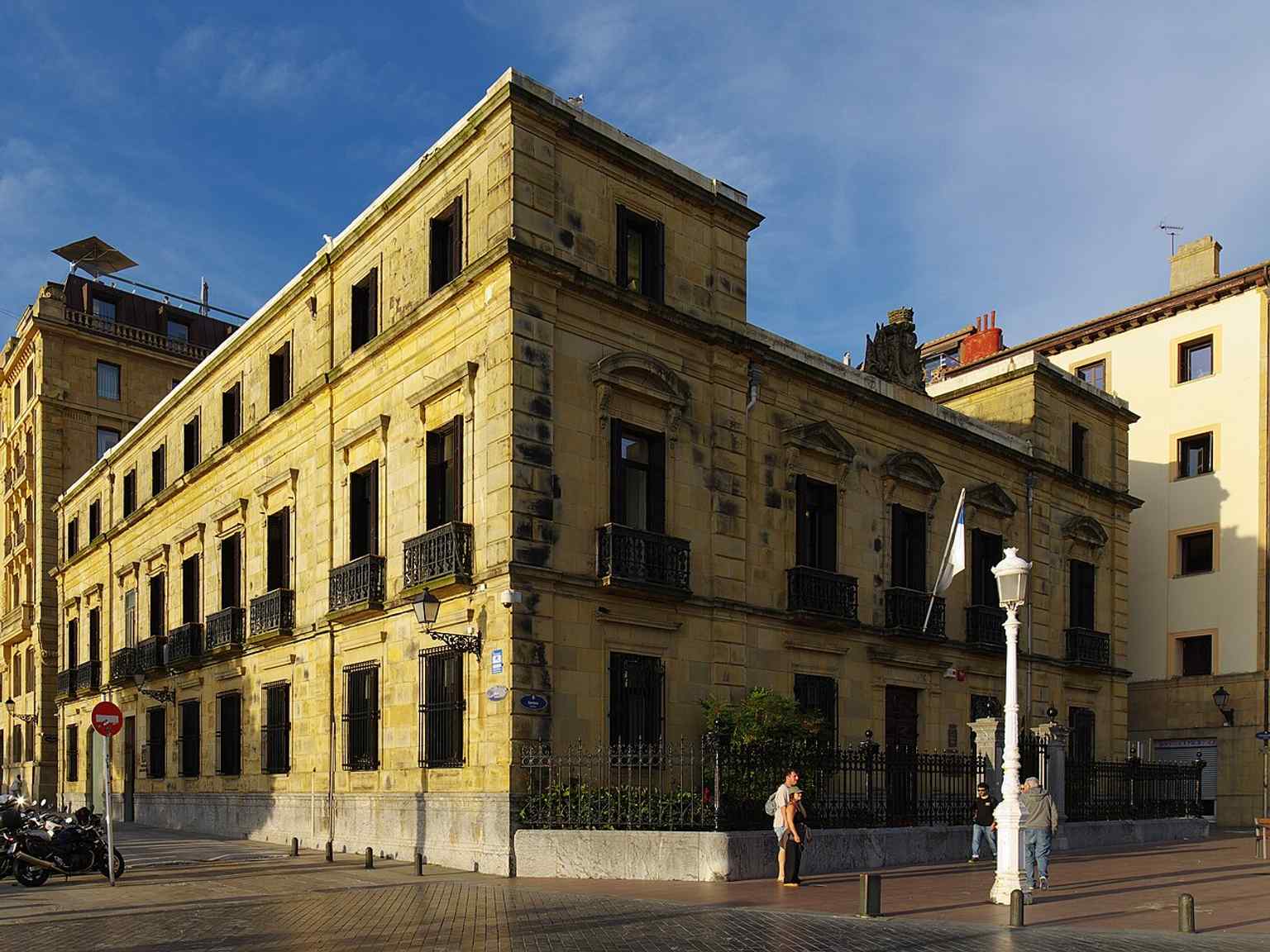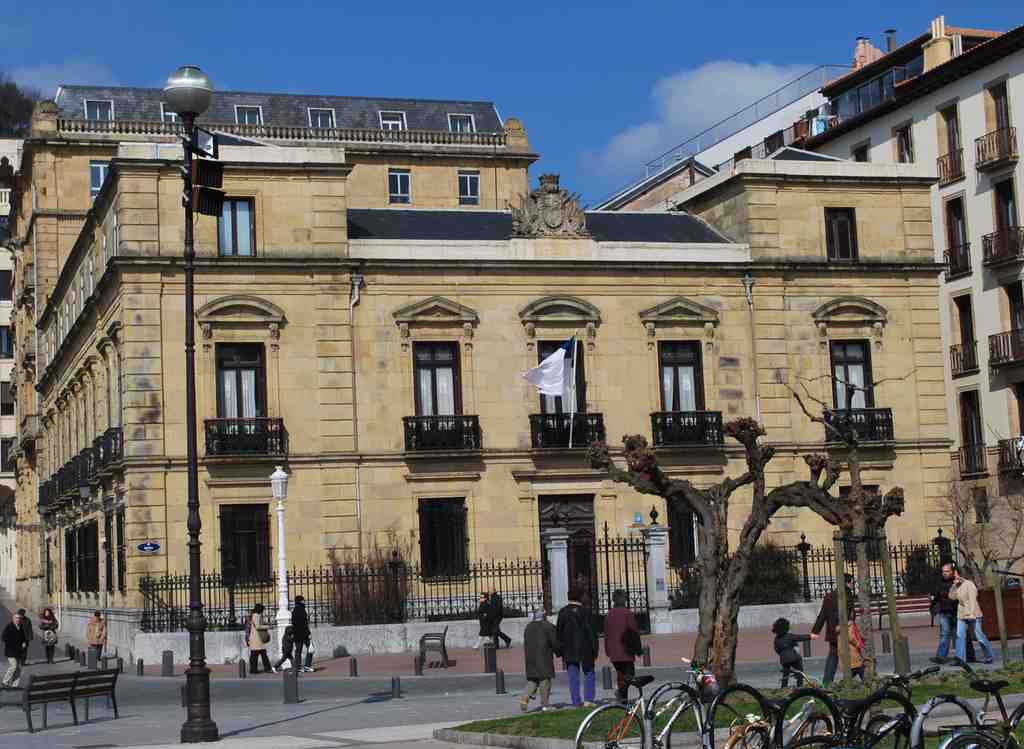
On your right, look for a pale stone block with a broad rectangular façade, evenly spaced windows, and a restrained central entrance that still carries the stern posture of an official military building.
This is the Palacio Goicoa, although that name is already part of the story, and not quite in the way people assume. Most visitors take it at face value. Locals with a sharp memory will tell you the building’s popular name grew from repetition, not certainty: newspapers, a nineteen ninety-six architecture guide, even the city council helped spread “Goicoa,” though the project documents point instead to Captain José González of Ferrol as the author. The nickname stuck; the authorship blurred.
That slight distortion matters here, because this site has been simplifying itself for centuries. Before this palace, this was the lost defensive edge of Igentea. In the Middle Ages, a strange cylindrical tower guarded the south-west corner of San Sebastián’s walls. Much later, Juan Antonio Sáez García and Colonel Mexía searched nearby excavations in Plaza de Lasala for traces of that tower, using plans from fifteen forty-six and fifteen fifty-two preserved in Simancas. So the old name, Igentea, did not survive as folklore alone; it survived in maps, soil, and stubborn investigation.
If you glance at the image on your screen, the first photo makes the building’s military discipline easier to read: the symmetry, the ashlar stone, the lack of flourish for flourish’s sake.
In eighteen eighty-four, Colonel Paulino Aldaz Goñi ordered José González to design a new headquarters here: two principal upper floors, solid stone façades, and a plan worthy of authority. The budget came to two hundred and thirty-nine thousand two hundred pesetas, roughly around a million euros in modern terms, and approval followed in December of eighteen eighty-six. Builders worked from eighteen eighty-eight to eighteen ninety-one. Captain Juan Olavide shaped the second-floor offices and the secretary’s residence. Then the adjustments began almost at once: façade lighting in nineteen oh five, interior redecoration in nineteen oh six. The file in the General Archive of Segovia runs all the way to nineteen twenty-nine, packed with sections, carpentry details, and iron fittings. In other words, the building never stood still, even when it looked immovable.
Then came July of nineteen thirty-six. Inside these rooms, around two hundred people waited through rumour and fear. A witness recalled artillerymen being summoned in a provisions lorry because the civil governor allowed only that vehicle to move through the city. They expected an assault from newly forming militias. Colonel Carrasco, described as wavering in those first hours, later turned up dead beside the Iron Bridge over the Urumea. Polished façades do not erase such episodes; they simply fold them inward.
Later, this place changed uniforms again, housing civic services instead of military command, and a competition in two thousand and eight pushed it further toward municipal use. That is the pattern here: fortification, command, administration, memory.
In a moment, we turn toward the Main Theatre, another building that replaced earlier, less satisfactory beginnings with something more confident and public.