
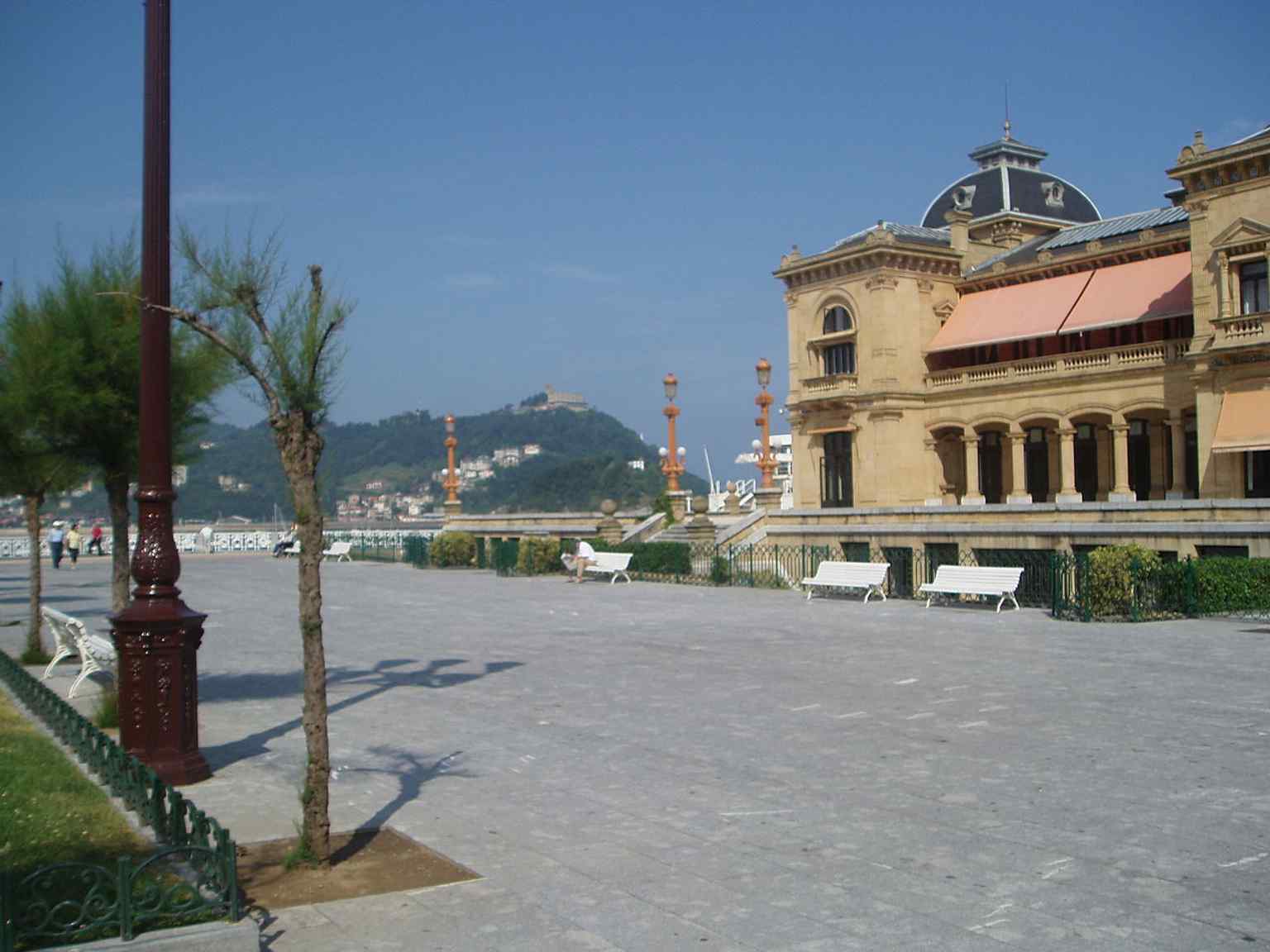
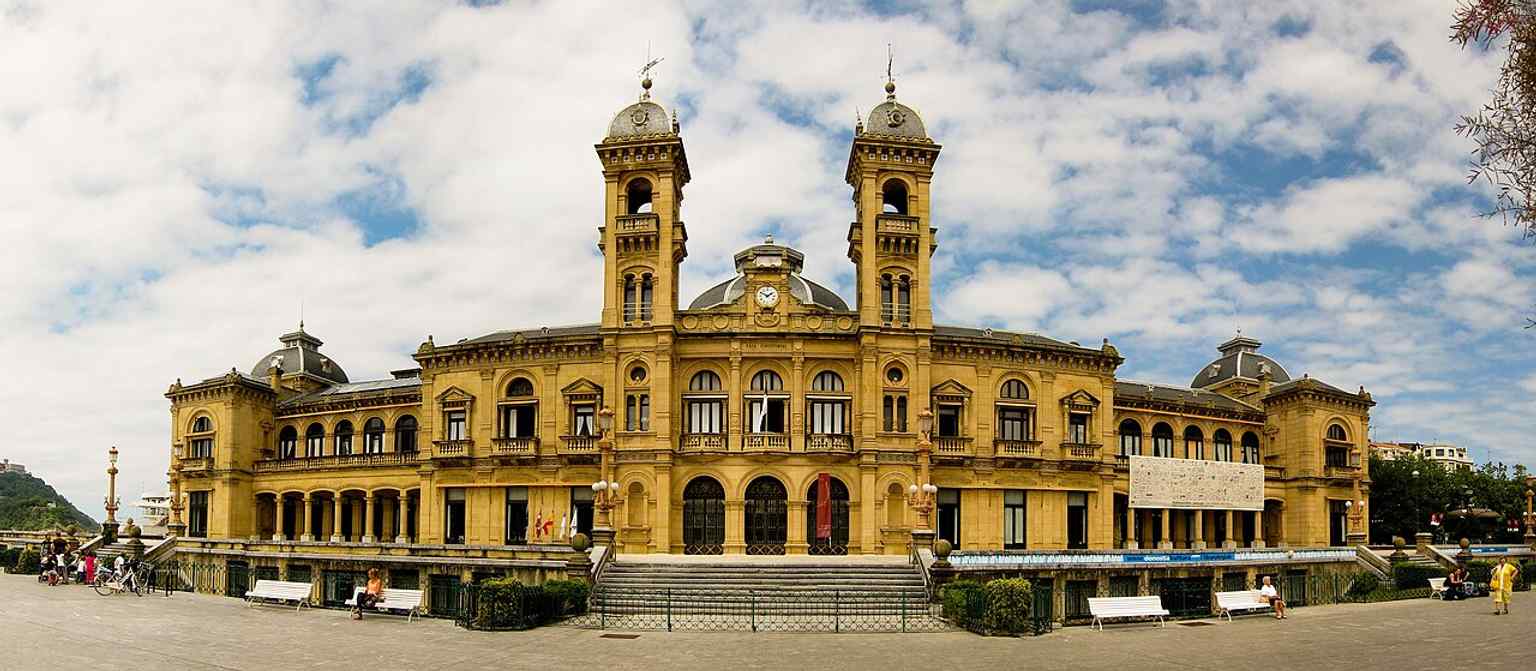
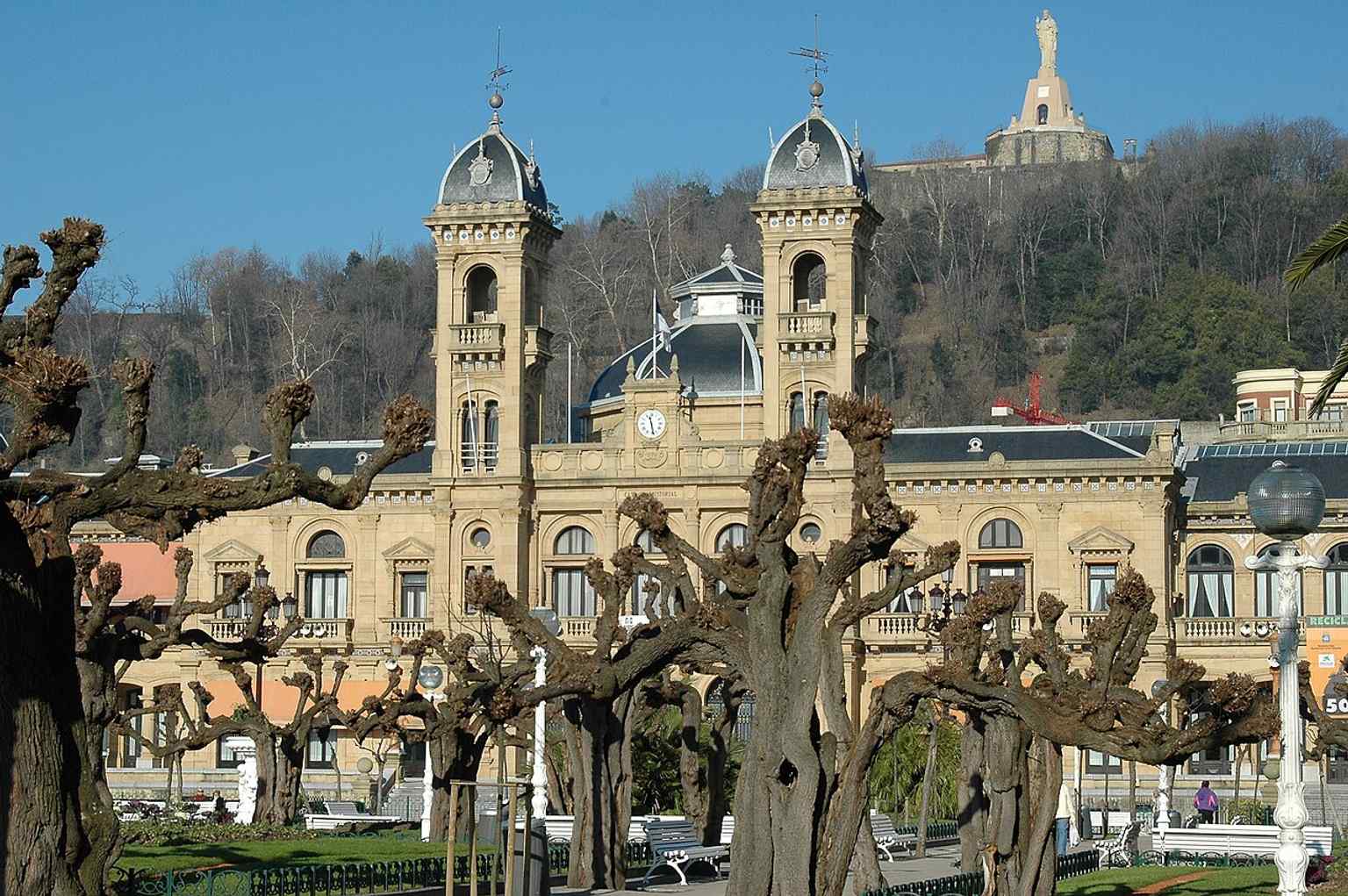
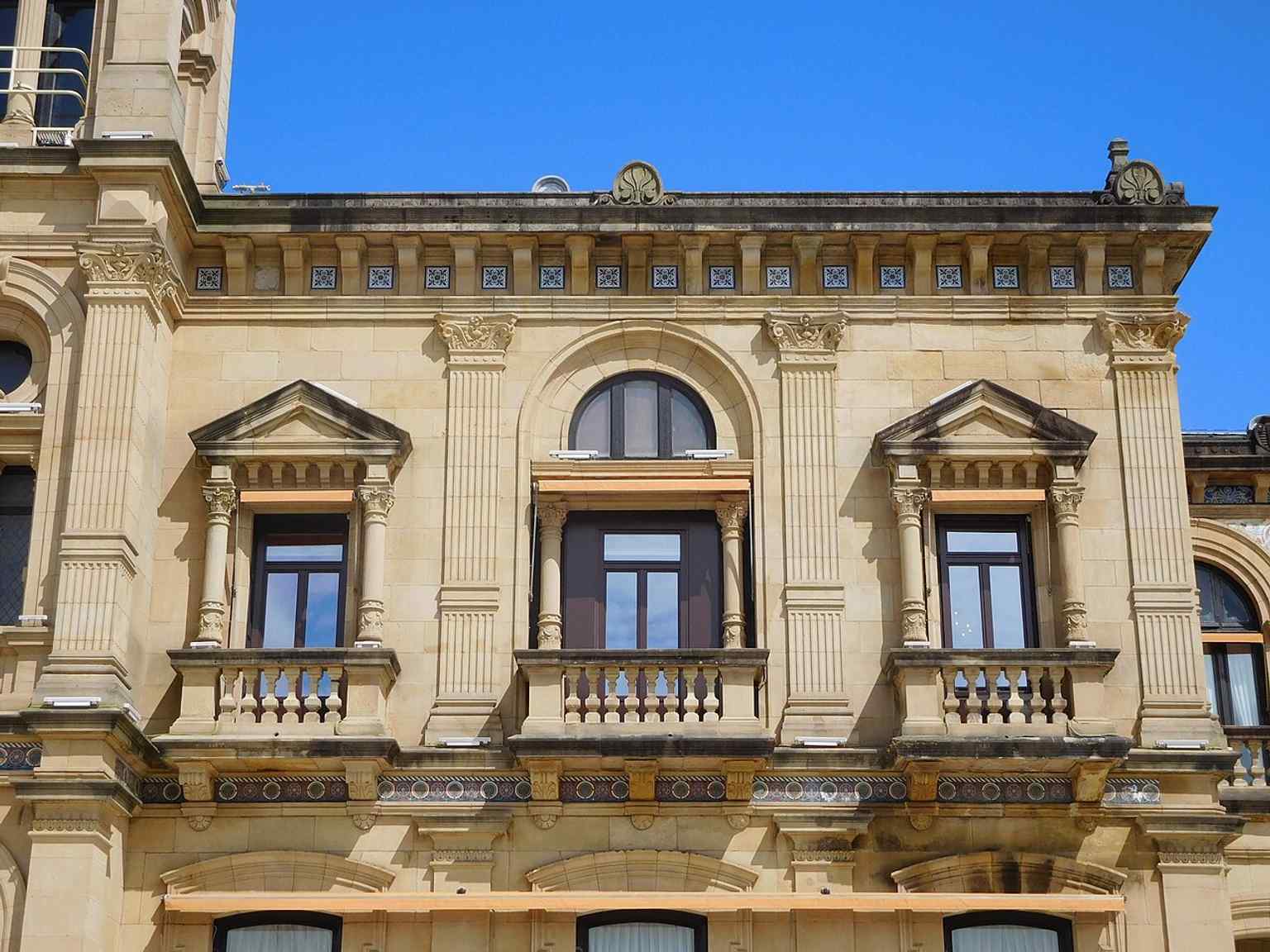
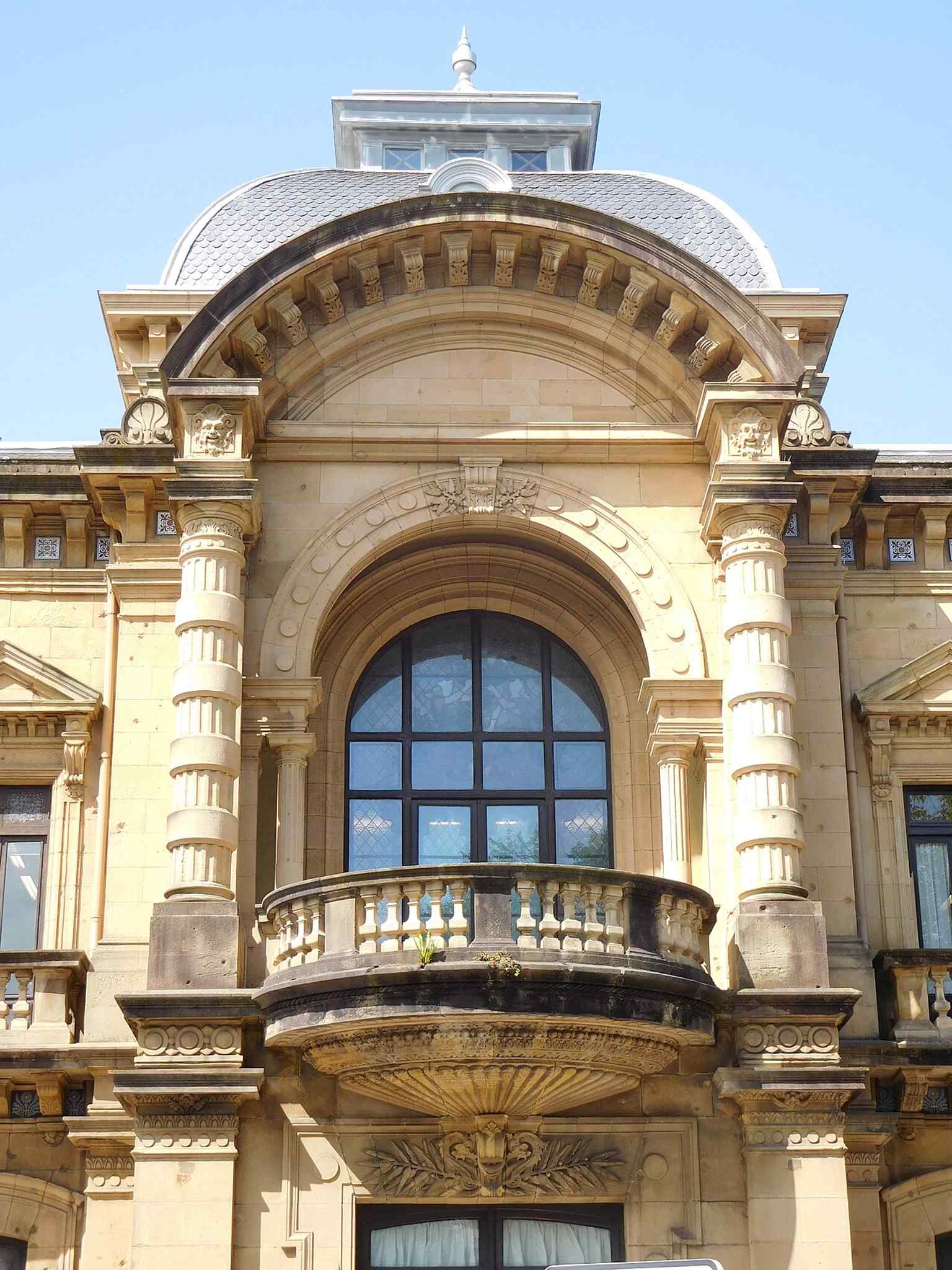
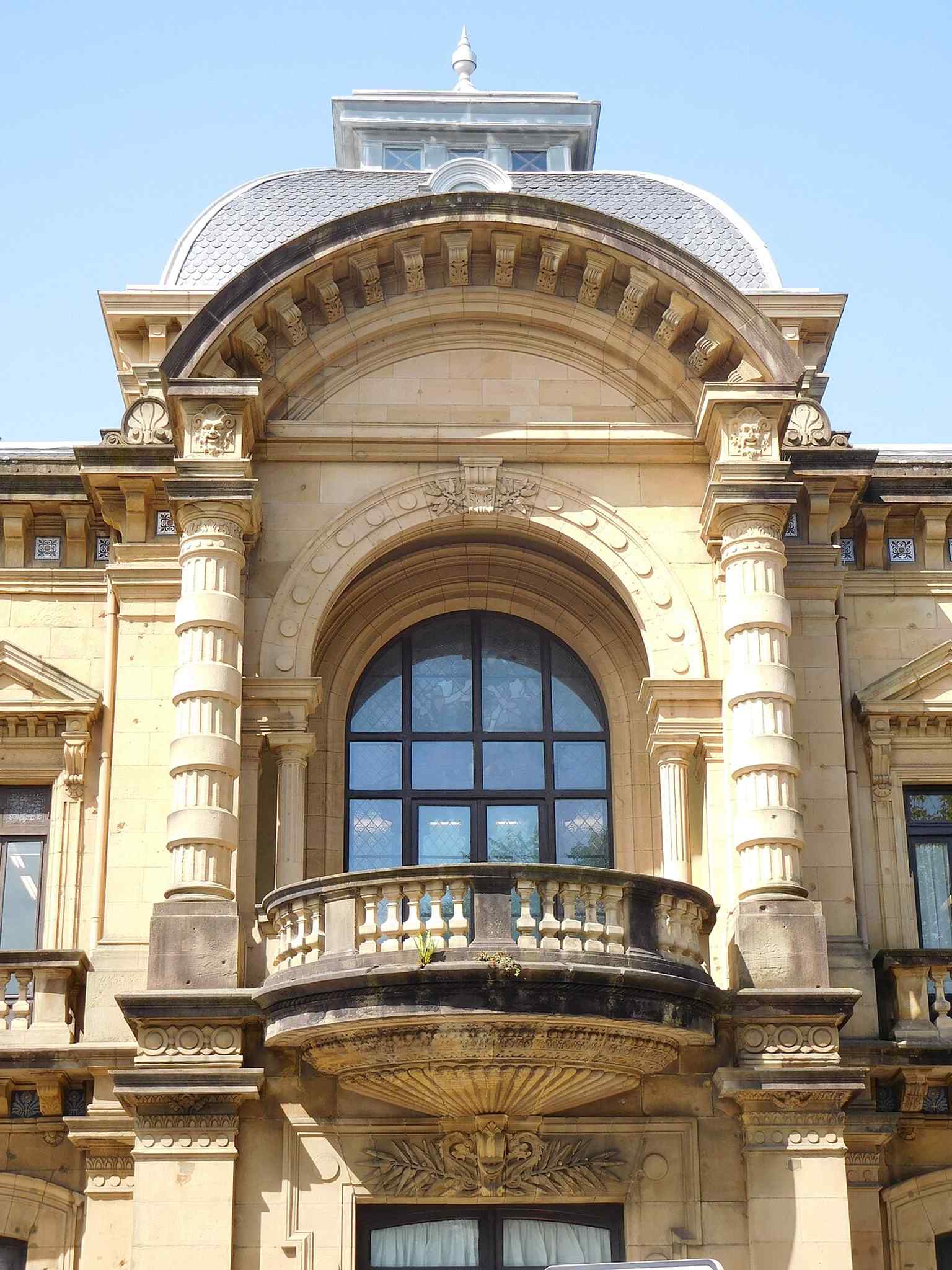
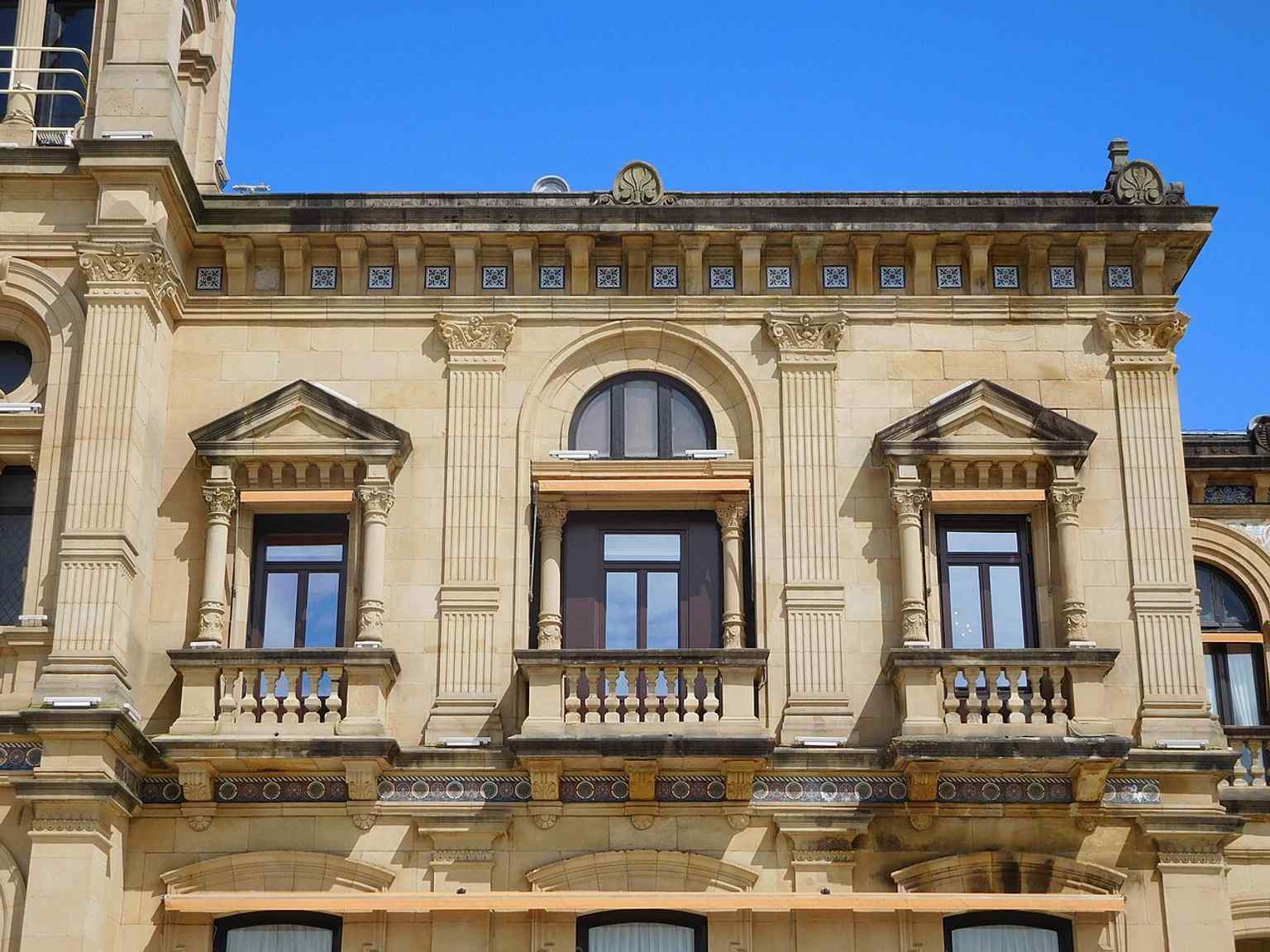
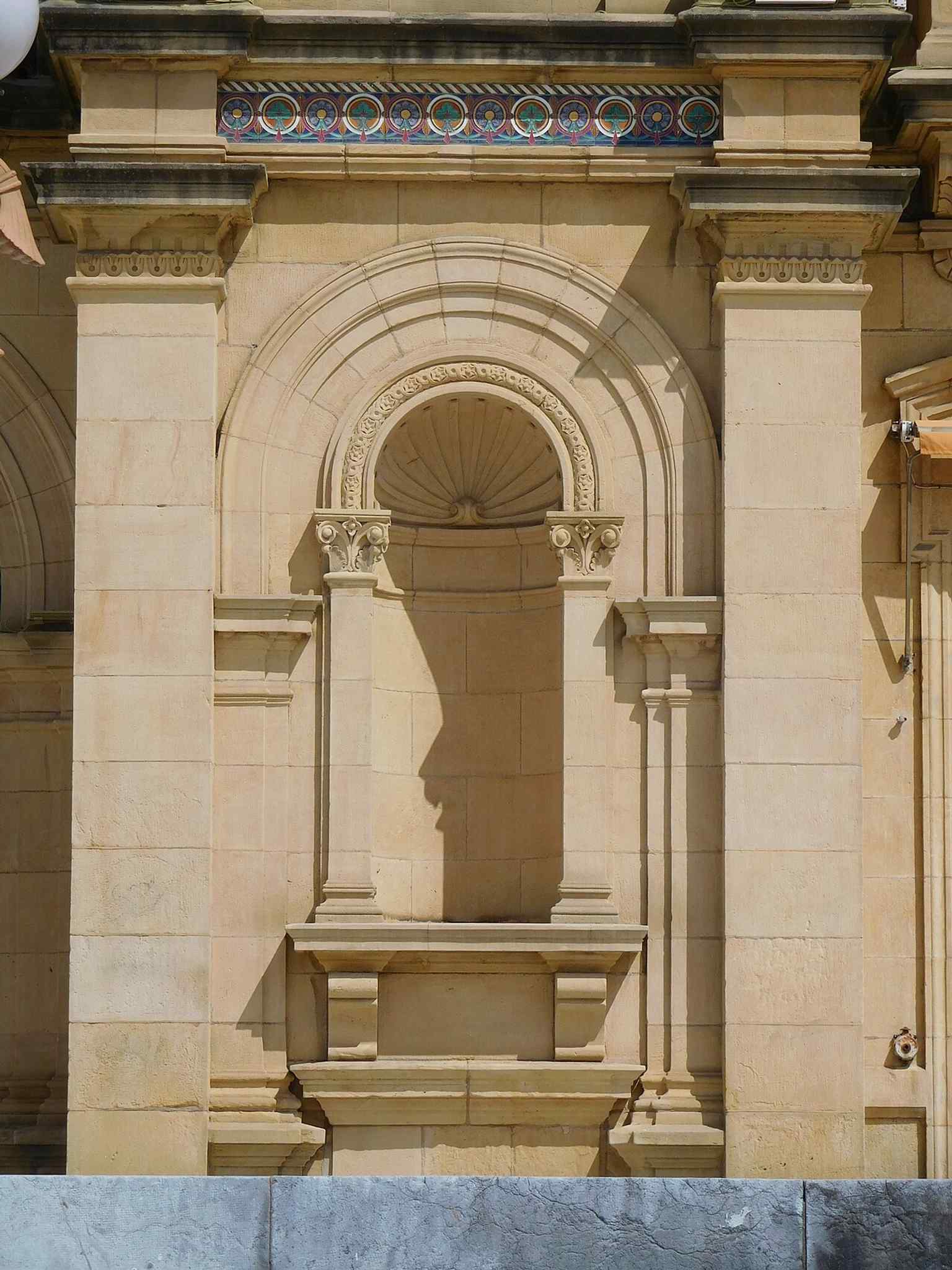
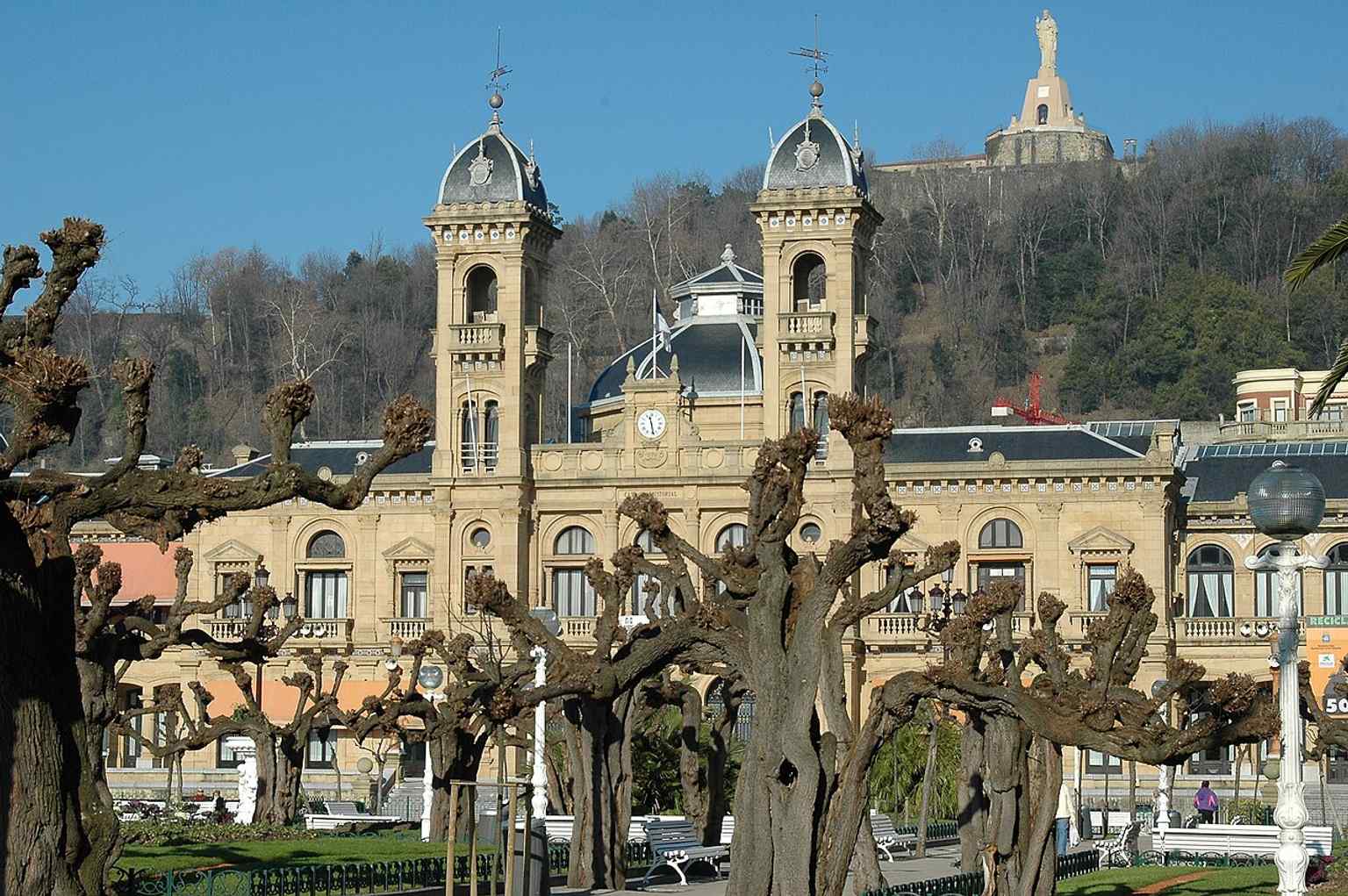
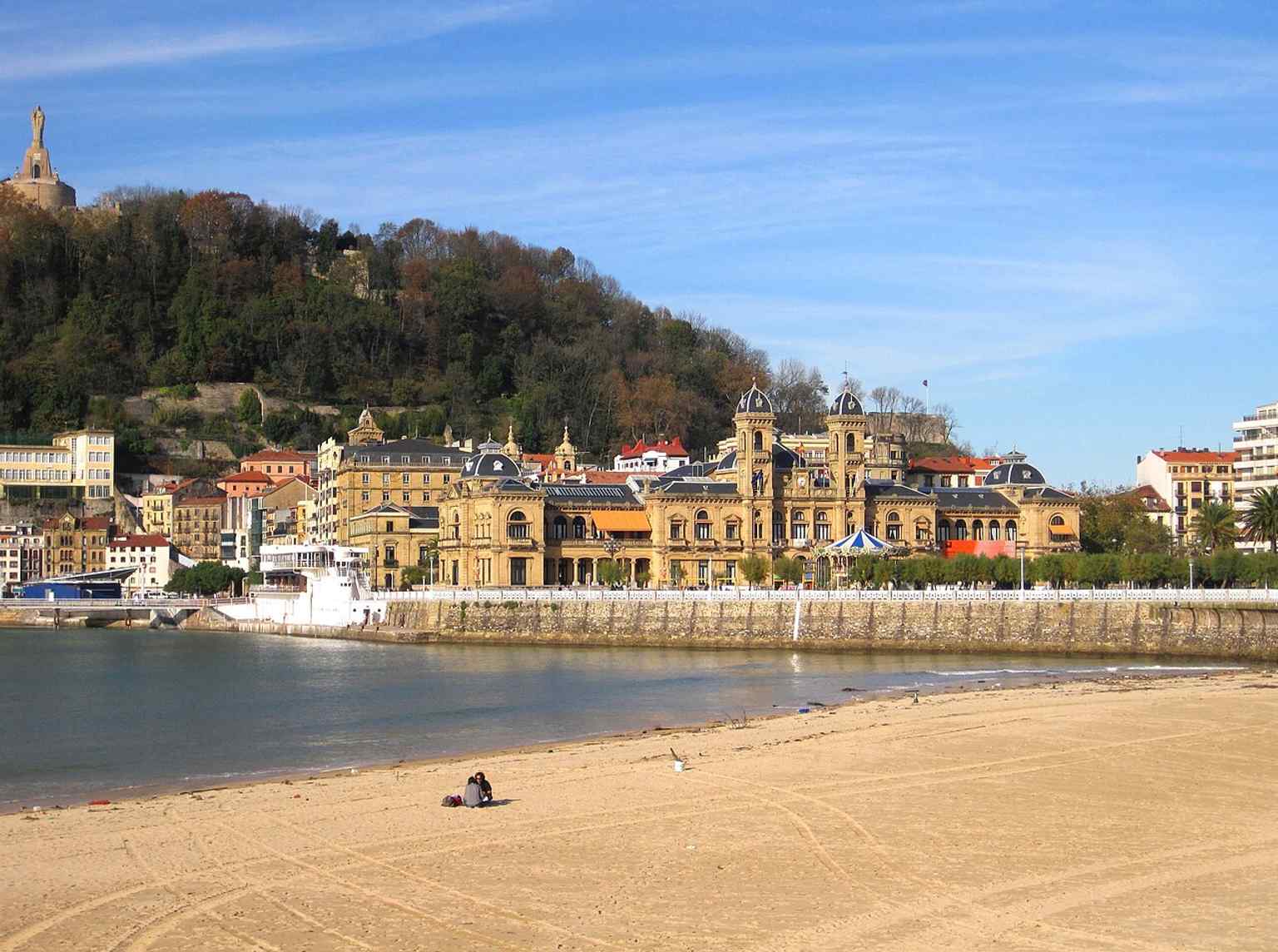
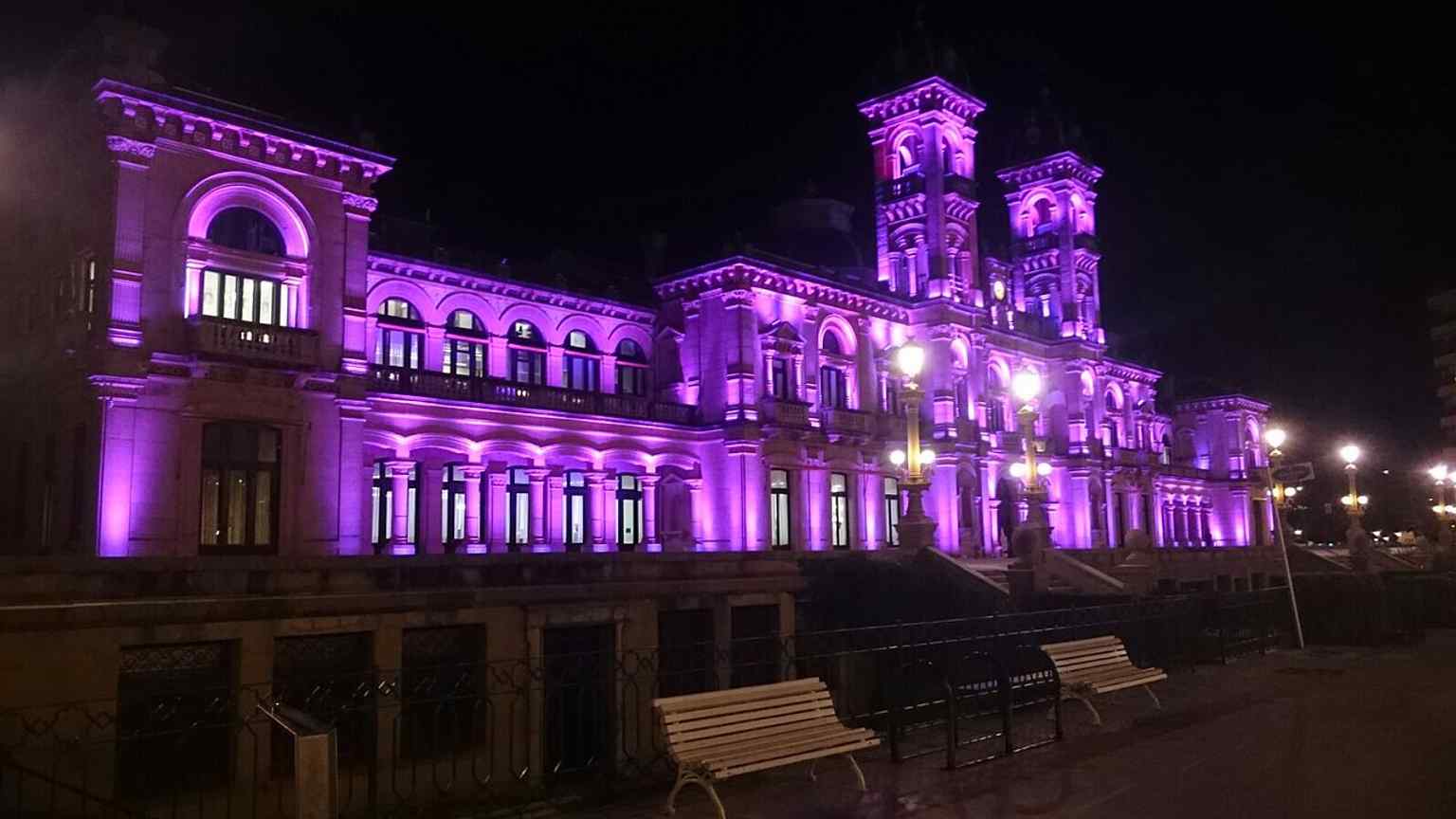
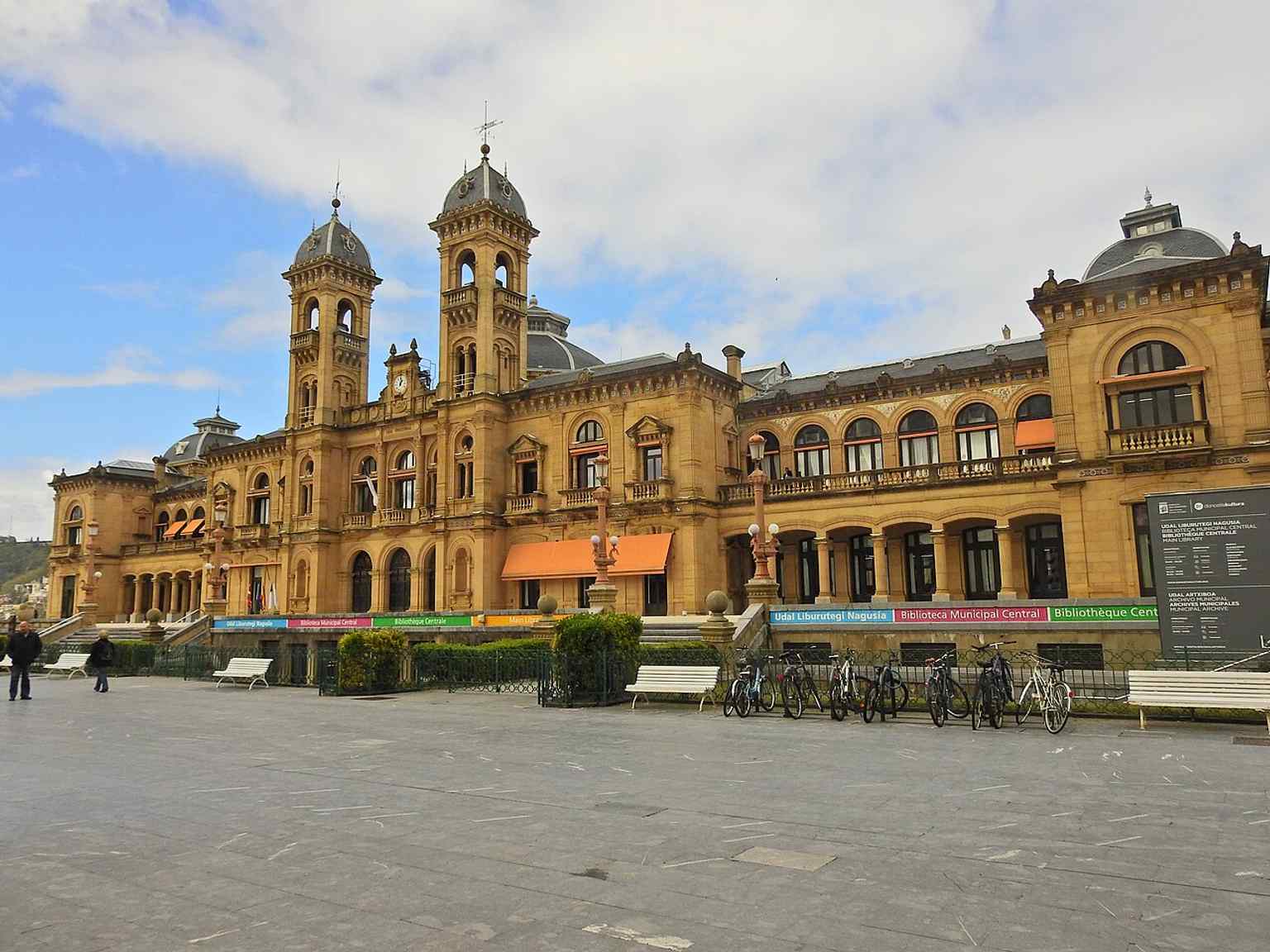
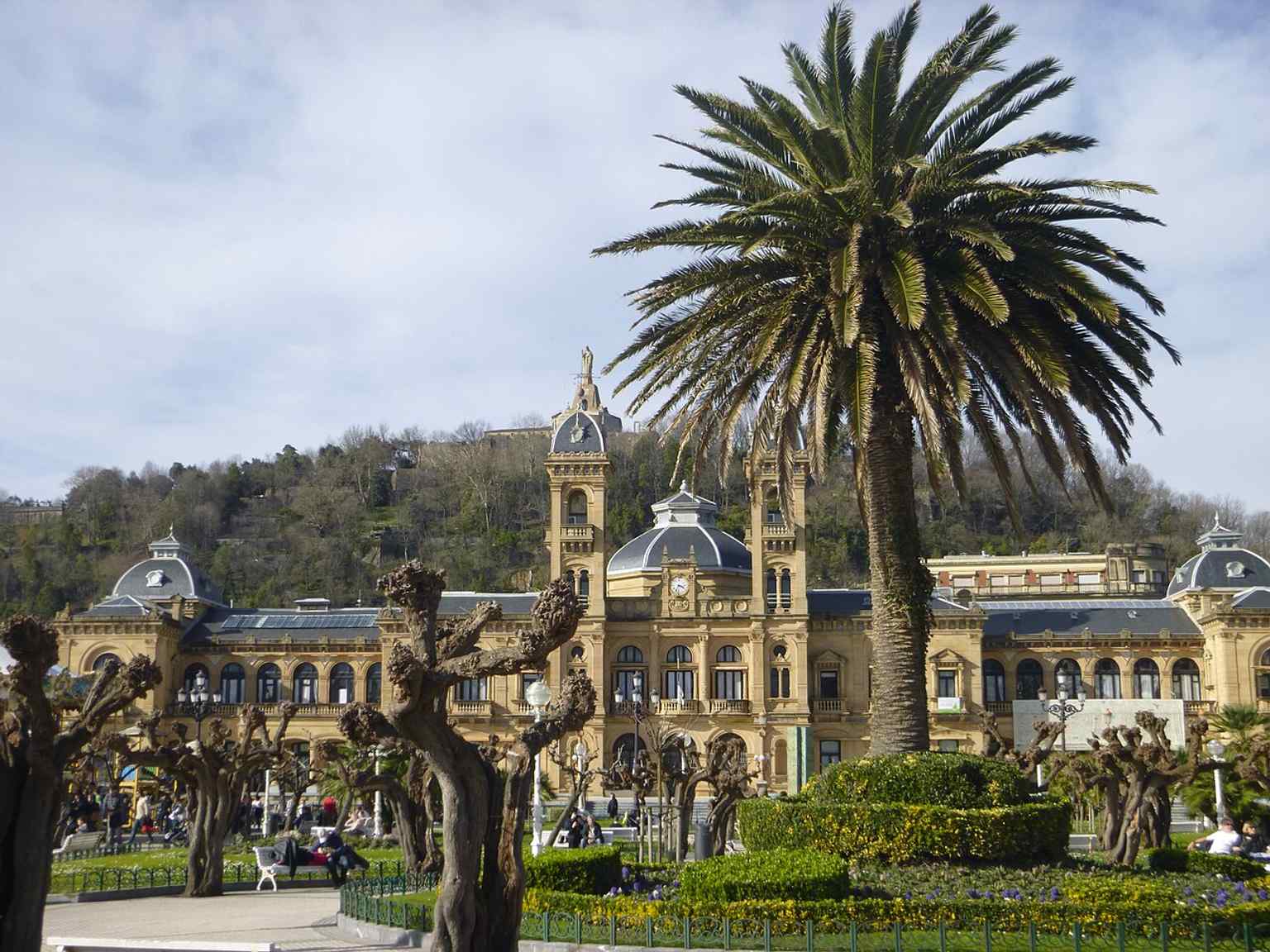
On your left, the Town Hall is a pale stone Belle Époque building with a long symmetrical facade, two rounded corner towers, and a central clock above the balcony.
It looks entirely respectable now. That, if anything, is part of the trick.
San Sebastián governs itself from a building that began life as the city’s casino, started in eighteen eighty-two and opened on the first of July, eighteen eighty-seven, in the Alderdi Eder gardens beside the bay. Queen María Cristina attended the inauguration, and the place quickly became one of the grand theatres of the resort city we have been tracing all afternoon: not a theatre with a stage, perhaps, but one with entrances, costumes, rules, and an audience.
In its glittering prime, locals nicknamed it Santa María de la Roulette. A teasing little joke. Those two towers reminded people of the nearby Basilica of Santa María del Coro, so the temple of chance borrowed the silhouette of a church. Inside, money flowed so freely that the casino helped fund major pieces of modern San Sebastián: the Paseo de La Concha, the Paseo Nuevo, even the Misericordia asylum. And yet the most lucrative room, the gaming hall upstairs, officially admitted foreigners only. Donostiarras were barred, supposedly to protect local morals. As you can imagine, that rule attracted more mockery than obedience.
If you glance at the historical image on your screen, you can see the building wearing its earlier identity rather proudly.
Then came the First World War, and the elegant rooms acquired another mask. Because Spain remained neutral, San Sebastián filled with aristocratic refugees, adventurers, and intelligence agents. The casino became, quite literally, a wartime nest of spies. The most famous was Mata Hari, the dancer and spy, who stayed at the nearby Hotel de Londres and slipped regularly into these salons. Local legend places her here with the journalist Enrique Gómez Carrillo, amid flirtation, champagne, and conversations that may have carried far more than gossip across Europe.
But glamour never tells the whole story. Gambling was banned in nineteen twenty-four, and the casino closed. Soon these rooms served wounded soldiers from the Rif War as a hospital. In July of nineteen thirty-six, during the outbreak of the Civil War, rebel troops and requetés - Carlist militia fighters - barricaded themselves inside. Republican militias besieged the building, and the fighting was fierce enough that local observers still point to bullet scars on the Boulevard side.
Then, one more reinvention. In nineteen forty-five, the city moved its council here. Architects Alday and Luis Jesús Arizmendi reshaped the old casino into a town hall. Arizmendi was an unusual fellow: municipal architect and chief of firefighters at the same time. His sharpest conversion came indoors, where the grand ballroom of the Belle Époque became the council chamber, the room where the city now argues over budgets and bylaws instead of dancing foxtrots.
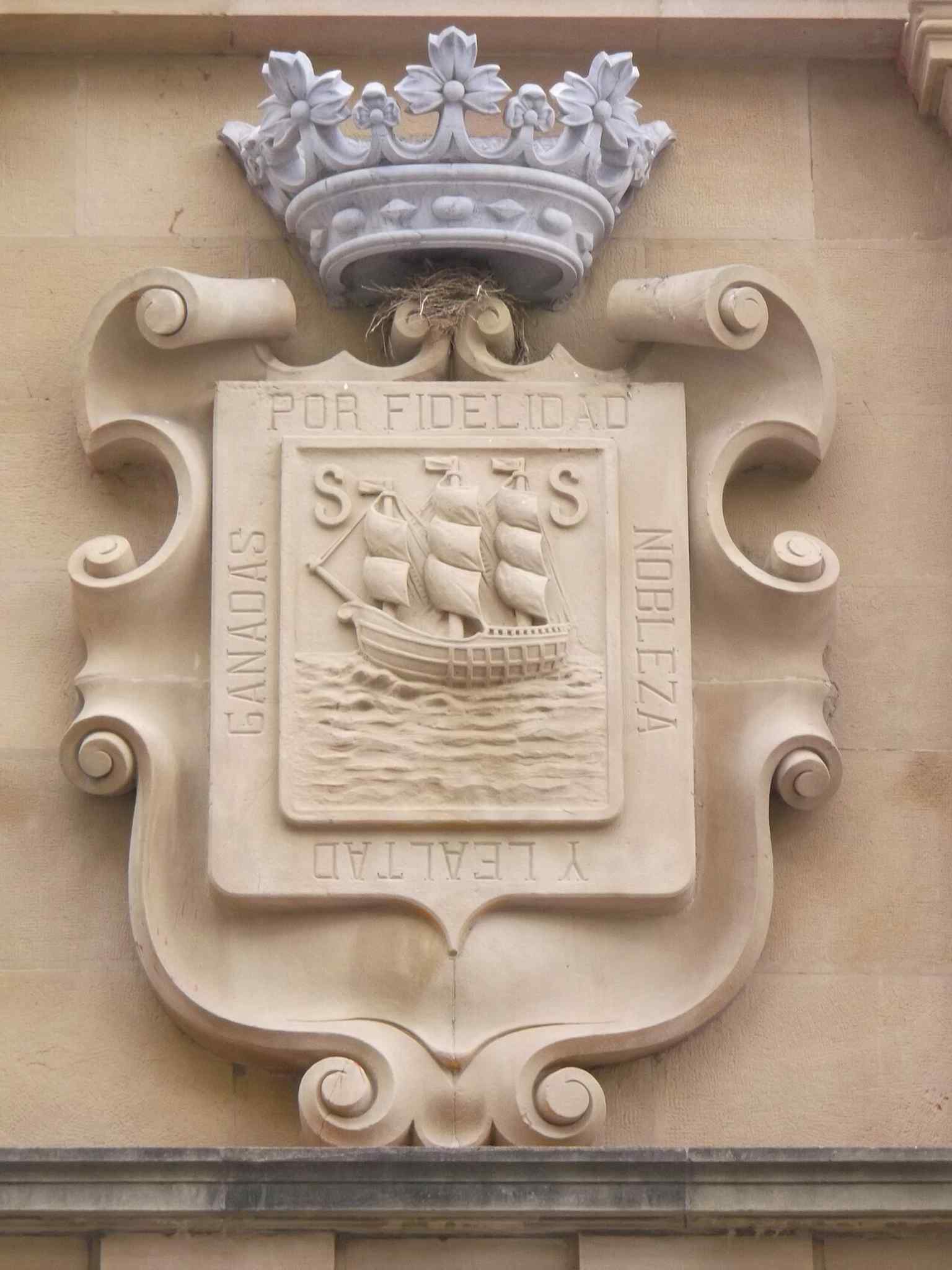
If you look at the close-up of the clock and coat of arms, you can see how thoroughly the building learned its new role without quite forgetting the old one.
That is the pleasure of San Sebastián: appearances are rarely false, but they are often incomplete. In a moment, we’ll continue to Goicoa Palace, only about a minute away.





%20de%20San%20Sebasti%C3%A1n.jpg)


