
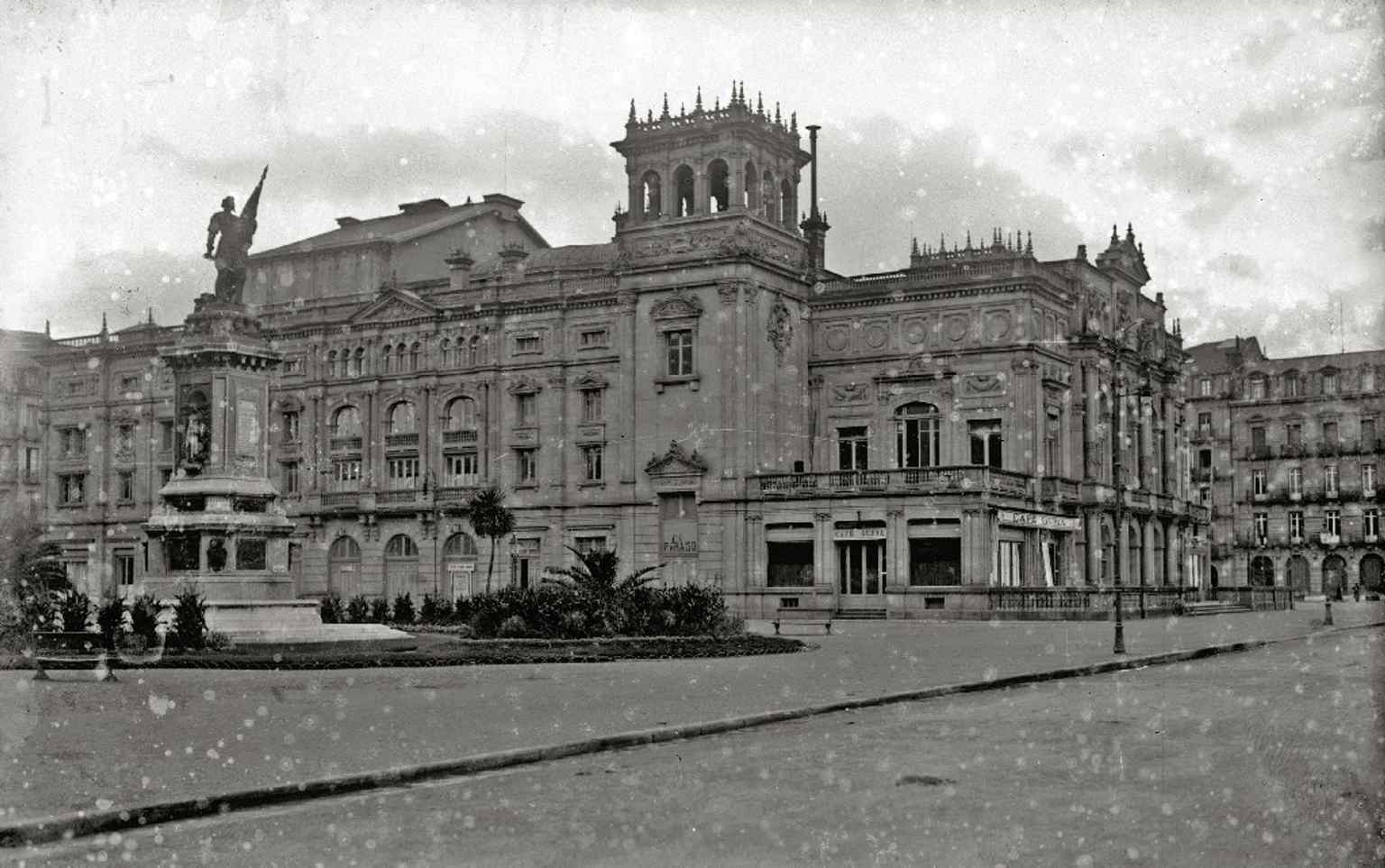
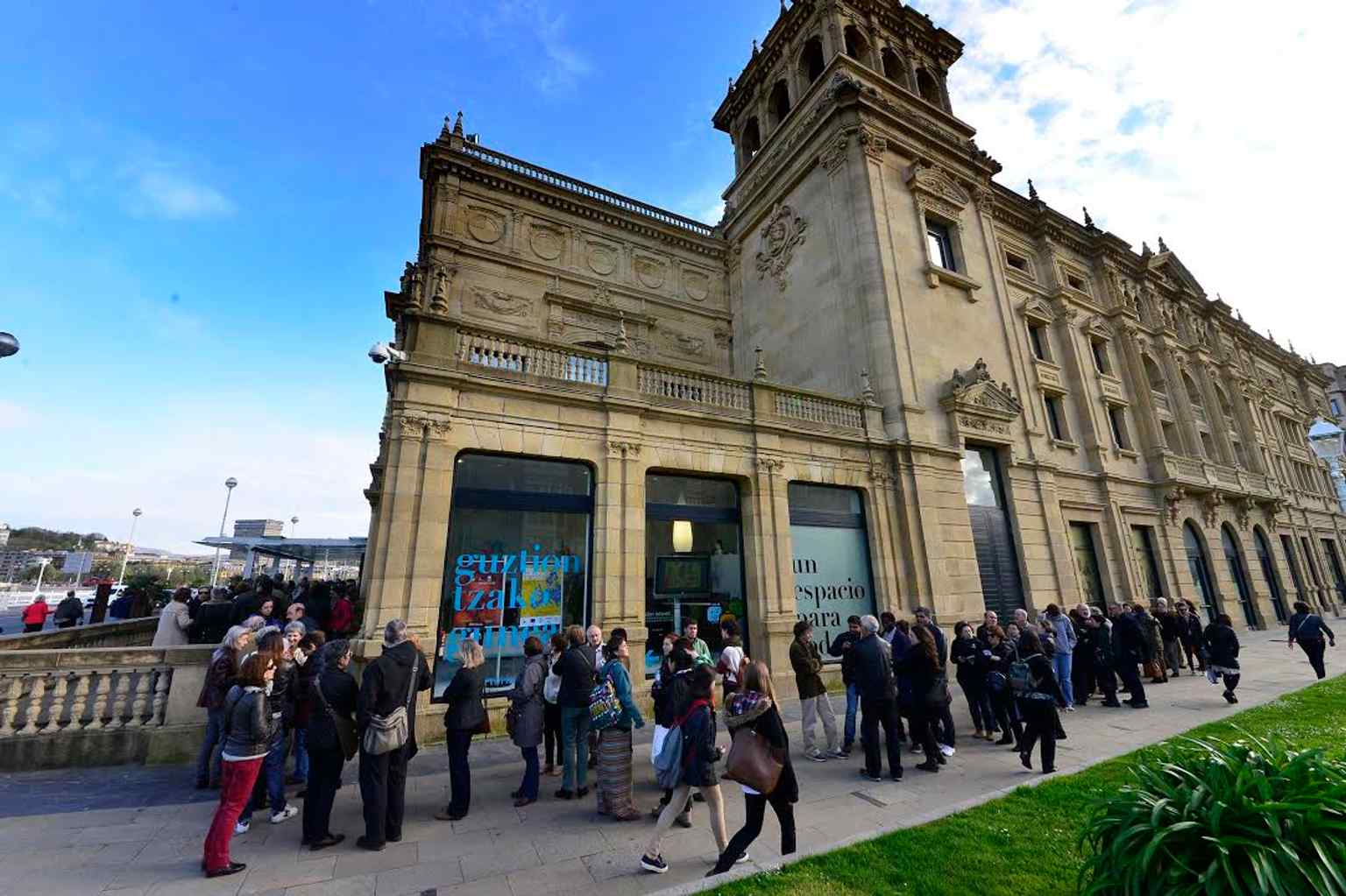
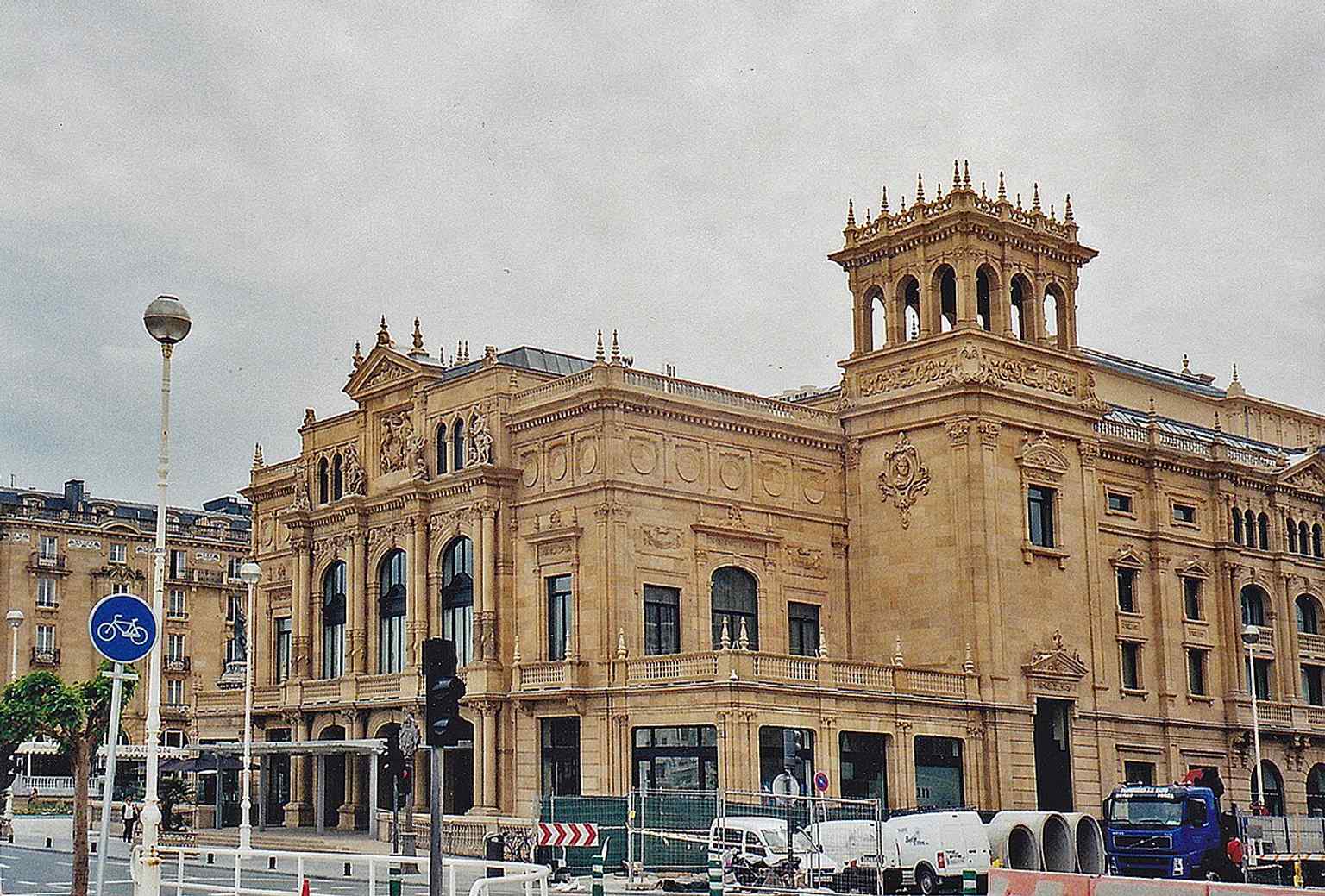
On your left, look for a pale sandstone theatre with carved balconies, tall arched windows, and sculpted busts set into its richly ornamented façade.
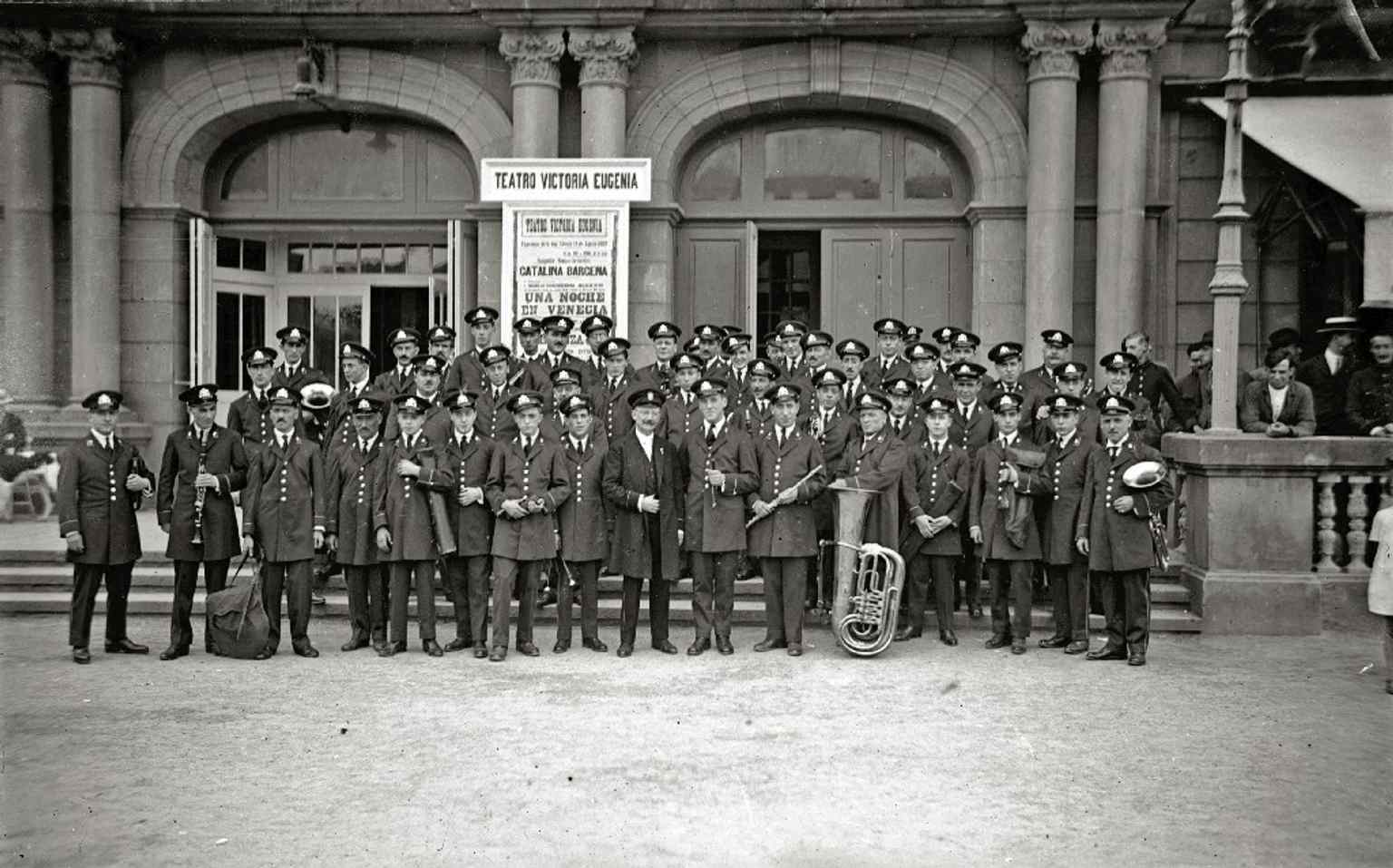
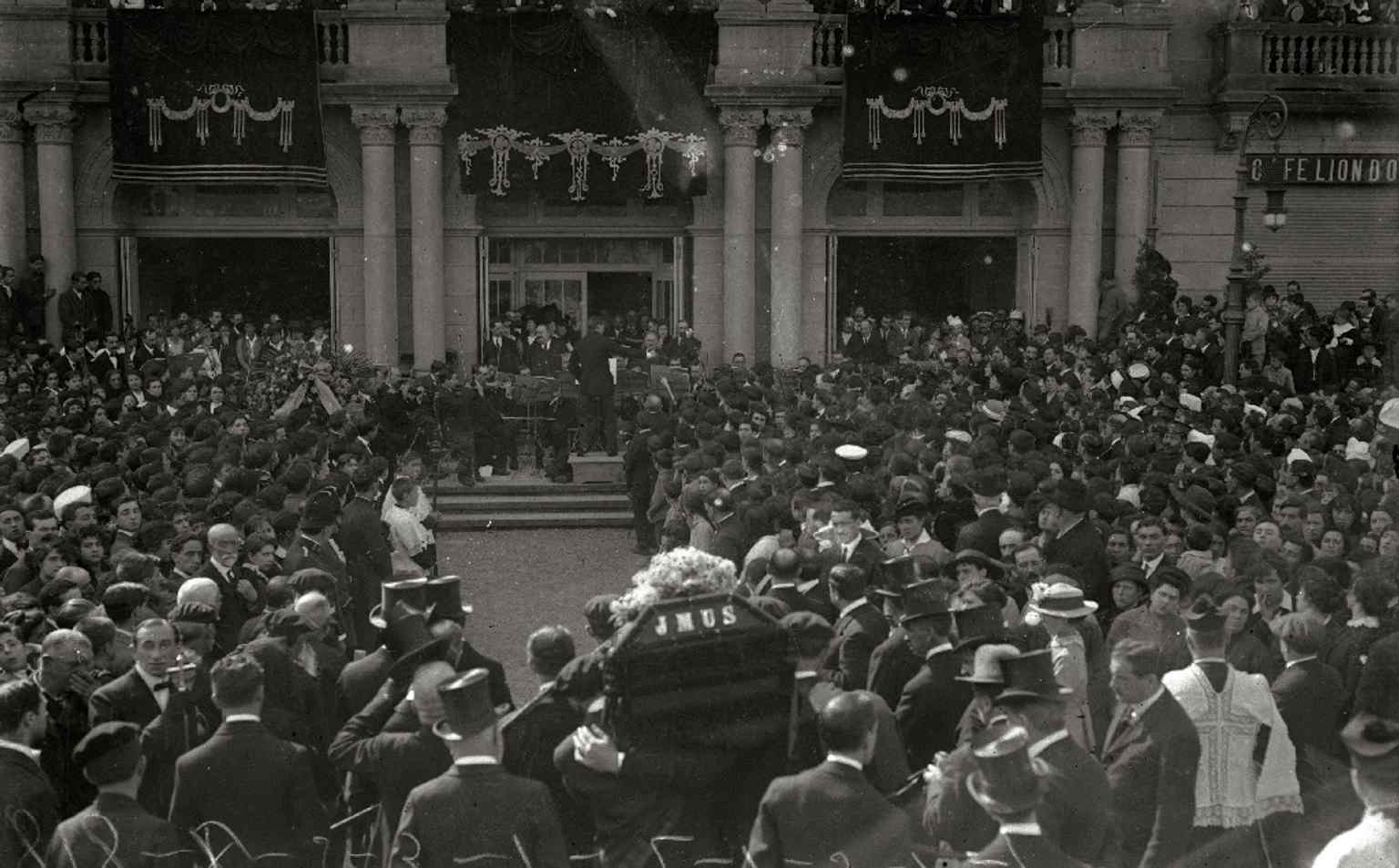
This is the Victoria Eugenia Theatre, and few buildings in San Sebastián understand spectacle quite so completely. Architect Francisco Urcola opened it in nineteen twelve, giving the city a grand cultural face in Spanish neo-Renaissance style, with the intricate, silvery stone carving of the neoplateresque tradition - a style that borrowed the richness of old royal architecture rather than the cooler French look seen on so many nearby buildings. Its exterior took inspiration from the Palace of Monterrey in Salamanca, which explains why it feels less like a simple playhouse and more like a civic palace with a curtain hidden inside.
It began, fittingly, with a touch of delicious theatre before anyone even stepped on stage. The official opening took place on the twentieth of July, nineteen twelve, yet the woman it was named for, Queen Victoria Eugenia, did not attend. San Sebastián has always appreciated a polished public moment, but locals still enjoy that small irony: the Victoria Eugenia opened without Victoria Eugenia. She arrived the following day with King Alfonso the Thirteenth and Queen Mother María Cristina, while the opening production, En Flandes se ha puesto el sol by Eduardo Marquina, had already raised the curtain with the celebrated company of María Guerrero and Fernando Mendoza.
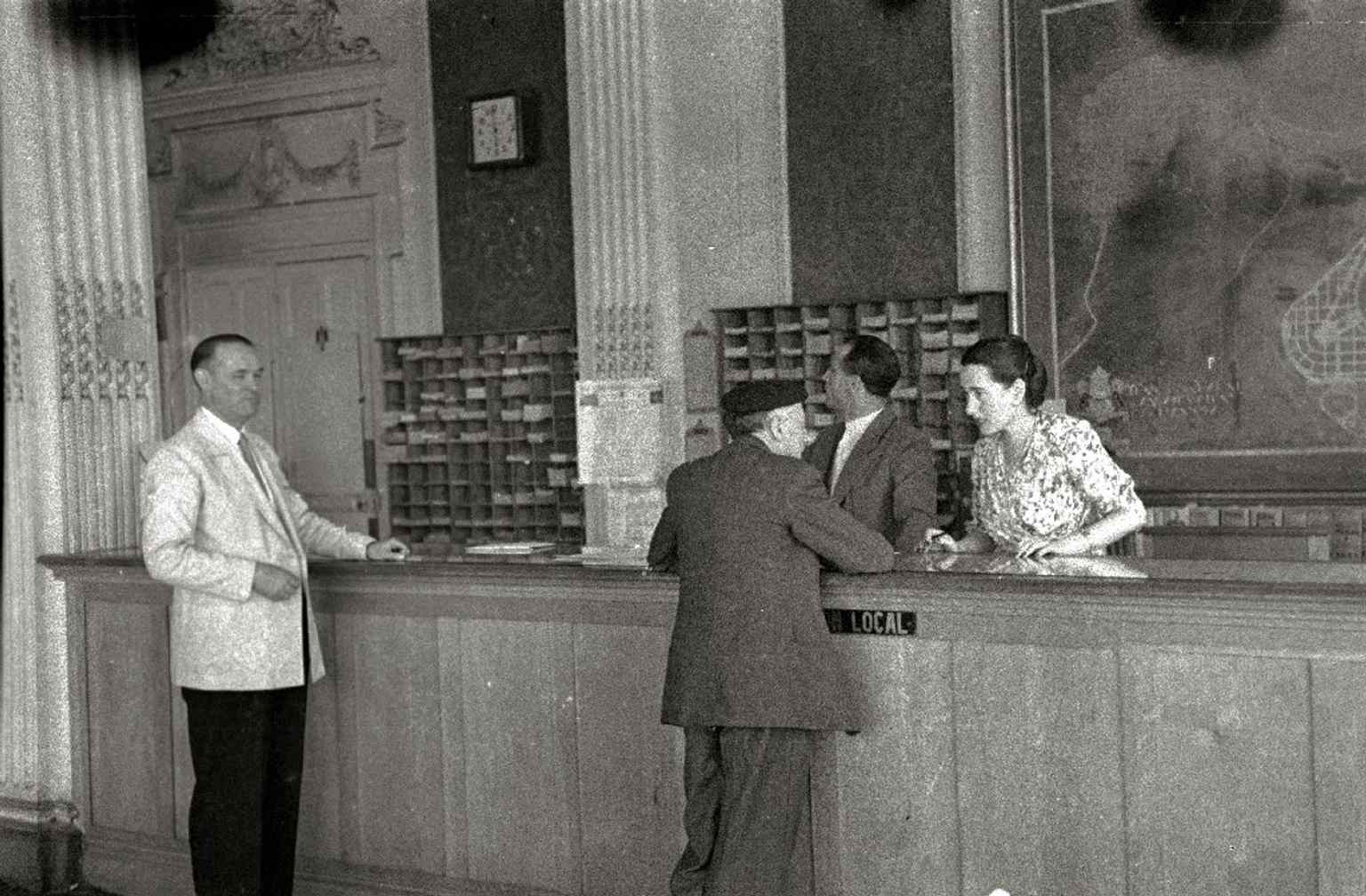
The theatre and the Hotel María Cristina across the way belonged to the same grand ambition. In the early twentieth century, city promoters wanted San Sebastián to look elegant enough for aristocrats, wealthy visitors, and the watching world. So they built not just accommodation, but a setting: a place where society could watch itself being society.
And then history refused to remain polite. On the twenty-third of July, nineteen thirty-six, during the Spanish Civil War, republican militiamen occupied this building and fired from it toward the Hotel María Cristina, where rebel officers had taken cover. Later, Franco’s regime turned the theatre to propaganda, ending performances with the fascist anthem Cara al sol and compulsory salutes. Even here, among velvet and applause, the city’s wounds showed through.
Yet the building kept changing costume. For decades it hosted the San Sebastián International Film Festival, right up to nineteen ninety-nine. Alfred Hitchcock stood here in nineteen fifty-eight for the world premieres of Vertigo and North by Northwest, while lodging in suite four hundred and five across at the María Cristina. He became so taken with chipirones in their ink that he urged Eva Marie Saint to order them, and, being Hitchcock, also wandered off to Polloe Cemetery with a photographer in search of something suitably morbid. In nineteen seventy-seven, Harrison Ford and Carrie Fisher posed on these steps for the European premiere of Star Wars, while inside the festival audience sat in baffled silence, unsure what to make of George Lucas’s space opera. And on the twenty-second of September, nineteen eighty-nine, Bette Davis made her final public appearance here, frail but unmistakably commanding, receiving the Donostia Award in velvet, cigarette in hand, before dying in France only two weeks later.
If you glance at the before-and-after image in the app, you can see how this frontage moved from an early twentieth-century theatre setting to a thoroughly modern cultural landmark. The biggest renovation came between two thousand and one and two thousand and seven: new stage technology, better access, fewer but larger seats, and new spaces tucked below and above the main hall. Some regulars still sigh for the old entrance, with its pinks, golds, and more decorative staircase, now replaced by a rather whiter, more marble-heavy welcome. If you look at the auditorium photo on your screen, you’ll see the painted vault where Ignacio Ugarte quietly slipped architect Francisco Urcola into the allegory of the rising sun, as if the building’s creator deserved a seat in his own dream. Here, performance never quite stays behind the curtain; it spills into the pavements and squares of San Sebastián. When you are ready, Plaza de la Brecha is about a four-minute walk away.





%20-%20Fondo%20Mar%C3%ADn-Kutxa%20Fototeka.jpg)
%20-%20Fondo%20Car-Kutxa%20Fototeka.jpg)
%20-%20Fondo%20Car-Kutxa%20Fototeka.jpg)
%20-%20Fondo%20Car-Kutxa%20Fototeka.jpg)

