
Look for the warm stone façade with its tall white marble doorway, rows of iron balconies, and the slender corner watchtower that marks the Palace of the Marquises of Recaño.
This house has the posture of a man standing on tiptoe... which, in Cádiz real estate, was a sensible ambition. Around seventeen thirty, the Genoese patrician Bernardo Recaño, first Marquis of Casa Recaño, commissioned it here on one of the highest points in the old city. He followed the local formula for a merchant palace, the kind used by the cargadores a Indias, traders whose fortunes rode the Atlantic routes to the Americas. Business happened on the lower levels, the owner lived on the grand main floor, servants stayed higher up... and above all of that rose the lookout tower.
That tower is the star of the show. It became known as the Torre Tavira, and because it stood higher than any other tower in Cádiz, the city chose it in seventeen seventy-eight as the official watchpoint over the port. The tower took the name of Antonio Tavira, the first man assigned to keep watch there. Imagine that job for a second: scanning the horizon for incoming ships, delays, danger, profit. In a trading city, that was not idle gazing; it was economic intelligence.
If you glance at the image on your screen, you can see how the palace and tower work together, almost like a dignified townhouse that secretly decided to grow a periscope.
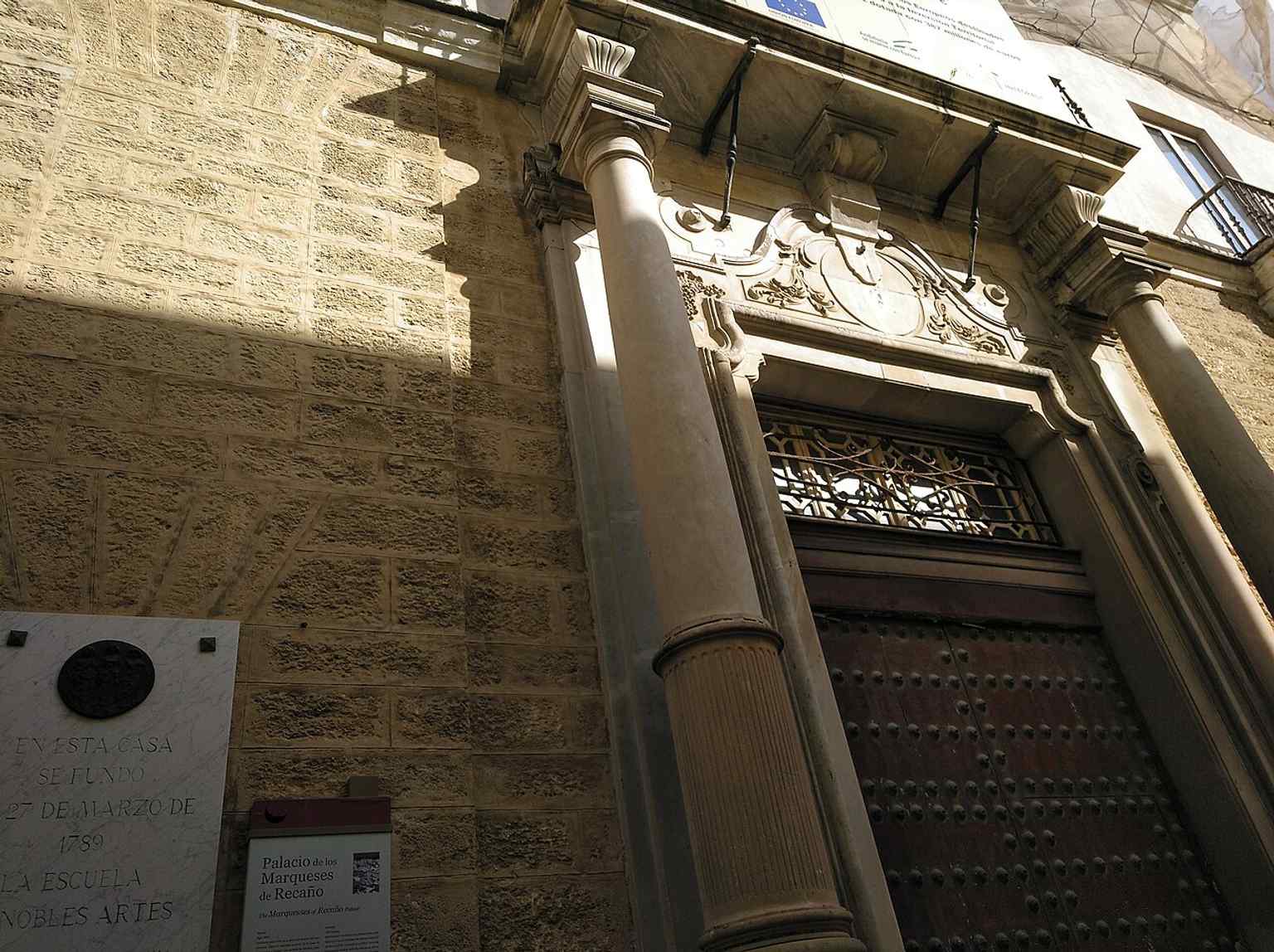
The entrance gives away the building’s ambitions. The main portal is white marble set into rougher oyster stone, with Tuscan columns, a split curved pediment, and a balcony above it like a little stage. If you want a closer look at that doorway, check the image in the app. Baroque architecture loved this sort of flourish. Baroque, in plain English, means a style that leaned into movement, ornament, and a bit of controlled drama.
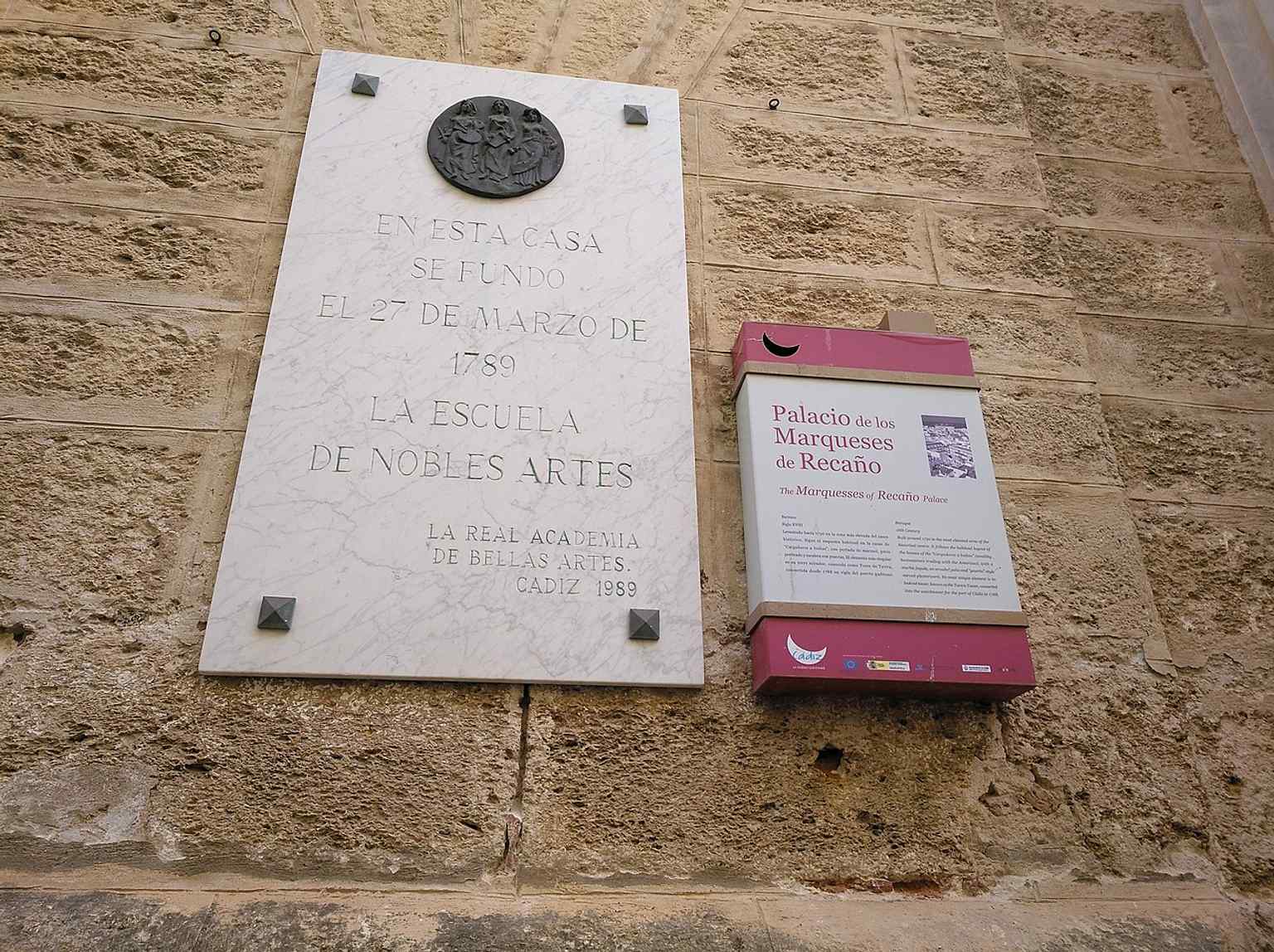
And this palace did not settle for one career. In seventeen eighty-seven, Cádiz moved its Free School of Drawing, Arithmetic, and Geometry here. That later became the School of Fine Arts, which stayed until eighteen thirty-eight. In eighteen twelve, during the year of the Constitution, Spain’s Supreme Court held its first seat in this very building before moving on to Madrid. Later it served as a teacher-training school, and later still the Sisters of Charity used it for a school of their own. Some buildings age quietly; this one kept updating its résumé.
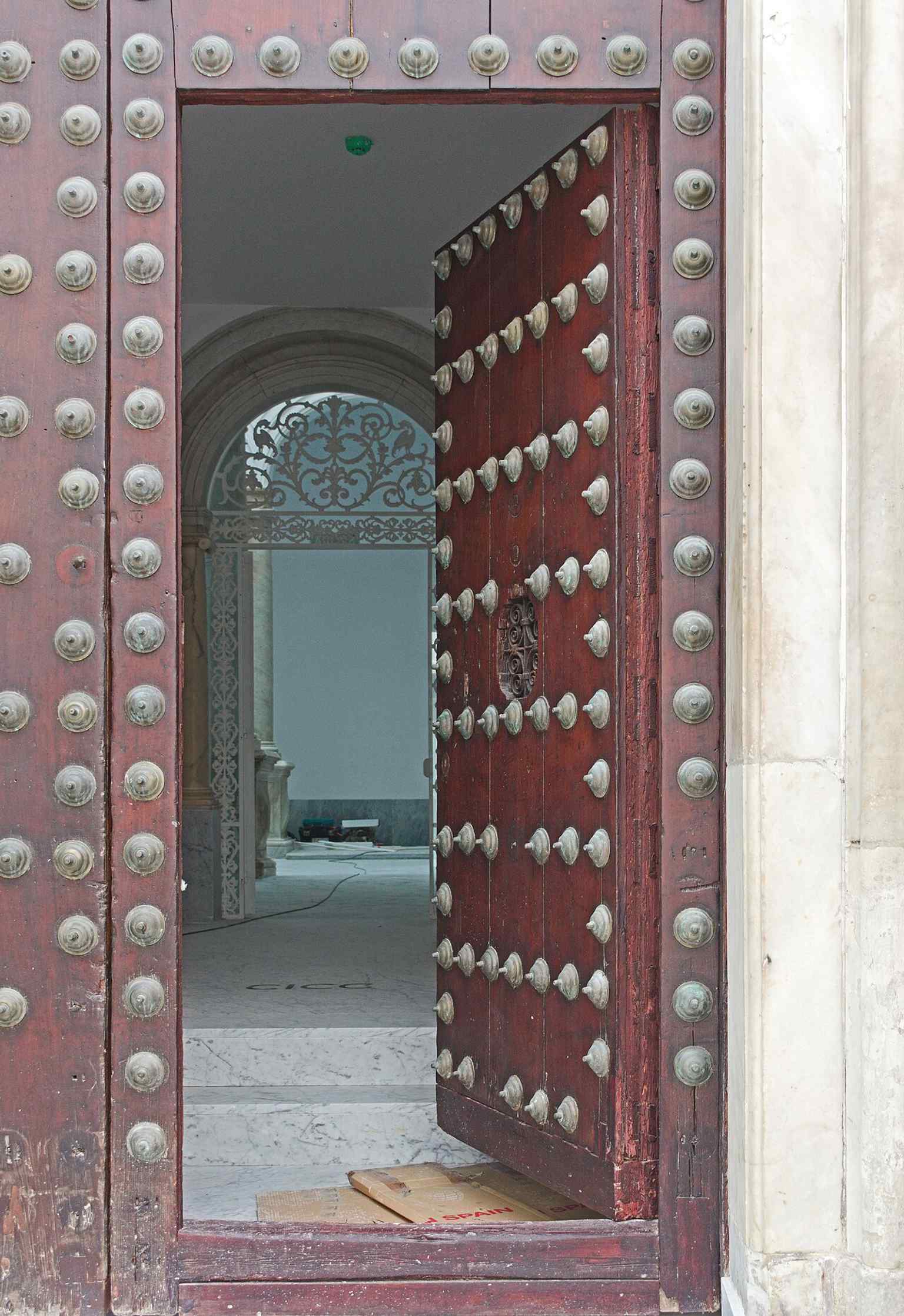
Inside, the palace is organized around a central courtyard with eight Tuscan marble columns. White decorative moldings stand out against reddish walls, and the main staircase rises under plaster vaults crowded with flowers, fruit clusters, curling leaves, and little angel heads. Even the iron screen beyond the entrance was designed to impress before a visitor reached the patio.
The city owns the palace now, and after restoration it became the Museum of Carnival, which feels exactly right for Cádiz: a noble house turned over to satire, costume, music, and mischief. In two thousand and five, Andalusia protected it as a monument, and fairly so.
If you want to go inside later, the museum generally opens every day from ten in the morning to eight in the evening. For a palace built to watch ships, it ended up keeping watch over a remarkable slice of Spanish history. Take a moment here, and when you’re ready, we can continue on to Mora Palace.





%2001.jpg)

%2002.jpg)