
On your left, look for a warm stone Baroque church with an oval shape, a compact façade framed by Ionic pilasters - flat columns attached to the wall - and memorial plaques set between them.
This is the Oratory of Saint Philip Neri, and for such a modest exterior, it carries a startling amount of Spanish history. Blas Díaz started it in sixteen eighty-five and completed this elliptical church by seventeen nineteen. That oval plan was unusual for a church, but it gave the interior a strong sense of gathering, which turned out to be very useful indeed. During the Napoleonic invasion, Spain’s Cortes Generales met here from eighteen eleven, and in eighteen twelve they proclaimed the first Spanish constitution... liberal enough to make defenders of absolute monarchy very uncomfortable.
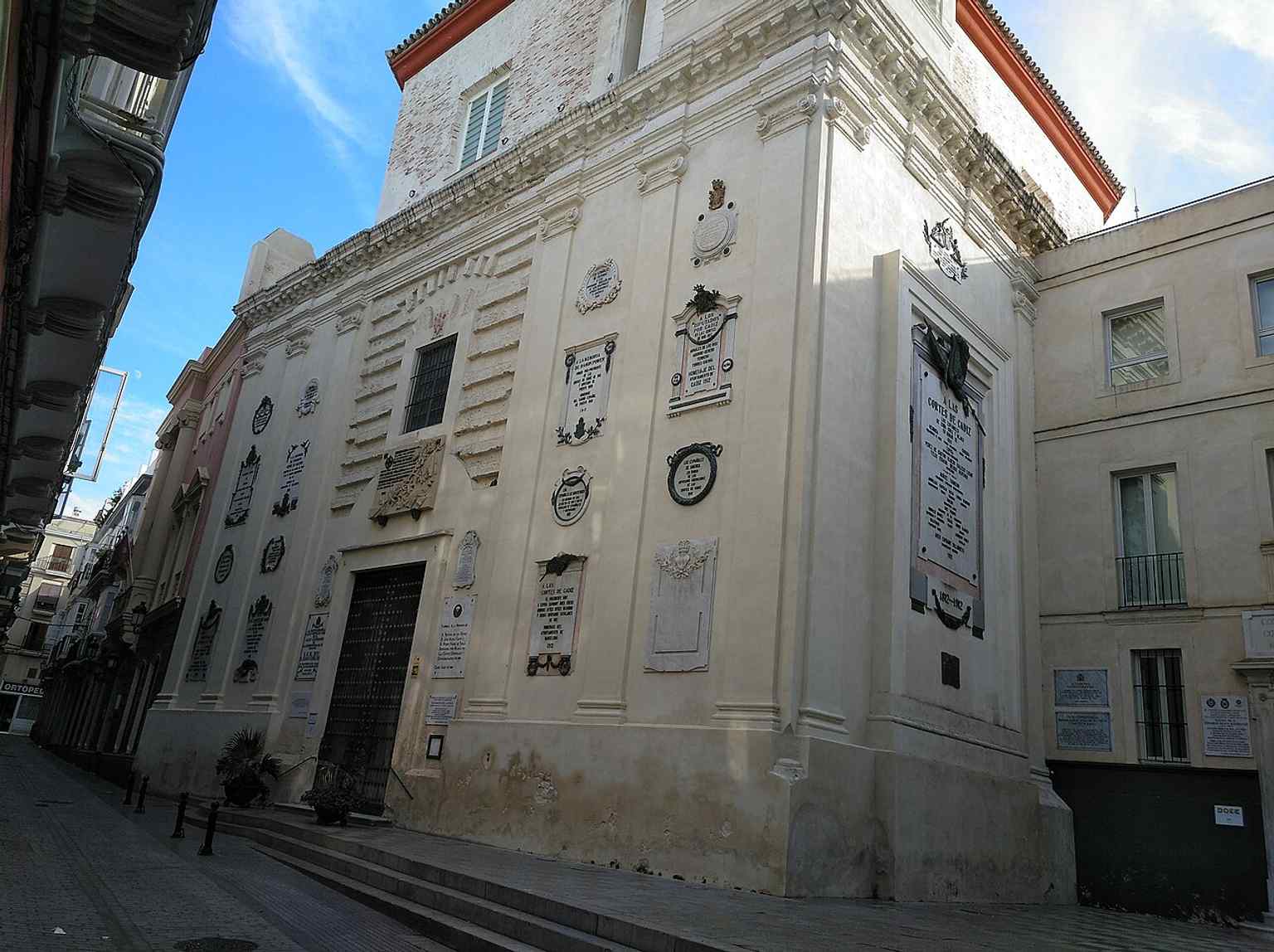
The building had already survived a serious shock. The Lisbon earthquake of seventeen fifty-five damaged it, even from across the border, and in seventeen sixty-four Pedro Luis Gutiérrez de San Martín rebuilt the dome, a timber shell with two sections and eight windows. If you glance at your screen, image three gives a clear view of that rebuilt exterior.
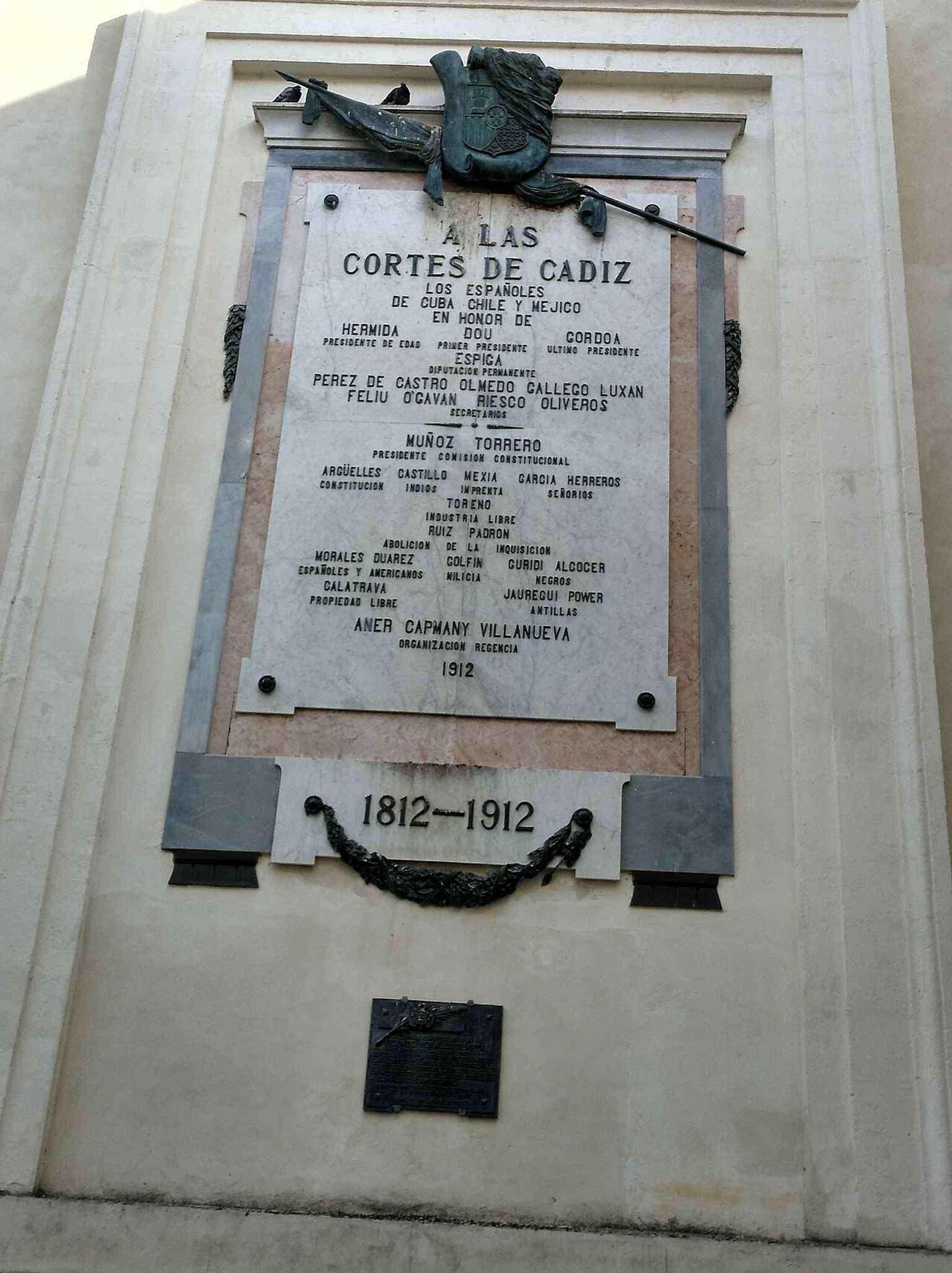
Those plaques outside were added especially in nineteen twelve, marking the constitution’s centenary and honoring the doceañistas, the liberal deputies linked to eighteen twelve. Inside, seven richly decorated chapels ring the oval hall, including the Sagrario Chapel by the Genoese brothers Bernardo and Francesco Maria Schiaffino, plus a Rococo main altarpiece with Murillo’s Immaculate Conception.
This church is both sanctuary and parliament in stone.
Take a moment here, and when you’re ready, we can continue toward the Palace of the Marquises of Recaño.





%2001.jpg)
%2002.jpg)
%2003.jpg)