
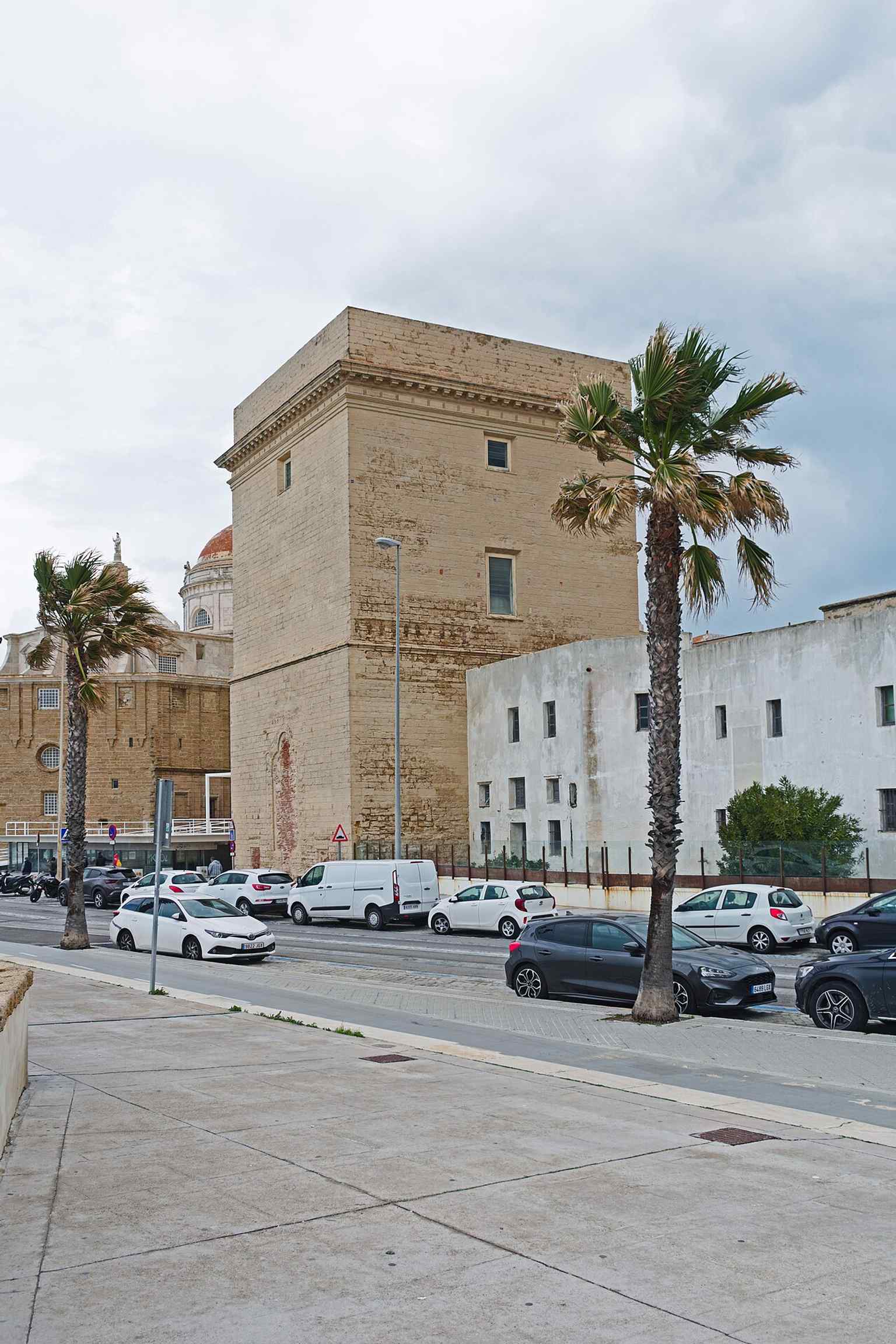
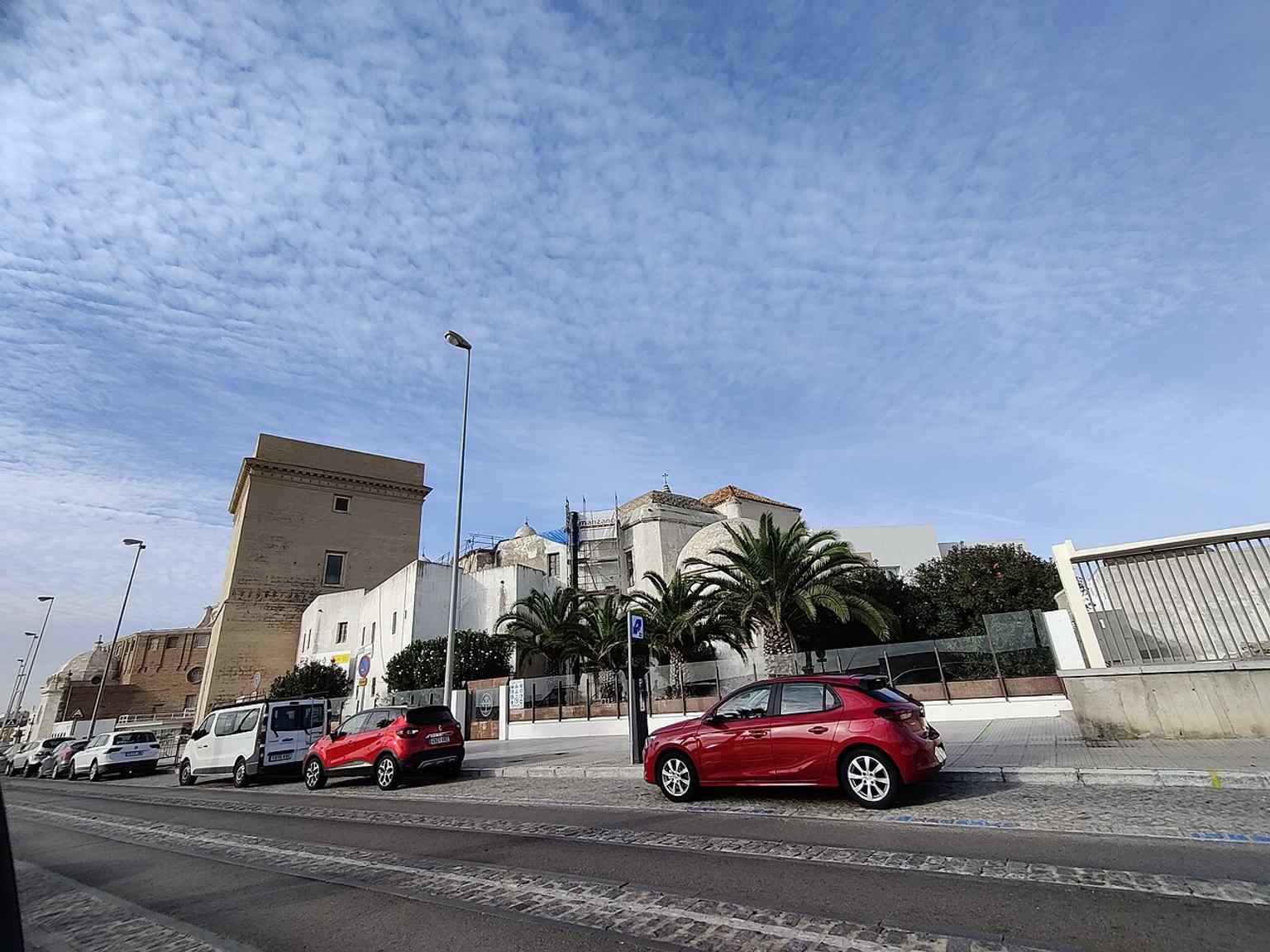
On your right, Santa Cruz is easy to spot by its pale stone walls, its broad rectangular body, and the separate bell tower topped with a polychrome tiled spire.
This is Cádiz’s old cathedral... a building with a long memory and, frankly, more lives than seems fair for one church. King Alfonso the Tenth of Castile, known as Alfonso the Wise, ordered a church here around the years twelve sixty-two to twelve sixty-three, after the Christian conquest of the city. He chose a site layered with older faiths and older stones: first an Islamic mosque, and possibly even earlier remains linked to a paleochristian or Visigothic temple... or land tied to Roman Gades. In Cádiz, the past rarely leaves politely.
Alfonso even meant this to be his burial place. History declined the invitation. He died and ended up buried in Seville instead.
For centuries, this church served as the city’s cathedral. Then came disaster in fifteen ninety-six, when an Anglo-Dutch fleet under Charles Howard and Robert Devereux attacked, invaded, and sacked Cádiz. The fire left this church almost destroyed. Only the entrance arch and the ribbed vault of the baptistery chapel survived. A ribbed vault, by the way, is that stone webbing you see in some older church ceilings, where the arches cross like the bones of an umbrella.
The rebuilding began soon after. In fifteen ninety-seven, the diocese gave the work to Ginés Martín de Aranda, and the final design came from the military engineer Cristóbal de Rojas. That detail feels very Cádiz: when things get serious, call the engineer. The church was finished in sixteen oh two, consecrated on the fifteenth of June that year, and opened for worship in sixteen oh three.
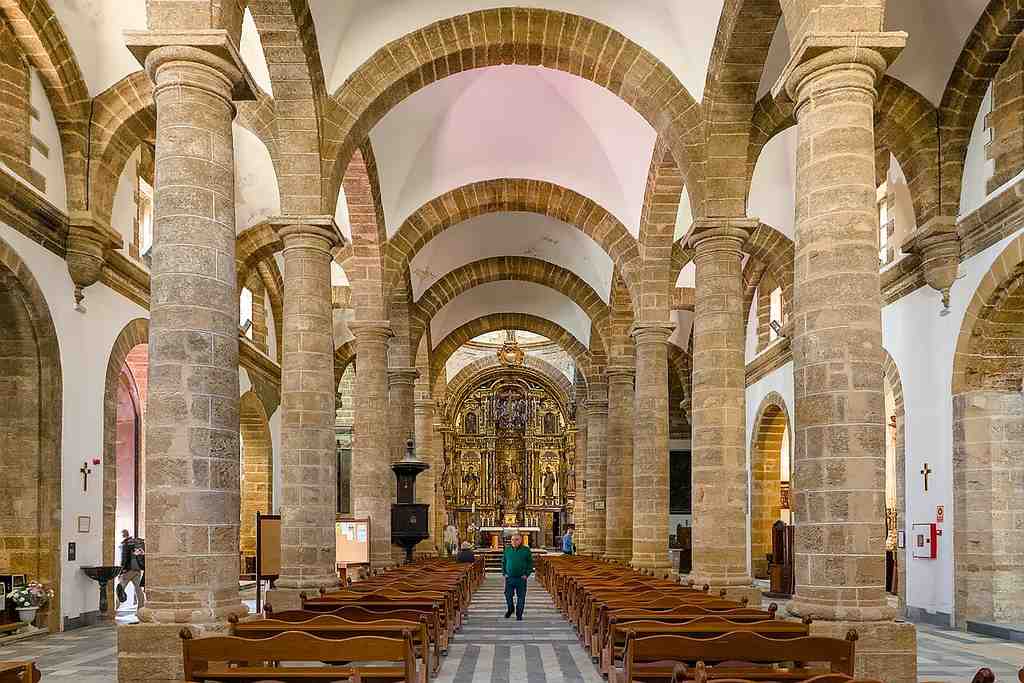
What you see now belongs mainly to that rebuilding: a Mannerist and Baroque church, meaning a style that is more controlled and geometric than high Renaissance work, but with some of the drama and richness Baroque loved. Inside, it has three aisles, the long parallel spaces of the church, divided by sturdy Tuscan columns and broad rounded arches. Over the crossing sits a hemispherical dome on pendentives, those curved triangular supports that let a round dome rest over a square space.
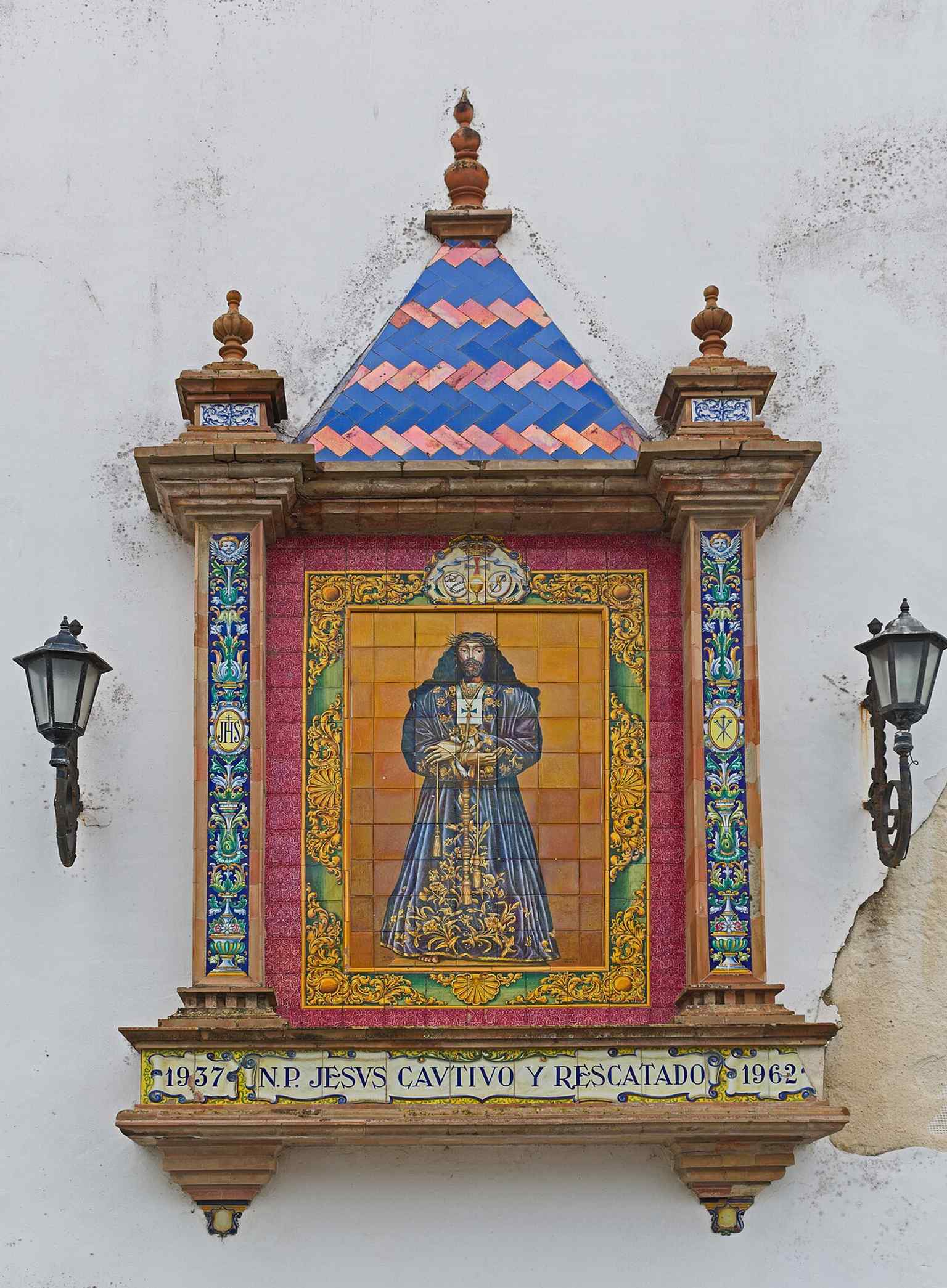
If you check your screen, the tower in image two shows one of the church’s most distinctive features: the separate bell tower, capped with bright tiled surfaces that give the whole complex a little extra swagger. And image three hints at the devotional art preserved inside after all that destruction and rebuilding.
In eighteen thirty-eight, the bishop’s seat moved to the New Cathedral, and Santa Cruz became what it remains now: a parish church, still in active worship, and still very much alive.
Santa Cruz feels less like a relic than a survivor.
Take a moment here, and when you’re ready, we can continue toward the market square.






%20-%20IMG%2020221114%20160419.jpg)
