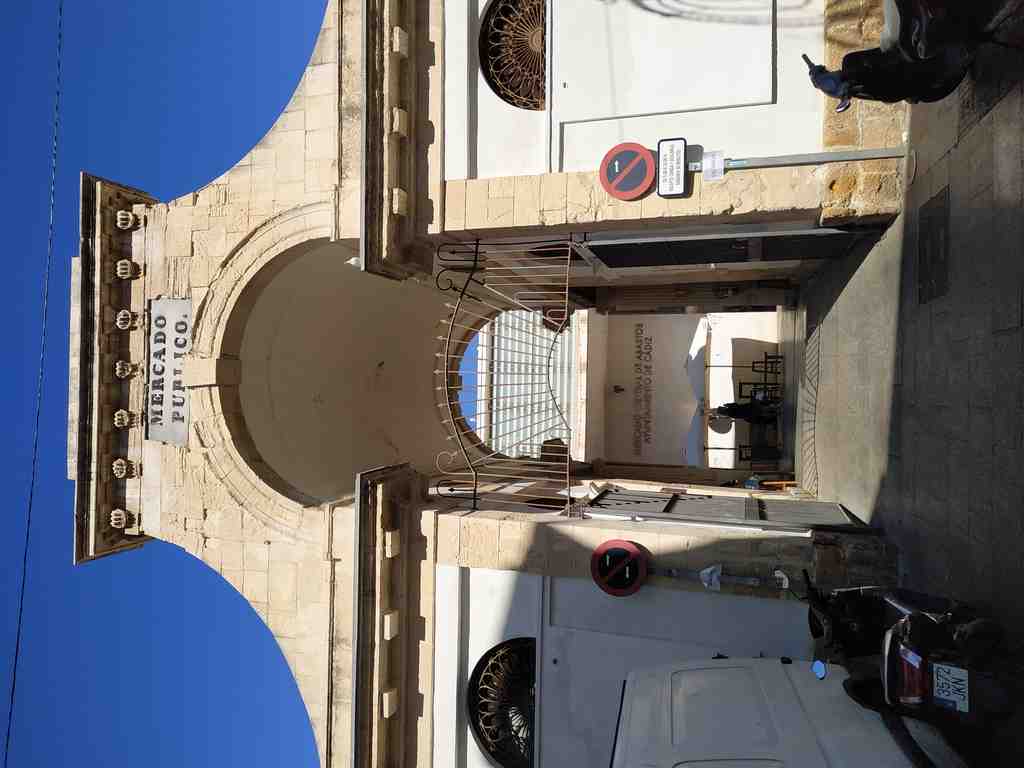
On your right, the market appears as a pale stone quadrangle with open arcades, sturdy Doric columns, and a long neoclassical façade wrapped around Plaza de la Libertad.
Cádiz did not place its central food market here by accident. Architect Torcuato Benjumeda designed it as a porticoed square on the former garden of a convent, after that land changed hands in the early nineteenth century. The market opened in eighteen thirty-eight, and then... for about a century, the city mostly expected it to keep doing its job without much pampering.
In the nineteen twenties, Mayor Ramón de Carranza pushed a program of “great works” across Cádiz, from the Alameda Apodaca to the revived monument to the Cortes, and this market got its turn. Juan Talavera y Heredia, an architect from Seville, began work in December nineteen twenty-six. He kept Benjumeda’s original Doric columns, each about four meters high. Doric means the plain, solid classical style - less fuss, more backbone. The trouble came from old cisterns still in use exactly where new foundations needed to go. Exterior work finished in November nineteen twenty-seven, and the whole project wrapped up by the end of nineteen twenty-nine.
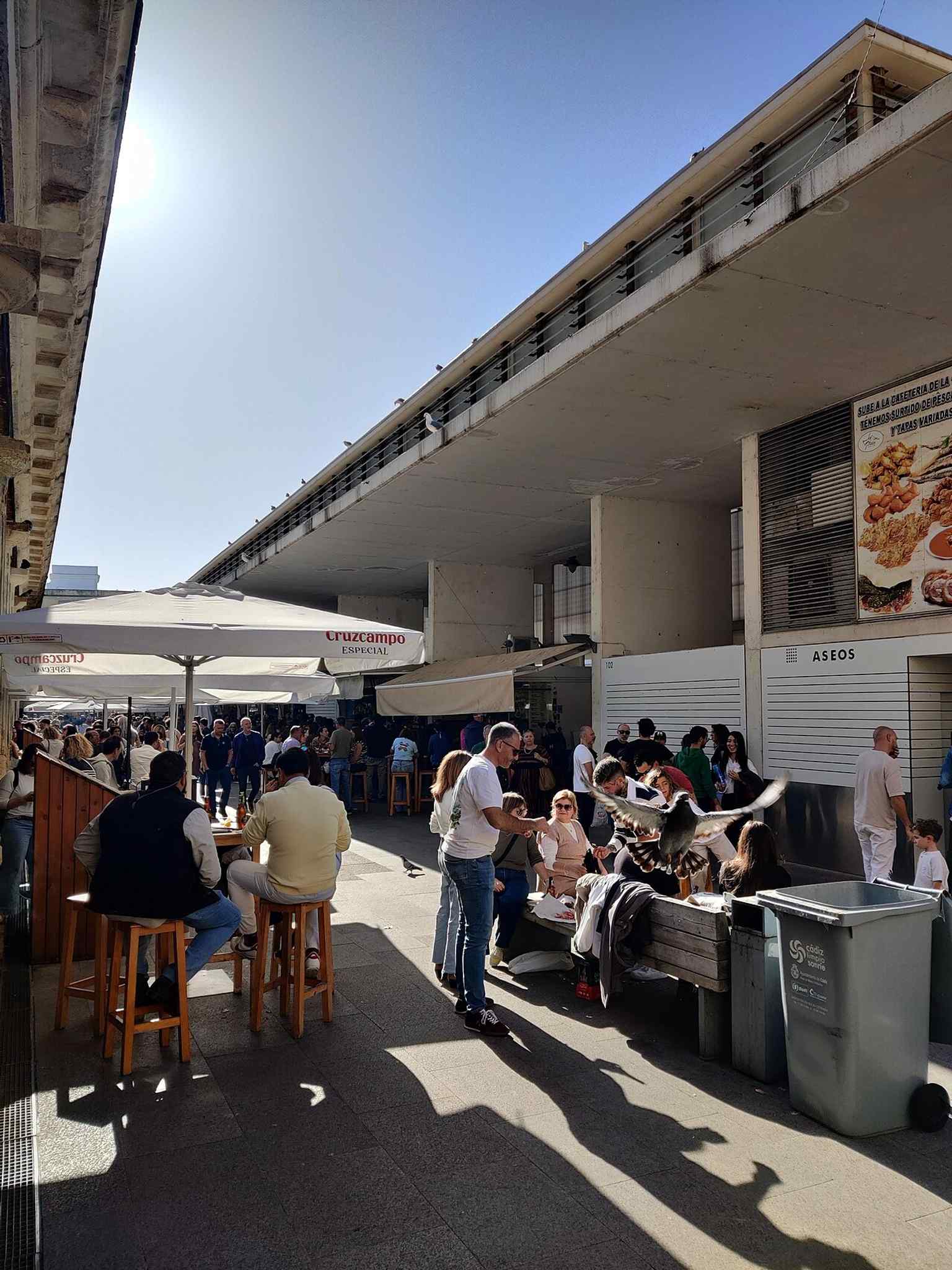
Glance at the app image for the exterior as it reads today. The interior photo shows the twenty-first-century remake, when restaurant spaces helped turn the market into a tourist draw as well as a local one. Carranza even hired a veterinarian to inspect produce, and vendors had to wear white with sleeve covers... hygienic, yes, but also famous enough to inspire a Carnival tango.
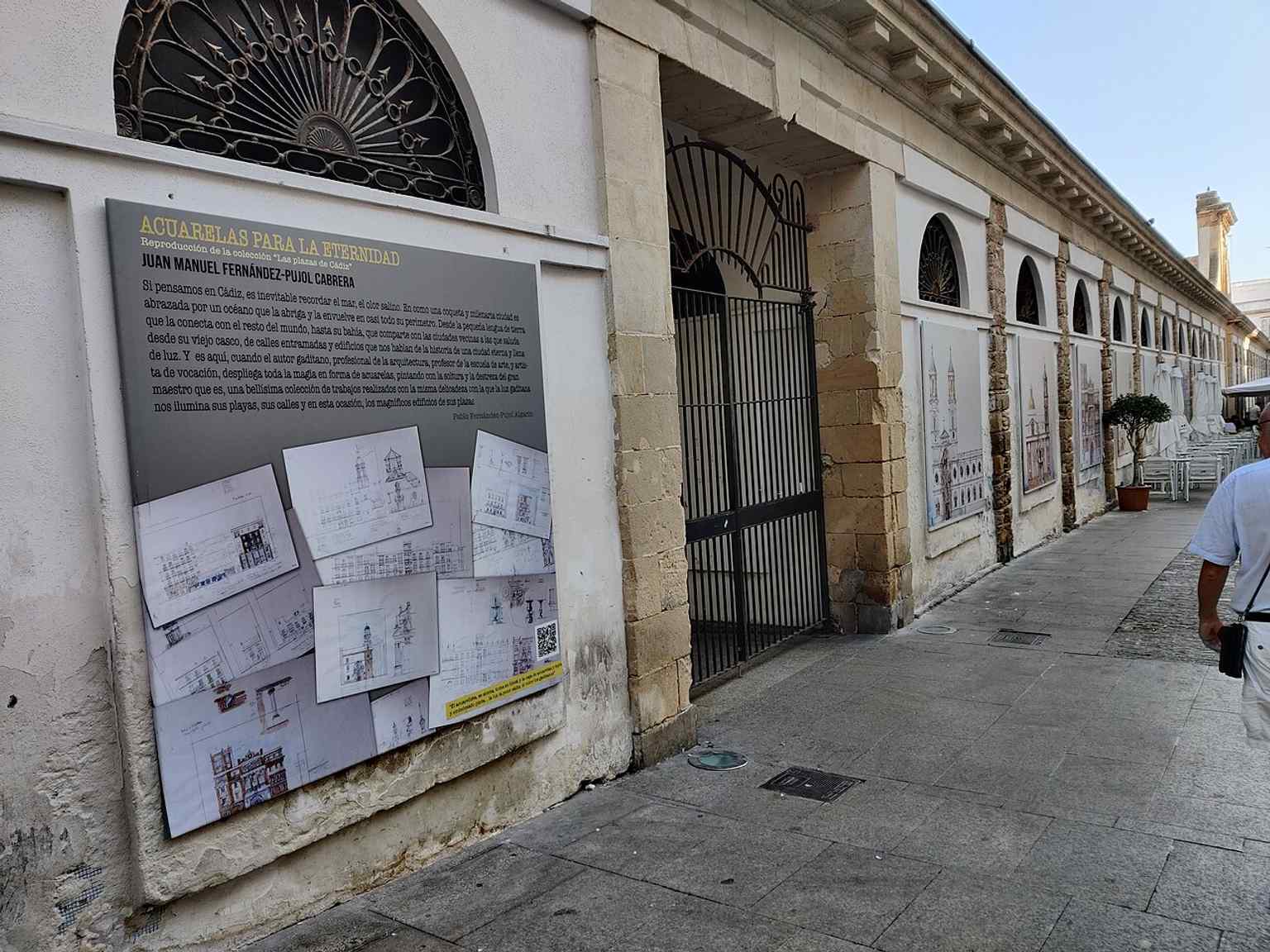
If you return later, it’s inexpensive and generally open daily, with evening hours on many nights. This market shows Cádiz turning everyday necessity into civic pride. When you’re ready, we can head on to Saint Lawrence.