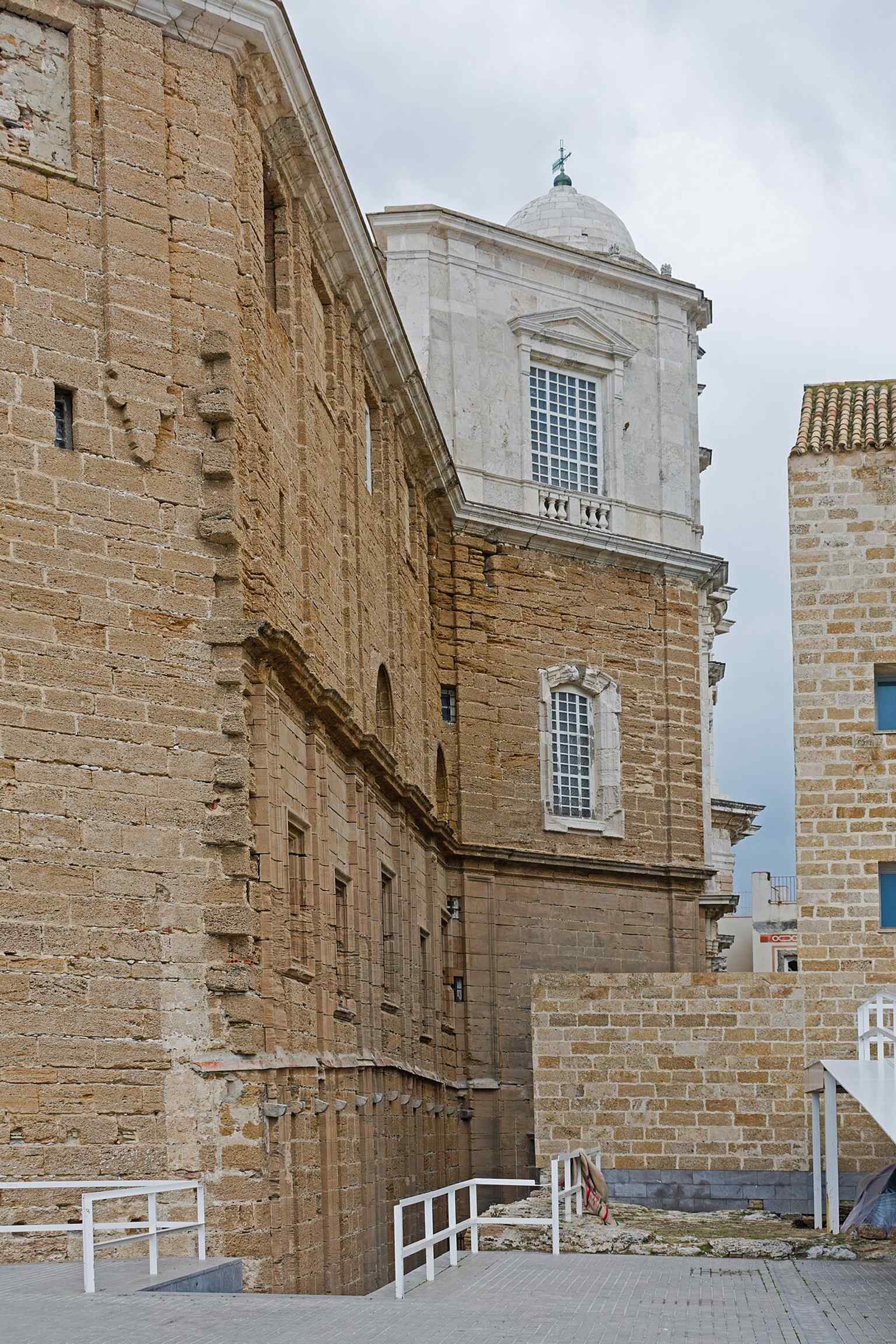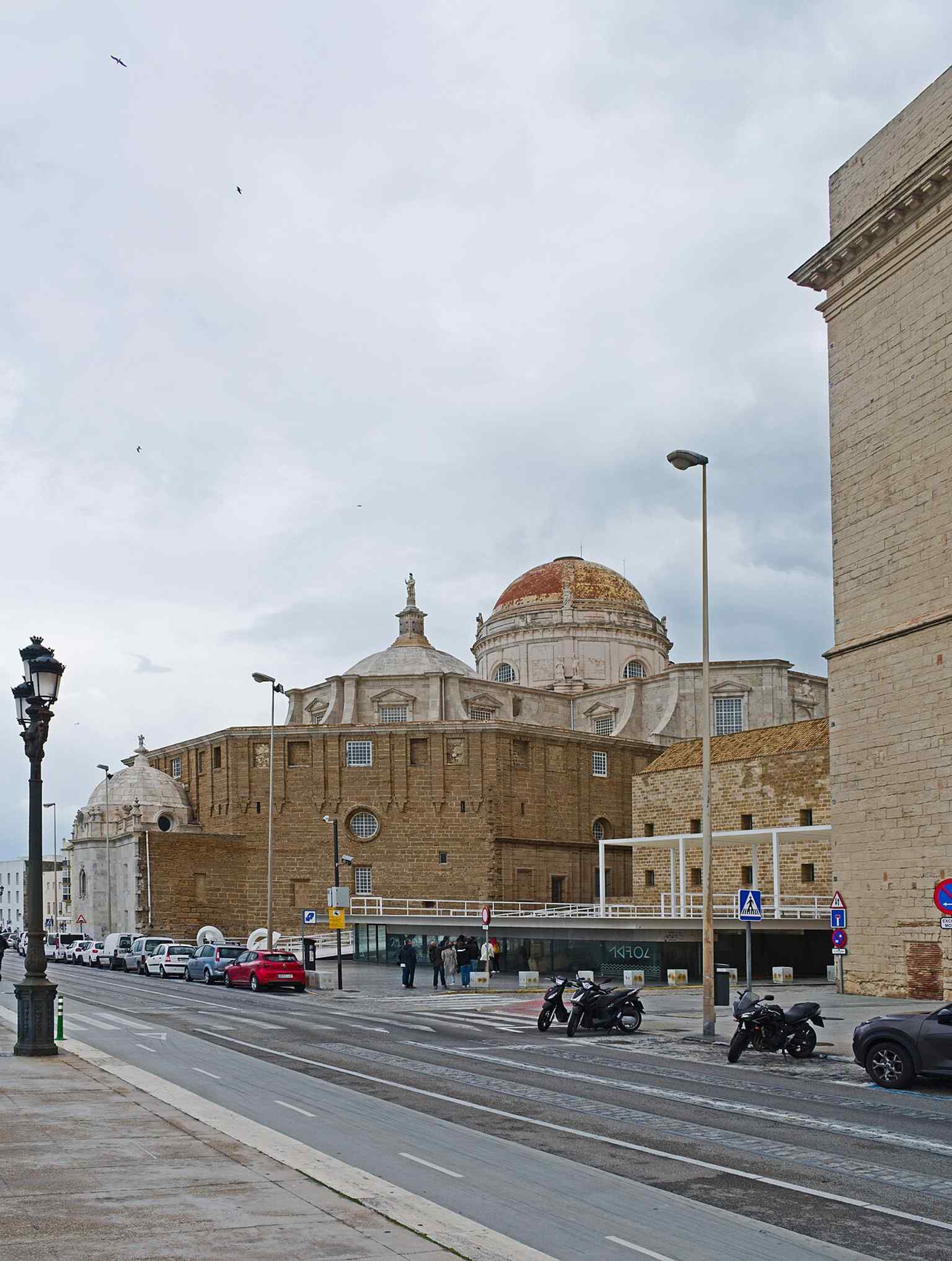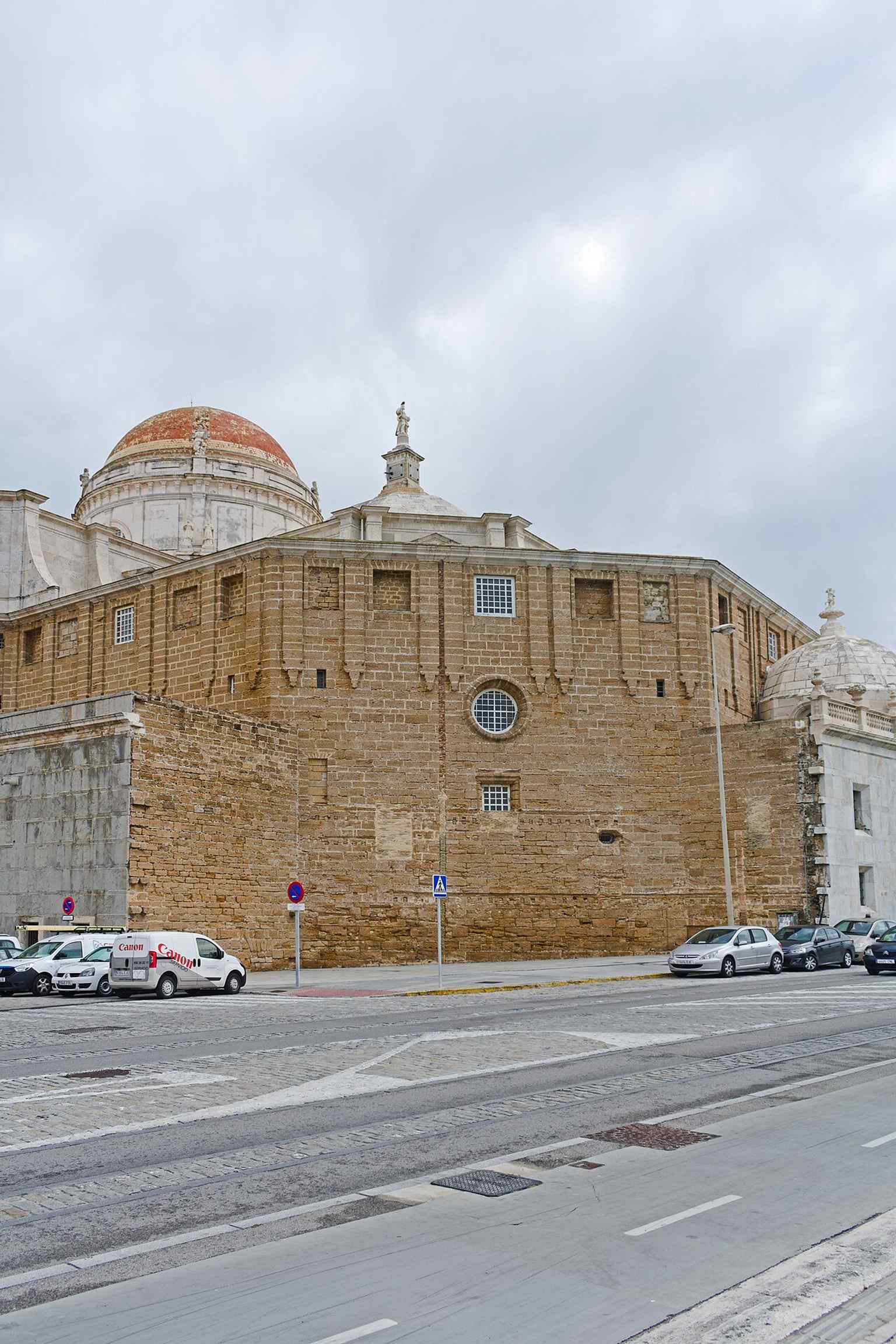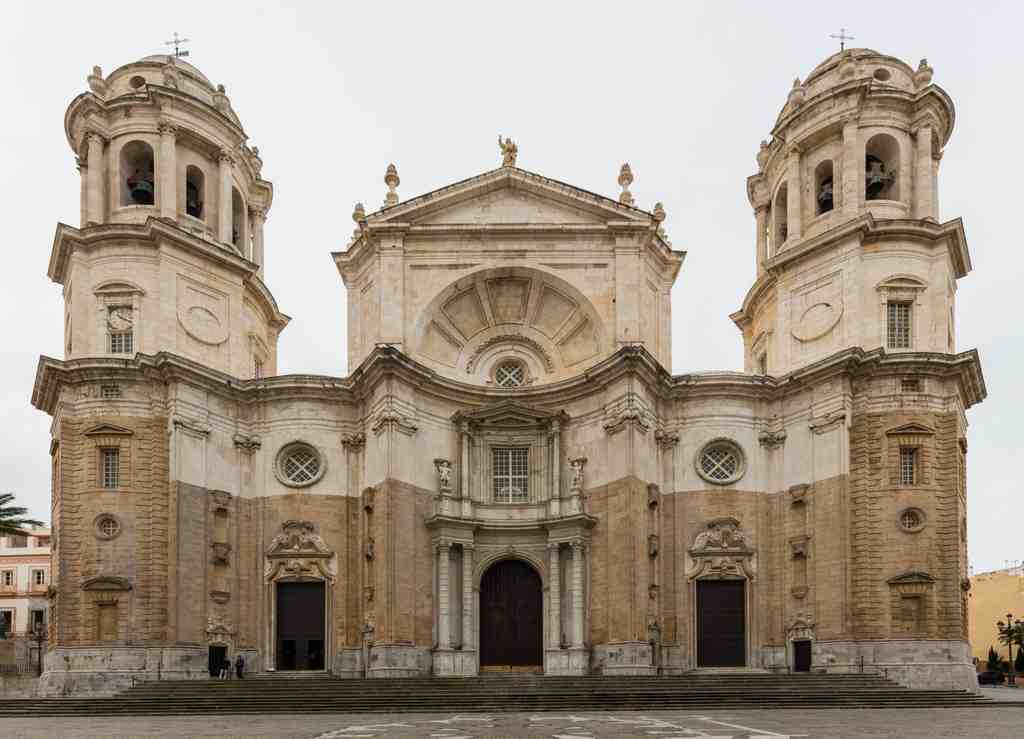
In front of you rises a pale stone cathedral with a broad curved façade, twin bell towers, and that unmistakable golden-tiled dome lifting above the roofline.
This is Cádiz Cathedral, formally the Holy and Apostolic Cathedral Church of Cádiz... though locals usually call it the New Cathedral, because Cádiz had already done the cathedral business once before. Apparently one was not enough.
The city began this one in seventeen twenty-two, after two things became impossible to ignore. First, the older cathedral had aged badly. Second, Cádiz had grown very rich and very important after the Casa de Contratación, the Spanish trade office for the Americas, moved here from Seville in seventeen seventeen. A city handling that much Atlantic business wanted a cathedral with proper swagger.
The trouble is, swagger costs money. A lot of money. And this project took one hundred and sixteen years. Vicente Acero drew the first plans, then left in seventeen thirty-nine. Gaspar Cayón took over, then Torcuato Cayón, then Miguel Olivares, then Manuel Machuca y Vargas, and finally Juan Daura carried it to completion in eighteen thirty-eight. So what you see in front of you is a long architectural relay race, and nobody handed over exactly the same baton.
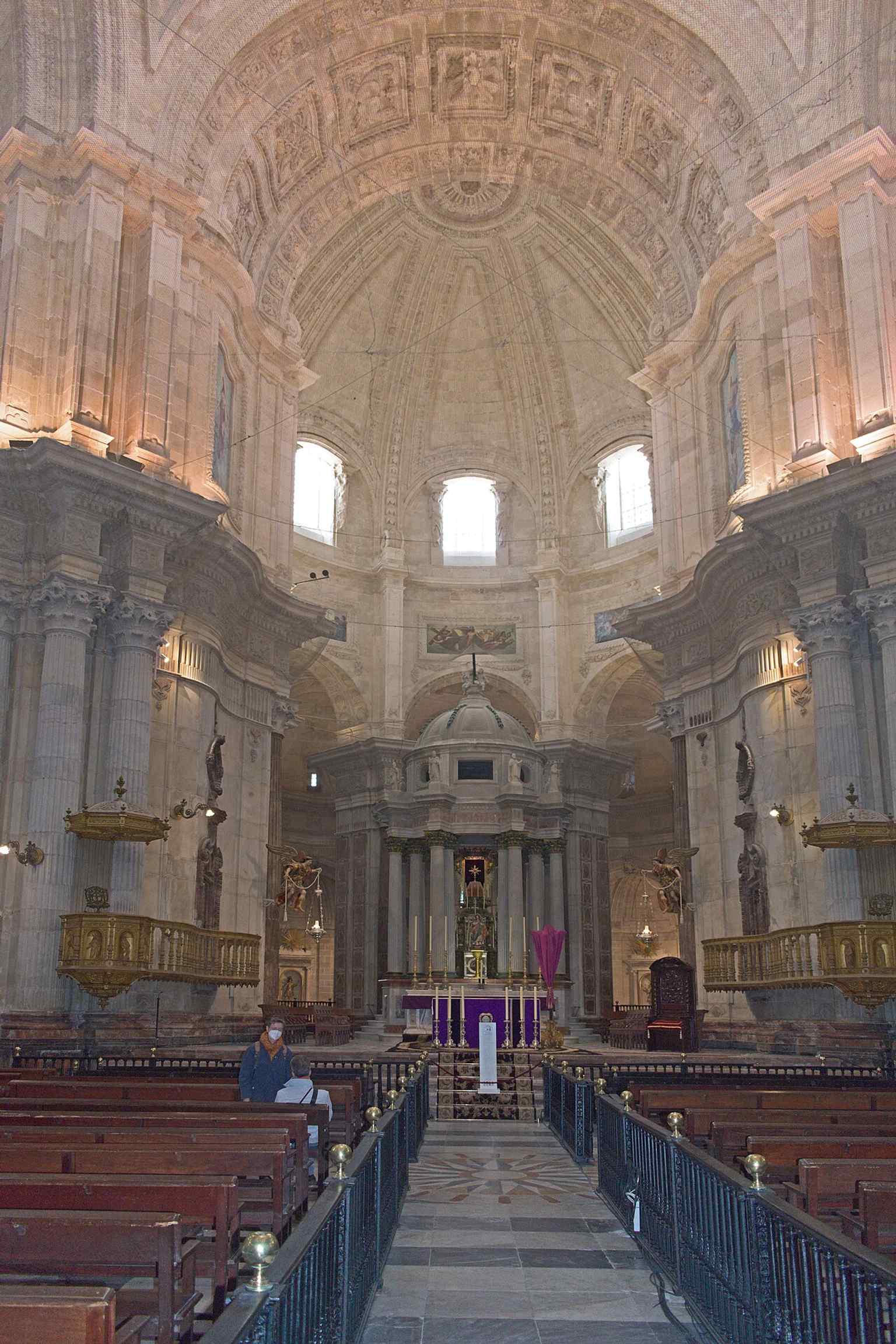
That explains the mixture of styles. The lower drama of the main façade belongs to the Baroque taste, full of movement with concave and convex curves... those inward and outward sweeps that make stone feel almost theatrical. Later phases brought Rococo touches and then a calmer Neoclassical order. If you glance at the image in the app, you can see that blend clearly in the full front view. It is not confusion, exactly; it is a century of changing fashion, economic strain, French invasion, and Spain losing power in the Americas, all written into one building.
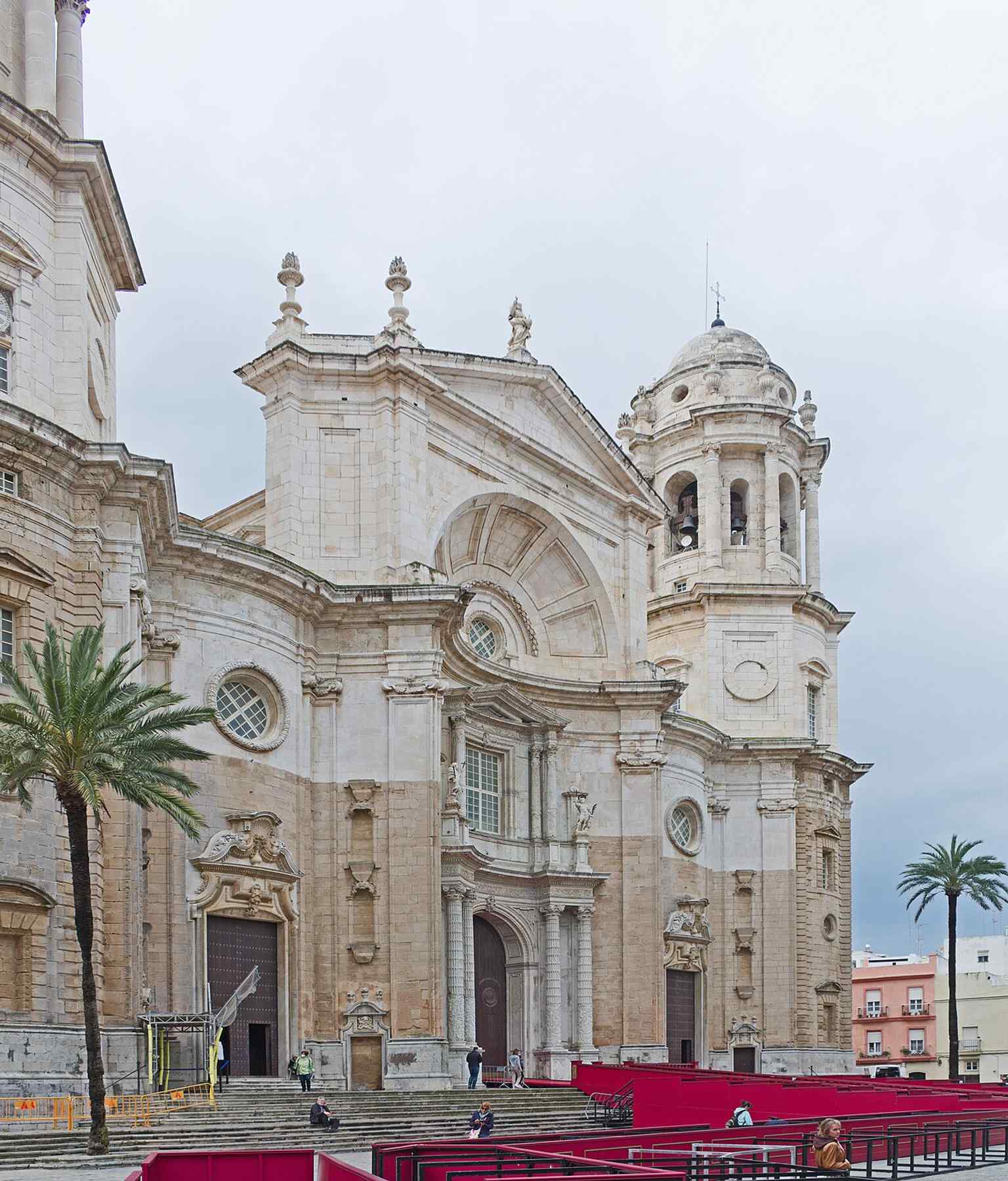
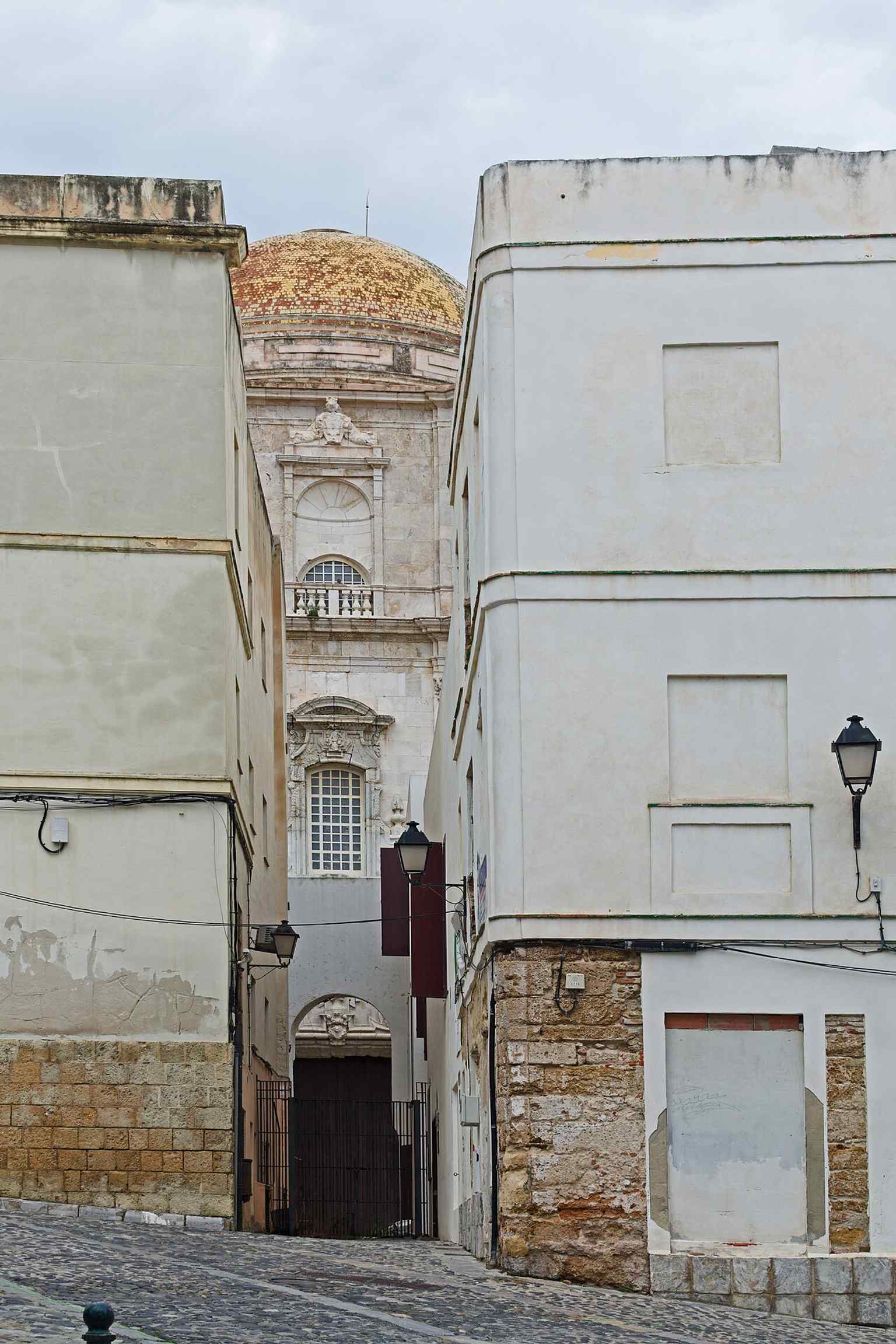
And then there is the dome. Cádiz loves that dome. It sits over the crossing, the point where the long main body of the church meets the shorter arms, and outside it is covered in golden tiles that catch the eye from all over the city. The cathedral stands so close to the sea that people called it Santa Cruz sobre el Mar, Holy Cross over the Sea, or sometimes over the Waters. From the waterfront, it looks almost like it rose out of trade, salt, and sunlight itself.
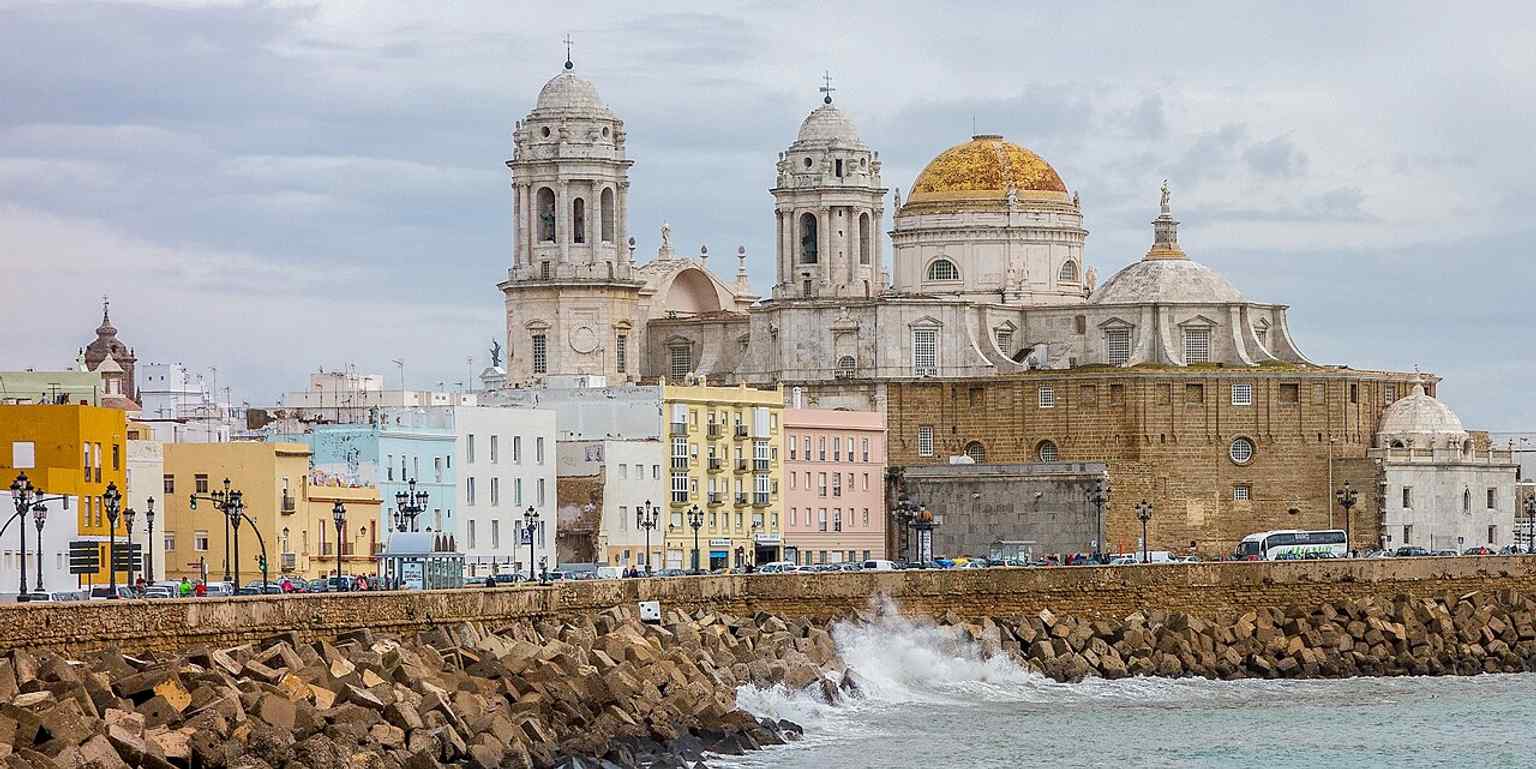
Look up at the towers too. They climb to around fifty-four meters from the ground, unusually tall for the time. The Bourbon rulers generally disliked bell towers that high because enemies could use them as easy targets. Cádiz, being Cádiz, went ahead anyway. The clock tower finished in the eighteen forties, and the clock itself arrived in eighteen fifty-one.
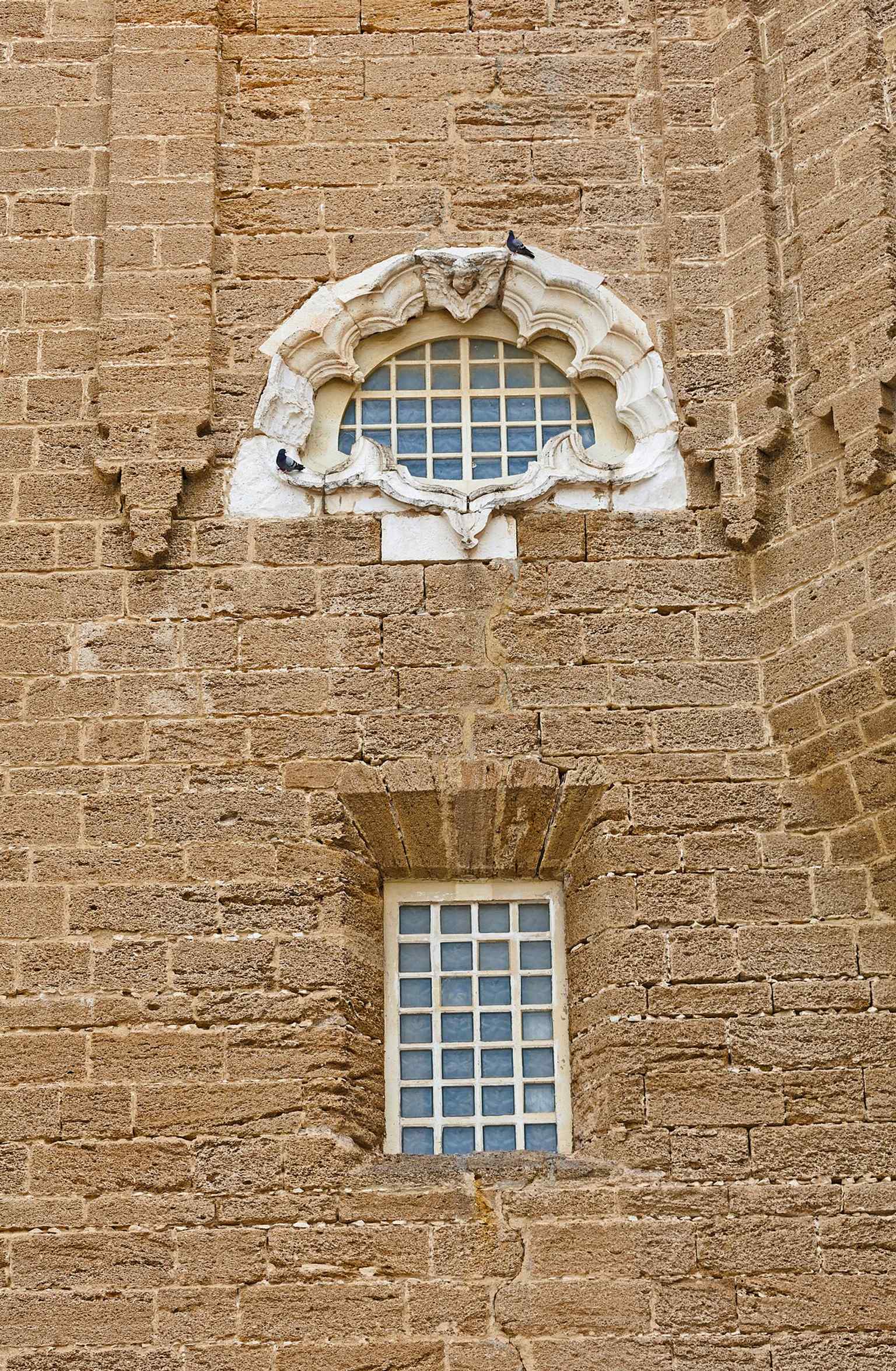
There is one more wrinkle. Sea air and long delays damaged the stone, especially the exterior oyster stone and limestone, so the cathedral has needed long restoration campaigns. Even grandeur, it turns out, needs maintenance.
This cathedral is Cádiz in one building: ambitious, maritime, elegant, and slightly stubborn.
Take one last look at that golden dome, and when you're ready, we can wander on to Santa Cruz, the older cathedral just nearby.