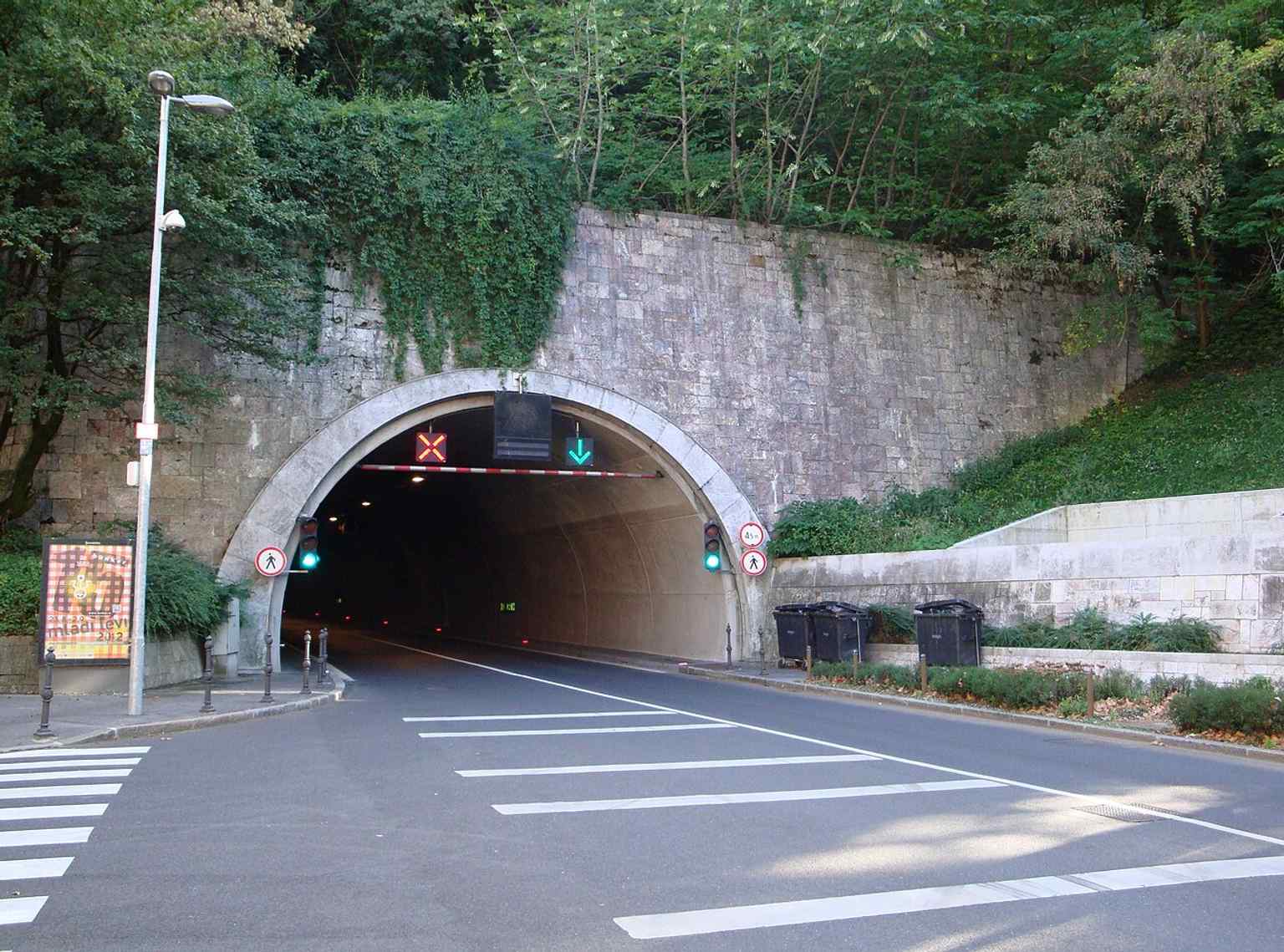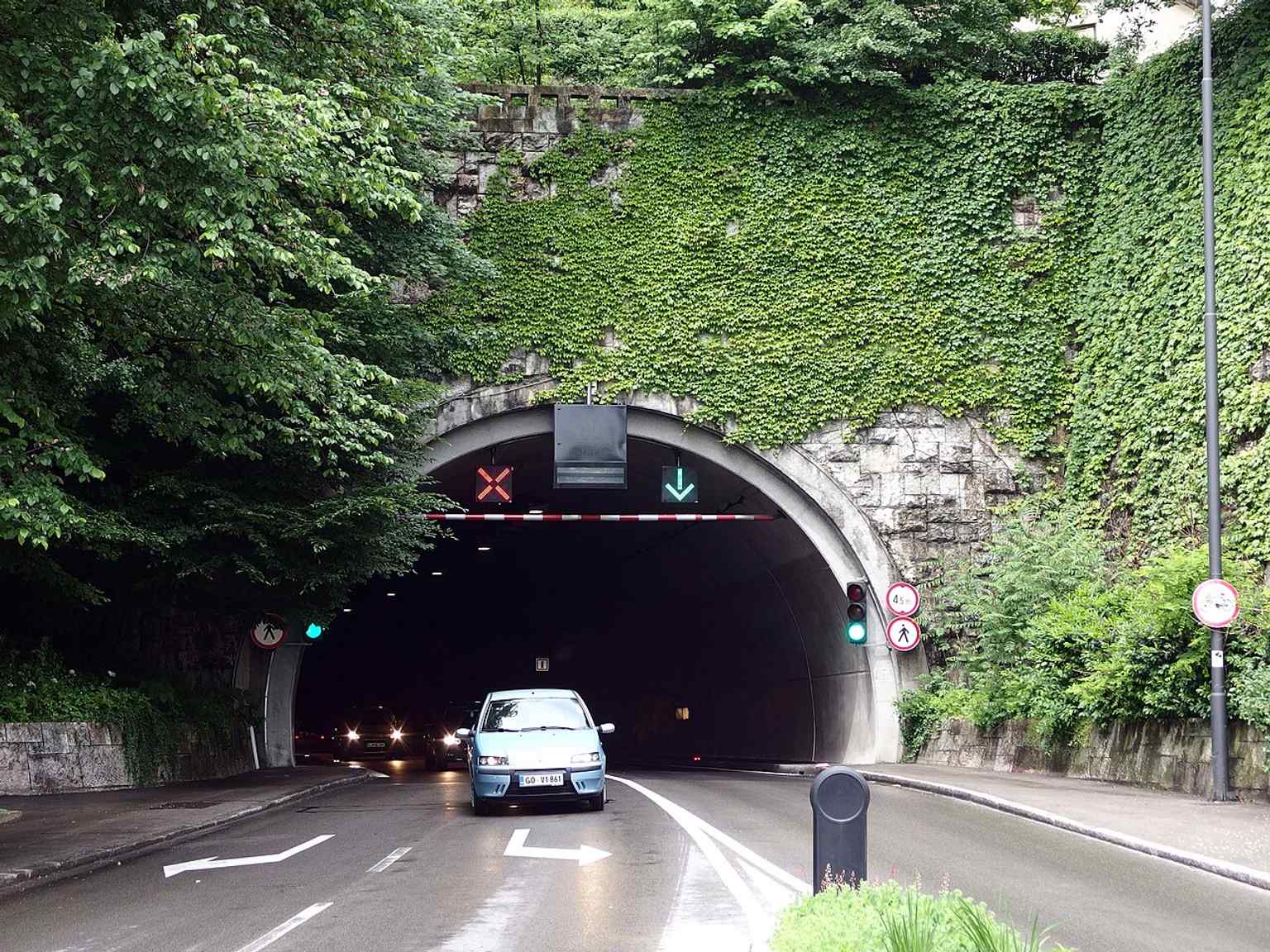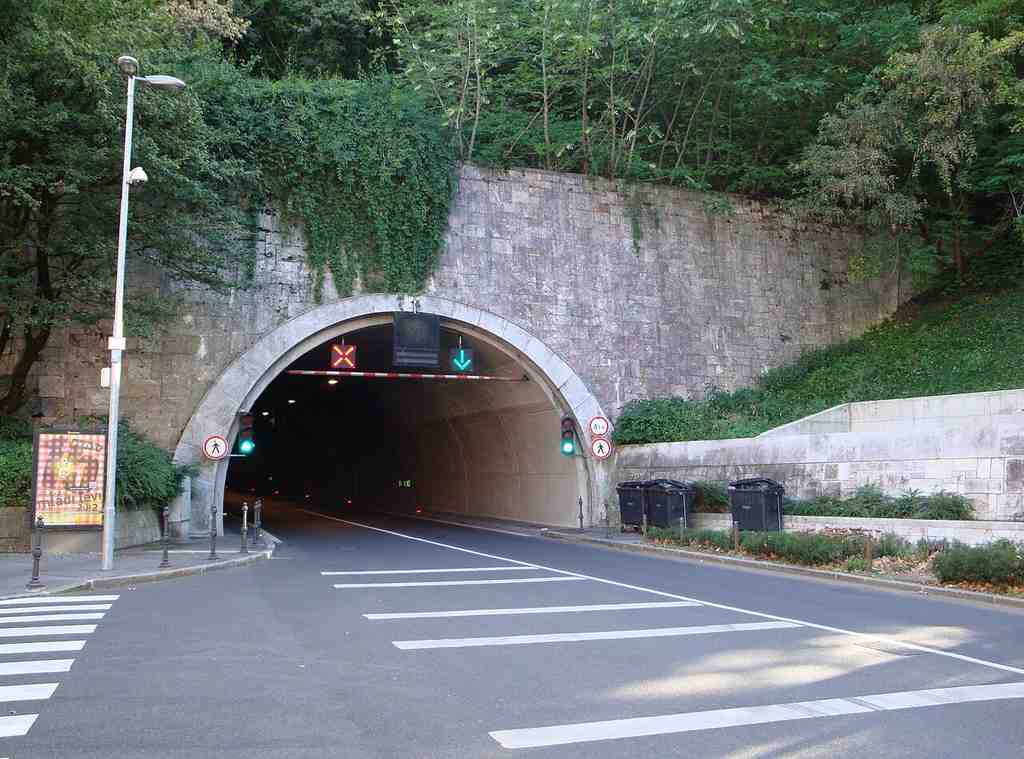
You are looking at a massive, semi-circular tunnel arch framed by a sturdy retaining wall of rough-hewn, light-grey stone blocks set directly into the hillside.
This is the Tunnel under the City, spanning 487 meters through Castle Hill, and it is a perfect example of how urban progress rarely comes without a heavy price. The story of this passageway begins just before World War Two, when city planners decided to cut a shortcut through the mountain. They started digging, but only made it about eleven meters deep before the war forced them to stop.
As bombs began to fall on Ljubljana, those eleven meters of unfinished rock suddenly gained a new purpose. The tiny cave became a vital air-raid shelter, protecting the lives of locals who huddled inside.
When the war ended, builders decided to start fresh from the opposite side of the hill. But bringing this vision to life meant destroying a piece of the city's heritage. To make room for the massive northern entrance, authorities demolished the Institute of Saint Martha, an old historic building that had long served as a home for maidservants. The decision sparked a bitter public debate. If you had to sacrifice a historic building to modernize a city, would you make that call?
The builders did, but the mountain did not surrender easily. As engineers drilled deeper, they encountered a geological nightmare. The hill was plagued by what geologists call clay smear, which is essentially slick layers of wet clay sandwiched between rock, acting like a slip-and-slide for the mountain's foundations. The drilling caused violent vibrations to ripple up to Ljubljana Castle right above them. The castle's stone walls began to crack, and a massive water cistern ruptured completely, sending water flooding out.
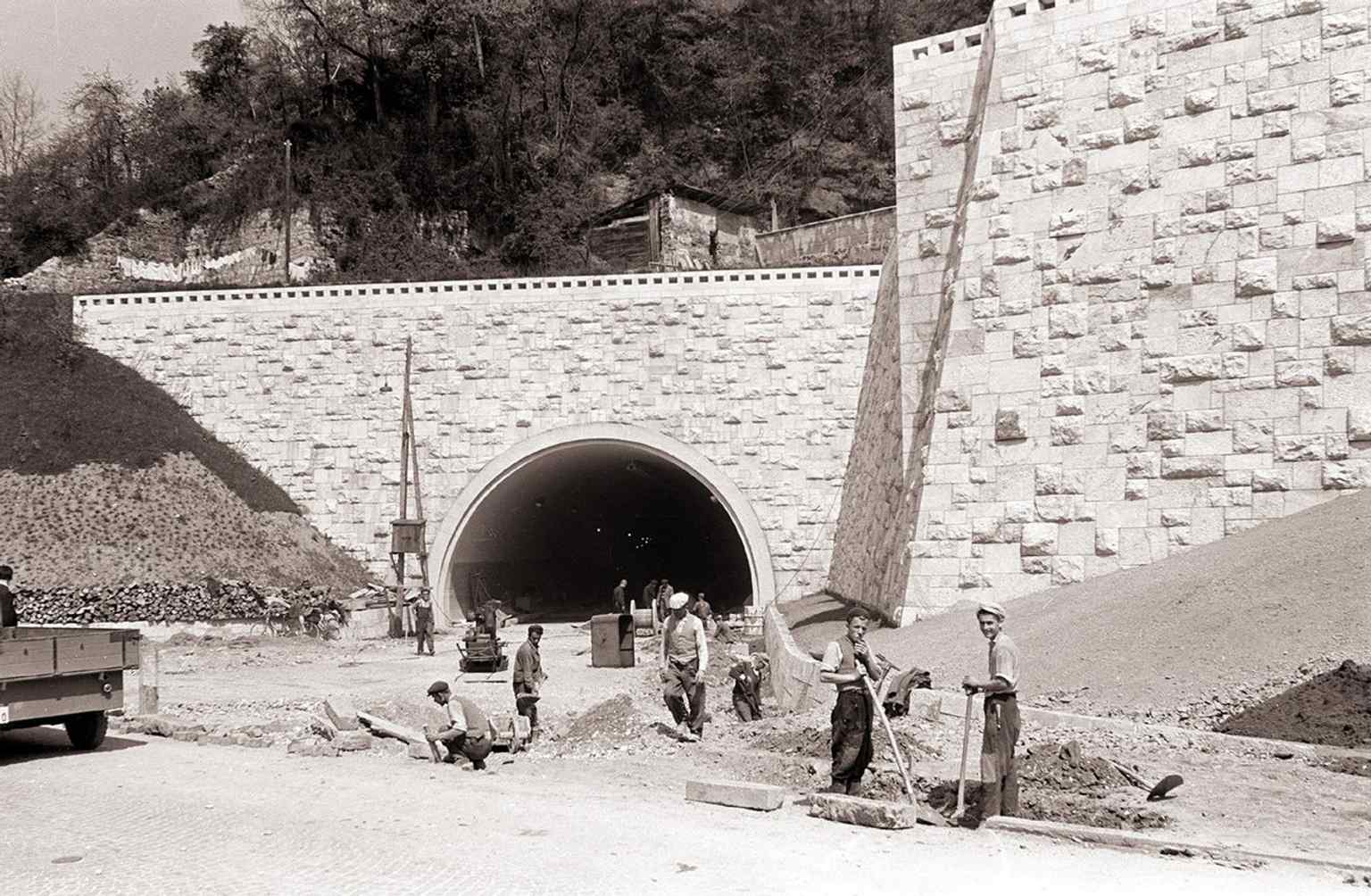
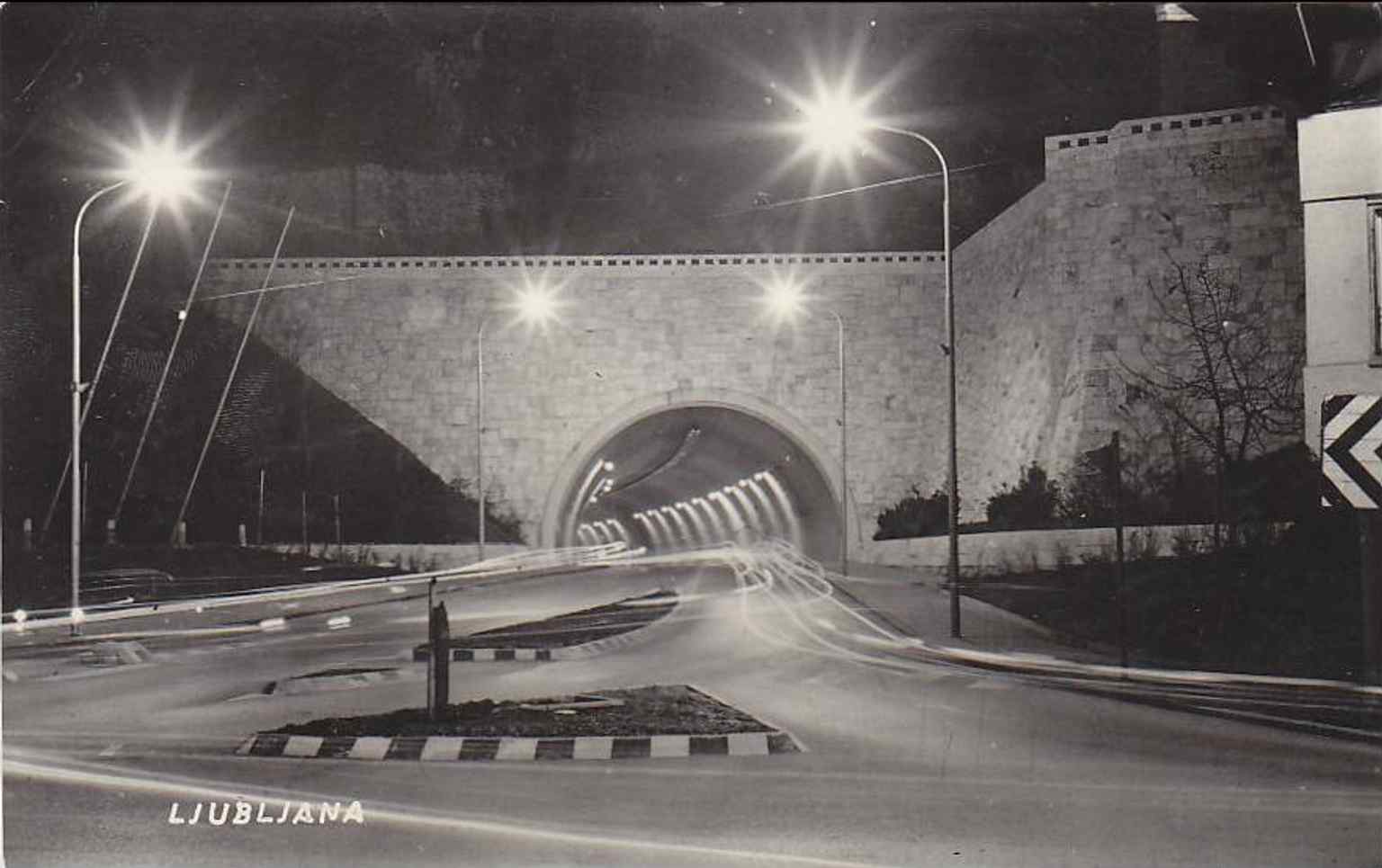
Despite the destruction, the tunnel finally opened in 1959. A grand ribbon-cutting ceremony unleashed a giant convoy of cars and motorcycles. City planners proudly declared that this modern marvel would solve Ljubljana's traffic problems for all time. As you can probably guess, it is now one of the city's most congested bottlenecks. Feel free to check out the before and after image in your app to see how this imposing portal has stood the test of time.
The tunnel's structure, however, had its own hidden flaws. Decades later, ceramic tiles began peeling off the walls and crashing onto the road. Inspectors closed it down in 2009 for a massive 5.7 million euro renovation, and what they found inside was terrifying. At one point, the interior concrete wall had separated from the main supporting structure by a full five centimeters, meaning a massive collapse was narrowly avoided. Take a look at your screen to see the interior just before this desperate structural rescue.
Oh, and there is one last secret hidden in the dark. Deep inside, a vertical shaft runs straight up from the tunnel ceiling to the bottom of the old castle well. Officials claim it was just for running electrical wires, but locals have always whispered that it was built as a secret escape route for city elites.
Let us emerge from the shadow of the hill and head toward our final stop. It is about a thirteen-minute walk from here to the Slovenian Academy of Sciences and Arts.