AudaTours logoAudaTours

Stop 15 of 18

Ljubljana Castle

headphones 02:47 Buy tour to unlock all 20 tracks
Ljubljana Castle
Ljubljana Castle
Ljubljana CastlePhoto: LjGrad, Wikimedia Commons, CC BY-SA 4.0. Cropped & resized.

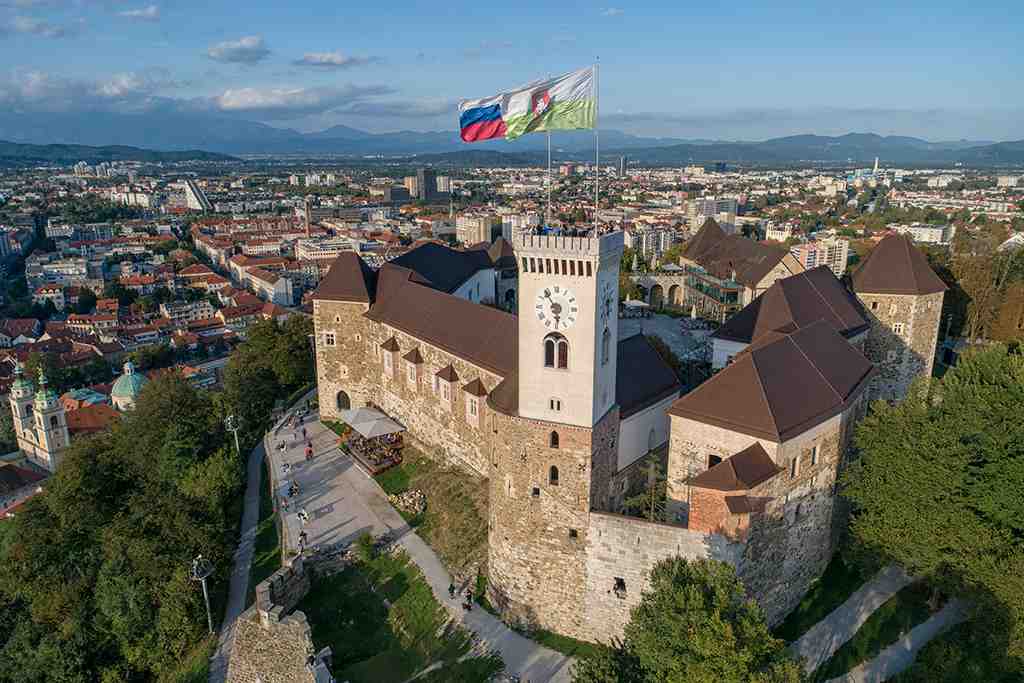
Up on your right, you will see a sprawling complex of rough stone walls and dark pitched roofs, anchored by a tall, white square clock tower rising above the fortifications. People have been climbing this exact hill for over four thousand years. Long before the stone walls you see today, Bronze Age tribes stood right here, looking out over the basin. Eventually, the Romans arrived and built a watchtower to protect their ancient settlement, Emona. This hill has always been a place of survival and ambition, a strategic pivot point holding fast no matter which empire claimed it.

But the most enduring story of this hill goes back even further, straight into myth. According to legend, the Greek hero Jason and his Argonauts sought refuge in the nearby marshes. They were hoping for a safe harbor to ride out a harsh winter. Instead, they heard a bone-chilling shriek. A giant, flying beast rose from the swamp waters, spitting fire and noxious fumes, destroying half their makeshift village. As the story goes, Jason heroically slew the monster, supposedly choking it with its own flames.

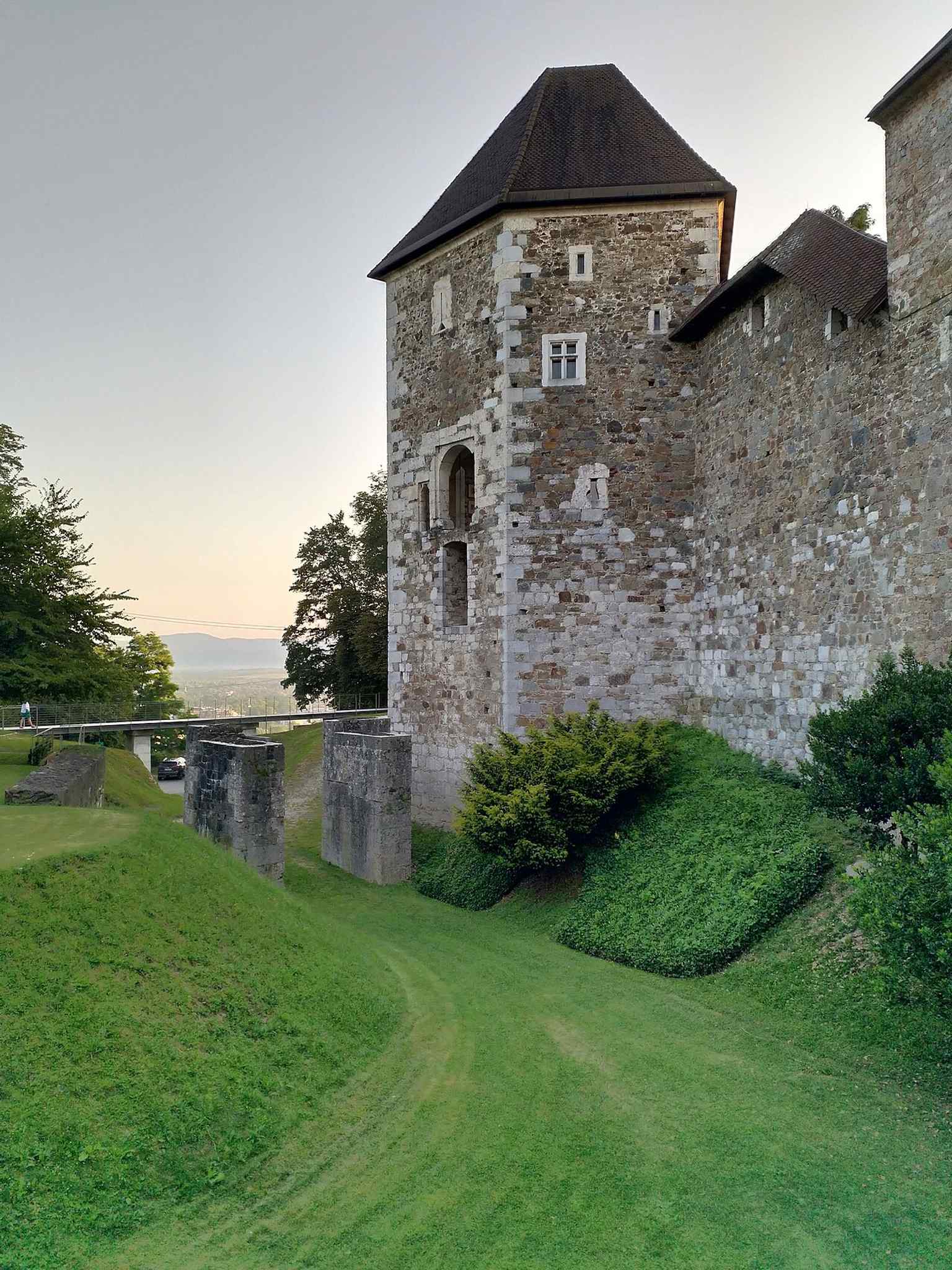
Over the centuries, that terrifying swamp monster underwent quite a rebrand, becoming the very dragon that guards the town today. Take a glance at your screen to see a detail of the entrance bridge, where a sculpture of this legendary beast sits proudly.

The castle's entrance bridge, restored to its medieval appearance, features a sculpture of the legendary dragon, a symbol of Ljubljana that evolved from a terrifying monster to a guardian.
The castle's entrance bridge, restored to its medieval appearance, features a sculpture of the legendary dragon, a symbol of Ljubljana that evolved from a terrifying monster to a guardian.Photo: Robert Jahoda, Wikimedia Commons, CC BY-SA 4.0. Cropped & resized.

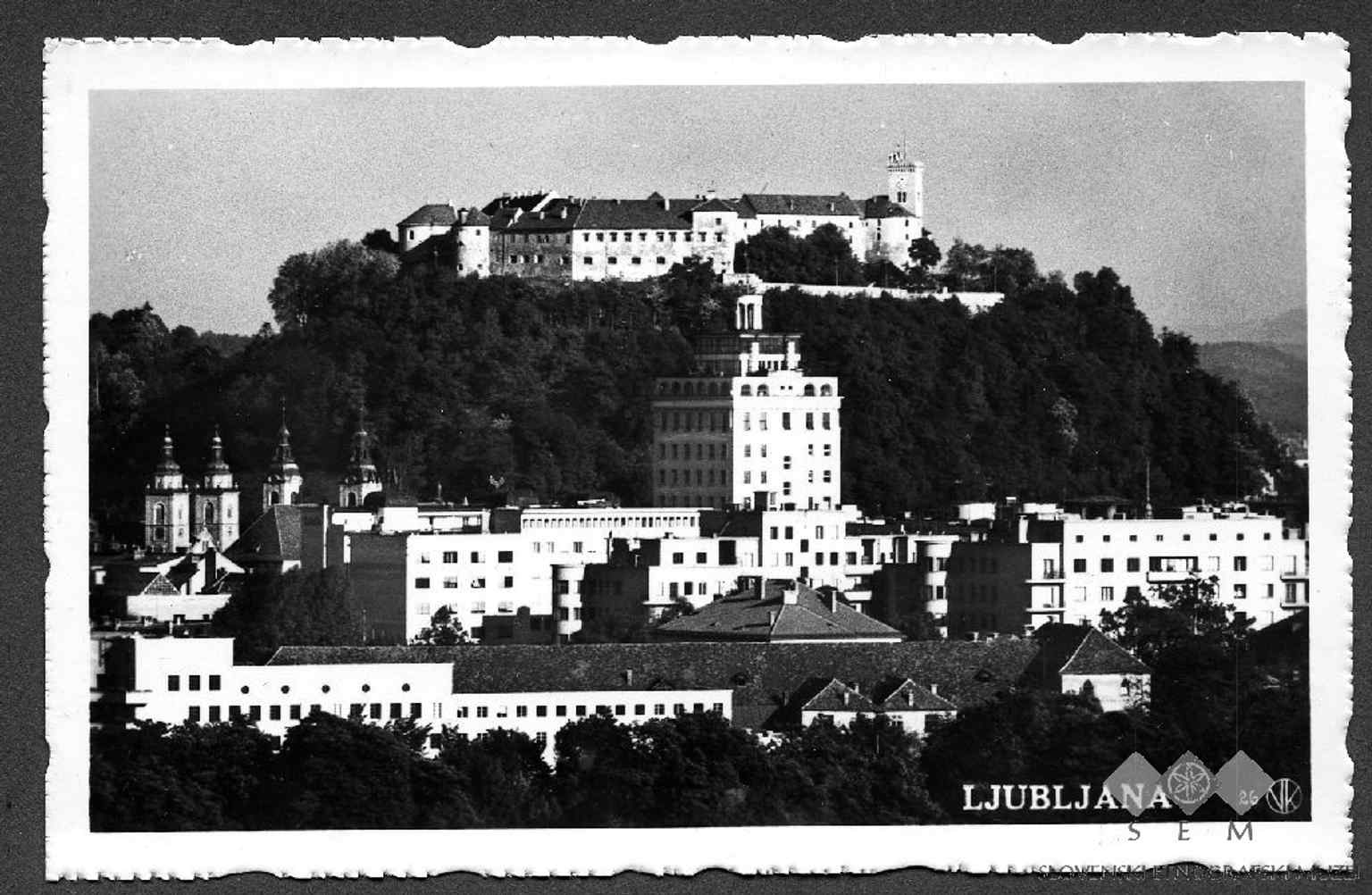
This fortress has survived everything from medieval sieges to a near-demolition in the late eighteenth century. At the time, penny-pinching administrators in Vienna viewed the crumbling fortress as a useless financial drain and proposed dismantling it to sell the stones as scrap. Fortunately, regional leaders fiercely opposed the plan, arguing it was a vital historical monument. They saved the castle, allowing it to endure into the modern era. Rising proudly above the capital for centuries, the imposing silhouette of Ljubljana Castle remains largely unchanged, though the hill's once-sparse slopes have grown into a lush, forested canopy over the decades, as you can see by checking the comparison image on your screen.

Through disaster, ambitious artistic renovations, and the heavy passage of time, the castle remains the undeniable focal point of the capital. If you want to explore the inner courtyards or the panoramic tower, the complex is open every day from nine in the morning until seven in the evening.

For now, let us head toward the subterranean paths beneath the castle, as we transition down to our next destination, the Tunnel under the city.

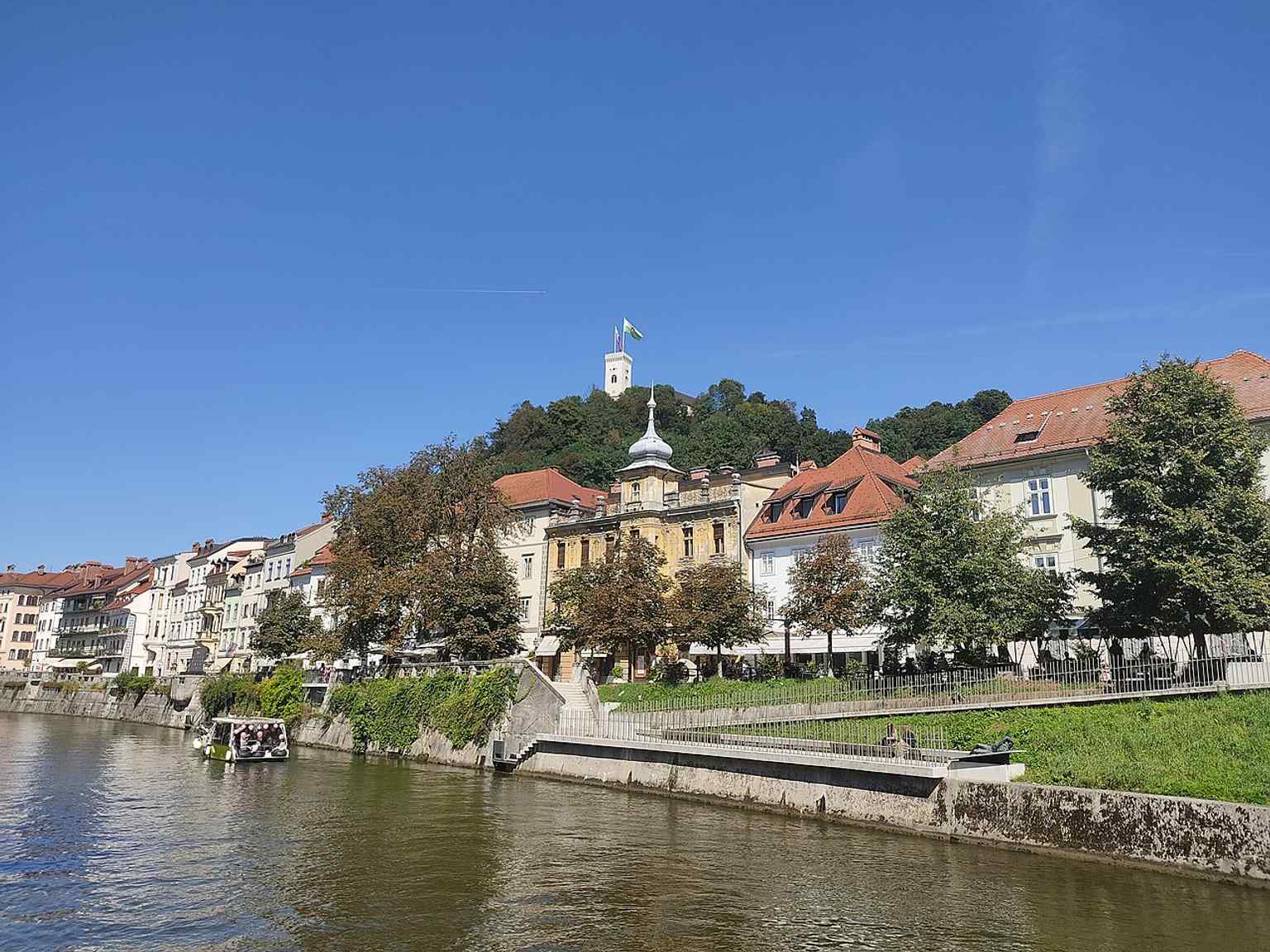
A commanding view of Ljubljana Castle, a landmark that acquired its present outline through an almost complete overhaul in the 15th century and serves as the capital's key cultural venue today.
A commanding view of Ljubljana Castle, a landmark that acquired its present outline through an almost complete overhaul in the 15th century and serves as the capital's key cultural venue today.Photo: Jakub Hałun, Wikimedia Commons, CC BY 4.0. Cropped & resized.
This 1933 postcard shows Ljubljana Castle before its extensive modern renovations, offering a glimpse into its appearance when poor families still resided within its walls as envisioned by Mayor Ivan Hribar.
This 1933 postcard shows Ljubljana Castle before its extensive modern renovations, offering a glimpse into its appearance when poor families still resided within its walls as envisioned by Mayor Ivan Hribar.Photo: Vekoslav Kramarič, Wikimedia Commons, Public domain. Cropped & resized.
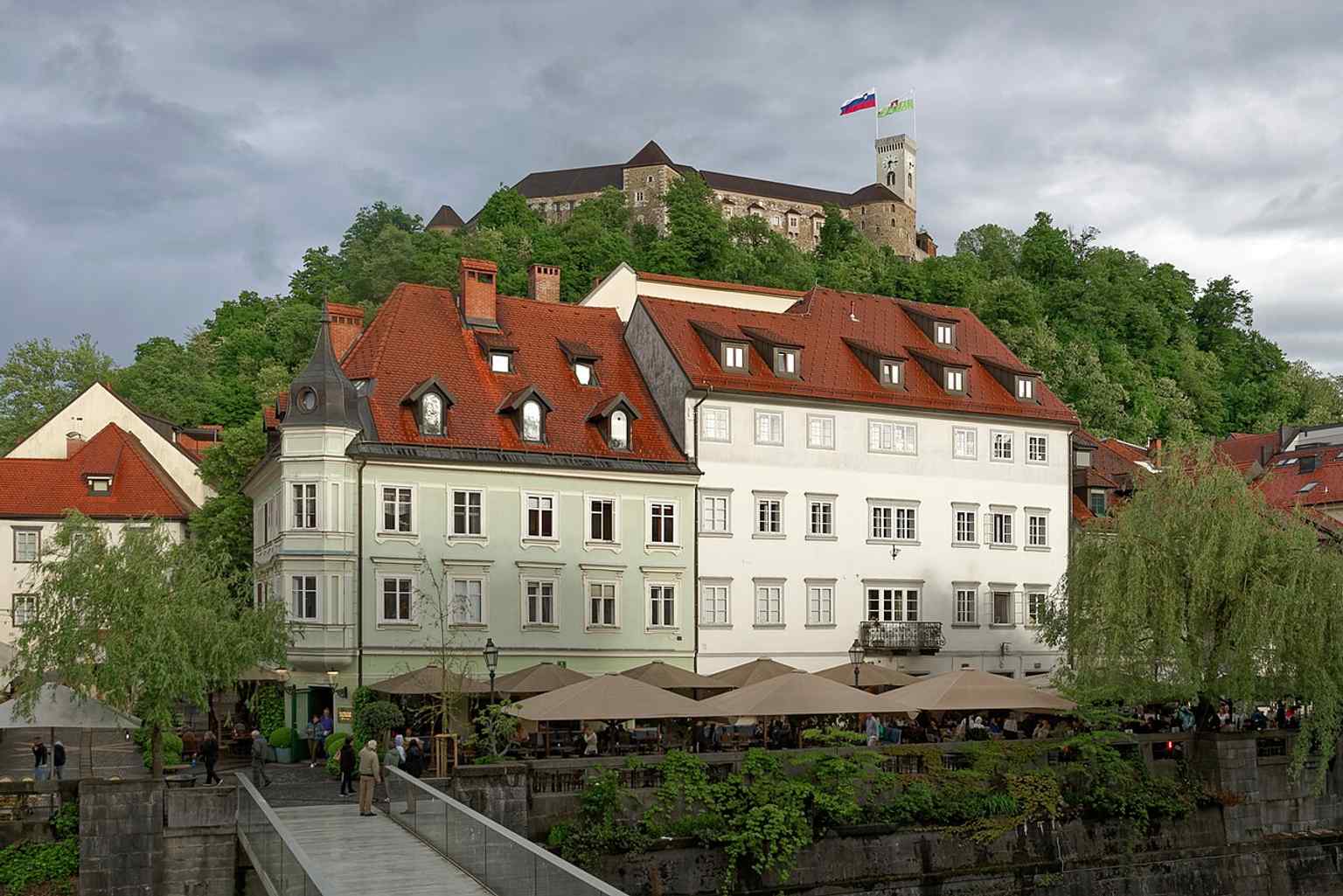
Ljubljana Castle sits atop Castle Hill, a site continuously settled for over 4,000 years, from the Bronze Age to a Roman army stronghold and the first wooden fortifications.
Ljubljana Castle sits atop Castle Hill, a site continuously settled for over 4,000 years, from the Bronze Age to a Roman army stronghold and the first wooden fortifications.Photo: Viktar Palstsiuk, Wikimedia Commons, CC BY-SA 4.0. Cropped & resized.
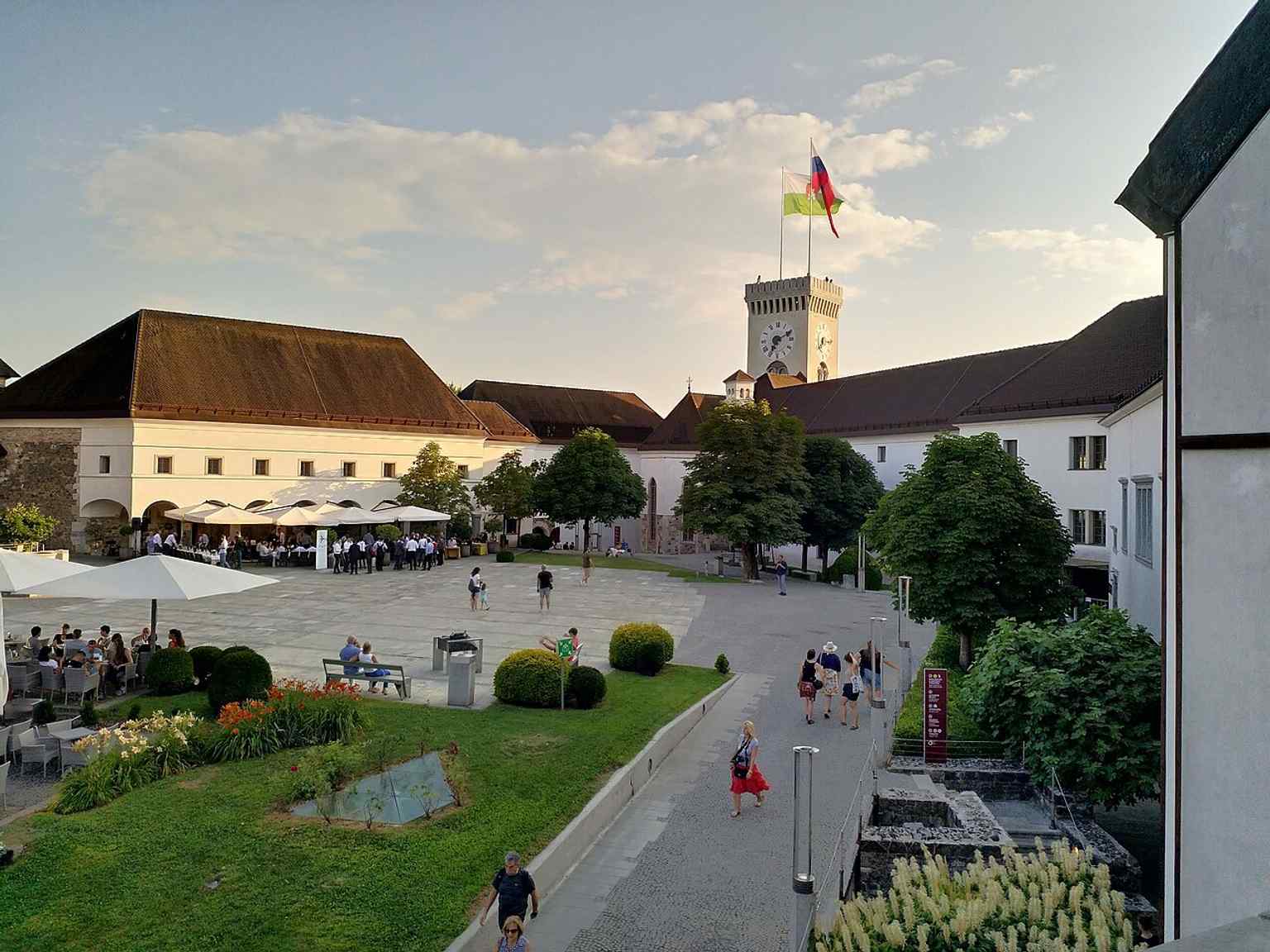
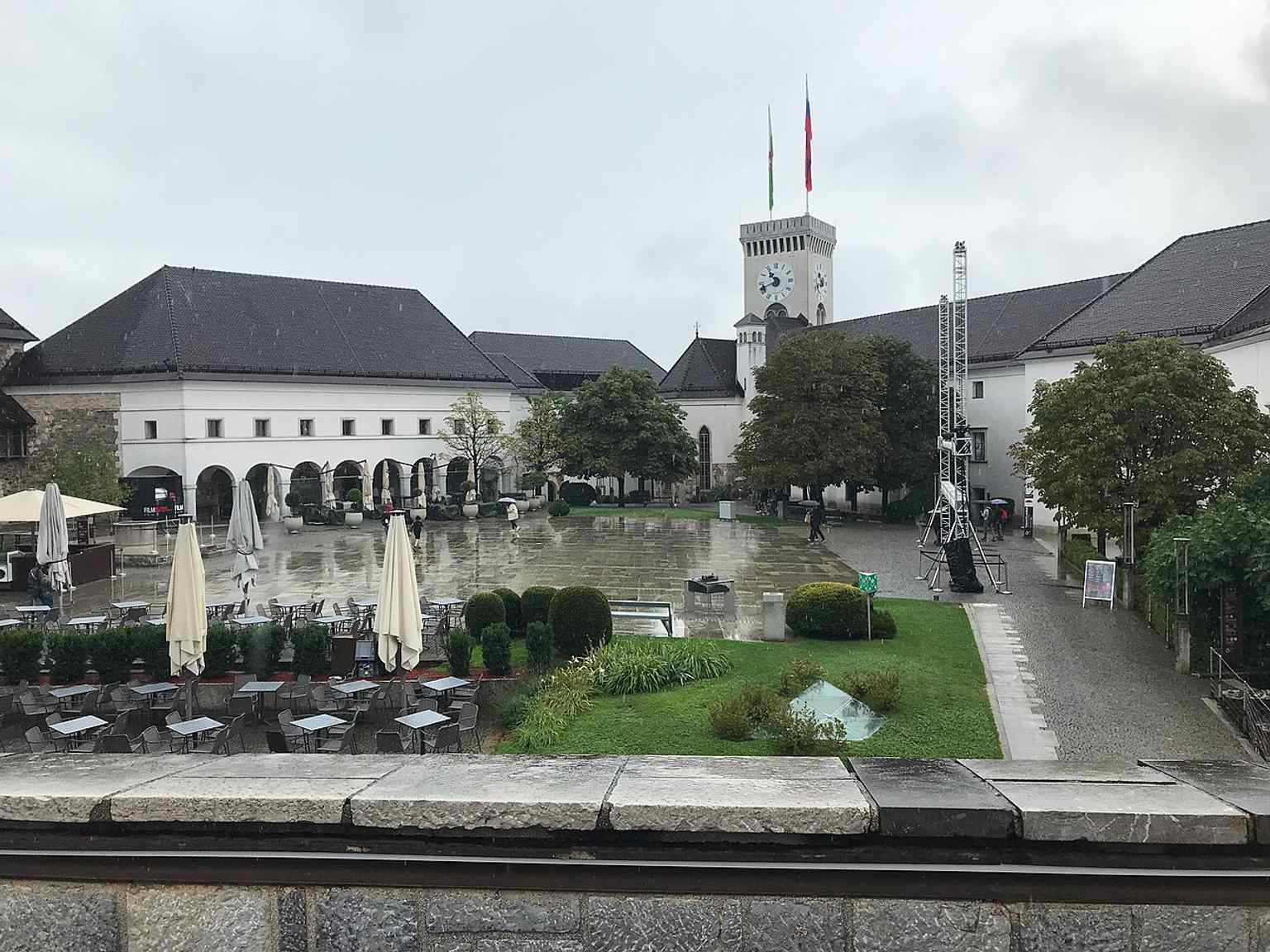
The castle's inner courtyard, a dynamic meeting point that once gathered armies and later served as a walking space for famous prisoners like Silvio Pellico and Ivan Cankar.
The castle's inner courtyard, a dynamic meeting point that once gathered armies and later served as a walking space for famous prisoners like Silvio Pellico and Ivan Cankar.Photo: Robert Jahoda, Wikimedia Commons, CC BY-SA 4.0. Cropped & resized.
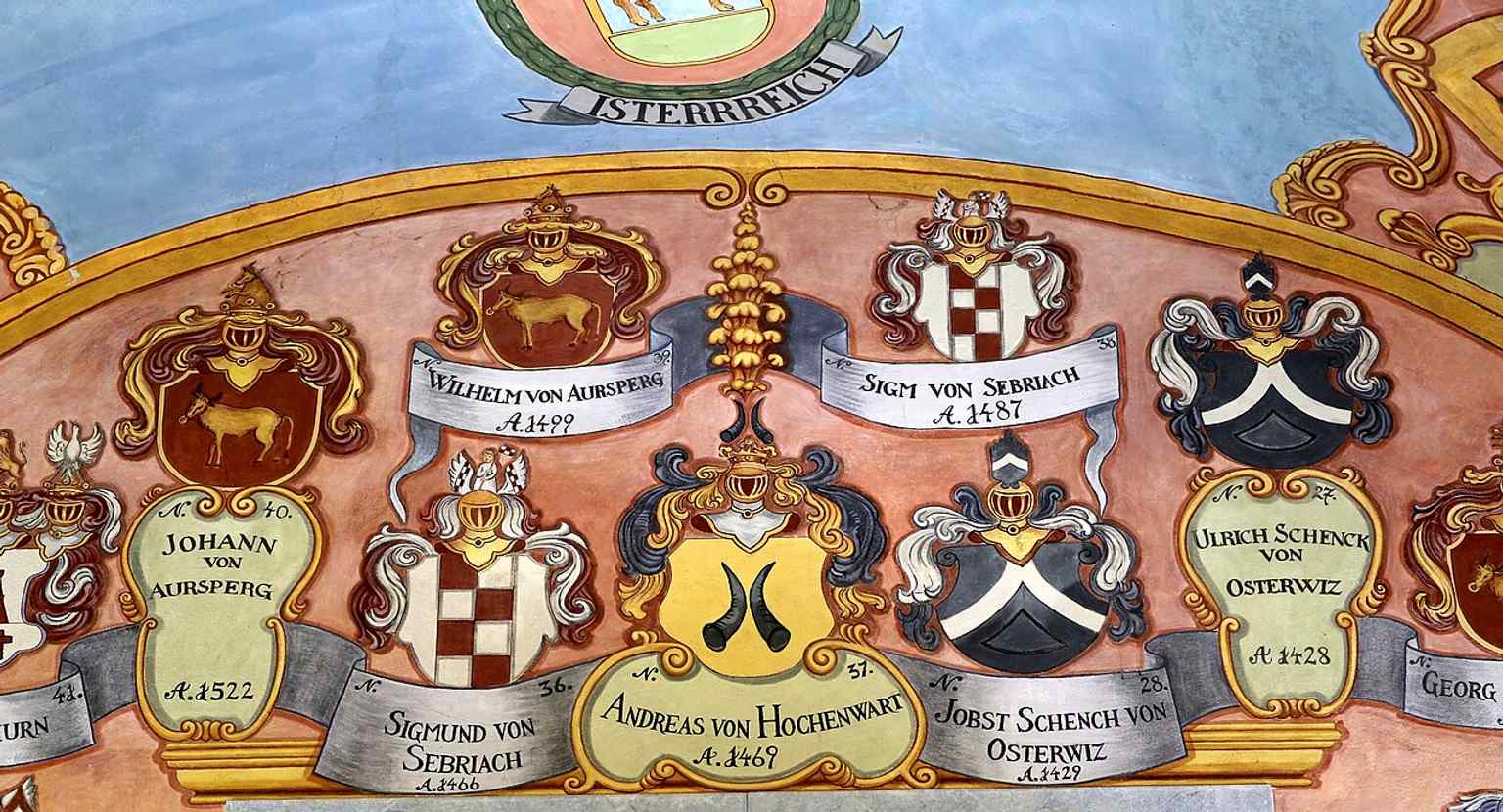
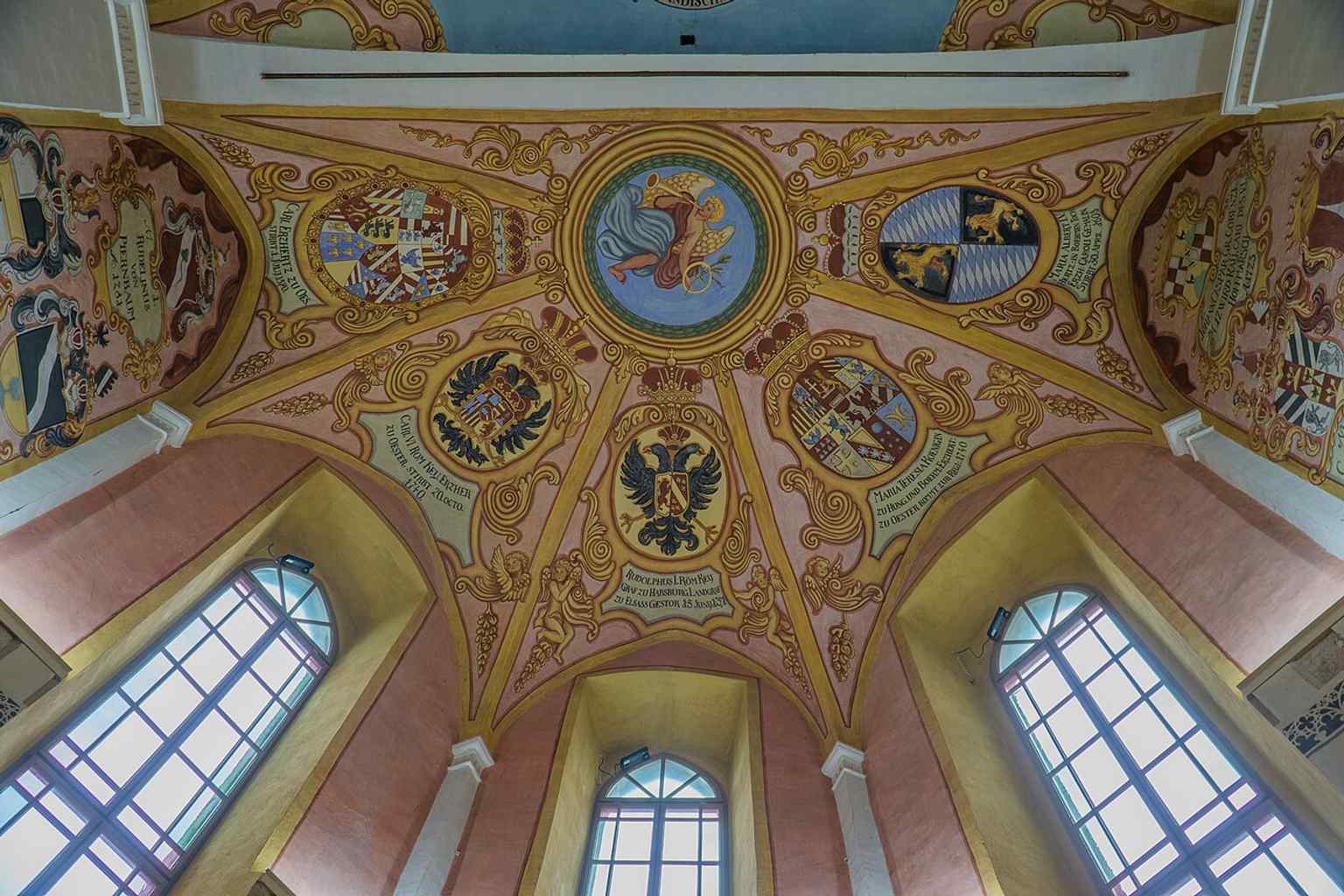
This intricate Baroque ceiling in St. George's Chapel, restored in 1747, features the coats-of-arms of provincial governors, reflecting the castle's administrative significance.
This intricate Baroque ceiling in St. George's Chapel, restored in 1747, features the coats-of-arms of provincial governors, reflecting the castle's administrative significance.Photo: Thaler Tamas, Wikimedia Commons, CC BY-SA 4.0. Cropped & resized.
The exterior of the Castle Chapel of St. George, consecrated in 1489, is connected to a local legend crediting Saint George with defeating the dragon, a Christianized version of the city's ancient myth.
The exterior of the Castle Chapel of St. George, consecrated in 1489, is connected to a local legend crediting Saint George with defeating the dragon, a Christianized version of the city's ancient myth.Photo: Sumitsurai, Wikimedia Commons, CC BY-SA 4.0. Cropped & resized.
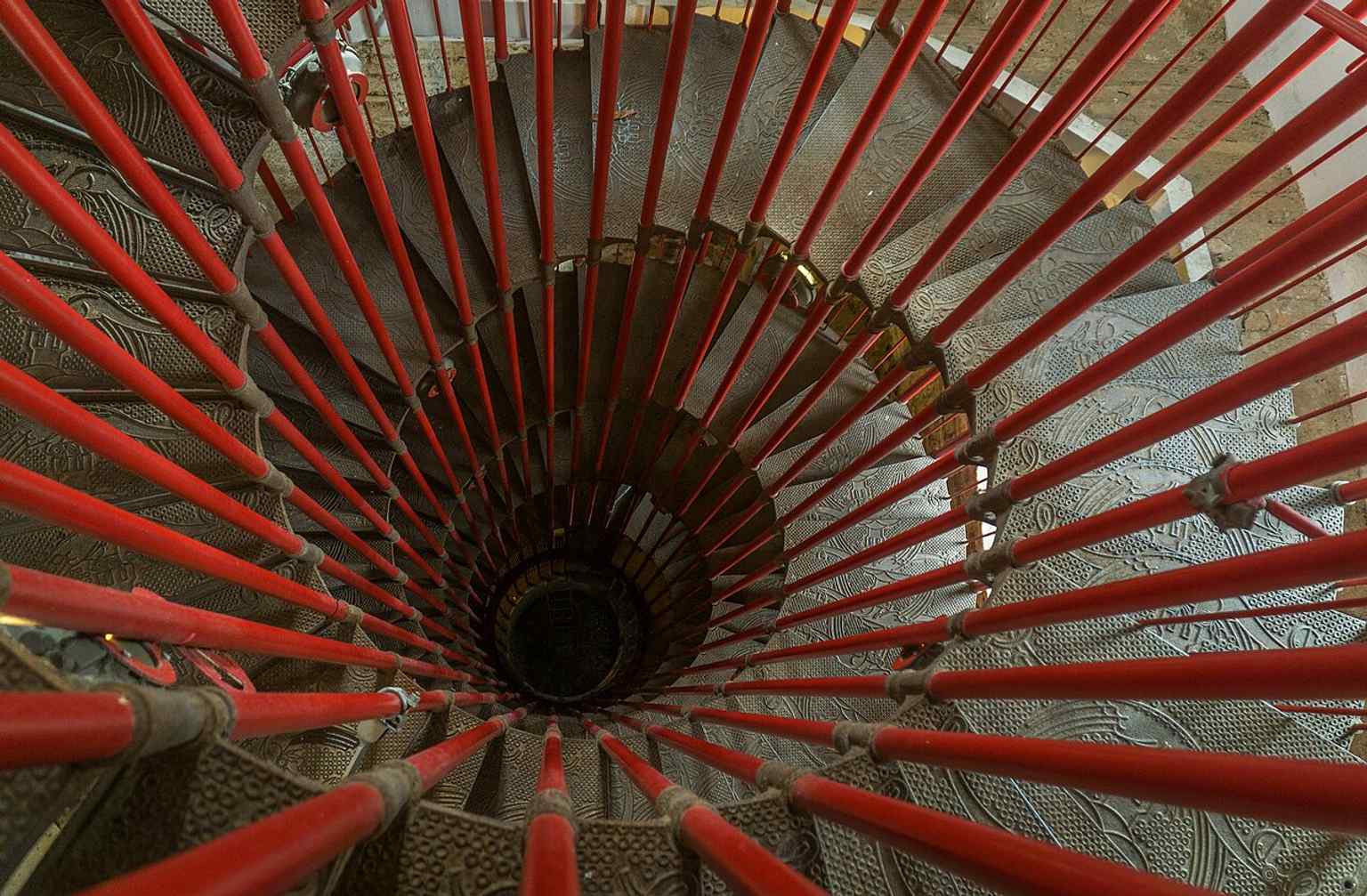
The distinctive double spiral staircase inside the Panoramic Tower, built between 1845-1848, was designed to prevent soldiers from crossing paths, a key logistical feature of the fortress.
The distinctive double spiral staircase inside the Panoramic Tower, built between 1845-1848, was designed to prevent soldiers from crossing paths, a key logistical feature of the fortress.Photo: Sumitsurai, Wikimedia Commons, CC BY-SA 4.0. Cropped & resized.
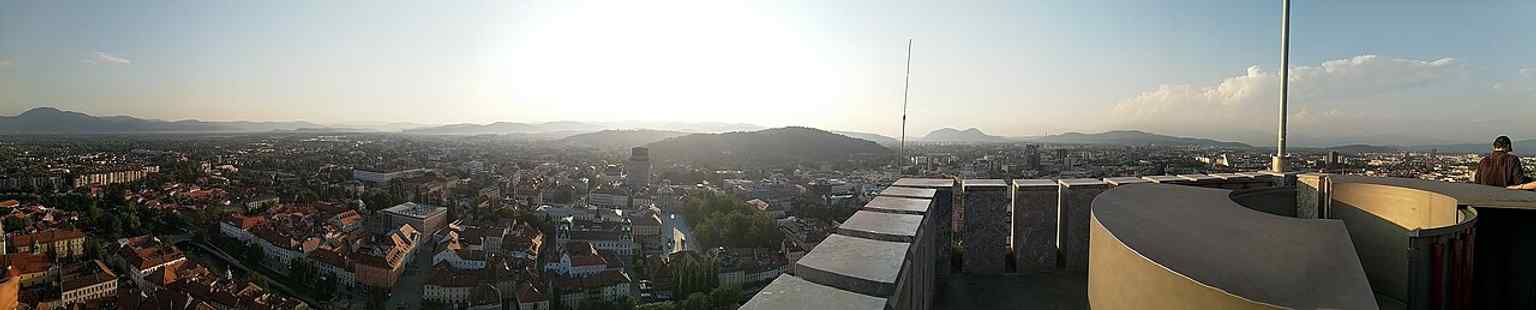
A sweeping view from the Panoramic Tower, once home to a fire watchman, offering distant glimpses of the Julian Alps and Kamnik-Savinja on a clear day.
A sweeping view from the Panoramic Tower, once home to a fire watchman, offering distant glimpses of the Julian Alps and Kamnik-Savinja on a clear day.Photo: Robert Jahoda, Wikimedia Commons, CC BY-SA 4.0. Cropped & resized.
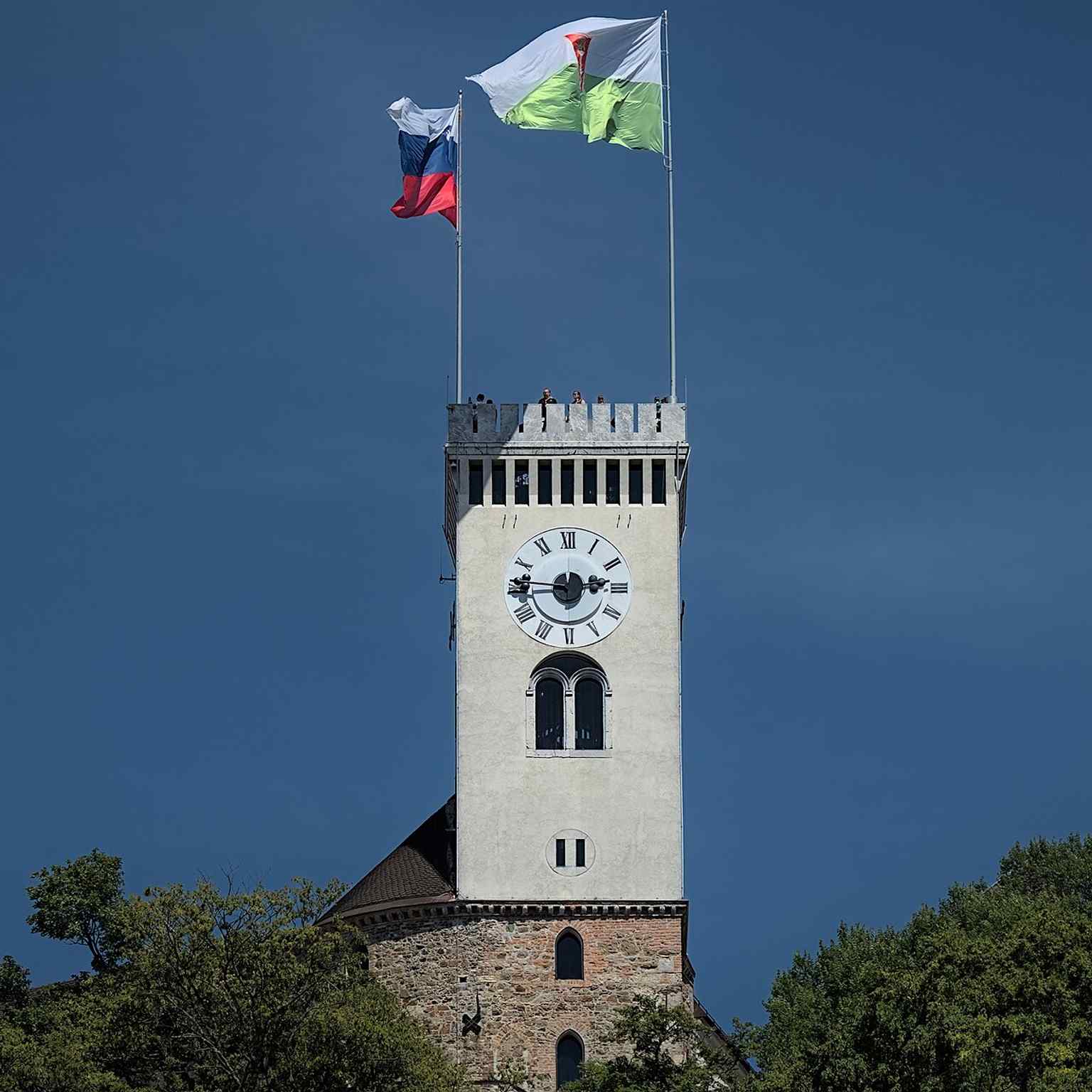
The Viewing Tower of Ljubljana Castle, rebuilt in masonry in the 1840s, proudly flies the national and city flags, representing its continued role as a civic and historical symbol.
The Viewing Tower of Ljubljana Castle, rebuilt in masonry in the 1840s, proudly flies the national and city flags, representing its continued role as a civic and historical symbol.Photo: This Photo was taken by Miha Peče. Feel free to use my photos, but please mention me as the author. I would much appreciate if you send me an email [email protected] or write on my talk page, for my information. Please do not upload an edited image here without consulting me. I would like to make corrections only at my own source to ensure that the changes improve the image and are preserved.Otherwise you may upload an edited image with a new name. Please use one of the templates derivative or extract., Wikimedia Commons, CC BY-SA 4.0. Cropped & resized.
A glimpse into the castle's adaptable interior spaces, which transitioned from medieval strongholds to a military hospital, barracks, and even a notorious prison in the 19th century.
A glimpse into the castle's adaptable interior spaces, which transitioned from medieval strongholds to a military hospital, barracks, and even a notorious prison in the 19th century.Photo: Antimuonium, Wikimedia Commons, CC BY-SA 4.0. Cropped & resized.
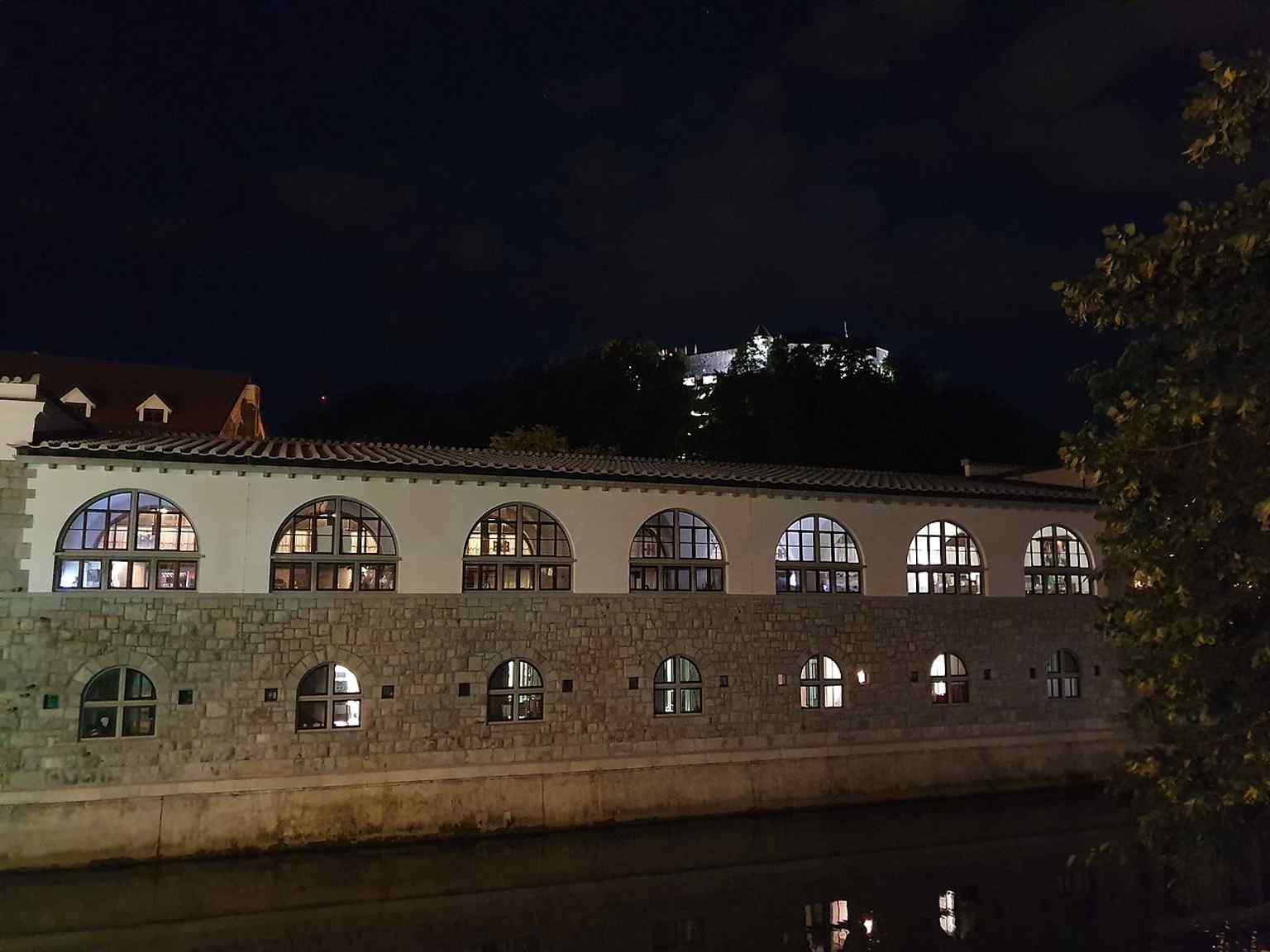
Ljubljana Castle illuminated at night, highlighting its modern role as a major cultural venue, hosting weddings and events after extensive renovations began in the 1970s.
Ljubljana Castle illuminated at night, highlighting its modern role as a major cultural venue, hosting weddings and events after extensive renovations began in the 1970s.Photo: Saška Grušovnik, Wikimedia Commons, CC BY-SA 4.0. Cropped & resized.
arrow_back Back to Ljubljana Audio Tour: Old Town Charms
Loved by travellers

Thousands of tours started.
Plenty of opinions.

4.8 across the App Store and Google Play. Here's a few we keep coming back to.

starstarstarstarstar
This was a solid way to get to know Brighton without feeling like a tourist. The narration had depth and context, but didn't overdo it.
Christoph
Christoph
Brighton Tour
starstarstarstarstar
Started this tour with a croissant in one hand and zero expectations. The app just vibes with you, no pressure, just you, your headphones, and some cool stories.
download Get the app

Pop your headphones in.
Step outside.

Free to download. Tours in every city. Start in 60 seconds — no account, no card.

Download on the App StoreGet it on Google Play
starstarstarstarstar_half
4.8
AudaTours app icon
headphones
~ 4 min until your first tour starts
public
1,000+ cities worldwide
all_inclusive
AudaTours
Unlimited

Every tour. Every city. One subscription.

3101 tours2271 cities138 countries50+ languages