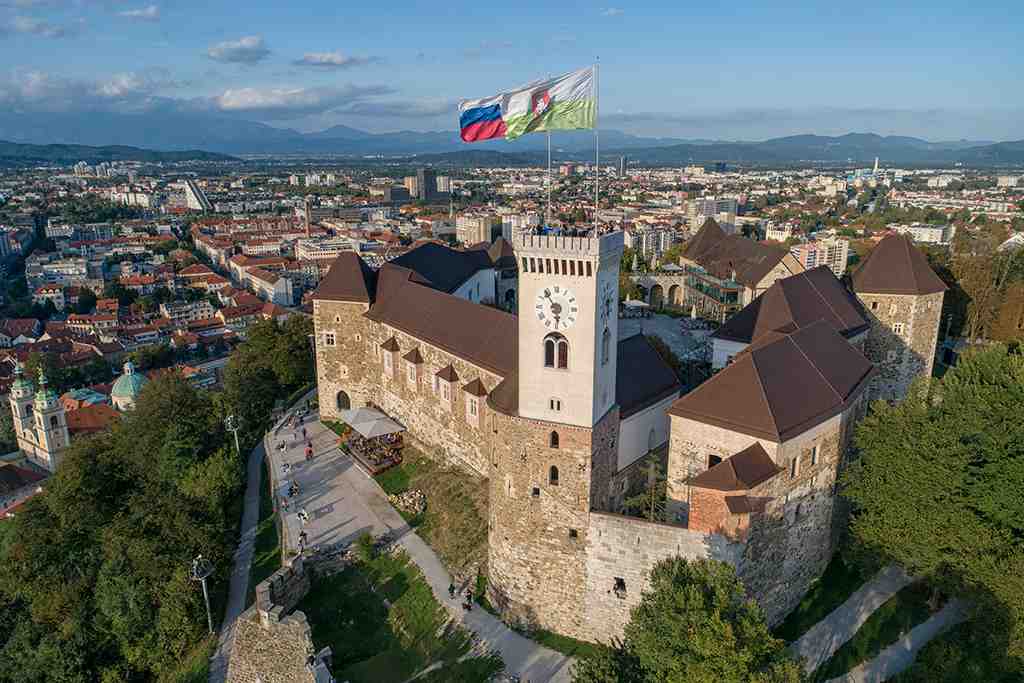
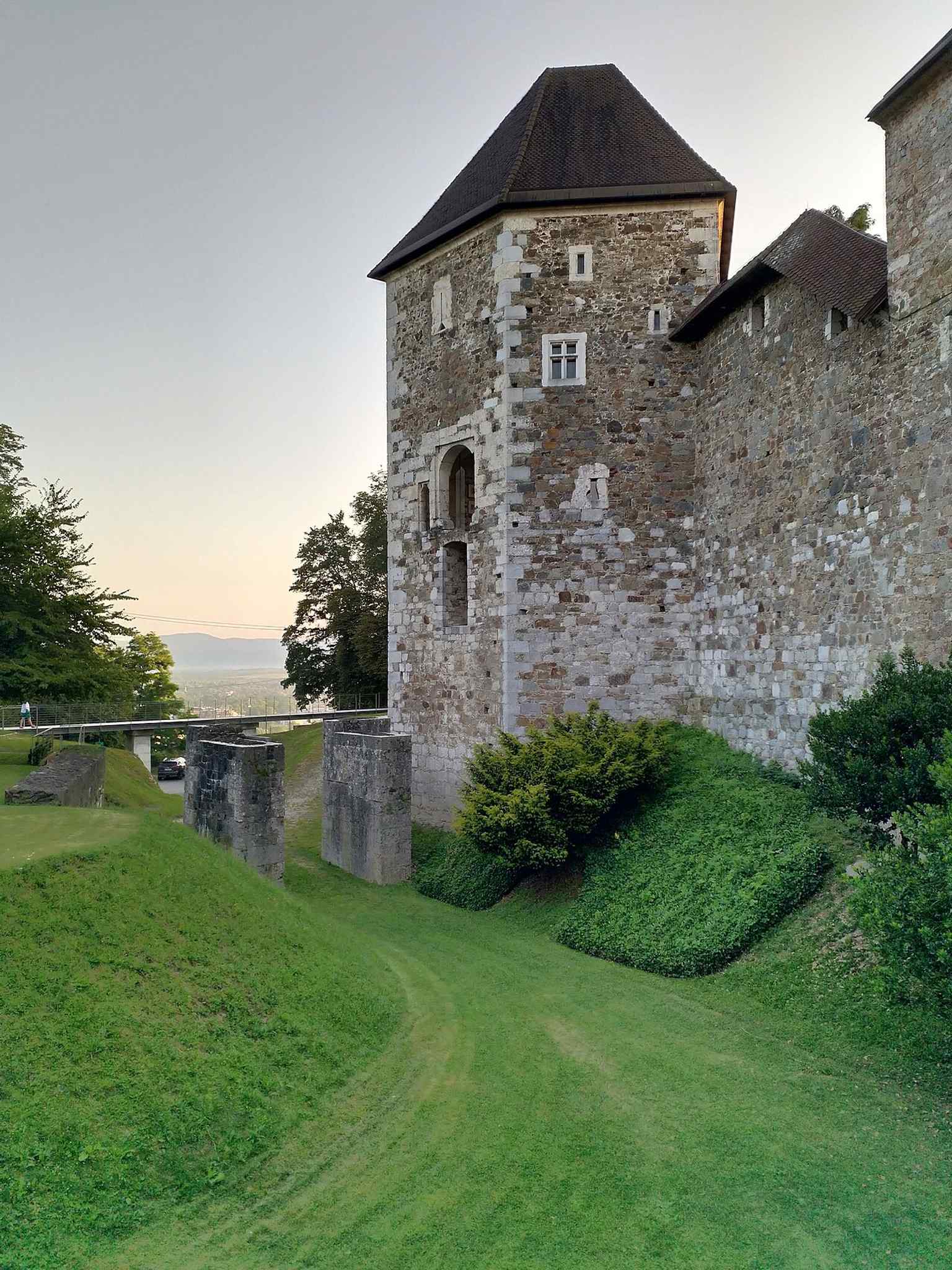
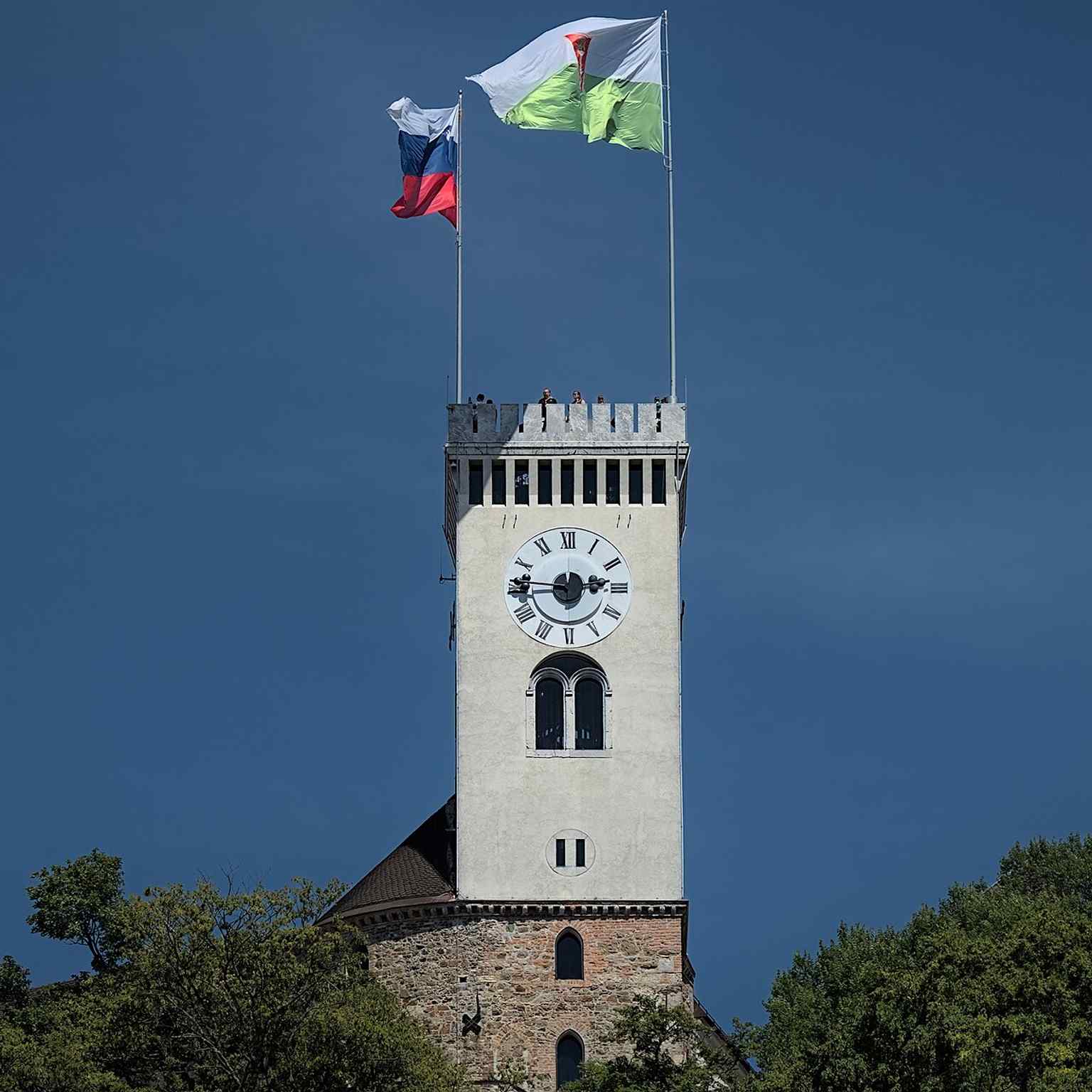
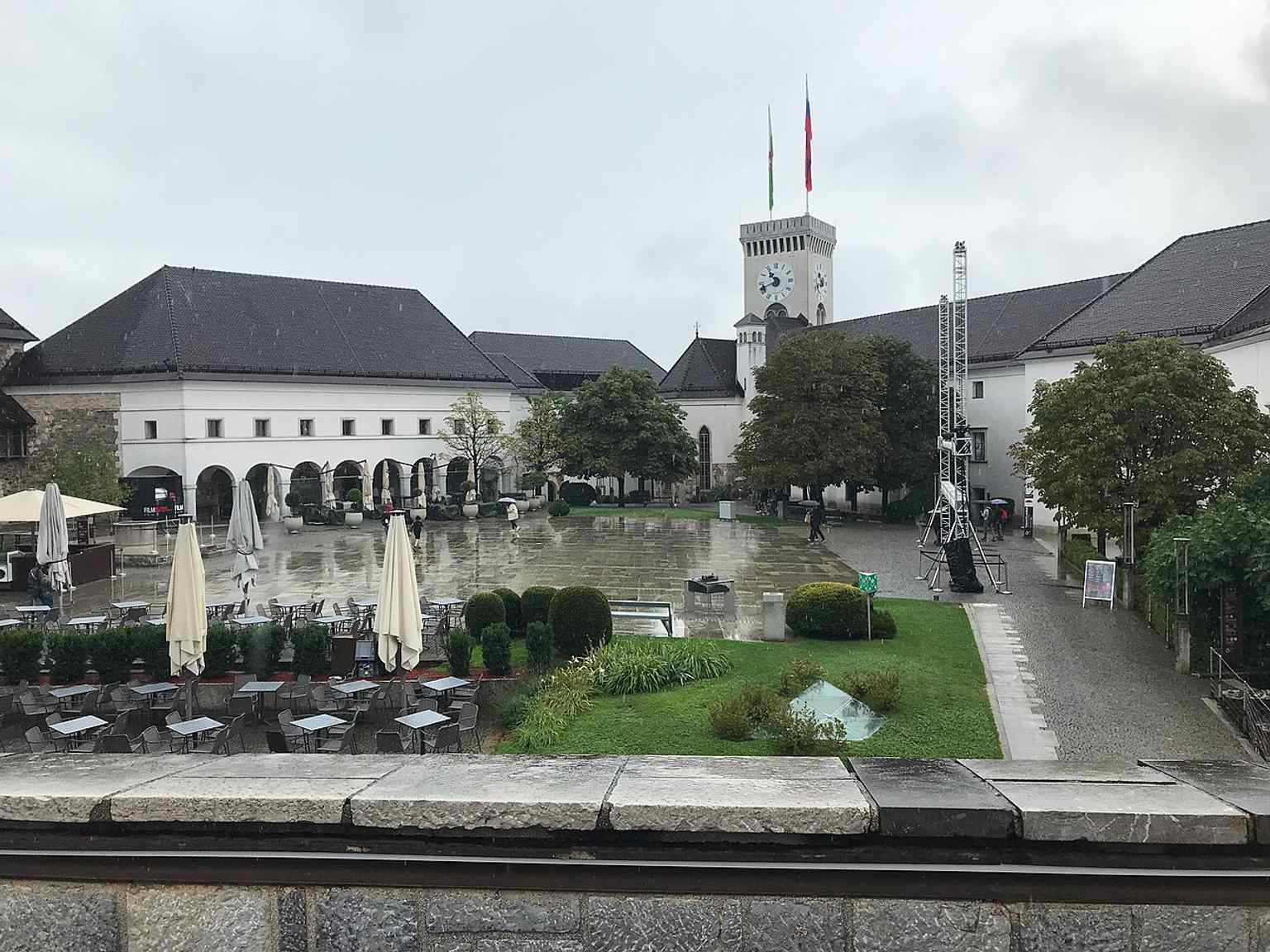
Look to your right, where you will see the fortress complex built of rough-hewn stone and dark pitched roofs, anchored by a striking white observation tower with a large clock face.
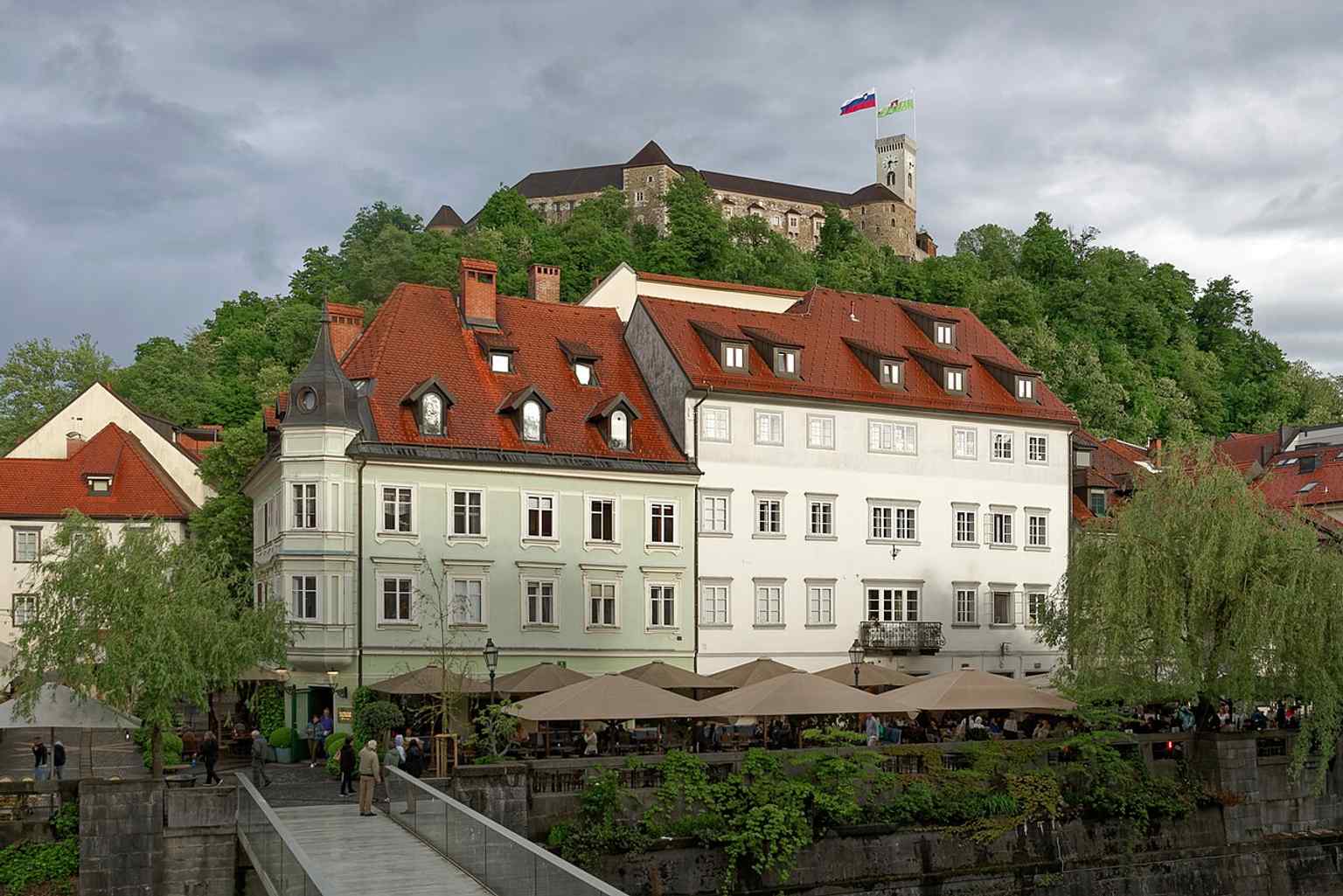
This summit has been watching over the valley for over four thousand years. Long before the Romans built stone watchtowers to monitor their trade routes, Bronze Age tribes sought refuge right where you are standing. Down at the river, we met the Dragon Guardian, that ancient swamp monster slain by Jason and his Argonauts. But up here on the hill, the myth evolved to fit the stones.
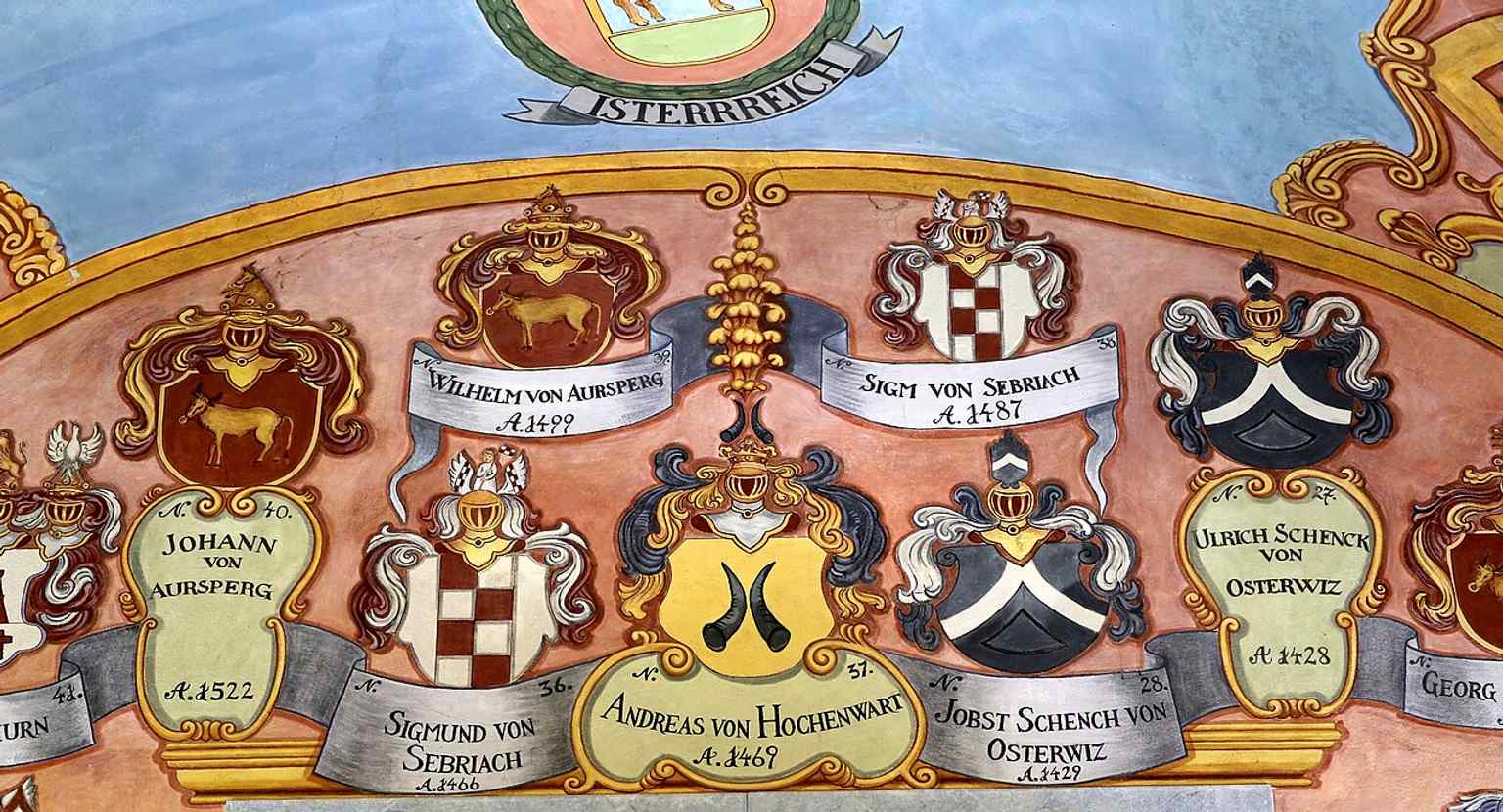
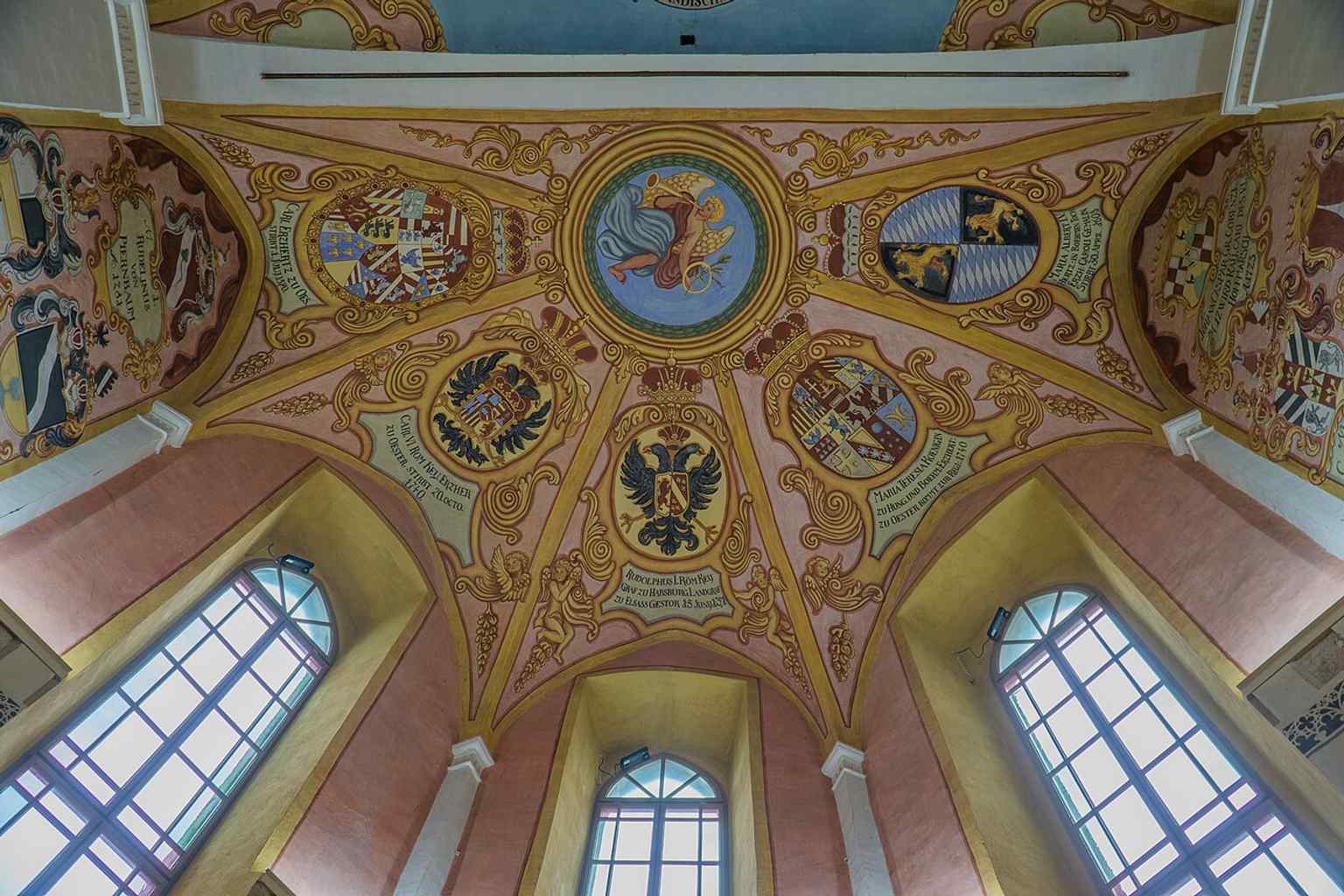
As the fortress took shape in the Middle Ages, the old pagan beast was replaced by a more refined narrative. Take a look at your screen to see the ornate altar ceiling of Saint George's Chapel located inside the castle walls. Local legends claim the patron saint defeated a dragon right here, one that demanded human sacrifices from the townsfolk below. The wild, fire-breathing beast of the marshes was tamed and transformed into a symbol of European chivalry.
Yet, the myth of invincibility did not protect the walls themselves. By the late eighteenth century, the fortress had become a massive financial burden. Bureaucrats in Vienna saw only a crumbling money pit and proposed tearing it all down to sell the stones for scrap. The castle narrowly escaped the wrecking ball, only to endure a dark era as a grim provincial prison and a military hospital.
By the dawn of the twentieth century, the complex was decaying into ruin. That is when Mayor Ivan Hribar made an incredible gamble. He purchased the rotting structure for the city for sixty thousand, two hundred Kronen, an amount equivalent to a few million dollars today. His vision was to create a cultural Acropolis, an elevated sanctuary of art and museums for the people. But realizing that dream would take nearly a century. In the meantime, to prevent the structure from totally collapsing, the city moved dozens of impoverished families into the drafty, abandoned military quarters. It is a strange twist of fate that the daily chores of ordinary citizens acting as unofficial guardians provided just enough upkeep to keep the ancient walls standing.
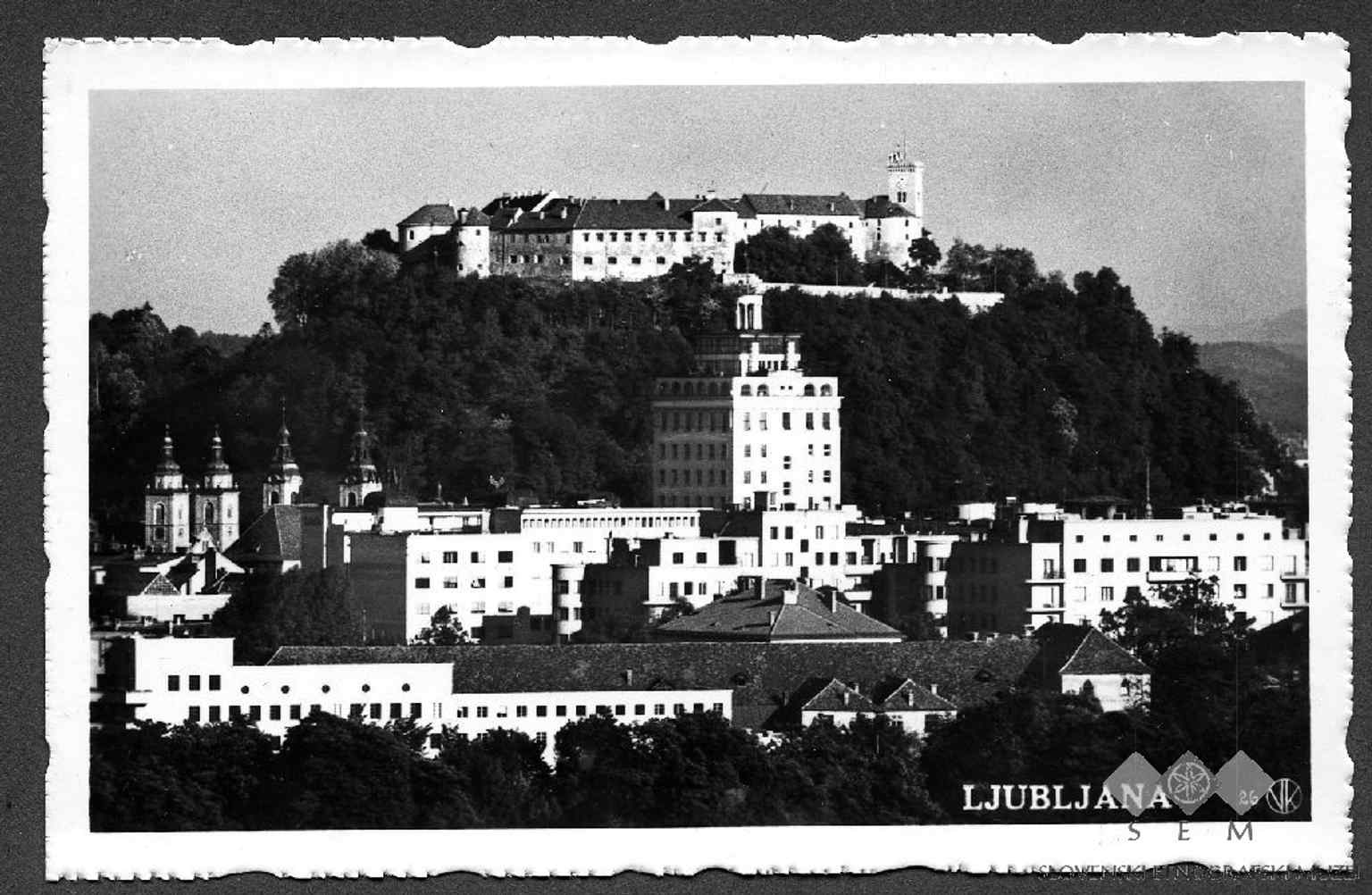
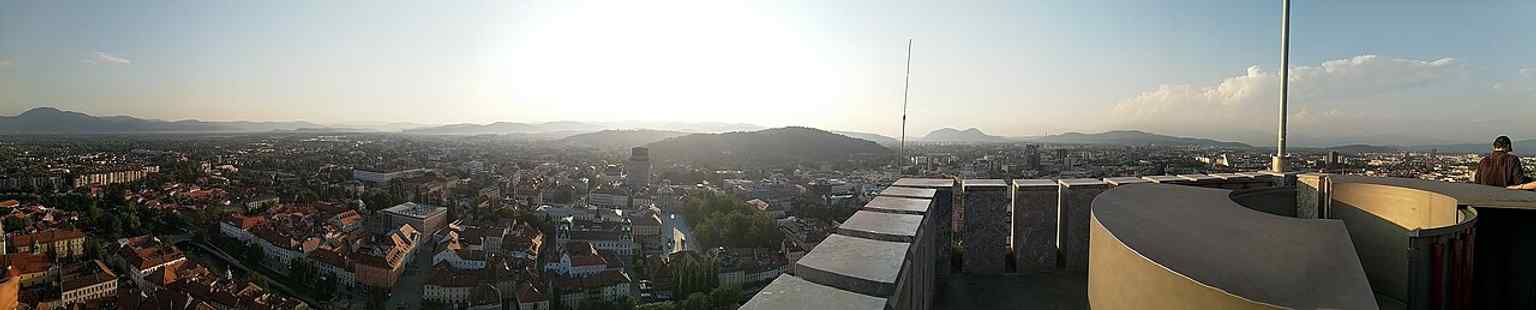
You can watch how the city below has grown and modernized over eight decades, while the ancient fortress continues to watch over Ljubljana from its increasingly forested hill, by checking out the historic image in your app.
Eventually, those families were relocated in the nineteen sixties, sparking a massive architectural revival. Engineers hollowed out the rock beneath the courtyard to install vast, invisible service areas, allowing the medieval shell to host modern events without losing its ancient soul. What was once destined for the scrap heap is now the crowning jewel of the city.
You can explore the castle grounds any day of the week between 9 AM and 7 PM. But as impressive as the view is from these towering heights, the true spirit of the city waits down below. Let us shift our focus from the fortress and head down toward the Archdiocese of Ljubljana, a walk of about eleven minutes.
4.8 across the App Store and Google Play. Here's a few we keep coming back to.
starstarstarstarstar
This tour was such a great way to see the city. The stories were interesting without feeling too scripted, and I loved being able to explore at my own pace.
Started this tour with a croissant in one hand and zero expectations. The app just vibes with you, no pressure, just you, your headphones, and some cool stories.







![This Photo was taken by Miha Peče. Feel free to use my photos, but please mention me as the author. I would much appreciate if you send me an email [email protected] or write on my talk page, for my information. Please do not upload an edited image here without consulting me. I would like to make corrections only at my own source to ensure that the changes improve the image and are preserved.Otherwise you may upload an edited image with a new name. Please use one of the templates derivative or extract.](https://upload.wikimedia.org/wikipedia/commons/d/de/StolpLjGrad.jpg)

.jpg)

![This Photo was taken by Miha Peče. Feel free to use my photos, but please mention me as the author. I would much appreciate if you send me an email [email protected] or write on my talk page, for my information. Please do not upload an edited image here without consulting me. I would like to make corrections only at my own source to ensure that the changes improve the image and are preserved.Otherwise you may upload an edited image with a new name. Please use one of the templates derivative or extract.](https://upload.wikimedia.org/wikipedia/commons/d/d5/Tivoli_park_in_Ljubljan.jpg)

