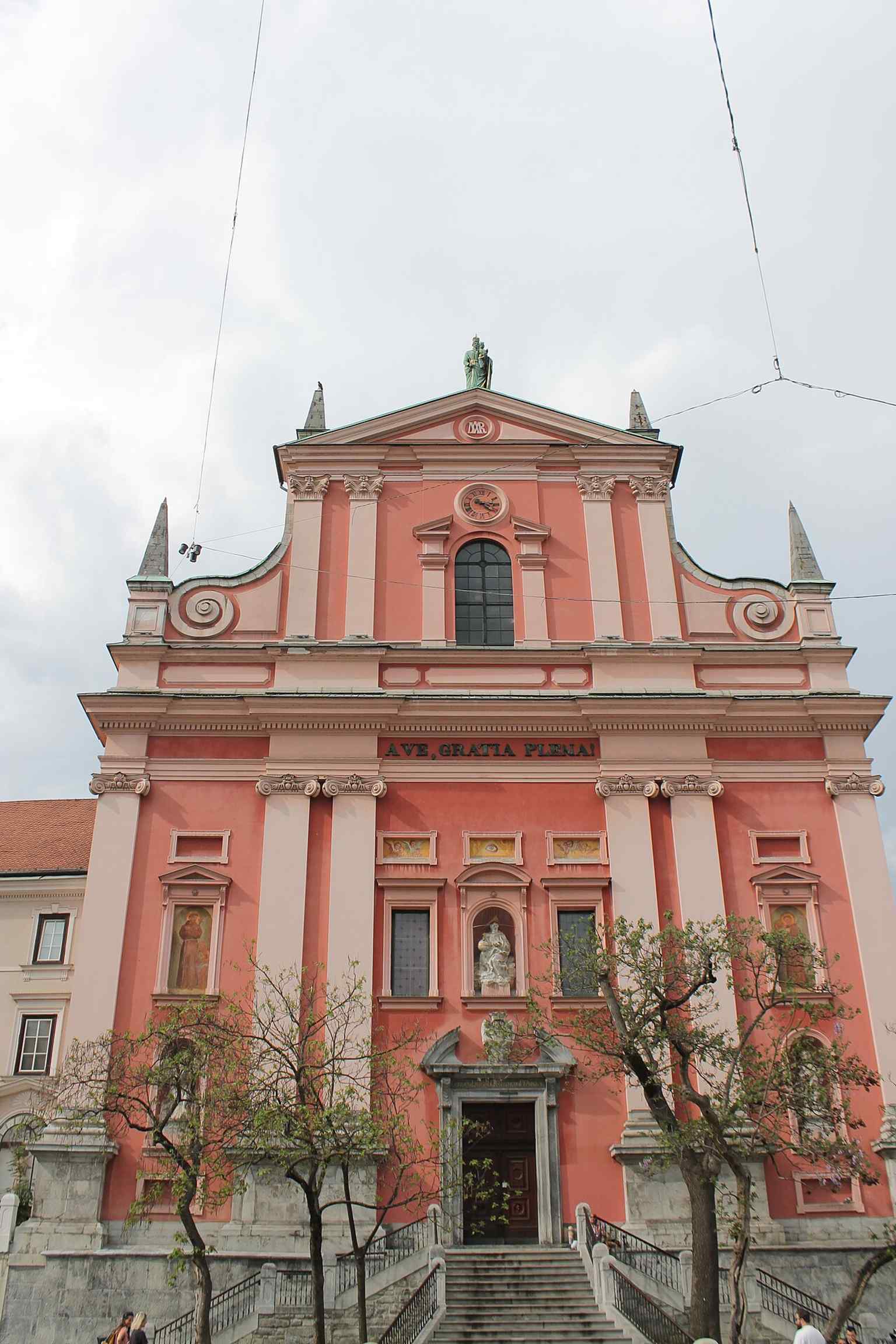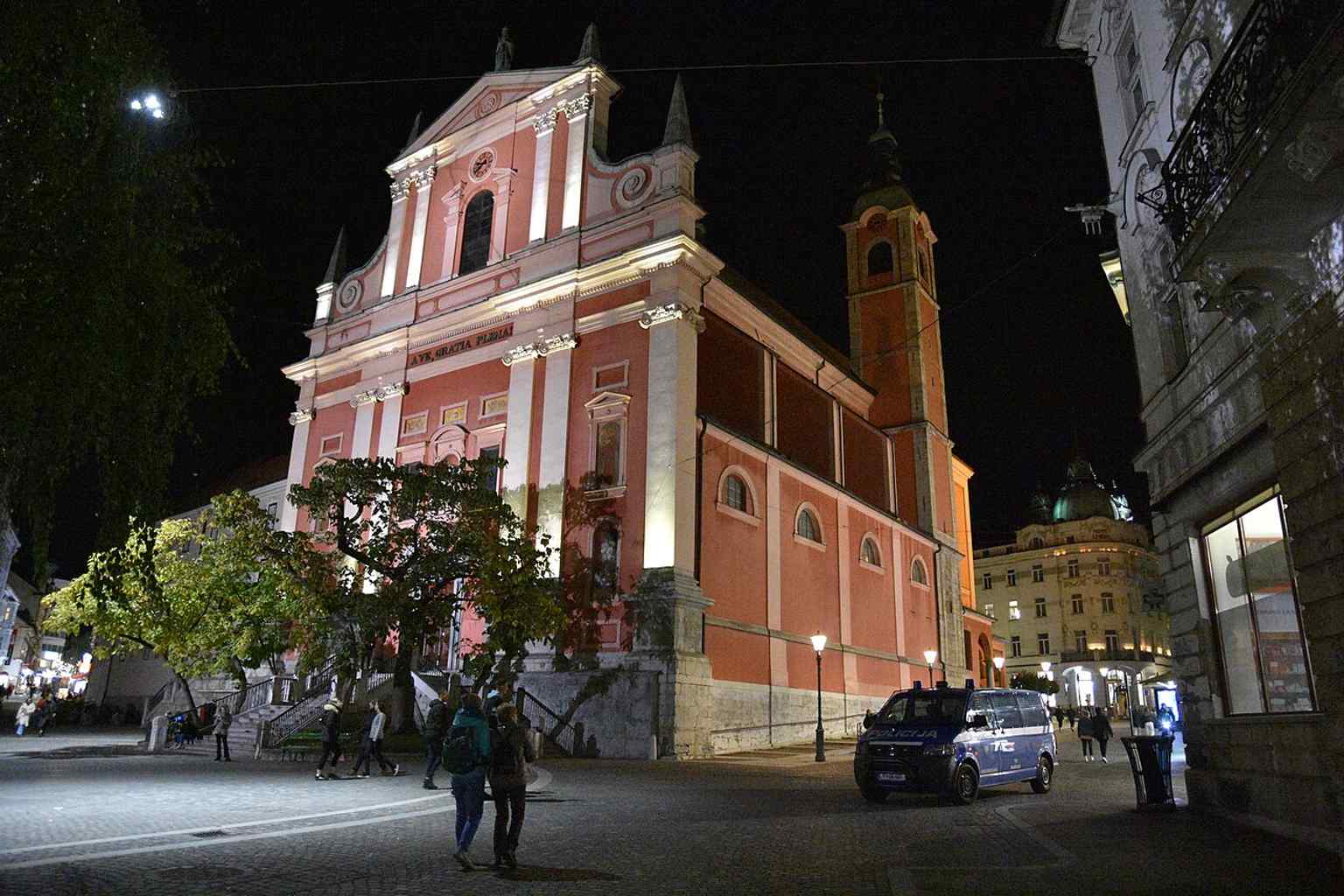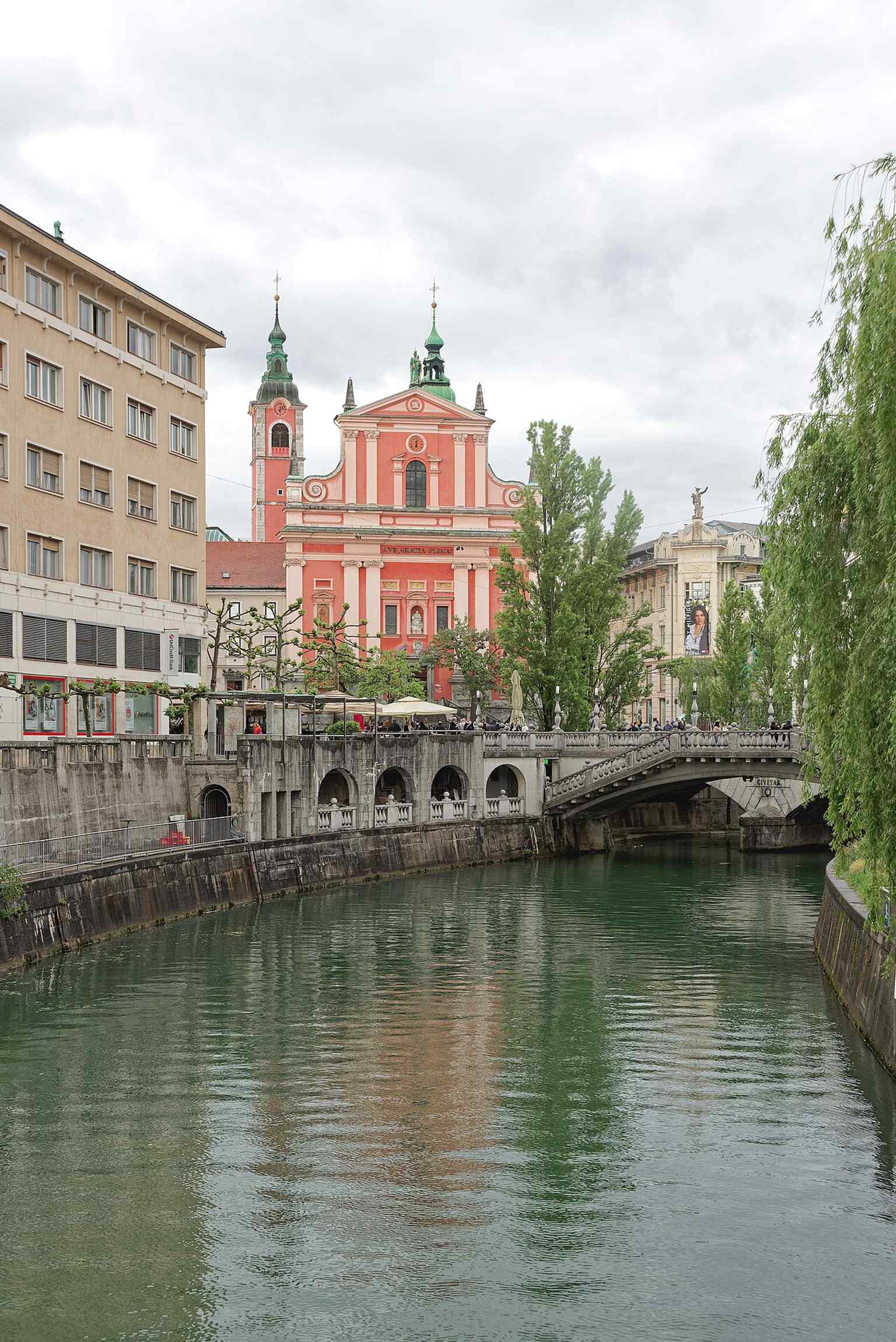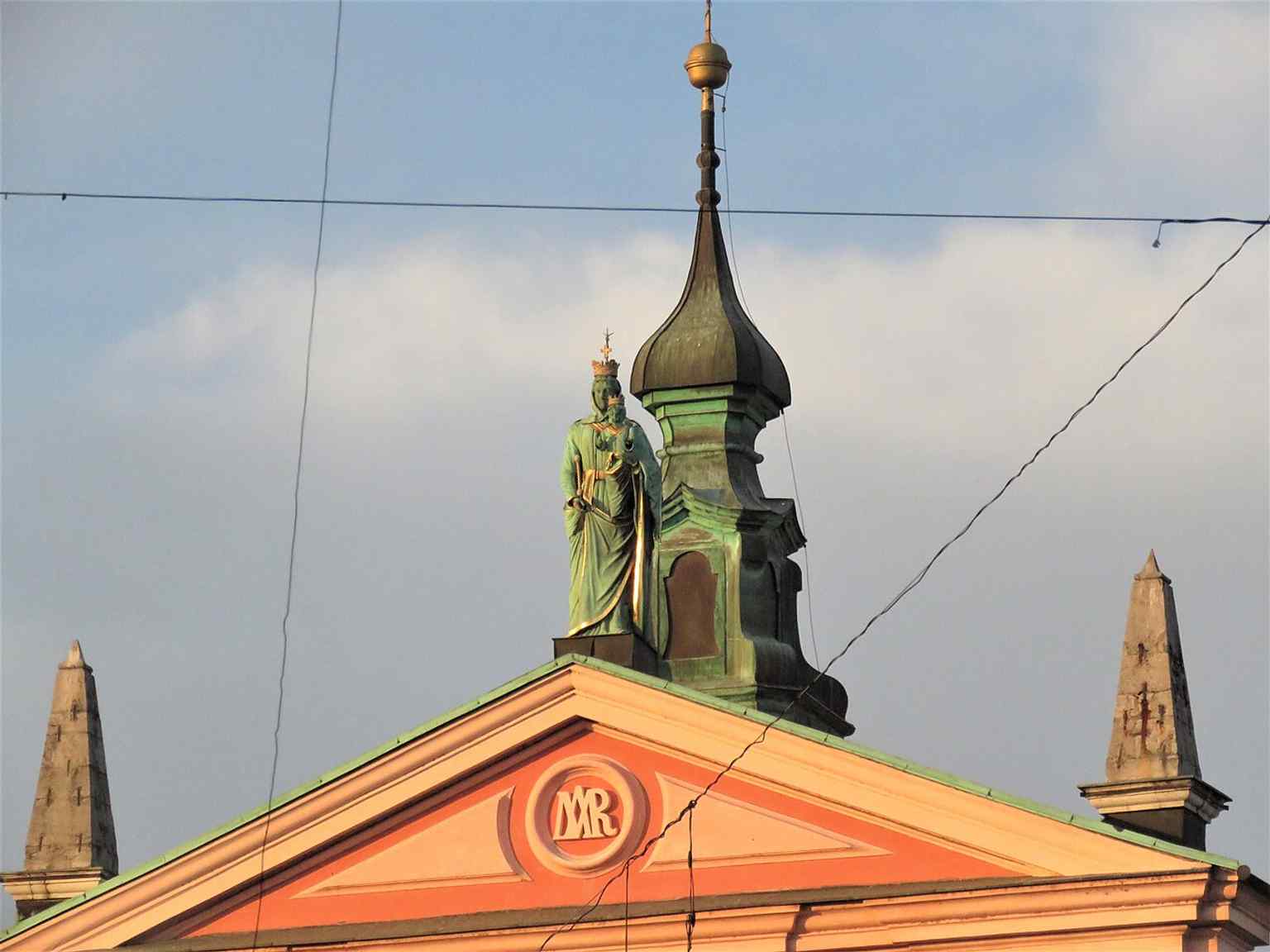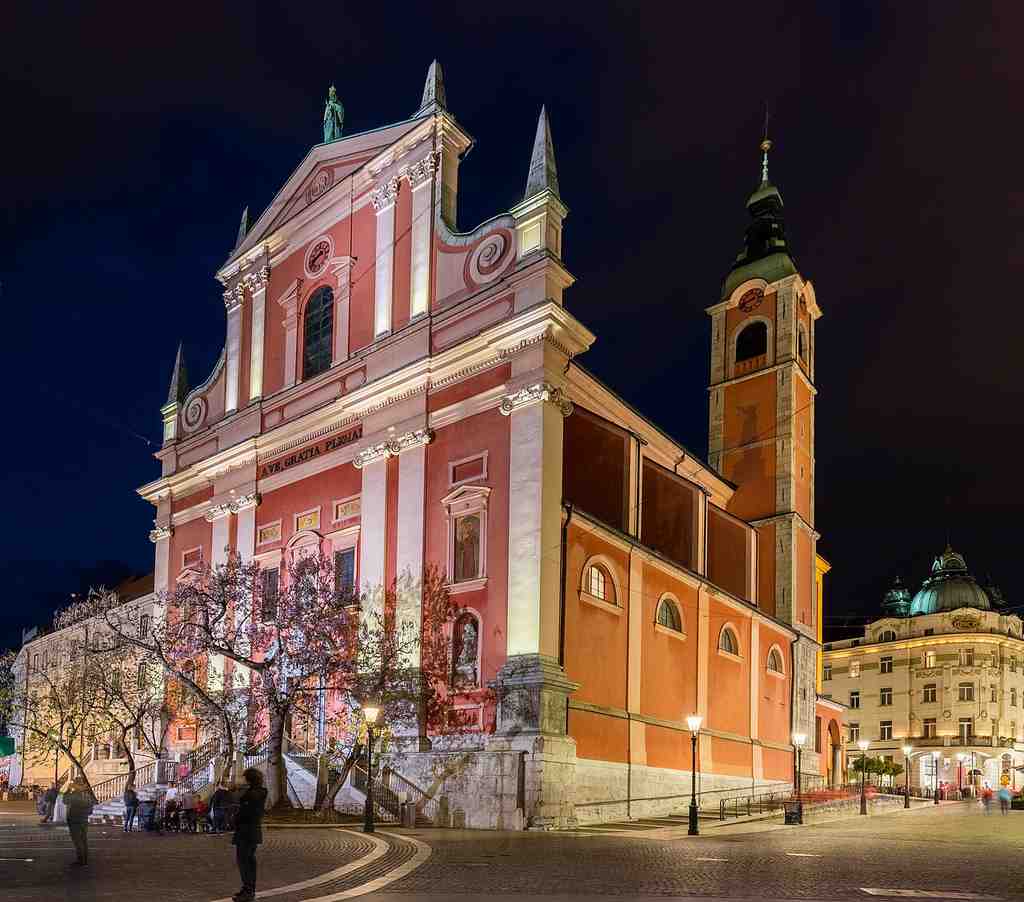
On your left is a towering, salmon-pink stone church framed by twin domed belfries and crowned with a dark copper statue on its highest peak.
You are looking at the Franciscan Church of the Annunciation. As you may recall, the Franciscans took over this site from the Augustinians in the late eighteenth century. The signature soft pink color you see today, beloved by the locals, is the faded remnant of the original, vibrant Franciscan red.
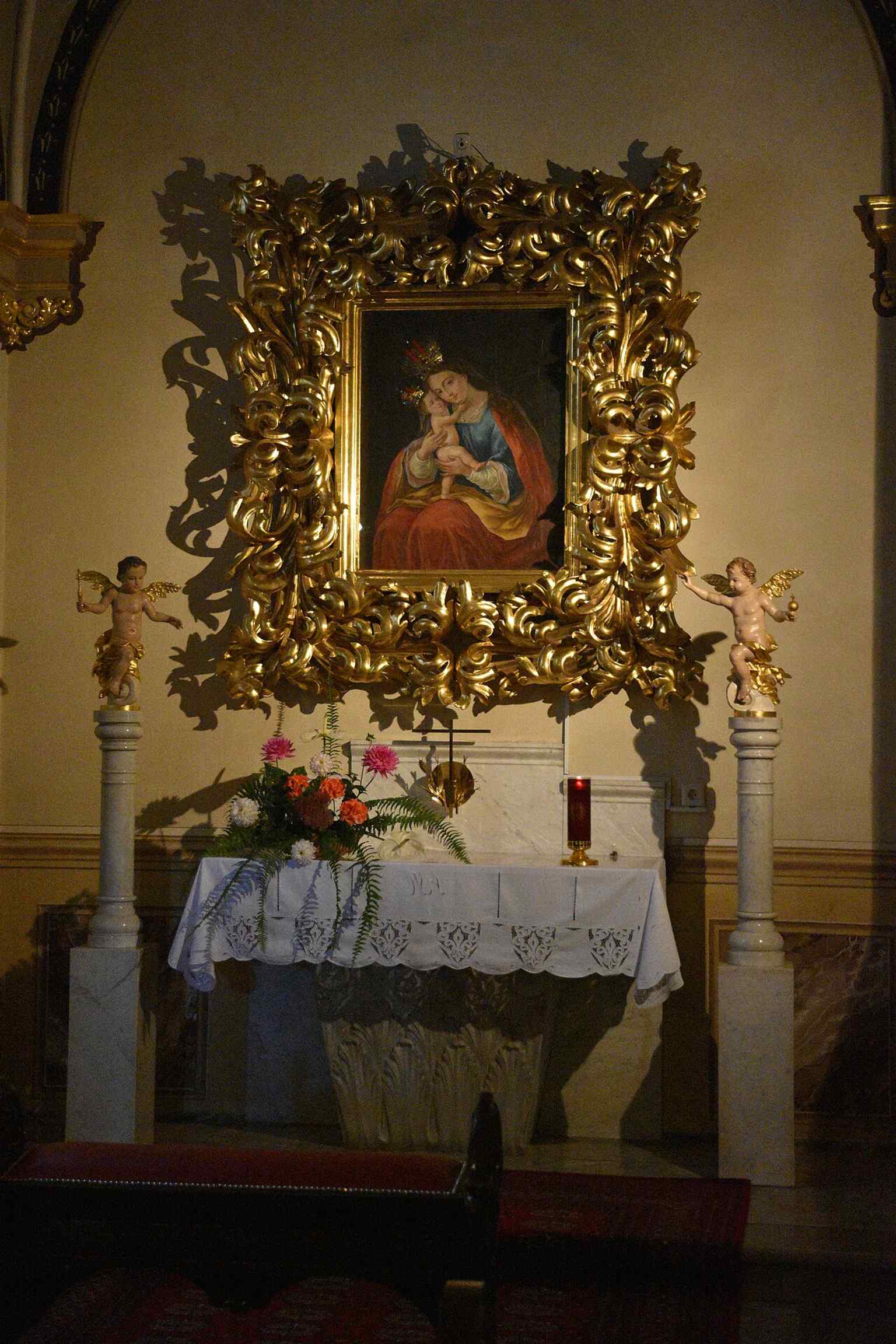
If you look at your screen, you can see the magnificent interior. The monumental Baroque main altar was designed by Francesco Robba. You might remember him from the fountain we saw a little while ago. Robba originally came to Ljubljana from Venice for a quick temporary commission, but he fell in love with a local woman and decided to stick around. His altar here is a masterpiece of intricate marble craftsmanship.
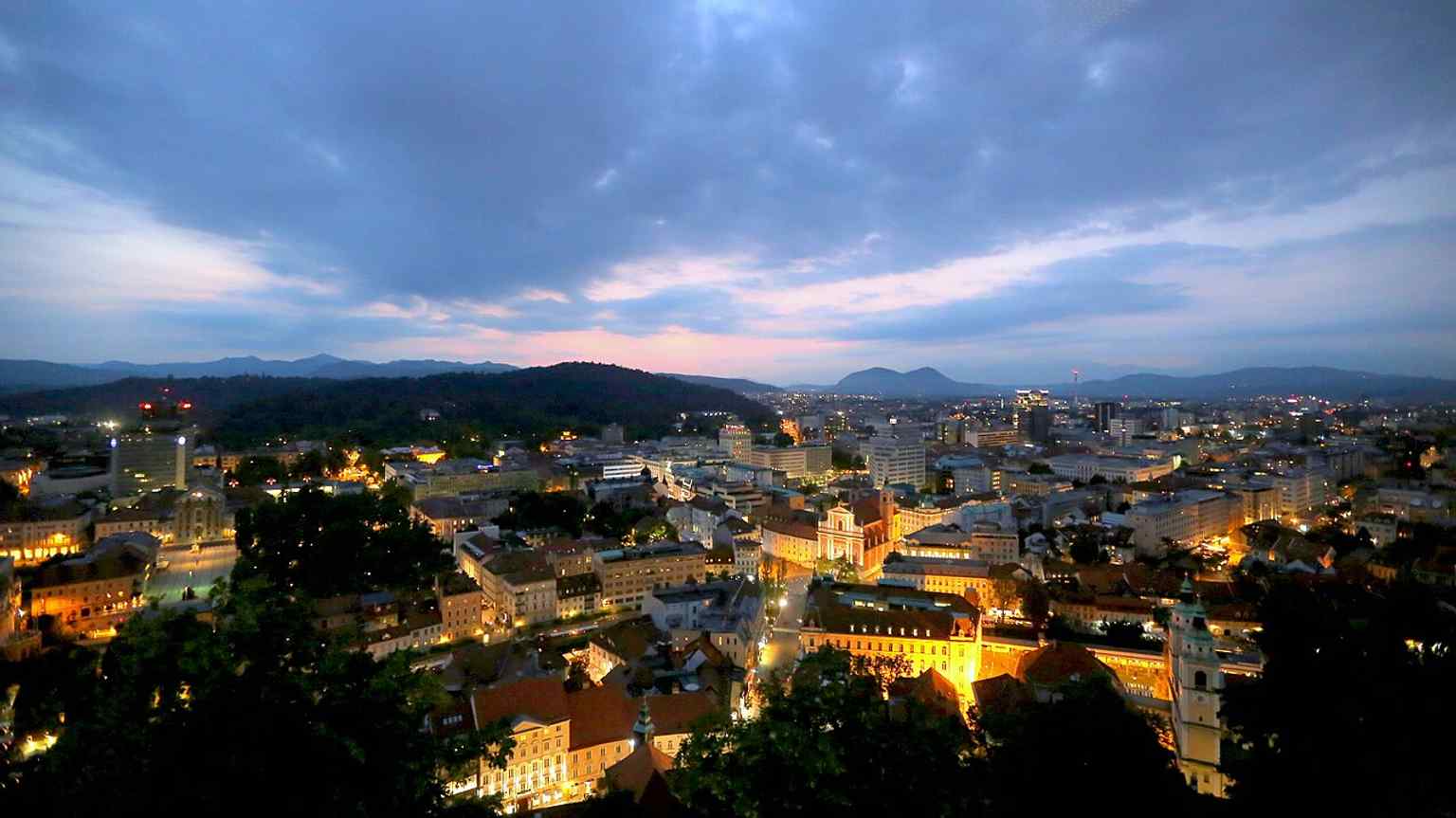
Take a moment and look up at the towering statue of Our Lady of Loretto right at the top of the facade. That heavy beaten-copper statue replaced an older wooden figure. It stands as a steady guardian over a building that has seen its fair share of devastating loss and visionary renewal. Inside, the mid-nineteenth century ceiling frescoes were originally painted by Matevž Langus. He spent years painstakingly covering the vault with scenes inspired by Raphael. Sadly, the cost of ambition can be unexpectedly steep. Langus died of cholera the very night before his masterpiece was scheduled to be consecrated, leaving the city to mourn him at the exact moment they gathered to celebrate his work.
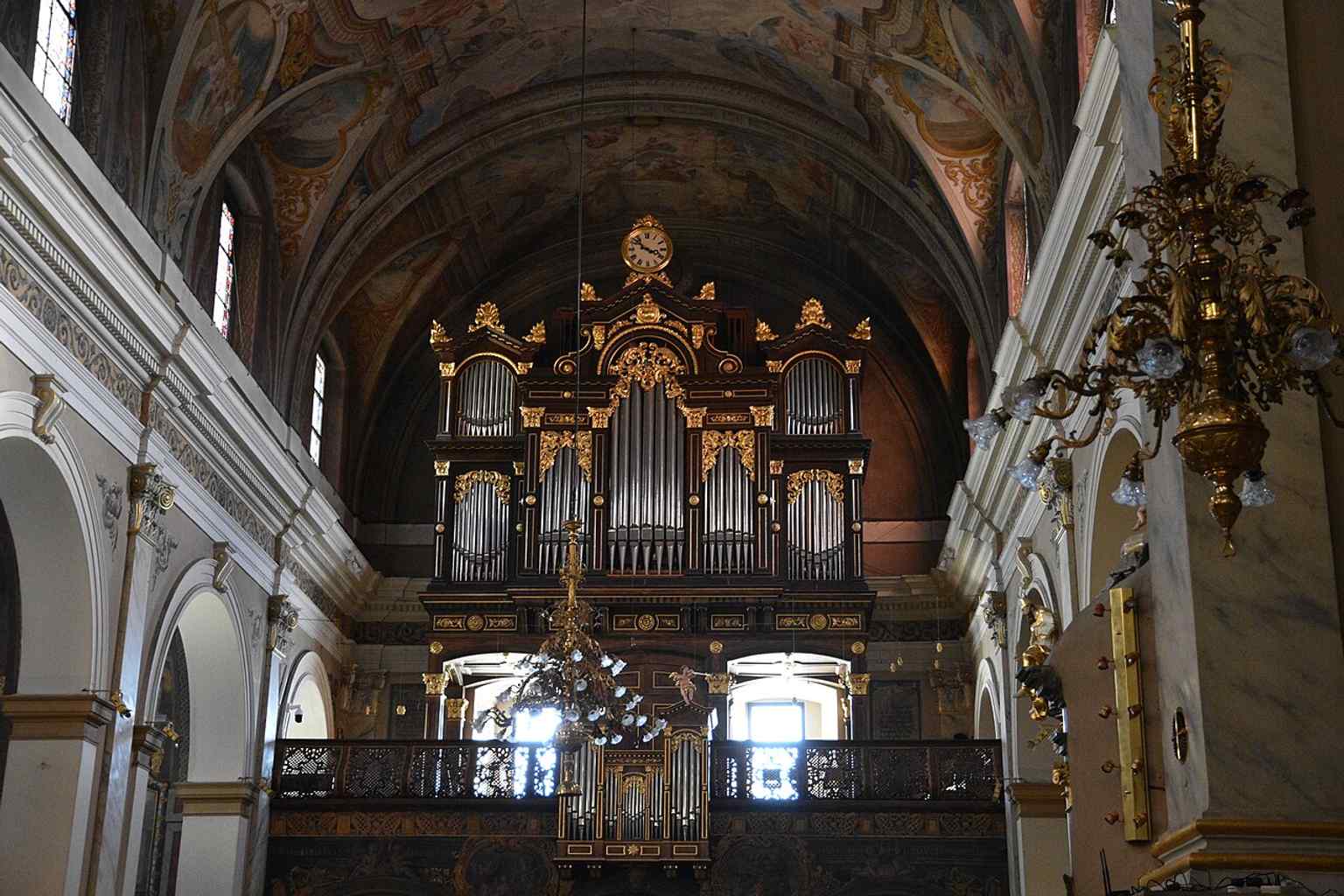
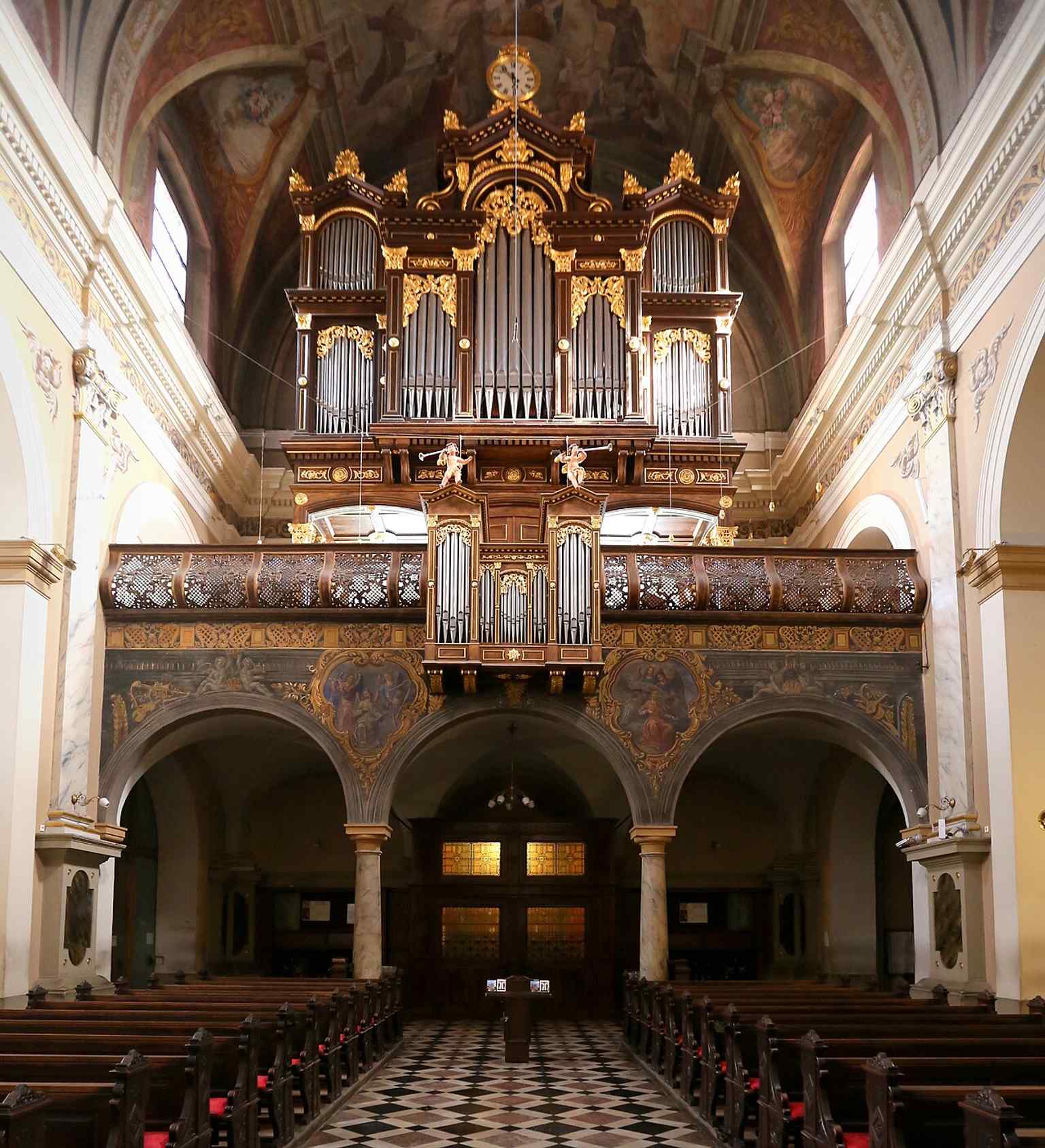
Decades later, the devastating earthquake cracked the church open, destroying much of that artistic legacy. The interior sat scarred and bare until the 1930s, when Slovenian painter Matej Sternen stepped in. You can see his brilliant restoration on your phone. Sternen used trompe-l'œil, an artistic technique that uses realistic imagery to create a three-dimensional optical illusion, perfectly recreating the illusion of depth that had been lost to the disaster.
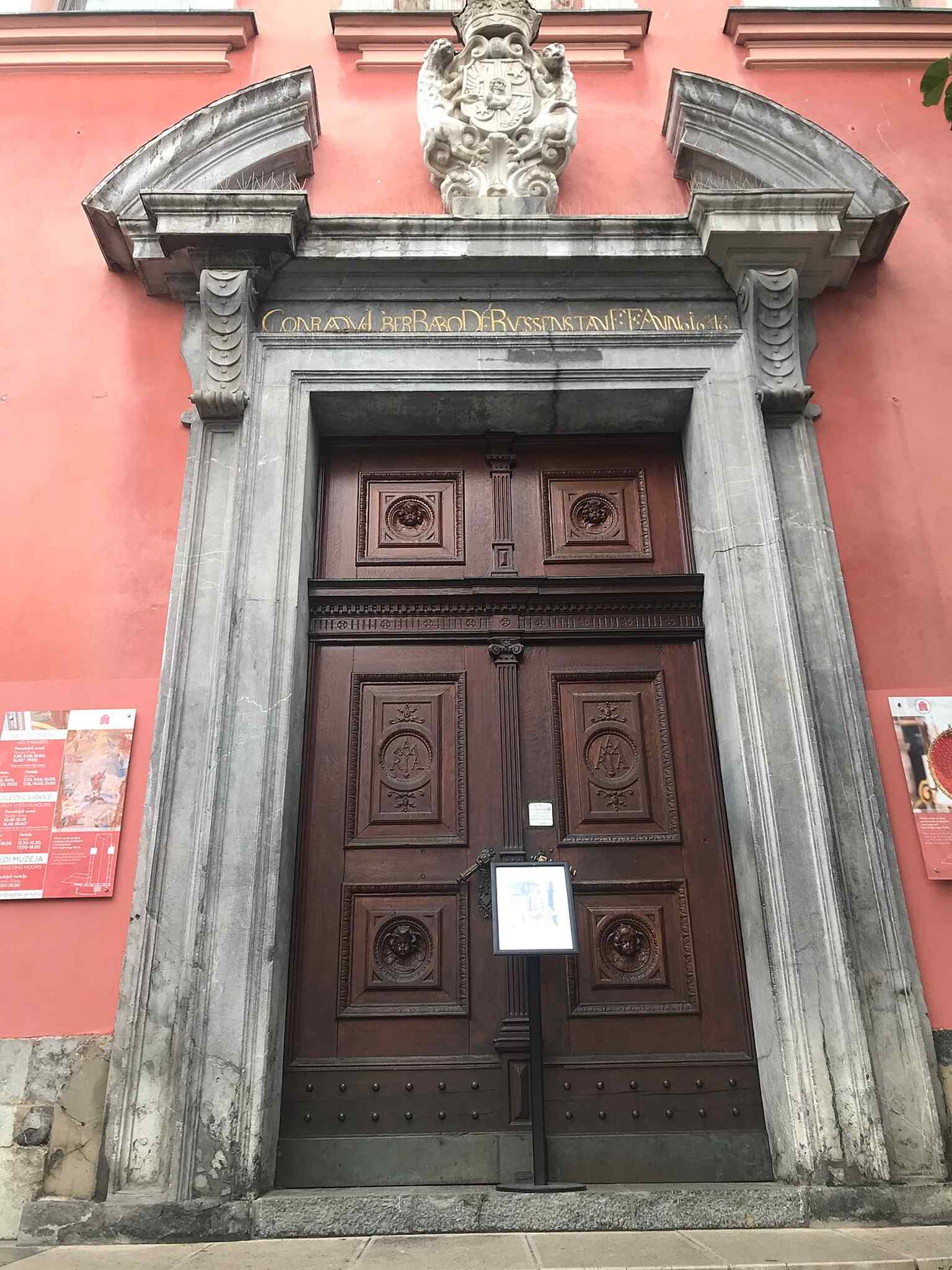
The church is filled with incredible hidden layers, from a vast library holding over seventy thousand ancient volumes protected from future quakes, to a slightly spooky glass coffin containing the skeletal remains of a seventh-century French hermit named Saint Deodatus.
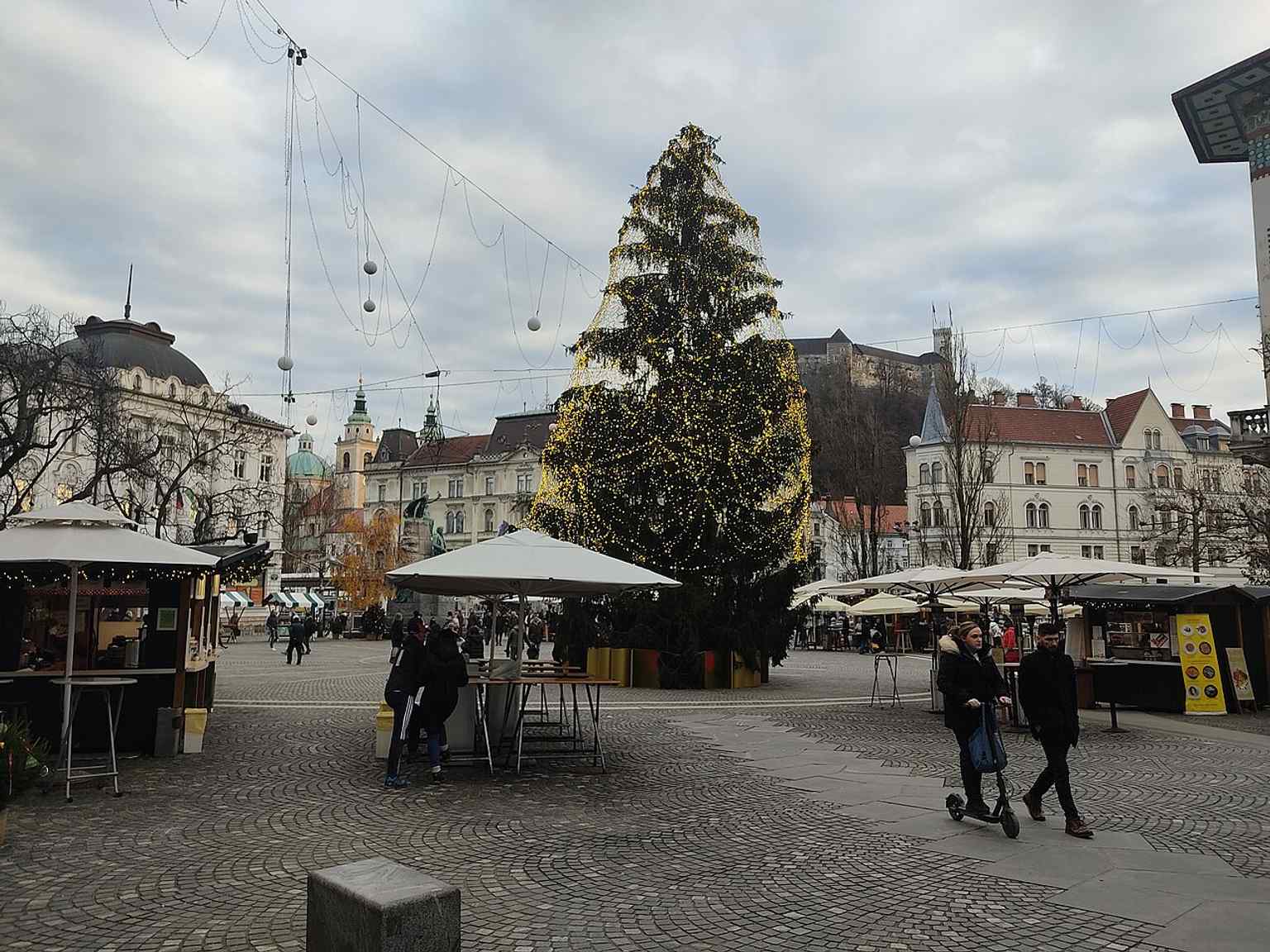
Let us step back from the church to take in the sprawling space it oversees, Prešeren Square, which is our very next stop. The church is open to visitors most days between late morning and late afternoon if you wish to explore the interior later.