
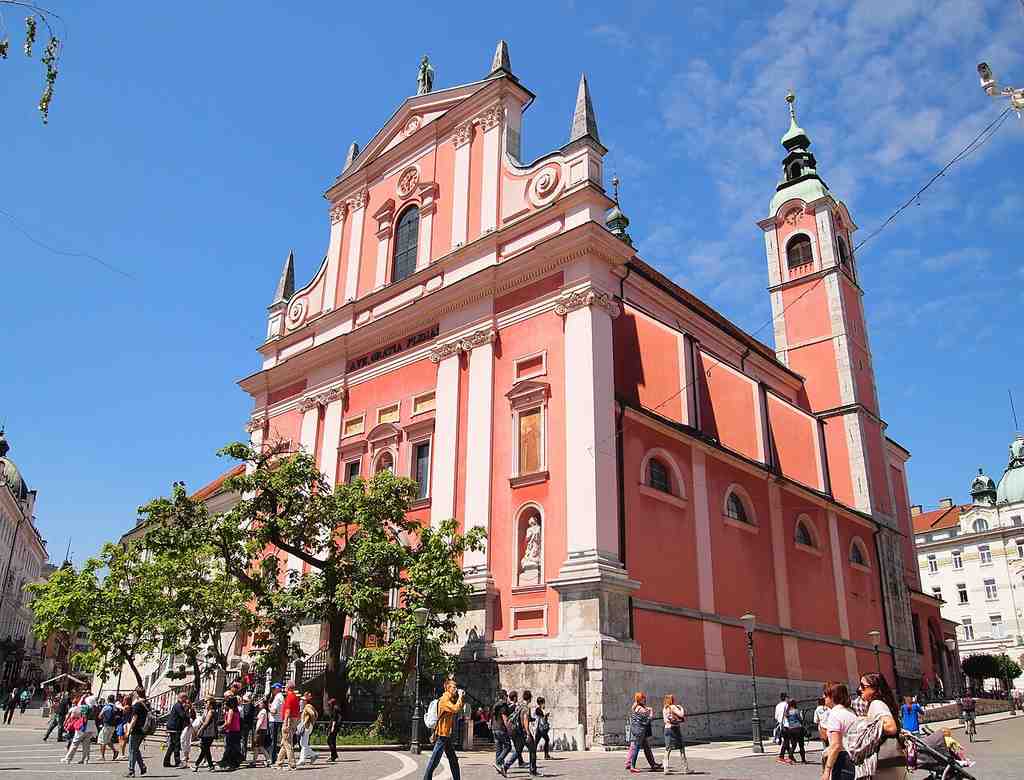
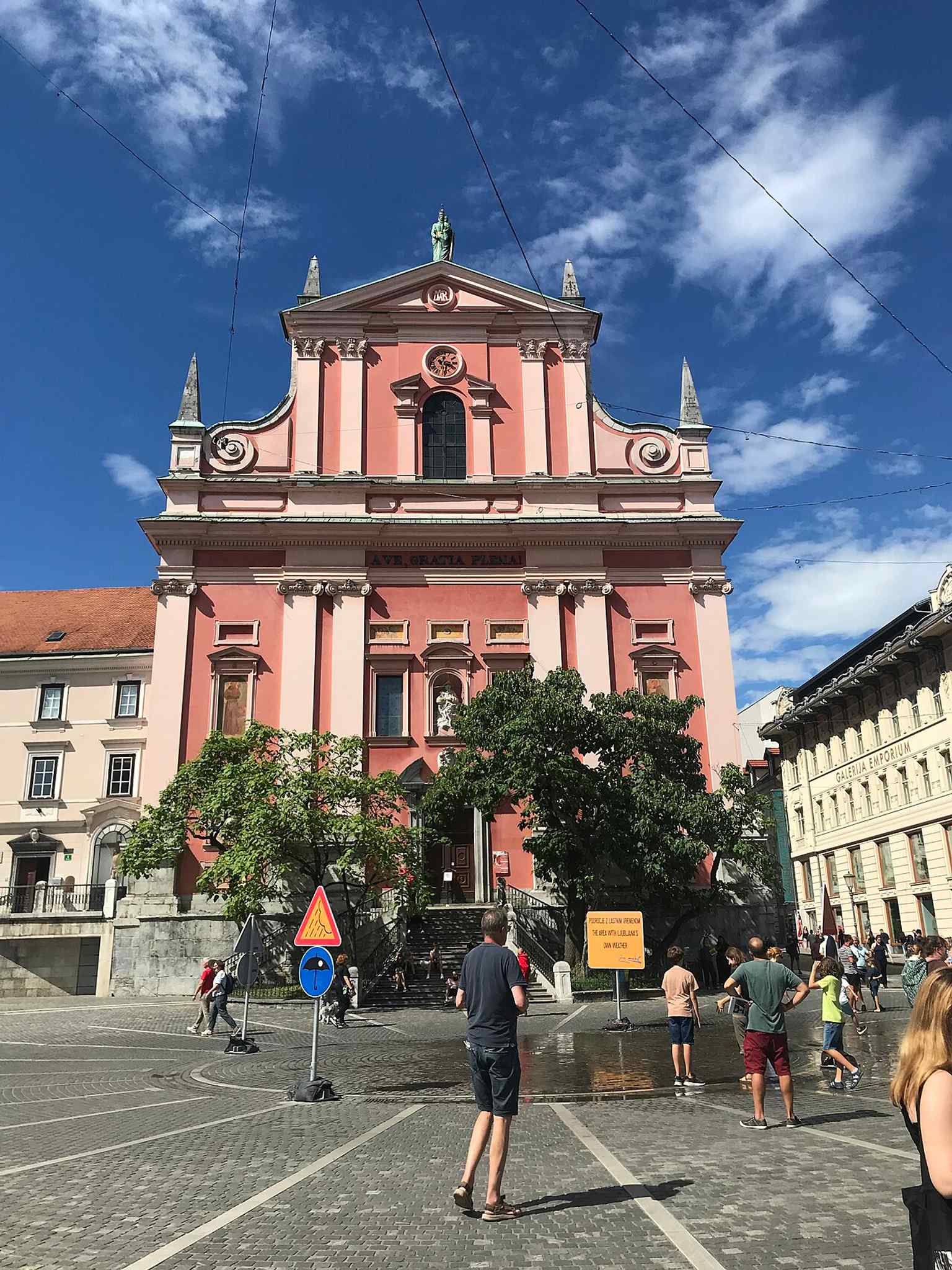
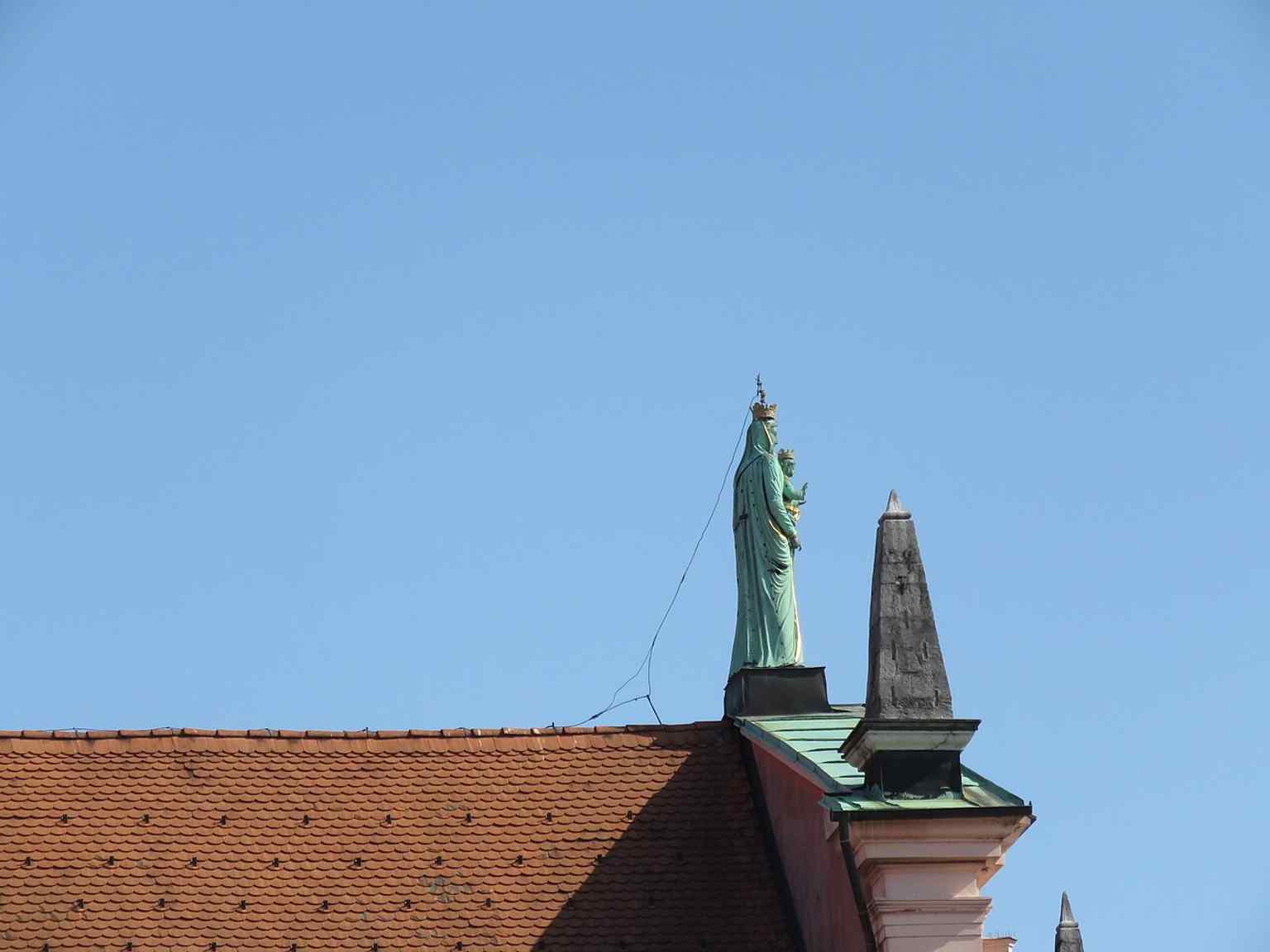
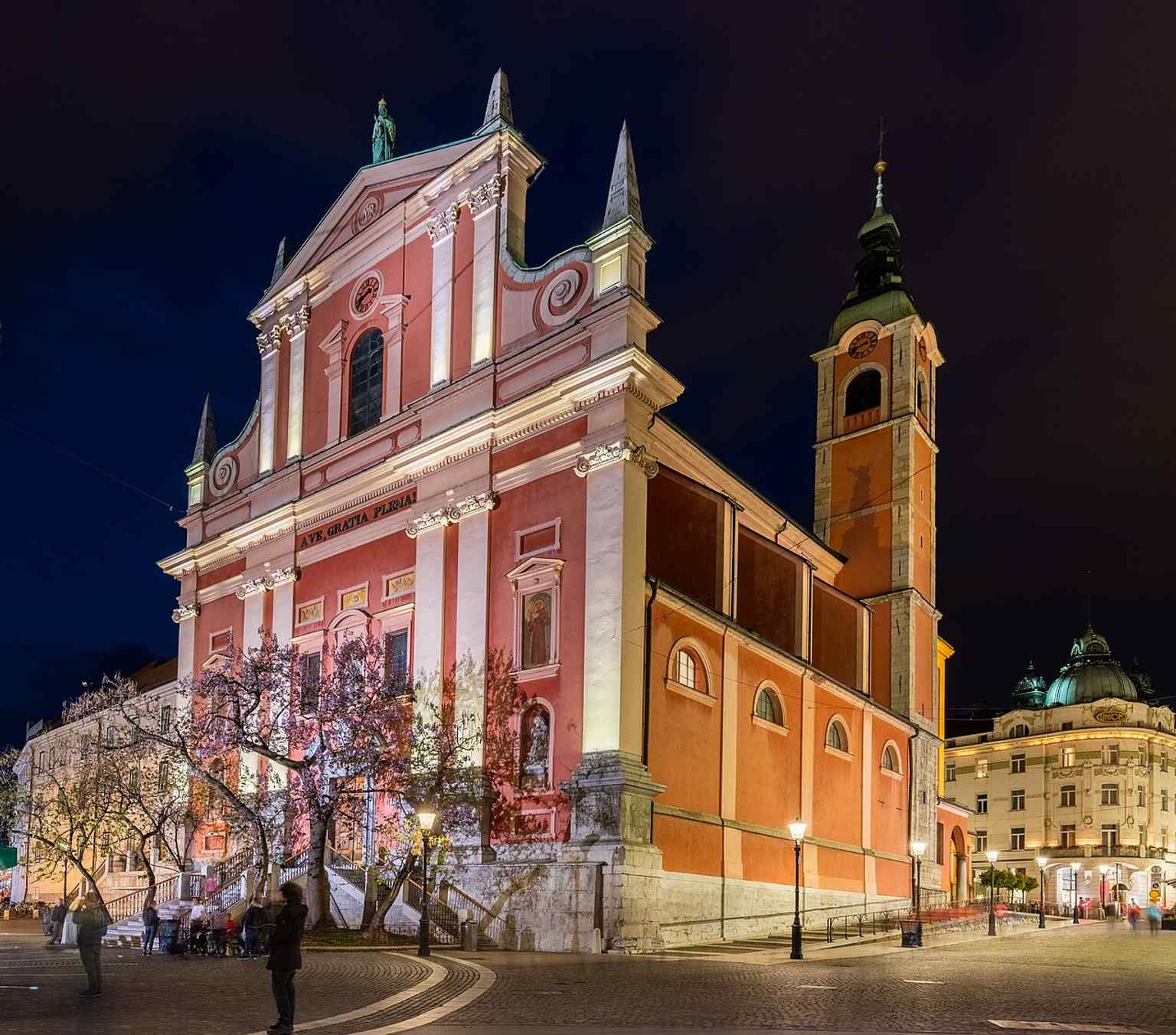
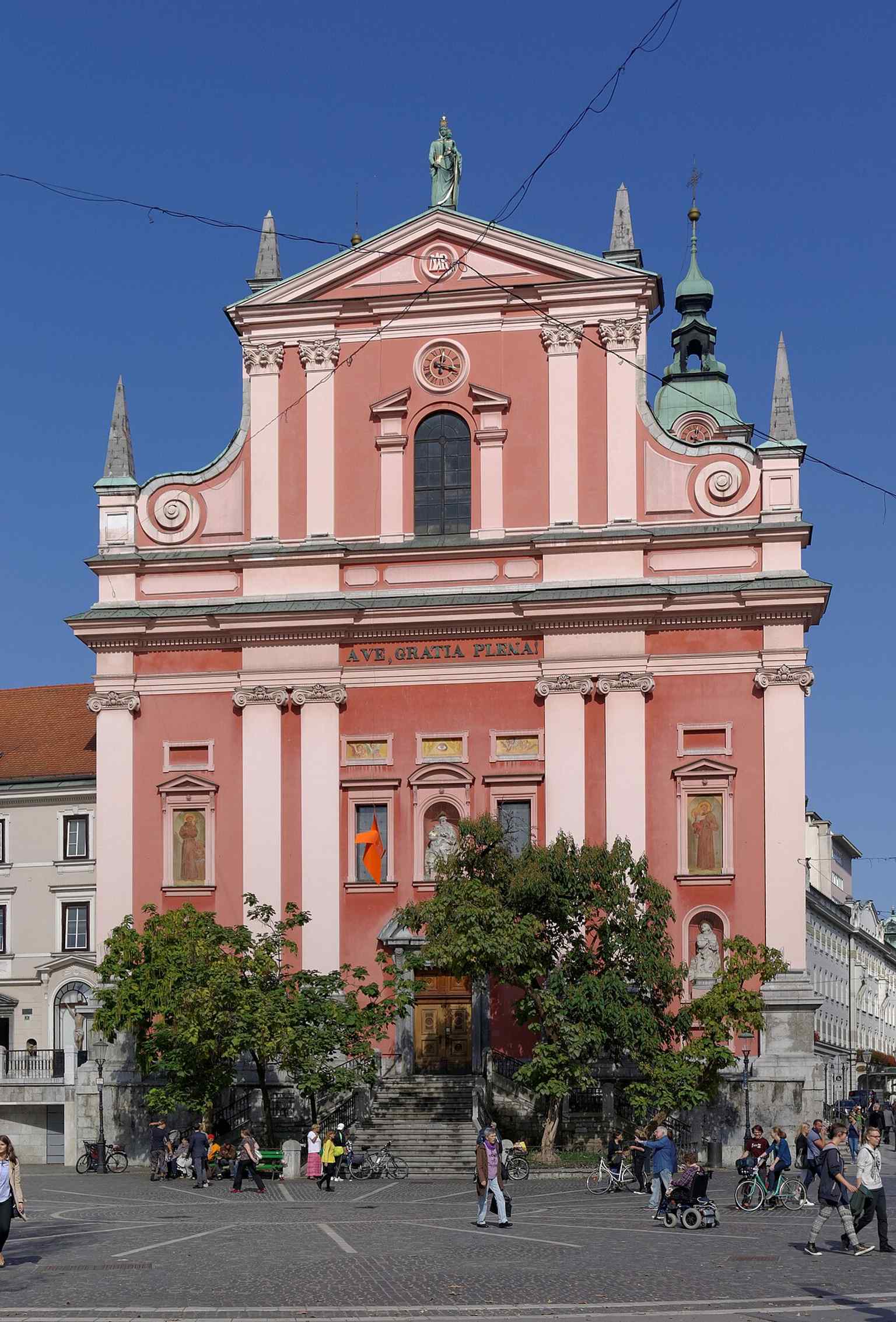
On your left stands the Church of the Annunciation, defined by its smooth salmon-pink walls, tall white rectangular columns called pilasters, and a striking copper statue standing at the very top of its triangular roof.
The story of this ground begins with the Augustinian Order, a Catholic community of monks dedicated to poverty and education, who laid the groundwork here by building a modest church in sixteen twenty-eight. But in sixteen forty-five, a devastating fire tore through the structure, reducing decades of devotion to ash and charred timber.
Yet, from absolute ruin, a profound new vision took shape, driven by a tragedy far deeper than losing a building.
In that same year, a wealthy nobleman named Baron Konrad Ruessenstein received the kind of news that permanently breaks a person. His son, Janez Karel, had traveled to Rome for his studies... and he never came back. The young man died suddenly, leaving his father completely shattered.
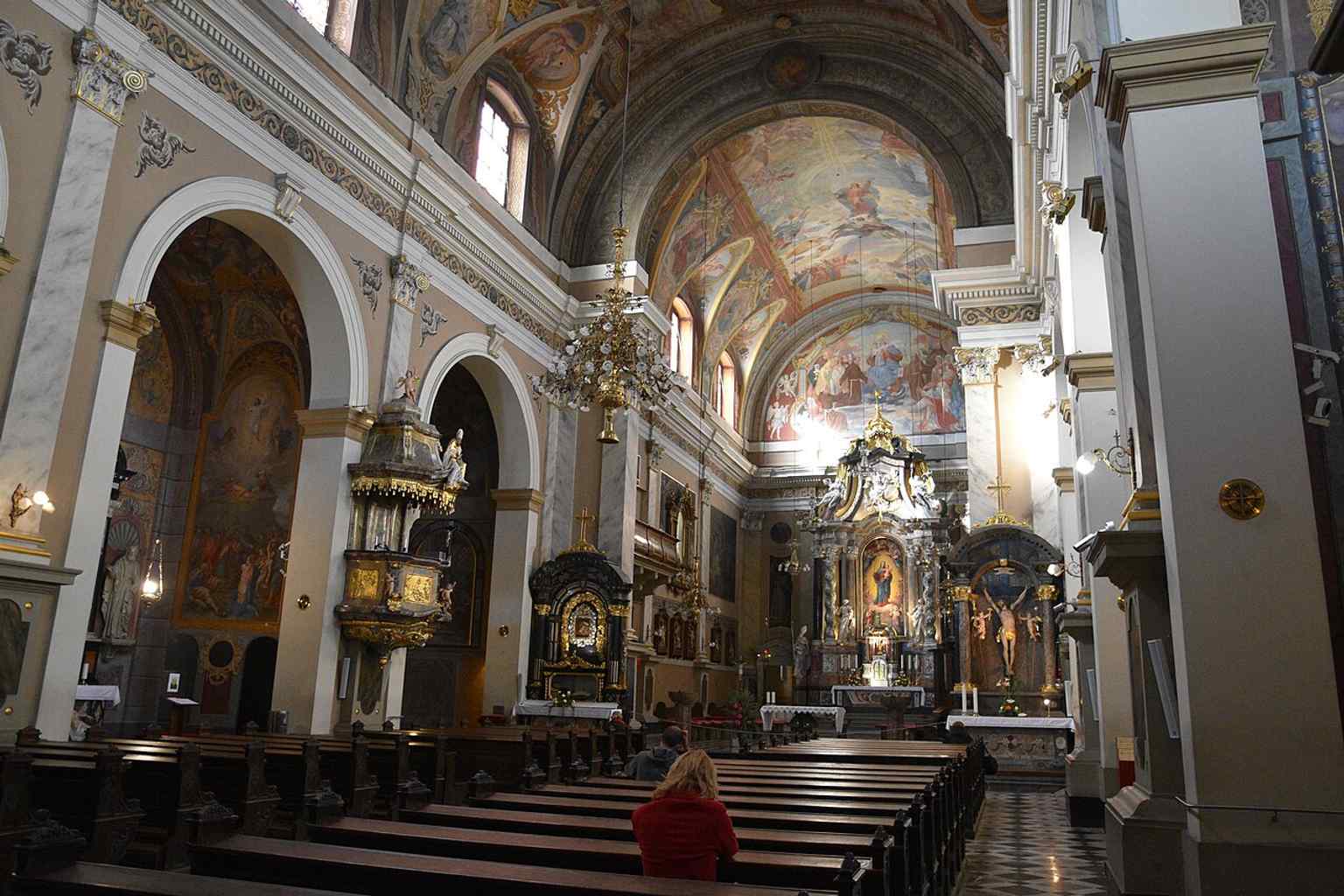
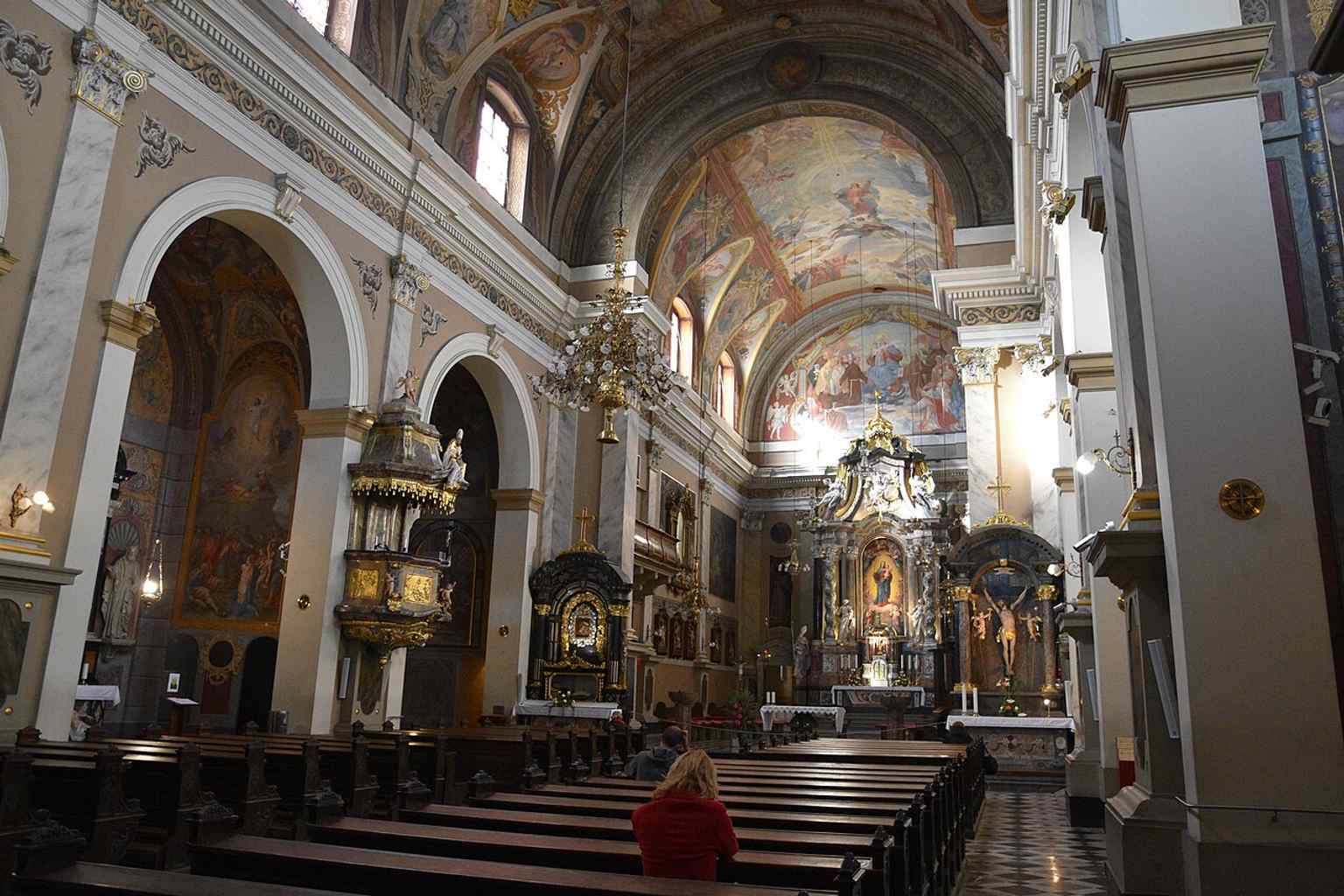
The Baron was left with a vast sum of money, his son's entire inheritance, and a crushing void. He decided he could not keep the wealth meant for a future that would never happen. So, he took every single coin of that inheritance and poured it into the ashes of the ruined Augustinian church. He bankrolled an entirely new, massive structure in the early Baroque style, an architecture known for its dramatic, soaring spaces meant to inspire deep emotion.
But the Baron had one condition. He required the builders to create a Loreto chapel inside the church. A Loreto chapel is a specific type of shrine modeled after the purported childhood home of the Virgin Mary, and the Baron needed it to serve as a family tomb. It was to be a sacred vessel to hold his son's remains, and his memory, forever.
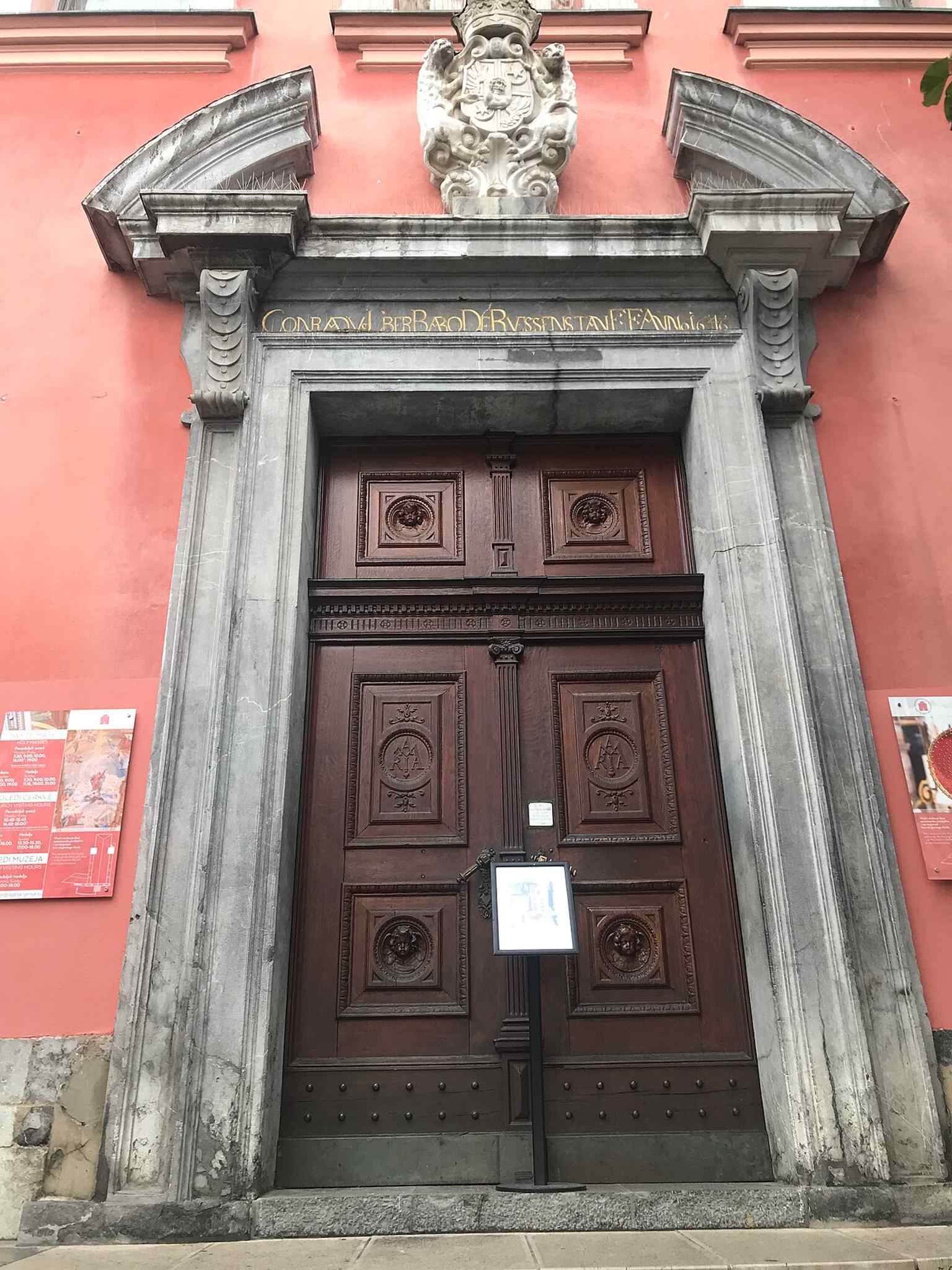
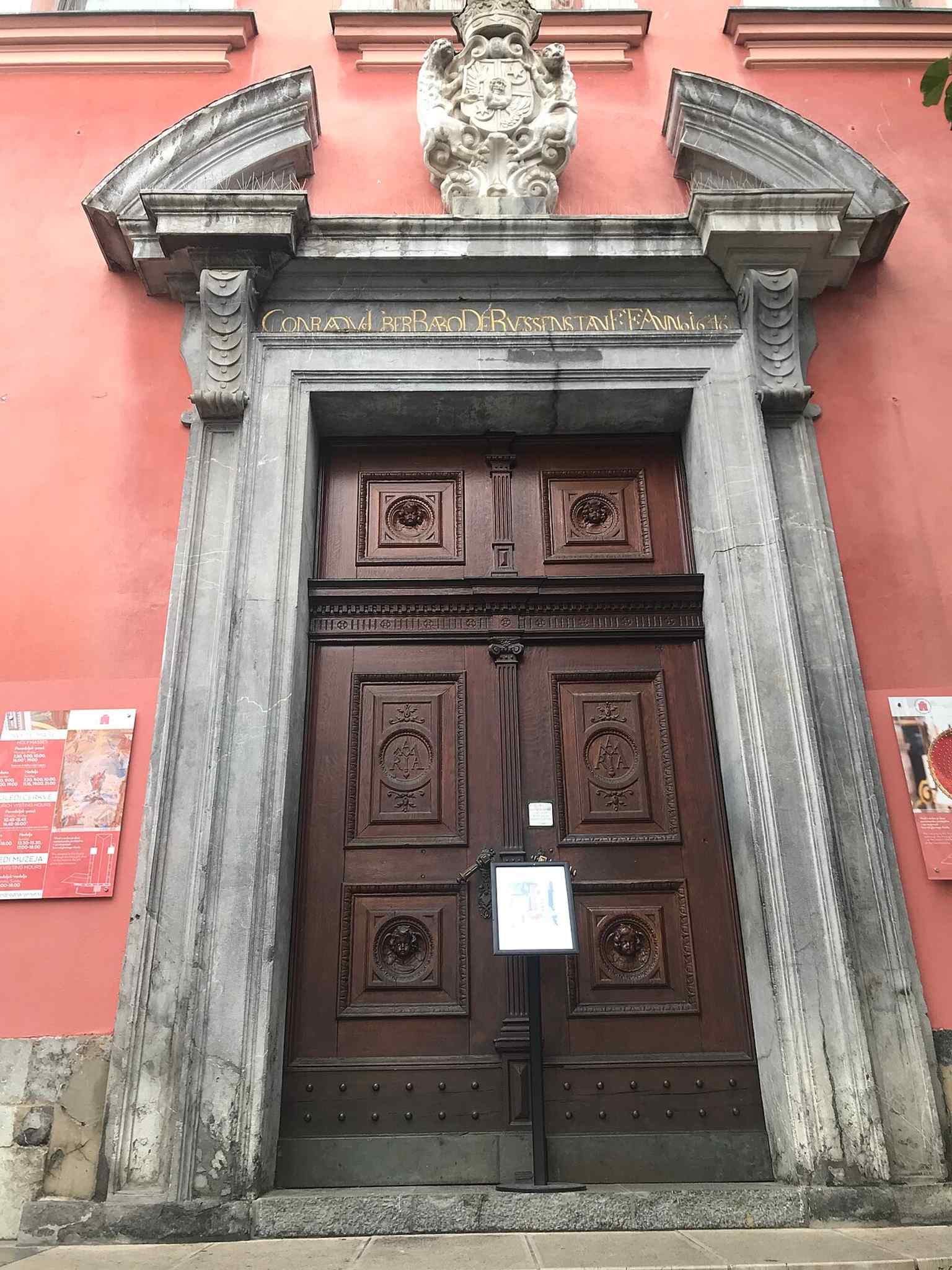
Take a look at the image on your screen. Just above the main entrance doors, you will notice a large, heavy stone coat of arms supported by two lions. That is the Ruessenstein family crest. It hangs there as a permanent, silent testament to a father's grief, carved in stone for all of Ljubljana to see.
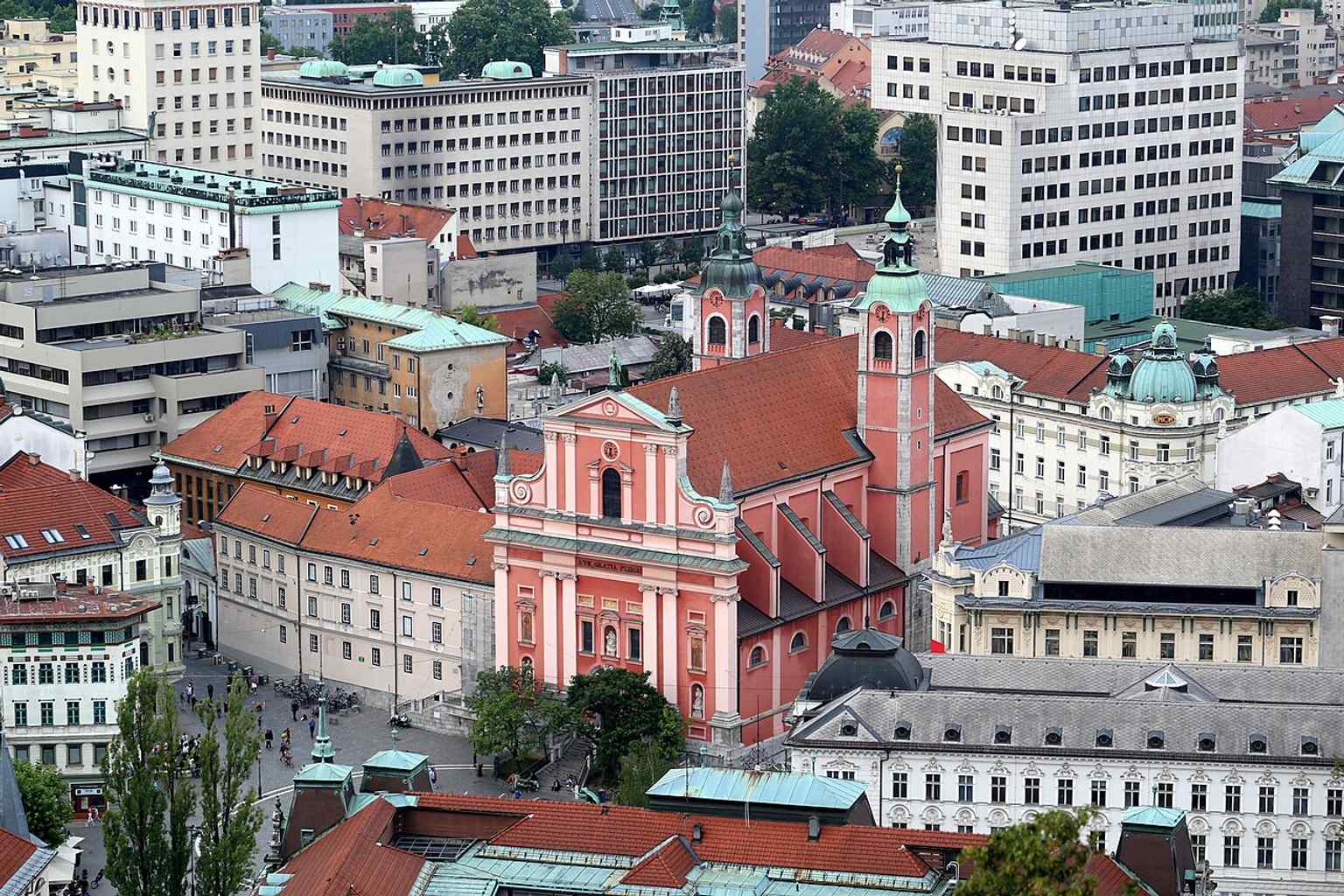
By the late eighteenth century, government reforms abolished the Augustinian order, and the Franciscans moved in to take over the church. They painted the exterior a vibrant red, the symbolic color of their order, but decades of relentless sun eventually faded that striking red into the gentle salmon-pink you see today. The locals fell in love with the softer hue, and so it remained.
The church is still active, with opening hours running through most of the day and pausing briefly in the late afternoon. Take a moment to look closely at those heavy stone details above the door, and feel the weight of the history resting there. Next, we will transition seamlessly to the Franciscan Church of the Annunciation, right here where you stand.






%2001.jpg)


