
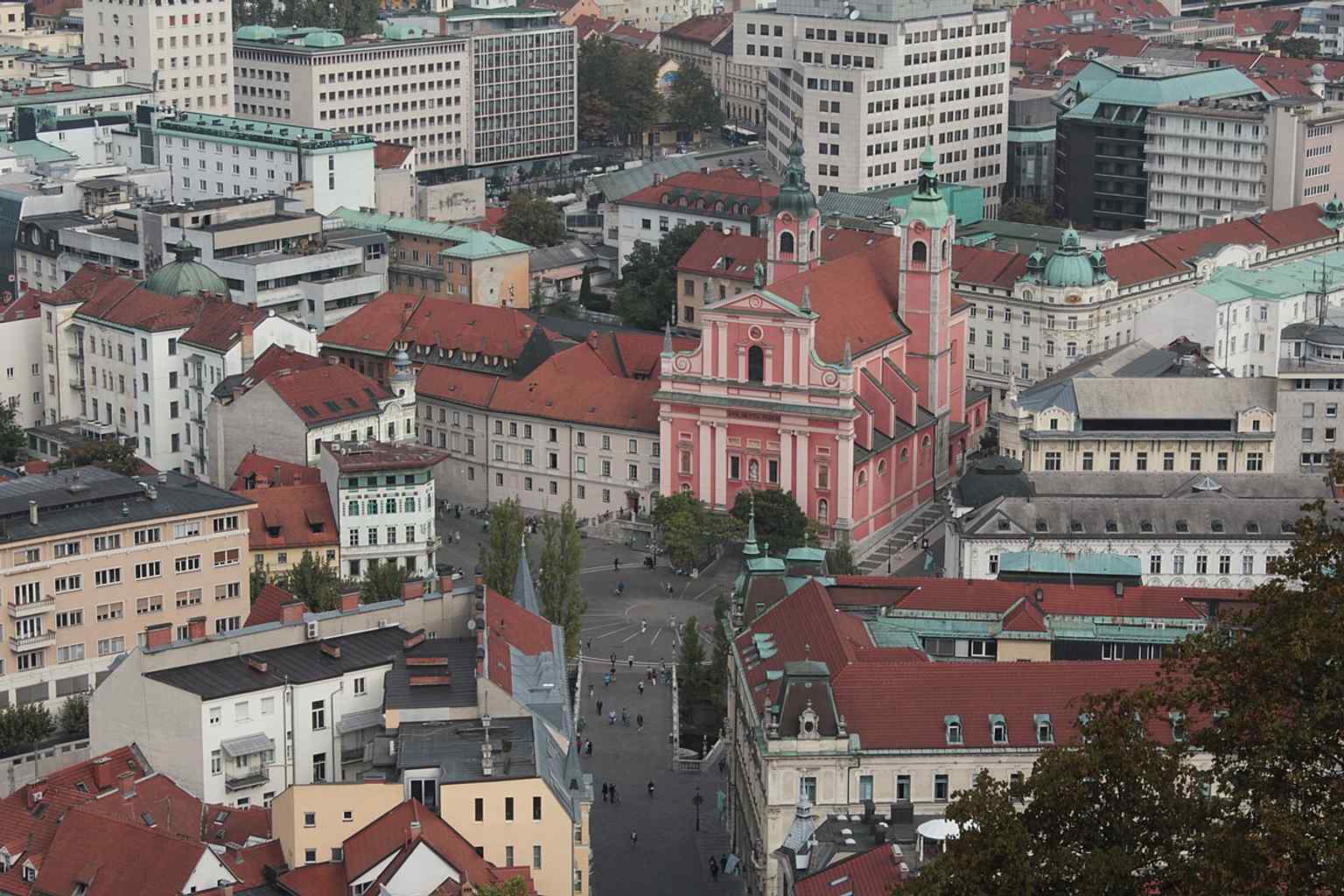
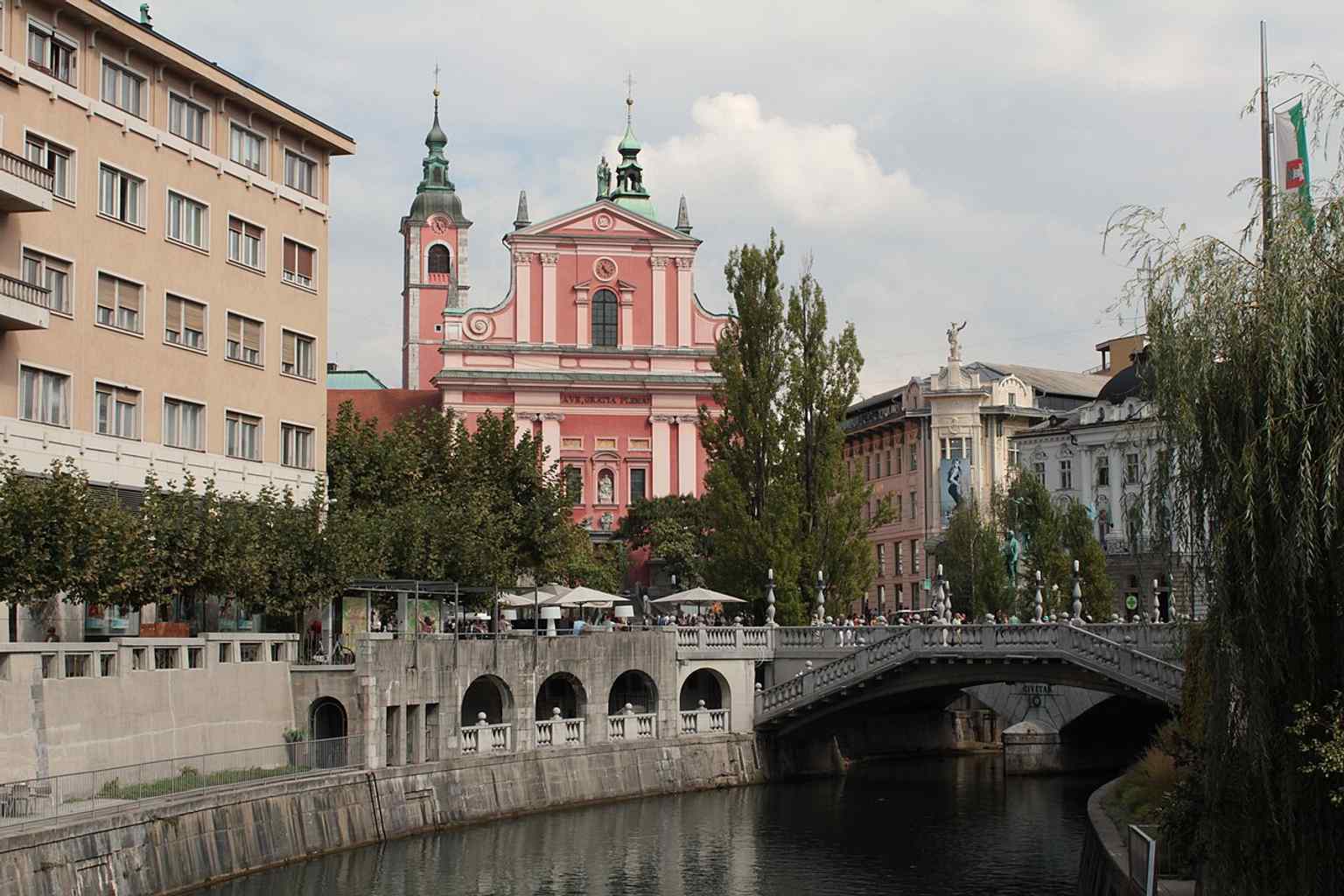
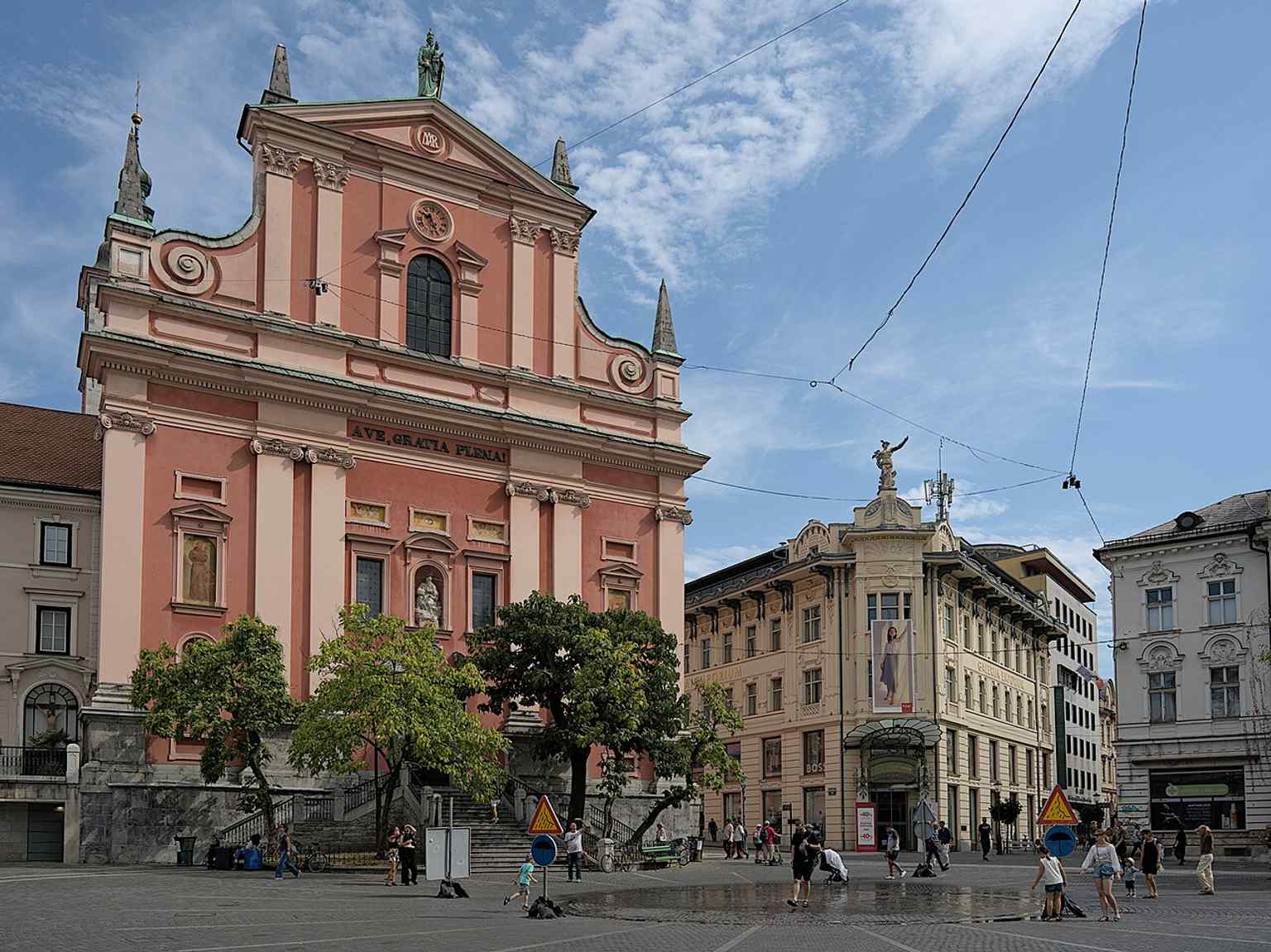
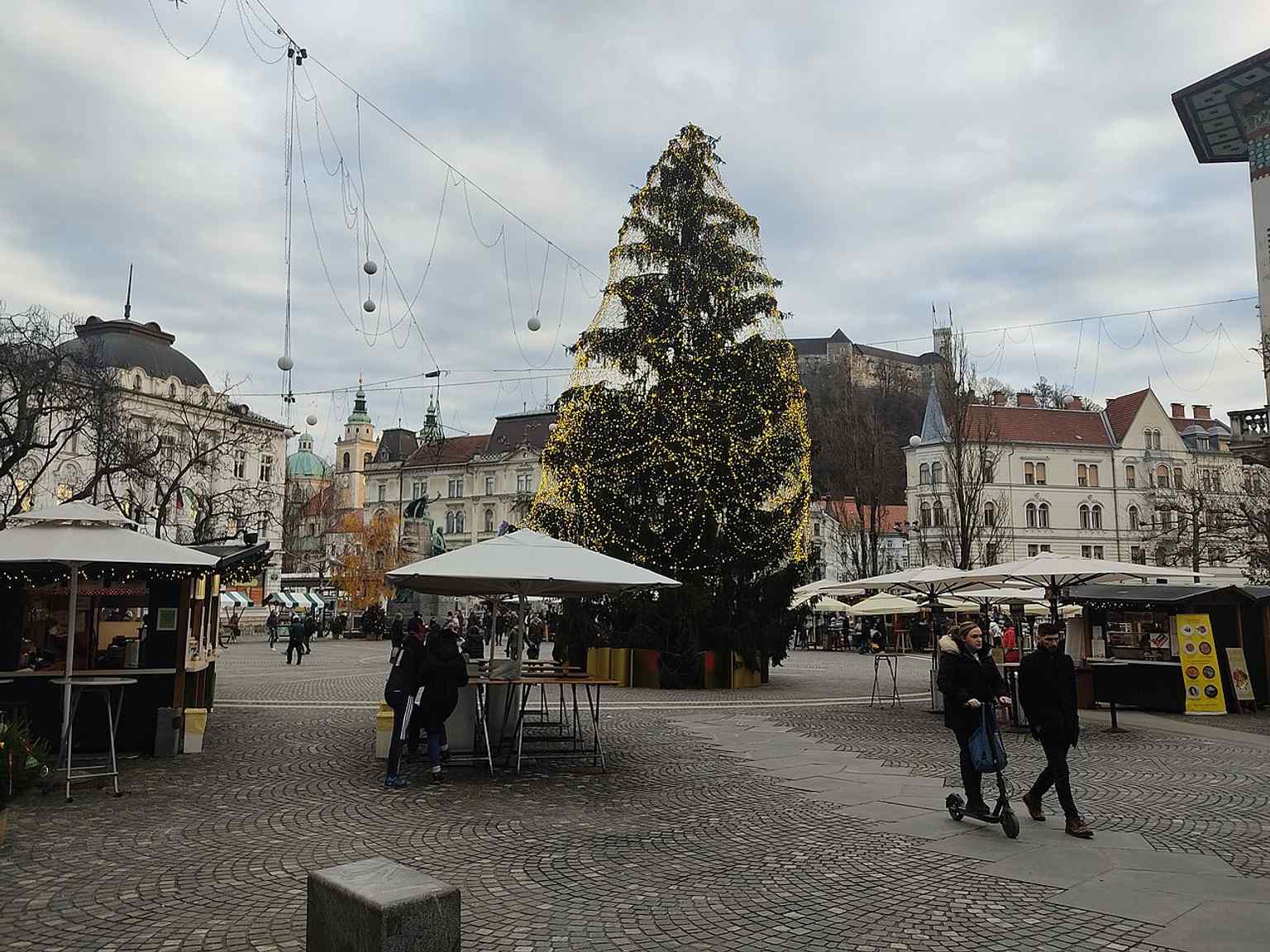
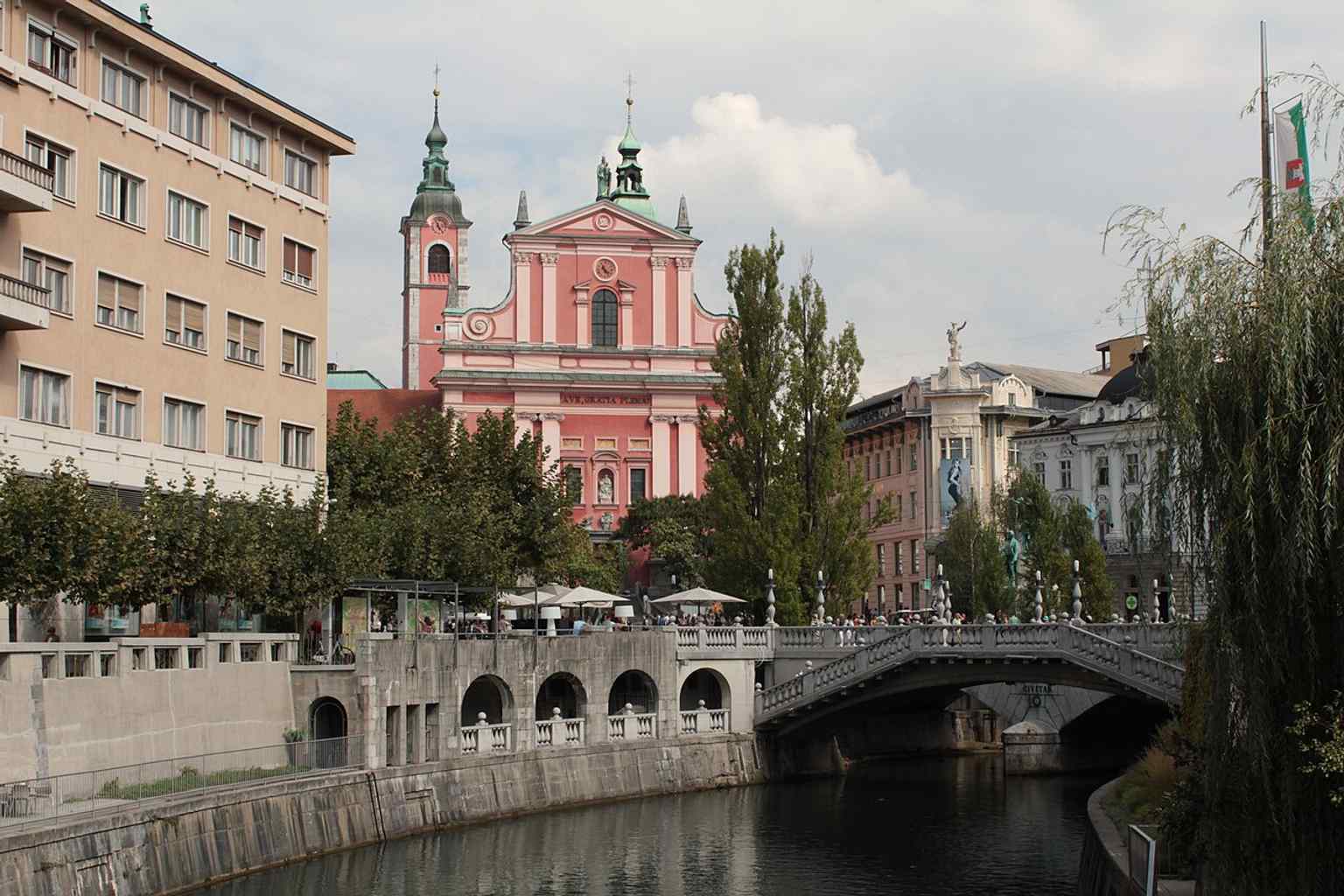
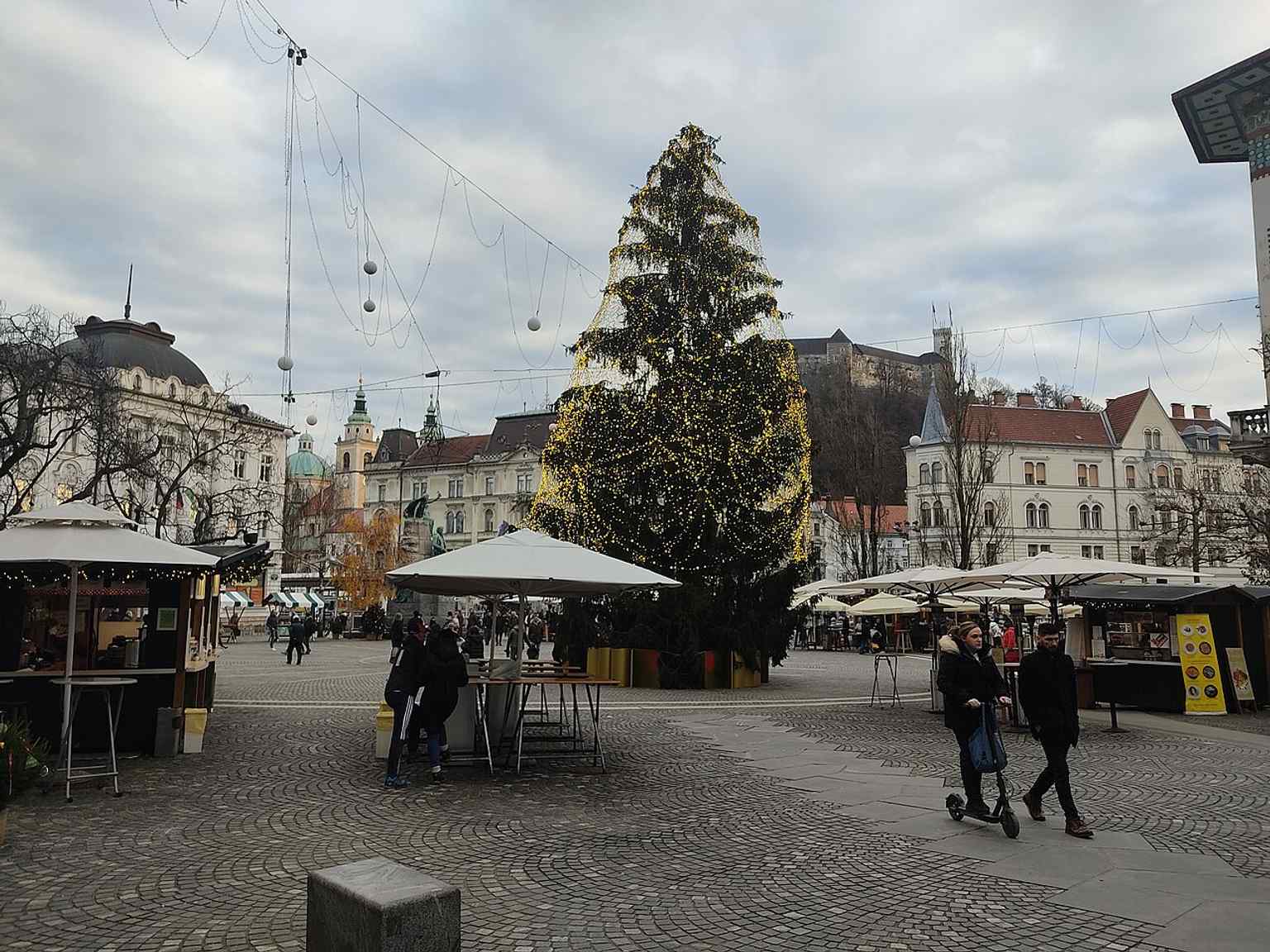
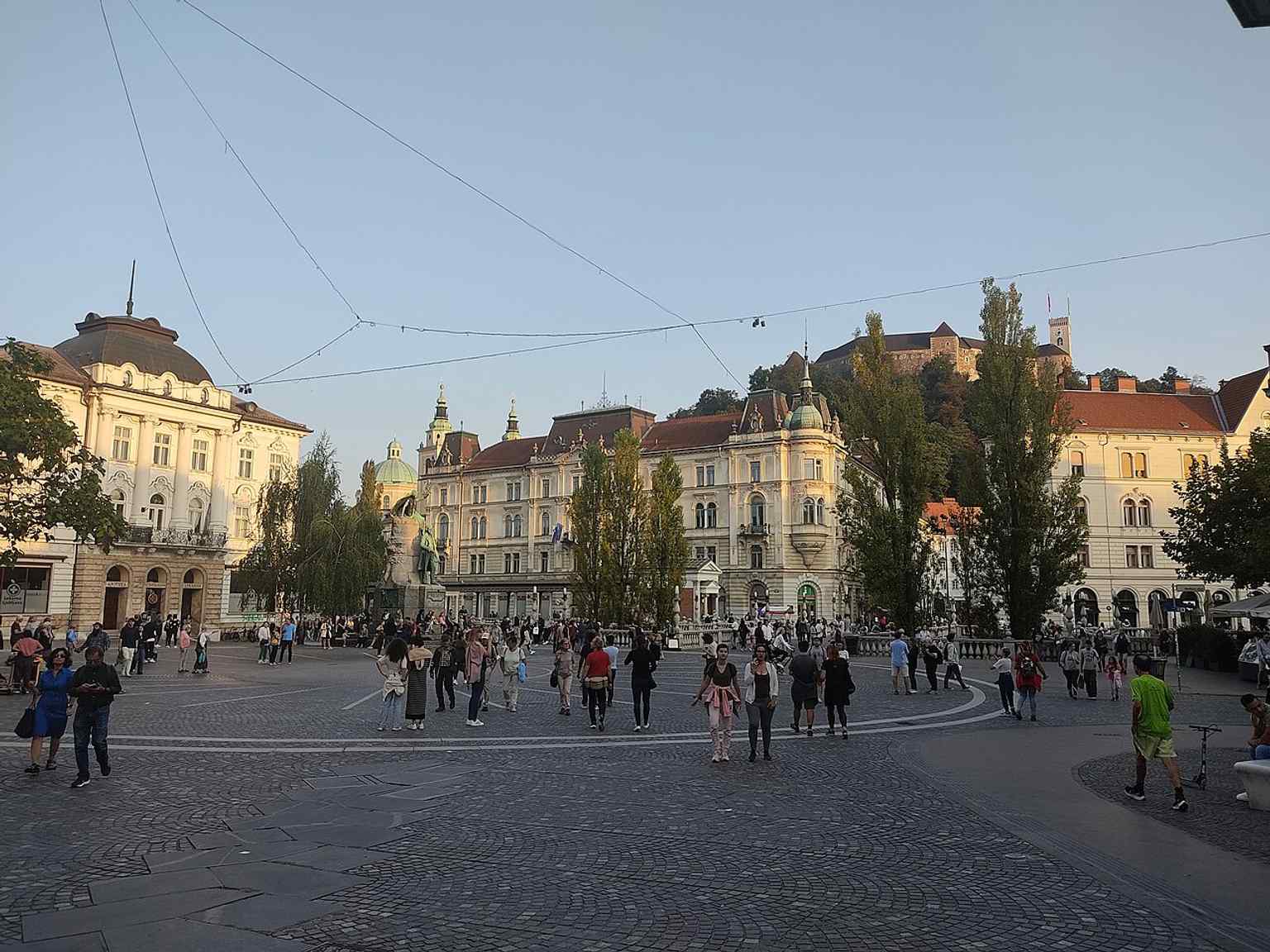
Here we are at Prešeren Square, just on your left. This is the absolute nexus of Ljubljana. Notice how the space forms a natural funnel, pouring the energy of seven different avenues into one vibrant, bustling focal point.
For centuries, this was just a medieval crossroads outside the old city gates. But as is so often the case, the identity of a place is often forged in catastrophe. When the earthquake brought the medieval structures crumbling down, the ruins became a blank canvas. Out of that destruction came a wave of visionary rebuilding. Take the Hauptmann House, for example. It was one of the few buildings to survive the quake, but it soon received a stunning facelift in the Vienna Secession style, an architectural movement known for breaking away from historic traditions to use modern, geometric forms. The architect covered the building in colorful ceramic tiles arranged in a checkerboard pattern, bringing a striking new energy to the old walls.
But the true anchor of this space is the bronze monument of France Prešeren, Slovenia's national poet, erected in 1905. You might think a monument to a poet would be a quiet affair, but this one caused a spectacular scandal. Check out the photo on your screen to see the details. Notice the muse holding a branch above his head? Well, the local Bishop was absolutely horrified. He fired off a furious letter to the mayor, declaring her a wantonly exposed female figure, completely inappropriate for a statue facing a church. He demanded she be taken down, or at least given some decent clothes. Naturally, the mayor refused. In protest, the Bishop supposedly ordered the church doors kept locked at certain hours so his congregation wouldn't have to endure such indecency.
Beyond the scandal, the statue holds a quiet, poetic secret. Follow the bronze poet's gaze across the square toward Wolf Street. He is staring eternally at a small relief portrait on the facade of a building there. It depicts Julija Primic, his great, unrequited love. Even in bronze, he never stops looking at her.
Before we move on, look down at the ground. In 1987, architect Edvard Ravnikar redesigned this paving. Pull up the next image in your app to see the pattern clearly from above. Those radiating lines of white Macedonian stone form a massive circle. The diameter is exactly forty-one and a half meters, a strict mathematical choice that perfectly matches the dimensions of the Triple Bridge right next to it. Ravnikar actually wanted to drop a massive modern fountain right in the middle of it, but the citizens revolted, fearing it would upstage their beloved poet. The people won, and the circle remained wonderfully, stubbornly empty.
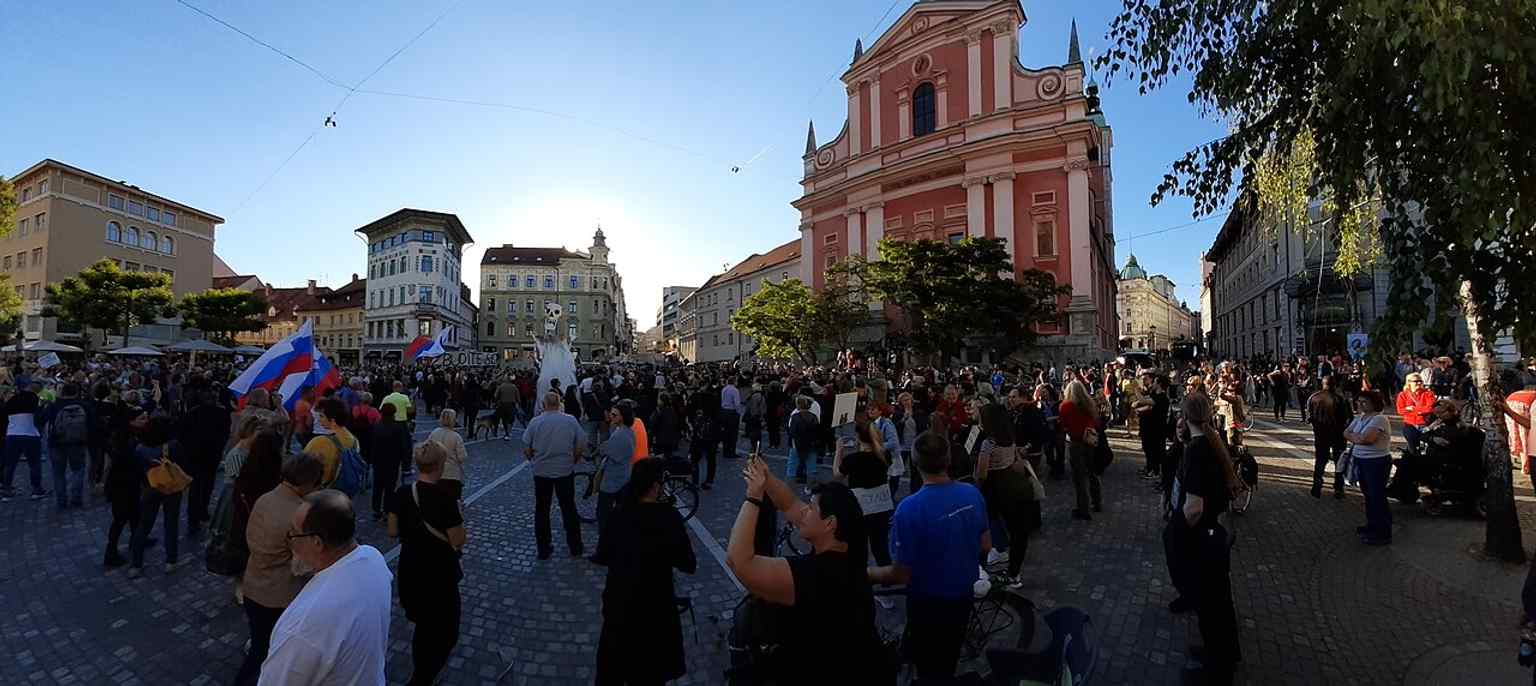
It is just as well. This public square is open twenty-four hours a day, serving as the city's natural stage for everything from quiet reflection to massive protests. Now, let's walk from this lively transit hub toward a space designed for grand gatherings, making our way to Congress Square, which is about a five-minute walk away.






![This Photo was taken by Miha Peče. Feel free to use my photos, but please mention me as the author. I would much appreciate if you send me an email [email protected] or write on my talk page, for my information. Please do not upload an edited image here without consulting me. I would like to make corrections only at my own source to ensure that the changes improve the image and are preserved.Otherwise you may upload an edited image with a new name. Please use one of the templates derivative or extract.](https://upload.wikimedia.org/wikipedia/commons/d/d3/Pre%C5%A1ernov_trg1.jpg)


