
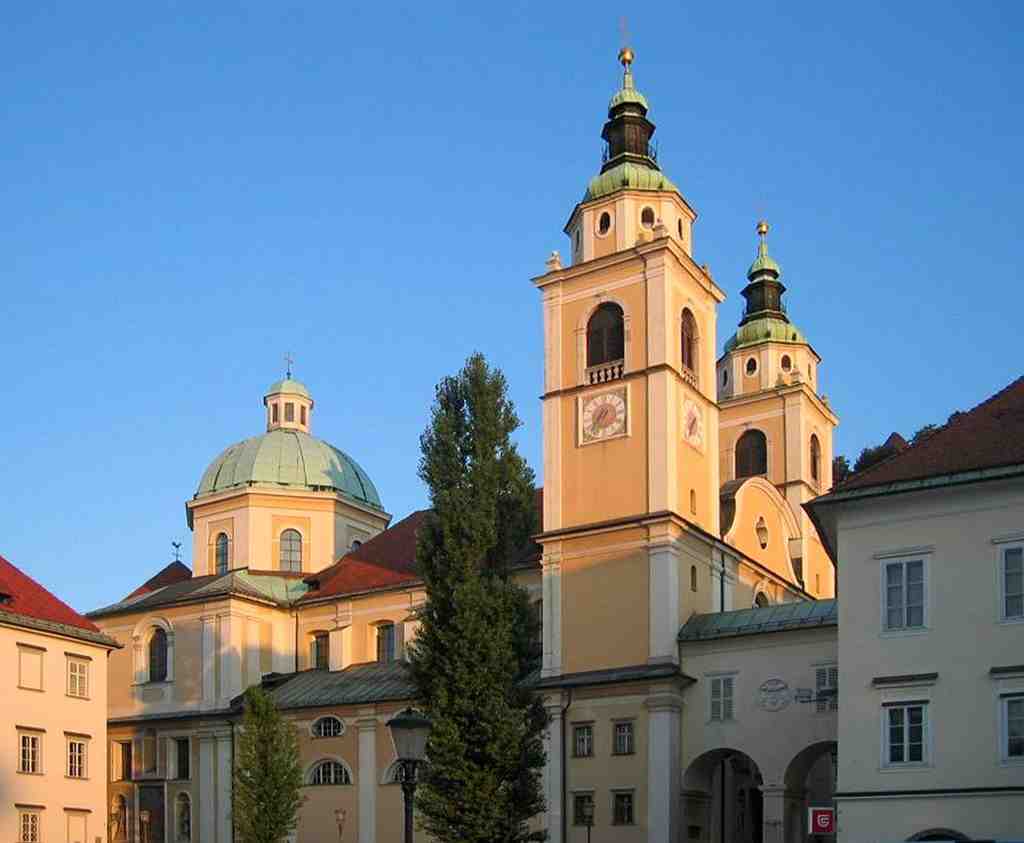
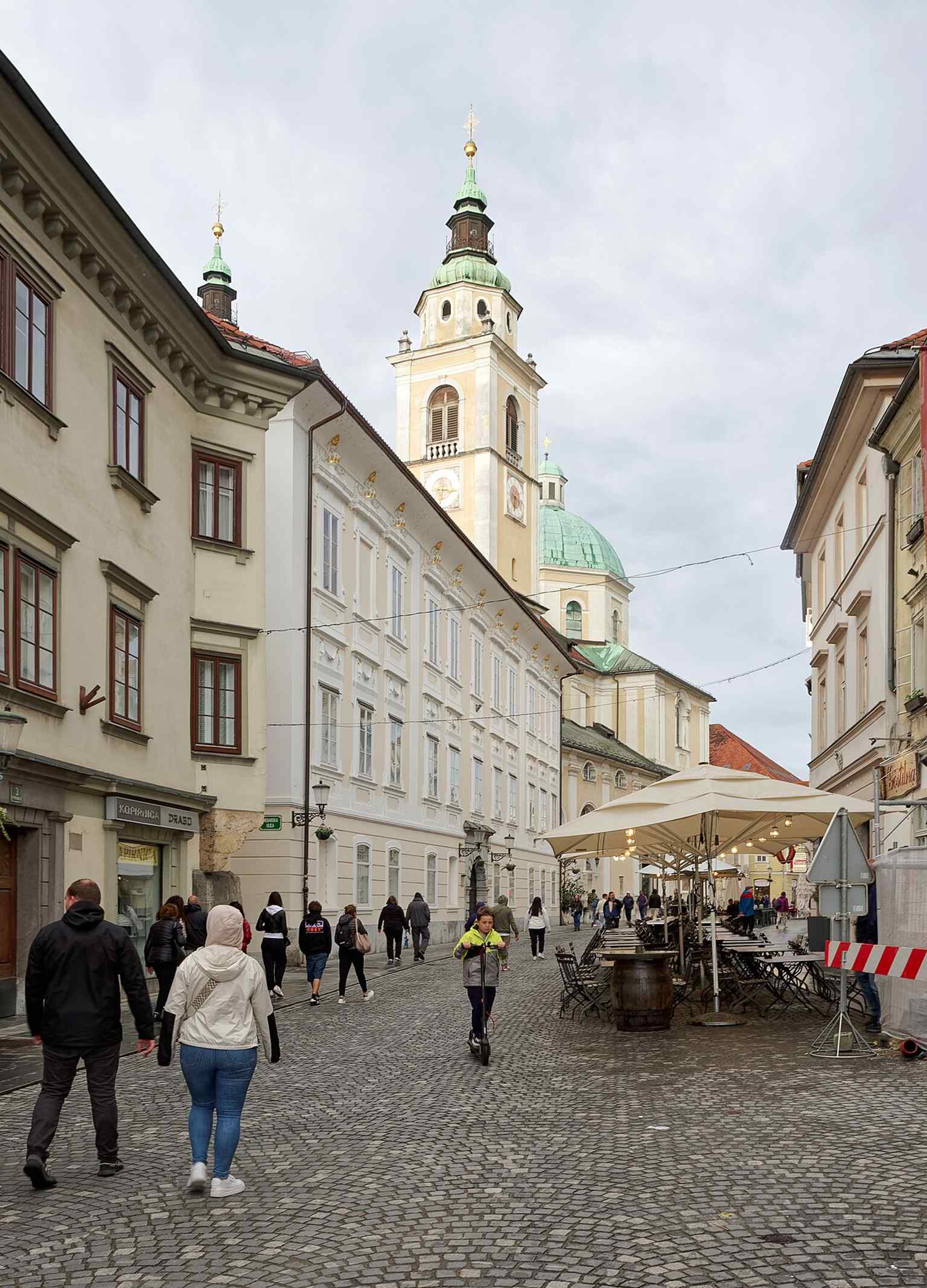
To your left stands the cathedral, easily spotted by its pale stucco facade, the prominent green copper octagonal dome, and twin rectangular bell towers topped with matching green spires. This is Ljubljana Cathedral, officially Saint Nicholas's Church.
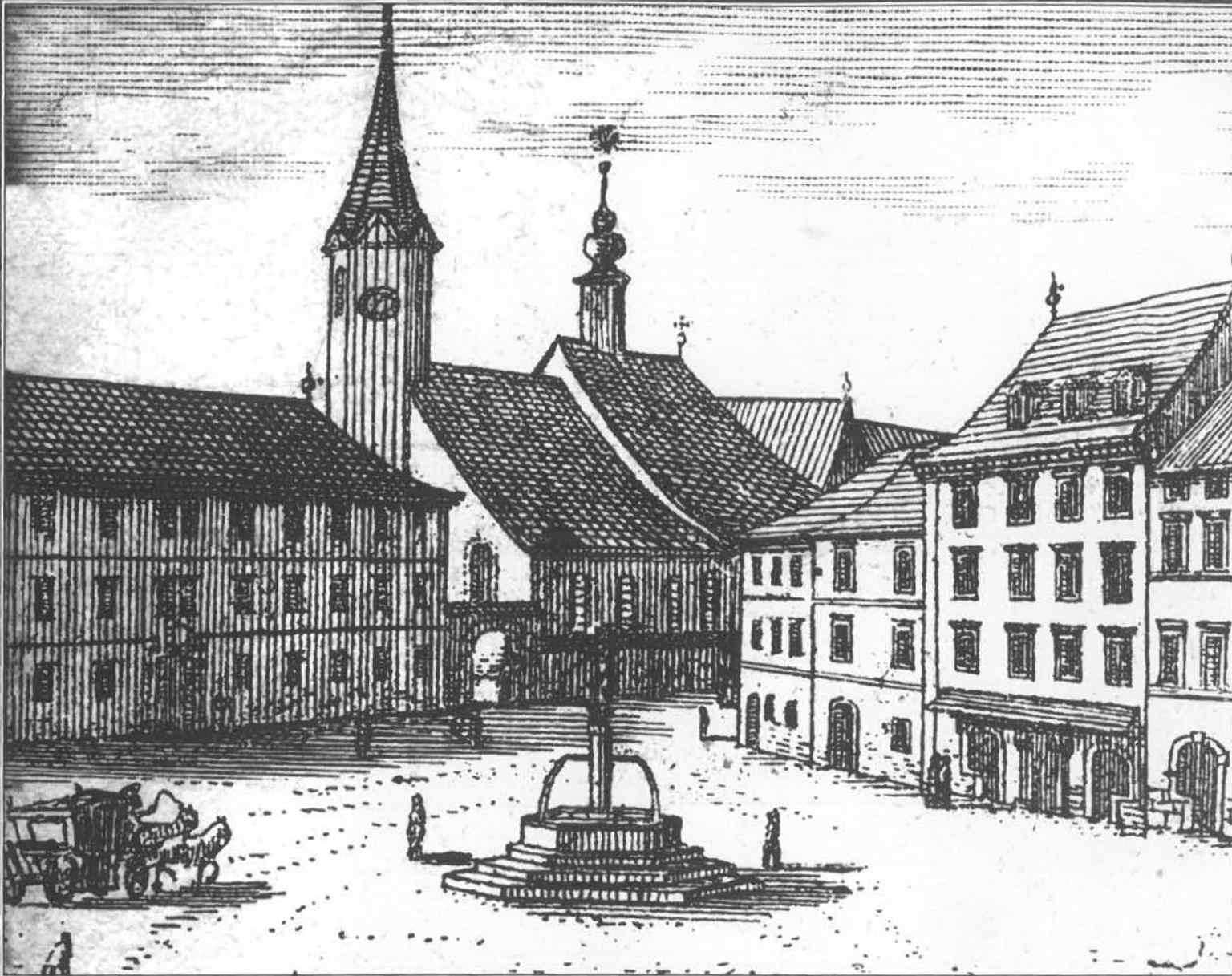
Its elegant exterior hides a rather dramatic past. Take a look at your screen for a 1689 engraving of this site's previous Gothic church. Back in 1469, just eight years after the church was elevated to a cathedral, it burned to the ground. The fire was a devastating blow, widely believed to be an act of arson by Ottoman forces raiding the territory. The ruins left a fragile structure that remained vulnerable for over two centuries. But out of that ash came a fierce desire to build something enduring.
Enter Dean Janez Gregor Dolničar. In the early 1700s, Dolničar became the relentless engine behind a grand Baroque masterpiece, acting as the project's main agitator. He faced tremendous hurdles. Ljubljana was in the middle of a massive building boom, meaning construction materials were incredibly scarce, and the wages for masons had absolutely skyrocketed. Dolničar spent years navigating these economic pressures before finally securing basilica plans from the renowned Jesuit architect Andrea Pozzo.
To overcome the staggering costs of the construction, Dolničar embraced a bold compromise. He hired Italian master Giulio Quaglio to paint the intricate Baroque ceiling frescoes you can see on your screen. Quaglio also painted the famous illusionistic fake dome, the cupola finta, which served as a dazzling placeholder for over a century. Quaglio even snuck his only known self-portrait into the presbytery frescoes.
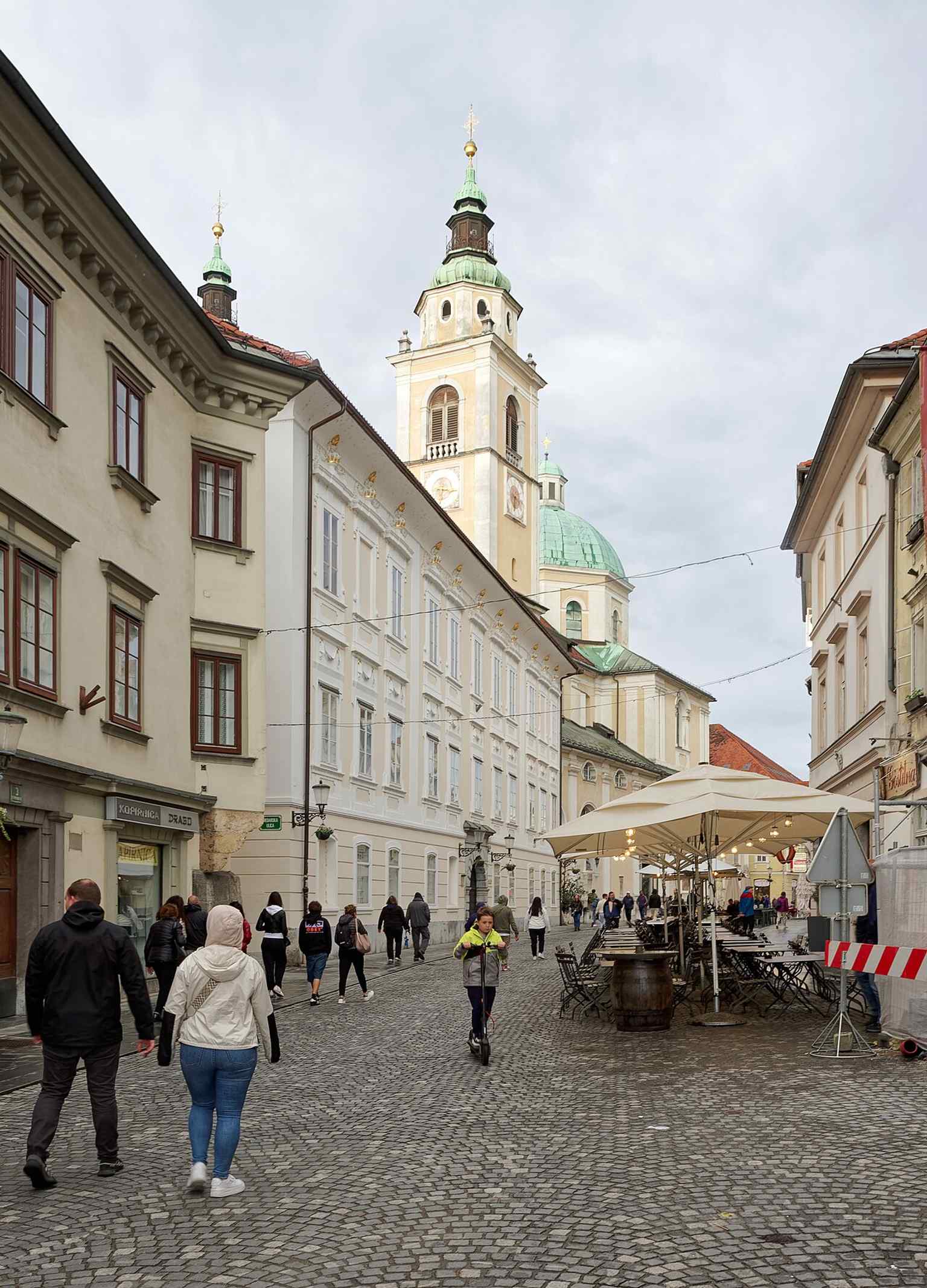
A real octagonal dome was finally added in 1841. But the building's trials were not over. During the great earthquake, the tremor severely compromised the cathedral's facade. The original Baroque semi-circular gable between the towers was deemed too unstable and had to be replaced with a simple triangular one. It took nearly a century until a 1989 structural assessment finally allowed the city to reconstruct the original, sweeping Baroque design you see today.
It seems this building just refuses to stay down. If you look up at the belfries, those golden apples at the very top are actually time capsules, holding relics and parchments since 1706. The towers also house a medieval bell cast in 1326, a rare survivor from the original ruined church.
If you want to explore the interior, the cathedral is generally open daily from eleven to six, with slightly shorter split hours on Sundays.
Now, let us continue our walk toward the striking red facade of the Church of the Annunciation, which is about a six minute walk away.





.jpg)
.jpg)


