AudaTours logoAudaTours

Bucharest Audio Tour: Echoes of Royalty and Revolution

Audio guide14 stops

Beneath Bucharest’s grand boulevards lie scars of revolutions and royal secrets that shaped a continent. Each palace and tower hides a dramatic moment lost to history’s glare. This self-guided audio tour invites you to wander past ornate facades and shadowed courtyards, unlocking stories ignored by hurried visitors. Discover the city not as a tourist, but as a seeker of secrets. What infamous midnight plot at the Palace of the National Military Circle changed an empire’s fate? Who vanished from the Royal Palace on the eve of a national crisis? Why did Colței Tower’s clock once run backwards for a single chaotic night? Follow these city streets and feel each echo of turmoil and triumph. Step through time, from regal grandeur to gritty insurrection, watching Bucharest transform beneath your feet. The city’s truths are waiting. Start the journey and reveal what’s been hidden just beneath the surface.

Tour preview

map

About this tour

  • schedule
    Duration 90–110 minsGo at your own pace
  • straighten
    3.3 km walking routeFollow the guided path
  • location_on
  • wifi_off
    Works offlineDownload once, use anywhere
  • all_inclusive
    Lifetime accessReplay anytime, forever
  • location_on
    Starts at Telephones Company Building

Stops on this tour

lock_open 3 free previews · 11 unlock with purchase

  1. To spot the Telephones Company Building, just look for a tall, creamy-white Art Deco structure with rows of slender windows and a sharp square tower topped with red-and-white…Read moreShow less

    To spot the Telephones Company Building, just look for a tall, creamy-white Art Deco structure with rows of slender windows and a sharp square tower topped with red-and-white antennas, right on the lively Calea Victoriei. Imagine yourself here on Calea Victoriei in the early 1930s, when the world felt topsy-turvy and the Great Depression echoed all the way to Romania. Picture the clamor of construction--as workers rush to build the city’s first skyscraper, a bold Art Deco marvel rising 52.5 meters into the sky. The Romanian government, facing economic trouble, struck a dramatic deal with the Americans: J.P. Morgan’s bankers brought modern telephony to Bucharest, but at the price of a 20-year phone monopoly. At the center of it all stood this very building, designed by Edmond Van Saanen Algi, who had Dutch roots and a flair for style. Where you now stand was once the Oteteleșanu Mansion-imagine elegant citizens sipping coffees and enjoying beer under twinkling café lights, gossiping about Bucharest’s latest news. As construction took off, the steel skeleton came from the smoky forges of Reșița, and by 1934, King Carol II himself admired the finished palace, a proud new symbol for the city. Through air raid sirens in 1944, the rumble of earthquakes over the next decades, and the thunder of revolution in 1989, this building stood its ground-sometimes barely! Legend says they didn’t even design the roof to hold more than a coffee shop, and when it was time to renovate in the ’90s, the plans had all vanished, like a good magician’s secret. Seven hundred workers, a million euros, and a lot of determination later, the grand palace was rescued, façade gleaming again, standing tall-a witness to nearly a century of drama, deals, and more than a few telephone calls that surely changed lives.

    Open dedicated page →
  2. location_on
    2
    Look for a grand cream-colored corner building with ornate details and the word “HOTEL” crowned in yellow on the roof, right at the intersection with big windows and classic iron…Read moreShow less

    Look for a grand cream-colored corner building with ornate details and the word “HOTEL” crowned in yellow on the roof, right at the intersection with big windows and classic iron balconies-that’s Casa Capșa directly across from the street. Now, imagine, you’re standing at the heartbeat of Bucharest’s old-world glamour! Welcome to Casa Capșa-a place where legends sipped coffee, secrets swirled in cigarette smoke, and a slice of cake might have had more drama than a theater. At the crossroads of Calea Victoriei and Edgar Quinet Street, the aroma of pastries might not be in the air right now, but trust me, this place has seen enough sugar and scandal for a whole city. Back in the late 17th century, this corner was just the home and garden of a nobleman named Radu Slătineanu. Then, in 1830, an adventurous Italian chef with a name that was almost as spicy as his dishes-Eronimo Momolo-turned the downstairs into a lively tavern famous for exotic, Italian-Oriental flavors. Above, a glittering ballroom soon appeared, with the city’s prettiest parties and the swish of silk dresses echoing through the night. But the real transformation happened in 1868, when brothers Constantin and Grigore Capșa got their hands on the building. Their first move? Open the “La doi frați, Constantin și Grigore Capșa” pastry shop-which quickly became the talk of Europe. As Constantin bowed out, Grigore kept growing the dream, adding a hotel in 1886 and, a few years later, the legendary Capșa Café. The treats? Parisian secrets brought back by Capșa’s chefs-brought hot off the boulevards of France, if you please. Casa Capșa’s fame exploded-you had to be a “somebody” to get in! No bohemians allowed, only the city’s last aristocrats, public figures, and newspaper men plotting the fate of Romania or maybe just tomorrow’s headlines. That’s not to say there wasn’t occasional excitement. During World War I, Bulgarian officers even turned this fancy home of desserts into their mess hall. Imagine the surprise-soldiers slurping soup beneath golden chandeliers, pastries swapped for military rations. After Grigore’s passing in 1931, the place kept changing hands and facing challenges, but always served the city’s most important banquets-both official and, let’s say, “off-the-record.” Chefs from Paris set strict rules: pastries from the day before became a cheap treat for staff, while fresh delights debuted daily. And each VIP visit meant a new dessert was invented, like the “joffre” bonbon for Marshal Joffre’s visit in 1920. Think of it: a new cake for every celebrity! By the mid-20th century, times were less spectacular. Nationalized and renamed, Capșa lost its sparkle, but after restoration in the 1970s and rebirth in the 1990s, it was the haunt of writers, artists, professors-Bucharest’s brains and dreamers. As poet Virgil Carianopol put it, “to become a writer, you needed the Capșa baptism”-no pubs, no stuffy boards, just the magical whiff of fresh pastry and pending fame. So now, pause and listen. If these walls could talk, you’d hear political plots, romantic whispers, birthday toasts, and maybe, just maybe, the crack of a crème brûlée shell. Welcome to the scene of countless stories-Casa Capșa, where history, art, and dessert collide!

    Open dedicated page →
  3. You’re now standing in front of the magnificent Universe Palace-Palatul Universul-a place that’s changed more headlines than a gossip columnist at a red carpet event! Let’s rewind…Read moreShow less

    You’re now standing in front of the magnificent Universe Palace-Palatul Universul-a place that’s changed more headlines than a gossip columnist at a red carpet event! Let’s rewind to the late 1800s. Picture yourself on this same street, Ion Brezoianu 23, but instead of city bustle, imagine the click-clack of typewriters, clouds of cigarette smoke, and the aroma of strong Romanian coffee wafting through the air. The year is before 1884, and an ambitious Italian journalist named Luigi Cazzavillan has just built the original part of this palace, known today as Corp C, or the Cazzavillan House. But as the decades rolled on, Bucharest’s thirst for news outgrew this cozy space. Why? Because "Universul" wasn’t just any paper-it became the biggest newspaper in Romania, packing more drama into its pages than a telenovela. So, it was time for something grander. Under the determined guidance of Stelian Popescu, who took over as director in 1915 (and clearly never missed a deadline), construction of the new palace began in 1926. The celebrated architect Paul Smărăndescu worked hand-in-hand with engineer Emil Prager to create a cutting-edge building-so modern, in fact, they used reinforced concrete, the architectural equivalent of a superhero’s cape. The design blends the sturdy, traditional Neo-Romanian style with the geometric flair of modernism. Think of it as the news headquarters with style-kind of like Clark Kent, if he had a passion for floorplans. The building was split in two: at the front, Corp A for editorial offices filled with busy journalists, editors, and a lot of chatter; at the back, Corp B, which thudded day and night with big, noisy printing presses. Early mornings would find reporters running up and down staircases chasing leads, secretaries sorting through drawers stuffed with scoops, and at the very top-where else-was the bar and party hall under the mansard roof. News never sleeps, but even journalists need a little fun, right? The Palace even had bridges connecting its two halves, so someone could dash from newsroom to printroom on any floor up to the third-all without stepping outside. At ground level, there were telegraph offices, ticket counters, and a waiting room, while the first floor held executive offices and boardrooms. Up above, each floor bustled with different teams: translators, typographers, and a library stacked with archives. You might say the whole building was its own universe of information-sorry, I couldn’t resist the pun! World War II brought its own storms. Stelian Popescu fled to Switzerland, and after the war, the building was seized and the presses rolled on under new management. Communism saw its nationalization, and by the 1950s, "Universul" had given way to "Informația Bucureștiului" and later the post-revolutionary "Libertatea," whose first wild issue hit the streets right after Communism fell in December 1989. In the 21st century, the good news is the Palace is thriving once again! After careful restoration starting in 2015, it’s a vibrant hub filled with creative industries: cafes with fresh coffee, design shops, theatre spaces, cocktail bars, a cinema, and offices buzzing with architects, artists, and advertisers. From the basement wine bar to the rooftop parties, the energy of news and creativity never left these seven stories. So, as you stand here, tune your ears and you might still hear the echo: an editor shouting "Stop the press!" or a journalist whispering the latest scoop. The Palace remains a symbol of Bucharest’s undying curiosity and flair for reinvention. And remember, if walls could talk-they’d probably ask for a coffee and start quoting headlines!

    Open dedicated page →
Show 11 more stopsShow fewer stopsexpand_moreexpand_less
  1. To spot the Palace of the National Military Circle, just look straight ahead for a grand, palatial building with tall Corinthian columns, a wide stone staircase, and a stately…Read moreShow less

    To spot the Palace of the National Military Circle, just look straight ahead for a grand, palatial building with tall Corinthian columns, a wide stone staircase, and a stately central fountain-it's hard to miss with its bold façade right between the two pine trees. Ah, you’ve arrived-right in front of one of Bucharest’s most impressive landmarks, where history and a bit of military flair come together! Picture yourself standing here in the early 1900s. The air hums with excitement, the ground is a bit marshy underfoot, and you can practically hear the distant chattering of soldiers and the pounding of hammers as workers hustle to build this very building on what was then swampy land. They drove oak pillars deep below the mud, following the advice of two very wise engineers, just to give the palace a sturdy backbone. This majestic palace was born in 1911, thanks to the brilliance of architect Dimitrie Maimarolu and his team. You know they meant business, because look at those massive columns and the regal eagles perched on top, keeping a watchful eye-no one gets by those birds! Sculptor Ion Schmidt Faur gave them their fierce look. The building was meant for Romanian army officers, who had set up their organization well before this palace-back in 1876, when mustaches were longer and marching was even more serious. Now, the palace rose slowly. By 1914, the shell was ready, red bricks peeking out, topped with a fresh roof. Then-dramatic pause!-World War I began. Just when everyone was dreaming of opening galas and grand balls, Bucharest was taken over by enemy forces, and the Military Circle was evacuated. Bit of a party crasher, that war. When the army returned in 1919, the palace was a mess inside-like someone had really lost at musical chairs. But nothing keeps a determined officer down, and repairs started right back up! Finally, in 1923, a fanfare of trumpets! King Ferdinand I and Queen Marie of Romania themselves arrived for the official grand opening. And trust me, this was no ordinary housewarming. Newspapers described the palace as Romania’s “architectural jewel”-the fanciest, most impressive palace around. But what about deep inside? Climb the Honor Staircase-marble, of course-and imagine the swish of gowns and the tapping of polished boots as guests sweep up to the dazzling Marble Hall. This ballroom is the stuff of legends: Corinthian columns, tall arched windows, winged victories, golden shields-it’s like stepping inside a general’s dream after a really good meal. Off to the side, you’ll find themed halls: there’s the Moorish Hall with golden details, the Byzantine Hall draped in arches and frescos of great Romanian leaders, and even the Norwegian Hall, complete with Viking ship chandeliers. Try not to raid anyone while you’re in there. And don’t miss the elegant Army Restaurant, where laughter and the clink of glasses once filled the air as officers and their guests enjoyed a very grand night out. Secret tip-some say you can almost hear the echoes if you stand very still on a quiet evening. Out front, you’ll see a commemorative plaque-this palace stands on the site of the once-famous Sărindar Monastery, built in 1652. Over the centuries, it endured earthquakes and decay, outlasting even the toughest soldiers, until it was taken down in the late 19th century. Its legacy-and a little bit of spiritual backup-lives on here in the very stones. Today, the Palace of the National Military Circle welcomes all, hosting concerts, exhibitions, and big official ceremonies. If you look closely, you might spot the bust of architect Dimitrie Maimarolu peering out from his corner, making sure his masterpiece is still standing strong. And if you think this palace looks especially spiffy, that’s thanks to a major facelift it started getting in 2018. Renovators have been restoring the gorgeous stone decorations, brightening up the grand façade, and making sure that-not even a lightning strike will dare disturb its grandeur! So take a moment, stand tall, and imagine the generations of uniforms, medals, music, and history swirling around you at the Palace of the National Military Circle-a place where every stone has a story, and where, if you listen closely, history almost salutes back. For a more comprehensive understanding of the historical stages, the palace halls or the bust of architect dimitrie maimarolu, engage with me in the chat section below.

    Open dedicated page →
  2. To spot the St. Nicholas in-a-Day Church, just look for the striking white church with tall arched windows, capped by a distinctive octagonal bell tower right ahead of you on this…Read moreShow less

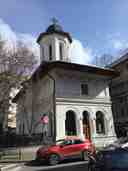
    To spot the St. Nicholas in-a-Day Church, just look for the striking white church with tall arched windows, capped by a distinctive octagonal bell tower right ahead of you on this quiet, tree-lined street. Now, let me weave you into the story of this rather legendary landmark. Imagine the bustling heart of 17th-century Bucharest, where weaving through the city’s muddy streets, people whispered about a tiny wooden church that sprang up seemingly overnight-so quickly, in fact, that it earned the tongue-in-cheek name “in-a-day.” Some say the church was built to fulfill a bold bet, with workmen rushing through the night, their hammers and saws echoing until dawn. Others, slightly more practical, will tell you it was finished exactly one year after it began, but why spoil a good story with facts, right? Originally, this was just a humble wooden chapel built by Postelnic Neagoe, but its fate soon twined with the powerful Marica, who carried it off as her dowry when she married none other than the soon-to-be prince, Constantin Brâncoveanu. In true royal fashion, Marica relocated the wooden church, making room for a sturdier stone version in 1702. The construction was overseen by Ianache Văcărescu, which explains the elegant brickwork you see around the windows and the saw-tooth string course wrapping the facade. During the 18th century, the church was the proud domain of Bucharest’s barbers’ guild-a place for barbers to pray for steady hands, no doubt! In a delightful twist of architectural drama, the church once had a secret footbridge built by Prince Ioan Caragea, connecting his upper-floor residence directly to the church. Imagine him sneaking across the hidden passageway, hoping no one caught him going to pray in his pajamas. The passage is gone now, but if you look closely, you can spot the patch in the brickwork where the door once was. This building has weathered fires, proposals for demolition, and even moonlighted as the spiritual home for Bucharest’s Albanian Orthodox community-where the legendary Fan Noli himself preached. Its bell tower was scorched in 1825, only to rise again in new form. The church has seen enough drama for a soap opera: marriages, fires, repairs, and restorations, all leaving their mark. So as you stand before this elegant yet unassuming church, imagine all those centuries layered within its walls, and know you’re gazing at a survivor-a place built on faith, a dash of legend, and maybe, just maybe, a winning bet on a very long day.

    Open dedicated page →
  3. To spot the Memorial of Rebirth, look just ahead in the middle of the plaza for a tall, white marble pillar rising dramatically into the sky with a dark metal “crown” perched near…Read moreShow less

    To spot the Memorial of Rebirth, look just ahead in the middle of the plaza for a tall, white marble pillar rising dramatically into the sky with a dark metal “crown” perched near its top-kind of like a giant toothpick decided to skewer a mysterious object for all of Bucharest to see. Now, as you stand before this towering pillar, let’s step back in time and imagine this square pulsing with shouts and chaos in December 1989. Romania’s people had flooded Revolution Square, defiantly turning against a regime that seemed unbreakable-until it suddenly wasn’t. That fateful winter, after decades of silence and fear, thousands risked everything to bring communism crashing down, culminating with the fall of dictator Nicolae Ceaușescu right here, in plain view. Flash forward to 2005. The city needed a symbol-something bold, something unforgettable-to honor the struggle and the 1,500 lives lost during the revolution. Enter designer Alexandru Ghilduș, a man better known for creating chairs and lamps than heroic monuments. He gave Bucharest this 25-meter pillar reaching skyward, topped with a metal “crown” (or, as some locals will tell you with a grin, a “potato on a spike,” an “olive on a toothpick,” or “the potato of the revolution”). It cost nearly 1.2 million euros, and boy, did it get people talking! Artists and critics scratched their heads. “Where’s the emotion? Where’s the story?” they wondered. The mayor famously declared, “I don’t get it. I don’t like it!” But love it or loathe it, here it stands-a symbol of Romania’s rebirth, just as its official name promises. The monument’s tale doesn’t end with its unveiling, though! Over the years, it became a magnet for midnight mischief. In 2006, someone painted the mask of the revolutionary “V” on its side. In 2012, a daring street artist launched a splash of red paint so high up, it still looks like the crown is bleeding decades later-a haunting reminder of both courage and loss. So, whether you see a symbol of hope or the world’s oddest vegetable on a stick, the Memorial of Rebirth makes sure you don’t forget the powerful spark that changed Romania forever.

    Open dedicated page →
  4. To spot the Sala Palatului, look for a large, domed building with tall arched windows and a vast open square in front-it's right behind the National Museum of Art, and kind of…Read moreShow less

    To spot the Sala Palatului, look for a large, domed building with tall arched windows and a vast open square in front-it's right behind the National Museum of Art, and kind of looks like a spaceship landed in downtown Bucharest! Now, take in the scene before you-imagine the year is 1960, and a sense of suspense is in the chilly communist air as workers finish hammering and polishing this enormous conference hall. Picture the site bustling, cranes overhead, and great hopes swirling about its modern design: tall columns, sweeping curves, and a roof that seems to float like a gigantic hat above it all. Sala Palatului was not just any building. Born during the communist era, it’s part of a group of ten buildings that made up what’s called the Palace Hall Square-talk about a family reunion! Initially, the Palace Hall was all about the big, serious stuff: think world-changing meetings about energy, population, and even United Nations conferences. Diplomats and scientists hurry by, speaking in many languages, while security guards keep their eyes out for suspicious mustaches or rogue briefcases. But don’t let its formal beginnings fool you-Sala Palatului has a wild side! Step inside today (not literally, unless you have a ticket), and you could find yourself swaying to music at the George Enescu Festival or, in years past, jamming out with legends like Tom Jones, Slash, or even the Duke Ellington Orchestra. There’s enough space for more than 4,000 fans to cheer, sigh, or sing along! The vast foyer is like an art gallery at times, hosting exhibitions, and smaller rooms conceal lively meetings and debates. If these walls could talk, they’d probably sing, shout, and whisper secrets of diplomacy, stardom, and the occasional lost umbrella. Not bad for a retro-modern giant who started life hosting some of the most important talks in Europe, don’t you think?

    Open dedicated page →
  5. You’re now standing in front of the InterContinental Athénée Palace Bucharest-a building so glamorous and dripping with intrigue, it could make even James Bond feel underdressed.…Read moreShow less

    You’re now standing in front of the InterContinental Athénée Palace Bucharest-a building so glamorous and dripping with intrigue, it could make even James Bond feel underdressed. Take a deep breath, and imagine the whispers of a hundred secrets swirling in the air. This place has been a front-row witness to revolution, luxury, and espionage-and a few hangovers, I’m sure. First opened in 1914, this jewel was designed by a Frenchman, Théophile Bradeau, who went for an Art Nouveau look-think grand curves, carved stone, and a style so fancy you could probably break a tooth just looking at the furniture. Back then, reinforced concrete was the cutting edge, and the Athénée Palace was the first in Bucharest to use it. It rose from the ashes, quite literally, of the Gherasi Inn, turning the old meeting point for travelers into the most elegant den of iniquity for miles around. By the 1930s and late '30s, the Athénée Palace had a reputation that would put any modern spy drama to shame. They remodeled it again in the chic Art Deco style, glitzing up the lobby with marble pillars, glittering chandeliers, heavy drapes, and deep, shadowy couches that just begged for whispered conspiracies. Picture A. L. Easterman of London’s Daily Express sliding into a sofa, watching as all sorts-British spies, Gestapo agents, concession hunters, and “ladies of easy or nonexistent virtue”-rubbed elbows. Even The New York Times’ tough-as-nails correspondent C.L. Sulzberger confessed to enjoying his stay here before World War II broke out, though he warned visitors to watch their wallets, their morals, and their bedfellows-a triple-threat if there ever was one. Countess R.G. Waldeck described it as the heart of Bucharest-artistically, intellectually, politically, and, if you’re feeling spicy, morally as well. With so many secrets in the air, you’d expect the walls to have ears. During the Communist era after 1948, they practically did. Every room was bugged, every phone was tapped, and even the payphones and lampshades seemed suspicious. The doorman? He’d rather take your picture than your luggage. Housekeeping? They spent more time photographing guests’ documents than fluffing pillows. Even the “ladies of the night” were reporting back to the authorities. It’s safe to say, hotel privacy policies were a bit…looser back then. When revolution shook Bucharest in 1989, it shook the Athénée Palace too-some of the worst violence erupted out front here. You could imagine the sounds of shouts and chaos outside the grand walls. But this legendary landmark brushed itself off yet again after the revolution. A massive $42 million renovation in the 1990s brought it back to life, splashing on a little 21st-century polish-but keeping that old-world glamor. The name on the front has changed-Hilton, then InterContinental-but if these lobby walls could talk, we’d have to send you on a second, highly classified tour. So, if you sense someone watching you from behind those grand marble pillars, don’t worry: today, it’s probably just the concierge. Probably.

    Open dedicated page →
  6. Right in front of you sprawls Revolution Square, the place where history didn’t just walk - it ran, tripped, cheered, and maybe even did a helicopter escape or two. Imagine the…Read moreShow less

    Right in front of you sprawls Revolution Square, the place where history didn’t just walk - it ran, tripped, cheered, and maybe even did a helicopter escape or two. Imagine the tension in December 1989: crowds gathered here, voices rising, and the future of a nation dangling in the air like a cliffhanger in a soap opera. This square, once called Palace Square, witnessed the incredible drama of the Romanian Revolution, when Nicolae Ceaușescu’s decades-long reign collapsed almost overnight. Fun fact: Ceaușescu actually addressed the public from the balcony of the building across from you, thinking he had the whole crowd on his side, only to discover their anger simmering beneath. The shock on his face, they say, was hard to beat. That same building, by the way, doubled as the Central Committee of the Communist Party and later served as the seat of the Senate. These days it houses the Ministry of Internal Affairs-a lot less drama, hopefully. You’re also surrounded by titans of Bucharest’s architectural heritage: the grand former Royal Palace, now the National Museum of Art; the luxurious Athénée Palace Hotel, once a hotspot for spies and intrigue; the stately University Library; and the Memorial of Rebirth-hard to miss with its striking, modern style. Look out for the equestrian statue in the square. The current one is a 2010 comeback act for a statue destroyed in 1948. The Communists removed the original King Carol I monument in their regime change spree and, rumor has it, didn’t even make good on paying damages to the Croatian sculptor, Meštrović. The replacement took a while-local debates and even accusations of artistic plagiarism! Apparently, even statues can’t escape a little scandal here. Soak it in-few places have witnessed so much passion, hope, and transformation packed into a single square. This is the beating heart of modern Romanian history. Now, ready to move to our next stop? I promise less political drama, but no promises on the statue gossip!

    Open dedicated page →
  7. Ahead of you stands a grand U-shaped neoclassical palace with elegant rows of arched windows and a flag flying from its central rooftop-just look for the wide, imposing façade set…Read moreShow less

    Ahead of you stands a grand U-shaped neoclassical palace with elegant rows of arched windows and a flag flying from its central rooftop-just look for the wide, imposing façade set back from the street, flanked by trees and ornamental iron fencing. Now, let’s dive straight into the lively world of the Royal Palace of Bucharest-where kings and queens, secret passages, bombings, revolutions, and even a touch of urban legend have all made an appearance. This striking palace was never meant to be confused with Elisabeth’s Palace, although with so many royal residences in Bucharest, you’d be forgiven for needing a royal family tree just to keep up! The story begins in 1812, when the original Casa Golescu went up right here. Back then, it was palatial for its time, boasting a whopping 25 rooms. Imagine the echo of horse hooves and carriages arriving, and the scent of pine wood drifting from fireplaces! Within a few decades, the elegant house turned into the ruling court of Alexandru Dimitrie Ghica, then played home to the first ruler of a united Romania, Alexandru Ioan Cuza. In 1866, it welcomed Carol I, setting the stage for its true royal destiny. But this site’s drama really took off after a devastating fire in 1926. The old palace didn’t stand a chance! Enter a Czech architect and his team-along, no less, with Queen Marie, who, with a keen eye for design (and apparently a knack for bossing around architects), oversaw the construction of the new palace, which finally opened its doors in 1937. The result? This imposing structure in front of you, with a U-shaped arms seemingly ready to embrace all of Victory Avenue. It wasn’t all tea, cookies, and royal audiences, though. In 1940, the very throne room hosted the moment when young King Michael II had to take a rather serious oath-imagine a room tense with generals, patriarchs, and political bigwigs. World War II brought even more drama. After King Michael bravely seized back control of the country from a pro-Nazi government, the Germans retaliated. On August 24, 1944-boom!-the Royal Palace was bombed so badly it became unlivable. The elegant villa behind it, once the family’s private residence, was wiped away. King Michael even had to beg to sleep over at his aunt’s place. Family reunions must have been awkward after that! After 1947, communism arrived and the monarchy was swept aside. The palace’s ornate trappings of royalty were removed or hidden. Its halls held communist party meetings, foreign delegations, and even the body of a dictator for a final bow. During Nicolae Ceaușescu’s reign, the throne room was renamed and used for official functions, but if you squint, you might still spot a hint of royal grandeur hiding under communist wallpaper. Let’s not forget the urban legend-some joke there’s a secret tunnel from here straight to the Kretzulescu Church next door, a royal shortcut for dodging paparazzi or running out for a quick blessing (or maybe just picking up forgotten groceries)! The ‘80s brought revolution, chaos, and fire to these walls, with priceless art nearly lost in the blaze. But post-1989, the Royal Palace rose from the ashes, restored and alive with art and music. Today, the palace is home to the National Museum of Art of Romania, as well as a concert auditorium that’s open to the public. Step closer, and picture yourself as a royal guest entering that grand octagonal hall, sunlight glinting off polished marble, the thrill of history swirling in the air. The building’s great column on the central façade isn’t just a quirky architectural feature: it’s one last royal joke, meant to symbolize the unity and stability of a monarchy. And if you see the Romanian tricolor with a big royal crest flying above, you’ll know the king-at least in spirit-has come home.

    Open dedicated page →
  8. Right in front of you, you’ll spot a grand, rectangular building with pale stone walls and rows of tall arched windows along its façade-just look for the impressive palace behind…Read moreShow less

    Right in front of you, you’ll spot a grand, rectangular building with pale stone walls and rows of tall arched windows along its façade-just look for the impressive palace behind the trees and the little fence, right across the broad boulevard! Welcome to the National Museum of Art of Romania, housed in what was once the grand Royal Palace of Bucharest. Imagine yourself transported back to 1948: the city is buzzing with changes, and the elegant palace suddenly turns from a royal residence into a guardian of Romania’s greatest artistic treasures. If you’re wondering why the building looks so regal, it’s because it was built to house kings before it became a kingdom of color and canvas. Step closer and picture this: In its early days, artists, curators, and workers were busy collecting priceless paintings and sculptures from all around Romania. Many of the first masterpieces were brought here from King Carol I’s own collection, which had previously filled the walls of Peleș Castle in the mountains. Actually, the museum’s halls are like a treasure map-each gallery holds jewels not just from the royal palaces, but from places like the famous Brukenthal Museum in Sibiu, and private collections that once adorned aristocratic homes. There are even pieces traced back to the city’s oldest art museum, founded way back in 1836 thanks to a passionate painter, Carol Valenstein. Just imagine, hidden in these rooms are the handprints, dreams, and secrets of generations! Of course, what’s a treasure hunt without a few mysteries? The museum is home to over 70,000 works, ranging from bold Romanian landscapes and silent portraits to dazzling European masterpieces. In the National Gallery side, you’ll discover the genius of legendary Romanian artists like Ion Andreescu, Theodor Aman, and Nicolae Grigorescu. And if you ever get lost in those galleries, don’t worry-you’re probably pausing in front of a scene that once looked out over the Carpathian hills or the Danube’s calm waters. Now, travel upstairs-at least in your mind! Here is the European Art Gallery, a place where the centuries collide. The gallery first opened in 1951, and since then, it has grown into one of the most impressive collections in Central and Eastern Europe. You’ll wander past Italian Renaissance wonders, like Antonello da Messina’s dramatic Crucifixion and Domenico Veneziano’s dreamy Madonna. From there, take a turn and there’s the Spanish “Golden Age,” with haunting works by El Greco-he painted some of them just before leaving this world! Peer into Dutch, French, and German rooms and you might catch a glimpse of a Monet, a Rubens, even a painting by Rembrandt himself, with brushstrokes so alive, you’d swear the subjects might wink at you if you stared too long. There’s something for lovers of every era-modern art fans can feast their eyes on Brâncuși’s sculptural visions, or the daring strokes of Romanian avant-garde artists. Each room is a new world; in one, noble ladies from old portraits seem to exchange secret glances, while in another, Romanian countryside scenes invite you in with blooming fields and the sunniest skies. The museum is also a stage for excitement-such as the 2005 exhibition “Shadows and Lights,” when French masterpieces lit up the rooms and crowds lined up all the way to the street! That show brought together works by everyone from Delacroix to Picasso, turning Bucharest into a mini-Paris for a few magical months. As you look at the stately building before you, think about its layers of history: the echo of royal footsteps, the nerve-wracking job of moving masterpieces during tumultuous times, the laughter of schoolchildren on field trips, the quiet footsteps of art lovers in search of inspiration. The National Museum of Art is much more than four walls and a collection-it’s a living tapestry, telling centuries of stories through every brushstroke and every frame. Now, ready to continue our royal adventure? Let’s head to our next stop… Intrigued by the historian, european art gallery or the gallery of modern romanian art? Explore further by joining me in the chat section below.

    Open dedicated page →
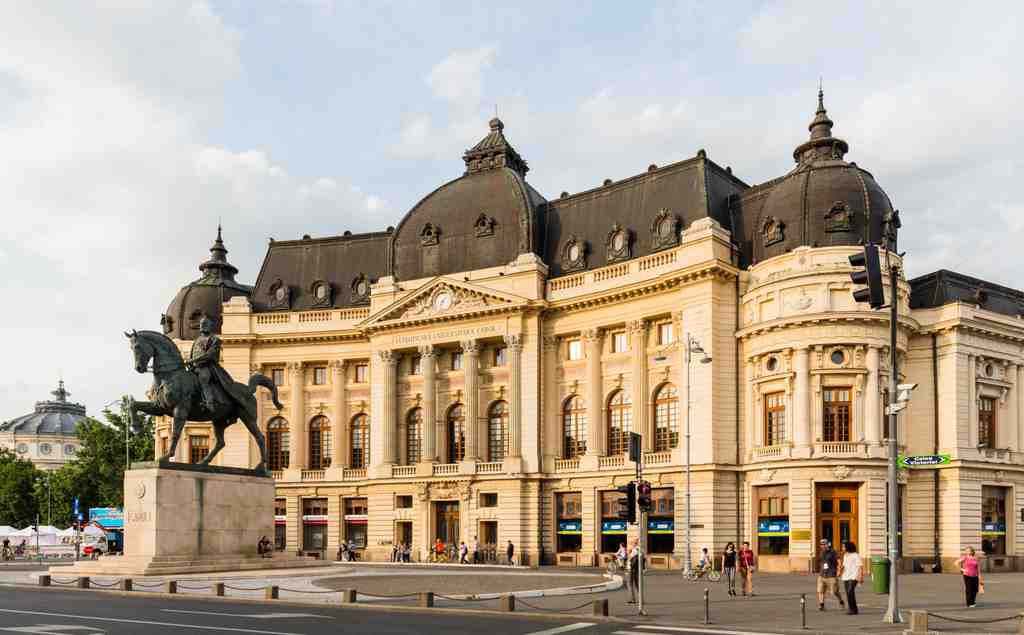
  9. To spot the Central University Library, look for a grand, elegant building topped with ornate black domes and a clock above its main entrance, right across the street from the…Read moreShow less

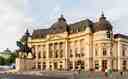
    To spot the Central University Library, look for a grand, elegant building topped with ornate black domes and a clock above its main entrance, right across the street from the National Museum of Art of Romania-oh, and don’t miss the statue of King Carol I on horseback guarding the front! Now, let’s imagine ourselves whisked back in time, right where you’re standing. Picture Bucharest in the late 1800s: university students rushing about, but there’s a scholarly problem brewing-no real library to call their own! Instead, books were scattered, sometimes even stored in other buildings. But King Carol I, with a vision as sharp as his royal mustache, saw that Romania’s brightest minds deserved better. In true kingly fashion, he bought this very patch of land, and French architect Paul Gottereau dreamt up this splendid palace of knowledge. By 1895, just behind these grand doors, the Central University Library was born, filled with 3,400 precious books and periodicals, and the scent of fresh ink and promise. As the decades turned, the walls couldn’t contain the knowledge pouring in. The numbers boomed-7,000 books by the turn of the century, over 31,000 by the eve of World War I, and imagine this: by 1944, nearly 91,000 volumes packed every shelf. The library became a living, breathing brain of Bucharest, growing alongside the city itself. But it wasn’t always smooth reading. During the dramatic days of the Romanian Revolution in 1989, tragedy struck-flames consumed over half a million books and thousands of irreplaceable manuscripts. The city crackled and echoed with the heartbreak of lost history, but Bucharest is nothing if not determined! Like a phoenix from the ashes (or perhaps, a bookworm out of a stack), the building was lovingly restored and reopened in 2001. Today, the spirit of scholarship lives on, with millions of volumes waiting to be discovered. Behind these beautiful columns, you’d also find hidden treasures-the library’s famous branch collections built with gifts from passionate professors, and special funds from generous students, too. Each book here tells a story, not just of facts and figures, but of struggle, generosity, and resilience. Oh, and if you ever picture a secret club for books, know that the Central University Library is an honorary royal-its shelves wear the Cross of the Romanian Royal House with pride! So, as you stand here, you’re not just facing a building-you’re stepping right into the heart of Bucharest’s scholarly soul, where stories wait around every corner (and behind every bookcase).

    Open dedicated page →
  10. Look for a striking, reddish-brown brick church with a tall, square Italianate bell tower and detailed arches right in front of you-its distinct medieval Lombard style stands out…Read moreShow less

    Look for a striking, reddish-brown brick church with a tall, square Italianate bell tower and detailed arches right in front of you-its distinct medieval Lombard style stands out against the city skyline. Now, picture yourself in Bucharest over a hundred years ago, when the city’s Italian community was buzzing with excitement-the word had spread that a real Italian priest was coming to town! With the help of Baron Carlo Fasciotti, Italy’s own ambassador, they rolled up their sleeves in 1915 and started building this unique church, designed by the duo Mario Stoppa and Giuseppe Tiraboschi. Imagine the aroma of fresh mortar, the clang of bricks, and the determined workers eager to bring a touch of Northern Italy to their new home. The church’s Romanesque lines, Gothic accents, and even a hint of Art Déco gave it a flavor you’d usually only find along the old streets of Lombardy. Step inside-at least in your mind-and you’ll see colorful stained glass, shiny mosaics, and murals telling stories both grand and mysterious. Outside, that tower holds three bells that have rung for generations, while the nearby parsonage and courtyard whisper stories of community gatherings. Dedicated in 1916 with dignitaries and families filling the air with laughter, the Italian Church went on to be a home for many priests-some of whom became legends themselves. Even today, this red-brick marvel isn’t just a building; it’s a piece of Italy, brought to life in the heart of Bucharest. And don’t worry, despite the Italian architects, you won’t need a passport to step inside!

    Open dedicated page →
  11. Congratulations, you’ve made it to the legendary site of the Colței Tower! Let me help you travel back in time by setting the scene: It’s the early 1700s, and just where you’re…Read moreShow less

    Congratulations, you’ve made it to the legendary site of the Colței Tower! Let me help you travel back in time by setting the scene: It’s the early 1700s, and just where you’re standing, a giant bell tower was rising, one that would soon rule the Bucharest skyline. Imagine the air thick with the smell of mortar and fresh-cut stone, laborers’ voices echoing through the city, and a clang of hammers as workers piece together a double-H-shaped giant, 50 meters tall-taller than any other building around. Built between 1709 and 1714 as a bell tower for the Colțea Monastery, the Colței Tower was the pride of Bucharest. And what a sight it was! Picture a sturdy base, so solid it looked like a slice of a mountain had sprouted right here, topped by levels more elegant and airy, inspired by the towers those Swedish and German builders must have admired back home. In fact, legend says that after the defeat at the Battle of Poltava, Swedish soldiers wandering through Romania found themselves recruited to help build this very tower. Now that’s what I call a career change! The Colței Tower didn’t just look amazing-it boasted a massive bronze bell, weighing nearly 1700 kilograms. When that thing rang out, you’d feel it not just in your ears, but in your bones. The neighborhood probably didn’t need alarm clocks! Nestled above the arched entrance was a beautiful inscription, giving thanks to the pious Mihai Cantacuzino and marking the tower as a monument to God, the city, and the family. Decoration? Only the finest. Just imagine brâncovenesc-style carvings, a spectacular sculpted balustrade held up by fierce lion heads, even groupings of noble eagles and flowers-motifs celebrating power, faith, and beauty. There was even a clock, just in case anyone forgot what time it was, and-get this-four little turrets on the corners of the baroque-style roof, all topped off with a shiny cross. If Instagram had been around in the 1700s, this place would’ve blown up. But wait, it’s not all celebrations and selfies. Disaster struck in 1802, when a massive earthquake-one of the most powerful in Bucharest’s history-hit the city. Imagine being here as the ground shook like a rug, knocking down church domes and, yes…toppling the pride of Bucharest. As chronicler Dionisie Eclesiarhul wrote, it all came crashing down in a near-legendary moment of panic. In the commotion, the giant bell dropped right onto a poor merchant passing beneath. The bell was later transported to Sinaia Monastery, where it found a less dramatic home. Afterwards, the damaged tower’s wooden upper floors were patched up, and-because Bucharest always seemed to be catching fire-it doubled as a fire lookout. Yet, more earthquakes followed and, by the mid-1800s, the mighty Colței Tower was on its last legs. Eventually, in 1888, it was demolished, leaving behind a heap of controversy and a city full of heartbroken Bucharesters-one even called its destruction a “true crime against the city’s heritage.” All that’s left hidden beneath the street is the old stone foundation, sometimes marked out above by pale paving stones-before asphalt covered even those. But don’t think the story stops at bricks and mortar. The Colței Tower has lived on in memory and literature-authors, poets, and even photographers climbed it for the city’s very first panoramic photo. Painters commemorated it, writers wished friends lived “as long as Colței Tower,” and, in one story, a poor miser was even threatened with being thrown off the top. Talk about high stakes! So, as you stand here, conjure up that lost giant. Feel the echoes of bells, the tremors of earthquakes, the protests of citizens, and the quiet dignity of lion-headed balustrades. The Colței Tower may be gone from the skyline, but it’s alive in the city’s dreams-and in yours, just for a moment. And remember: If you ever see a Swede with masonry skills wandering Bucharest, you might want to check what they’re building next! Intrigued by the archaeological excavations, traditions and histories or the colta's tower in literature? Explore further by joining me in the chat section below.

    Open dedicated page →

Frequently asked questions

How do I start the tour?

After purchase, download the AudaTours app and enter your redemption code. The tour will be ready to start immediately - just tap play and follow the GPS-guided route.

Do I need internet during the tour?

No! Download the tour before you start and enjoy it fully offline. Only the chat feature requires internet. We recommend downloading on WiFi to save mobile data.

Is this a guided group tour?

No - this is a self-guided audio tour. You explore independently at your own pace, with audio narration playing through your phone. No tour guide, no group, no schedule.

How long does the tour take?

Most tours take 60–90 minutes to complete, but you control the pace entirely. Pause, skip stops, or take breaks whenever you want.

What if I can't finish the tour today?

No problem! Tours have lifetime access. Pause and resume whenever you like - tomorrow, next week, or next year. Your progress is saved.

What languages are available?

All tours are available in 50+ languages. Select your preferred language when redeeming your code. Note: language cannot be changed after tour generation.

Where do I access the tour after purchase?

Download the free AudaTours app from the App Store or Google Play. Enter your redemption code (sent via email) and the tour will appear in your library, ready to download and start.

verified_user
Satisfaction guaranteed

If you don't enjoy the tour, we'll refund your purchase. Contact us at [email protected]

Checkout securely with

Apple PayGoogle PayVisaMastercardPayPal
Loved by travellers

Thousands of tours started.
Plenty of opinions.

4.8 across the App Store and Google Play. Here's a few we keep coming back to.

starstarstarstarstar
This was a solid way to get to know Brighton without feeling like a tourist. The narration had depth and context, but didn't overdo it.
Christoph
Christoph
Brighton Tour
starstarstarstarstar
Started this tour with a croissant in one hand and zero expectations. The app just vibes with you, no pressure, just you, your headphones, and some cool stories.
download Get the app

Pop your headphones in.
Step outside.

Free to download. Tours in every city. Start in 60 seconds — no account, no card.

Download on the App StoreGet it on Google Play
starstarstarstarstar_half
4.8
AudaTours app icon
headphones
~ 4 min until your first tour starts
public
1,000+ cities worldwide
all_inclusive
AudaTours
Unlimited

Every tour. Every city. One subscription.

3101 tours2271 cities138 countries50+ languages