
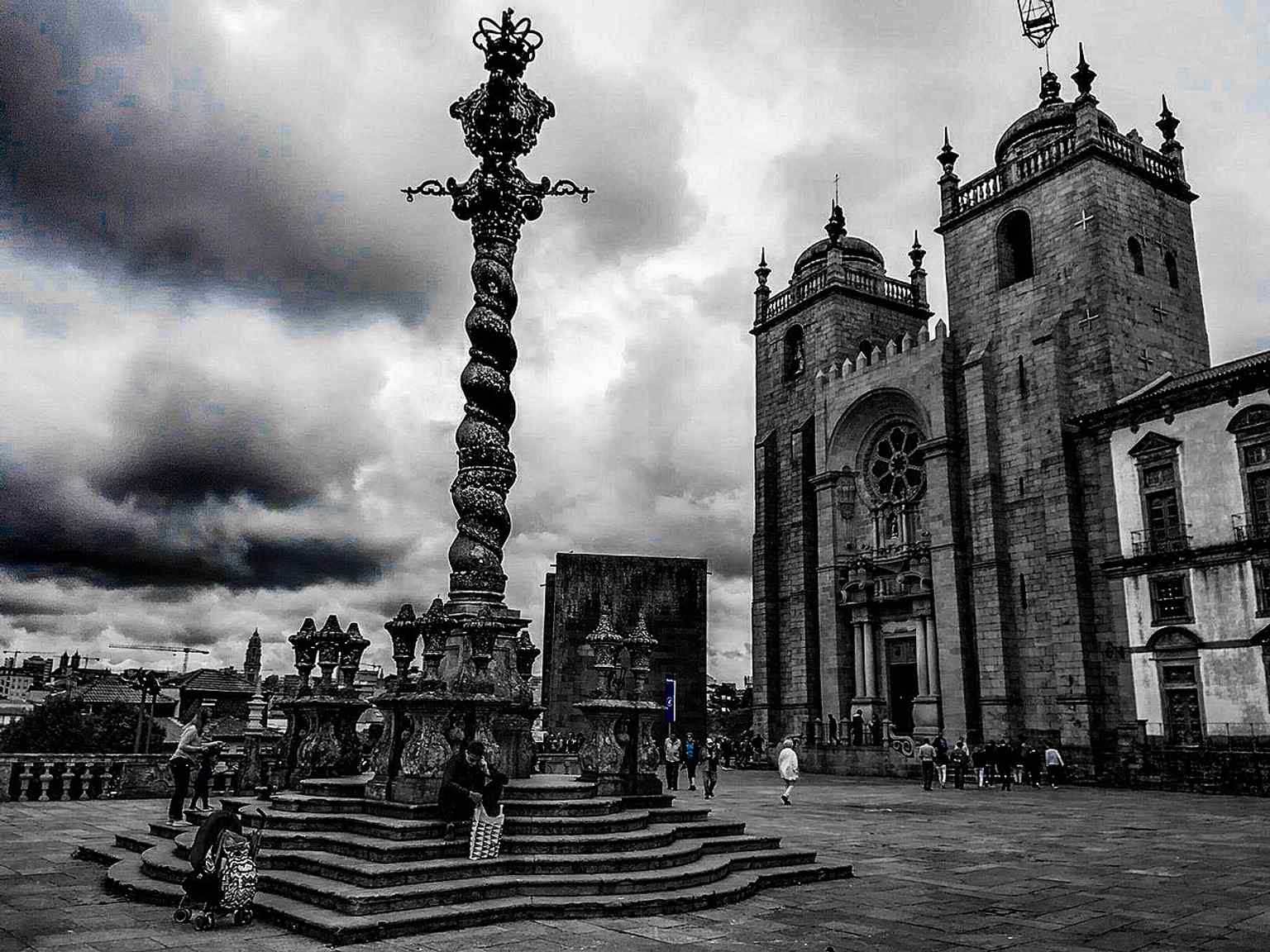
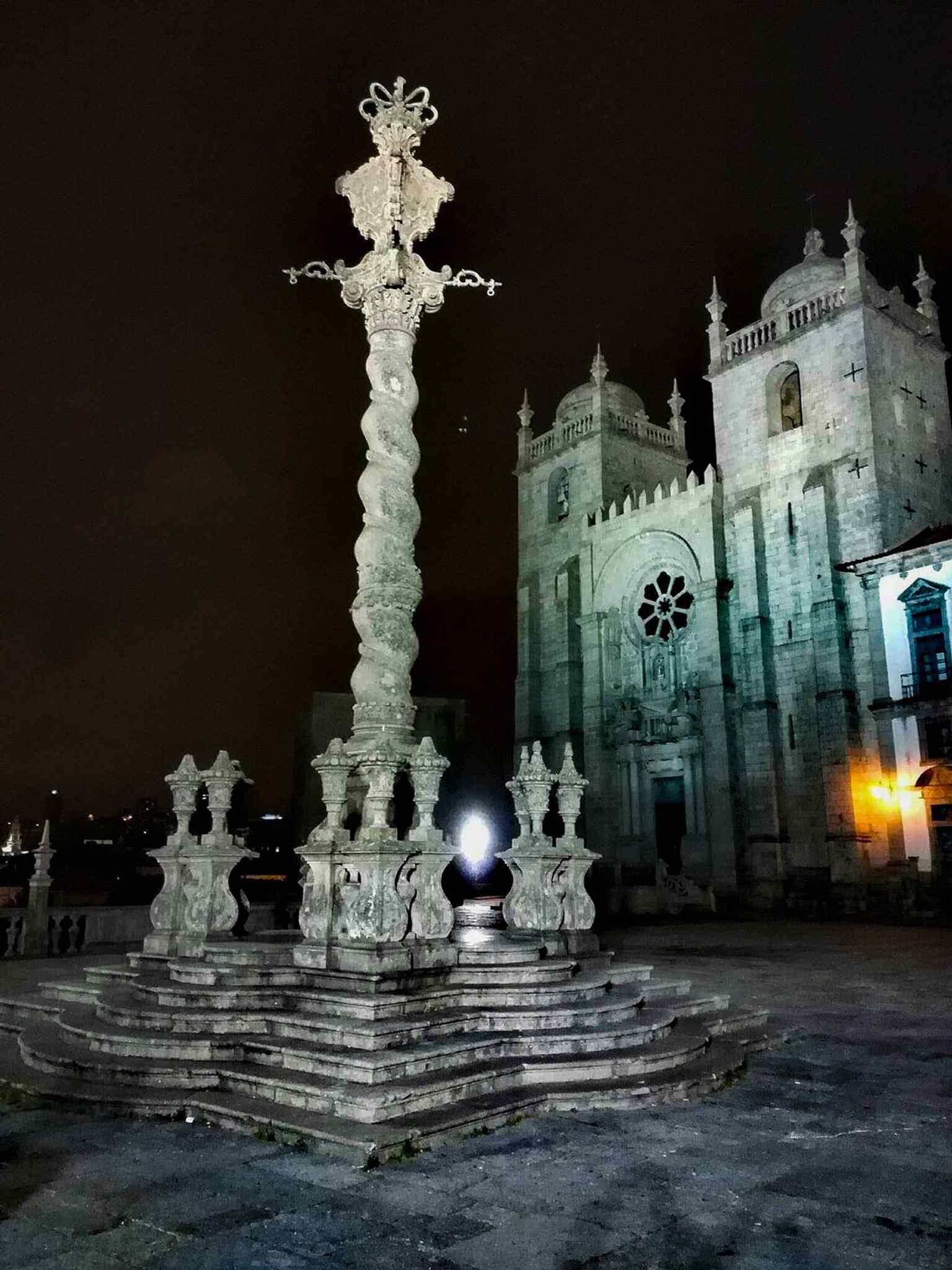
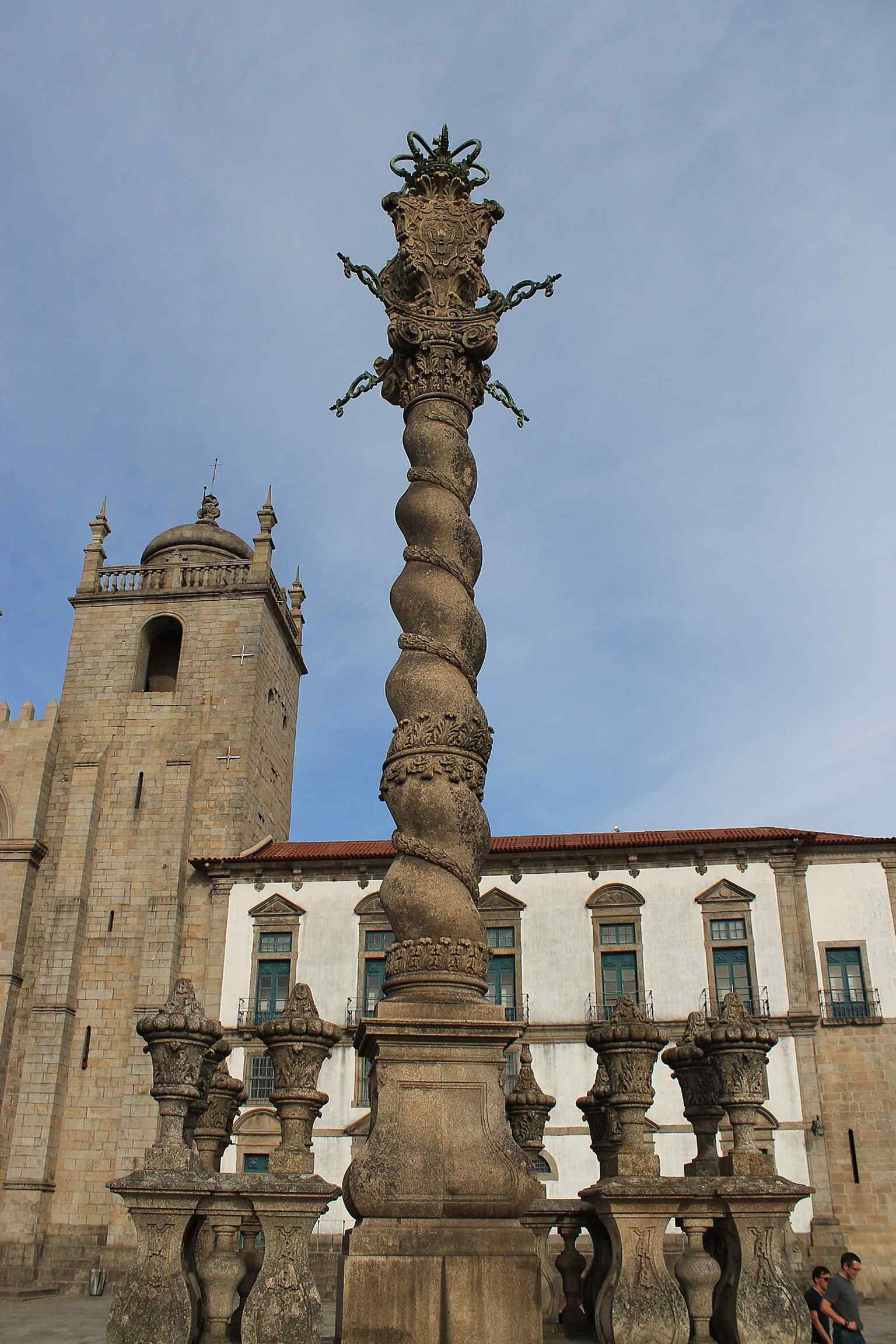
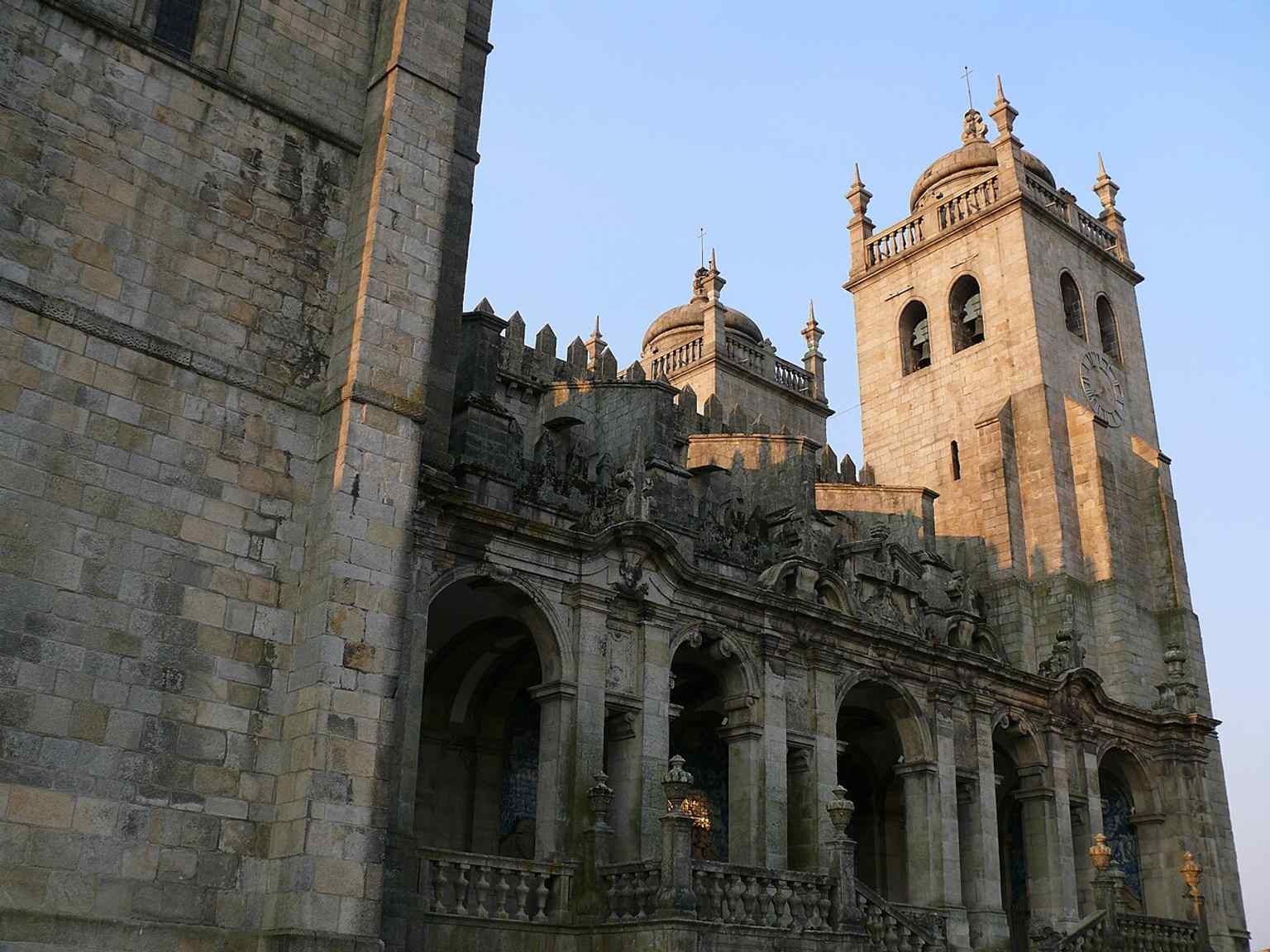
On your left, look for a pale granite church with a broad, blocky front, two square towers capped by cupolas, and a round rose window tucked beneath a battlement-like arch.
This is where Porto’s memory piles up in stone. The cathedral stands on the site of an older chapel linked to Henry of Burgundy and his wife in eleven oh eight. An earlier church still stood here in eleven forty-seven, and then, in the later twelfth century, people began the building you see now. They kept working on it into the sixteenth century. Later generations added Baroque flourishes in the eighteenth century and made more changes in the twentieth. So yes... this place has had a long life and many editors.
And yet the heart of it still reads as Romanesque, the older medieval style of thick walls, heavy shapes, and a certain refusal to be delicate. The front is famously plain, almost severe. Those two towers stand square and solid, each braced by buttresses, the stone supports that help hold the walls steady. Below the battlement-like arch sits the rose window, a small round note of elegance in all this muscular masonry. Even the main hall inside, with its stone roof, relied on flying buttresses, those outer supports that carry weight away from the walls, making it among the earlier buildings in Portugal to use them.
Take a second and really study the bulk of it. Does it feel like a church, a fortress, or a building that preferred not to choose? Medieval builders did enjoy keeping their options open.
Up here on the hill, that double identity mattered. This was not only a place for prayer. It marked power. It anchored the upper city. And it held some of the moments Porto kept closest. In thirteen eighty-seven, King John the First and Philippa of Lancaster were blessed here and then married here on the fourteenth of February. That marriage helped secure the long alliance between Portugal and England, and Philippa later became remembered as the mother of Portugal’s Illustrious Generation. One wedding, in one cathedral, and suddenly the city is tied to a much larger map.
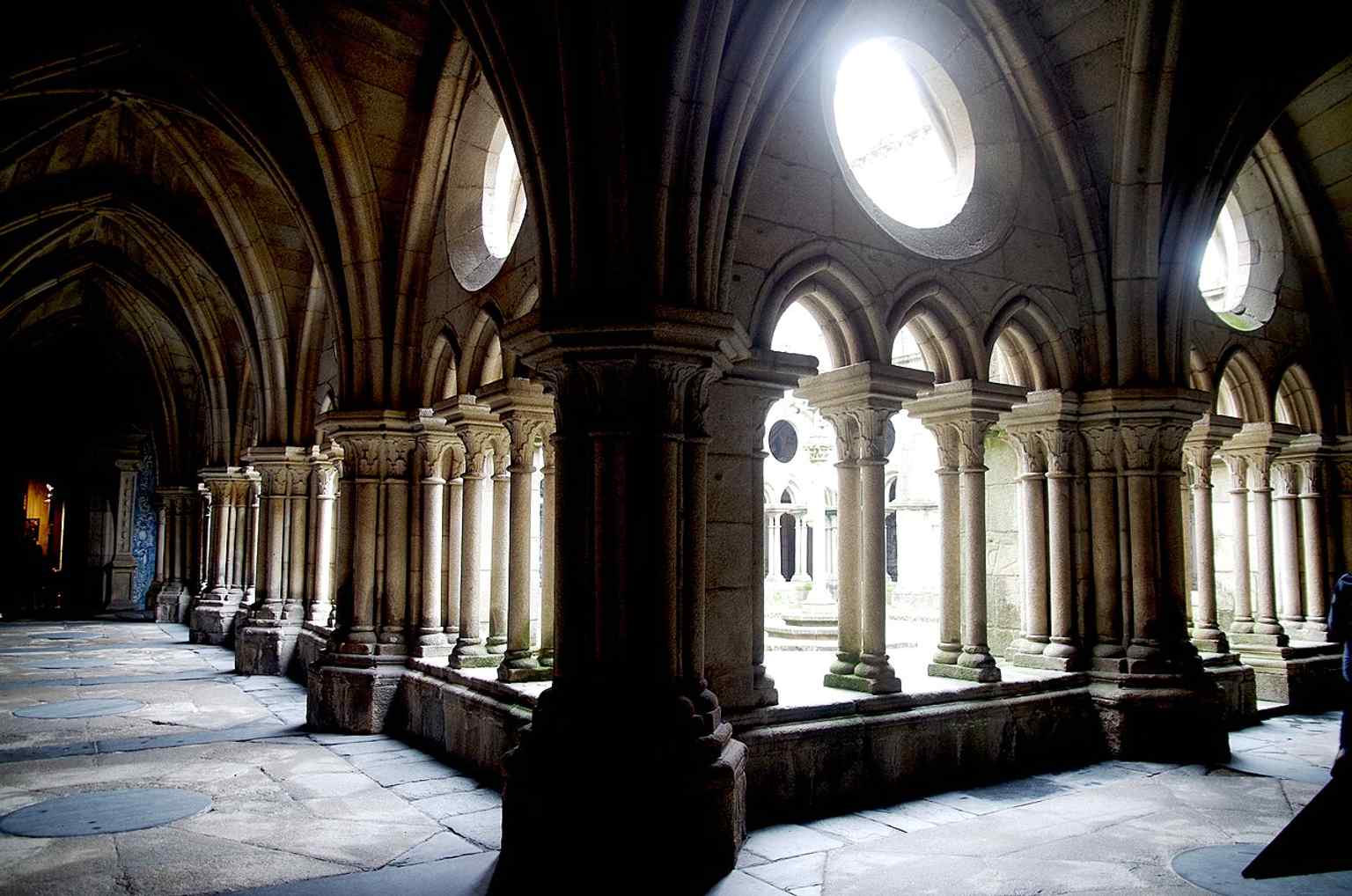
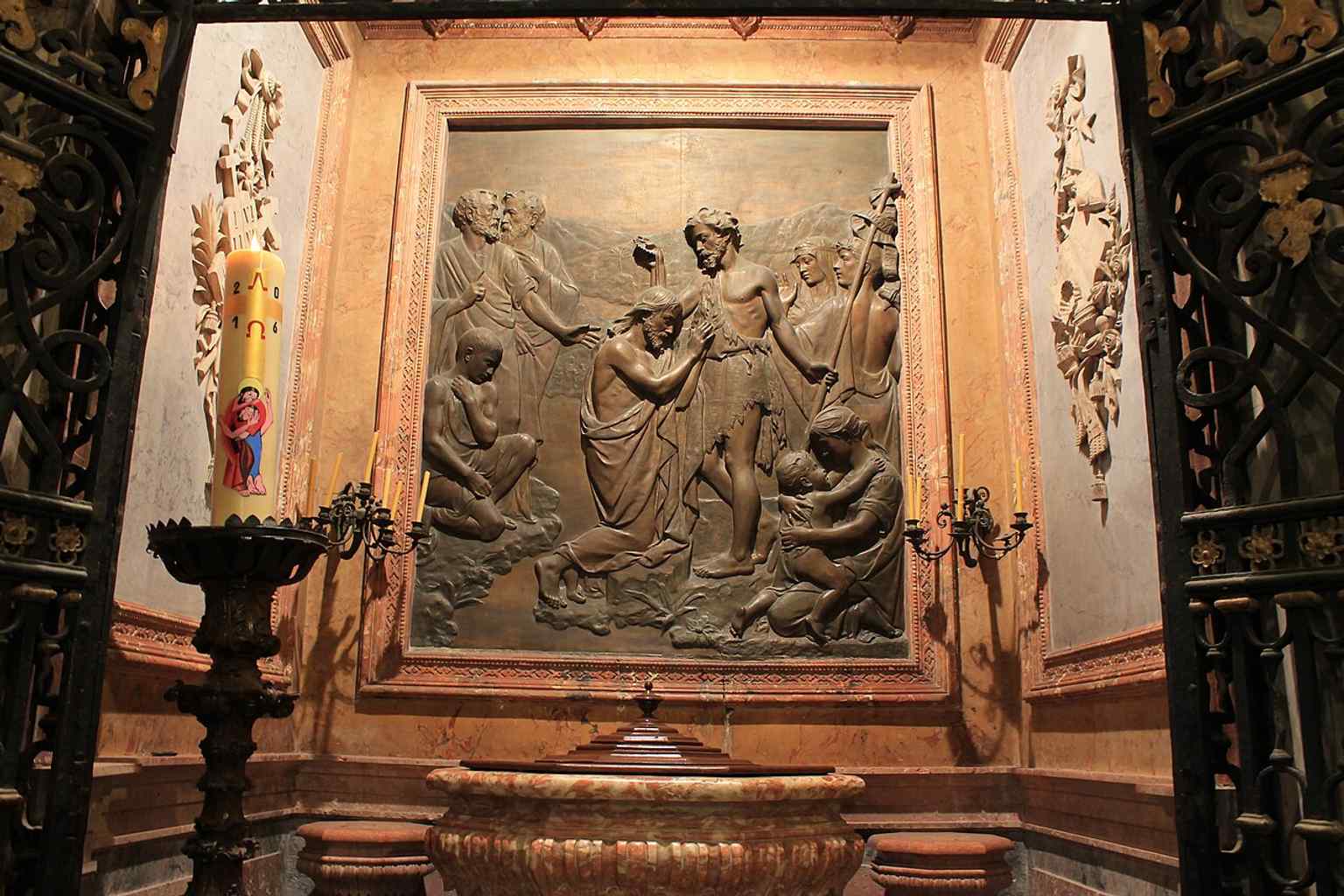
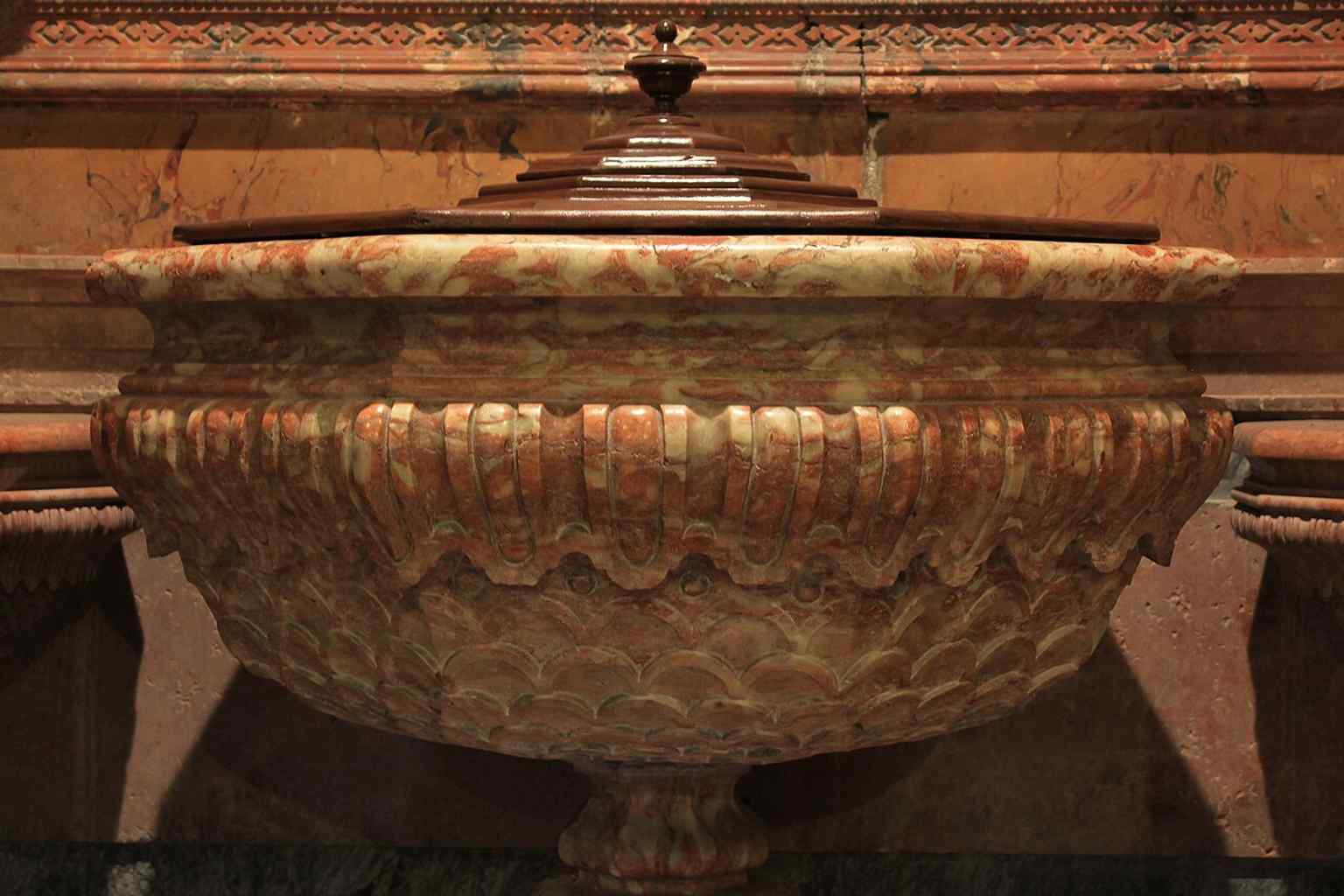
The cathedral also belongs to the story of Prince Henry the Navigator, because he was baptized here. If you look at the image in the app, you can see the baptistery linked to that early chapter in Portugal’s age of exploration. And another image shows the Gothic cloister, later enriched with Baroque azulejo tiles by Valentim de Almeida, a neat reminder that this building never stopped absorbing new centuries.
Nicolau Nasoni, the architect you met at Clérigos, joined that process too. He arrived in Porto in seventeen twenty-five to work on the sacristy and chancel, and in seventeen thirty-six he added a Baroque loggia to the cathedral’s side. In seventeen seventy-two, builders replaced the old Romanesque main portal. In eighteen oh one, during the War of the Oranges, Spanish soldiers briefly seized the cathedral before local residents drove them out. And when Napoleon’s troops entered Porto in eighteen oh nine, legend says a sacristan, or perhaps canon Pedro Breiner, saved the great silver altarpiece by disguising it with plaster or bargaining for its survival. However the story happened, the point is clear: people fought to keep this place intact.
That feels right for this hilltop church. Altered many times, never erased... still unmistakably itself.
From here, the story is ready to open outward. Next, head to the Dom Luís the First Bridge, about a seven-minute walk away, where all this gathered stone suddenly turns into a single span across the river. If you want to come back inside later, the cathedral is generally open every day from nine in the morning to six thirty in the evening.






%2001.jpg)
.jpg)