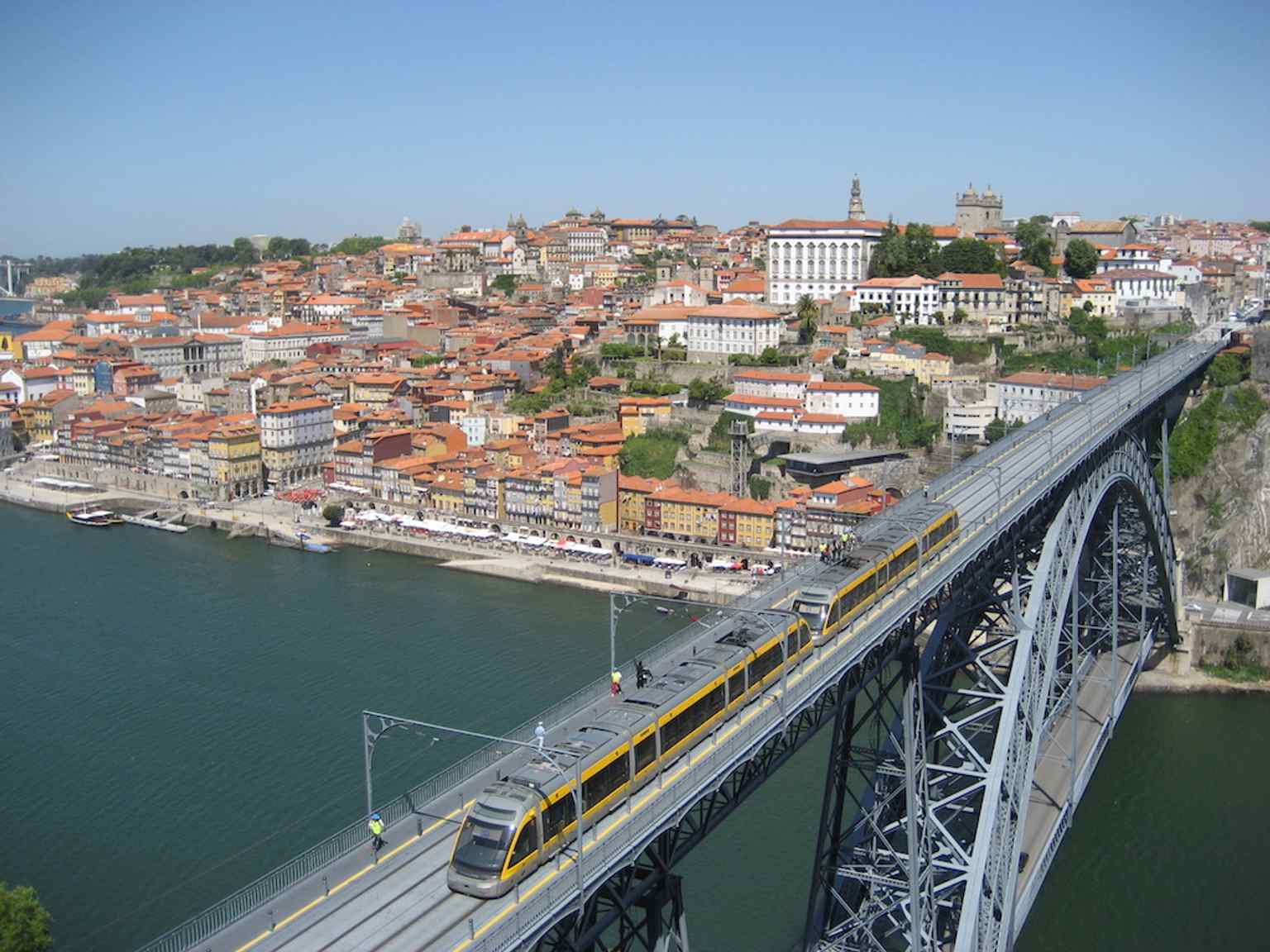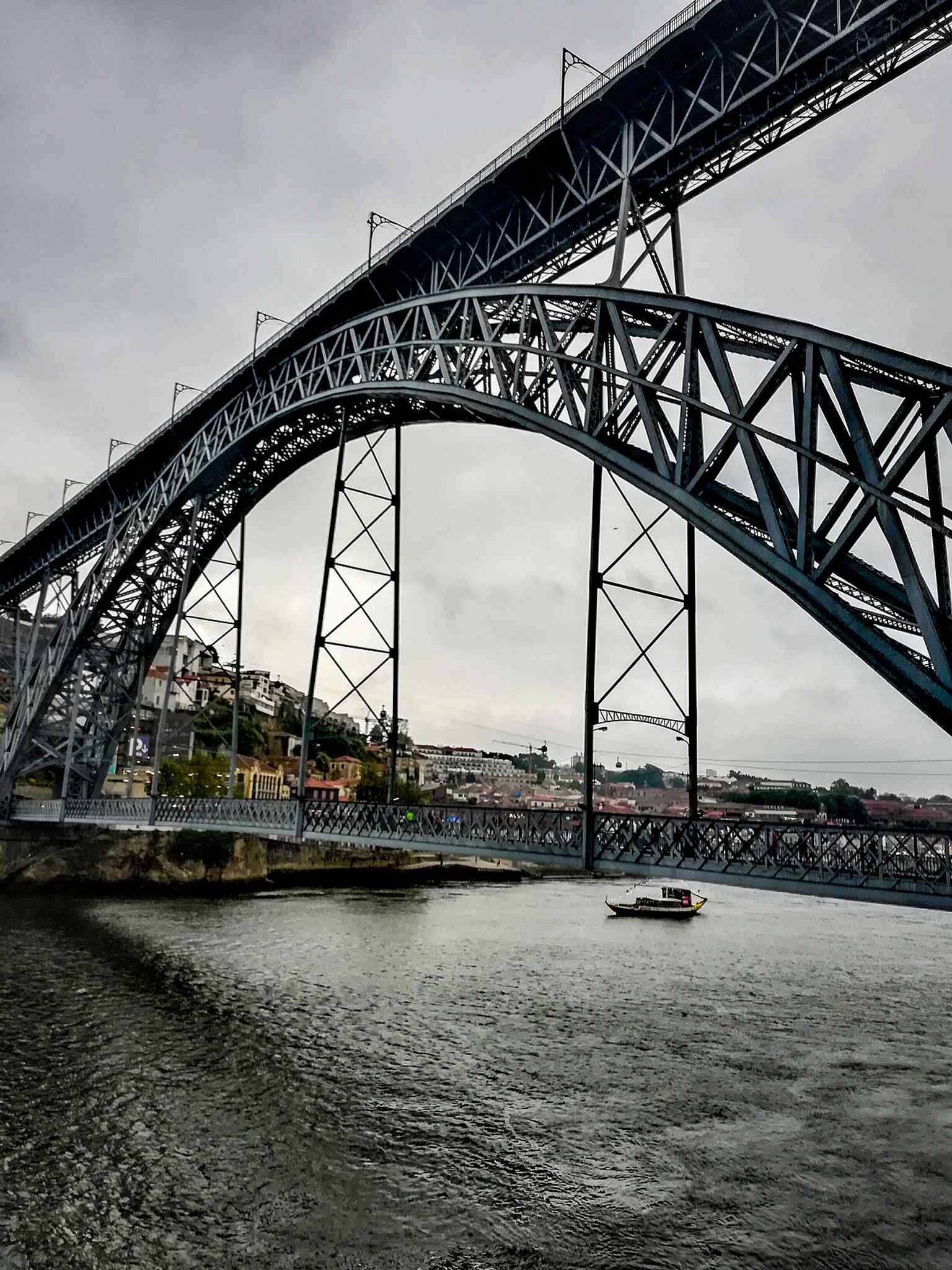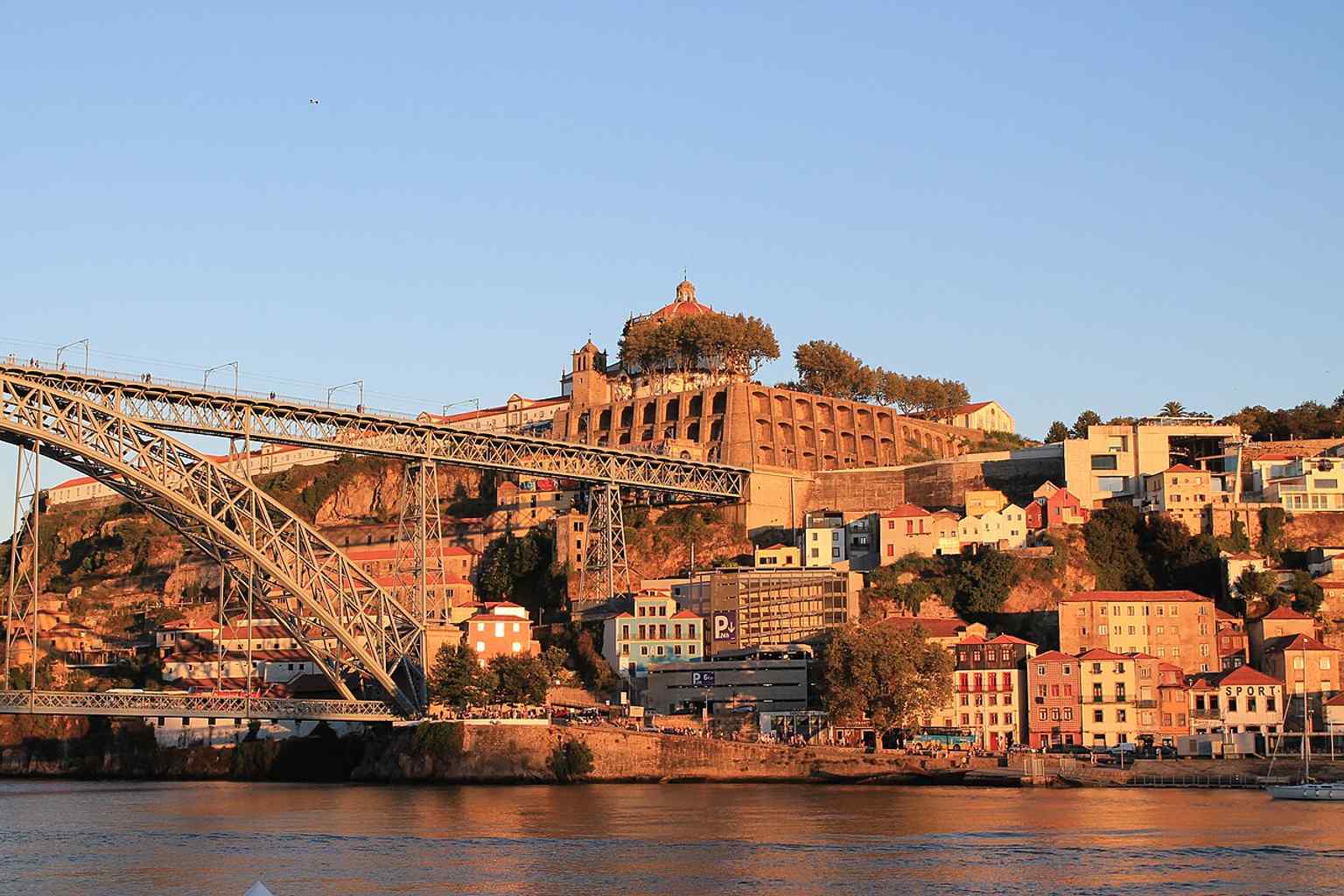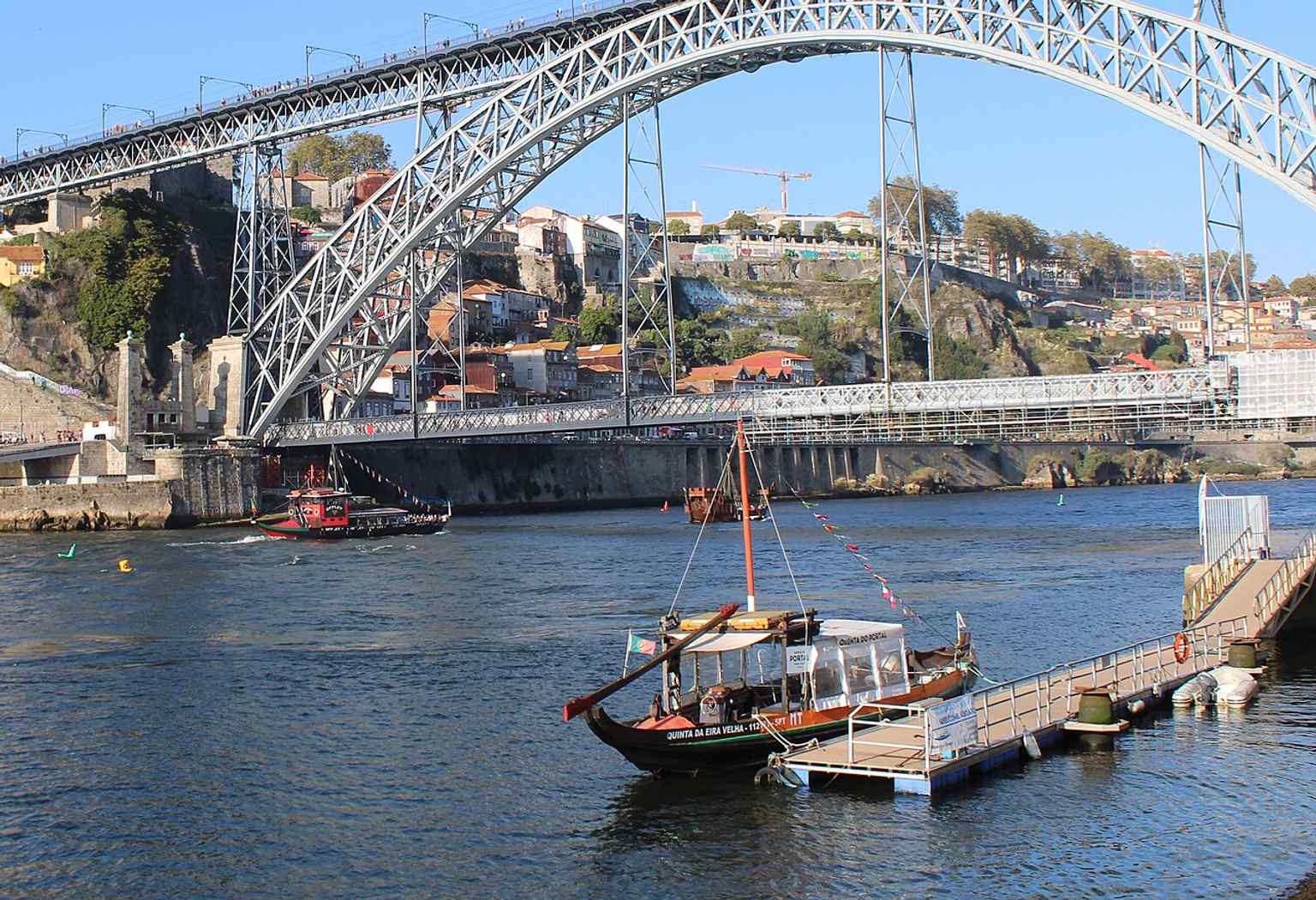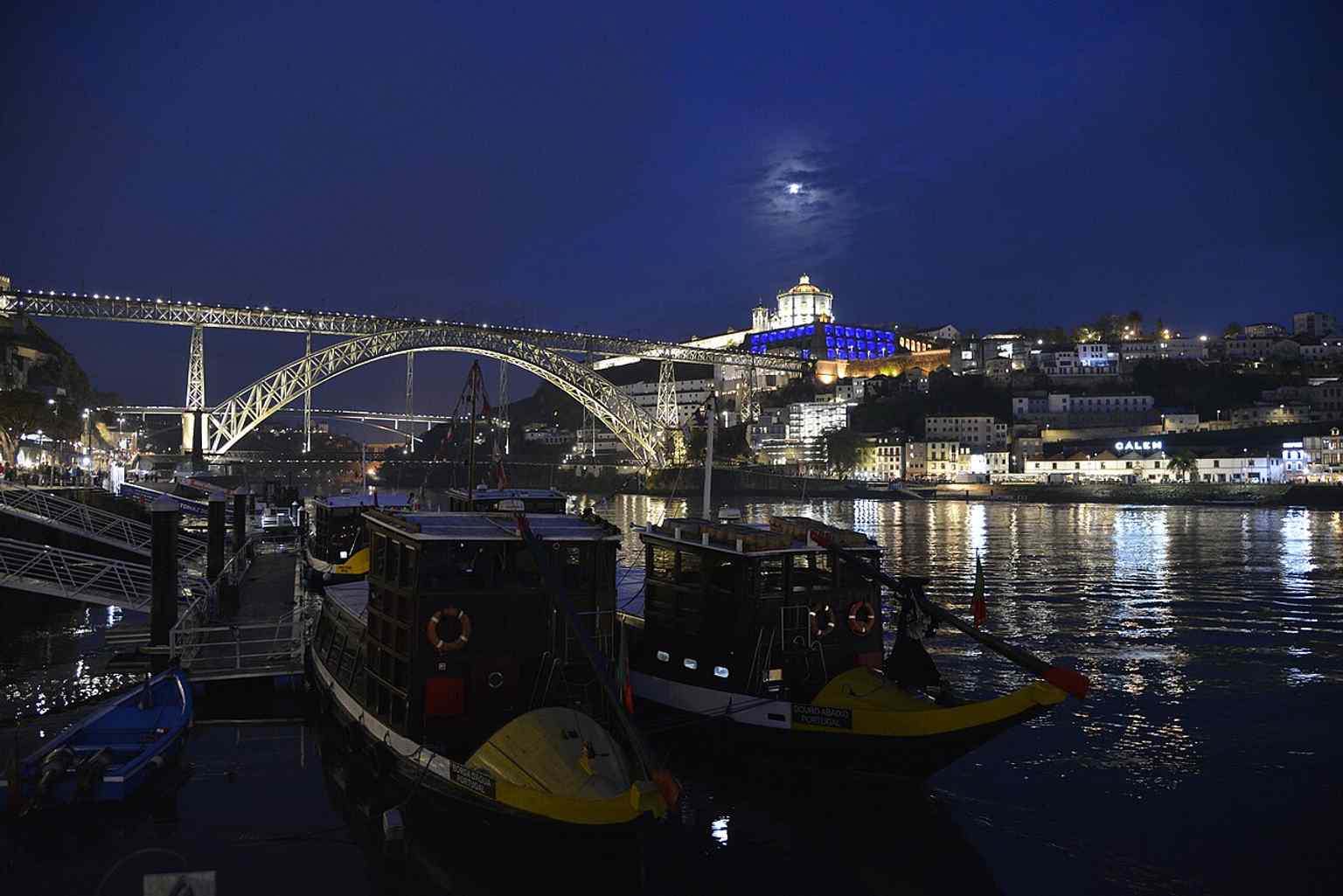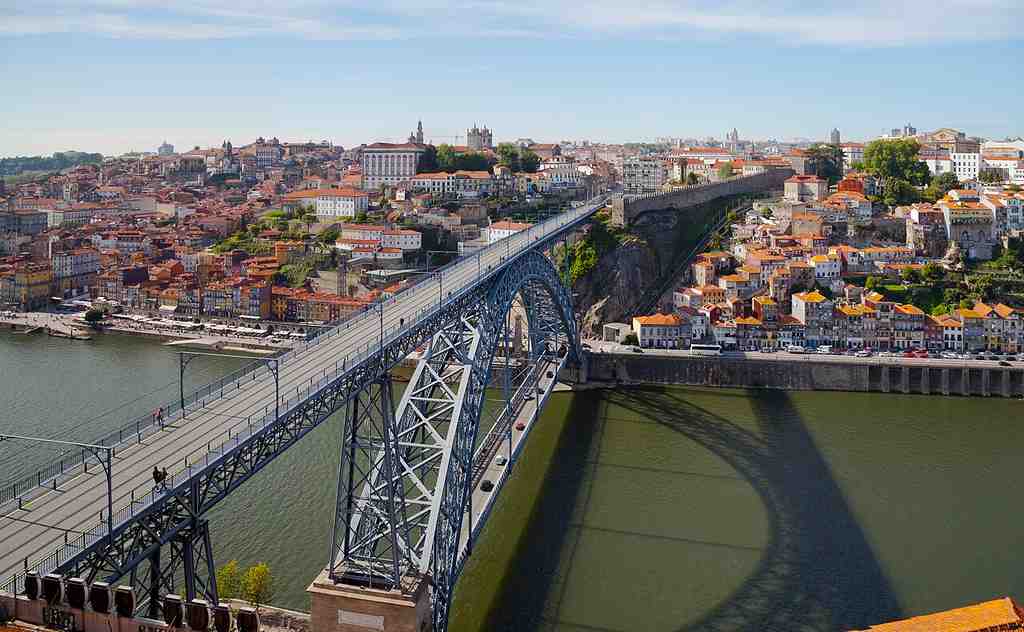
Look for the huge iron arch with two straight metal decks stacked above the Douro, its latticework skeleton tying Porto to Gaia in one unmistakable sweep.
This is Dom Luís the First Bridge... though even the name has a Porto twist. Officially, the old plaques use the spelling Luiz the First, and the story that locals dropped the royal title because the king skipped the opening is probably just a good rumor that refused to die. Porto does enjoy a stubborn legend.
What you’re facing is more than a crossing. It’s an argument in iron. In the late eighteen hundreds, trade in Porto surged, factories spread through the eastern districts, and traffic between Porto and Vila Nova de Gaia outgrew the old suspension bridge that stood here before. So the government called for something bigger and smarter: not one deck, but two, so the river level and the upper city could both connect properly. That requirement quietly knocked aside a proposal from Gustave Eiffel’s firm. Yes, that Eiffel.
The winning design came from the Belgian engineer Théophile Seyrig, who had already worked with Eiffel on the Maria Pia Bridge... and then split from him in eighteen seventy-nine. So this bridge carried a little personal drama inside all that public utility. Seyrig returned with his own design, working with Société de Willebroeck, beat Eiffel in the Douro competition, and left his former partner behind. Around here, that counts as elegant professional revenge.
Construction started in eighteen eighty-one. The upper deck opened on the thirty-first of October, eighteen eighty-six, timed to match King Luís the First’s birthday. The lower deck followed in eighteen eighty-eight, and then the bridge truly began its working life. And work it did. Crossing was not free at first; from the first of November, eighteen eighty-six, people paid tolls just to get over the river. Pedestrians only escaped that charge in nineteen thirteen. Vehicles and even animals kept paying until the first of January, nineteen forty-four. Nothing says modern progress quite like paying by the hoof.
If you glance at the app image now, you can see why this design mattered so much. Two decks turned a river obstacle into a layered piece of city planning. The upper level now carries Metro Line D and pedestrians; the lower one serves local traffic, bicycles, and walkers. That double life is the whole point.
And if you look at the close detail on your screen, notice that iron webbing. Engineers call that a truss, the crisscross skeleton that spreads weight through the structure. In its day, the great central arch was celebrated as the largest metal arch in the world. The whole bridge stretches about three hundred eighty-five meters and weighs roughly three thousand forty-five tons, but somehow it still reads like lace... if lace had ambitions.
It has kept changing without surrendering itself. Repairs in recent years tackled corrosion, replaced rivets and steel plates, strengthened the lower deck, and reduced vibrations from heavy crowds. Since nineteen eighty-two it has held protected status as a property of public interest, and since nineteen ninety-six it has stood within Porto’s UNESCO World Heritage site.
From here, Porto finally makes its case in one view: river and hill, warehouse and cathedral, market life and merchant money, stone faith above and working water below. A city stacked in levels, argued over by kings, bishops, traders, engineers, and ordinary people with somewhere to be. And in the middle of it all, this bridge does what Porto has always done best... turn pressure into form, and division into connection.