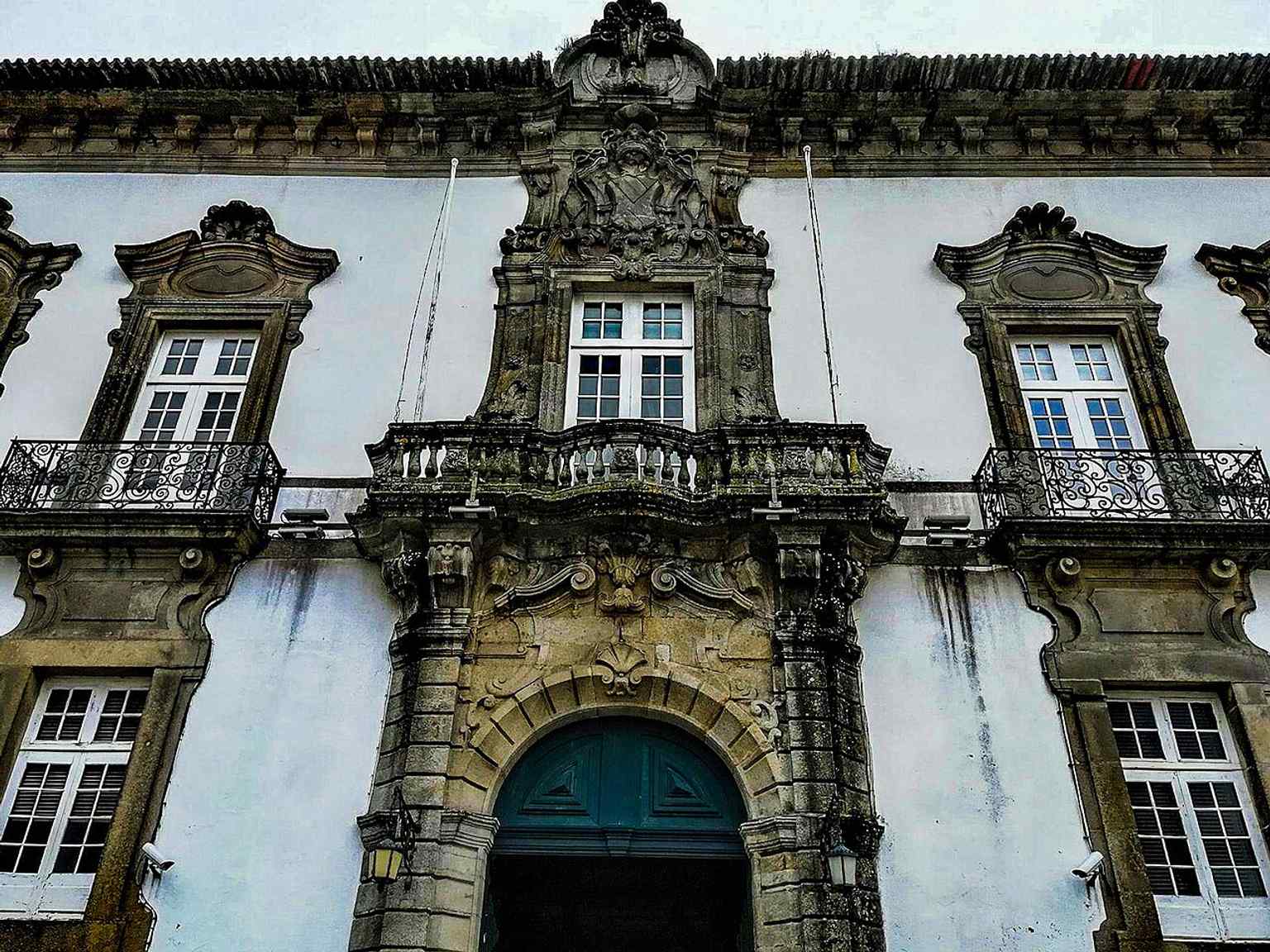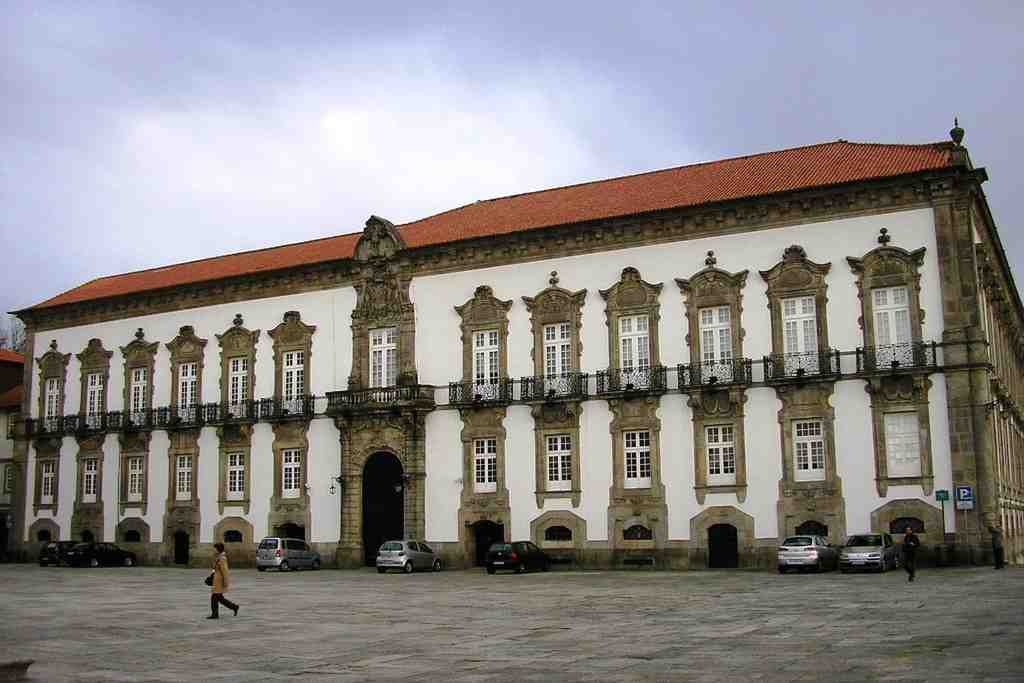
On your right, the Episcopal Palace shows itself as a long white Baroque block with rows of windows, a dark granite portal, and a balcony crowned by a bishop’s coat of arms.
This hill was Porto’s upper command post. Down by the river, merchants counted cargo and coin; up here, beside the cathedral, bishops watched over souls, law, and a very useful view of the city below.
The story begins early. By the time of Bishop D. Hugo, in the early twelfth century, there was already a bishop’s residence beside the cathedral. One stubborn survivor from that older house is still here: a narrow late-Romanesque slit window near the right side of the main door. Porto does this a lot... it rebuilds grandly, but it rarely throws everything away.
In thirteen eighty-seven, this palace witnessed the marriage of John the First of Portugal and Philippa of Lancaster. So yes, this hill has handled both salvation and statecraft with a fairly straight face.
What you see now mostly comes from a sweeping eighteenth-century remake. The Italian architect Nicolau Nasoni, the same restless imagination behind Clérigos, likely drew the project in seventeen thirty-four. Miguel Francisco da Silva then took on the actual building work from seventeen thirty-seven. Progress crawled, partly because Porto went for years without a confirmed bishop, and money was tight. Authority, it turns out, looks impressive from a distance and surprisingly expensive up close.
The man most tied to the palace’s completion is Bishop Rafael de Mendonça. His coat of arms sits over the main portal, as if signing off on the whole operation. Even then, the original plan had to shrink. What survived is still a fine piece of late Baroque and Rococo civil architecture, but also a reminder that institutions improvise, even when they pretend not to.
This building changed roles when the city did. During the Siege of Porto in eighteen thirty-two, the bishop fled, and Peter the Fourth’s liberal troops turned the palace into a stronghold against Miguel the First. Later, from nineteen sixteen until nineteen fifty-seven, the city council moved in and used it as Porto’s town hall. Then, in nineteen forty, redevelopment cleared away neighboring buildings, leaving the palace more exposed than it had been for centuries.
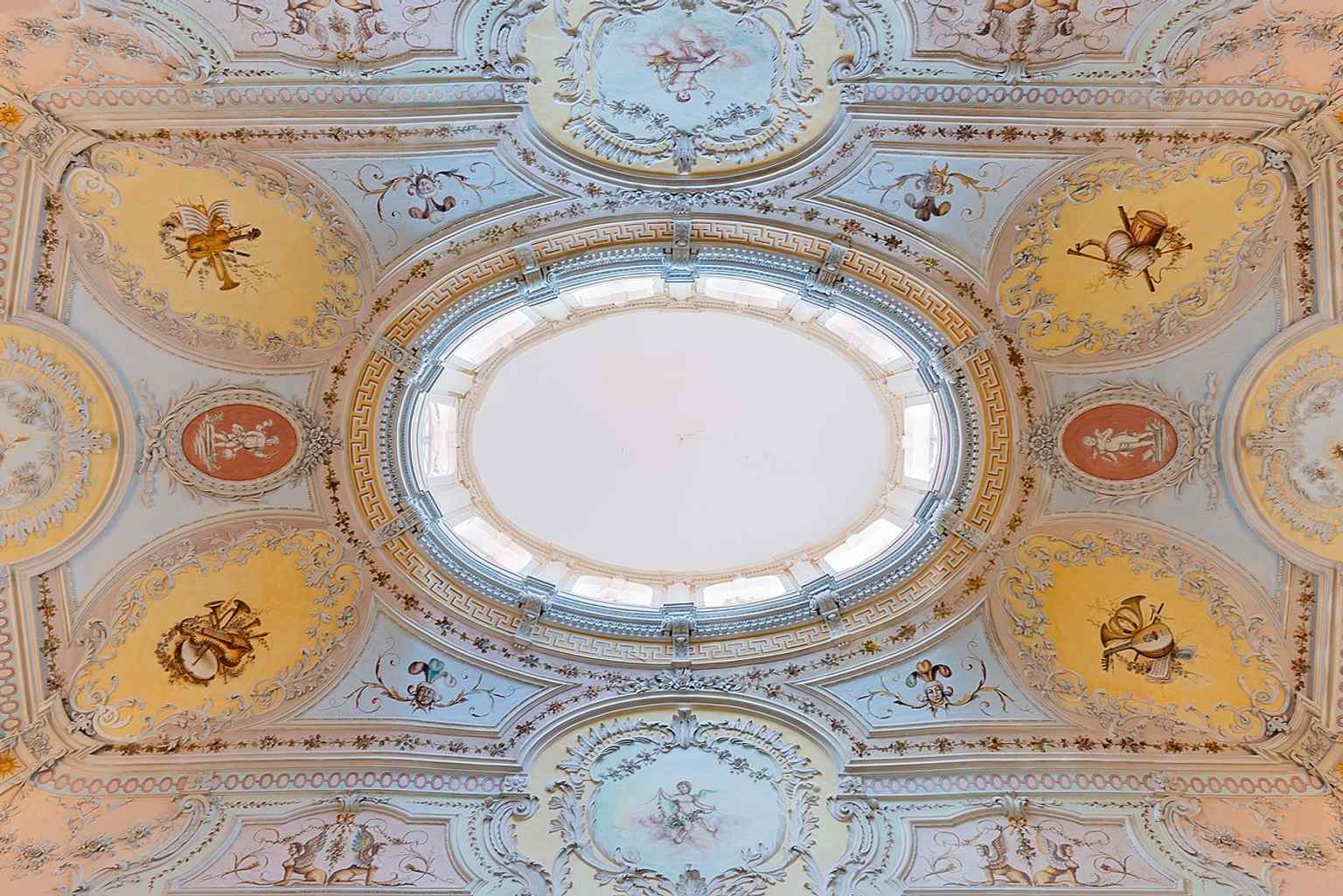
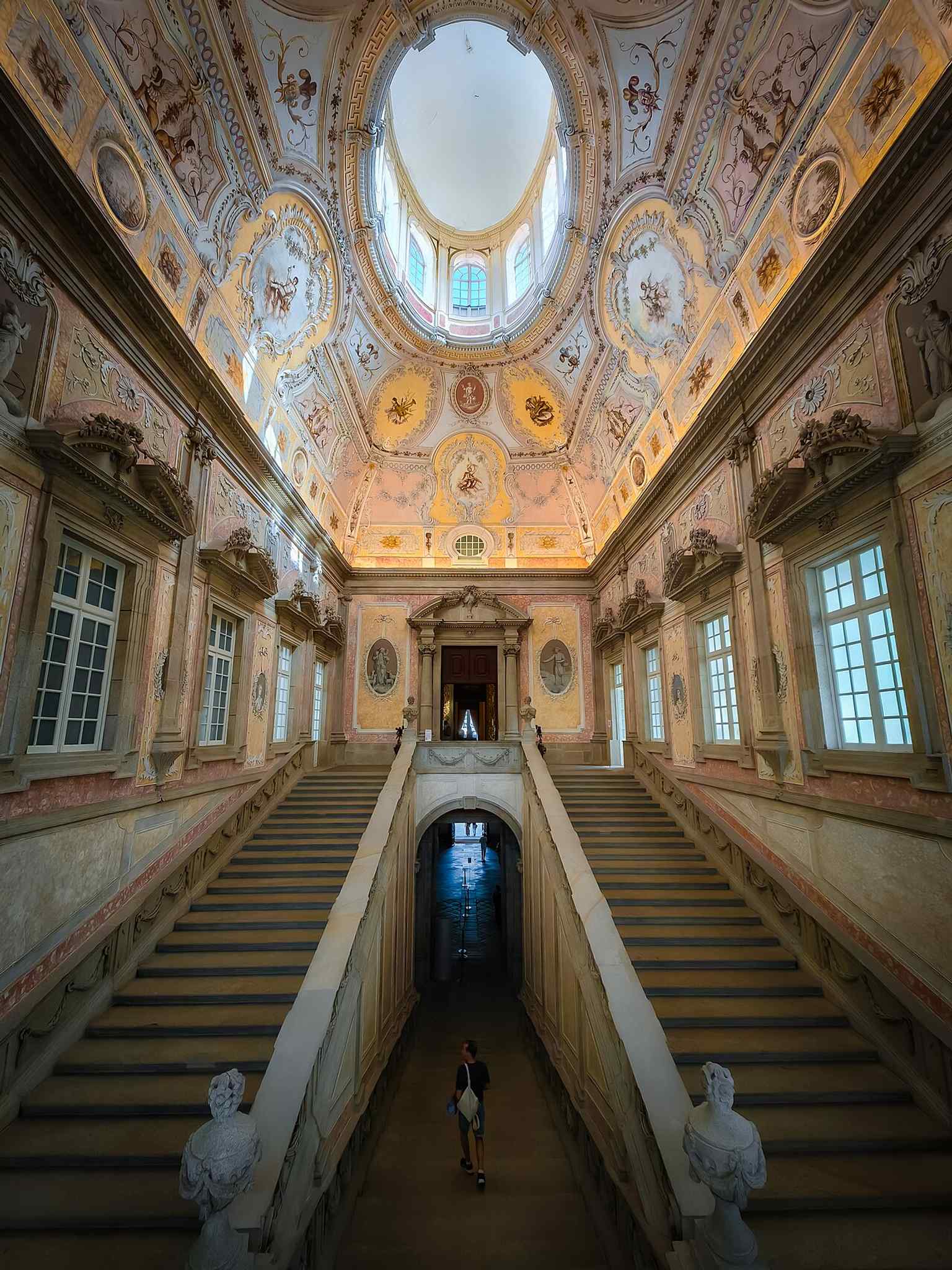
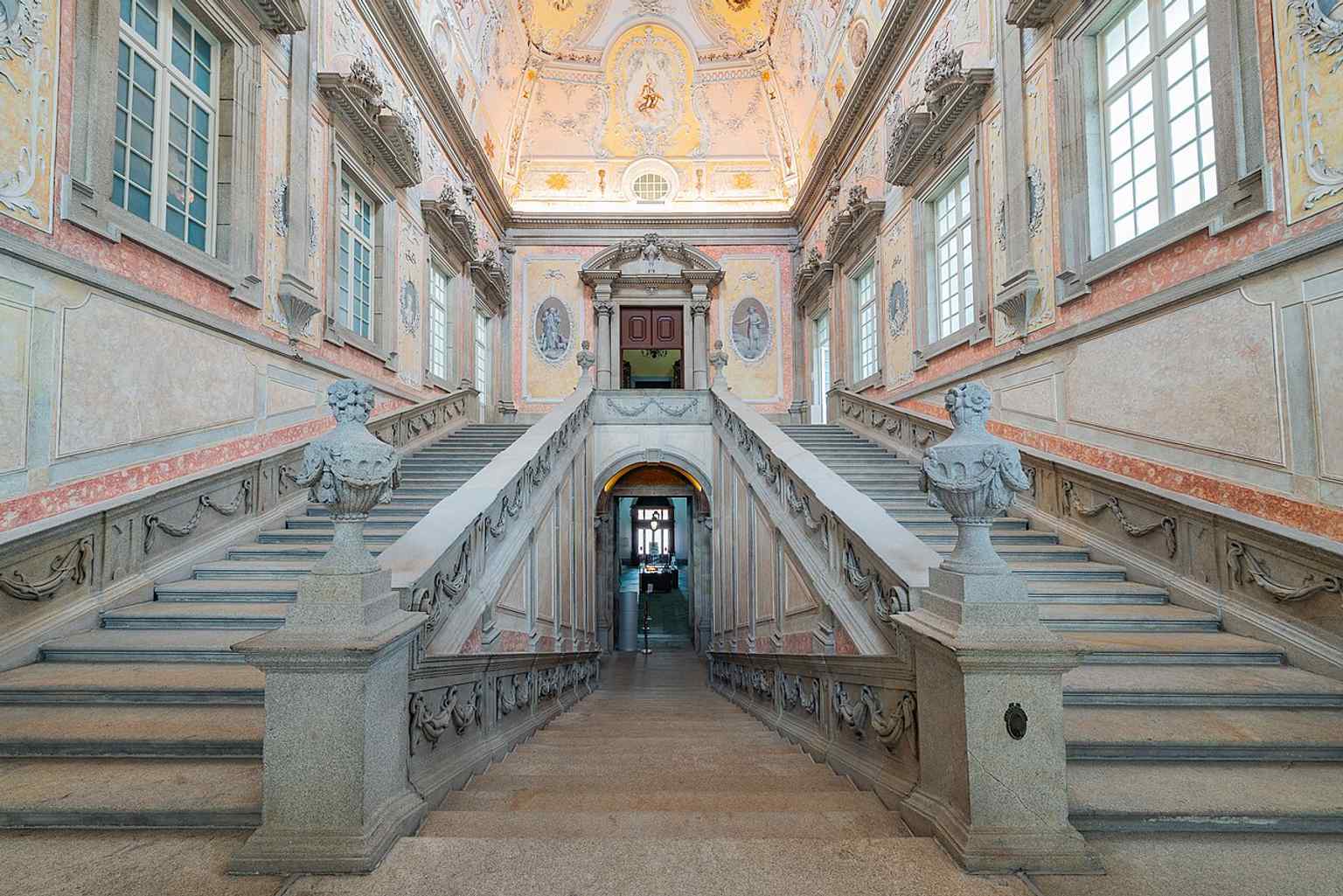
If you check the image on your screen, you can peek at the monumental staircase inside - a grand U-shaped climb with painted walls, stucco decoration, and a glass dome above. Since two thousand and sixteen, part of the palace has opened as a museum, though the bishop still uses parts of it, including the Audience Hall. Power here never really moved out; it just learned to share.
From here, the palace prepares you for the older heart of the hill: the cathedral itself. Head there next. If you want to return inside later, the museum generally opens Monday through Saturday from nine to one-thirty and from two to five-thirty, and it stays closed on Sunday.