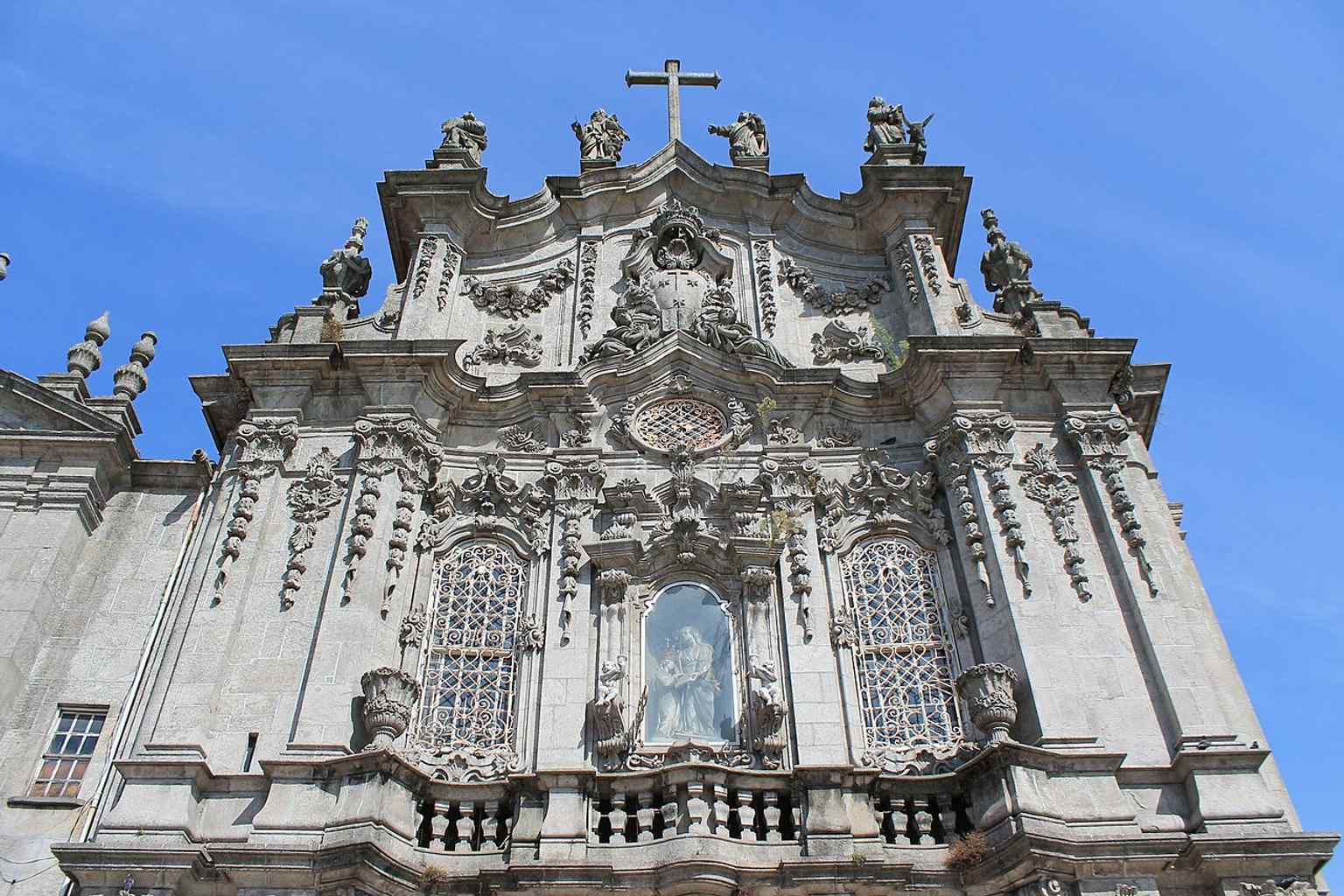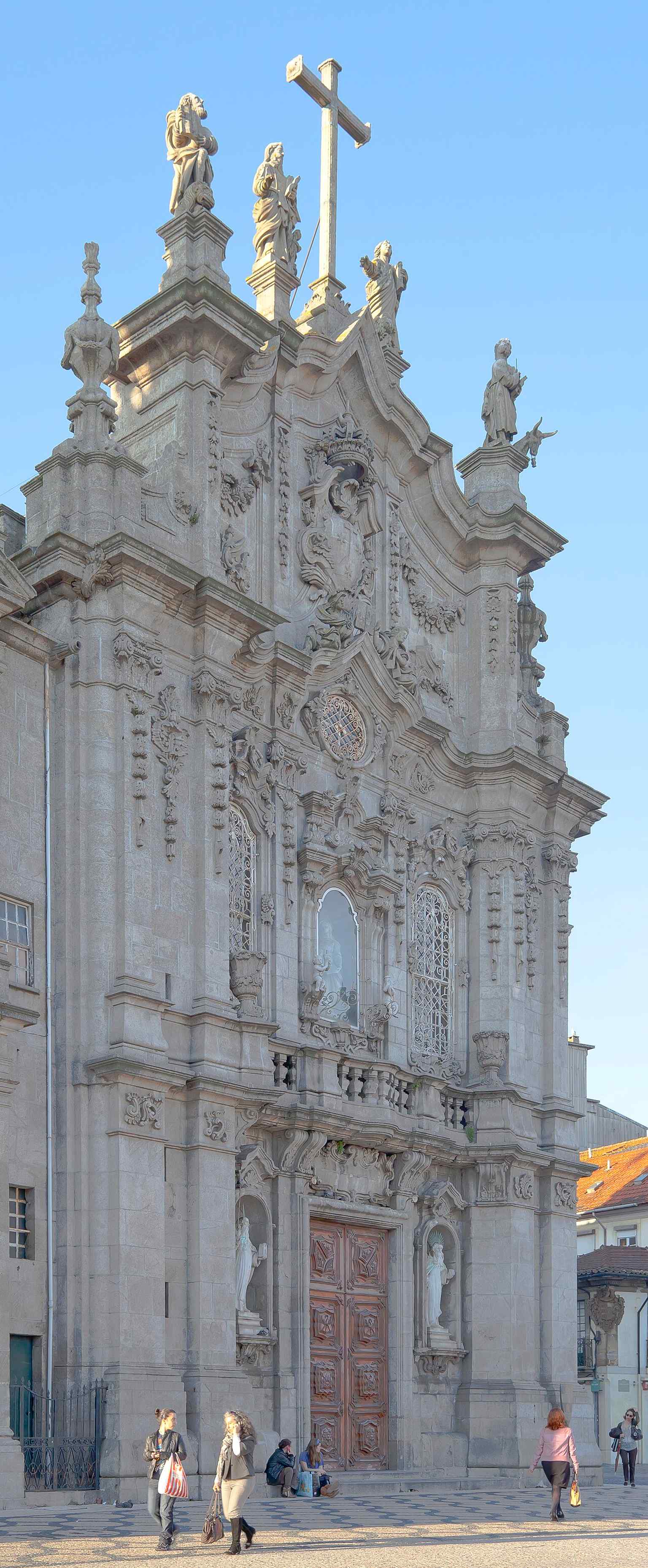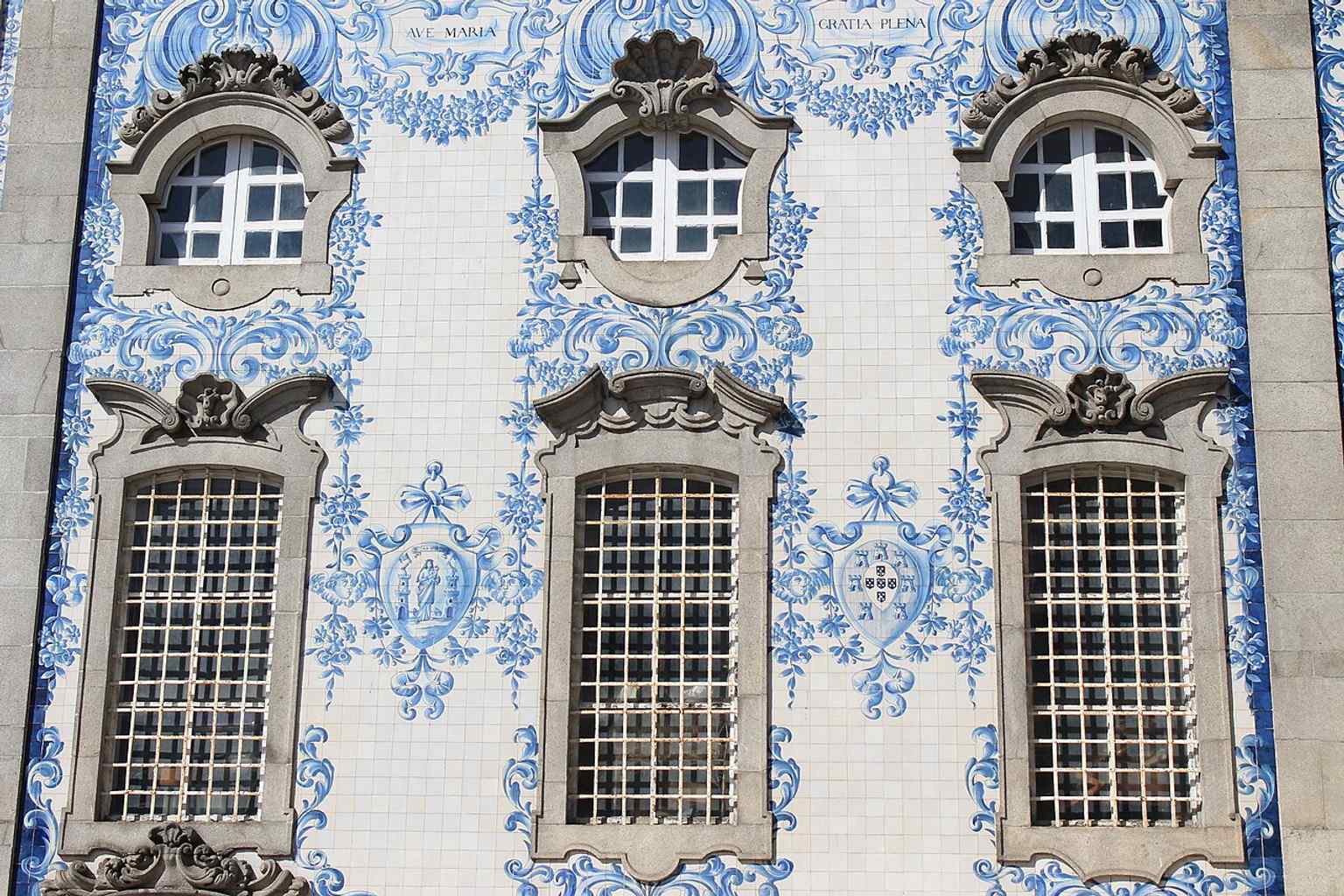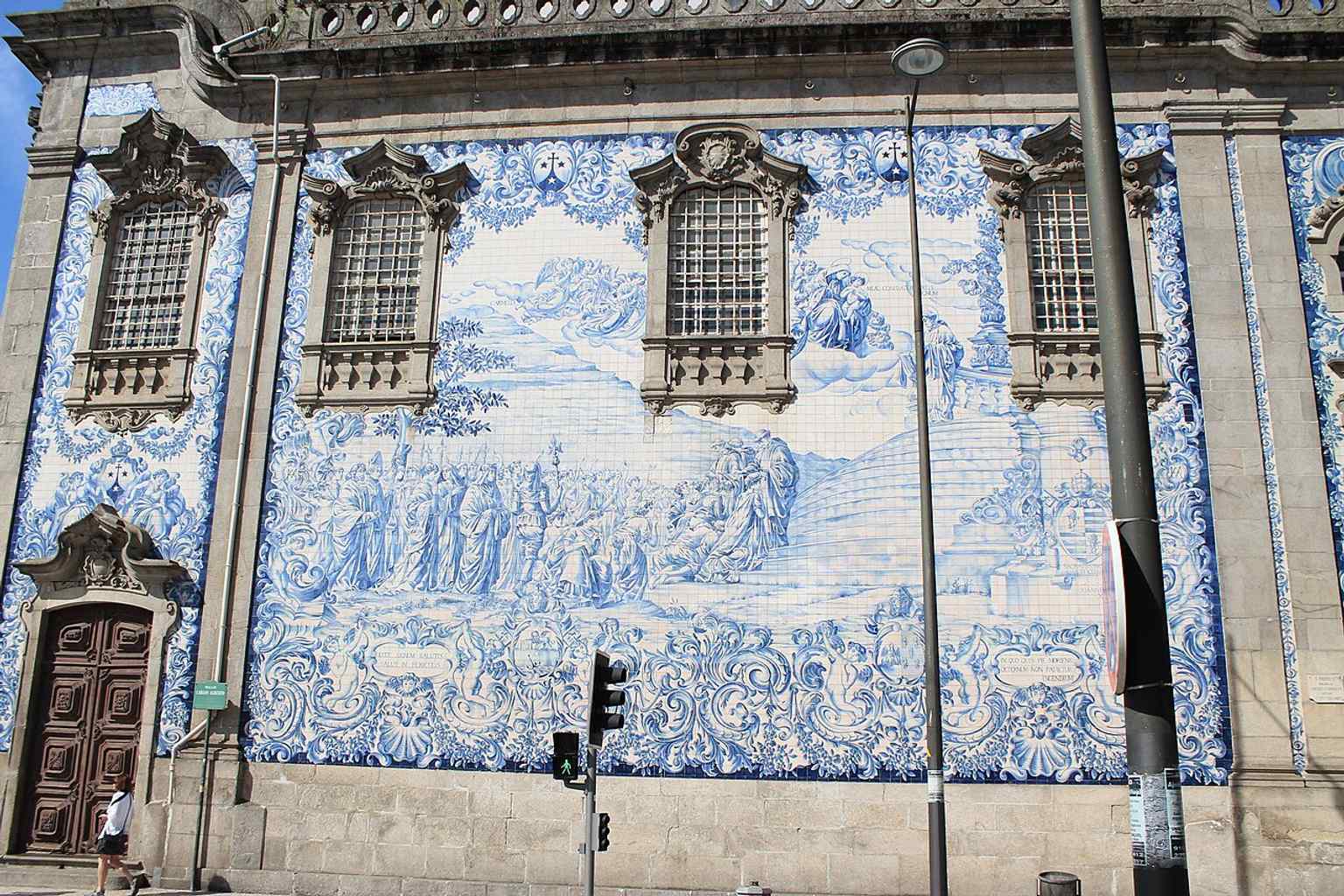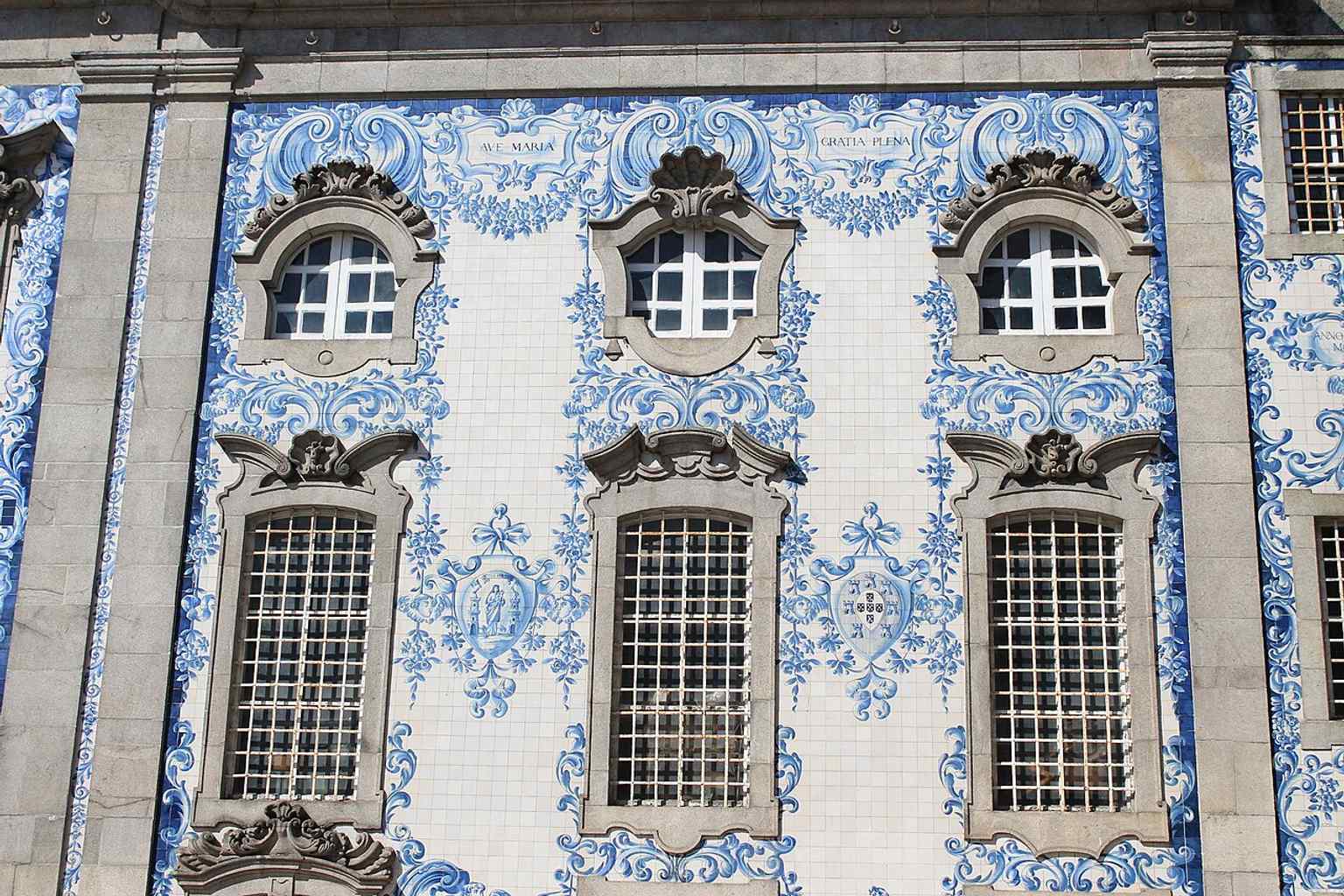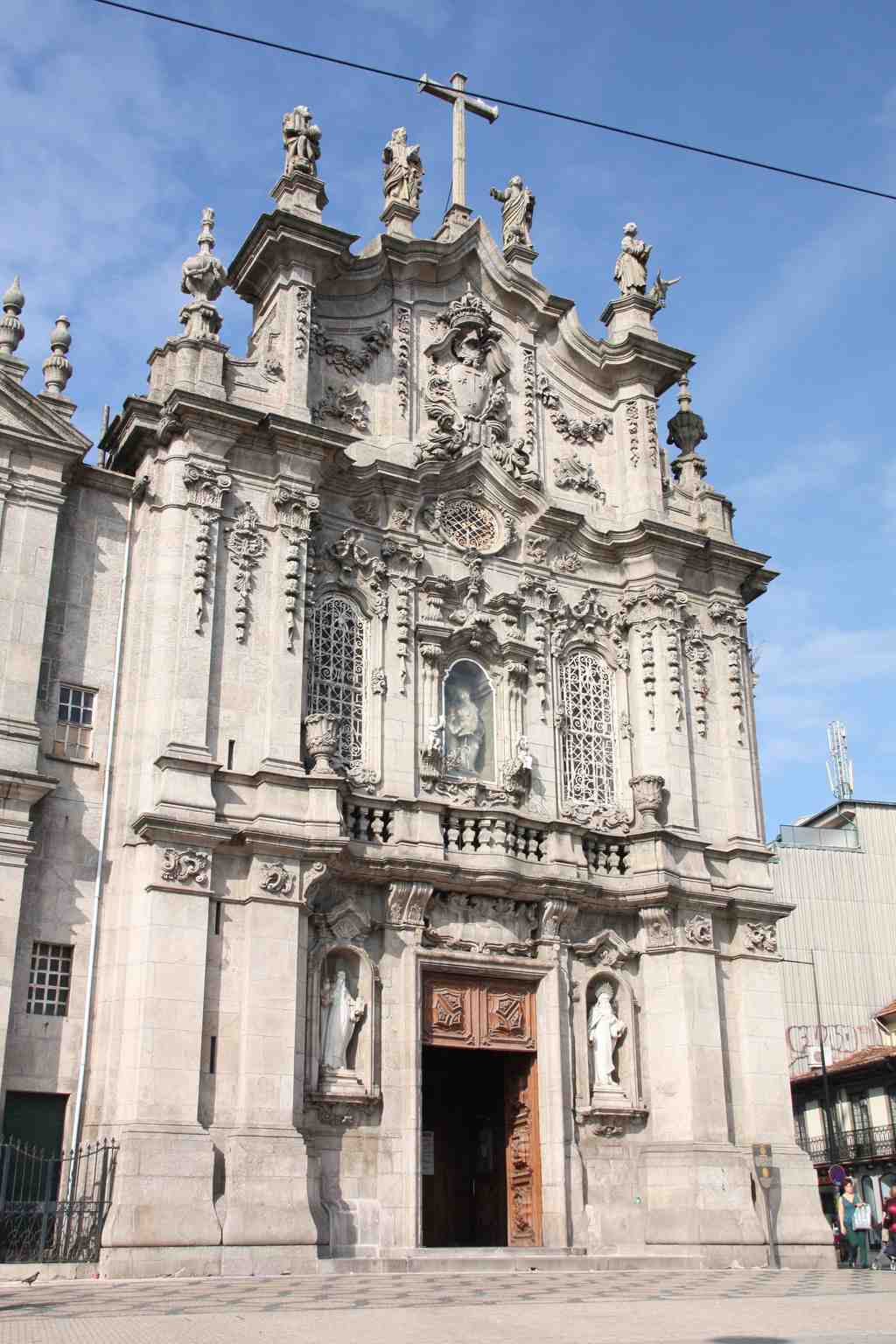
On your left, look for a pale granite church front rising in a rippling baroque shape, topped with stone statues and paired with a huge blue-and-white tile wall along its side.
This is Carmo Church, and it tells one of Porto’s favorite kinds of stories: the city runs into a rule, then answers it with elegance and a slightly mischievous workaround. In seventeen fifty-two, the Carmelite Third Order - a brotherhood of lay members linked to the Carmelite tradition - received this plot beside the older Carmelitas church. They wanted their own church here. There was just one snag: urban rules did not allow two churches to stand directly attached.
So architect José Figueiredo Seixas got clever. Between the two churches he inserted the Casa Escondida, the Hidden House, a wafer-thin building just over one and a half meters wide. Officially, problem solved. When the law says “not touching,” Porto apparently replies, “Fine... we’ll add a house.”
Look for the join between the two churches for a moment. Not the grand front, not the statues above... the narrow seam where most people assume there is only stone and symmetry. That tiny slice is the whole trick.
Local legend, naturally, improved the story. People said the house existed to prevent any improper contact between friars and nuns by stopping the two religious communities from sharing a wall. Charming story... but not documented fact. Over roughly two hundred and fifty years, the hidden house had much more practical lives. Historian Joel Cleto notes that chaplains stayed there, and at times doctors connected to the Carmelite hospital did too. There is even a tradition that the little space hosted discreet meetings in politically uneasy times. A legal loophole, then lodging, then whispered backdrop to city life. Very Porto.
Now lift your eyes to the facade itself. Seixas gave the church its late baroque and rococo drama between seventeen fifty-six and seventeen sixty-eight. Above the entrance, Saint Anne appears in relief, the church’s patron and a figure the Carmelites especially venerated. In the niches by the door stand the prophets Elijah and Elisha, spiritual models for the order. Higher up, the four Evangelists and the pointed finials show the pull of Italian baroque, especially the style associated with Nicolau Nasoni - a name that will matter again before long.
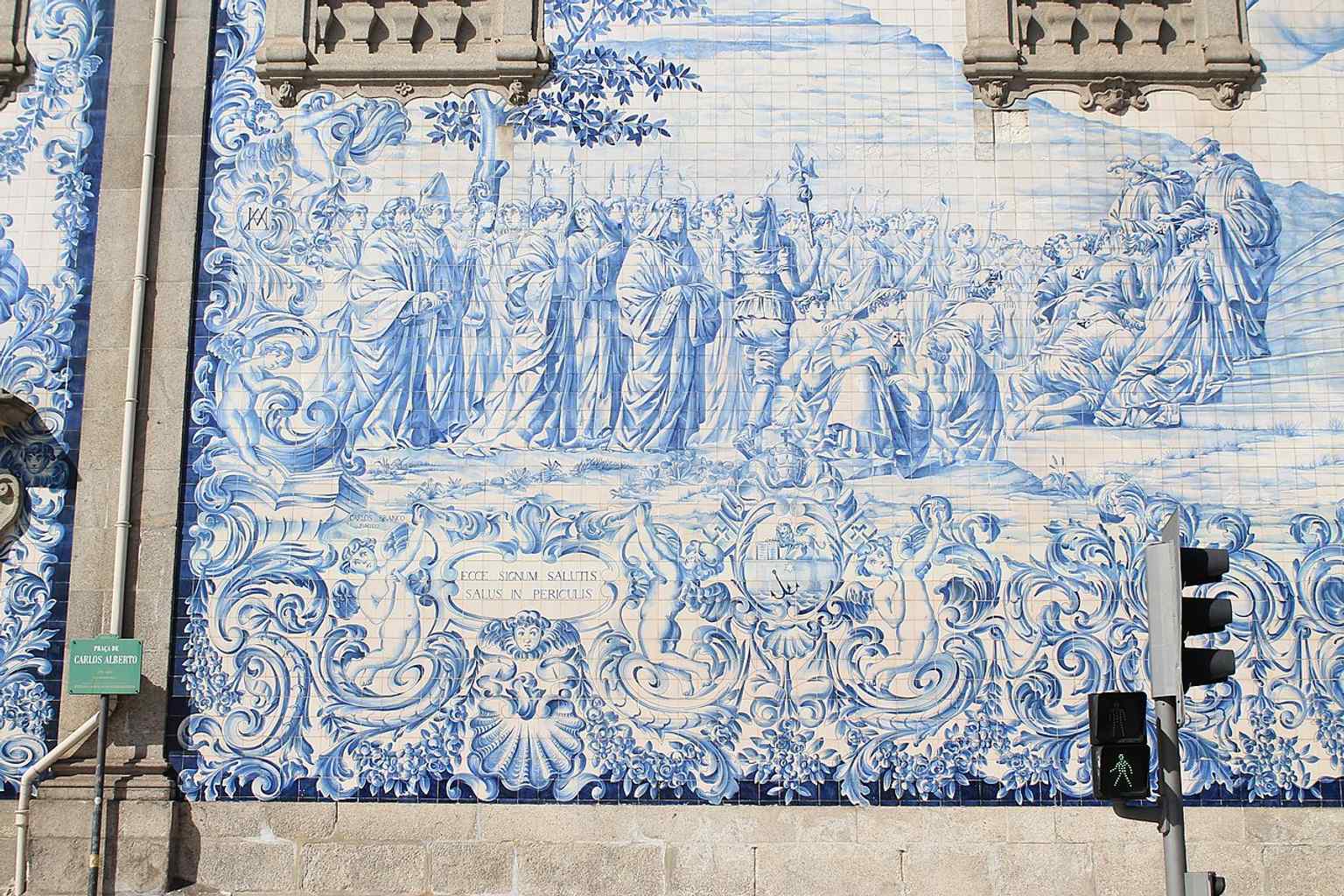
If you want the side of the church on your screen, have a glance now. That immense tile panel dates to nineteen twelve. Silvestre Silvestri designed it, Carlos Branco painted it, and workshops in Vila Nova de Gaia produced it. It tells scenes tied to the founding of the Carmelite order and Mount Carmel, and it turns the whole side elevation into a ceramic billboard for faith.
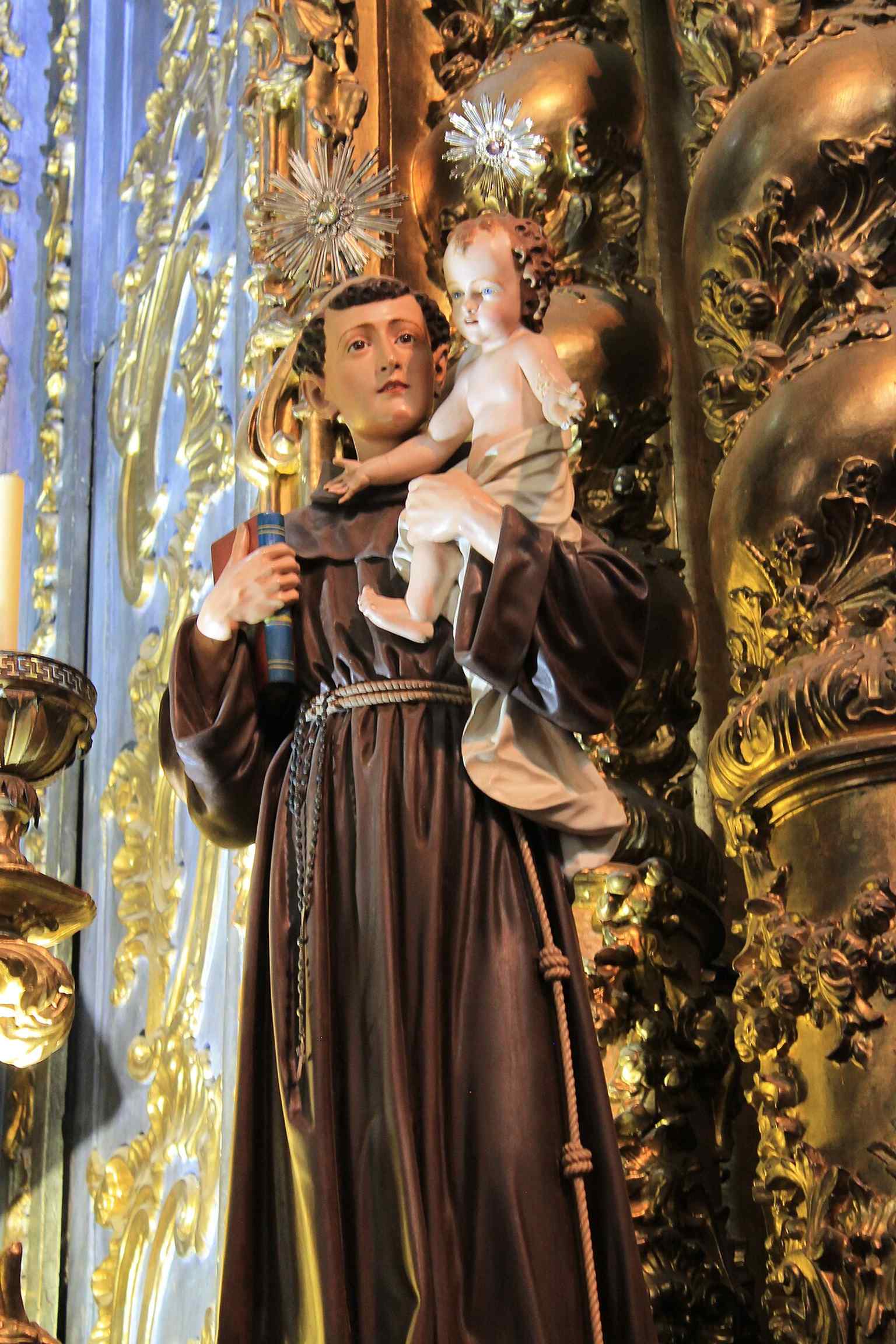
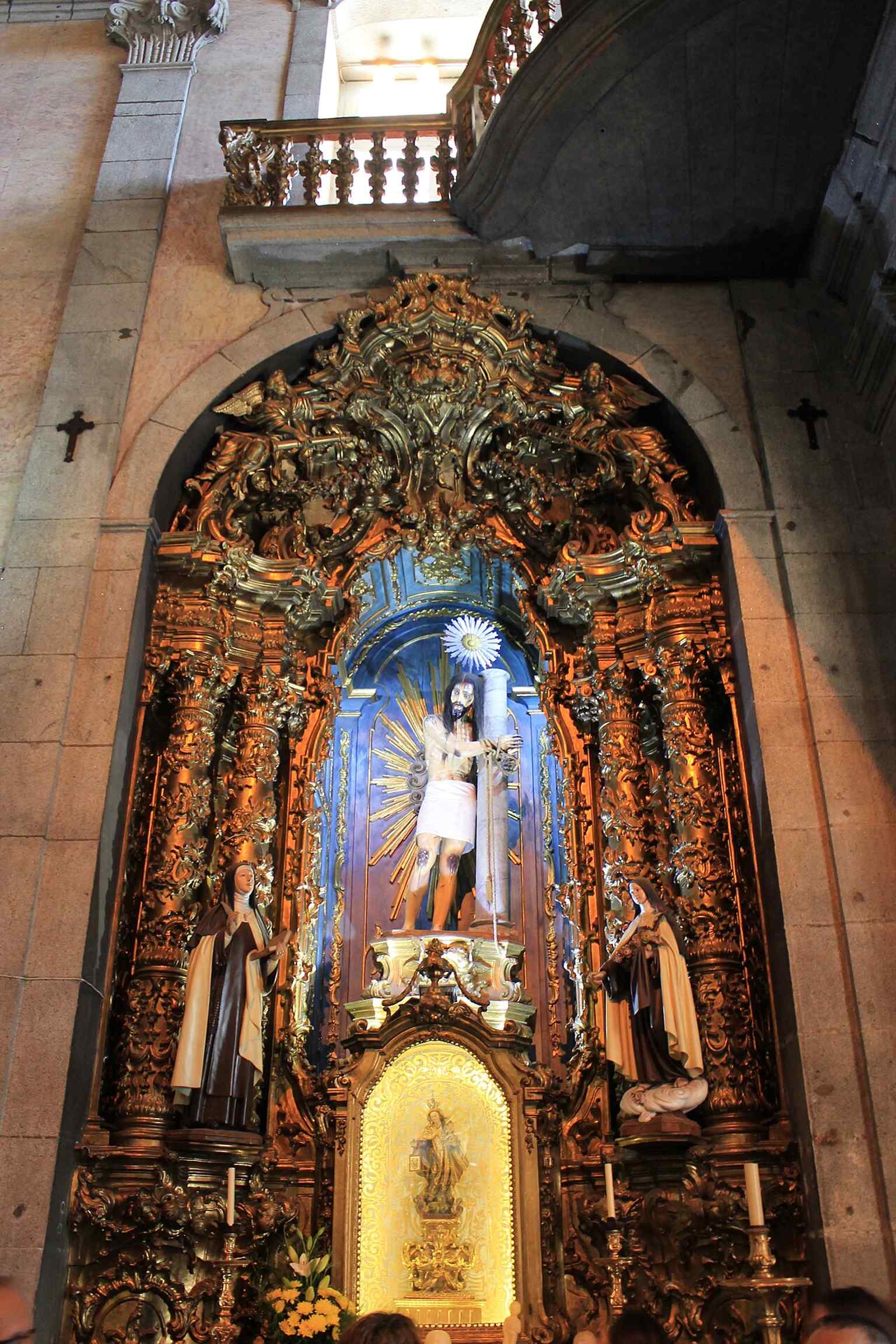
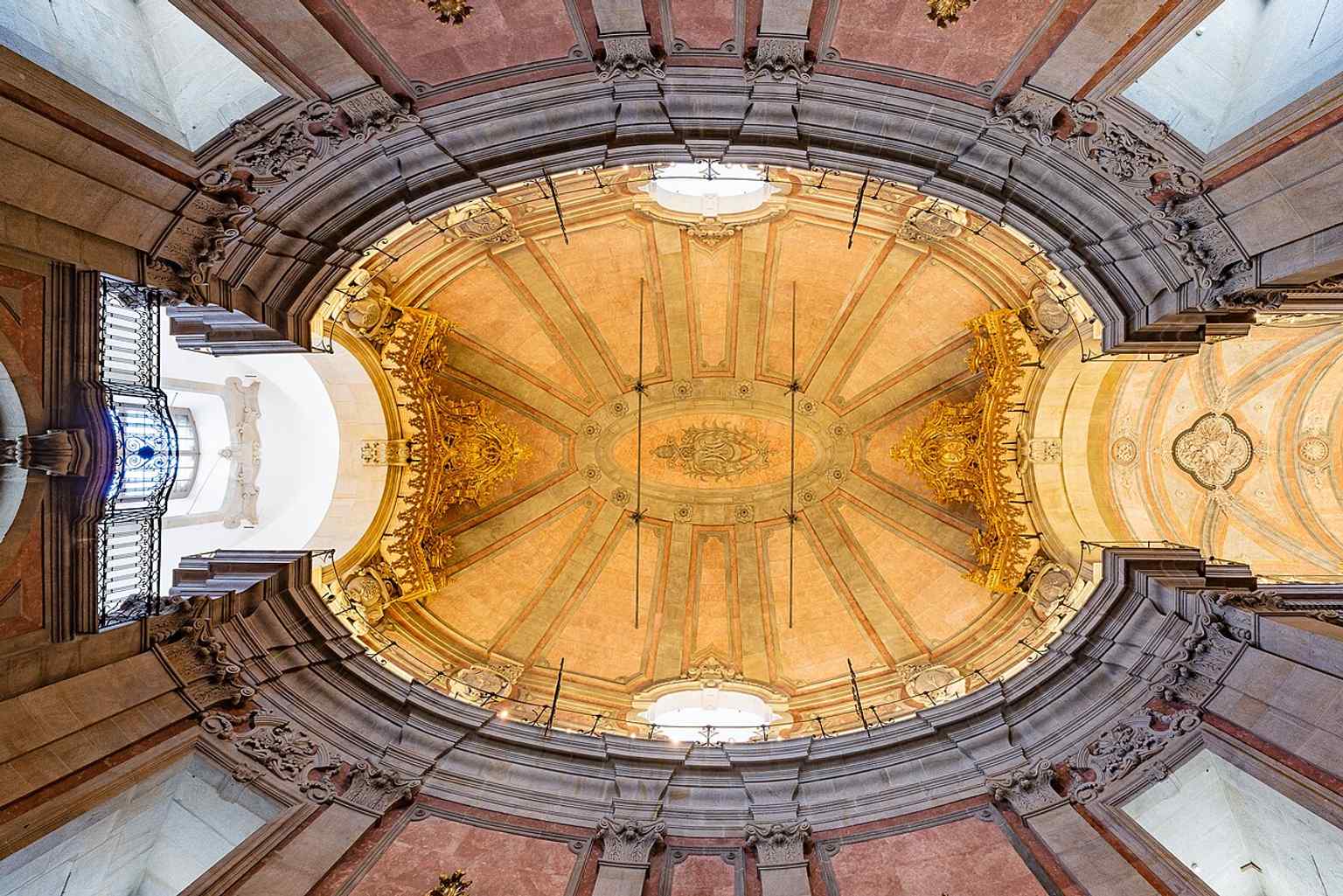
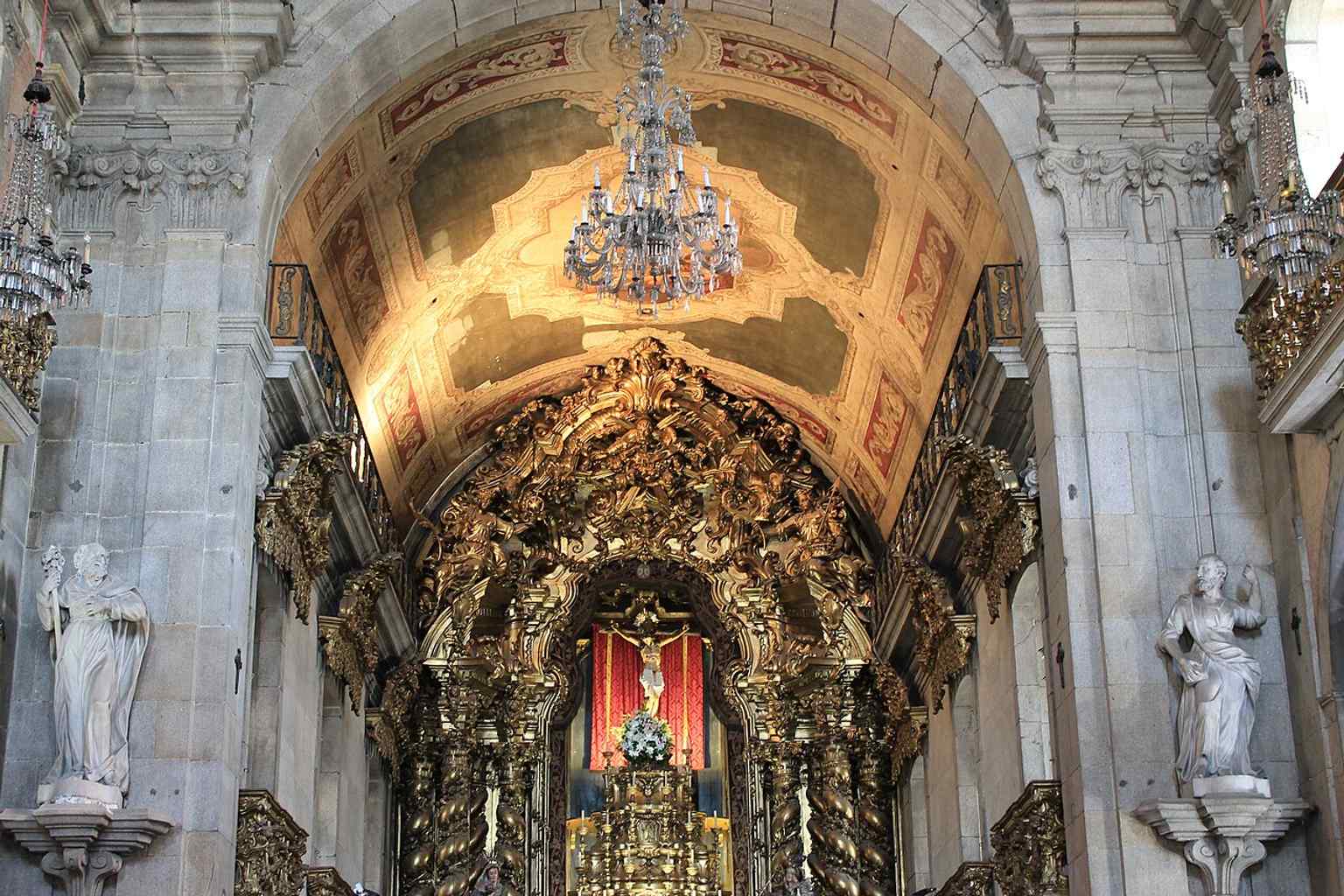
Inside, the church continues with gilded carving, sculpture, and paintings arranged around the Passion of Christ. If you peek at the interior image in the app, you’ll see how lavishly the Carmelites answered restraint with ornament.
The pair of churches, together with their almost invisible house, gained national monument status in two thousand and thirteen, and since two thousand and eighteen the Casa Escondida has opened to visitors instead of just teasing them from the outside.
That is the pleasure here: realizing the strangest part was never hidden very well... only politely overlooked. When you’re ready, continue about five minutes to Lello Bookstore, where Porto hides another spectacle in plain sight. If you want to come back inside later, the church generally opens from nine thirty A-M to five P-M.