
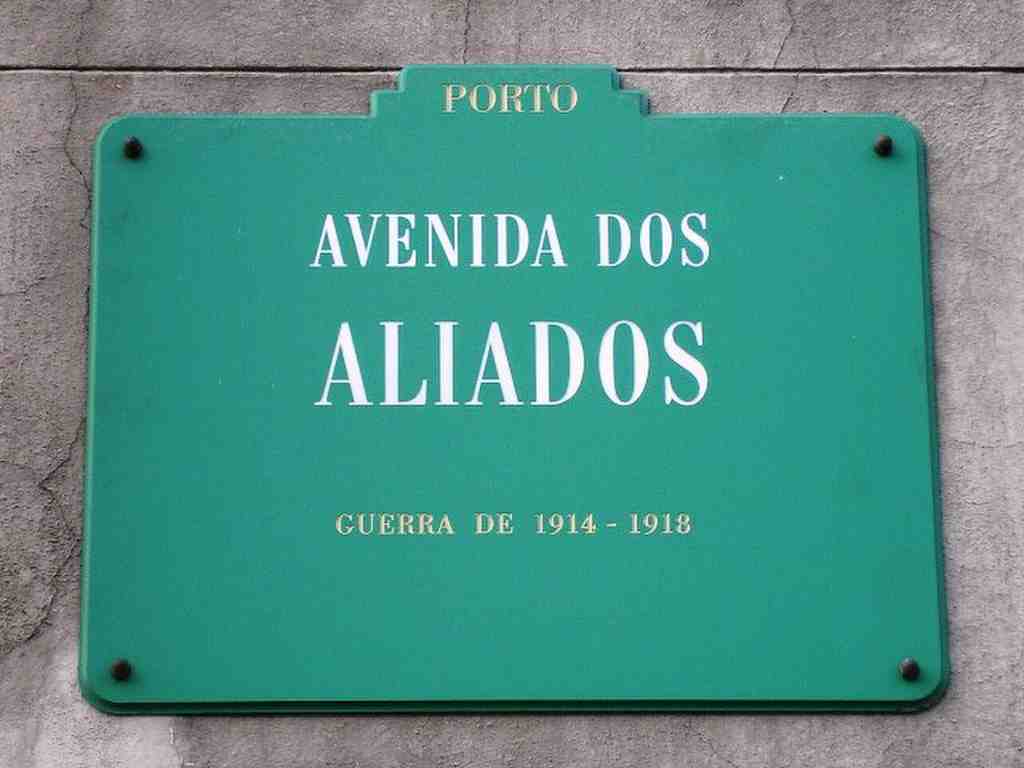
On your right, Avenida dos Aliados opens as a wide granite boulevard climbing between pale stone facades, many crowned with domes and lantern-like turrets, with the great block of City Hall holding the top.
This is Porto making a public statement. The creation of Avenida dos Aliados was not a simple street improvement; it was a planned rewrite of the old center, cutting through a tighter, messier web of lanes so the city could present itself as modern, orderly, and important... preferably all at once.
Before this avenue, this ground held short streets and alleys locals called the lavadouros, along with two busy parallel roads, Rua de Dom Pedro and Rua do Laranjal. In nineteen fifteen, the English planner Barry Parker came to Porto to study the crowded center. He wrote a small but influential report, Memórias sobre a projetada Avenida da Cidade, laying out how a new civic avenue might open the place up and give it some breathing room. City leaders approved the plan on the twenty-ninth of November, nineteen fifteen. Then everyone started arguing.
And I do mean properly arguing. The fiercest dispute centered on the Paços do Concelho, the City Hall: where it should stand, what shape it should take, what kind of city it should represent. The Industrial Association of Porto disliked the whole affair so much it did not even attend the official inauguration. Nothing says civic harmony like skipping the ribbon cutting.
The work began on the first of February, nineteen sixteen, with President Bernardino Machado present. The ceremony involved dismantling the “first stone” of the old baroque palace on Praça da Liberdade, where the municipal government had sat since eighteen sixteen. So this avenue began with demolition as public theater: one Porto taken apart so another Porto could step forward.
But Parker did not get everything he wanted. Architect José Marques da Silva, already known here for São Bento Station and the São João Theatre, pushed back hard against Parker’s design. That resistance helped shape the avenue you see now, a compromise between imported planning ideas and local architectural muscle. One visible trace of Marques da Silva’s hand is the former A Nacional insurance building near the lower end.
If you glance at the image on your screen, you’ll see the statue of Dom Pedro the Fourth marking where this monumental center begins. Around that axis, the avenue became the city’s reception room: banks and insurance firms shifted here from the older commercial area around São Domingos and Rua do Infante, and financial power followed them. Keep that in mind for later... Porto’s money has a habit of rearranging the map.
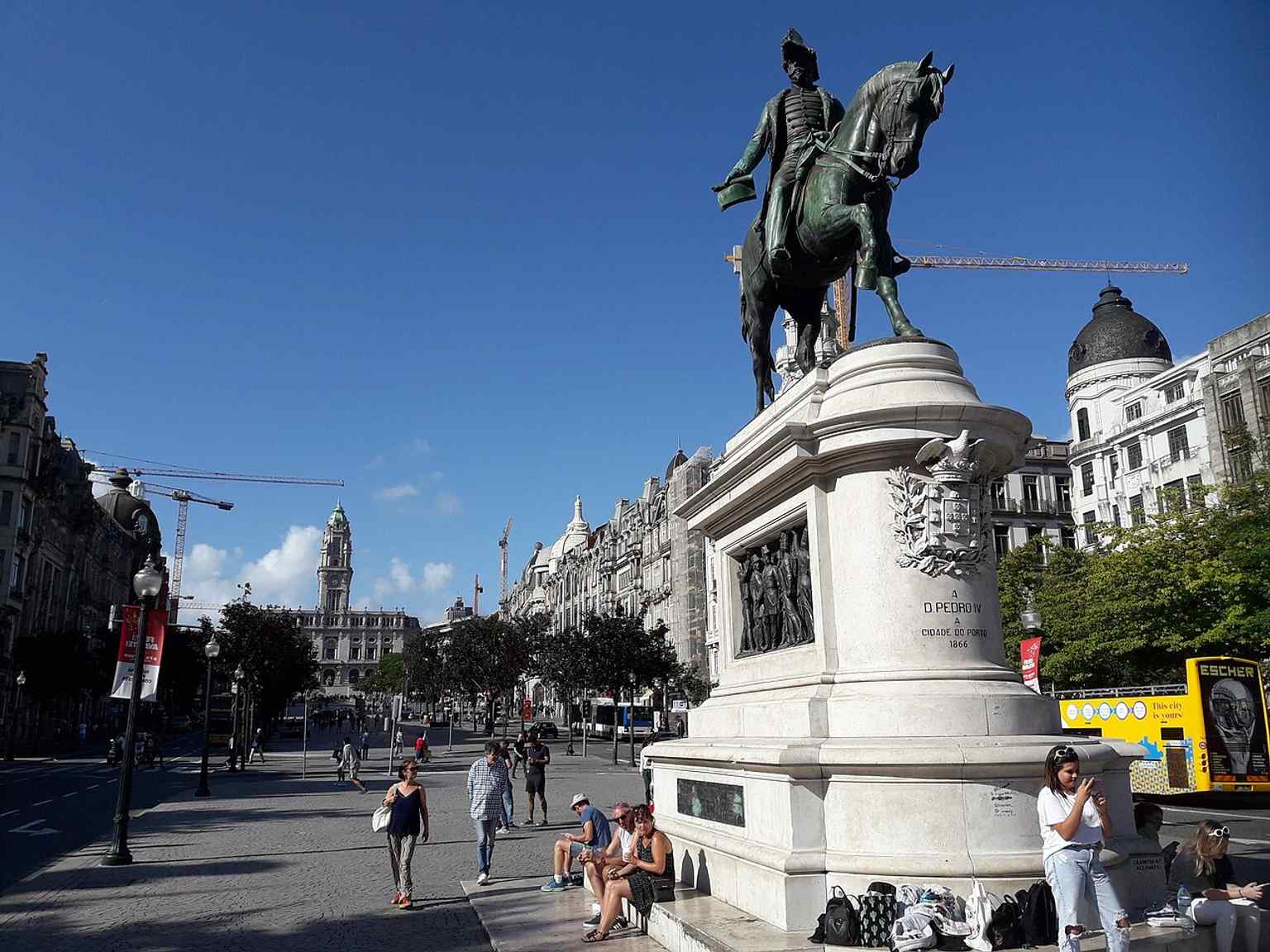
Even in the twenty-first century, Aliados kept provoking battles. When Álvaro Siza Vieira and Eduardo Souto Moura redesigned the avenue around the new metro station, they removed the old gardens, paved the central strip in granite, widened sidewalks, and tried to merge Aliados with Praça da Liberdade into one continuous urban space. Critics protested in two thousand and five around the Dom Pedro statue, carrying banners and even coffin-shaped installations to mourn what they called the death of the city’s heart. Porto does not do quiet disagreement.
So Aliados is more than grandeur. It is ambition, argument, demolition, and reinvention cast in stone. And from this boulevard-sized act of self-confidence, we head toward one of Porto’s slyer tricks: at Carmo Church, the city hides a very narrow house between sacred walls, an architectural evasion with excellent manners.





