AudaTours logoAudaTours

Stop 3 of 16

Church of Saint Ildefonso

headphones 03:27

In front of you stands a granite church with twin bell towers and a blue-and-white azulejo façade, marked by a niche where Saint Ildefonso stands above the entrance.

At first glance, Santo Ildefonso looks straightforward enough... a handsome eighteenth-century church keeping watch near Batalha Square. But Porto is rarely that tidy. Hidden Porto begins with places like this, where later surfaces sit over older names, and older names sit over older ground. What you see is only the newest clear sentence in a much longer story.

Most people remember the tiles, and fair enough: around eleven thousand azulejos, painted ceramic tiles, cover the façade. Jorge Colaço designed them in nineteen thirty-two, filling the front with scenes from the life of Saint Ildefonso and images from the Gospels. Behind that famous skin, though, the church itself is older and sterner, built in granite, and its body stretches into an elongated octagon rather than a simple box. If you want a better sense of that shape, take a quick look at the side view in the app.
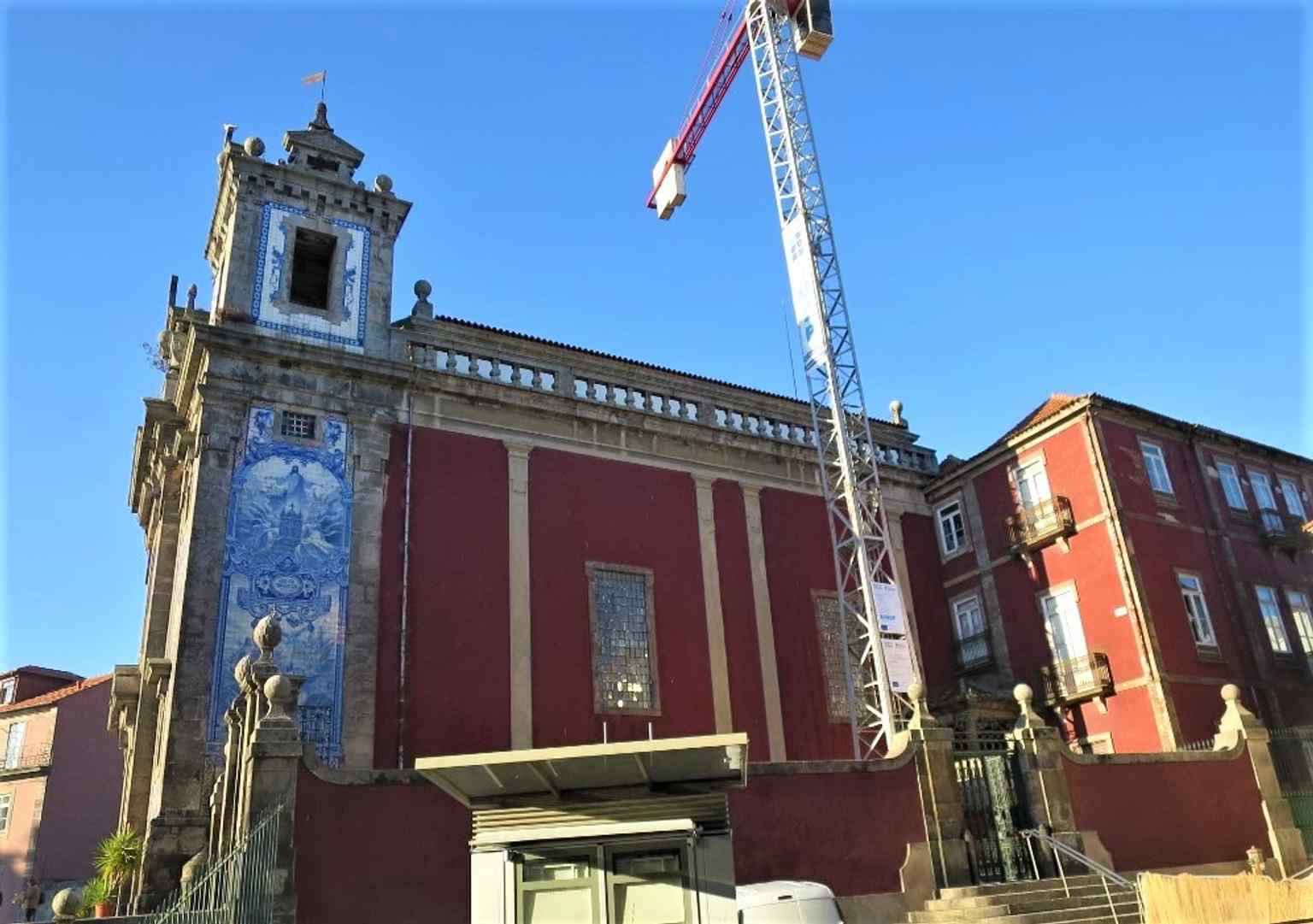
One of the side elevations of the church, useful for showing the elongated octagonal massing of the granite building.
One of the side elevations of the church, useful for showing the elongated octagonal massing of the granite building.Photo: Senhormario, Wikimedia Commons, CC BY-SA 4.0. Cropped & resized.

The church honors Ildephonsus of Toledo, a Visigoth bishop from the seventh century. But the local memory here runs deeper than the name on the front. Long before this building, a chapel called Santo Alifon stood on this spot. Bishop Vicente Mendes mentioned it in twelve ninety-six, which is the sort of small written clue historians treasure with perhaps a touch too much enthusiasm. When that old chapel grew dangerous and unstable, workers pulled it down in seventeen oh nine and started again. They finished the main body by seventeen thirty, then completed the towers and façade by seventeen thirty-nine.

Inside, another layer waits. Nicolau Nasoni - keep that name with you - designed the main retable, the grand carved screen rising behind the altar. Miguel Francisco da Silva carved and installed it in seventeen forty-five, so even the church’s great centerpiece came together in stages, by more than one hand. If you glance at the interior image, you can see that baroque drama gathered around the sanctuary.
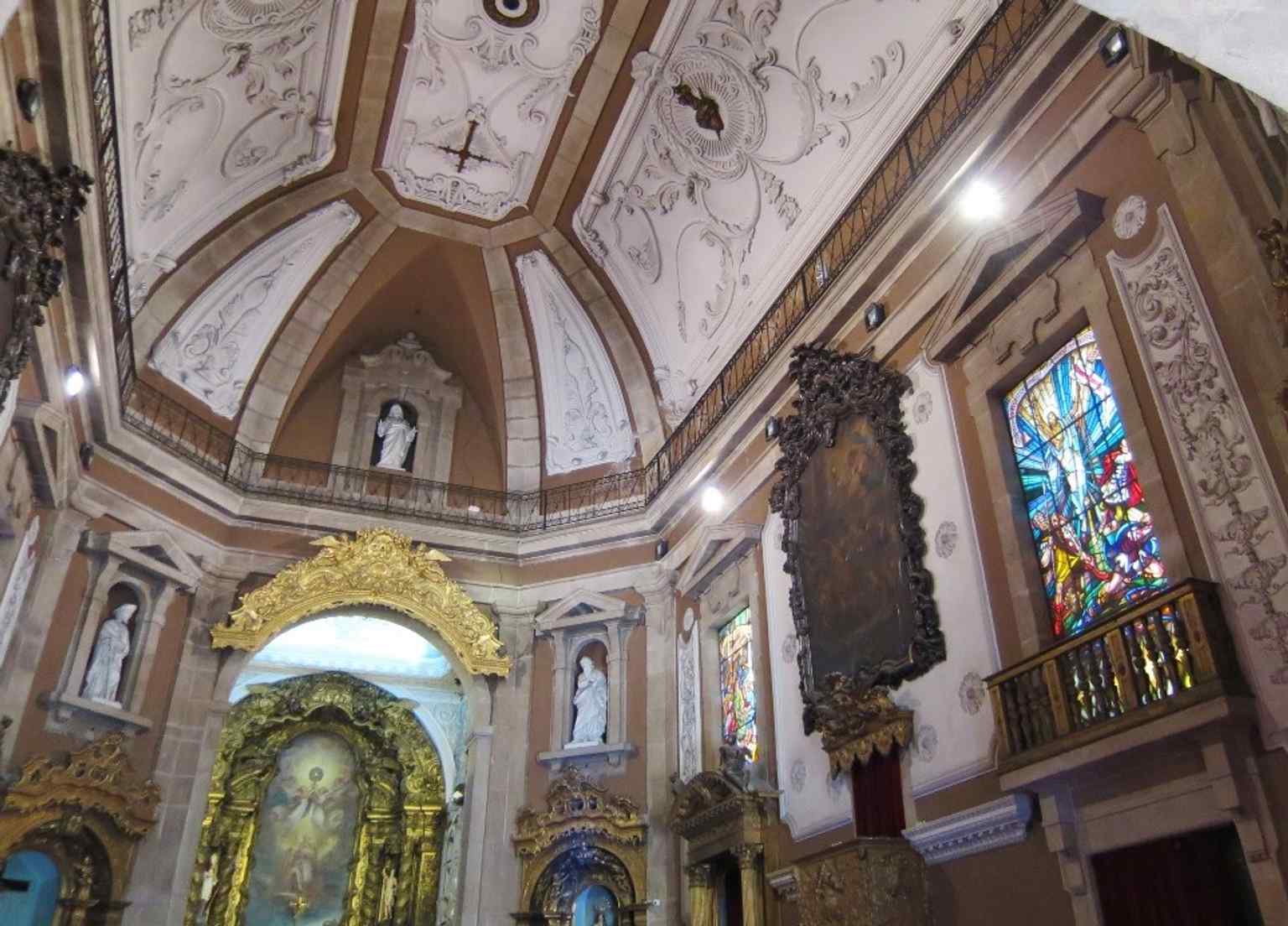
The church interior, where the celebrated baroque retable designed by Nicolau Nasoni anchors the sanctuary.
The church interior, where the celebrated baroque retable designed by Nicolau Nasoni anchors the sanctuary.Photo: Senhormario, Wikimedia Commons, CC BY-SA 4.0. Cropped & resized.

And here’s the detail locals tend to enjoy quietly: this church still stands over Santo Alifon’s old ground. In nineteen ninety-six, restorers working in the narthex - the entrance porch - uncovered nineteen graves from the earlier chapel’s churchyard. So the plain granite shell, the baroque interior, and the ceramic façade all sit above a buried parish memory.

The church took real damage too: a severe storm hit it in eighteen nineteen, and artillery struck it during the Siege of Porto in eighteen thirty-three. Porto has a habit of repairing what history breaks, then folding the repair into its identity.

When you’re ready, head on to São João National Theatre, about a four minute walk from here... and keep Nasoni, and that buried chapel, in the back of your mind. If you want to return inside later, opening hours vary by day, with short morning and afternoon windows and more limited access on Monday and Sunday.
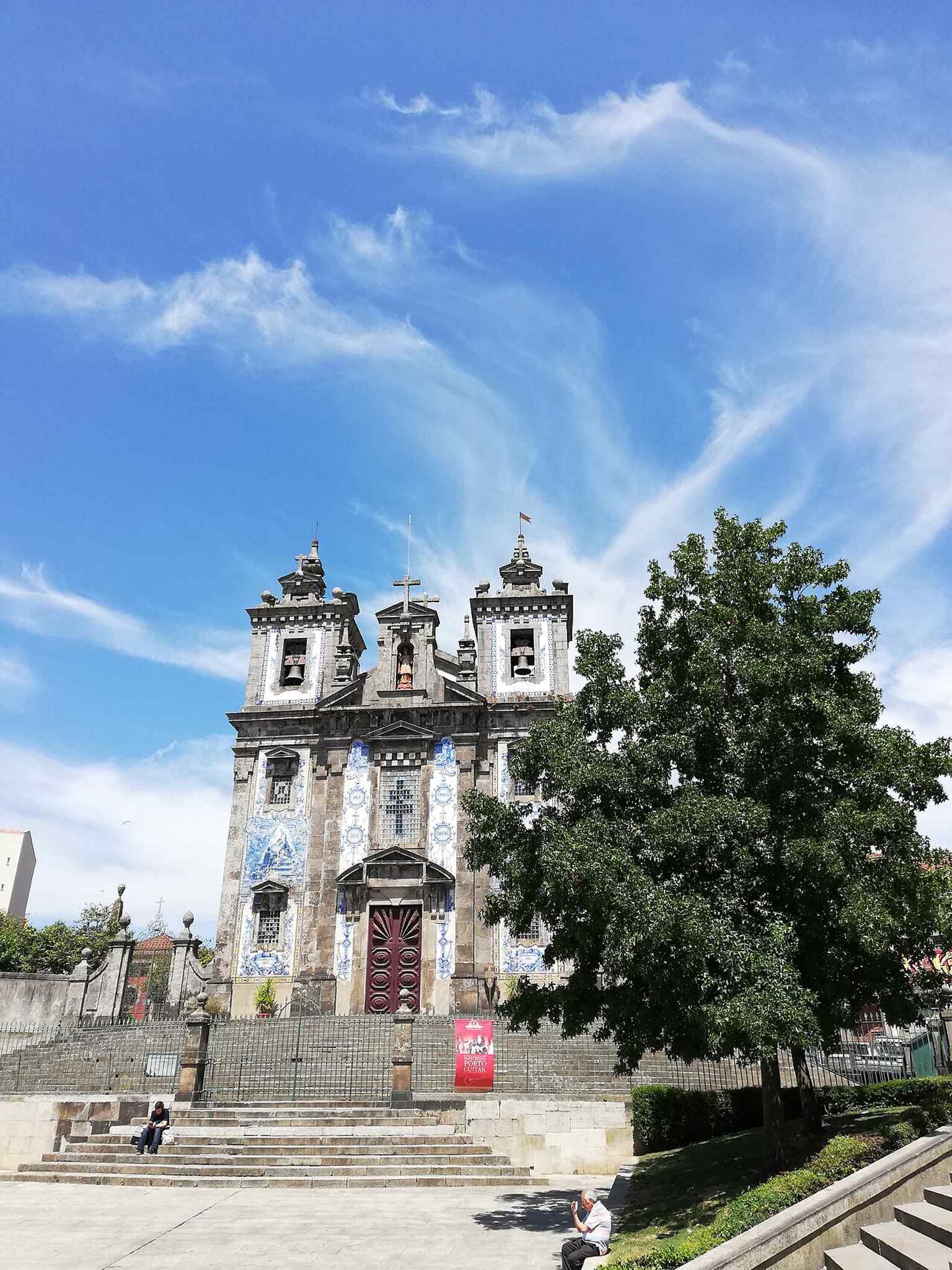
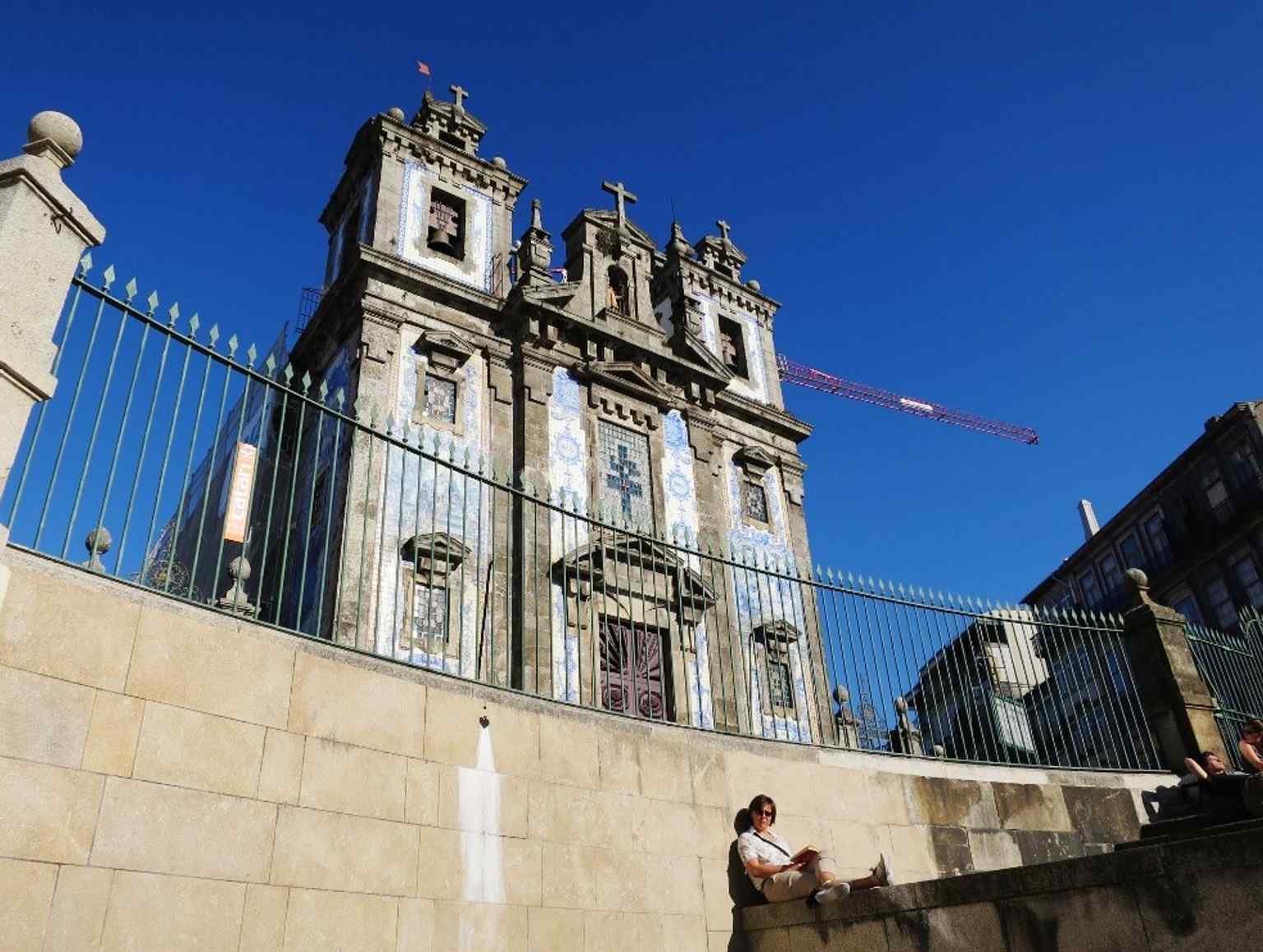
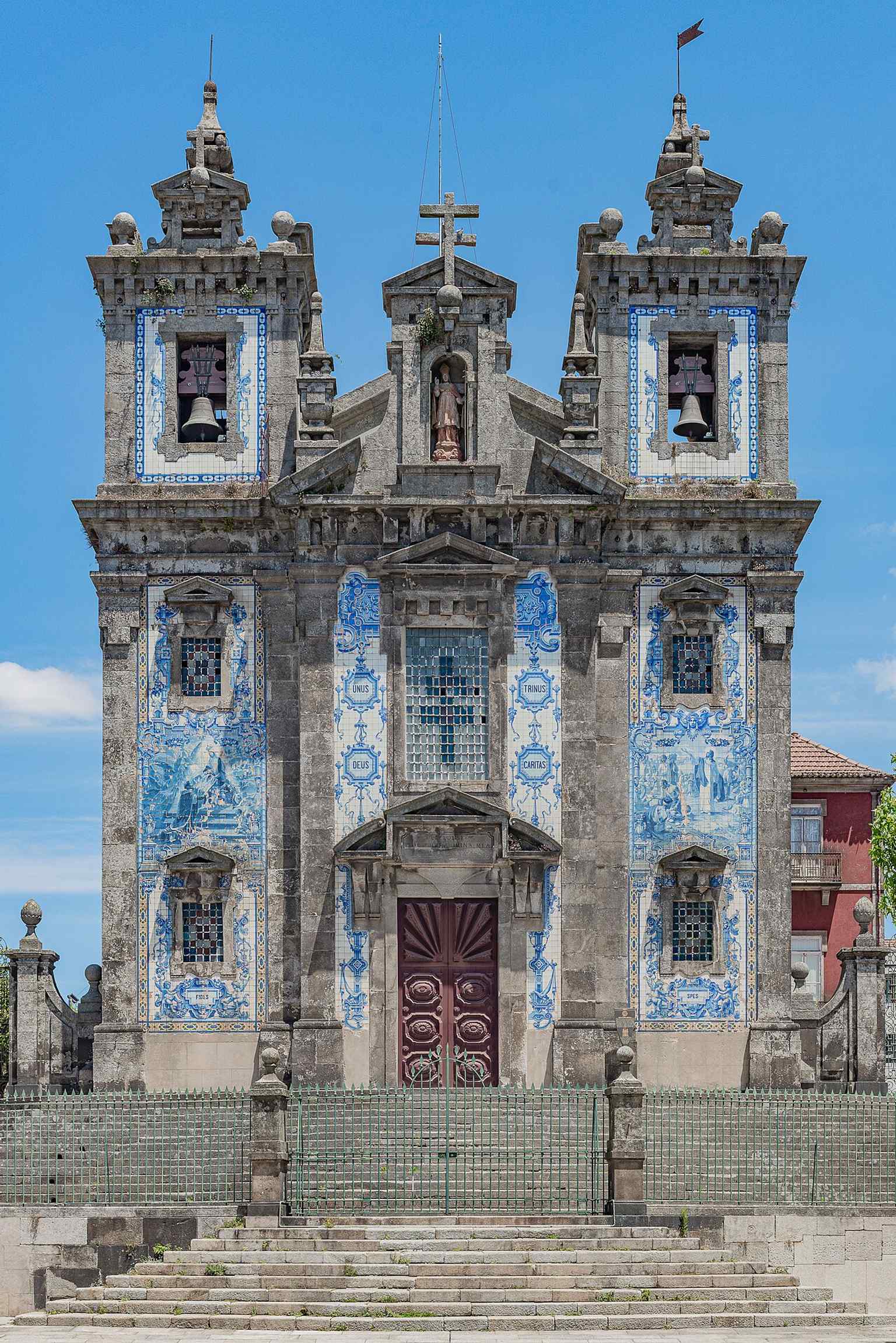
A full daylight view of the church’s famous blue-and-white azulejo façade, added in 1932 and now its most recognizable face.
A full daylight view of the church’s famous blue-and-white azulejo façade, added in 1932 and now its most recognizable face.Photo: Asublif, Wikimedia Commons, CC BY-SA 4.0. Cropped & resized.
The main façade in a clear, centered view, showing the twin bell towers and the plain granite structure behind the tilework.
The main façade in a clear, centered view, showing the twin bell towers and the plain granite structure behind the tilework.Photo: Senhormario, Wikimedia Commons, CC BY-SA 4.0. Cropped & resized.
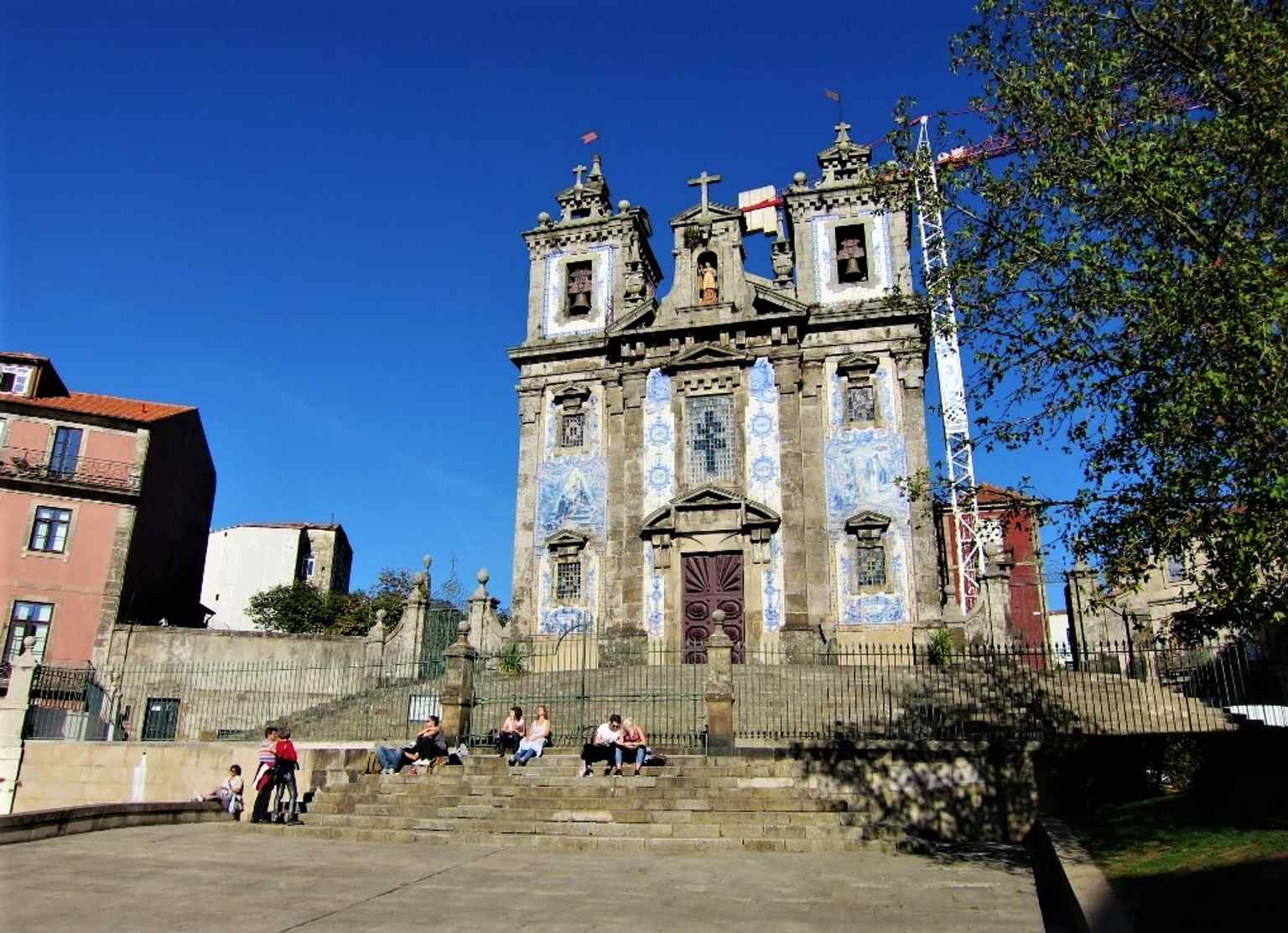
Seen from Batalha Square, this view places the church in its busy urban setting near Porto’s historic pedestrian heart.
Seen from Batalha Square, this view places the church in its busy urban setting near Porto’s historic pedestrian heart.Photo: Senhormario, Wikimedia Commons, CC BY-SA 4.0. Cropped & resized.
A high-resolution contemporary exterior that captures the full height of the façade and bell towers in one frame.
A high-resolution contemporary exterior that captures the full height of the façade and bell towers in one frame.Photo: T meltzer, Wikimedia Commons, CC BY-SA 4.0. Cropped & resized.
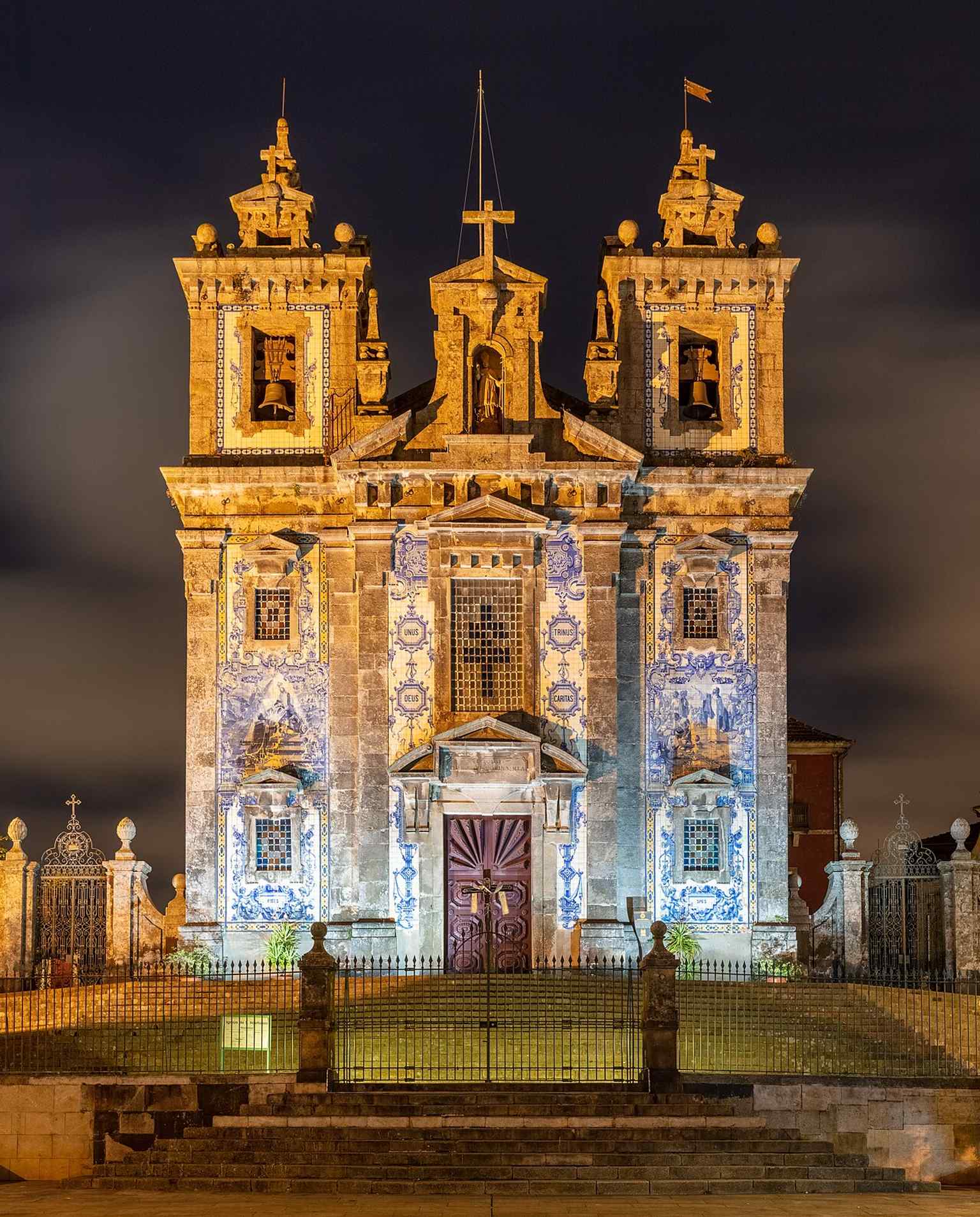
Night photography emphasizes the 1932 azulejo façade and the church’s dramatic presence after dark in central Porto.
Night photography emphasizes the 1932 azulejo façade and the church’s dramatic presence after dark in central Porto.Photo: Diego Delso, Wikimedia Commons, CC BY-SA 4.0. Cropped & resized.
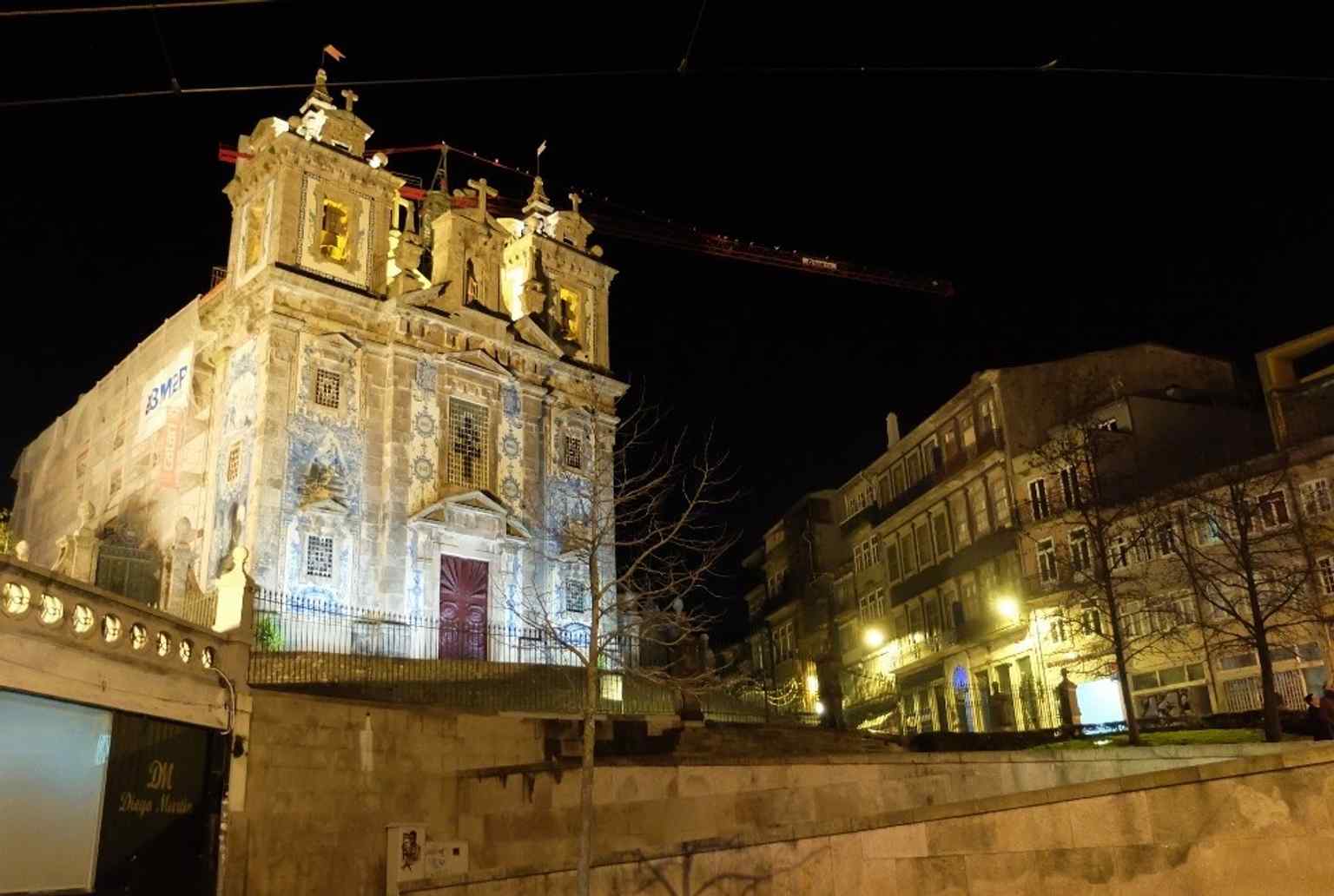
A nighttime overall view that highlights the twin towers and the church’s strong silhouette in the city center.
A nighttime overall view that highlights the twin towers and the church’s strong silhouette in the city center.Photo: Senhormario, Wikimedia Commons, CC BY-SA 4.0. Cropped & resized.
A Porto skyline montage that includes Santo Ildefonso, helping place the church within the city’s broader historic fabric.
A Porto skyline montage that includes Santo Ildefonso, helping place the church within the city’s broader historic fabric.Photo: see sources above, Wikimedia Commons, CC BY-SA 4.0. Cropped & resized.
arrow_back Back to Porto Highlights Audio Tour: Architectural Charms and Riverside Wonders
Loved by travellers

Thousands of tours started.
Plenty of opinions.

4.8 across the App Store and Google Play. Here's a few we keep coming back to.

starstarstarstarstar
This was a solid way to get to know Brighton without feeling like a tourist. The narration had depth and context, but didn't overdo it.
Christoph
Christoph
Brighton Tour
starstarstarstarstar
Started this tour with a croissant in one hand and zero expectations. The app just vibes with you, no pressure, just you, your headphones, and some cool stories.
download Get the app

Pop your headphones in.
Step outside.

Free to download. Tours in every city. Start in 60 seconds — no account, no card.

Download on the App StoreGet it on Google Play
starstarstarstarstar_half
4.8
AudaTours app icon
headphones
~ 4 min until your first tour starts
public
1,000+ cities worldwide
all_inclusive
AudaTours
Unlimited

Every tour. Every city. One subscription.

3101 tours2271 cities138 countries50+ languages