
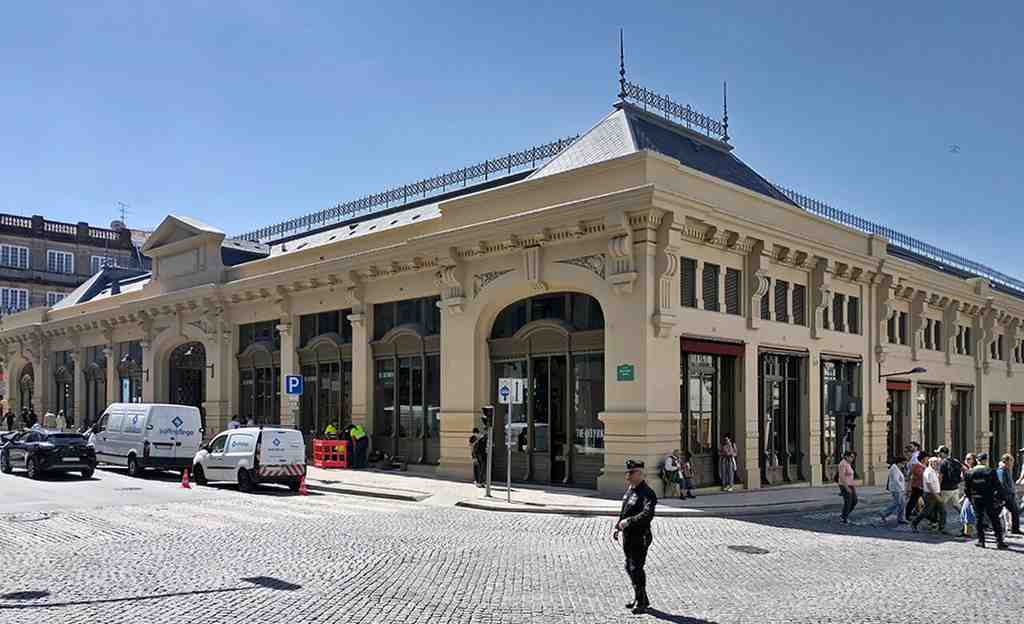
Look for the monumental granite-and-iron block with arched openings, iron railings, and stacked levels that wrap an entire city block like a market dressed for civic duty.
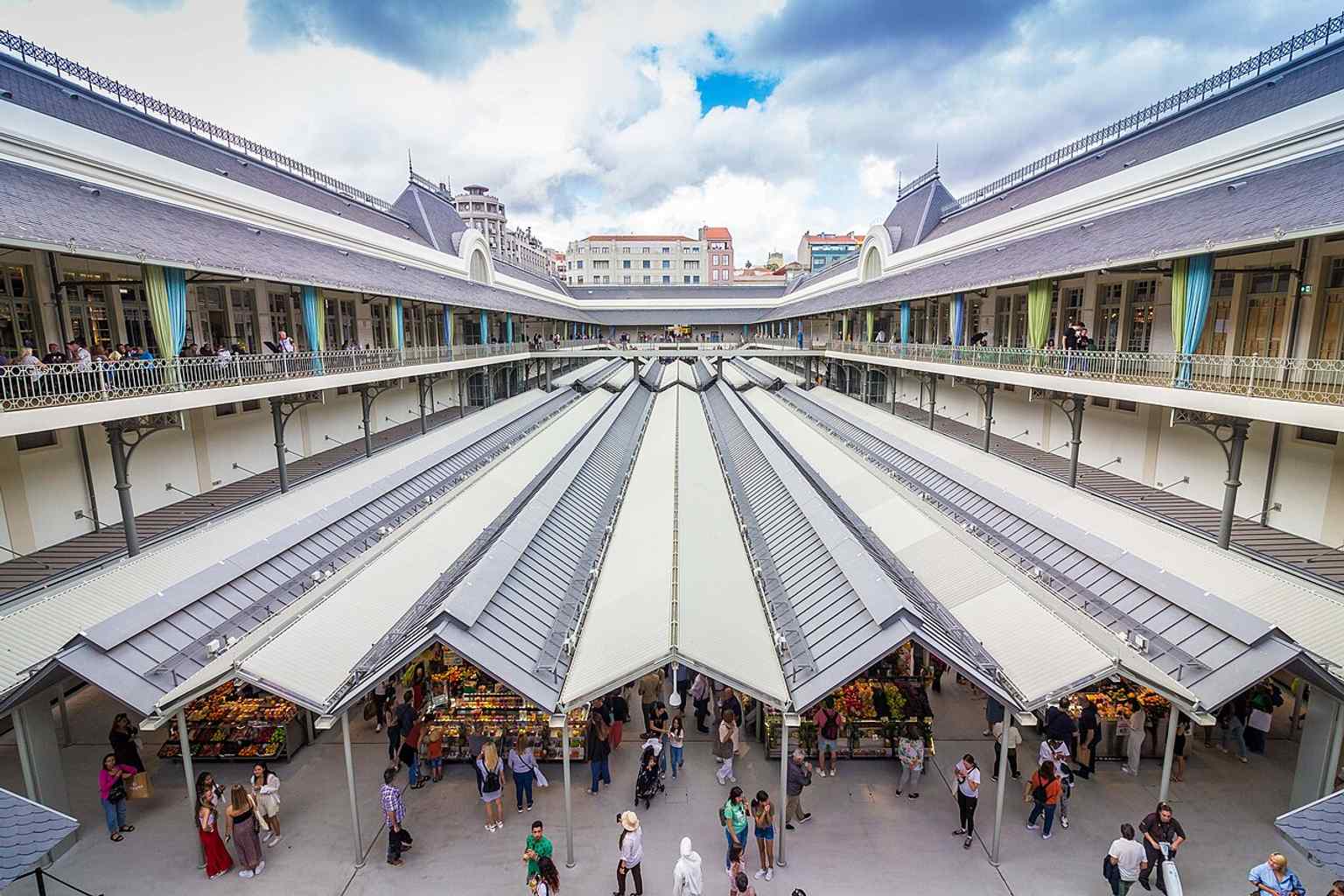
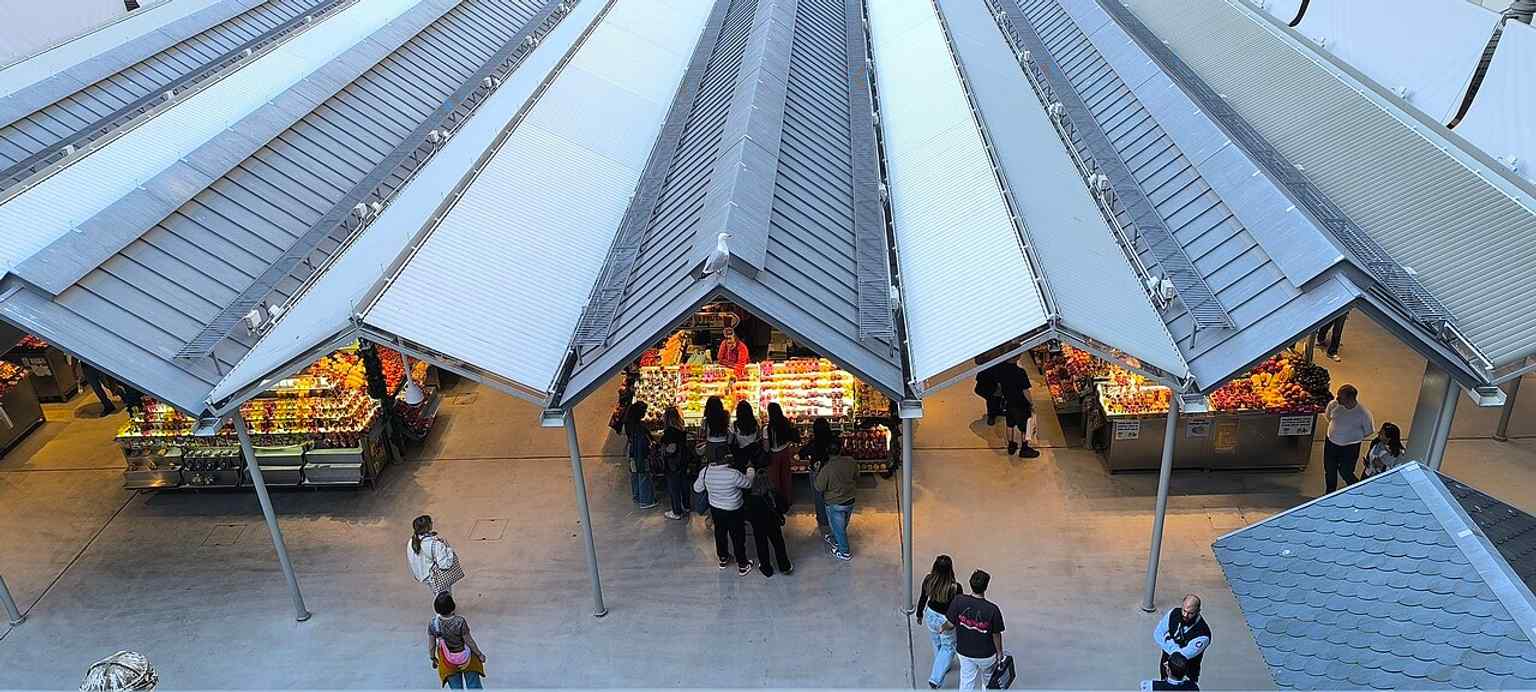
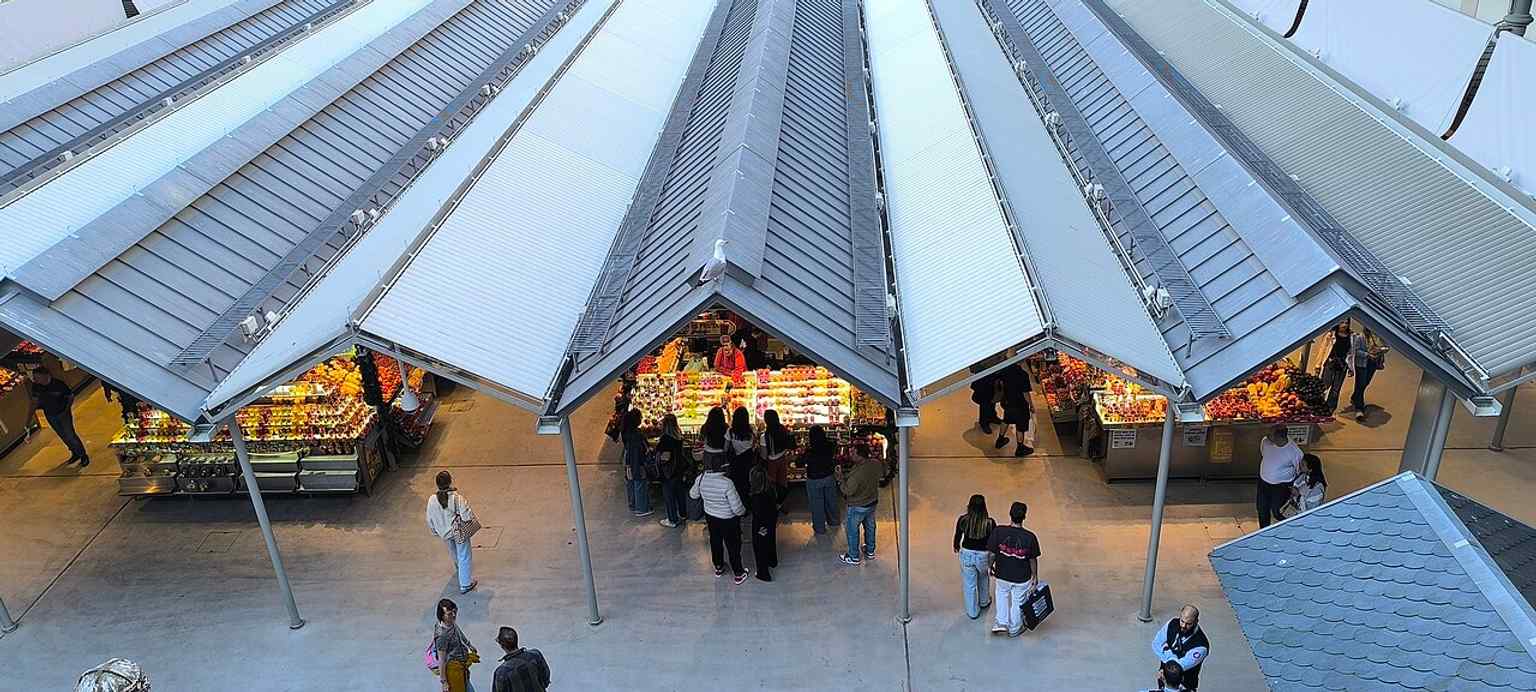
Welcome to Bolhão, Porto’s everyday heart... not a pretty extra, but the place where the city has long argued, shopped, gossiped, and fed itself. Across two floors, traders have sold fish, meat, vegetables, and flowers here, while the outer ring held small street-facing shops for everything from fabric to perfume. In other words: if you wanted to understand Porto, you came where people actually bought dinner.
The name goes back to a muddy field and a tiny spring bubble - a bolha de água, a bubble of water - that rose here before the market. In eighteen thirty-nine, the city decided to gather scattered food markets into one organized place. Porto likes order, but only after a healthy amount of chaos.
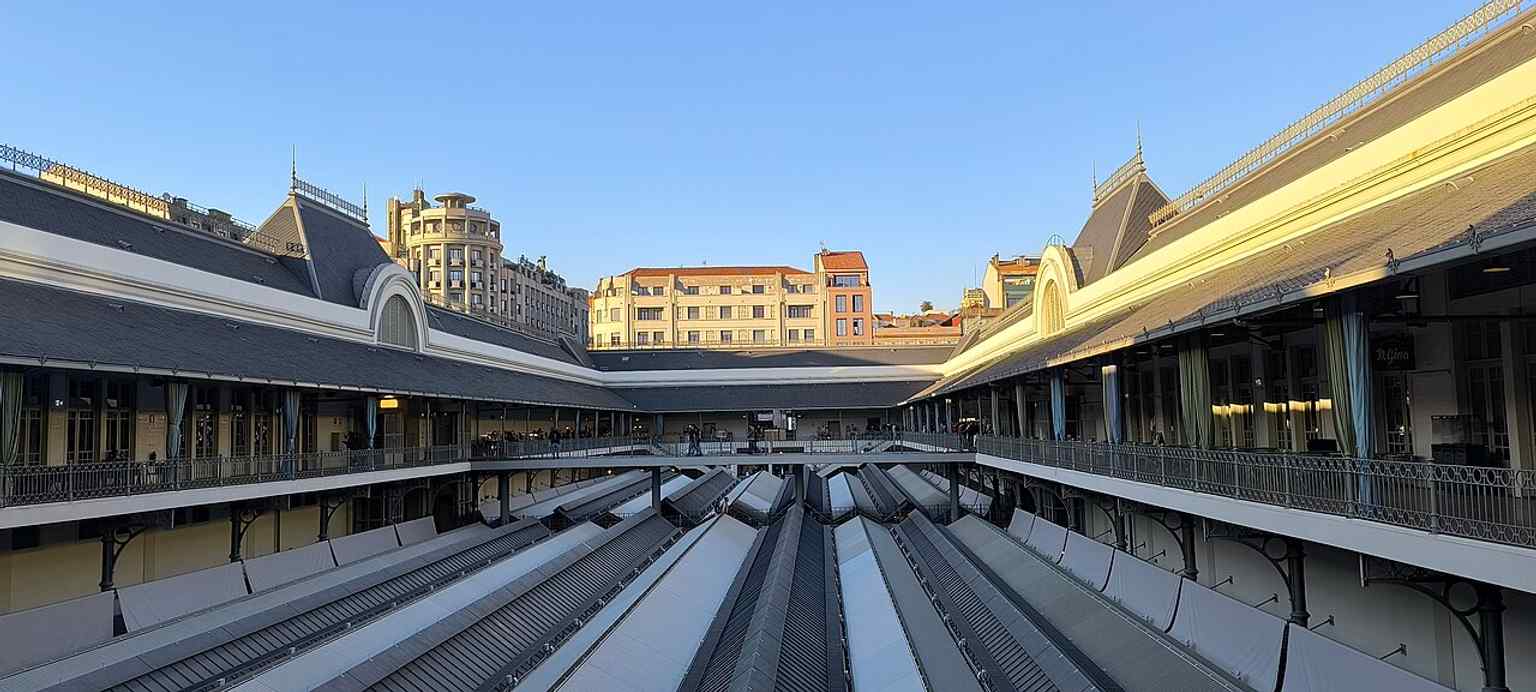
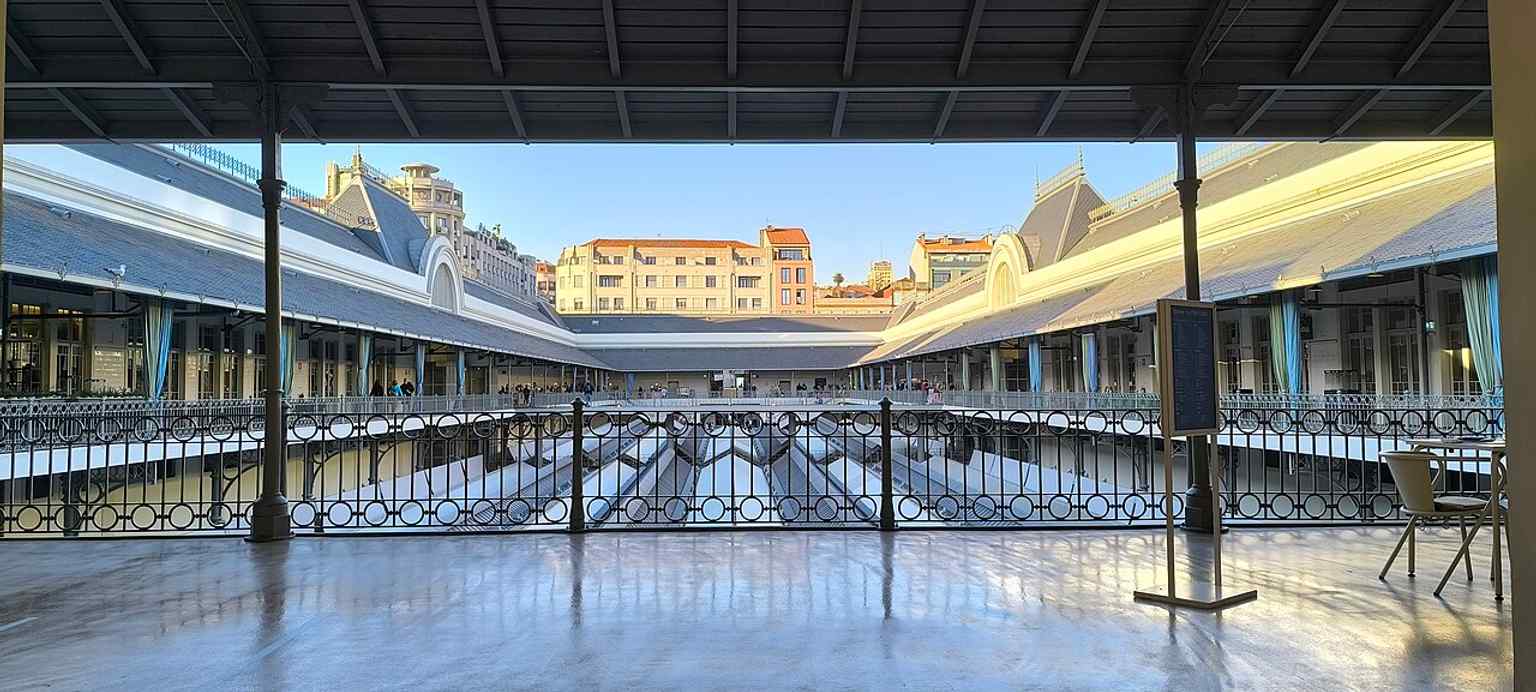
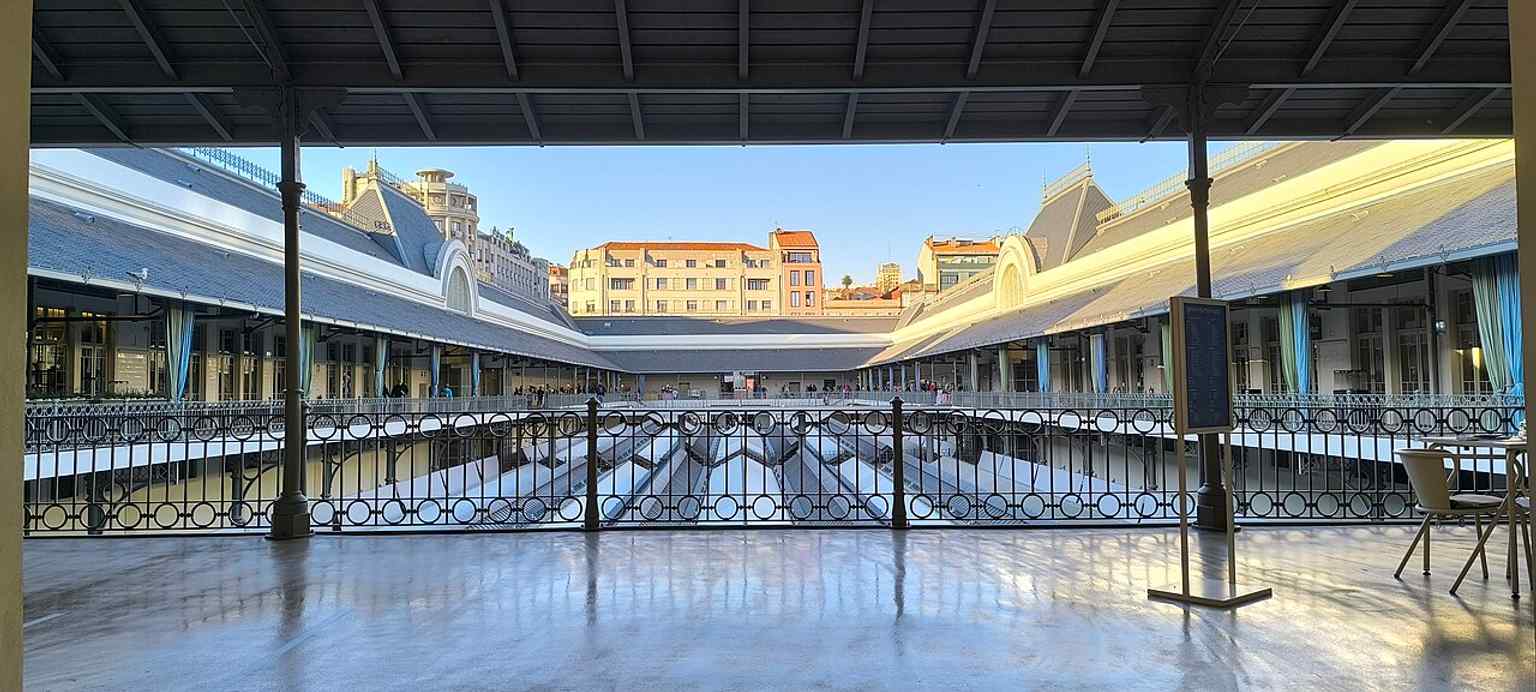
The building in front of you took its monumental form in nineteen fourteen, when architect Correia da Silva gave Bolhão its lasting face. He mixed reinforced concrete - quite forward-looking at the time - with metal structure, wooden roofs, and granite stonework. The result feels sturdy and public-minded, almost as if a market and a city hall had a practical child. If you check the image on your screen, you can catch that grand, block-filling presence clearly.
Take a moment and study the different levels and entrances. From Rua Formosa, Rua de Sá da Bandeira, Rua Alexandre Braga, and Rua de Fernandes Tomás, the building meets the streets at different heights. That’s your clue that Bolhão was designed for movement, trade, and real working life first... monument second.
And yet it became both. The market earned protection as a public-interest monument in two thousand and six, then again in two thousand and thirteen. That matters, because Bolhão spent decades in decline. Engineers found serious structural problems back in the nineteen eighties. Later, one redevelopment plan would have handed the market to private operators for seventy years, with luxury housing, a shopping center, and only a sliver left for traditional trade. Porto answered with petitions, court fights, and a rather stubborn civic refusal to let daily life be erased.
One face of that persistence was Cindinha dos Frangos. At eighty-two, she still kept her stall and remembered starting work here at age five, hoping she might return to the historic building “if I’m alive and well.” She did not talk about heritage like a museum curator. She lived it.
After more than four years of reconstruction, Bolhão reopened on the fifteenth of September, two thousand twenty-two, with its traditional market still at the core. So this place tells you something essential about Porto: even groceries can become civic memory.
From here, we’ll head toward a different kind of inheritance - tile, faith, and public grandeur - at the Church of Saint Ildefonso, about a seven-minute walk away. And if you plan to come back inside later, Bolhão generally opens daily except Sunday, with shorter hours on Saturday.






.jpg)
%20(29802).jpg)
%20(58463).jpg)
%20(81142).jpg)
%20(86324).jpg)