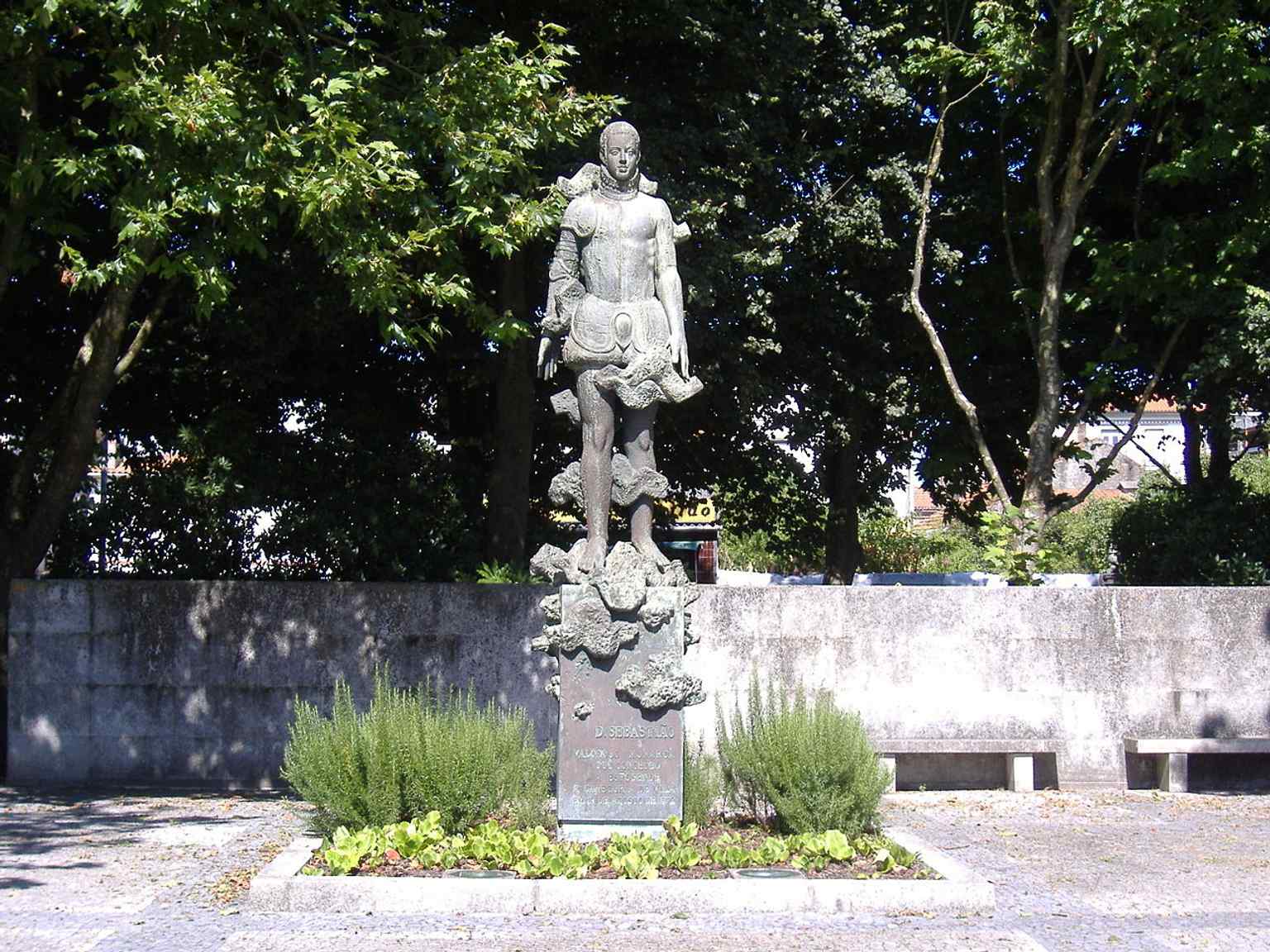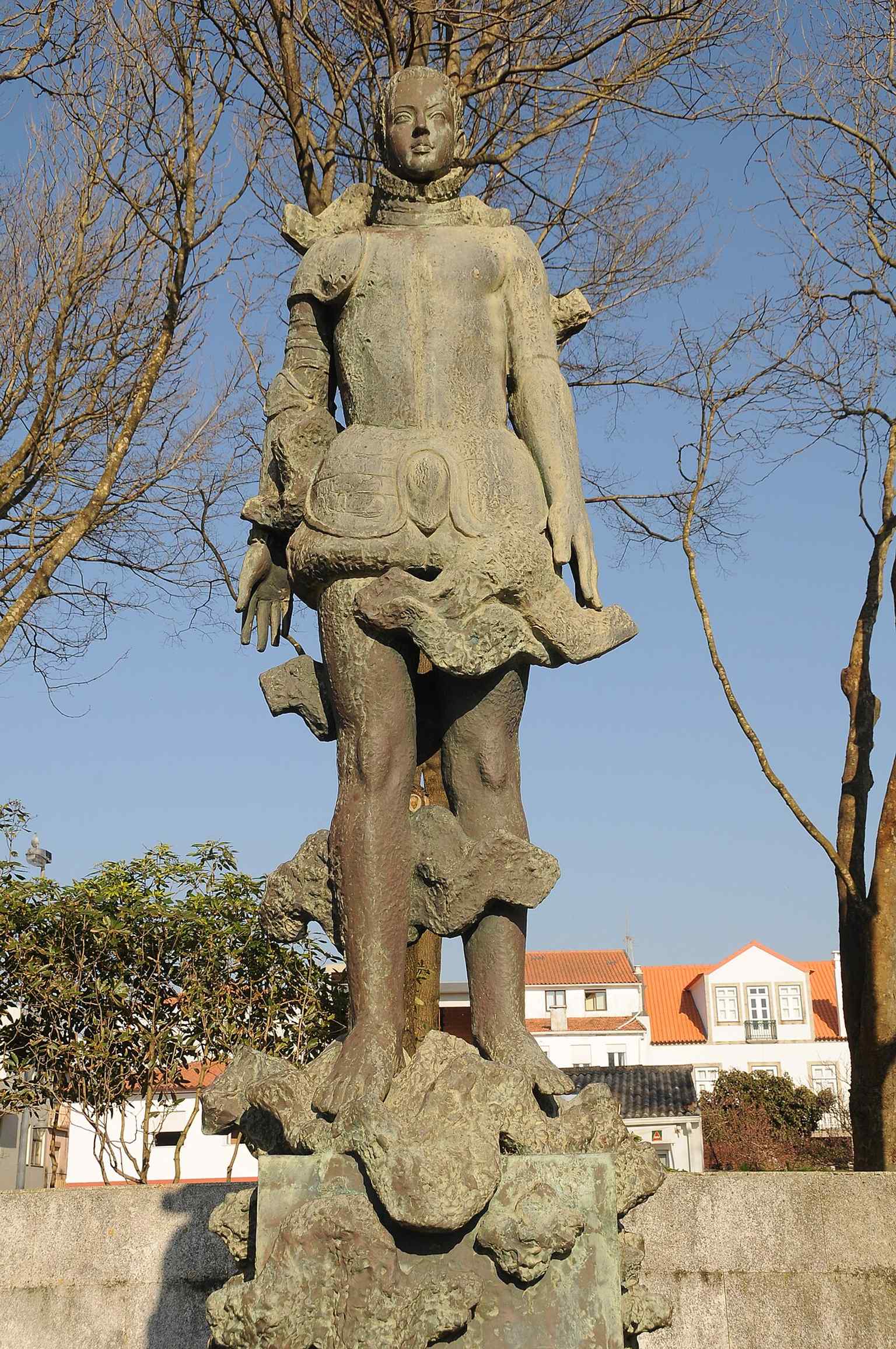
On your right, look for a dark bronze figure of a king standing upright on a tall pale stone pedestal, his long cloak falling in heavy folds above an inscribed base.
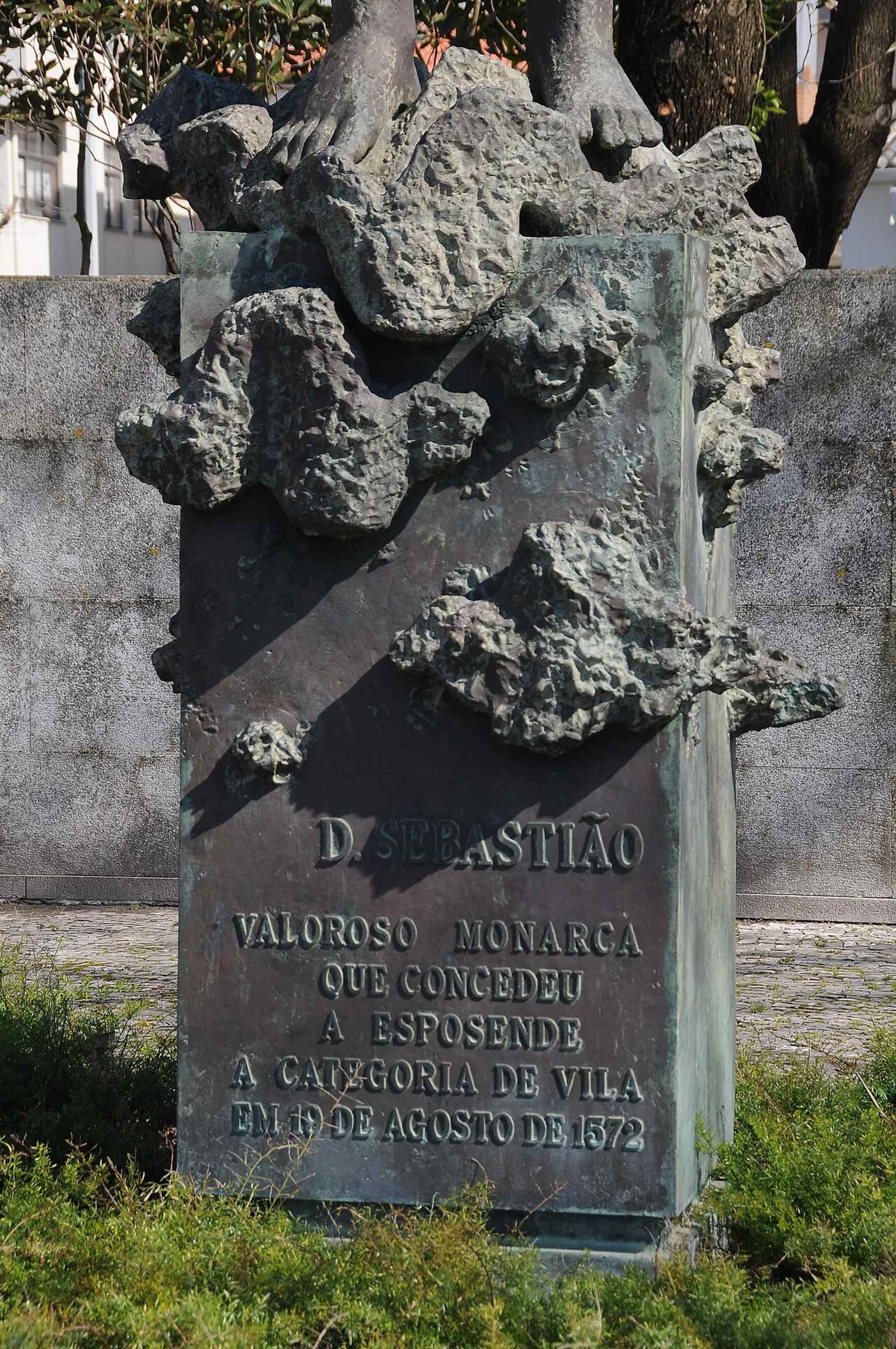
This monument honours Dom Sebastião, the sixteenth king of Portugal, but here in Esposende the real drama is not the man alone. It is the document attached to his name. At the chapel, we saw how paperwork could preserve devotion; here, formal writing did something even larger. On the nineteenth of August, fifteen seventy-two, Dom Sebastião granted Esposende a charter, a royal legal act that raised the settlement to the rank of town and detached it from Barcelos. In other words, ink and seal helped create the civic body that still speaks in Esposende’s name.
That is why this statue stands in a square named for him. The bronze fixes in public memory what the charter first established in law. If you glance at the detail image on your screen, you can see how the sculptor Lagoa Henriques avoided a stiff official likeness. The surface feels textured, almost misted, as though the king is emerging from legend as much as history. Scholars have even said that this work casts Sebastianism into bronze - that old Portuguese habit of imagining the absent king as a figure of longing and return.
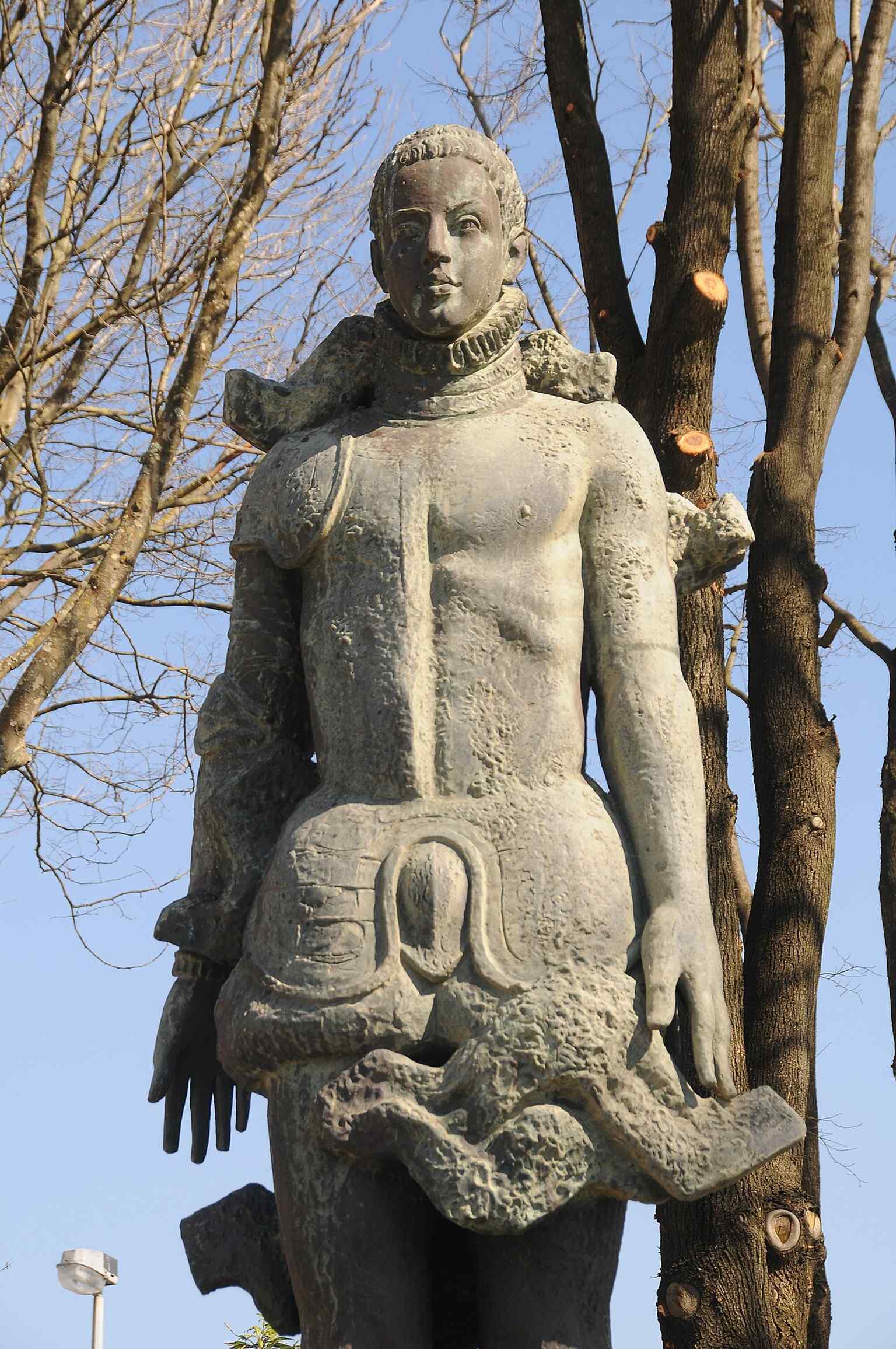
And yet memory is never as tidy as a pedestal suggests. The council raised the monument for the fourth centenary celebrations in nineteen seventy-three, but some municipal sources say Lagoa Henriques’s piece was only inaugurated in nineteen seventy-eight. A small discrepancy, perhaps, though an instructive one. Towns love certainty in stone and bronze; archives often answer with a shrug.
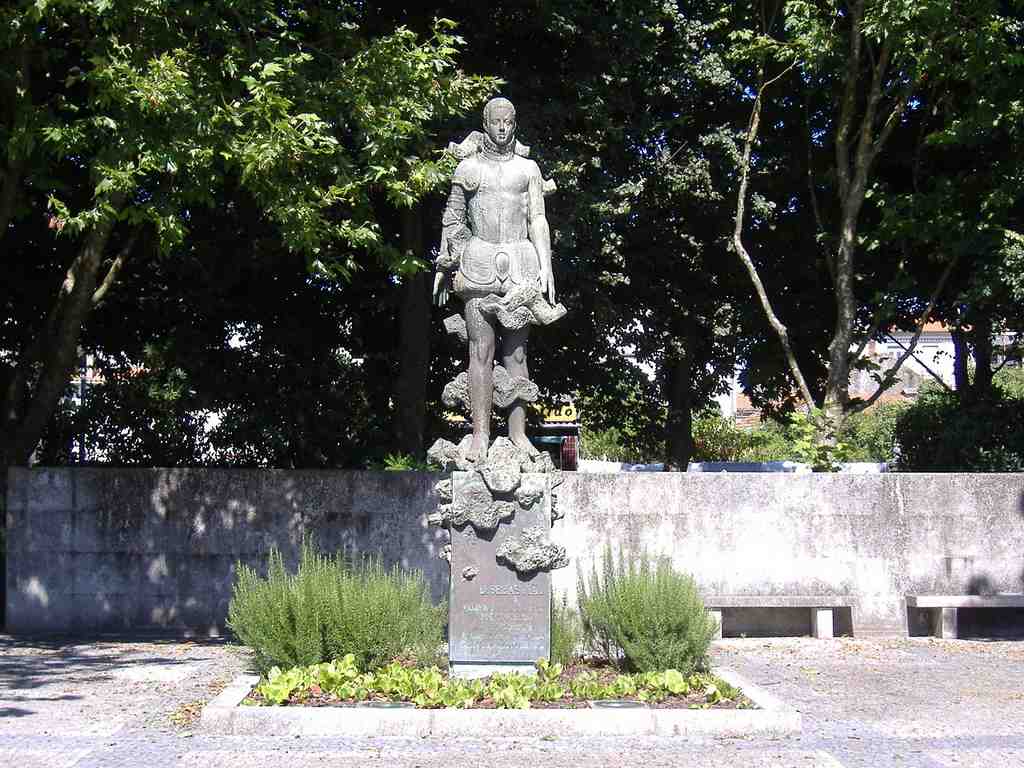
The Ministry’s heritage service donated the sculpture, Bronzes Artísticos cast it, and later generations kept promoting it as a civic emblem, even placing it on a commemorative medal for the four hundred and fiftieth anniversary. If you look at the older photo in the app, you can see how long this statue has carried that public burden of memory. So hold two truths together: laws can found a town, but later generations decide how to remember that fact. From here, the Chapel of Saint John the Baptist is about a six-minute walk, and this monument is here for you at any hour.