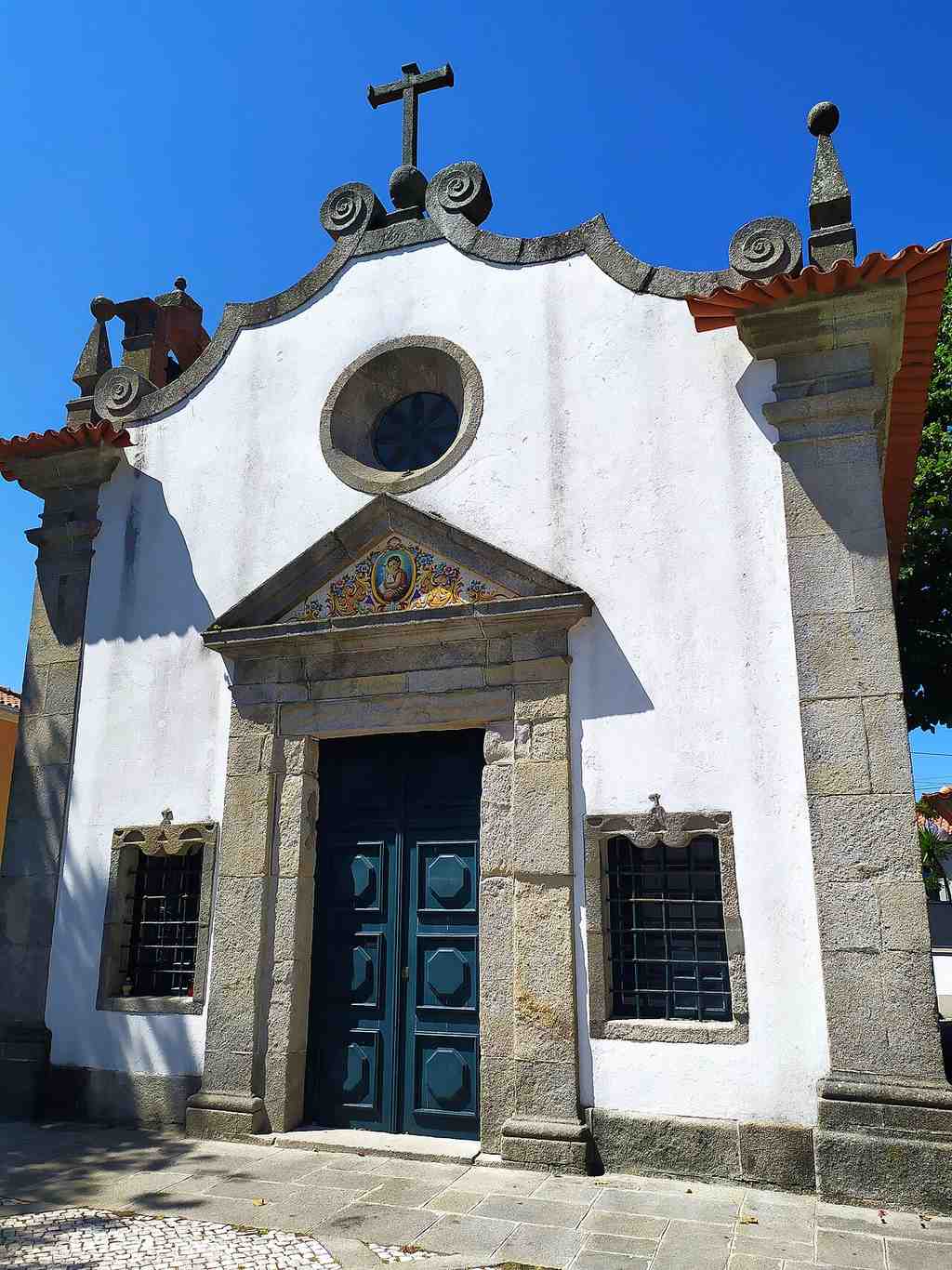
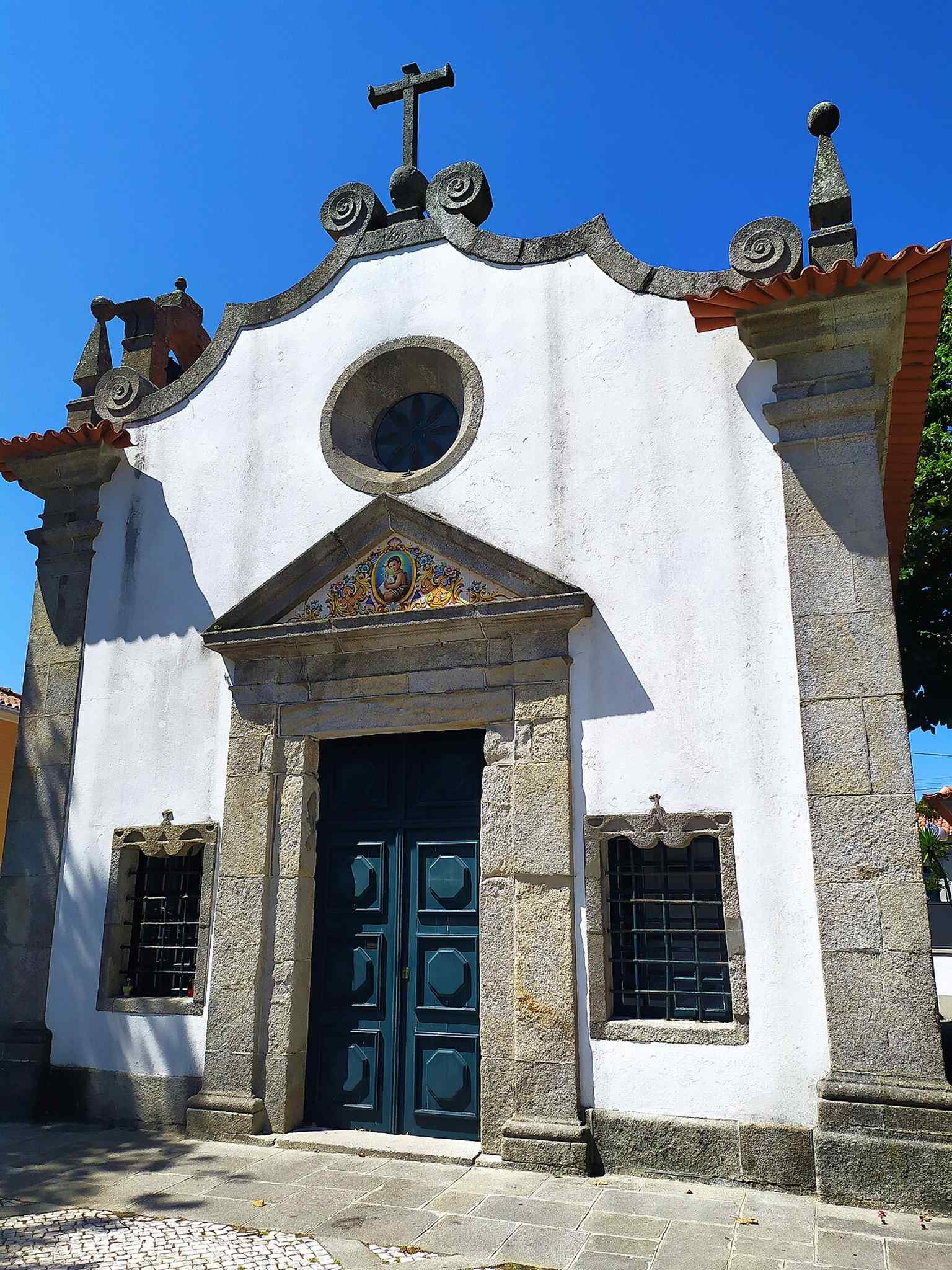
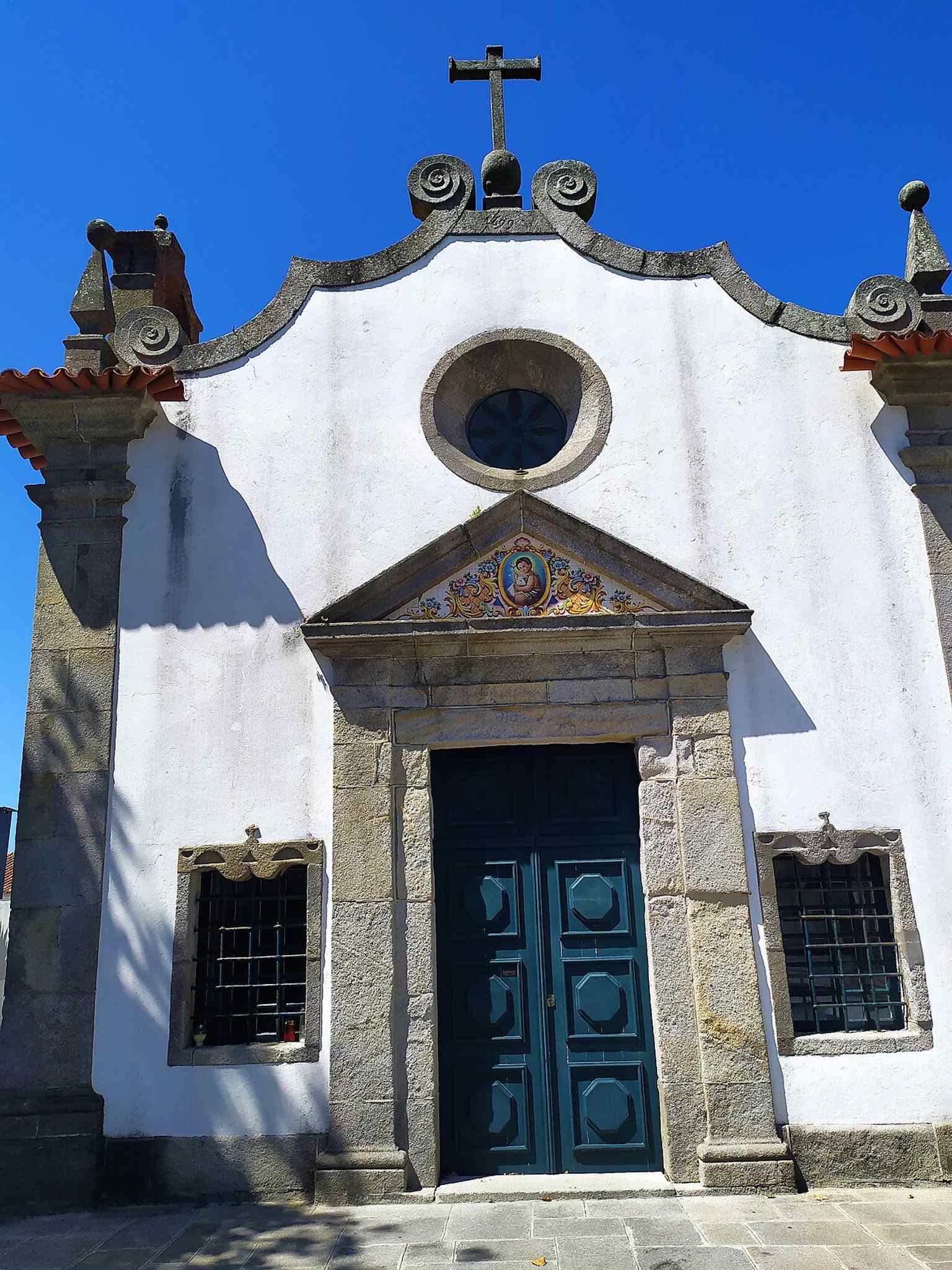
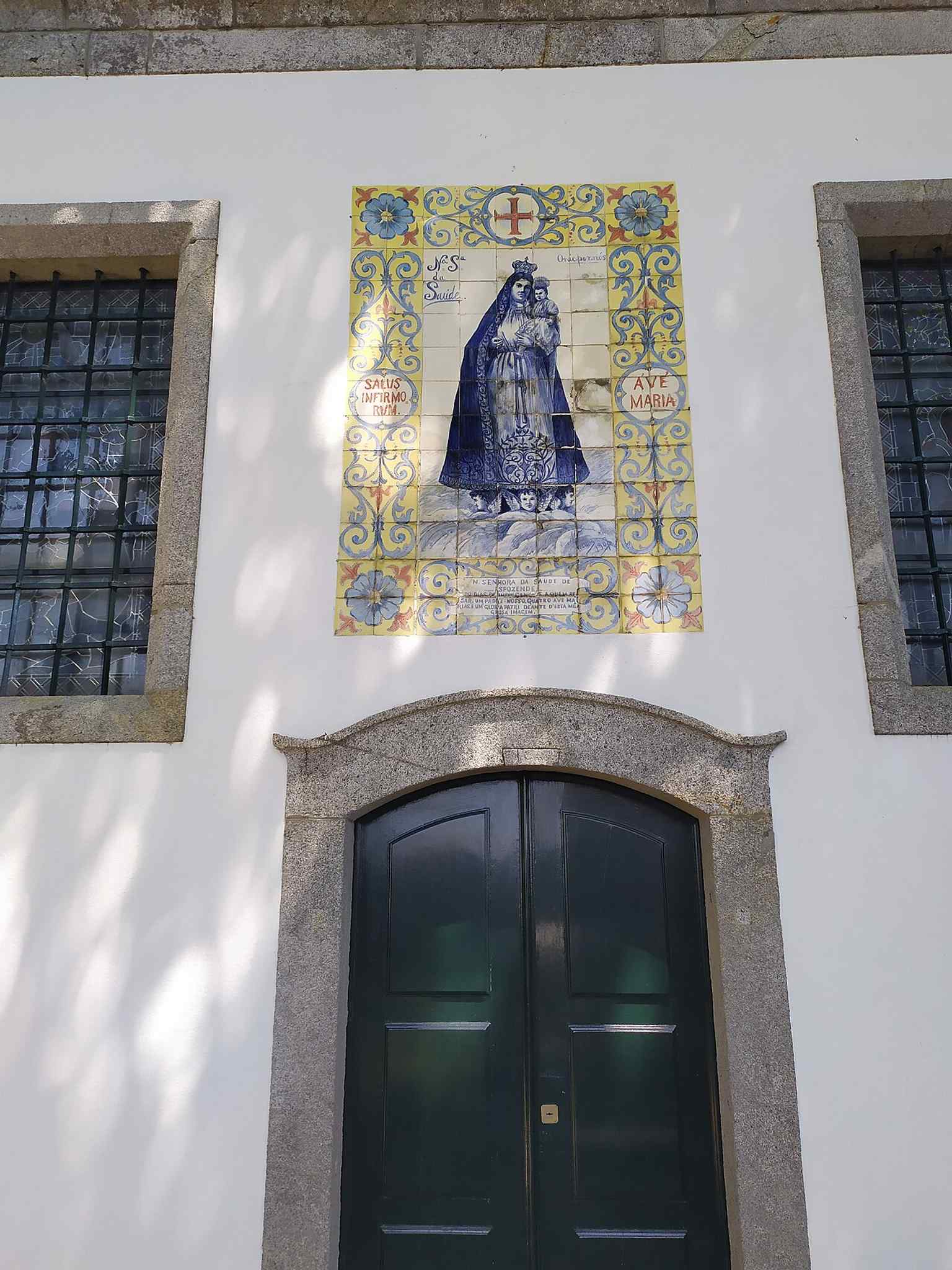
On your left is a small whitewashed masonry chapel, rectangular and restrained, with a blue-tiled image of Saint John above the stone door and a flowered cross rising from the dated gable.
The sobriety of the São João chapel is not a lack; it is its character. Founded in sixteen ninety-nine, this little temple chose one simple hall for worship, stout stone corners, and a front that speaks softly rather than grandly. Yet even quiet buildings are rewritten. After repairs in nineteen seventy-five and nineteen seventy-six, the Aleluia factory in Aveiro added the azulejo panel of Saint John the Baptist above the door, so the chapel carried its seventeenth-century calm into a modern restoration. If you glance at your screen, the tile detail is clearer there.
A closer look at the chapel’s decorative elements, including the Saint John the Baptist azulejo added after the 1975–76 restoration.Photo: Joseolgon, Wikimedia Commons, CC0. Cropped & resized.
Take a moment to study the plain geometry, the round oculus above, and the worked stone around the windows. Saint John appears again inside at the altar, keeping continuity in a place that changed by careful degrees, not dramatic reinvention. In about four minutes, the Mother Church will broaden this story into something larger.
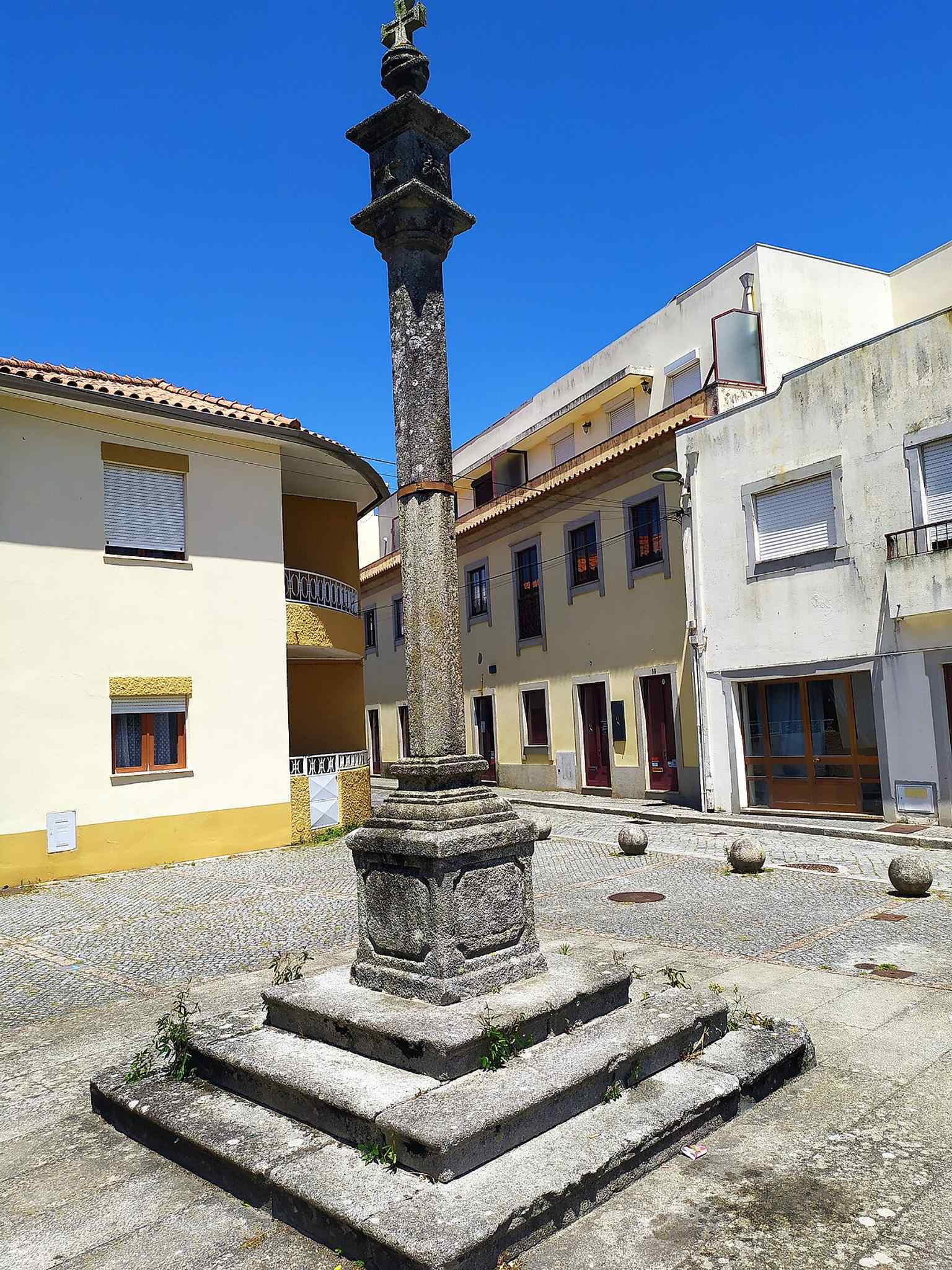
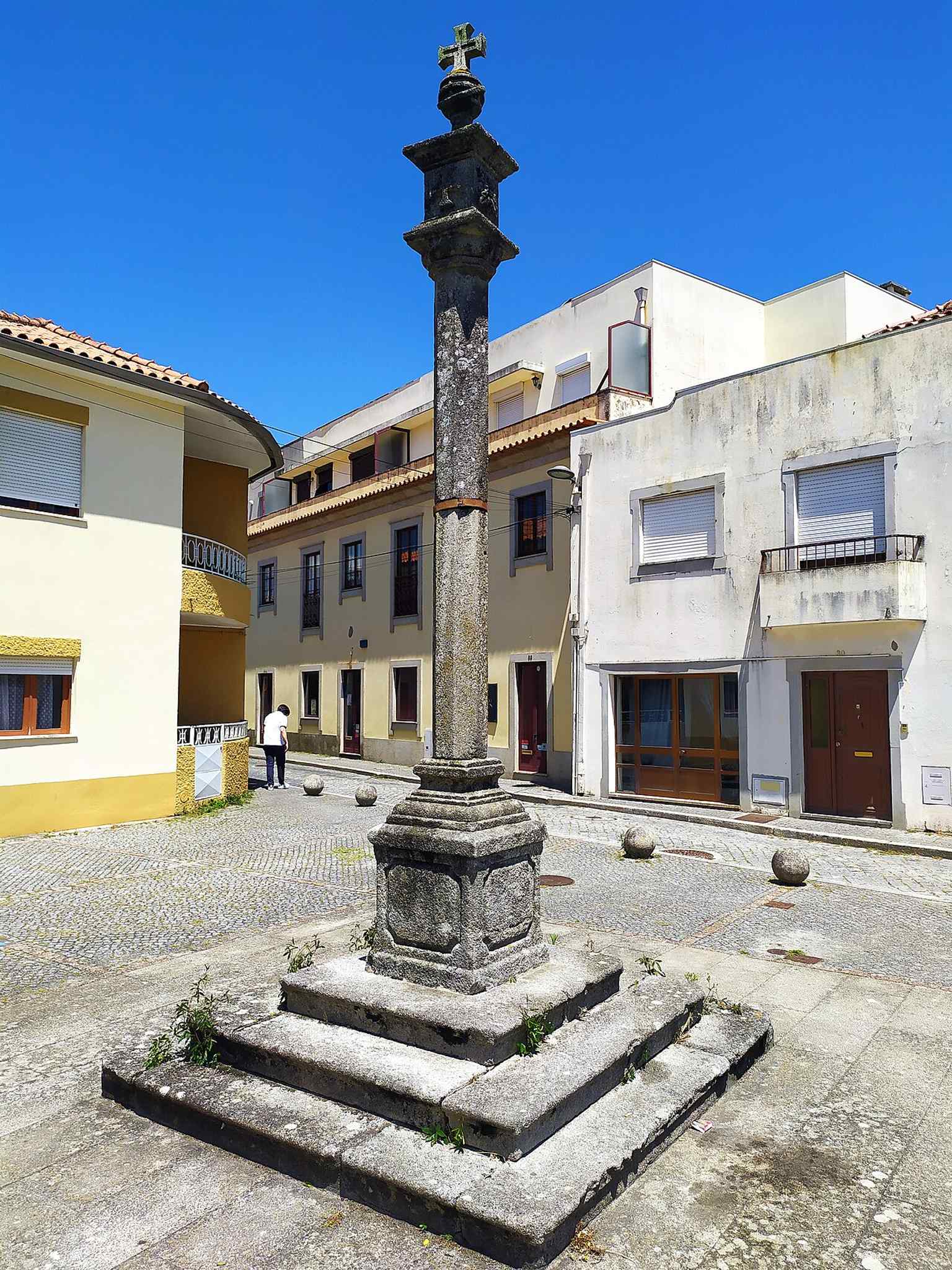
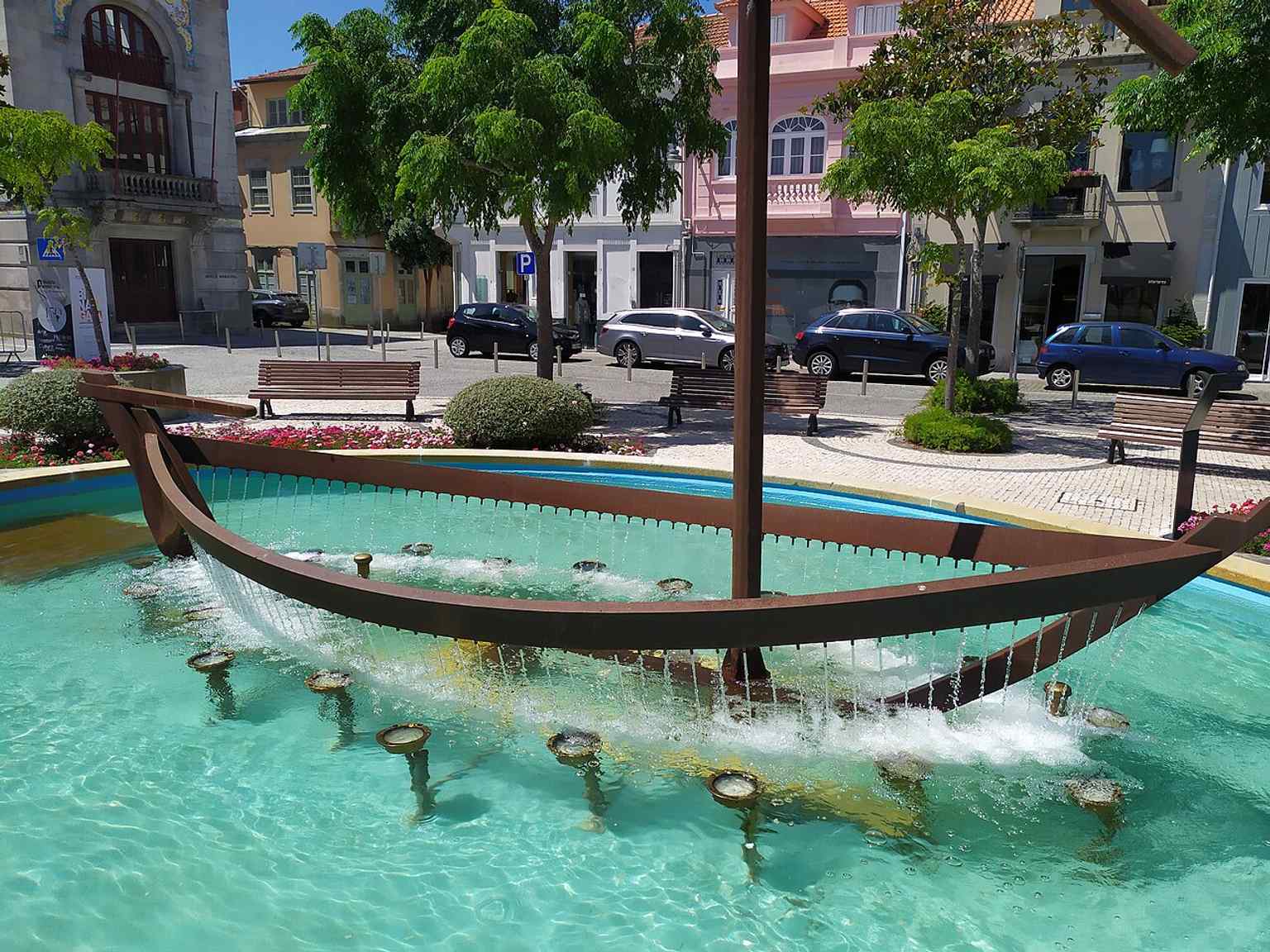
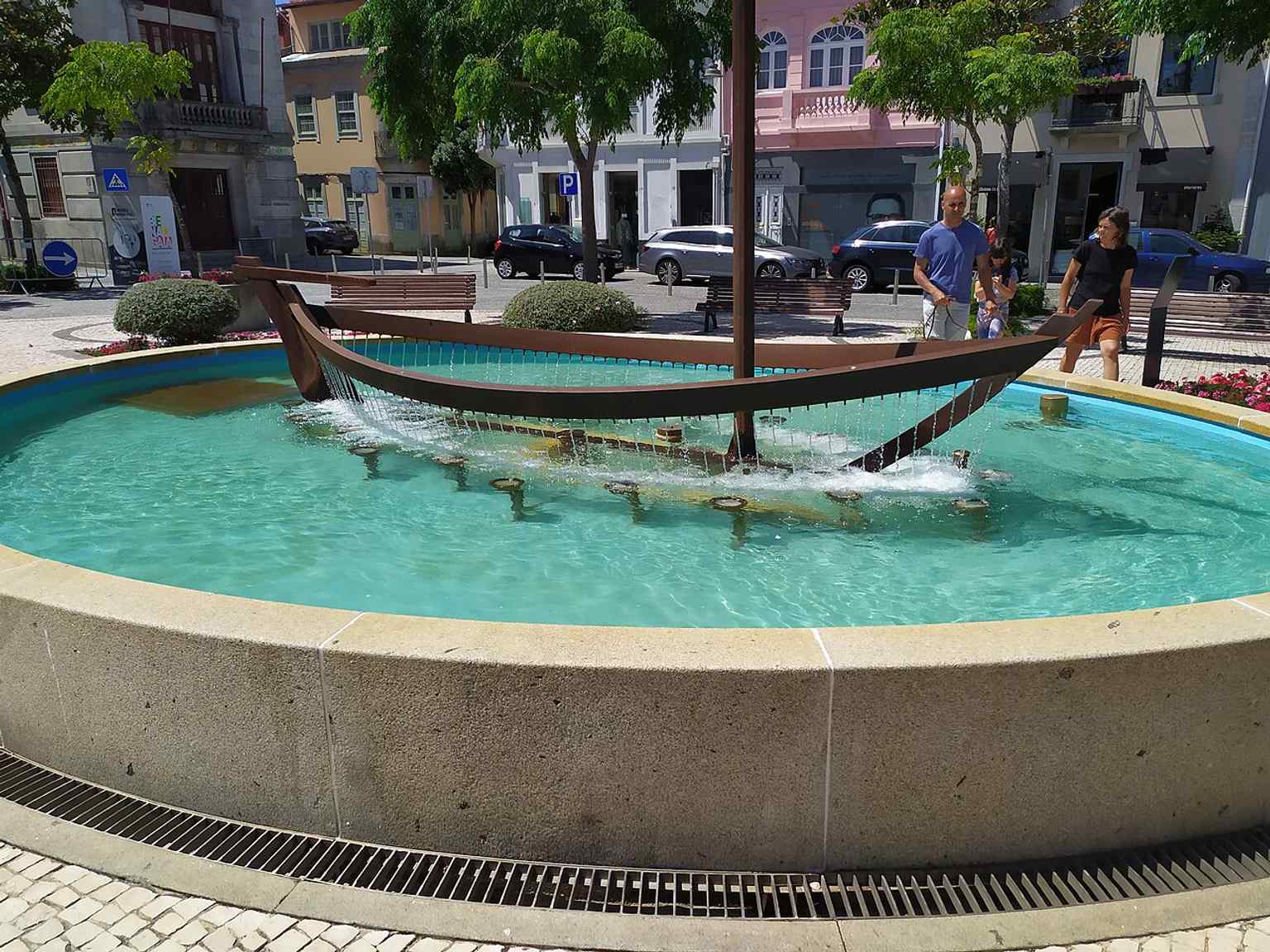
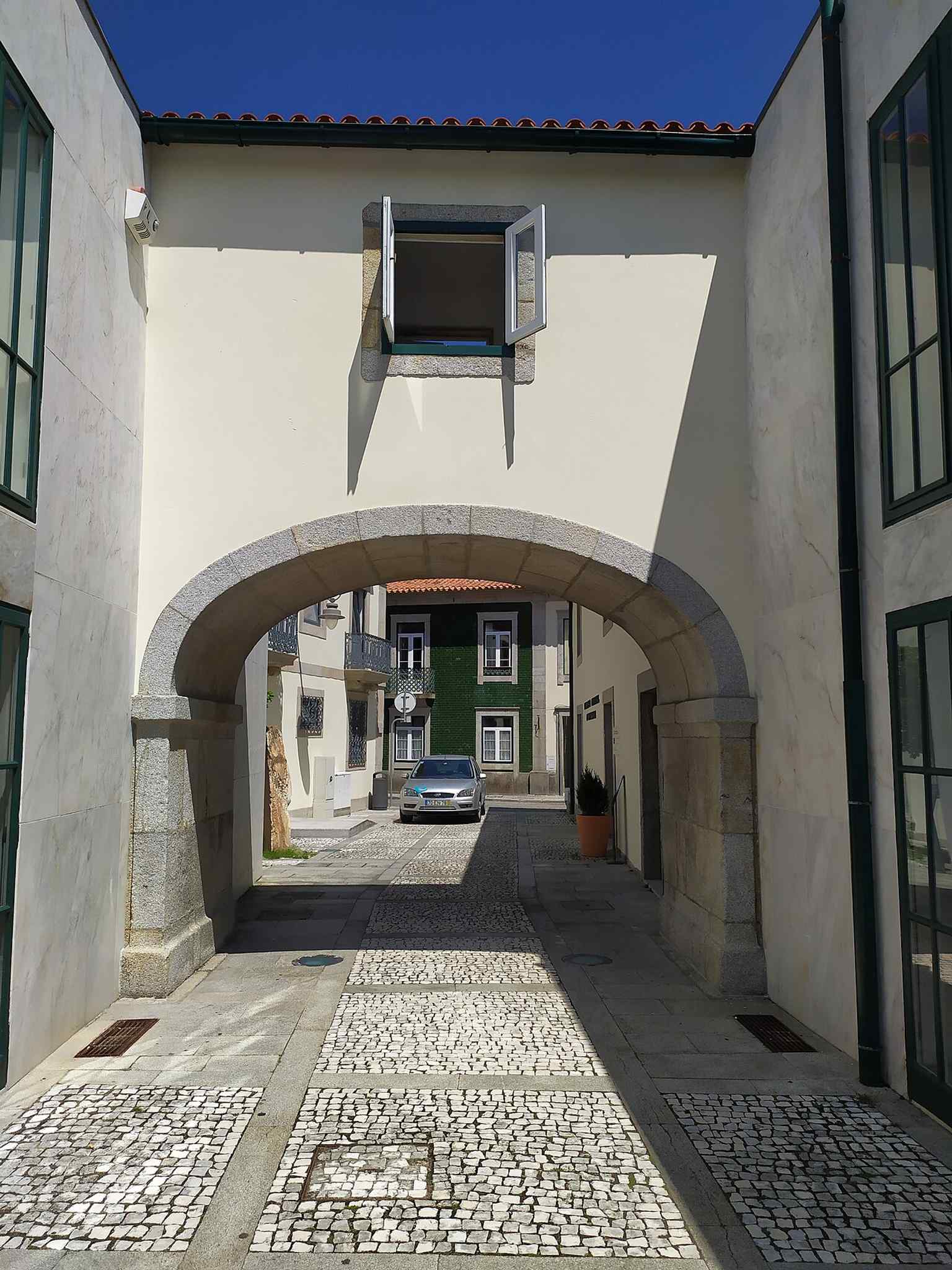
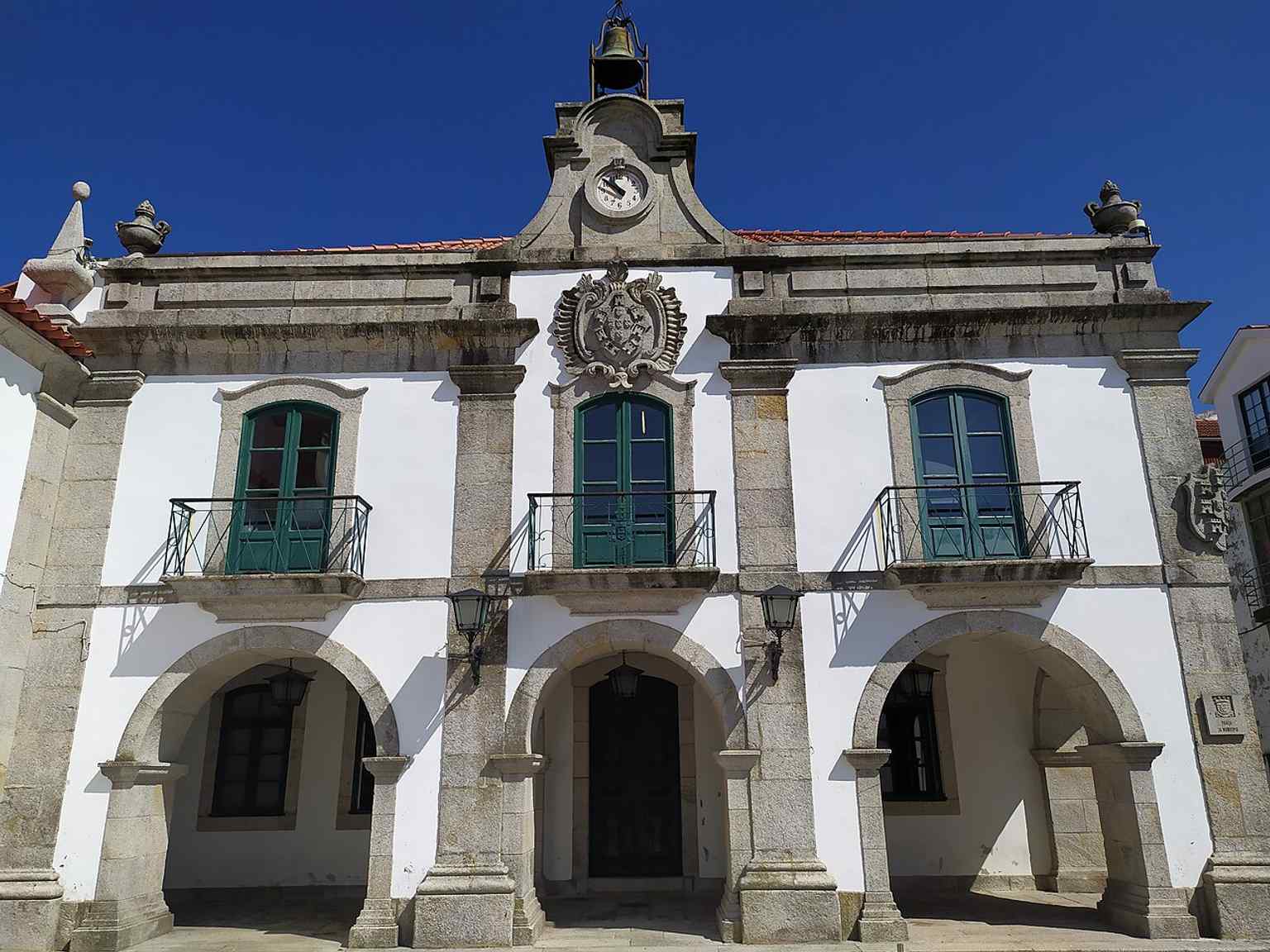
Front view of the Chapel of Saint John the Baptist, showing the small 17th-century shrine in Esposende and its simple rectangular form.Photo: Joseolgon, Wikimedia Commons, CC0. Cropped & resized.A second exterior angle on the chapel, useful for showing the sober façade and the building’s modest scale.Photo: Joseolgon, Wikimedia Commons, CC0. Cropped & resized.The chapel in its urban setting, with the façade details and the neighboring cross that the source text places beside it.Photo: Joseolgon, Wikimedia Commons, CC0. Cropped & resized.The nearby pillory helps situate the chapel within Esposende’s historic streetscape and gives context for the landmark’s surroundings.Photo: Joseolgon, Wikimedia Commons, CC0. Cropped & resized.Another view of the old civic monument near the chapel, adding local heritage context to the walking tour route.Photo: Joseolgon, Wikimedia Commons, CC0. Cropped & resized.Blue-and-white tilework from Esposende, echoing the chapel’s azulejo panel of Saint John Baptist on the façade.Photo: Joseolgon, Wikimedia Commons, CC0. Cropped & resized.A public fountain detail from Esposende that complements the chapel stop by showing the town’s traditional street furniture and heritage fabric.Photo: Joseolgon, Wikimedia Commons, CC0. Cropped & resized.Another historic fountain detail in Esposende, useful as a visual cue for the neighborhood around the chapel.Photo: Joseolgon, Wikimedia Commons, CC0. Cropped & resized.A narrow passageway in Esposende that reflects the old-town atmosphere surrounding the seventeenth-century chapel.Photo: Joseolgon, Wikimedia Commons, CC0. Cropped & resized.An overview of Esposende that helps place the chapel within the town’s wider historic center.Photo: Joseolgon, Wikimedia Commons, CC0. Cropped & resized.A broader view of Esposende’s civic area, giving geographic context for the chapel’s location in the town.Photo: Joseolgon, Wikimedia Commons, CC0. Cropped & resized.arrow_back Back to Esposende Audio Tour: Sacred Landmarks
Loved by travellers
Thousands of tours started. Plenty of opinions.
4.8 across the App Store and Google Play. Here's a few we keep coming back to.
starstarstarstarstar
This tour was such a great way to see the city. The stories were interesting without feeling too scripted, and I loved being able to explore at my own pace.
Started this tour with a croissant in one hand and zero expectations. The app just vibes with you, no pressure, just you, your headphones, and some cool stories.