
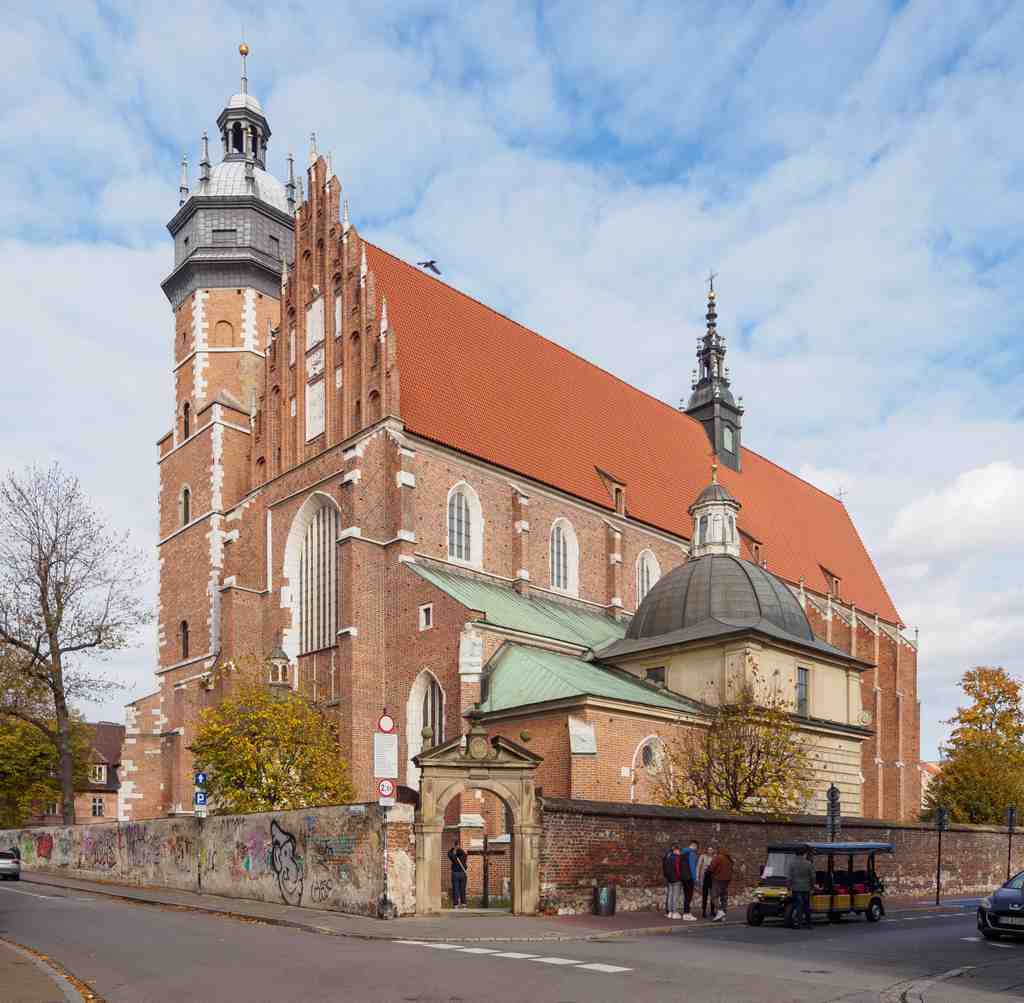
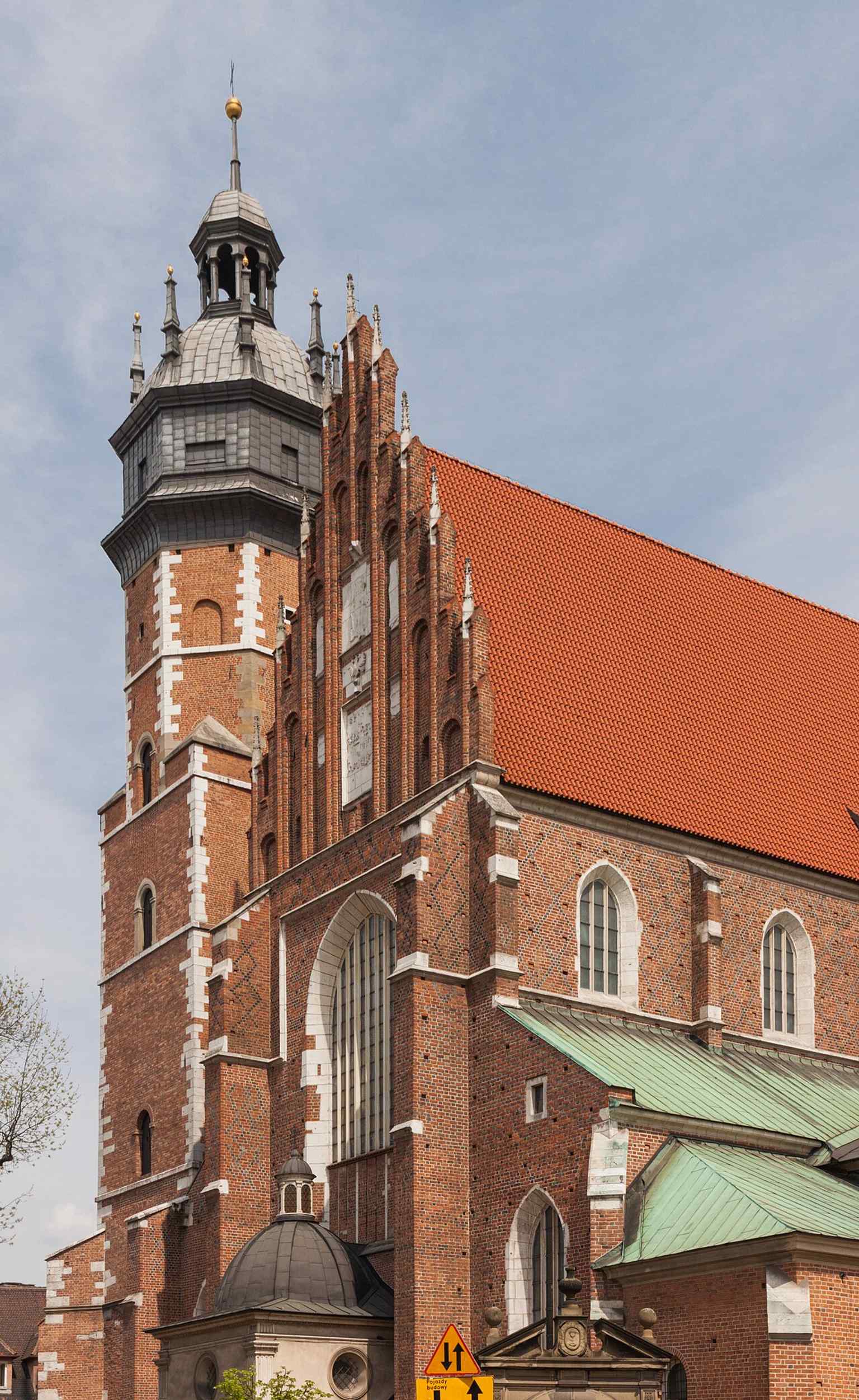
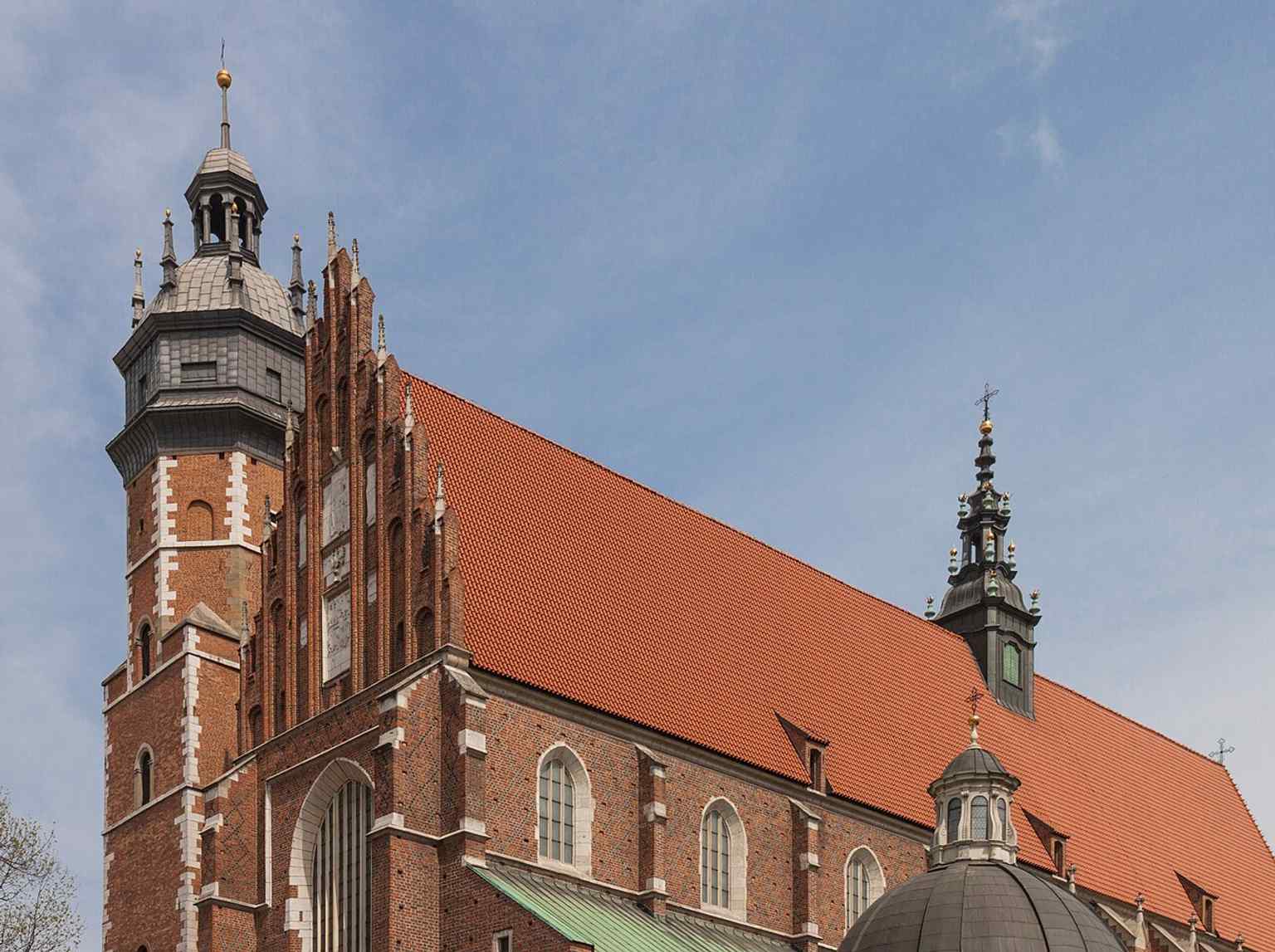
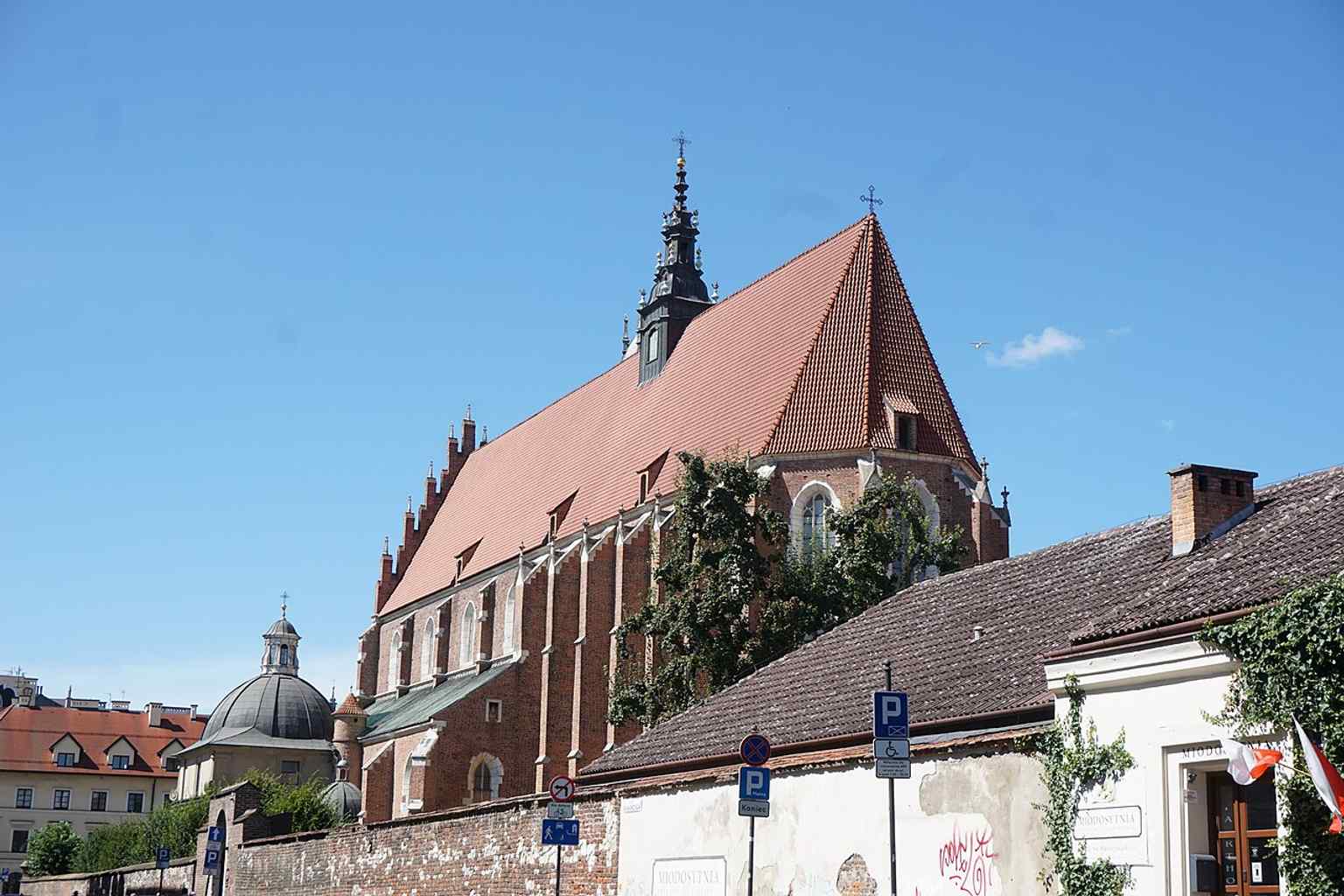
Look to your right for a long red-brick church with a pointed Gothic façade, tall narrow windows, and a square tower rising above the west front.
Corpus Christi Basilica reminds you, rather firmly, that Kazimierz never belonged to just one story. This great church entered the district in thirteen thirty-five, when King Casimir the Great founded it. Yet people preferred a better tale to a dry date. The chronicler Jan Długosz wrote that a stolen monstrance - the vessel that holds the consecrated host - reappeared on the marshy ground where the basilica now stands. In that version, the king did not simply sponsor a parish church; he answered a mystery with a public act of thanks.
The building grew slowly, and that matters. Work began around thirteen forty, but the church did not rise in one clean sweep. In thirteen seventy the city took patronage. Planners changed the original scheme and turned it into a basilica, meaning a taller central hall with lower aisles beside it. The chancel, the space around the altar, reached completion and consecration in fourteen oh one. Only later did royal backing carry the nave and the front façade to completion, with a second consecration in fifteen hundred. If you glance at the image on your screen, you can sense that long, staged growth in the church’s stretched brick body.
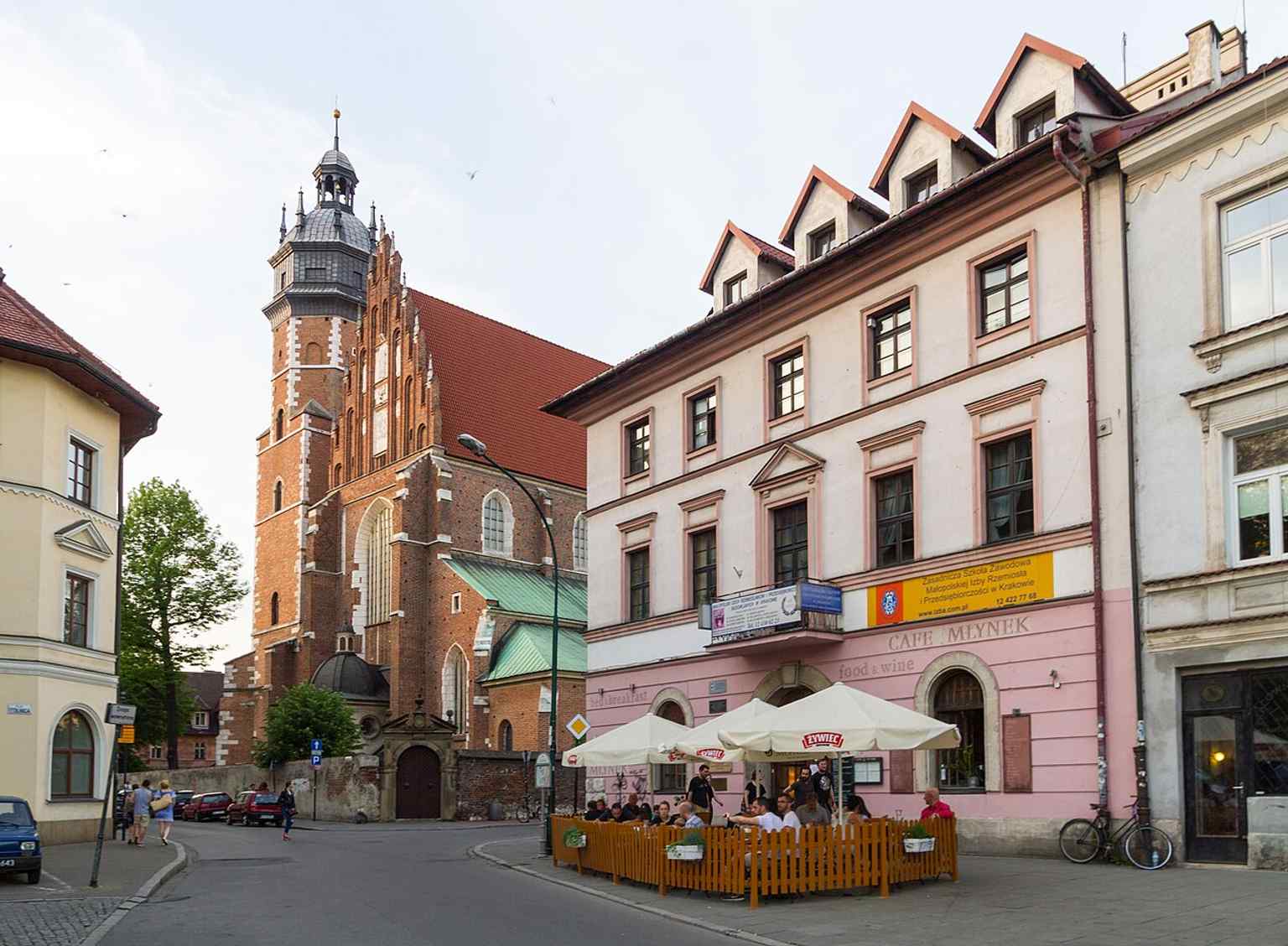
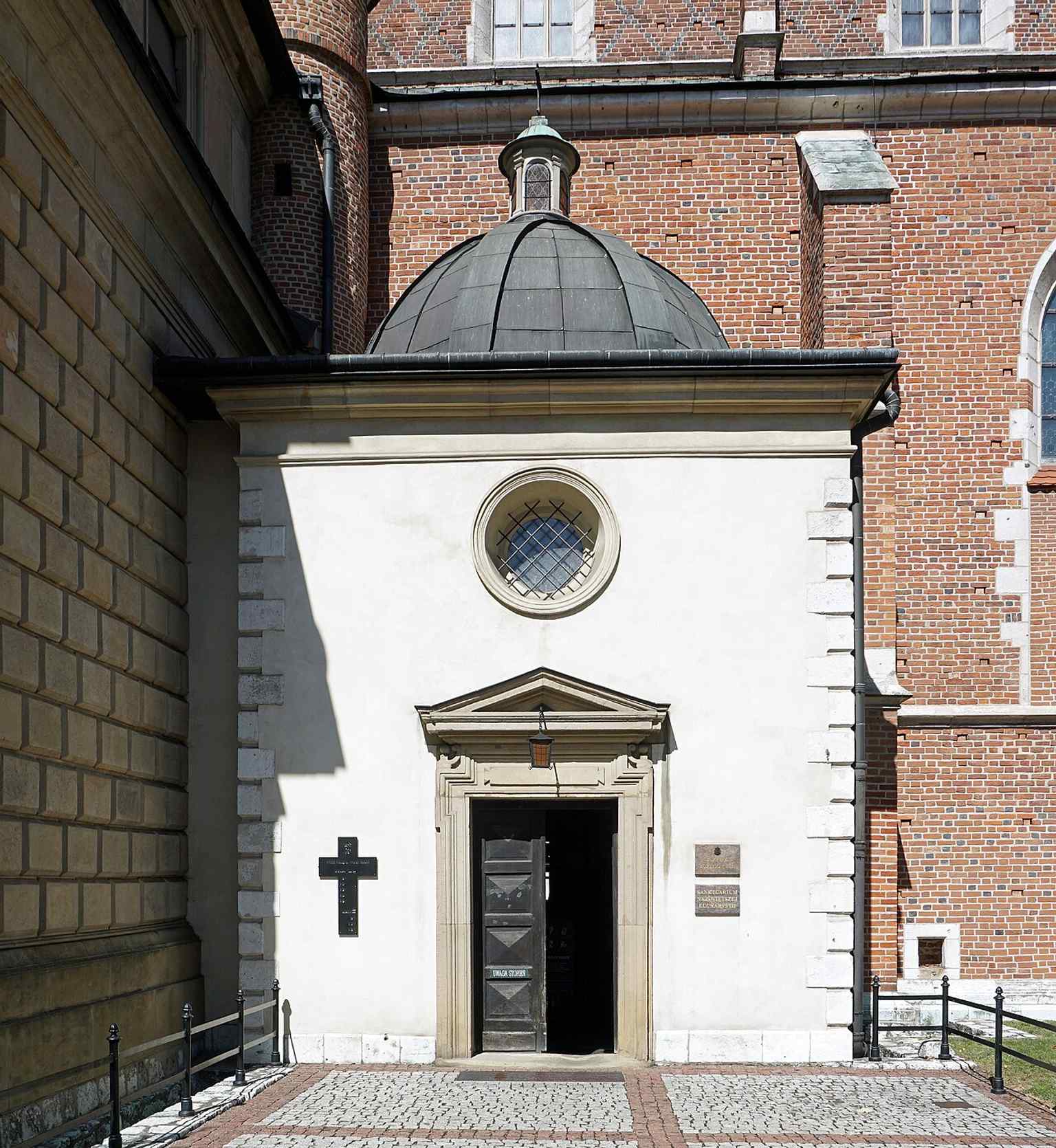
King Władysław Jagiełło then gave the place a settled community. In fourteen oh five he brought the Canons Regular of the Lateran from Kłodzko, and Corpus Christi became not only a parish church but a monastic one, woven into daily prayer, study, and work. The adjoining complex still hints at that enclosed life: porch, cells, treasury, oratory. Bożego Ciała Street is not merely an address here. It is one of Kazimierz’s binding lines, carrying sacred memory, royal intent, and ordinary urban life along the same route.
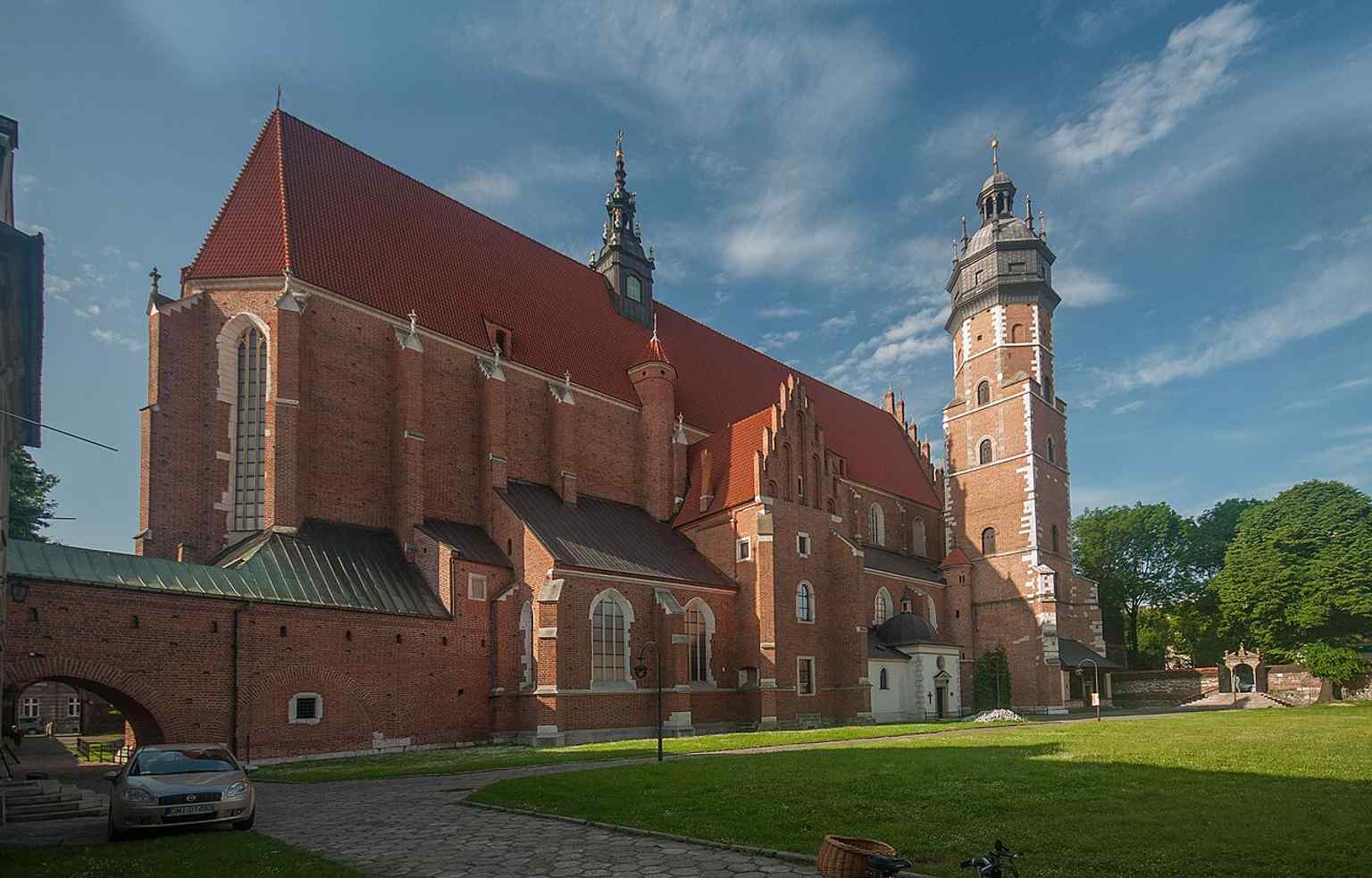
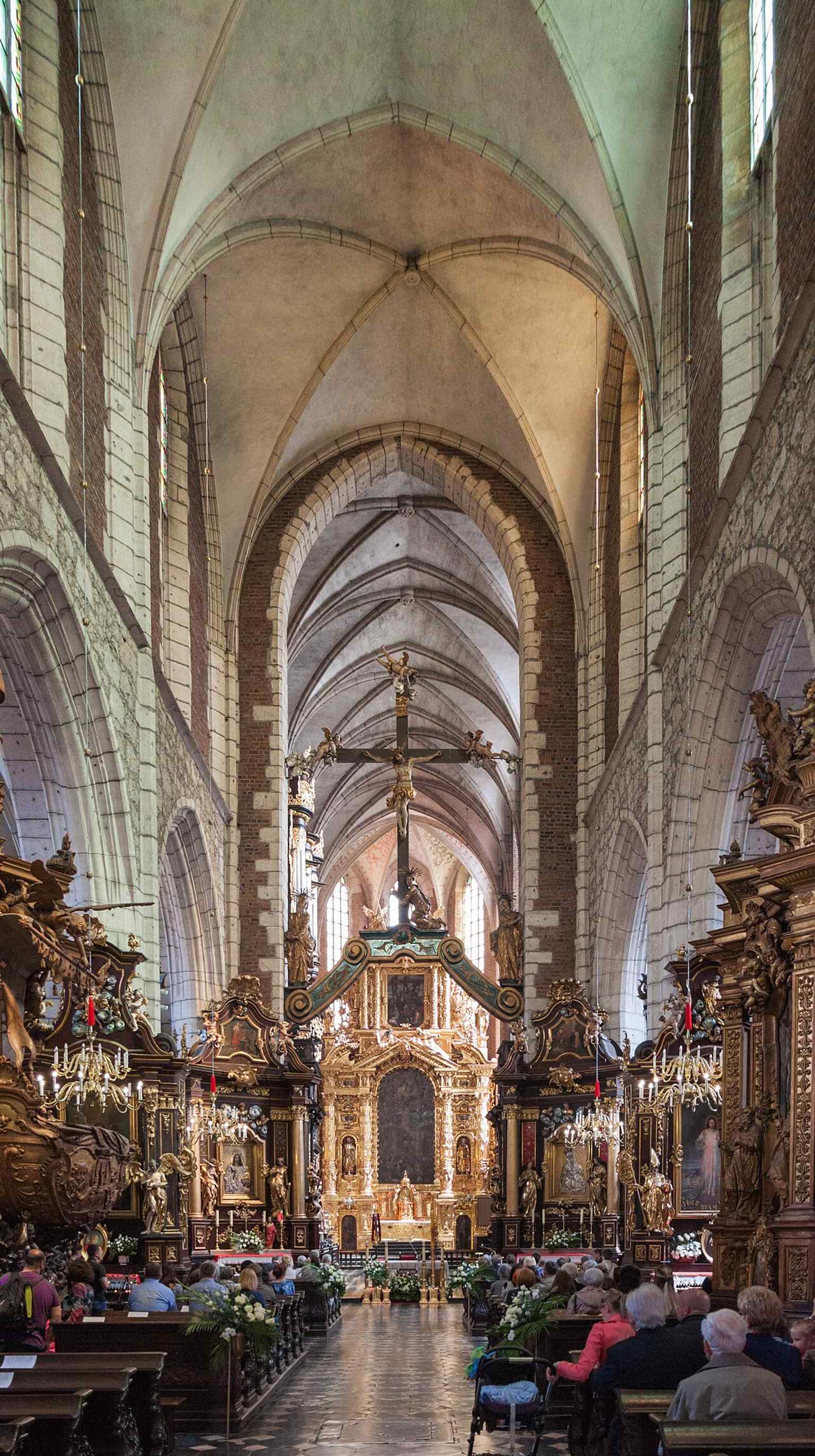
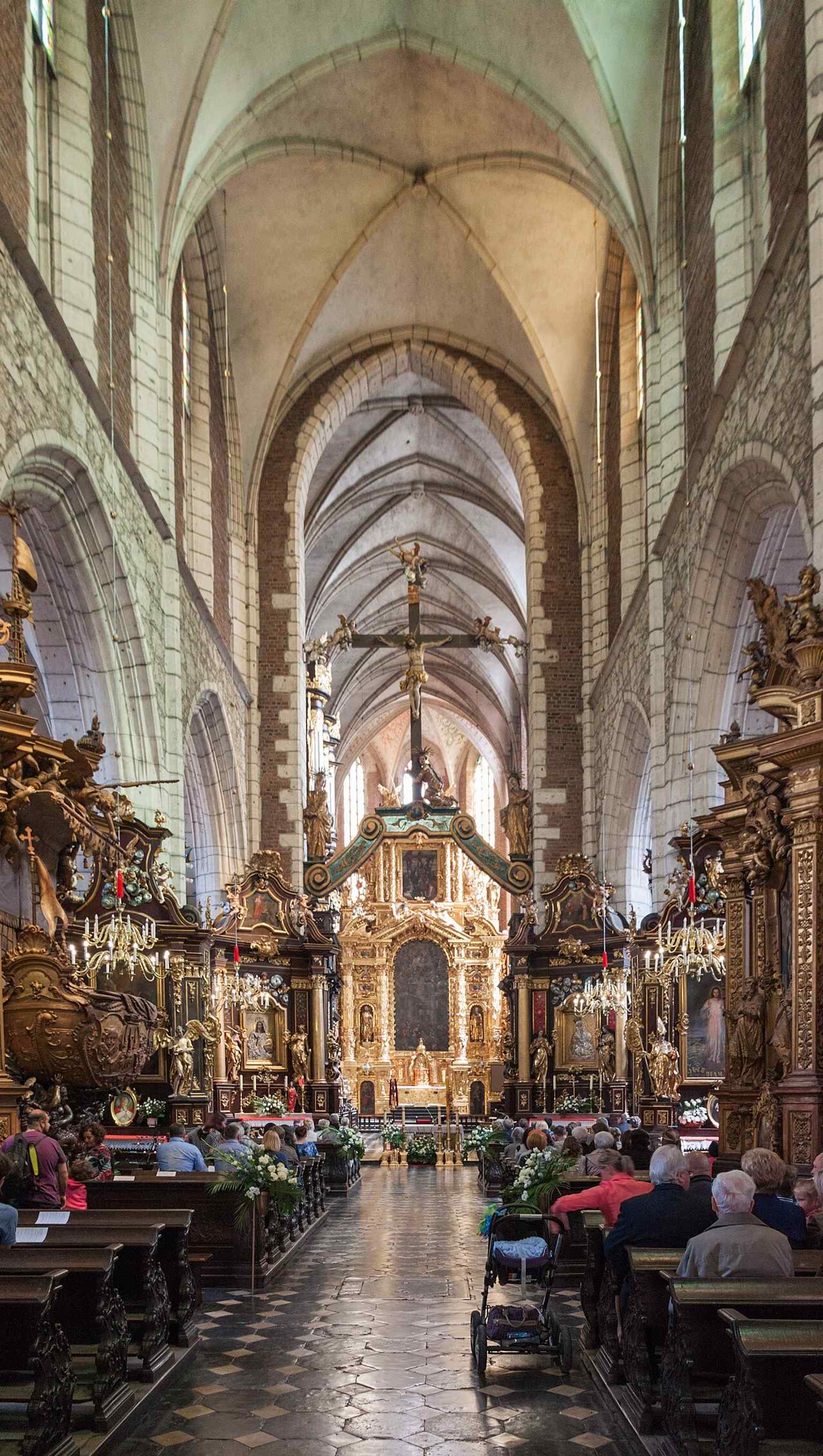
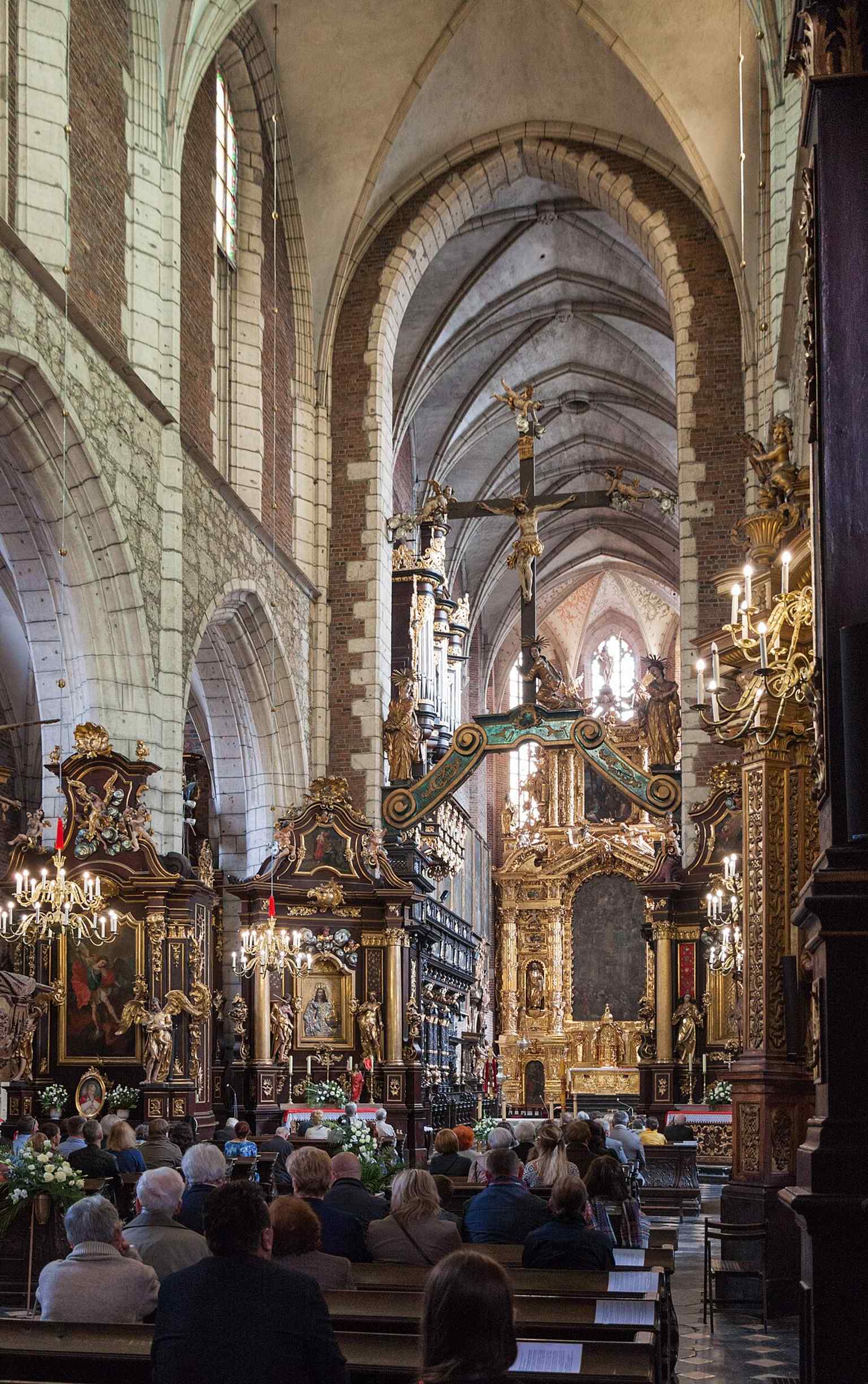
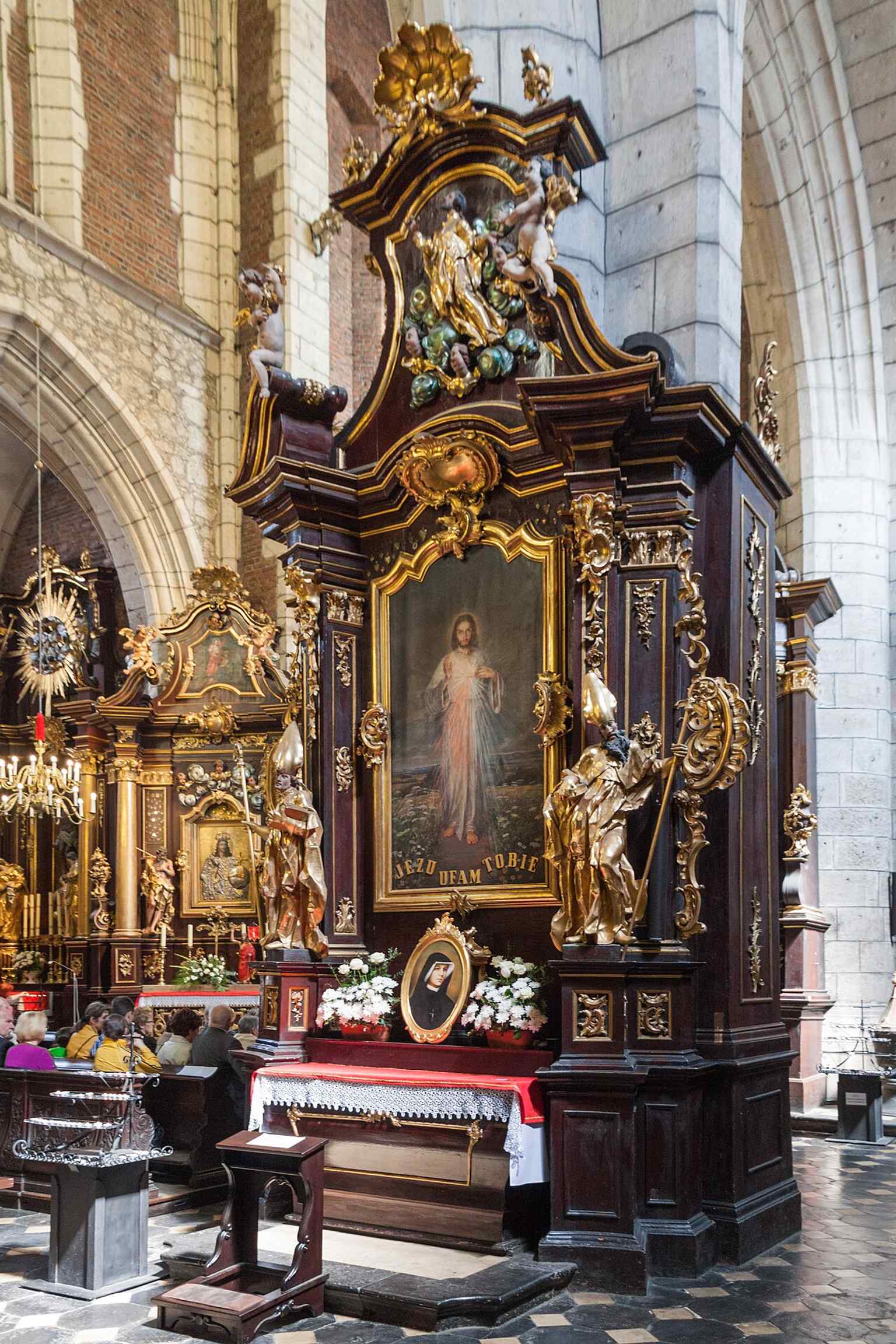
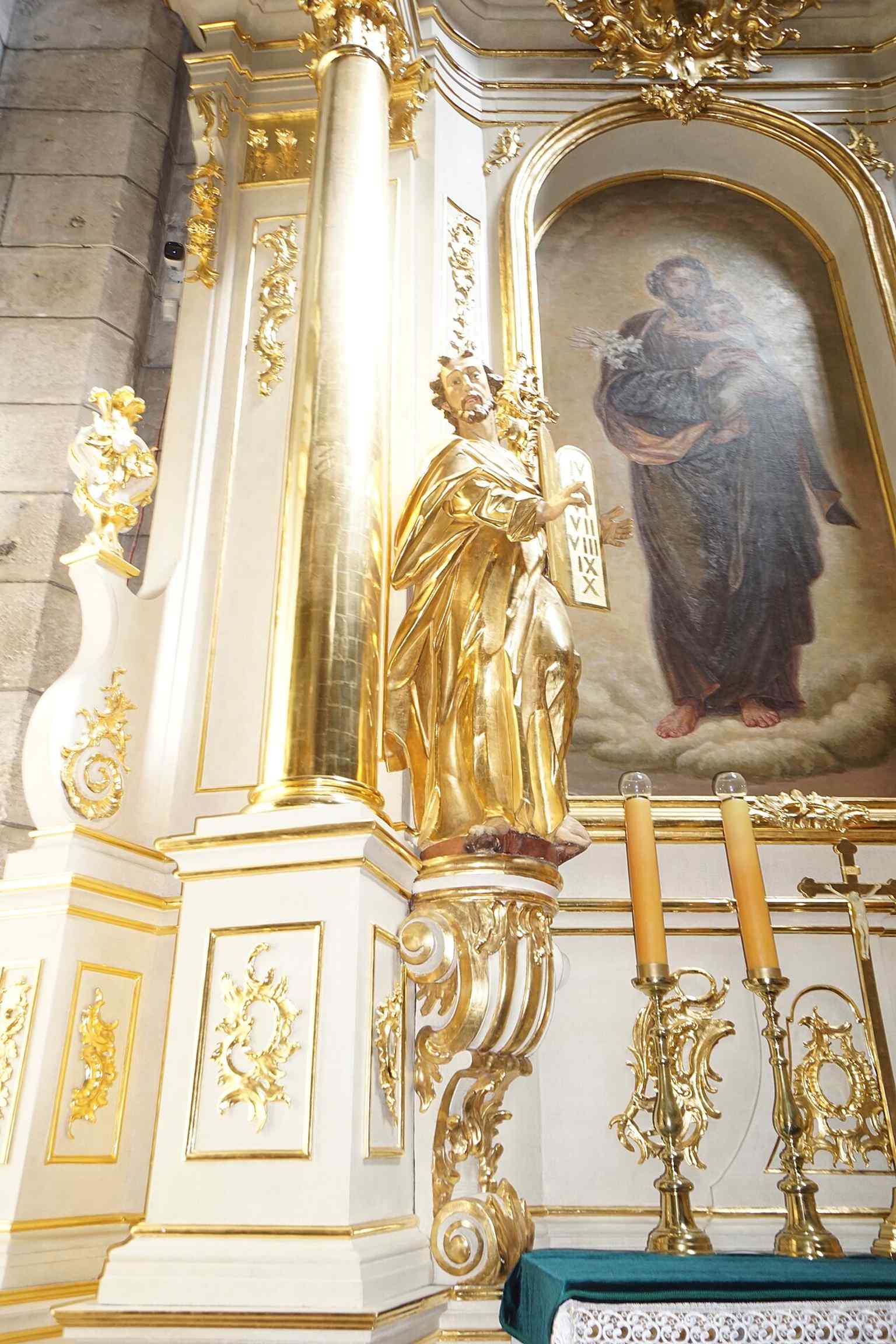
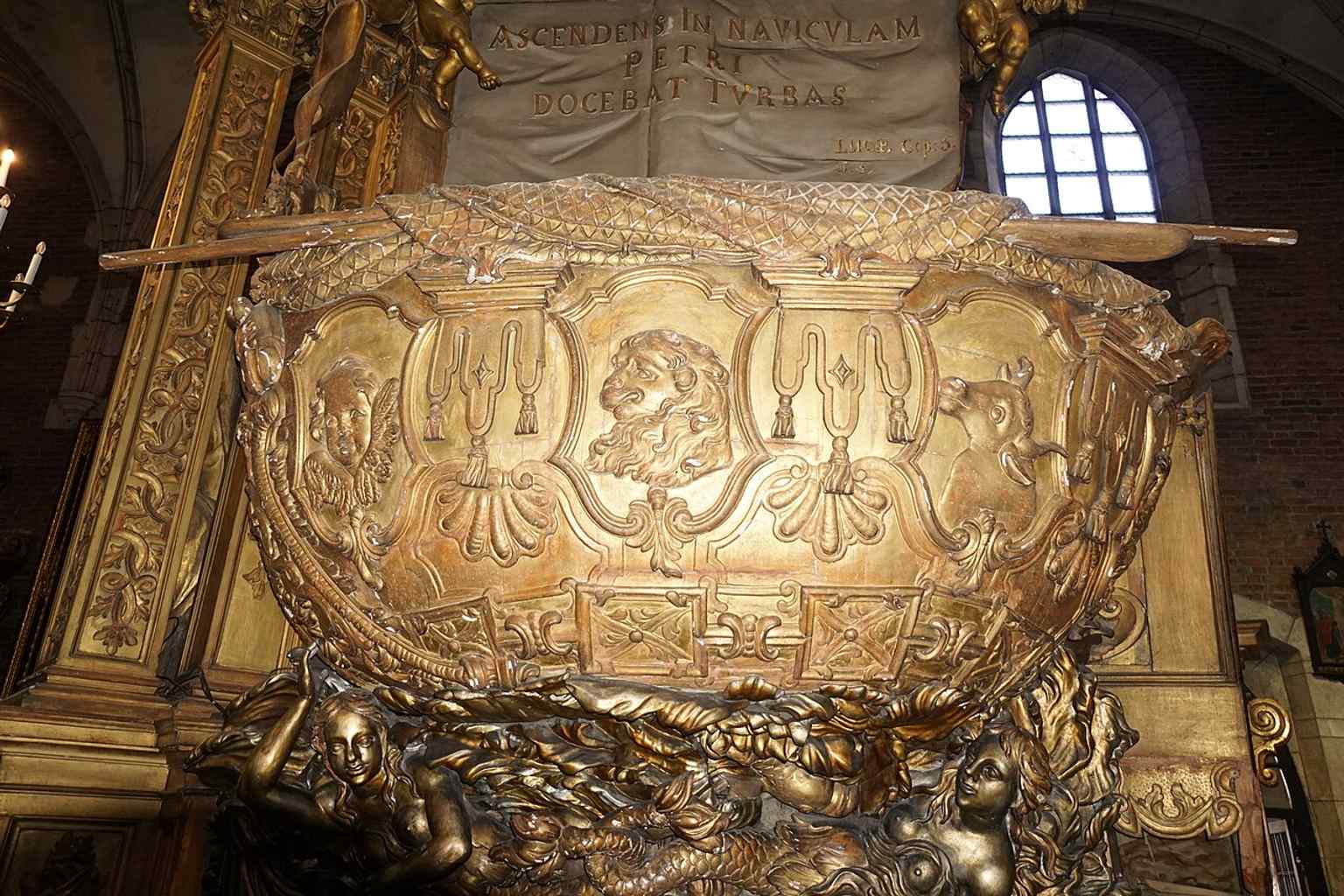
The church suffered, repeatedly. Fire damaged the tower in fifteen fifty-six and the roof again in fifteen ninety-four. Then, during the Swedish invasion in sixteen fifty-five, King Charles Gustav made this church his headquarters for the attack on Kraków. Soldiers turned sacred rooms into warehouses and stables, while the monks were confined to a single cell and the sacristy. Much of what you would see inside now - the rich Baroque decoration, the gilded high altar, even the sense of theatrical recovery - grew from that ruin.
One man resting here captures that wider world: Bartolommeo Berrecci, the Florentine architect of Wawel’s Sigismund Chapel. He died in Kraków in fifteen thirty-seven, perhaps murdered by a rival, perhaps from an infected work accident, and they buried him here.
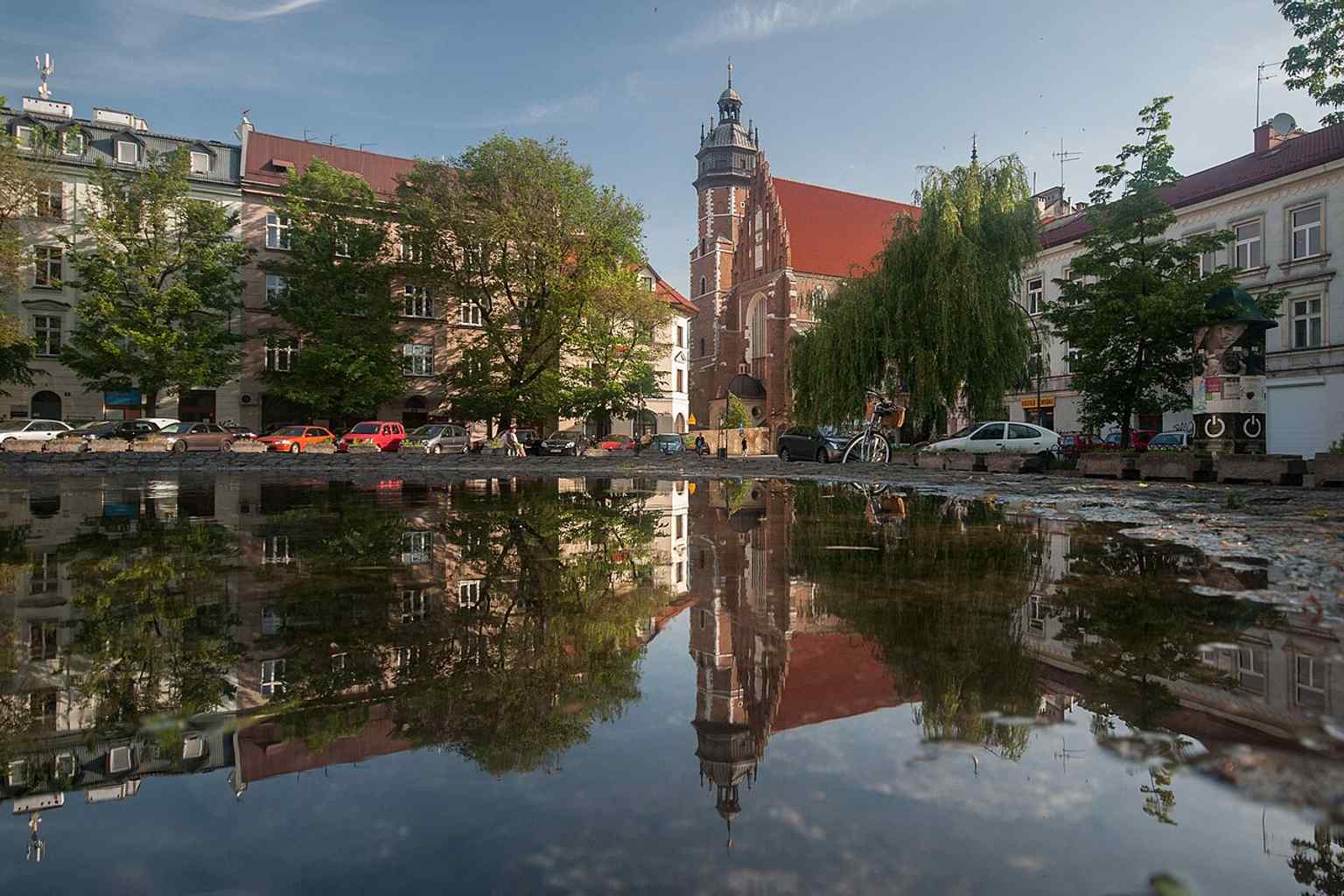
So as you leave, take this church as context, not contrast. Kazimierz is larger than any single quarter or creed; it is a whole memory-city made from lives that overlapped, argued, borrowed, and endured. Our final stop, Kazimierz itself, is about a two-minute walk away. If you hope to step inside later, the basilica usually opens daily from early morning until early evening, with slightly longer hours on Sundays.






.jpg)
.jpg)
.jpg)
.jpg)
.jpg)