
Look for a broad weave of stucco-and-stone townhouses, straight street lines, and the rising towers and synagogue rooflines that make Kazimierz feel less like one building than a whole old city preserved in place.
Kazimierz is the rare place that still behaves like a former town, even after the map insists it belongs to somewhere larger. In thirteen thirty-five, King Casimir the Great looked south of Kraków and founded a new royal city here, naming it after himself. He gave it self-rule under Magdeburg Law, a German system of urban law, ordered walls in the thirteen sixties, and set in motion something larger than a suburb. This was meant to be a proper urban organism: market square, churches, trade routes, defenses, authority.
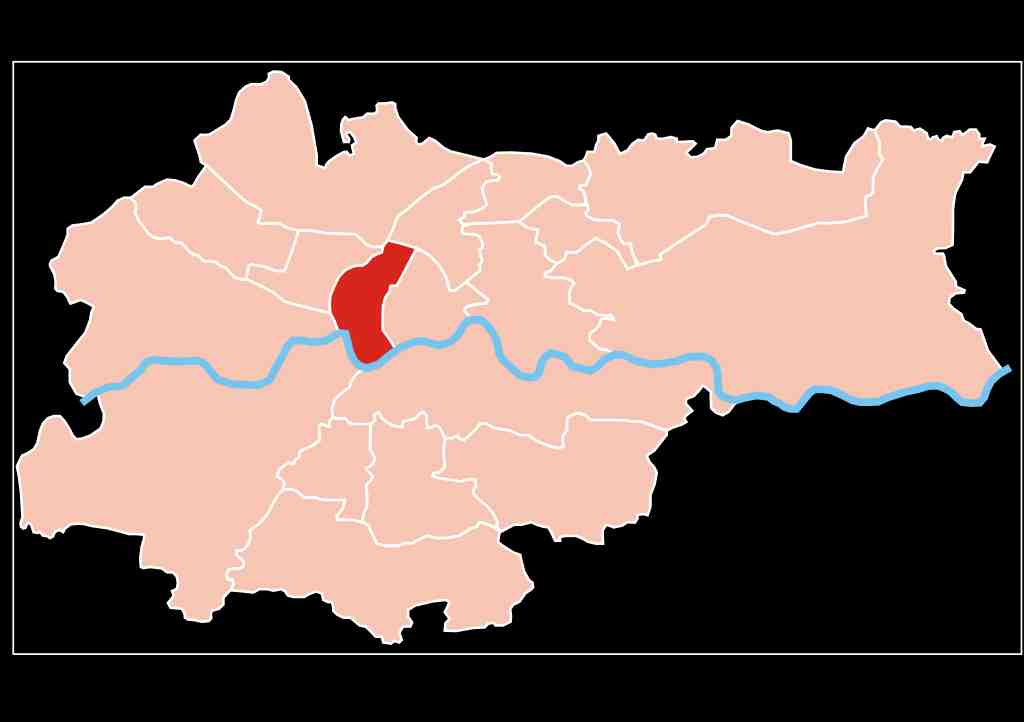
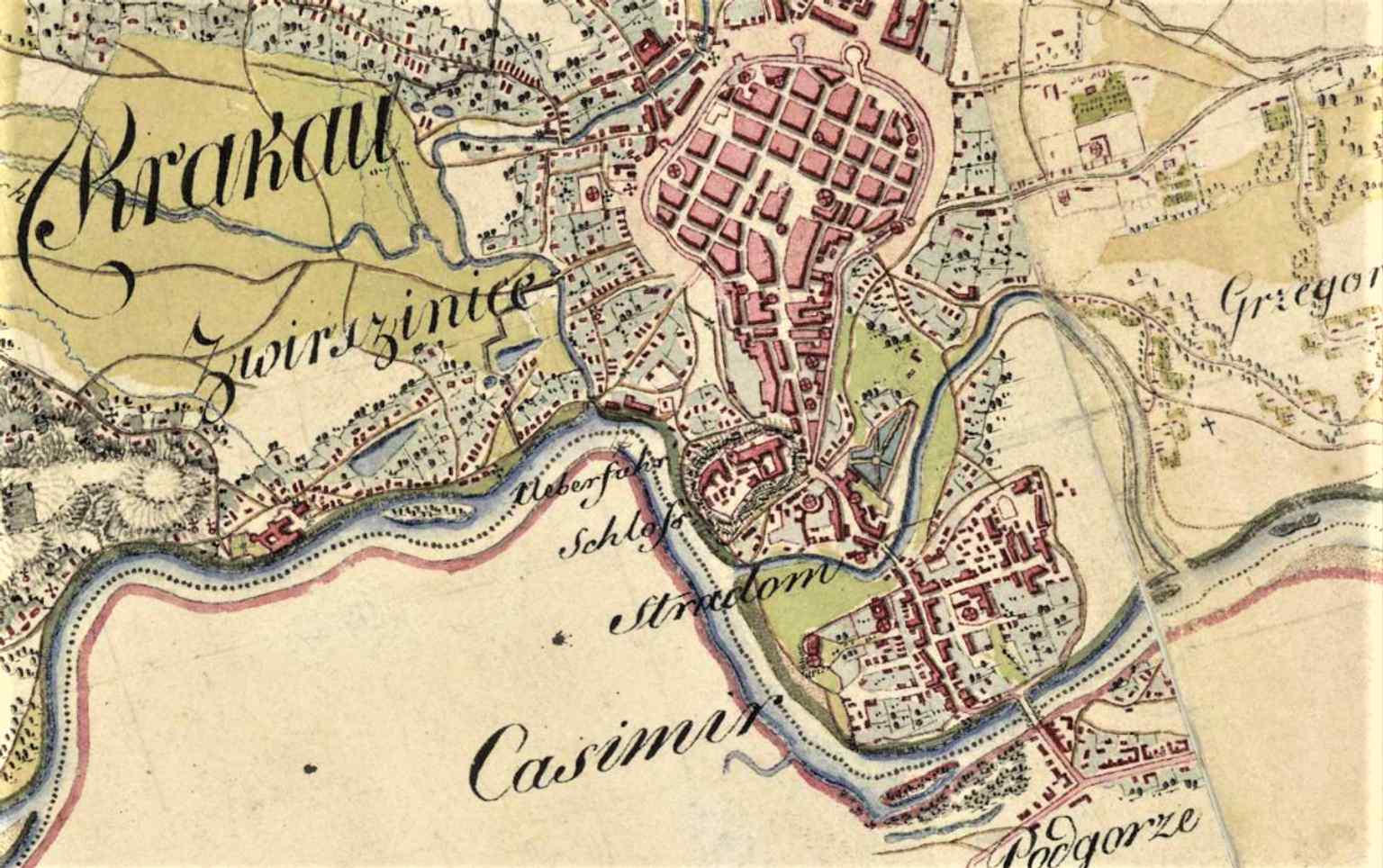
If you glance at the map in the app, you can see the secret that explains the whole district. Kazimierz once sat apart from Kraków, divided by a branch of the Vistula called the Old Vistula River. That green line now known as Józef Dietl Street is not just an avenue; it is a buried riverbed. Locals know that when you cross it, you are really crossing an old piece of geography that used to decide who belonged to which city. That separation helped Kazimierz become two things at once. Its Christian heart grew around Wolnica Square, Corpus Christi, and Skałka. Its northeastern quarter became the Oppidum Judaeorum, the Jewish City, dense behind its own internal walls, only a fifth of Kazimierz in area but nearly half its population. The turning point came after the great fire of fourteen ninety-four. In fourteen ninety-five, King Jan Olbracht forced Jews out of Kraków’s Old Town and into Kazimierz. Brutal as that was, it also began the concentrated Jewish Kazimierz whose synagogues, schools, and courts made this district a spiritual centre of Polish Jewry.
One man helps fix that world in memory: Rabbi Moses Isserles, the Remuh. His grave, his synagogue, and the cemetery we began with turned Kazimierz into a destination for study and devotion, not merely residence. Around him lived scholars, craftsmen, physicians, and merchants. Prayer filled courtyards; law and learning travelled from house to house.
Then the district changed again. Emperor Joseph the Second dissolved the Jewish communal government in seventeen eighty-two. Austria absorbed Kraków after the partitions. In eighteen twenty-two, workers tore down the old walls. And yet the old patterns clung on. Sabbath law kept many Jewish families close to the synagogues, so memory remained anchored to streets even after administration moved on.
Another image in the app shows the old town hall at Wolnica Square. It matters because it reminds you that Kazimierz did not begin as a theme, or a quarter, or an afterthought. It began as a city with its own civic spine. The twentieth century tried to silence all of this. In nineteen forty-one, the Germans forced Kraków’s Jews across the river into the ghetto in Podgórze, and many did not survive. After the war came violence again, neglect after that, and long years of ruin. But Kazimierz refused to stay empty. Museums, restoration, a living Remuh congregation, and the Jewish Culture Festival have brought sound back into streets once hollowed out. Even Spielberg’s Schindler’s List helped the world look again.
So here, at the end, perhaps the truest picture is this: a district shaped by a vanished river, scarred by removals, and still full of return. In Kazimierz, stones, street names, cemeteries, sanctuaries, and ordinary facades keep speaking across the breaks. If you listen carefully, this place does not tell you only who was lost. It tells you who still, stubbornly, belongs.





%20%2C%20Josephinische%20Landesaufnahme%20(cropped).png)