

Santo Domingo Audio Tour: Echoes of Conquest and Colonial Splendor
A single cannon blast once echoed through Santo Domingo, rattling ancient walls that hid rebel secrets and dreams of freedom. Beyond the sunlit plazas, this city shelters legends in its shadows—if you know where to listen. Embark on a self-guided audio tour, winding through Puerta del Conde’s defiant stones, along the vibrant bustle of Calle El Conde, and into the stirring halls of the Memorial Museum of Dominican Resistance. Discover stories too bold for textbooks, tucked between alleys and balconies most travelers never notice. Who dared to raise the first Dominican flag beneath enemy guns at Puerta del Conde? What mysterious messages passed along Calle El Conde after midnight during the Trujillo era? Which artifact inside the museum is rumored to have been smuggled out at great personal risk—and why did it matter so much? Trace rebellion, heartbreak, and resilience with every step. Feel Santo Domingo’s heartbeat shift as each landmark reveals a new side of its soul. Ready to uncover what the city tried to keep hidden? Your journey through Santo Domingo’s secrets begins now.
Tour preview
About this tour
- scheduleDuration 80–100 minsGo at your own pace
- straighten2.8 km walking routeFollow the guided path
- location_onLocationSanto Domingo, Philippines
- wifi_offWorks offlineDownload once, use anywhere
- all_inclusiveLifetime accessReplay anytime, forever
- location_onStarts at Puerta del Conde
Stops on this tour
lock_open 3 free previews · 11 unlock with purchase
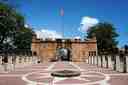
To spot Puerta del Conde, look straight ahead for a sandy brown, fortified stone gate with an archway in the middle, standing proudly beneath the Dominican flag, flanked by lines…Read moreShow less
To spot Puerta del Conde, look straight ahead for a sandy brown, fortified stone gate with an archway in the middle, standing proudly beneath the Dominican flag, flanked by lines of sculptures and trees on both sides. Now, take a good look at that grand old gateway before you-the Puerta del Conde! Imagine you’re here, right at the edge of the city’s past and present. The air hums with history, say, almost like you could hear the boots of old soldiers echoing across the stones. Once, this was not just any gate, but the mighty main entrance to the fortified city of Santo Domingo, guarding the city like a stubborn old bulldog with stories to tell. But here’s where it gets really interesting... Travel back, if you will, to the year 1543. Construction workers are sweating under the Caribbean sun, heaving blocks into place to create Fort San Genaro. Their mission was simple: keep out pirates, corsairs, and anyone else who fancied a bit of mischief with the city’s riches and people. I bet even a very polite pirate wouldn’t have made it past this wall! Fast forward to 1655-the Spanish troops inside these walls are tense, because the English, led by the formidable duo General Robert Venables and Admiral William Penn, are laying siege. The Third Anglo-Spanish War is raging, and cannons echo through the salty air. But then comes the hero of our tale: Captain-General Bernardino de Meneses Bracamonte y Zapata, the very first Count of Peñalva. With a hearty dose of guts (and probably a pinch of luck), he stands firm, orchestrates the city’s defense, and chases the English right back to their ships. People were so grateful, they renamed the fort after him-La Puerta del Conde, the Count’s Gate. It’s a name that stuck, a little like how peanut butter sticks to the roof of your mouth. As you stand here, see the thick, weather-worn walls. These were once part of a sprawling pentagon-shaped defense system, with five major gates and forts all around-though today, only a handful like this one remain. If only these stones could talk; they’d tell tales of soldiers on watch, lanterns flickering in the night, and the nervous thrill as an enemy army approached. But the Puerta del Conde didn’t just stand against foreign foes. It became a witness to the birth of a nation. Picture it: It’s the night of February 27, 1844. Francisco del Rosario Sánchez, one of the founding fathers, gathers his companions here. Hearts pound, eyes dart-this is the moment. With trembling yet determined hands, they raise the first Dominican Flag right at this very gate, declaring the independence of the Dominican Republic. Can you feel the pride in the air? I hope so, because it’s as thick here as the Caribbean heat! Now, let your eyes drift to the arch overhead. Written just above, in Latin, are some pretty powerful words: “Dulce et decorum est pro patria mori.” That means, “It is indeed sweet and honorable to die for the fatherland.” It reminds everyone coming and going through this entrance of the ultimate sacrifice made for freedom. Puerta del Conde now welcomes visitors into Independence Park, or Parque Independencia, and just steps away sits the gleaming white Altar de la Patria-the resting place of the three national heroes, Sánchez, Mella, and Duarte. Their marble statues, crafted by an Italian sculptor, keep watch over an eternal flame that never goes out, making sure the memories of struggle, laughter, and hard-won liberty never fade. So, as you stand at this gateway, you’re not just at the entrance of a park-you’re walking straight into the heart of Dominican history! Alright, adventurer, are you ready for the next chapter? Let’s step through the gate-or, as I like to say, travel through time!
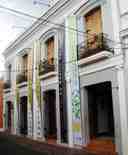
Open dedicated page →Look for a stately two-story building with grand wooden doors, ornate black iron balconies filled with plants, and several tall, colorful banners draped down from the top-if you…Read moreShow less
Look for a stately two-story building with grand wooden doors, ornate black iron balconies filled with plants, and several tall, colorful banners draped down from the top-if you see that right in front of you, you’re standing by the Memorial Museum of Dominican Resistance! Let’s travel back in time together. Imagine the city as it was not so long ago-where secrets whispered through the narrow streets, shadows stretched long with worry, and hope sometimes had to hide behind closed shutters. When you enter the world of the Memorial Museum of Dominican Resistance, you’re stepping into a story of courage, sacrifice, and a never-ending struggle for freedom-a story that’s as much about love and loss as about politics and power. It all began with a mother’s love. Picture Mrs. Angela Ricart. She’s a mother whose heart brimmed with pride and sorrow-her son, Tony Mota Ricart, fought bravely for his country but gave his life in the struggle against a shadow that lay heavy on the land: the dictatorship of Rafael Trujillo. One day, Mrs. Ricart wondered aloud, “Who will safeguard the memories of my son, the proof of his patriotism and sacrifice, when I’m gone?” Her friend Cristina Gautier listened carefully, then told her granddaughter, Luisa De Peña-a woman who would become the future beating heart behind this museum. Now, I can imagine Luisa pacing tirelessly in her living room, maps and papers piled around her. Her mission wasn’t simple: people said there were already monuments, already museums, why do more? But Luisa and those who joined her believed this story-the story of the men and women who had fought for freedom-needed its own home. They needed a place that wasn’t just for looking back, but for inspiring new generations. Luisa knocked on doors, shared Mrs. Ricart’s worry, faced setbacks and skeptical faces. Then, finally, a stroke of luck! The Manolo Tavárez Justo Foundation and the famous Mirabal Sisters Foundation welcomed her project-imagine a room full of determined faces, legends in Dominican history, now uniting for a common cause. Even more, the president of the country said, “Take the Casa de las Fundaciones-make your dream come true.” Yet, every hero’s journey has obstacles, doesn’t it? Just when things seemed to be working, the place was tied up in a legal battle, partners split, the museum seemed lost. Like a telenovela, just when everyone was biting their nails… help arrived. Thanks to the “Fundación Héroes del 30 de Mayo” and a generous donation, a new home on Calle Arzobispo Nouel was found-the very spot where you are standing now! Renovations began, stories and artifacts poured in, and gradually the museum came to life. Do you smell the old wood of the doors, feel the cool stone beneath your feet? Long before these banners fluttered here, it took sixteen years of hard work, hope, and heartache before the museum finally opened its doors in 2011. Today, it’s more than a building with walls-it’s a memory kept alive, a monument not just to tragedy, but to resistance and hope. Inside, you’d see exhibits that make history feel almost alive. There are objects that belonged to those who fought and fell, there are holograms casting ghostly images, and even animatronic dramatizations that make you jump and laugh-no spoilers, but the mannequins are less stiff than some politicians, I promise! You can hear voices from the past, see photos that survived decades, and sense the breathless courage needed to stand up to dictators like Trujillo and Balaguer. This isn’t just about the past. The museum tries to teach something vital: that freedom isn’t free, that human rights matter, and that even in the darkest times, people will risk everything for a better tomorrow. The collection grew so important, UNESCO recognized it as part of the world’s Memory-a sign that the stories inside these walls belong to every one of us. So as you stand outside, listen for the echo of marching feet, the laughter of conspirators sneaking a meeting, and the gentle voice of mothers like Mrs. Ricart. This is a place where history remembers, and where hope refuses to be silenced. Are you ready to step inside and feel the heartbeat of a nation’s resistance? Remember, even the smallest voice can become history, especially if you say it loud enough!
Open dedicated page →
Show 11 more stopsShow fewer stopsexpand_moreexpand_less
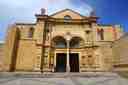
Straight ahead, look for a grand golden façade made from coral limestone with impressive archways and statues-the Cathedral of Santo Domingo stands right there, inviting you in…Read moreShow less
Straight ahead, look for a grand golden façade made from coral limestone with impressive archways and statues-the Cathedral of Santo Domingo stands right there, inviting you in with its timeless presence. Now, take a deep breath and imagine you’ve just time-traveled to the heart of the 1500s. You’re standing where the New World touched the old, right in front of what locals call the “mother” of all cathedrals in the Americas. That dazzling golden stone is older than nearly any building on this side of the Atlantic! Construction started way back in 1504-so old, even Columbus would have gotten lost trying to find the exit. After a few construction hiccups, new architects tried their luck, from Friar García Padilla (who never actually visited!) to Bishop Alessandro Geraldini. They all poured their dreams and sweat into this magnificent house of worship for nearly half a century, finally finishing around 1550. Back then, this spot wasn’t just a church. It was a frontier outpost, a beacon-and sometimes a fortress! Imagine the clatter and clang of hammers and the soft chatter of workers. The grand plans were so ambitious that the Pope himself had to get involved. By 1546, the church wasn’t just a local chapel-it was the crown jewel of the New World, the first archdiocese ever planted in these lands. And because this was the very first diocese around, the Archbishop was honored with the grand title “Primate of the Indies.” Try fitting that on a business card! Its style is real Gothic, just like those old European cathedrals you’ll find in Spain or France-but with a Caribbean twist. Look up-the mighty vaults above your head, pointed arches, and thick stone walls were crafted not just to last, but to weather hurricanes, pirates, and politics. Speaking of pirates, in 1586, none other than Sir Francis Drake stormed these very doors! His men used the sacred halls for their headquarters, probably not stopping to admire the altarpieces or funerary monuments. Imagine the shouts of the invaders echoing off the stone as treasures and relics were hurried away into hiding. Luckily for us, plenty of priceless treasures still remain. The treasury is filled with wooden carvings, glittering jewelry, and paintings going back centuries-like the 1523 panel of the Virgin of la Altagracia! Over time, this cathedral became a true labyrinth of history: what started without chapels slowly grew to nine, and now there are fourteen, each one filled with its own legends and secrets. The building covers over 3,000 square meters, with sky-high naves that reach up to sixteen meters-perfect for catching the Caribbean breeze, or for impressing visitors of all sizes. The main façade is a showstopper, a blend of Gothic and Plateresque details that capture the golden sunlight just right, especially in the afternoon. But the tales here aren’t only about brick and mortar. This is a holy resting place for presidents, priests, and heroes. Imagine standing in the shadow of those stone angels, knowing you’re sharing ground with someone like Buenaventura Báez, who was president so many times you’d think they ran out of candidates, or Ramón Báez, the doctor-president. Even Simón Bolívar’s predecessor has a tombstone here! You might also be standing over a great mystery-Christopher Columbus’s remains were once kept in this cathedral, carried off to Havana, then Seville. Imagine all the secrets hidden in these crypts and chapels, the whispers of explorers and empire-builders swirling through the darkness. Although centuries have passed and the city outside has changed, the cathedral remains the beating heart of Santo Domingo-a survivor of conquests, revolutions, and storms. Even today, its golden walls soak up the laughter, prayers, and footsteps of everyone who passes. So before you head off, take a moment to let the history sink in. Listen for the distant echoes of choirs, the roll of thunder on an ancient roof, and the soft onrush of Caribbean wind-this is a place where the past is always present. Want to explore the description, notable people buried or the gallery in more depth? Join me in the chat section for a detailed discussion.
Open dedicated page →You’ll know you’re at Columbus Park when you see a large open square with a dramatic statue of Christopher Columbus standing tall in the center, right in front of an impressive…Read moreShow less
You’ll know you’re at Columbus Park when you see a large open square with a dramatic statue of Christopher Columbus standing tall in the center, right in front of an impressive old stone building-just watch for all the pigeons! Step into this lively square and imagine yourself in the heart of Santo Domingo’s social life, just like folks did over five hundred years ago. Back then, the city’s first homes and buildings were springing up all around La Española, and this very plaza-now called Columbus Park-was the place to be. Picture it: music filling the night air, laughter echoing off sun-warmed stone, the aroma of food mingling with the salty breeze. Neighborhood kids played under these same trees, and the city’s grandest celebrations spilled wildly into the streets surrounding you. But don’t let today’s peaceful scene fool you-back in the 1500s, this wasn’t just a spot for quiet benches and gentle strolls. Known then as Plaza Mayor, it was where all the action happened! The city elders, brave adventurers, and even a few schemers gathered here to gossip, proclaim news, and dance in the shadows of the cathedral. For a time, folks even called it Plaza de la Catedral because the mighty Cathedral of the Americas was just a stone’s throw away. Now, have a look at the hero at the center-Christopher Columbus himself, pointing dramatically northward as if he’s just spotted the next grand adventure (or maybe the best spot for ice cream, who can say?). This statue was created by French artist E. Gilbert, and when it officially became Columbus Park in 1887, city dwellers must have gathered in awe, chattering excitedly about how their beloved plaza would forever carry the name of the famed explorer. Today, you stand where history once danced and debated, at a true crossroads of stories-soak it all in, and just mind the pigeons-they think they own the place!
Open dedicated page →To spot the National School of Visual Arts, look for a striking modern-style logo right in front of you, with bold red letters forming an artistic design and a mysterious black…Read moreShow less
To spot the National School of Visual Arts, look for a striking modern-style logo right in front of you, with bold red letters forming an artistic design and a mysterious black eye in the center-trust me, you can’t miss it! Now, step a little closer-can you almost hear the echo of paintbrushes tapping on canvas inside? Standing outside the Escuela Nacional de Artes Visuales, or ENAV, you’re at the crossroads of color and history. This place isn’t just an art school; it’s a living canvas that holds nearly a century of artistic dreams, brushstrokes, and the occasional splatter of paint where it doesn’t belong. Hey, even the greats miss the canvas sometimes! It all began in 1942, right here in the heart of Santo Domingo-though the story of art teaching in this city goes back even further, to the 1800s, when artists like Juan Hernández Corredor or the daring Luis Desangles would teach painting and drawing with the hum of the city outside their windows. Picture workshops full of curious young minds, squinting at sculptures, charcoal smudges on their hands, while teachers tried to keep the paint off the walls. Jump ahead to the early 1900s and you’ll find Abelardo Rodríguez Urdaneta opening his own school, building the foundations of formal art education. That school ran until the whirlwind of the 1930s, when the world outside Dominican borders was erupting into chaos. Here’s where the plot thickens! In 1939, a tide of artists-painters, writers, thinkers-fled the shadows of the Spanish Civil War and World War II. They arrived on this island seeking safety, bringing with them not just luggage, but a rich, buzzing world of creative talent. As Spain lost geniuses, the Dominican Republic gained them, receiving the precious cargo of artists, journalists, mathematicians-refugees whose gifts sparkled through difficult times. With these new arrivals came a dream: to build a true haven for art. Thus, the National School of Visual Arts was born! Imagine those first days-everyone’s nerves humming with hope, Spanish, German, and Dominican accents blending in the halls, and Master José Gausachs (fresh from Spain), George Hausdorf from Germany, and the talented Celeste Woss y Gil from here, all coming together as the original crew of educators. Drawing, painting, sculpture, applied arts, even how to drape robes or paint still lifes-these were their magic subjects. Fun fact: the first director was Manolo Pascual, a Spanish sculptor who could probably have built a statue with his eyes closed. By July 1943, the first student exhibition dazzled visitors-imagine the hustle of young artists, the anxiety, the smell of turpentine in the air! Over the years, new teachers joined in. There was Dr. Maireni Cabral teaching anatomy-yes, to make sure arms and legs were in the right places-and perspective classes under Professor Pou Ricart and later Amable Frometa, ensuring nobody’s paintings turned into wobbly funhouse mirrors. Even a priest, Roble Toledano, lectured on art history, so every student knew their Michelangelo from their Monet. The first graduating class in 1945 included future art legends: Luz María Castillo, Aída Roquez, Luis José Álvarez del Monte, Rafael Pina Melero, and more. And ENAV didn’t always live at this very corner-over the years, it moved from Las Damas Street to the Palacio de Bellas Artes, then Palacio Borgella, finally settling here in 1989 at the corner of El Conde and Isabel la Católica, right where you are now! The school is now part of the Directorate of Fine Arts, under the Ministry of Culture, and has trained generations of creative minds, each adding their own layer to the ever-growing mural of Dominican art. Each July, the school bursts with energy for its yearly exhibition-imagine the proud faces, the clatter of frames being hung, and the thrill as young artists show their works to the world for the first time. Today, ENAV is a vibrant hub, alive with the laughter (and sometimes frustration) of students shaping the next masterpiece. If you listen closely, maybe you’ll catch a whisper from history-or just hear some lively debate about whether modern art actually needs to make sense! So take a moment and let your eyes wander, because you’re standing in front of a place where imagination leaps off the canvas and into life.
Open dedicated page →To spot the National Pantheon, look for the grand and sturdy stone building waving Dominican flags, with its tall arched entrance and rows of columns-it’s hard to miss with its…Read moreShow less
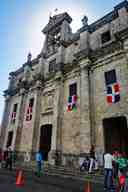
To spot the National Pantheon, look for the grand and sturdy stone building waving Dominican flags, with its tall arched entrance and rows of columns-it’s hard to miss with its stately facade and air of reverence! Now, let’s take a deep breath and step back in time-imagine standing in front of this impressive structure, built over 300 years ago, when the streets were filled with the clatter of hooves and the salty air from the port drifted through the city. It all began between 1714 and 1746, when a determined Spaniard named Geronimo Quezada y Garzón decided to build a church for the Jesuit order right on this very spot. It was once a sacred place, echoing with the sounds of whispered prayers and the scent of incense rising under that beautiful neoclassical-renaissance dome. But don’t get too comfortable-because the story has twists worthy of a telenovela! In 1767, the Jesuits were forced to leave, and the grand church became... a tobacco warehouse! That’s right: the choir may have vanished, but the aroma certainly didn’t. Imagine stacks of leaves where priests once stood! Time marched on, and in 1860, the building became a stage for dreams-literally. It was transformed into the very first Dominican theater by the society Amantes de las Letras. Imagine applause ringing through these arches as the people of Santo Domingo marveled at their new artistic playground. Then, from 1878 to 1917, it buzzed with life as the theater La Republicana, a beloved home for actors and dramatic tales. Afterwards, the building saw a more serious phase, housing government offices-though I suspect the paperwork was still more dramatic than most theater scripts. Let’s fast-forward to 1956. The Dominican Republic was under the stern rule of Rafael Trujillo, a man who, let’s just say, was not shy about monuments. He ordered Spanish architect Javier Borroso to makeover the building, turning it into a grand national mausoleum. Trujillo planned for this to be his everlasting home-ironic, considering that today the National Pantheon honors the very people who fought for liberty, including the folks who helped usher out Trujillo himself. So, who rests here now? Only the Dominican Republic’s most revered heroes: brave soldiers like Francisco Caamaño and Gregorio Luperón, writers and presidents like Ulises Espaillat and Francisco Henríquez y Carvajal, passionate teachers like Concepción Bona, who helped design the national flag, and Salomé Ureña, an early champion of women’s education. There’s a shelf of history here-every plaque inside tells a story of struggle, freedom, and even a few epic mustaches. As you peer through the doors, picture the torchlight reflecting off the marble, the deep hum of history in the air, and the delicate shuffle of footsteps inside as Dominicans come to pay their respects. This is no ordinary building-it’s where tales of sacrifice and hope are laid to rest, right here in the heart of the city. Ready to move on? Don’t worry, the next stop will be… slightly less haunted by history-but hey, you didn’t hear that from me!
Open dedicated page →To spot the Pantheon of the Homeland, look for a grand stone building ahead draped with Dominican flags, a crest above the doorway, and a small bell tower at the top. Now, as you…Read moreShow less
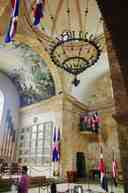
To spot the Pantheon of the Homeland, look for a grand stone building ahead draped with Dominican flags, a crest above the doorway, and a small bell tower at the top. Now, as you stand before this historic stone giant, you’re meeting the Pantheon of the Homeland-a building so full of stories, it puts your family photo album to shame. Imagine walking through these heavy doors and stepping straight into the past. This structure wasn’t always a solemn resting place for national heroes; it’s had more outfit changes than a pop star. Built between 1714 and 1755, it was designed by Jerónimo Quezada y Garçon, back when “awesome beard” was a qualification for being an architect. If you were around here in the 1700s, you’d find Jesuit priests chanting and echoing prayers around these walls. But in 1767-plot twist-the Jesuits were expelled, leaving the building to hunt for its next purpose. First, it became a tobacco warehouse. I’d bet it smelled a bit smokier than the usual church! Then, a change of scene: in 1860 it transformed into a theater, with audiences applauding and the floorboards creaking under the dancers’ feet. The theater era ran all the way until 1917, when the curtain fell for good, and the building went back to its favorite role: being mysterious and dusty. Offices took over, and the Pantheon faded into government business until the 1950s. Now, here’s where the drama comes in. In 1958, during the time of dictator Rafael Trujillo, the government restored the Pantheon with more money than you’d imagine for that era. They topped it all off with a colossal chandelier-gifted by none other than Spanish dictator Francisco Franco. (If chandeliers could talk, this one would have some awkward stories to tell.) Today, the chandelier hangs as the centerpiece, with an eternal flame burning right beneath it, flickering 24 hours a day to remind everyone that memory never sleeps. But let’s talk about what makes this place truly special: inside these walls lie the remains of the Dominican Republic’s greatest heroes-artists, writers, generals, and visionaries. Walk inside and the air feels just a bit heavier, thick with stories of courage and sacrifice. On the south side, you’d find names like Eugenio María de Hostos, the famous educator; Abigaíl Mejía, the suffragist whose remains were moved here just in 2023; and Salomé Ureña, the poet who wrote verses of national pride. Right at the altar’s heart rest titans like Gregorio Luperón, Ulises Francisco Espaillat, and Benigno Filomeno de Rojas-leaders whose actions helped shape the country’s destiny. Each wall is lined with plaques dedicated to those who’ve defended the nation or shaped its spirit, from generals to poets, from Rosa Duarte to Juan Sánchez Ramírez. There’s even a blank space, no plaque at all, for the “Unknown Soldier”-a silent nod to the sacrifices no one could trace. Look for the Honor Guard, dressed to the nines in immaculate uniforms, standing perfectly still. Every so often, one will begin a slow, dignified patrol down the central aisle, straight from the entrance to the altar. And as you gaze around, Dominican flags share space with those of the Air Force, Navy, and Army, wrapping the Pantheon in national pride. Since June 2023, the Ministry of Culture took on the task of keeping this monumental story safe-so now it’s officially under the care of those who cherish art and heritage most. So, while the Pantheon of the Homeland may be silent on the outside, step closer and you’ll feel the pulse of centuries-stories of faith, revolution, heartbreak, hope, and a bit of dramatic flair, echoing under its stone arches. Even on a quiet day, it seems to whisper, “Welcome, and remember.”
Open dedicated page →To spot the Hospital San Nicolás de Bari, look straight ahead for crumbling ochre and red stone walls with a large, open archway in the center, surrounded by scattered stone…Read moreShow less
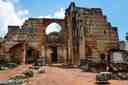
To spot the Hospital San Nicolás de Bari, look straight ahead for crumbling ochre and red stone walls with a large, open archway in the center, surrounded by scattered stone blocks on a brick courtyard. Now, let’s step back in time-way back! Imagine you’ve just arrived at this block more than 500 years ago, and instead of ruins and sunlit silence, you’d hear the echo of footsteps, maybe a few moans, and church bells ringing out. You stand at the entrance of the very first hospital ever built in the entire Americas, started in 1503 thanks to Governor Nicolás de Ovando. Ovando wanted to show off a bit, just like those fancy European princes-so he borrowed ideas from Italy’s grand Renaissance hospitals, making this place a true medical marvel of its day. By 1522, this spot was buzzing with activity! Picture priests moving from the central nave straight to a patient’s bedside, doctors whispering about the latest herbal cure, and rays of sunlight pouring in from the open courtyards at each corner. This wasn’t a small clinic; it was a complex two stories tall, built in a cross shape, able to care for up to seventy patients-pretty impressive, since that matched the mighty hospitals of Rome. The design was so modern, it inspired big-name copycats across Spanish America, like the hospital Hernando Cortés started in Mexico. Inside, you would have found three naves: the main one for worship, and two side naves just for the sick. Imagine, you’re ill but only a few steps away from a chapel, hoping a little prayer would help with the medicine. Even the architecture here was a wild mash-up: Gothic arches, Renaissance styles, and the distinctly Spanish Mudéjar mix. Look up and you’d see pointed arches on the upper floor and barrel-shaped arches below-almost like the building itself couldn’t quite make up its mind. For centuries, this place was a lifeline for the city, until the mid-1700s when its bustling halls went quiet. By 1908, time and weather had taken their toll, and part of the grand façade collapsed with a dramatic crumble. What’s left now is like a giant open-air history book, but every stone tells a tale of hope, pain, faith, and the determination to heal. And don’t think its story ended with those ruins! In 2021, a fresh chapter began with the dream of turning these remains into a vibrant museum-a place where the history of medicine across the Americas could come alive again. Teams from universities, the mayor’s office, even language and culture experts, are hard at work organizing exhibitions and cultural exchanges in these magnificent old walls. With every brick and battered column you see, you’re standing on the very ground where doctors of old changed lives, and where modern historians are building new bridges. I’d say this hospital is the perfect prescription for anyone hungry for history! Which, luckily, can be cured without a trip to the pharmacy.
Open dedicated page →To spot the Monastery of San Francisco, just look for the huge stone archway rising from ancient, weathered walls, with tufts of greenery poking through the cracks-almost like the…Read moreShow less
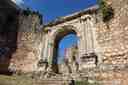
To spot the Monastery of San Francisco, just look for the huge stone archway rising from ancient, weathered walls, with tufts of greenery poking through the cracks-almost like the ruins are trying to grow a new hairstyle. Let’s step back in time together! Imagine you are standing in front of a bustling construction site in the early 1500s, where Spanish friars have just arrived and set up camp right here, dreaming of building the greatest monastery the Americas had ever seen. The Monastery of San Francisco isn’t just any old ruin-this is the granddaddy of all monasteries in the New World, the very first ever built! It took decades to complete, from 1508 to 1560, with its stunning stonework rising on this hill. Picture the echo of hammers on stone, the voices of hardworking friars mixing with the sounds of tropical birds. Over the centuries, the monastery became a legend for its toughness. It survived hurricanes-yes, those roaring Caribbean storms tried to knock it down. It survived pirates-imagine English pirate Francis Drake and his men storming in, plundering everything in sight and leaving nothing but chaos in 1586. Even the earthquakes got in on the action, shaking and cracking the stones in 1673 and 1751. Yet, these walls stubbornly refused to fall. Every time disaster struck, the people of Santo Domingo patched it up, determined to keep their beloved monastery alive. If the stones could talk, they’d tell you about secret burials by the entrance-right where you might be standing, under your feet! Alonso de Ojeda, a legendary explorer, was buried here, along with Bartholomew Columbus. Later, the French, thinking they were clever during a siege, put cannons up on the monastery roof and cut through the ancient vaults to build platforms-only to have the whole thing come crashing down! The story doesn’t end there. During the Haitian occupation, the monastery was slowly picked apart, its stones recycled into new buildings all over the city. Hurricanes like San Zenón in 1930 battered it, but somehow a bit of its magic always lingered. Even in modern days, its ruins became home to a hospital and a place of rest for the weary. Today, you might hear the laughter of locals and visitors as the ruins host music, dance, and celebrations-proof that the Monastery of San Francisco is still the heart of the city, alive in memory and music. So look up and imagine all those centuries of stories swirling around you-after all, you’re standing in the oldest monastery in the Americas, and it’s got way more plot twists than any soap opera!
Open dedicated page →To spot the Casa del Cordón, look up ahead for a strong, pale stone building with a thick, twisted stone “cord” draped across its front, framing a heavy wooden doorway that looks…Read moreShow less
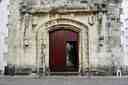
To spot the Casa del Cordón, look up ahead for a strong, pale stone building with a thick, twisted stone “cord” draped across its front, framing a heavy wooden doorway that looks like it has a story or two to tell. Now, as you stand before this incredible facade, let’s whisk you back to the very dawn of European life in the Americas. Imagine the year is 1503-the streets of Santo Domingo thrumming with merchants, explorers, musicians, and locals. In the middle of all this action, a truly unusual house is rising from the earth-Casa del Cordón. Why is it so special? Aside from being one of the very first stone homes in the Americas, it might just be the first European house here with a whole second floor. Talk about setting the standard for the neighbors. But the real showstopper: that thick rope carved into the front wall, giving the house its name. Don’t be fooled-it’s not for tying up the family donkey. This stone cord is the signature of the Franciscan order, a nod to Spanish tradition. In fact, similar homes in Spain show off almost identical ropes, proving that even back then, good style travelled fast. The design itself mixes gothic isabelline swagger with fancy mudéjar touches-think royal palaces of Castile but with a Caribbean twist and a breeze you don’t get in Spain. Over the centuries, Casa del Cordón has been home to some very big names. Francisco de Garay, a mover and shaker of his time, called this place home-he hung out with Columbus, governed Jamaica, and got mixed up in the conquest of Mexico. In 1509, none other than the viceroy Diego Colón and his wife, María de Toledo, took up residence here after moving out of the Tower of Homage. Imagine them sweeping down this street, Maria’s fancy dress swishing against these very stones. The house has also played its part in moments of high drama: during the infamous attack by the English pirate Francis Drake, the townsfolk were forced to bring their valuables here to be weighed on a grand balance Drake had set up inside-it was the city’s very own version of “Who Wants to Lose a Fortune?”. Time flows on, and Casa del Cordón’s walls have heard it all: it was once the Real Audiencia, the main colonial court, and later belonged to descendants of a Dominican president. Peek inside today and you’ll find its tall patios wrapped in original brick arches and a hint of distant Castilla in its carved shields and mudéjar-style windows. Right now, this stony storyteller houses the vibrant Taíno Cultural Center, where you can meet the island’s true first inhabitants-through ancient treasures, lively exhibitions, and a mission to keep their stories alive. So while the outside stands strong and old, inside, every echo, artifact, and creak is full of the energy of Santo Domingo’s past and future. If only walls could talk-though, in this case, as your trusty guide, I’m doing my best impression!
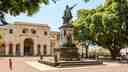
Open dedicated page →Look ahead for a wide, open square with crisscrossing stone paths and a statue of a man standing boldly on a marble pedestal-welcome to the spacious Spain Square, crowned by the…Read moreShow less
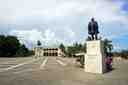
Look ahead for a wide, open square with crisscrossing stone paths and a statue of a man standing boldly on a marble pedestal-welcome to the spacious Spain Square, crowned by the grand building with arches at the far end. Alright, step into this huge, sunlit square and let’s travel back a few centuries together! Imagine the sound of horses' hooves clacking on the stones, and the chatter of elegant ladies and dashing gentlemen weaving through merchants and musicians-because right here in Plaza de España, the social magic of old Santo Domingo was born. Back then, if you wanted to see and be seen, you’d wander these very stones, maybe hoping not to trip on a loose cobble in front of some Spanish noble! At the center stands Nicolás de Ovando-now, you can’t miss him-up on his pedestal, he looks like he’s still keeping an eye on everyone. Ovando was the governor who rebuilt the city after it was destroyed, so you could say he’s the ultimate “fixer-upper.” All around you, history comes alive. North, the Alcázar de Colón, built in 1514, was the home of Columbus’s son, and today it’s the most visited museum in the country. To the south, the stately Museo de las Casas Reales once buzzed with Spanish officials plotting big plans for the New World. If it feels grand today, well, this square saw its share of dramas. Families built their homes around the plaza in the 1800s, each adding another layer to the story. By the 1990s, city leaders were polishing up the plaza’s look for its big UNESCO debut. They even removed a fountain to keep the stone stage clear-so if you hear echoes of music, you’re not imagining things! Huge concerts and festivals still fill the square with life. Now, as the breeze drifts from the Ozama River, take a moment to picture the swirl of old Spanish cloaks mixing with modern laughter. The plaza still has plenty of stories to tell…you just need to listen.
Open dedicated page →To spot the Alcázar de Colón, look ahead for a massive, two-story stone palace with a row of grand arches on both the ground and upper floors, flanked by tall palm trees and…Read moreShow less
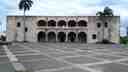
To spot the Alcázar de Colón, look ahead for a massive, two-story stone palace with a row of grand arches on both the ground and upper floors, flanked by tall palm trees and rising proudly at the edge of a wide, open plaza. Welcome to the legendary Alcázar de Colón! Standing right here, you’re gazing up at the very first fortified European palace in the Americas - and if it seems majestic, well, just imagine it centuries ago with the clatter of horses’ hooves and the bustle of noble life all around. Picture the building when it was new, glittering under the Caribbean sun, built of pale coral blocks hauled up from the shore and stacked to create Gothic arches, airy Renaissance balconies, and a home fit for colonial royalty. This palace was shaped by centuries of drama, adventure, and, yes, the occasional pirate invasion. Now, why is it called the Alcázar de Colón? Because it was the family home of Diego Columbus, son of Christopher Columbus, making this the only known residence of the Columbus family in the New World. Diego moved in with his wife, María Álvarez de Toledo, and their children-Juana, Isabel, Luis, and Cristóbal-lived and grew up right behind these walls. So next time you argue over room assignments at home, just remember: they started it here! Construction started back in 1511, on a plot of land granted by King Ferdinand II of Aragon, and by 1514, it was ready to host governors, visiting conquistadors, and maybe a few ghostly secrets. The design was inspired by a Spanish mansion in Salamanca; rumor has it, if you squint hard enough, you might see the resemblance-but careful, don’t trip on the cobblestones! This palace was once the political heart of the Spanish colony: Columbus himself was governor and viceroy, and his house was the base for major expeditions. Famous conquistadors, like Hernán Cortés and Pedro de Alvarado, strutted through here, plotting the next chapters of adventure-or mischief, depending on who you ask. But with great palaces come even greater trouble! In 1586, British pirate Sir Francis Drake stormed into Santo Domingo. Picture the noise as men rushed about, treasures jangling, and pirates laughing as they plundered everything not nailed down. The palace never quite recovered from Drake’s visit… Well, wouldn’t you need some rest after a pirate attack? Three generations of the Columbus family called this place home, with María Álvarez de Toledo holding on until her death in 1549. By the late 1500s, the family’s influence (and maybe their dinner parties) faded, and the mansion slowly crumbled. By the mid-1700s, the grand home had become ruins, almost turned into a prison-imagine prisoners wandering where noble children once played! By 1776, only half of the original 55 rooms survived. Luckily, in 1870, the Dominican government decided, “Hey, let’s not turn this into a jail,” declaring it a National Monument. Nearly two centuries later, in the 1950s, the palace finally got a top-to-bottom makeover. Now, it’s a captivating museum with 22 rooms, each filled with centuries-old furniture, art, and a tapestry collection so rare it would make a king jealous. Some of these stunning tapestries were woven by the legendary Flemish Van Den Hecke family from patterns drawn by Charles Le Brun-no small feat! The Alcázar you see now is only about half its original glorious size. Still, these coralline stone walls have seen more history, laughter, and chaos than most places in the Caribbean. If only these stones could talk, they’d have stories even funnier than mine-and that’s saying something! Don’t forget: your footsteps are echoing where explorers, pirates, nobles, and dreamers once lived the stories we can only imagine today.
Open dedicated page →

Frequently asked questions
How do I start the tour?
After purchase, download the AudaTours app and enter your redemption code. The tour will be ready to start immediately - just tap play and follow the GPS-guided route.
Do I need internet during the tour?
No! Download the tour before you start and enjoy it fully offline. Only the chat feature requires internet. We recommend downloading on WiFi to save mobile data.
Is this a guided group tour?
No - this is a self-guided audio tour. You explore independently at your own pace, with audio narration playing through your phone. No tour guide, no group, no schedule.
How long does the tour take?
Most tours take 60–90 minutes to complete, but you control the pace entirely. Pause, skip stops, or take breaks whenever you want.
What if I can't finish the tour today?
No problem! Tours have lifetime access. Pause and resume whenever you like - tomorrow, next week, or next year. Your progress is saved.
What languages are available?
All tours are available in 50+ languages. Select your preferred language when redeeming your code. Note: language cannot be changed after tour generation.
Where do I access the tour after purchase?
Download the free AudaTours app from the App Store or Google Play. Enter your redemption code (sent via email) and the tour will appear in your library, ready to download and start.
If you don't enjoy the tour, we'll refund your purchase. Contact us at [email protected]
Checkout securely with 




