
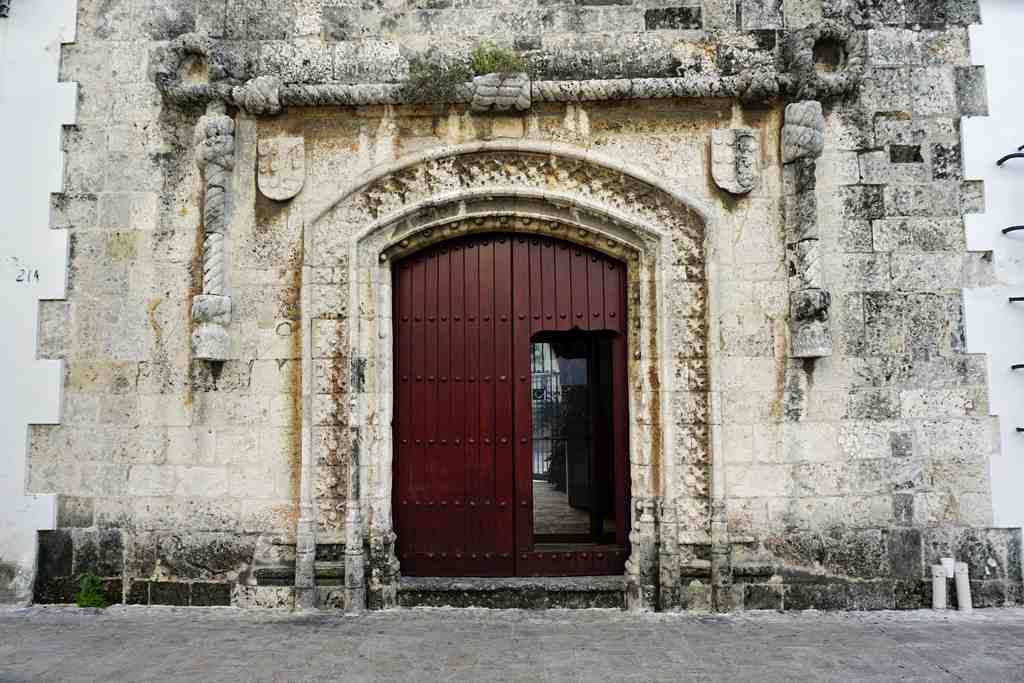
To spot the Casa del Cordón, look up ahead for a strong, pale stone building with a thick, twisted stone “cord” draped across its front, framing a heavy wooden doorway that looks like it has a story or two to tell.
Now, as you stand before this incredible facade, let’s whisk you back to the very dawn of European life in the Americas. Imagine the year is 1503-the streets of Santo Domingo thrumming with merchants, explorers, musicians, and locals. In the middle of all this action, a truly unusual house is rising from the earth-Casa del Cordón. Why is it so special? Aside from being one of the very first stone homes in the Americas, it might just be the first European house here with a whole second floor. Talk about setting the standard for the neighbors.
But the real showstopper: that thick rope carved into the front wall, giving the house its name. Don’t be fooled-it’s not for tying up the family donkey. This stone cord is the signature of the Franciscan order, a nod to Spanish tradition. In fact, similar homes in Spain show off almost identical ropes, proving that even back then, good style travelled fast. The design itself mixes gothic isabelline swagger with fancy mudéjar touches-think royal palaces of Castile but with a Caribbean twist and a breeze you don’t get in Spain.
Over the centuries, Casa del Cordón has been home to some very big names. Francisco de Garay, a mover and shaker of his time, called this place home-he hung out with Columbus, governed Jamaica, and got mixed up in the conquest of Mexico. In 1509, none other than the viceroy Diego Colón and his wife, María de Toledo, took up residence here after moving out of the Tower of Homage. Imagine them sweeping down this street, Maria’s fancy dress swishing against these very stones.
The house has also played its part in moments of high drama: during the infamous attack by the English pirate Francis Drake, the townsfolk were forced to bring their valuables here to be weighed on a grand balance Drake had set up inside-it was the city’s very own version of “Who Wants to Lose a Fortune?”.
Time flows on, and Casa del Cordón’s walls have heard it all: it was once the Real Audiencia, the main colonial court, and later belonged to descendants of a Dominican president. Peek inside today and you’ll find its tall patios wrapped in original brick arches and a hint of distant Castilla in its carved shields and mudéjar-style windows.
Right now, this stony storyteller houses the vibrant Taíno Cultural Center, where you can meet the island’s true first inhabitants-through ancient treasures, lively exhibitions, and a mission to keep their stories alive. So while the outside stands strong and old, inside, every echo, artifact, and creak is full of the energy of Santo Domingo’s past and future. If only walls could talk-though, in this case, as your trusty guide, I’m doing my best impression!




