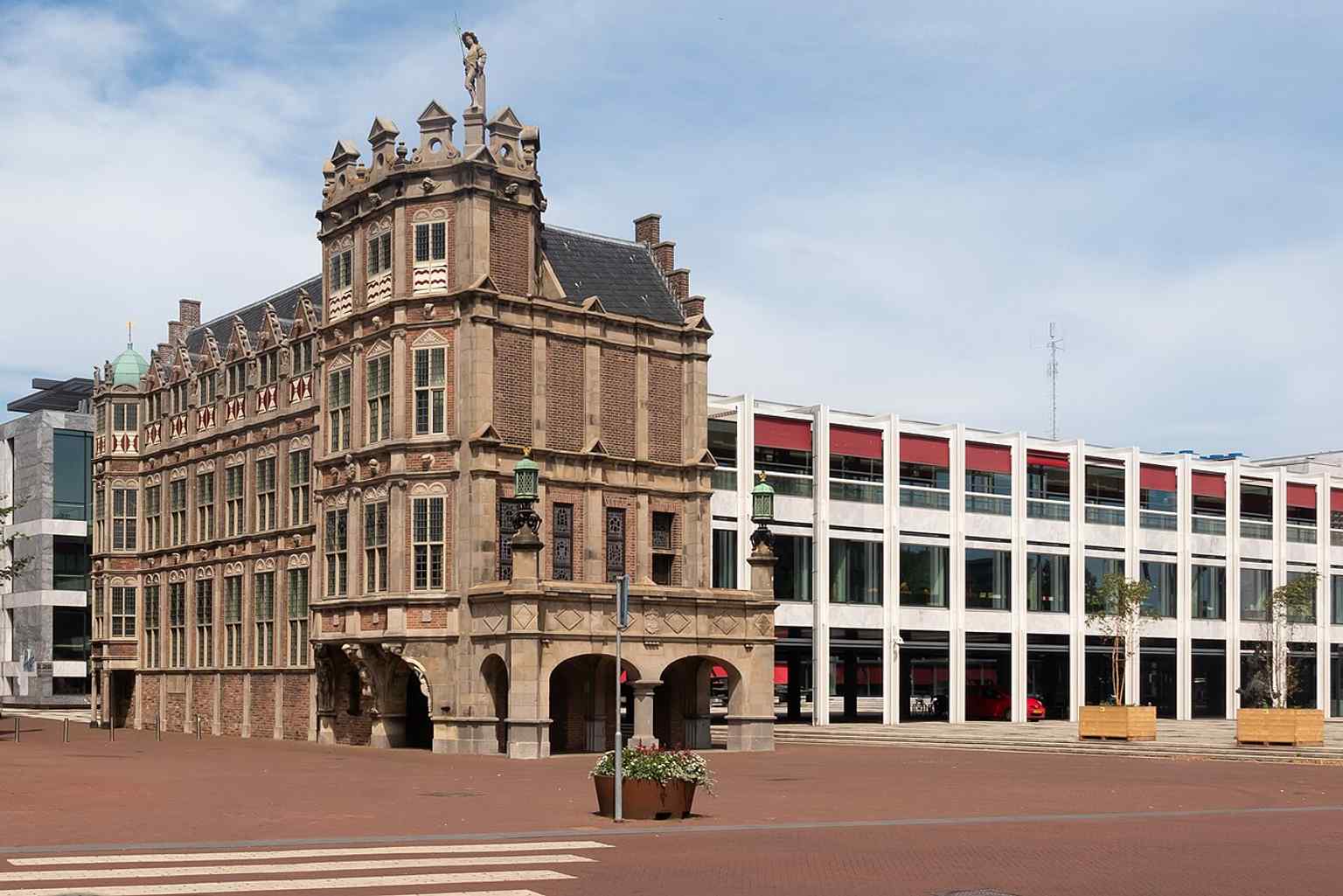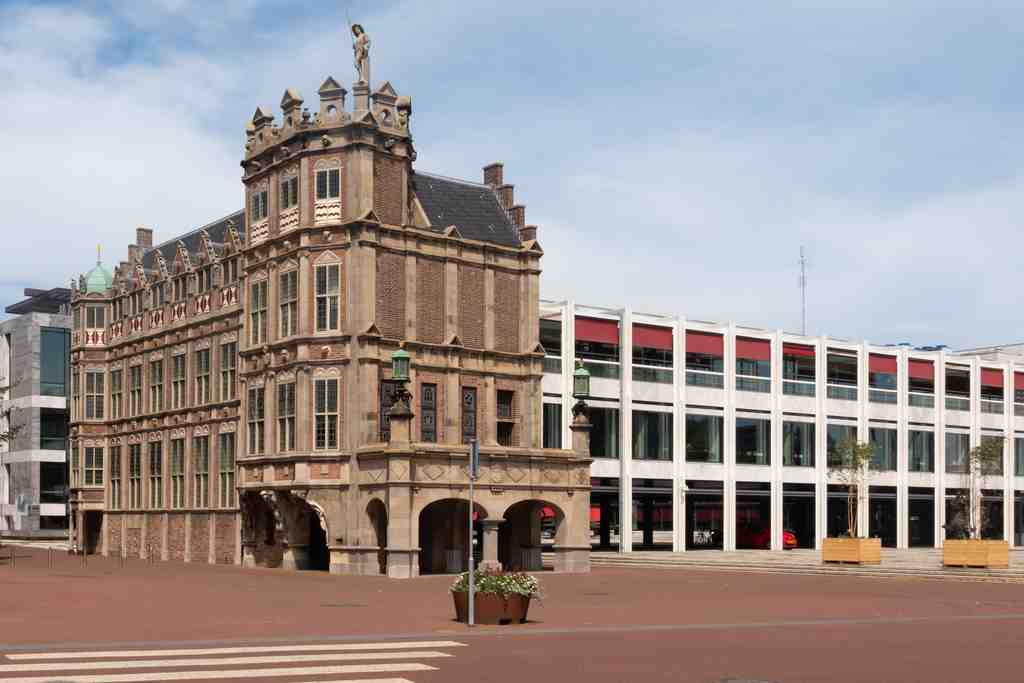
On your left stands a dark brick city castle with tall rectangular windows, a steep roofline, and eerie stone saters on the facade that gave it its unforgettable name.
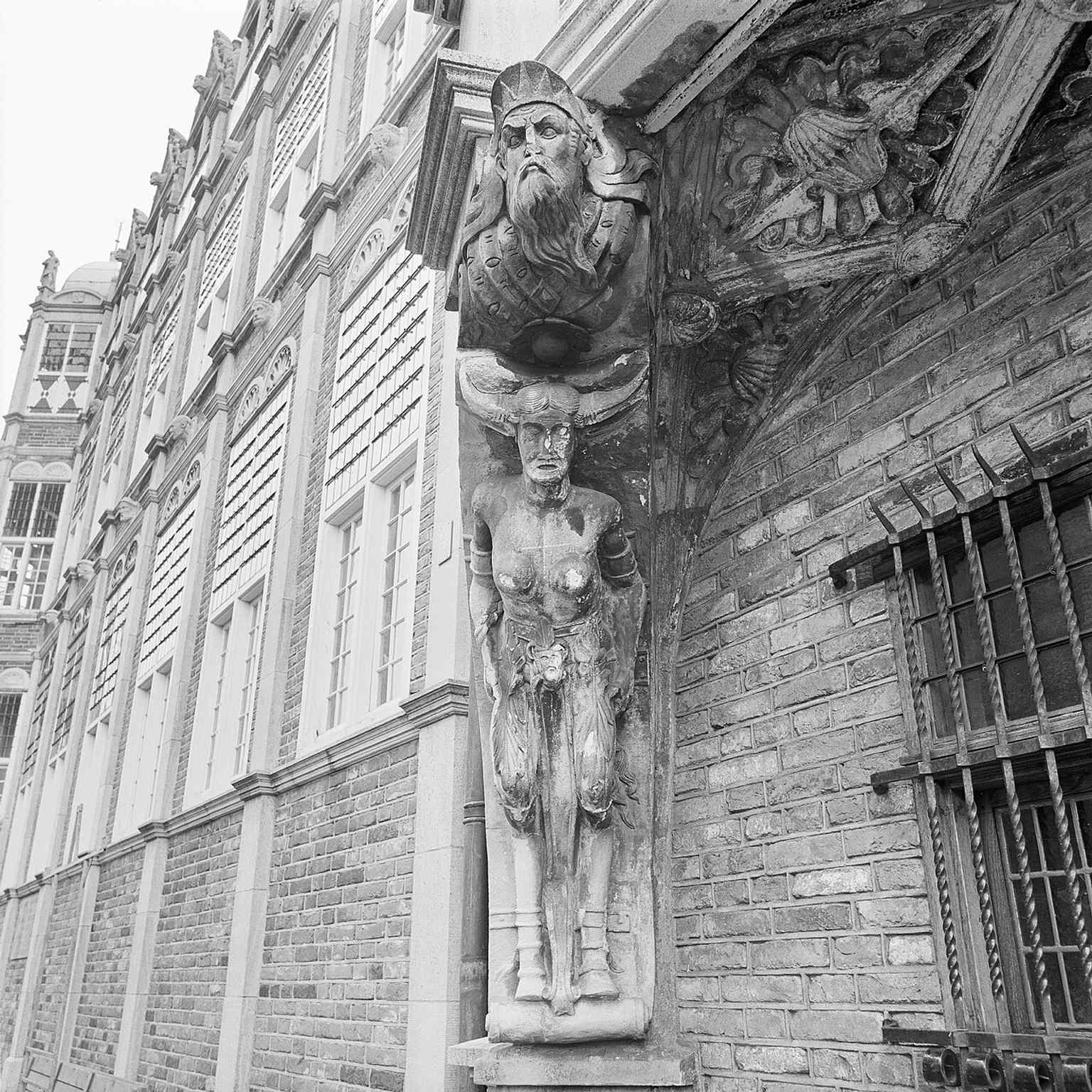
This is the Duivelshuis, the Devil’s House... and it earns that title honestly. Look up at those creatures on the front: saters, half-man and half-goat beings from classical myth, carved so grotesquely that Arnhem’s residents decided the house itself felt demonic. If the details are hard to catch from here, the image in the app shows one of those figures up close.
But the real force behind the house’s reputation was Maarten van Rossum. He was the feared military commander of Duke Charles of Guelders, and in fifteen thirty-nine he bought this property, then rebuilt it in fifteen forty-three as a statement of rank, money, and menace. His wealth came from military raids... so this elegant residence was funded, quite literally, by war booty. That changes the mood of the place, doesn’t it? What looks like aristocratic beauty also carries a threat.
The house itself is layered. Before Van Rossum, a city farm stood here, and the site belonged to Johan Mynschart, an earlier mayor of Arnhem. Behind the sixteenth-century swagger, parts of a fifteenth-century core still survive, including old cellars. So this building never belonged to just one age; Arnhem kept adding new meanings to it.
Then came another turn. In eighteen twenty-eight, the city bought the Duivelshuis for thirteen thousand four hundred seventy-five guilders, roughly a few hundred thousand euros in today’s buying power, because the old town hall had become too worn out. Two years later, a former noble residence began serving the public. The mayor still works here, and since eighteen thirty, Arnhem has honored each departing mayor with a new stained-glass window in the mayor’s room. On the ground floor, the Schepenzaal, the aldermen’s hall, welcomes wedding ceremonies. Power, ceremony, and ordinary civic life all gathered under one roof.
If you want, take a quick look at the before-and-after image in the app; it shows how this once more independent facade has been absorbed into the larger town hall complex around it.
And then the war returned in the most brutal way. During Operation Market Garden in September nineteen forty-four, German troops occupied this building and locked captured British parachutists in its cellars. Much of central Arnhem broke apart under the fighting, yet this old castle survived almost intact. After the war, those same cellars became a place of pilgrimage for veterans, relatives, and others trying to carry the weight of what happened here in September nineteen forty-four. A house built to intimidate became a house of remembrance.
From here, we’ll continue to another medieval center of power, this time shaped by church authority and legend: St. Walburga’s Church, about a three-minute walk away.