
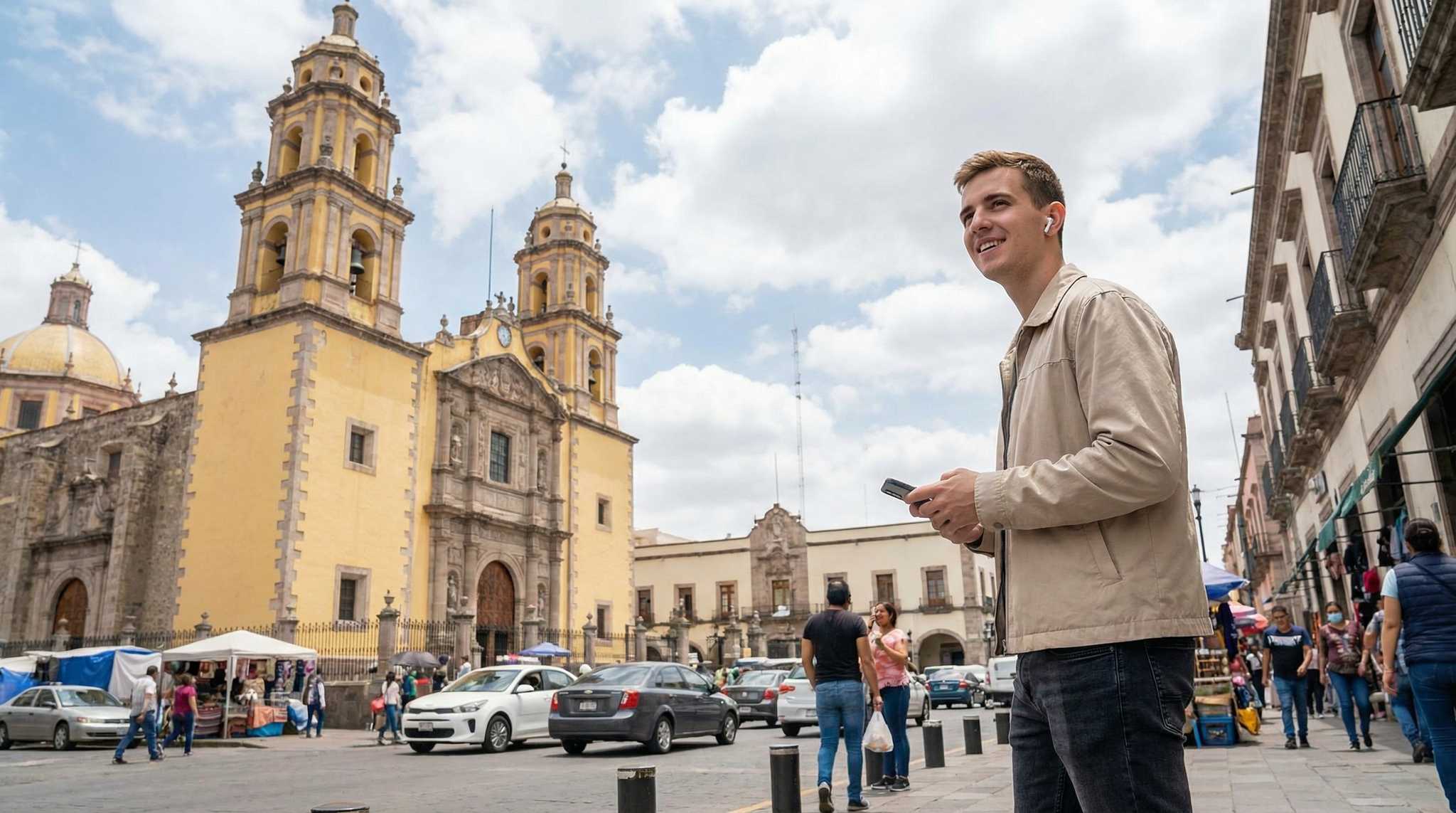
Guadalajara Audio Tour: Heroes, Legends, and Sacred Stories Unveiled
A statue’s stolen machete, earthquake-battered towers, and political whispers echo between grand facades in Guadalajara’s storied heart. Secrets hide behind centuries-old stone and in bustling market squares, waiting for footsteps like yours. Venture through this self-guided audio tour to peel back layers of drama and wonder most visitors miss—where rebellion crackled beneath city hall balconies and quiet chapels witnessed both miracles and disaster. Which mysterious hand stole the weapon from a revolution’s hero in the dead of night? What secrets lie beneath the ornate towers of La Merced after catastrophe struck? Why did city leaders keep shuffling palaces, each time sparking new rivalries and ambitions? Move from fierce bronze figures to baroque sanctuaries to palatial corridors alive with untold tales. Discover the city anew as intrigue, devotion, scandal, and hope tug you through Guadalajara’s beating core. Ready to uncover what the shadows behind every stone conceal? Begin your journey into the pulse of Guadalajara now.
Tour preview
About this tour
- scheduleDuration 30–50 minsGo at your own pace
- straighten1.3 km walking routeFollow the guided path
- location_onLocationGuadalajara, Mexico
- wifi_offWorks offlineDownload once, use anywhere
- all_inclusiveLifetime accessReplay anytime, forever
- location_onStarts at Statue of José Antonio Torres
Stops on this tour
Look for a tall, dark statue of a fierce-looking man thrusting a machete high above his head, standing on a round pedestal right in the middle of the lively square beside the…Read moreShow less
Look for a tall, dark statue of a fierce-looking man thrusting a machete high above his head, standing on a round pedestal right in the middle of the lively square beside the Corona Market. Alright, you’ve found the mighty José Antonio Torres! Imagine the clamor of the market around you, the warm afternoon sun glinting off this statue just like it would a real blade. Torres, a hero of the Mexican War of Independence, looks like he’s ready for battle-with his angry face and his hand thrust defiantly into the sky, you can almost hear him shouting a rallying cry! He wasn’t a polished general-he was a brave man of the people, nicknamed “El Amo Torres,” who led ordinary folks in rebellion against Spanish rule. Sculptor Juan José Méndez Hernández captured that wild spirit so well, you might even feel your own heart pounding a little just looking at him! Ah, but life as a statue isn’t all glory-one day in April 2017, someone made off with his machete. Imagine sneaking up here in the middle of the night to take on such a towering figure-quite the bold move! Even without his original blade, Torres stands unyielding, inviting anyone who passes to remember that electric spark of revolution. So take a moment here, right by the busy Corona Market, and let the spirit of rebellion-and maybe a whiff of fresh tortillas-wash over you. Ready for our next stop? Let’s march on!
Open dedicated page →Right in front of you, you’ll spot a grand white church with a square bell tower on the right and a beautifully carved stone doorway, all set behind a sturdy iron fence-just look…Read moreShow less
Right in front of you, you’ll spot a grand white church with a square bell tower on the right and a beautifully carved stone doorway, all set behind a sturdy iron fence-just look for the statues above the entrance and you know you’ve found the Temple of Our Lady of La Merced. Alright, take a deep breath and get ready to step back in time! Imagine it’s the 1600s and you’re standing right where the city’s very first school once stood, long before fried tacos or phone chargers ever existed. The air is filled with the chatter of monks in brown robes, busy planning something monumental. After the school disappeared, the Carmelite monks and, soon after, the Order of La Merced arrived, eager to build a new convent. You might even picture the sound of construction--as brave friars, led by Francisco de Pineda, started work that took more than seventy years to finish. But wait, things weren’t always peaceful. Fast forward to the time of the Reform Laws, when the government came along and said, “We’ll take that,” and much of the convent was unfortunately lost to expropriation. Can you feel the tension in the stones? And as if things weren’t dramatic enough, imagine the shock in 1977 when an earthquake struck, toppling a tower that had only just been added in the 1930s. Guadalajara definitely knows how to keep things interesting! Now, as you gaze up at the intricate Baroque façade, think about the three statues looking back at you: the Virgin of La Merced at the center, flanked by Santa María de Cervelló and the Blessed María de Jesús. Each one was carefully placed to protect and watch over the city’s faithful. Step closer and peek through the doorway, and you might spy the richly carved cypress wood altarpiece inside, with Mary and the infant Jesus smiling down. If only wood could talk… or at least sing! This temple is more than just beautiful architecture; it’s one of the classic stops for the “Seven Temples” pilgrimage every Holy Week. Each year, crowds shuffle by, whispering prayers and taking part in an ancient tradition--that’s lasted for centuries. So whether you’re here for the history or just hoping the friars left behind a secret recipe for peace and quiet, know that you’re standing in a spot that has witnessed centuries of faith, drama, and even a few earthquakes.
Open dedicated page →To spot the Municipal Palace of Guadalajara, look straight ahead for a grand two-story stone building with a row of large arched doorways on the ground floor, a symmetrical row of…Read moreShow less
To spot the Municipal Palace of Guadalajara, look straight ahead for a grand two-story stone building with a row of large arched doorways on the ground floor, a symmetrical row of windows above, and an ornate coat of arms rising above the central entrance. Now, let’s take you back through time in the shadow of this dignified palace! Imagine you’re standing where rulers, rebels, and dreamers have all gathered for nearly five centuries. The story of Guadalajara’s seat of government is a bit like musical chairs for architects-every time history changed, the city hall got a new address! Our tale begins in 1542, just as the city’s first stone was laid. Picture a dusty square, the clang of tools, and humble adobe walls rising under the hot Jalisco sun. This first city hall lasted just eighteen years before the growing power of Guadalajara called for something grander. Fast forward: royal judges arrived from Compostela, packing up their legal files and family cats, and settled into the new city. But space ran out again-Guadalajara was booming! The city council bounced from one building to another, each move echoing the lively drama of city life. One city hall overlooked the Plaza de la Liberación with a grand balcony flaunting three impressive coats of arms-talk about a place for speeches and scandalous gossip! Later, the council moved into what had once been the archbishop’s palace, until the relics of the old era gave way to dreams of modernity. Now, imagine 1948. Instead of sticking to the minimalist trends that were all the rage, the city chose tradition: sweeping arches, balustrades, and the proud seal of Guadalajara right above the entryway. Picture architects fussing over Doric columns and drawing up plans that reached back through time to harmonize with the surrounding historic heart of the city. The new home of local government opened its doors in 1952-a neocolonial beauty where formal meetings resound with echoes of history. Step inside in your imagination, and you’ll find solemn chambers where presidents have gathered and where statues of local heroes silently look on. And if you wander up the grand staircase, you’ll stand in the warm glow of five mighty murals by Gabriel Flores. These paintings burst with drama: you’ll see conquistadors arriving, indigenous people defending their land, the city’s foundation, struggles of faith, and the grand parades of old Guadalajara. So as you stand here, can you just sense the thousands of footsteps, secret plans, heated debates, and everyday city business that’s passed through this plaza? The Municipal Palace is more than a building; it’s a stage where centuries of Guadalajara’s triumphs and growing pains come alive, brick by brick, brushstroke by brushstroke! Even if the mayors sometimes moved out, the spirit of the city never left this spot. And now, neither have you!
Open dedicated page →


Show 8 more stopsShow fewer stopsexpand_moreexpand_less
 4
4Árbol adentro
Buy tour to unlock all 15 tracksTo spot Árbol adentro, look straight ahead for a gigantic bronze head resting on the plaza with a real tree sprouting right out of the top-honestly, you can’t miss it, unless…Read moreShow less
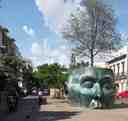
To spot Árbol adentro, look straight ahead for a gigantic bronze head resting on the plaza with a real tree sprouting right out of the top-honestly, you can’t miss it, unless you’re expecting your average potted plant! Now that we’re here, let me take you on a little adventure. Imagine walking down the busy streets of Guadalajara when suddenly, you stumble upon this larger-than-life head, serene and mysterious, as if it’s dozing off and dreaming in the open air. Designed by Mexican artist José Fors, this isn’t just any sculpture-it’s a blend of nature and imagination. The name Árbol adentro means “Tree Inside,” and, well, Fors certainly wasn’t kidding! If you peek inside, there’s an actual tree growing straight up from the heart of the statue, its branches reaching for the sky, almost like it's sharing the head’s wildest thoughts. Some folks say the tree represents how ideas can just burst out of our minds-who knew green thumbs could be this literal? And let’s be honest, it must be quite the hair-care routine. So, while you stand here, take in the city’s noises-the laughter, the distant music, the cars-and imagine what secret wisdom this giant, peaceful head might be dreaming under the sun, its leafy crown waving in the breeze. Sometimes, Guadalajara likes to plant a little surprise right in front of you. And this one is a beauty!
Open dedicated page → 5
5Casa Museo Lopez Portillo
Buy tour to unlock all 15 tracksTo spot the House López Portillo Museum, just look for the large pale green corner mansion with wrought iron balconies and tall windows-right at the intersection, you can’t miss…Read moreShow less
To spot the House López Portillo Museum, just look for the large pale green corner mansion with wrought iron balconies and tall windows-right at the intersection, you can’t miss it! Now, imagine you’re stepping through time, right here on this very sidewalk. The walls around you started rising back in the 1600s, when Guadalajara was still a young, bustling city. What you see now was once part of a grand home owned by the first bishop of Zacatecas-probably a man with both a big hat and even bigger dreams. Then, in the 1700s, the house switched hands thanks to a royal order from King Carlos III of Spain. I’m guessing royal orders sounded very impressive, perhaps like this:. As centuries rolled on, the mansion transformed into the home of the influential López Portillo family. Imagine grand dinners, laughter echoing in candle-lit rooms, and the clip-clop of fancy boots, as not one but two governors of Jalisco called this place ‘home’. It even housed a famous historian who, believe it or not, became the father of a future Mexican president. Never underestimate what stories those old walls could spill if they could talk! But hey, life isn’t always about politics-this mansion has also been a school for young girls and a hospital, hearing the whispers of nuns and the urgent footsteps of doctors. In 1982, it was reborn as the cultural heart you see today, with the President himself attending the big opening-no pressure, right? Step inside and you'll find nine elaborate rooms, bursting with Victorian chairs, golden mirrors, and sparkling chandeliers. If you’re lucky, the music room might be alive with a concert or a passionate debate. So while the outside may seem serene, trust me, there’s enough intrigue, art, and family drama inside to fill a thousand telenovelas! Ready to unlock its secrets?
Open dedicated page → 7
7Regional Museum of Guadalajara
Buy tour to unlock all 15 tracksTo spot the Regional Museum of Guadalajara, look for a large, stone building with an ornate baroque façade and several small towers lined up along the roof, right across from the…Read moreShow less
To spot the Regional Museum of Guadalajara, look for a large, stone building with an ornate baroque façade and several small towers lined up along the roof, right across from the Rotonda de los Jaliscienses Ilustres. Alright, traveler, look up at this grand, timeworn building-what you see is a real heavyweight of Guadalajara’s history! If these thick stone walls could talk, believe me, they'd have enough gossip to fill the whole city. Let’s step back into the swirling dust of 1669, when this was a seminary founded by a friar named Felipe Galindo Chávez. Imagine robed students scribbling Latin lessons while bells echoed around. Fast forward a few decades-Bishop Juan Gómez de Parada wanted something bigger and flashier, so builders with hammers banging set to work, giving us this very baroque palace, with its impressive columns and those fancy twisted pilasters by the main door. By 1810, the peaceful lessons were interrupted by a different noise-the clatter of boots and the shouts of rebel soldiers. That’s right, the War of Independence came knocking! Miguel Hidalgo’s insurgents took the plaza, and this place became a military barrack and a prison for the Spanish. There was no more school for a while, just tension and, if rumors are true, quite a bit of drama. Some say Spanish prisoners were even sacrificed here-let’s just say it makes those school detentions sound pretty tame. Years rolled on, and with Mexico full of laws and reforms, this building got shuffled between different purposes, like a piece in a historic board game. It became a library in the 1850s, then, when the Government Palace exploded in 1859-yes, exploded!-the governor literally moved his office here, probably muttering, “I just need one quiet day…” By 1869, this was the Liceo de Varones-a boys’ high school, full of youthful chatter echoing off stone halls. Then, one of Guadalajara’s legendary heroes enters: Ixca Farías, whose parents were potters, and who studied art abroad before bringing his passion for painting and culture back home. Ixca loved two things: saving art and giving dramatic speeches about pre-hispanic pottery. In the chaos of the Revolution, religious treasures and precious artwork were at risk of vanishing completely. So, in 1918, with the painter Jorge Enciso and some government help, Ixca filled these rooms with rescued masterpieces, fossils, and ancient treasures, officially opening the museum’s doors for the very first time. The museum’s collection kept growing-thanks to some lucky finds and maybe a few neighbors nosing around their attics. One of its weirdest treasures is the “Mammoth of Catarina,” discovered by farmers digging for watermelons. Picture it: they’re swinging their hoes and, BAM! They hit a mammoth bone sticking out of the dirt. Rumor had it the ground was haunted by spirits, but as it turns out, it was just full of ancient bones. Now the skeleton sits inside as a not-so-gentle reminder to always watch where you dig! As you gaze at the heavy wooden doors and those mysterious windows, know that this museum is more than just a building-it's a time traveler’s suitcase, bursting with relics. From fossilized sabre-toothed cats to Mesoamerican pottery and paintings by famous masters like Diego Rivera or the legendary Dr. Atl, the inside is a maze of history. On sunny days, search for the five courtyards, each cooled by bubbling fountains, and peek up at the chapel dome, which guards its own stories in stained-glass light. Over the years, this place has helped launch the careers of famous painters and has become a cultural powerhouse for the city. Today, it’s led by Blanca Alicia Martínez Cano, an academic who brings her own passion to the halls first shaped by Ixca over a hundred years ago. Standing outside, imagine all the footsteps over time-students, soldiers, governors, artists, and the occasional startled mammoth digger-each leaving a trace on these old stones. If you’re ready, head inside and see which piece of history speaks to you. Just watch out for any prehistoric jaws lurking in the shadows! Intrigued by the architecture, ixca farías: first jalisco museologist of the twentieth century or the exposition? Make your way to the chat section and I'll be happy to provide further details.
Open dedicated page →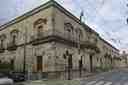 8
8State of Jalisco Government Building
Buy tour to unlock all 15 tracksTo spot the Jalisco Legislative Palace, look for the large, two-story stone building right on the corner, with a series of iron balconies and a Mexican flag proudly waving from…Read moreShow less
To spot the Jalisco Legislative Palace, look for the large, two-story stone building right on the corner, with a series of iron balconies and a Mexican flag proudly waving from the rooftop-it's directly facing Plaza de la Liberación. Now, step a little closer and get ready for a tale of political drama, hidden secrets, and enough relocations to make any moving company weep! Imagine the air carrying the echoes of debates and decisions just behind those thick stone walls. Right in front of you stands the official home of the Congress of Jalisco-a place where the big choices for the state get made. But did you know it wasn’t always here? Picture Guadalajara in 1823, after independence: the very first legislative palace was squeezed into a creaky old city hall, “Casa del Cabildo,” just across the plaza. Lawmakers gathered inside, always nervously watching the ceiling for falling tiles. Eventually, the roof got so bad they had to seek shelter elsewhere, and for a dramatic twist, the Assembly ended up bunking in the nearby San Francisco convent for a month. But not even a convent could hold them for long-within years, they were off to Lagos de Moreno, dodging the political chaos that made Guadalajara’s history so colorful. For decades, the search for a proper home felt like a telenovela-false starts, broken deals, and near-misses aplenty. Leaders eyed the old Santo Tomás Church as a good option as early as 1827, but not until 1870 did the legislators finally set foot inside. And even then, they didn’t stay put! At one point, the whole legislative show moved to the Governor’s Palace, before briefly heading to Ciudad Guzmán. Resilient or indecisive? You decide! Now, remember the stories hiding in the stones right in front of you. The corner you see, with its grand old-style facade, was once a lavish 19th-century mansion owned by Francisco Velarde, a man so loyal to Emperor Maximilian that, after the Empire fell, he gained a few very dangerous enemies-so dangerous he met his end right here, by order of General Ramón Corona. After that, the building just couldn’t settle down: it was a home, then anything people needed-then, combined with the neighboring house, it became the perfect home base for lawmakers in the 1980s. This is a building layered with history. One half was an aristocrat’s lost dream, the other, once the house of Guadalajara’s very first bishop and then a royal tobacco factory. Fast forward to 1982, and after some quick renovations (and some legendary Guadalajara construction dust), the new Legislative Palace was opened by President López Portillo himself. Step inside today, and you’ll find not just lawmakers at work, but oil portraits of famous Jalisco figures, sculptures, and even documents signed by Morelos and Hidalgo, two national heroes. And if you think the drama stopped after opening, think again! The question of who the palace belonged to-executive power, legislative power, government, or the people-was only settled in 2021 after a last-minute transfer of the deed. Turns out, when it comes to the halls of power, there’s always another chapter waiting to be written. So, take a good look-hundreds of years, countless relocations, and a healthy dose of mystery live right here in these old stone walls.
Open dedicated page → 9
9Guadalajara's Cathedral
Buy tour to unlock all 15 tracksLook for the massive stone building with two tall, bright yellow spires reaching for the sky and a grand dome behind, right in front of you-it’s impossible to miss, towering over…Read moreShow less
Look for the massive stone building with two tall, bright yellow spires reaching for the sky and a grand dome behind, right in front of you-it’s impossible to miss, towering over the square like a king wearing a golden crown. Alright, time to travel through centuries-welcome to the spectacular Guadalajara Cathedral! Can you smell the faint incense in the air? Listen carefully-you might just hear the echoes of a bell toll, or maybe even the whispers of an old architect still arguing with the wind about spire height. The story begins way back in 1541, when the very first church on this site was no more than humble adobe and palm, a far cry from the architectural showstopper in front of you now. Not long after, in true dramatic flair, gunfire from a raucous celebration fell back to earth and set the roof ablaze. If you’ve ever wondered how NOT to celebrate a holiday-well, there you go. With the church damaged, the city folks must have dusted off their hands and thought, “Let’s do this right,” leading to a cathedral worthy of the city’s dreams. That new cathedral, started in 1561 by the master Martín Casillas-on commission from the Spanish King himself!-would take nearly 60 years and plenty of patience, but it was finally completed in 1618. But, as in all good stories, the cathedral’s troubles weren’t over. The night of May 31, 1818, brought a great earthquake that toppled the towers and the majestic dome, leaving the city’s pride in ruins. Imagine the dust, the shock, and then the resilient determination to rebuild. By 1849? Another quake. Those towers just couldn’t catch a break! It was Guadalajara’s own Manuel Gómez Ibarra-already famous for the impressive Hospicio Cabañas-who finally gave the cathedral its distinctive yellow spires in 1854 after three years of hard work and, I imagine, quite a few sighs of exasperation. The entire restoration cost 33,521 pesos; I’m not sure if that includes coffee for the workers, but it should! Even after all this, the cathedral sits in a sort of geological soap opera. It’s survived earthquakes in 1932, 1957, 1979, 1985, 1995, and 2003-if those stones could talk, they’d probably ask for hazard pay! Today, the north tower leans just slightly and the dome shows scars from all its battles, but the building stands, still the beating heart of Guadalajara. Now, take a closer look at its façade. The blend of Spanish Renaissance elegance with those pointy “neo-Gothic” towers makes it an icon. See those yellow tiles and blue accents sparkling in the sun? At ground level, the massive stone columns and the three huge front doors seem ready to swallow you into a world of history. Inside, the marble and silver altar gleams under beams of colored light from French stained glass. All around, chapels are dedicated to saints and miracles, each with its own story, and paintings done by celebrated Mexican artists depict tales of faith and wonder. There’s a touch of tragedy and mystery too: the cathedral is home to the mummified body of Santa Innocencia, a young girl whose heartbreaking legend still stirs the local imagination. Bishops, cardinals, and even the assassinated Cardinal Posadas Ocampo rest here, deepening the sense of sacred memory. So as you stand here, surrounded by the bustle and color of modern Guadalajara, feel how the centuries layer together-the drama of fires, the clatter of stones after earthquakes, the resonance of prayers, and the vibrant pride of a city that keeps rebuilding, no matter what history throws at it. And, if the towers tremble a bit the next time you visit, just remember, they’ve seen worse! Welcome to the living, breathing soul of Guadalajara.
Open dedicated page → 10
10Statue of Miguel Hidalgo y Costilla, Guadalajara
Buy tour to unlock all 15 tracksLook just ahead-towering above the street, you’ll see a large bronze statue of a man in a dramatic pose, clutching broken chains in both hands and standing atop a stone pedestal,…Read moreShow less
Look just ahead-towering above the street, you’ll see a large bronze statue of a man in a dramatic pose, clutching broken chains in both hands and standing atop a stone pedestal, right in front of the grand Legislative Palace. Now, take a good look at Miguel Hidalgo y Costilla-he’s the reason people here can shout “Viva México!” with pride. Imagine it’s the early 1800s. The air is thick with the whispers (and a few shouts) of revolution. Hidalgo, the man in front of you, isn’t calmly striking a pose for the sculptor; he’s angry, voice booming, calling out for freedom, chains in his hands snapping apart. Those chains aren’t just props-they’re the true symbol of breaking away from years of suffering and slavery. You can almost hear the crowd holding its breath, watching this priest lead the first cry for Mexico’s independence. When this statue was unveiled in 1952, people were amazed-it’s a full 4 meters tall! The artist, Ignacio Díaz Morales, made sure you’d never forget Hidalgo’s passion or his fury. Take in the bronze shine, the determined face, the wide stance. Don’t be surprised if you feel a burst of goosebumps. Standing here, you’re not just looking at a statue-you’re witnessing the moment when all the rules broke and hope marched into real life. And hey, if your selfie here comes out looking heroic, just blame Hidalgo for the inspiration!
Open dedicated page → 11
11Degollado Theater
Buy tour to unlock all 15 tracksRight ahead, you’ll spot the grand Degollado Theater by looking for a wide stone building with tall columns and a white sculpted triangle at the top, right beyond the splashing…Read moreShow less
Right ahead, you’ll spot the grand Degollado Theater by looking for a wide stone building with tall columns and a white sculpted triangle at the top, right beyond the splashing fountain in Plaza de la Liberación. Welcome to Guadalajara’s crown jewel of the arts-Degollado Theater! Let’s imagine the mid-1800s for a second: bustling city streets, gentlemen in top hats, ladies in elegant dresses, and all of Guadalajara buzzing with one big question: “When will we get a theater worthy of our dreams?” The story begins in 1855, when the visionary Antonio Pérez Verdía pitched the idea to Governor Santos Degollado. The city was yearning for a grand stage-a place where culture, music, and the passion of the people could shine. Without missing a beat, Governor Degollado signed the approval faster than you can say “Bravo!” and, come March 1856, he laid the very first stone of this now-iconic building. But, as in every great drama, there was a twist. Construction slowed to a crawl-wars, politics, and money woes couldn’t resist making a special guest appearance. Still, in November 1861, with progress finally resuming, the city’s new governor decided to change the name to Degollado Theater to honor the late general, Santos Degollado, who’d bravely fallen in battle just months before. Oddly, no one paid much attention to the new name at the first inauguration-another plot twist! Only in December 1866 did the theater truly take on its now-famous name, as the city returned to Liberal hands after much political back-and-forth. Picture the night of September 13, 1866. The air is thick with anticipation. A chorus of street vendors shout, horses clop on cobblestones, and hundreds squeeze close to catch a glimpse of the glamorous opening night. On stage? The legendary soprano Ángela Peralta, known as the “Mexican nightingale,” wowing the crowd with Gaetano Donizetti’s Lucia di Lammermoor. A grand debut-even though, just between us, the theater was only half-finished! Finished or not, the show had to go on-literally. Over the decades, the Degollado Theater had FOUR more inaugurations after being remodeled, in 1880, 1910, 1941, and 1964. You might say it’s the only theater that loves a dramatic entrance as much as any of its performers. Step inside, and you’d find a spectacle of red and gold. Imagine the soft glow of chandeliers, gilded balconies, and paintings so lush you’d think you’d entered a dream. The theater’s artist friends left their mark, too: Jacobo Gálvez, Gerardo Suárez, and Carlos Villaseñor painted a jaw-dropping mural inspired by Dante’s Divine Comedy. Years later, a golden eagle with a Mexican flag in its talons soared above center stage, while the walls slowly donned their iconic golden glow. In 1909, Roberto Montenegro added a crystal chandelier that could make even the clumsiest a dancer want to waltz under its light. Every inch of this place is the result of decades of artist teamwork, rivalry, and probably more ladders than you can count. And outside-well, just look up! Sixteen Corinthian columns lift the entrance skyward, and the white artistic relief depicts Apollo with his nine muses. Montenegro designed this dramatic mosaic in the 1950s-no wonder the building looks ready to host gods and demigods for opening night. Along the frieze, squint and find the phrase: "Que nunca llegue el rumor de la discordia"-may the rumor of discord never arrive. Fun fact: that’s the closest thing a theater can have to a “no drama backstage” sign. And yet, history lives on its walls. At the side facing Plaza Fundadores, don’t miss the monumental bronze relief showing the city’s founders-a tribute by Rafael Zamarripa, as tall as three people standing on each other’s shoulders! As you stand outside, imagine the echoes of applause, the tap of dance shoes, and the murmurs of excitement from generations of performers-Juan Gabriel, Plácido Domingo, Anna Pavlova, Vicente Fernández, Ravi Shankar-even a magician or two! Today, Degollado Theater pulses as the heart of Jalisco’s music, dance, and celebration-home to the city’s philharmonic, mariachi festivals, ballets, and unforgettable nights. So take a bow-you’ve made it to Guadalajara’s grandest stage, where every stone, every story, and every note still sings!
Open dedicated page →
Frequently asked questions
How do I start the tour?
After purchase, download the AudaTours app and enter your redemption code. The tour will be ready to start immediately - just tap play and follow the GPS-guided route.
Do I need internet during the tour?
No! Download the tour before you start and enjoy it fully offline. Only the chat feature requires internet. We recommend downloading on WiFi to save mobile data.
Is this a guided group tour?
No - this is a self-guided audio tour. You explore independently at your own pace, with audio narration playing through your phone. No tour guide, no group, no schedule.
How long does the tour take?
Most tours take 60–90 minutes to complete, but you control the pace entirely. Pause, skip stops, or take breaks whenever you want.
What if I can't finish the tour today?
No problem! Tours have lifetime access. Pause and resume whenever you like - tomorrow, next week, or next year. Your progress is saved.
What languages are available?
All tours are available in 50+ languages. Select your preferred language when redeeming your code. Note: language cannot be changed after tour generation.
Where do I access the tour after purchase?
Download the free AudaTours app from the App Store or Google Play. Enter your redemption code (sent via email) and the tour will appear in your library, ready to download and start.
If you don't enjoy the tour, we'll refund your purchase. Contact us at [email protected]
Checkout securely with 


