
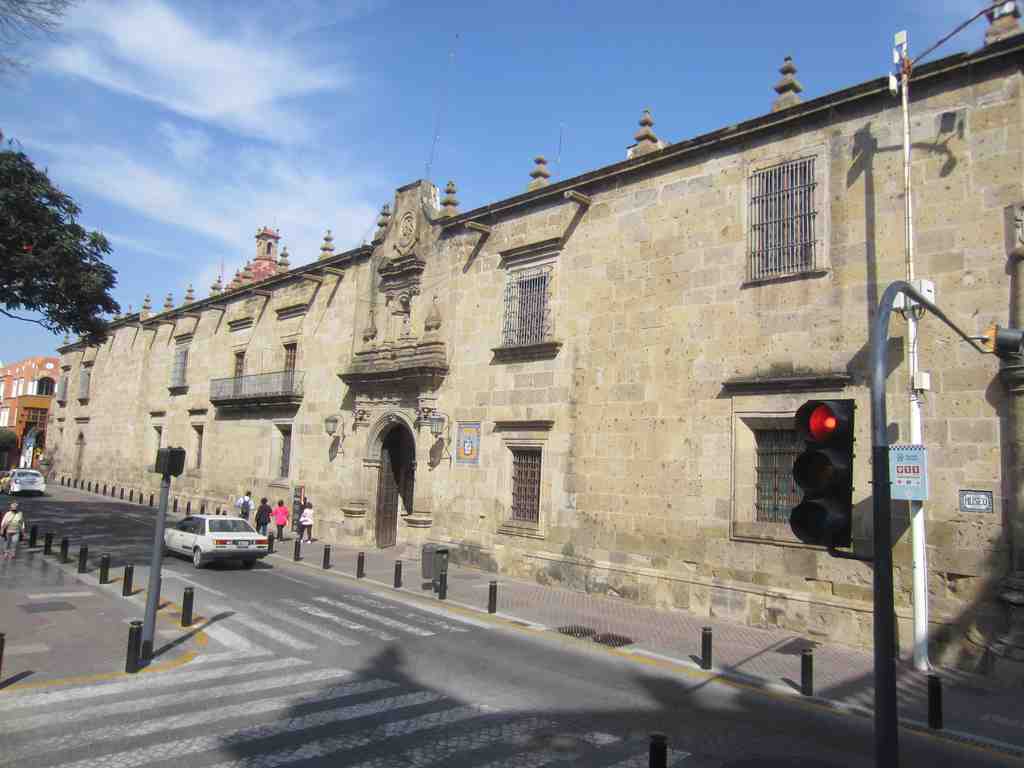
To spot the Regional Museum of Guadalajara, look for a large, stone building with an ornate baroque façade and several small towers lined up along the roof, right across from the Rotonda de los Jaliscienses Ilustres.
Alright, traveler, look up at this grand, timeworn building-what you see is a real heavyweight of Guadalajara’s history! If these thick stone walls could talk, believe me, they'd have enough gossip to fill the whole city. Let’s step back into the swirling dust of 1669, when this was a seminary founded by a friar named Felipe Galindo Chávez. Imagine robed students scribbling Latin lessons while bells echoed around. Fast forward a few decades-Bishop Juan Gómez de Parada wanted something bigger and flashier, so builders with hammers banging set to work, giving us this very baroque palace, with its impressive columns and those fancy twisted pilasters by the main door.
By 1810, the peaceful lessons were interrupted by a different noise-the clatter of boots and the shouts of rebel soldiers. That’s right, the War of Independence came knocking! Miguel Hidalgo’s insurgents took the plaza, and this place became a military barrack and a prison for the Spanish. There was no more school for a while, just tension and, if rumors are true, quite a bit of drama. Some say Spanish prisoners were even sacrificed here-let’s just say it makes those school detentions sound pretty tame.
Years rolled on, and with Mexico full of laws and reforms, this building got shuffled between different purposes, like a piece in a historic board game. It became a library in the 1850s, then, when the Government Palace exploded in 1859-yes, exploded!-the governor literally moved his office here, probably muttering, “I just need one quiet day…”
By 1869, this was the Liceo de Varones-a boys’ high school, full of youthful chatter echoing off stone halls. Then, one of Guadalajara’s legendary heroes enters: Ixca Farías, whose parents were potters, and who studied art abroad before bringing his passion for painting and culture back home. Ixca loved two things: saving art and giving dramatic speeches about pre-hispanic pottery. In the chaos of the Revolution, religious treasures and precious artwork were at risk of vanishing completely. So, in 1918, with the painter Jorge Enciso and some government help, Ixca filled these rooms with rescued masterpieces, fossils, and ancient treasures, officially opening the museum’s doors for the very first time.
The museum’s collection kept growing-thanks to some lucky finds and maybe a few neighbors nosing around their attics. One of its weirdest treasures is the “Mammoth of Catarina,” discovered by farmers digging for watermelons. Picture it: they’re swinging their hoes and, BAM! They hit a mammoth bone sticking out of the dirt. Rumor had it the ground was haunted by spirits, but as it turns out, it was just full of ancient bones. Now the skeleton sits inside as a not-so-gentle reminder to always watch where you dig!
As you gaze at the heavy wooden doors and those mysterious windows, know that this museum is more than just a building-it's a time traveler’s suitcase, bursting with relics. From fossilized sabre-toothed cats to Mesoamerican pottery and paintings by famous masters like Diego Rivera or the legendary Dr. Atl, the inside is a maze of history. On sunny days, search for the five courtyards, each cooled by bubbling fountains, and peek up at the chapel dome, which guards its own stories in stained-glass light.
Over the years, this place has helped launch the careers of famous painters and has become a cultural powerhouse for the city. Today, it’s led by Blanca Alicia Martínez Cano, an academic who brings her own passion to the halls first shaped by Ixca over a hundred years ago.
Standing outside, imagine all the footsteps over time-students, soldiers, governors, artists, and the occasional startled mammoth digger-each leaving a trace on these old stones. If you’re ready, head inside and see which piece of history speaks to you. Just watch out for any prehistoric jaws lurking in the shadows!
Intrigued by the architecture, ixca farías: first jalisco museologist of the twentieth century or the exposition? Make your way to the chat section and I'll be happy to provide further details.


