AudaTours logoAudaTours

Stop 14 of 17

Vilnius Cathedral

headphones 04:00 Buy tour to unlock all 19 tracks
Vilnius Cathedral
Vilnius Cathedral
Vilnius CathedralPhoto: Scotch Mist, Wikimedia Commons, CC BY-SA 4.0. Cropped & resized.

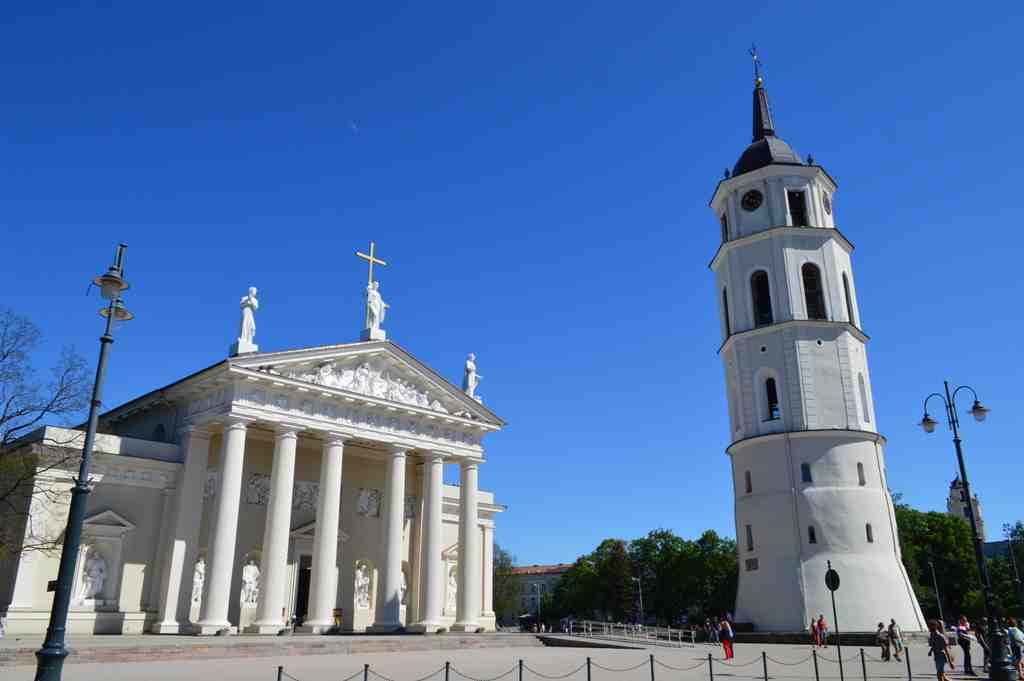
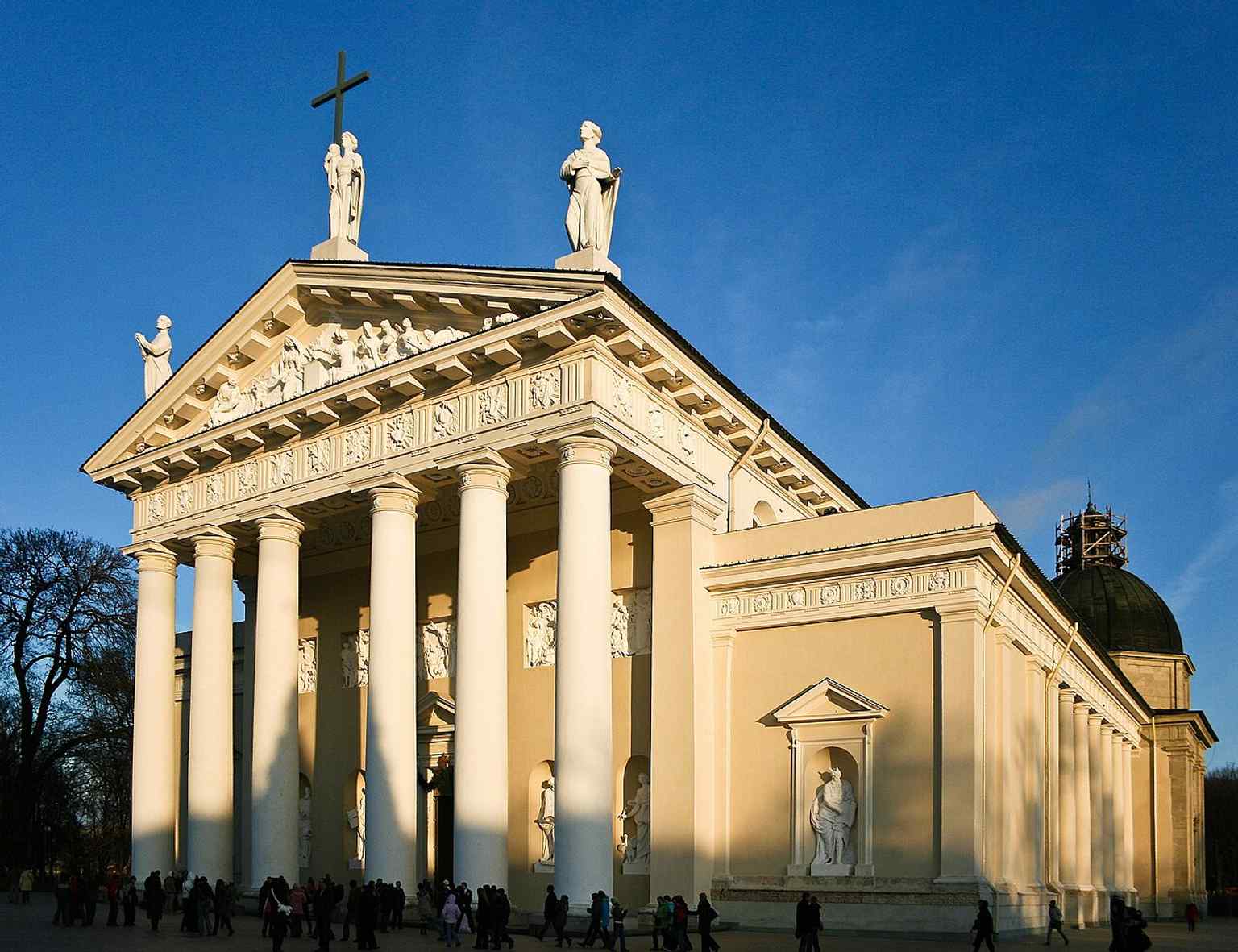
On your left, Vilnius Cathedral is a broad white stone building shaped like a classical temple, with tall columns across the front and three statues standing along the roofline.

For all its calm symmetry... this is one of the most rewritten places in Vilnius. The official name is the Cathedral Basilica of Saint Stanislaus and Saint Ladislaus, and it became the main Catholic church in Lithuania. But this ground started arguing about belief long before the present facade showed up. Sixteenth-century writers claimed a stone temple to Perkūnas, the Baltic thunder god, once stood here. Then King Mindaugas, after converting in twelve fifty-one, likely ordered the first cathedral. After his death in thirteen sixty-three, the site returned to pagan worship. So yes, even Lithuania’s most important Catholic church began as a place with commitment issues.

In thirteen eighty-seven, when Lithuania officially accepted Christianity, builders raised a new Gothic cathedral here. That one burned. Vytautas the Great then pushed forward a larger Gothic version for his planned coronation in fourteen twenty-nine. The coronation never happened, but the building still mattered. Inside these walls, Lithuanian rulers were ceremonially affirmed, and until fifteen sixty-nine the bishop placed Gediminas’ Cap, the coronation cap of Lithuanian rulers, on the monarch’s head here. In fifteen eighty, Bishop Merkelis Giedraitis presented Stephen Báthory with a sword and a pearl-decorated hat blessed by Pope Gregory the Thirteenth, a ceremony meant to say, politely but firmly, that Lithuania still considered itself very much somebody.

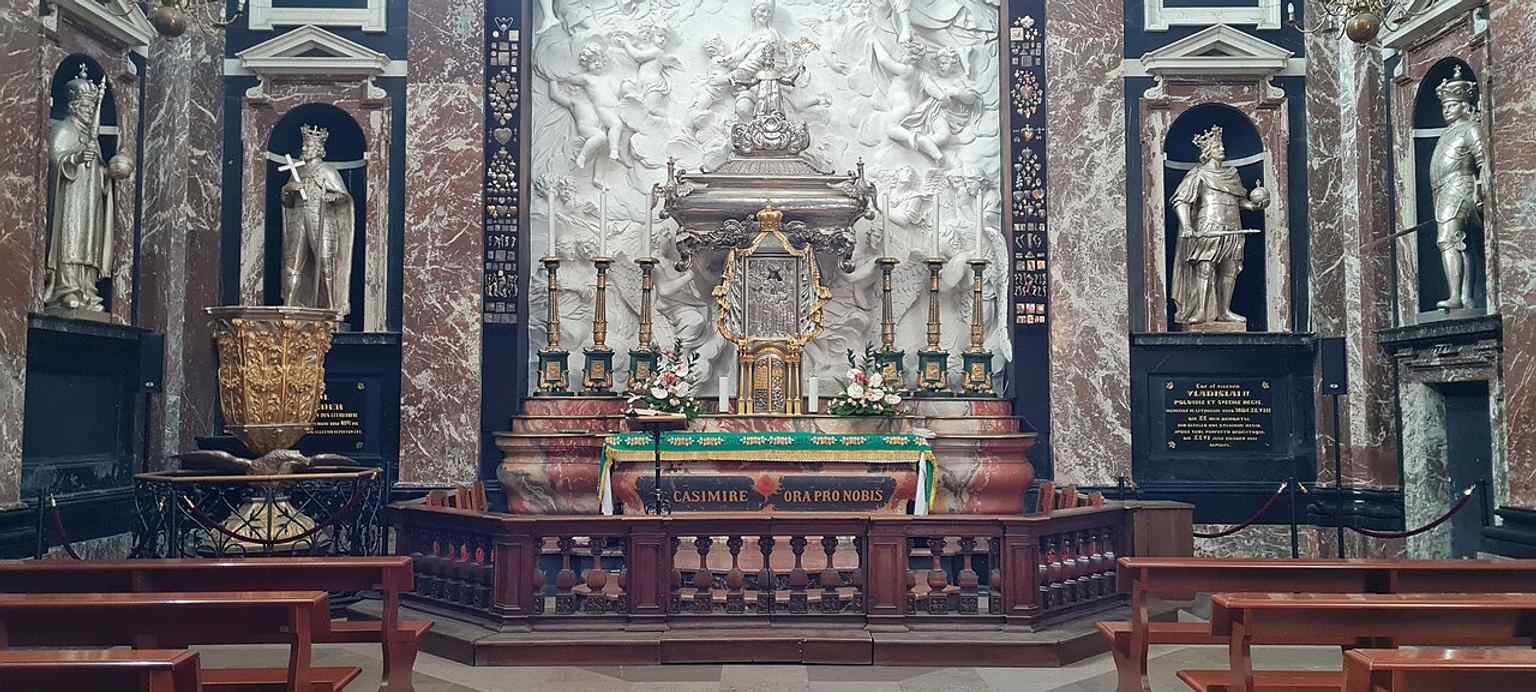
This cathedral also gathered memory into its side chapels and underground burial chambers. Vytautas rests here. So do Saint Casimir, Alexander Jagiellon, and Barbara Radziwiłł. In Saint Casimir’s Chapel, legend says a relic of Saint Stanislaus from Krakow may be hidden, tying Vilnius to Polish devotion as tightly as politics ever did. If you want a peek at that chapel’s rich Baroque interior, have a look at the image in the app.

The building you see now owes a lot to Laurynas Gucevičius. In seventeen sixty-nine, a southern tower collapsed, smashed a neighboring chapel, and killed six people. Bishop Ignacy Jakub Massalski then ordered a total rebuilding, and Gucevičius gave the cathedral this severe Neoclassical form in the late eighteenth century. It looks steady, even rational... which is impressive for a place that survived fires, war damage, Soviet use as a warehouse, and the stripping of its copper roof under German occupation in nineteen sixteen.

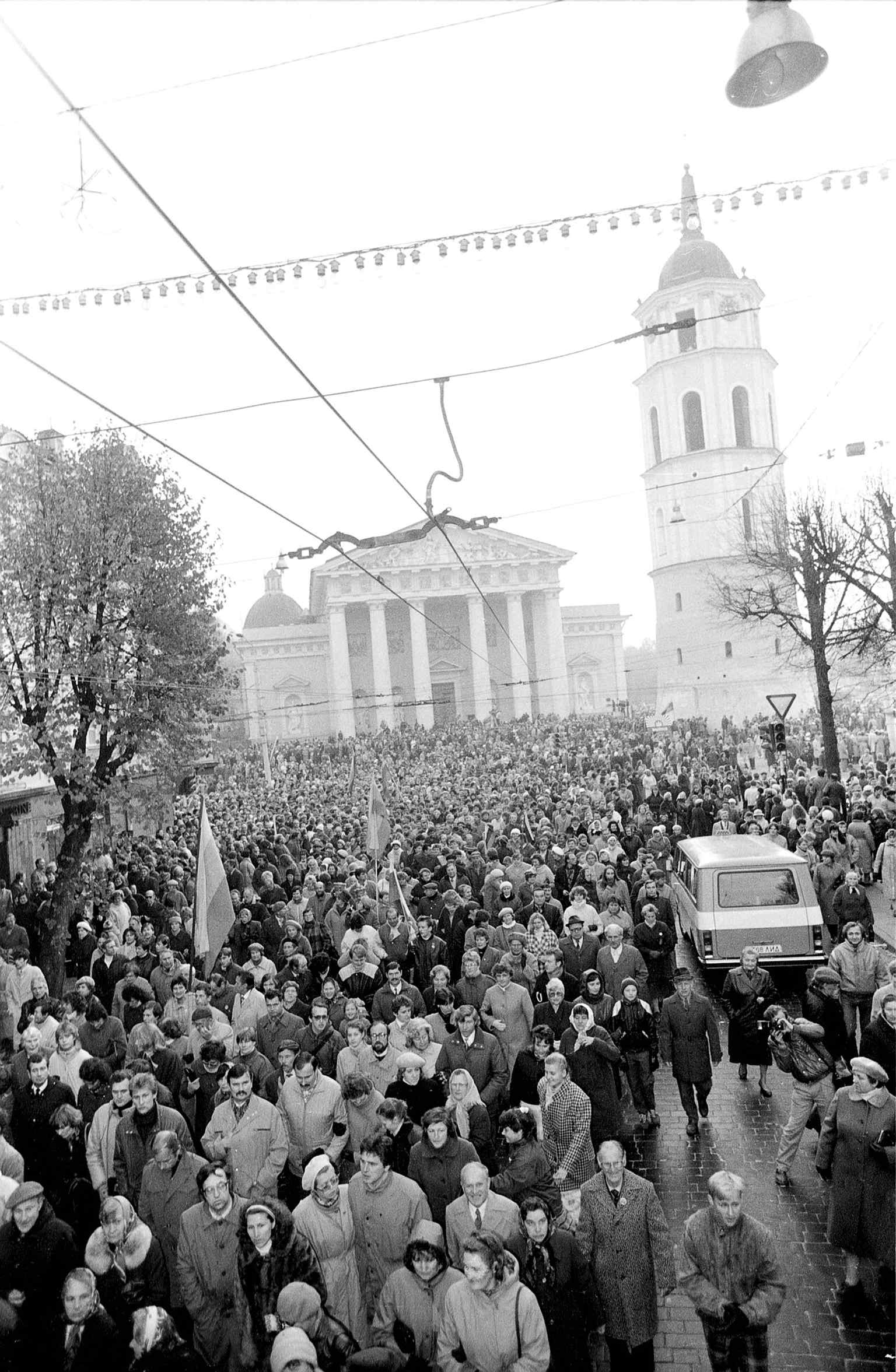
And still it kept becoming itself again. In nineteen eighty-eight, when the cathedral returned to believers, Mass was celebrated outside at the doors. During the reconsecration in nineteen eighty-nine, Archbishop Julijonas Steponavičius lay crosswise before the altar in public repentance. Modern Lithuania still comes here after presidential inaugurations too. So this is not just a church. It is where pagan memory, royal ritual, Catholic devotion, and national ceremony keep sharing the same address... alongside the Orthodox and Jewish centers that shaped Vilnius too.

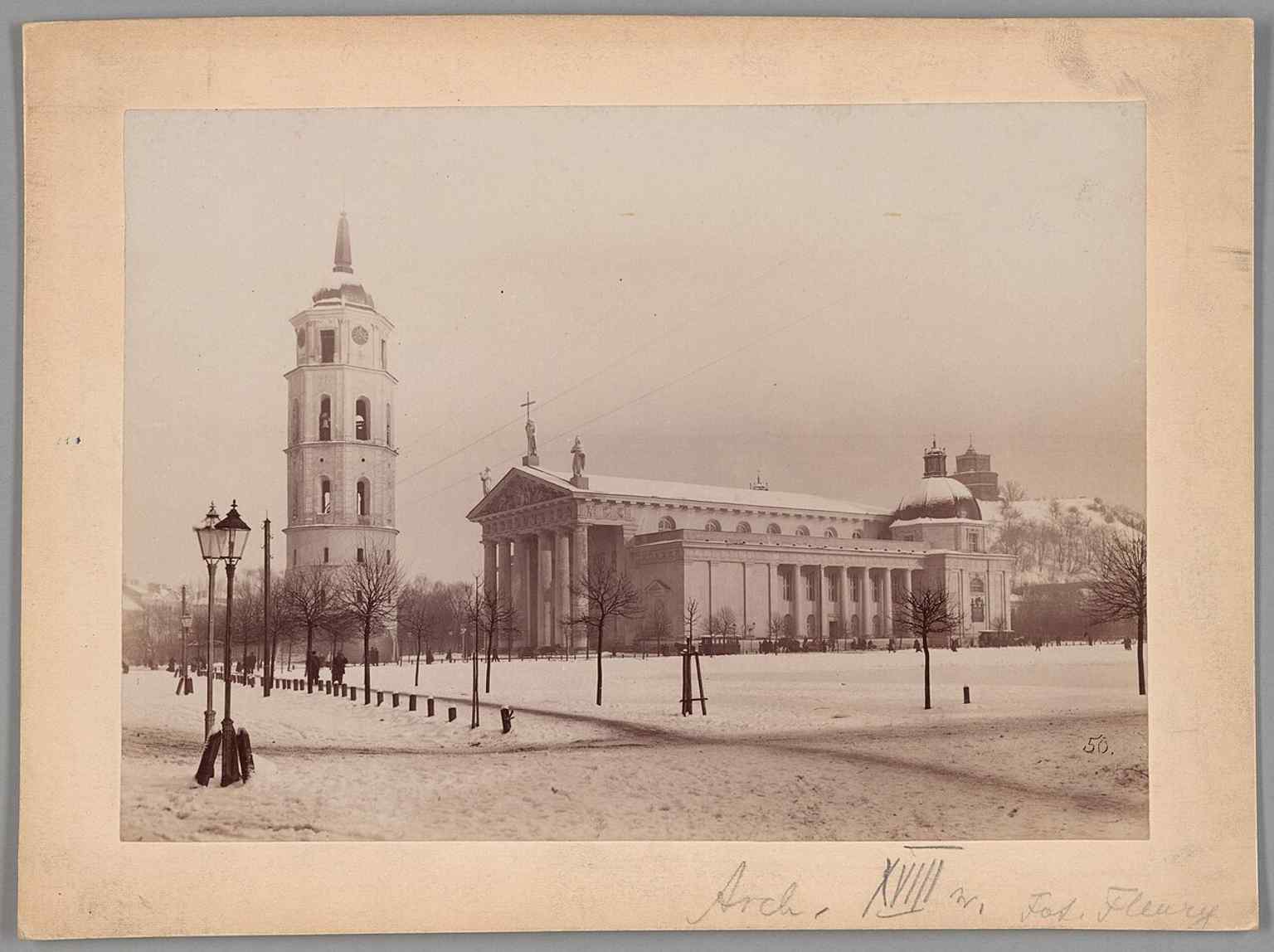
If you check the before-and-after image in the app, the cathedral stays almost uncannily steady while the horse-drawn square around it turns into the open plaza you see now.

From here, power steps out from prayer almost without a gap, because the Palace of the Grand Dukes stands right beside it.

If you want to go inside later, the cathedral usually opens from seven in the morning to six in the evening, and until seven on Sundays.
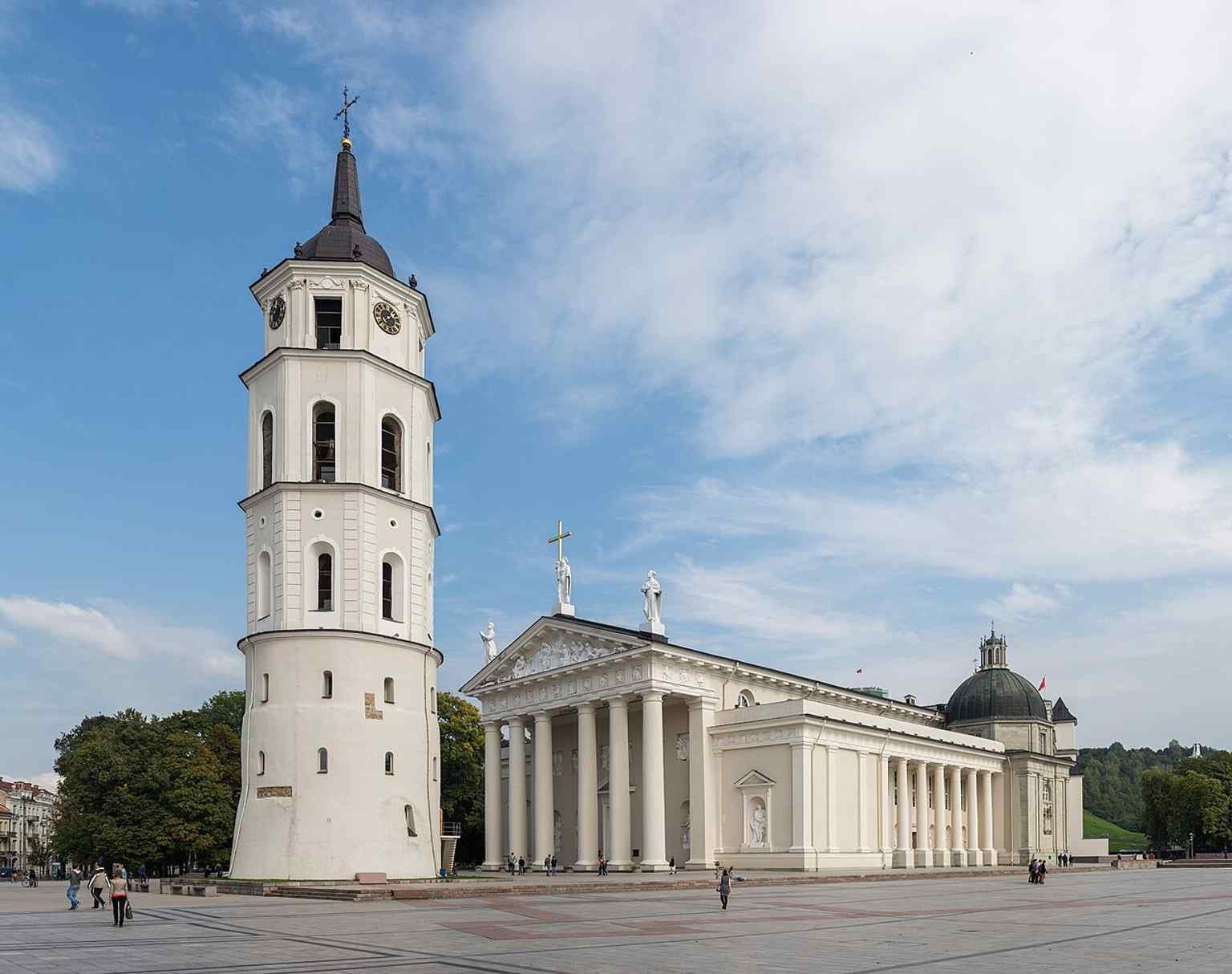
The cathedral and its belfry from the southwest — a classic view of Vilnius Cathedral beside Cathedral Square, the heart of Lithuania’s Catholic life.
The cathedral and its belfry from the southwest — a classic view of Vilnius Cathedral beside Cathedral Square, the heart of Lithuania’s Catholic life.Photo: Diliff, Wikimedia Commons, CC BY-SA 3.0. Cropped & resized.
The west facade in winter light — this neoclassical front reflects Laurynas Gucevičius’s 18th-century rebuild after earlier fires and collapses.
The west facade in winter light — this neoclassical front reflects Laurynas Gucevičius’s 18th-century rebuild after earlier fires and collapses.Photo: Juliux, Wikimedia Commons, CC BY-SA 3.0. Cropped & resized.
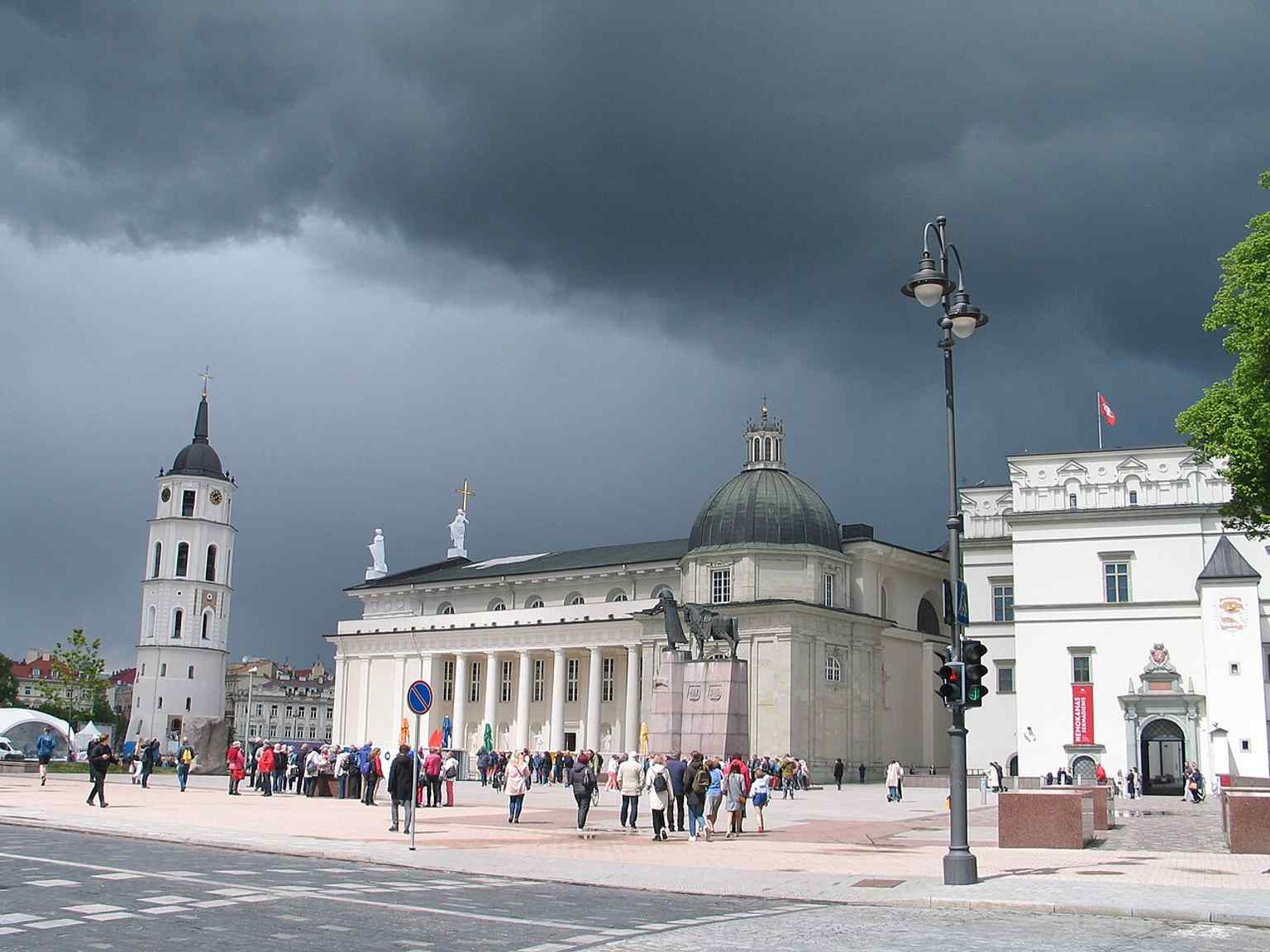
Cathedral Square with the cathedral as its anchor — the setting for national ceremonies and public gatherings around the basilica.
Cathedral Square with the cathedral as its anchor — the setting for national ceremonies and public gatherings around the basilica.Photo: Андрей Романенко, Wikimedia Commons, CC BY-SA 4.0. Cropped & resized.
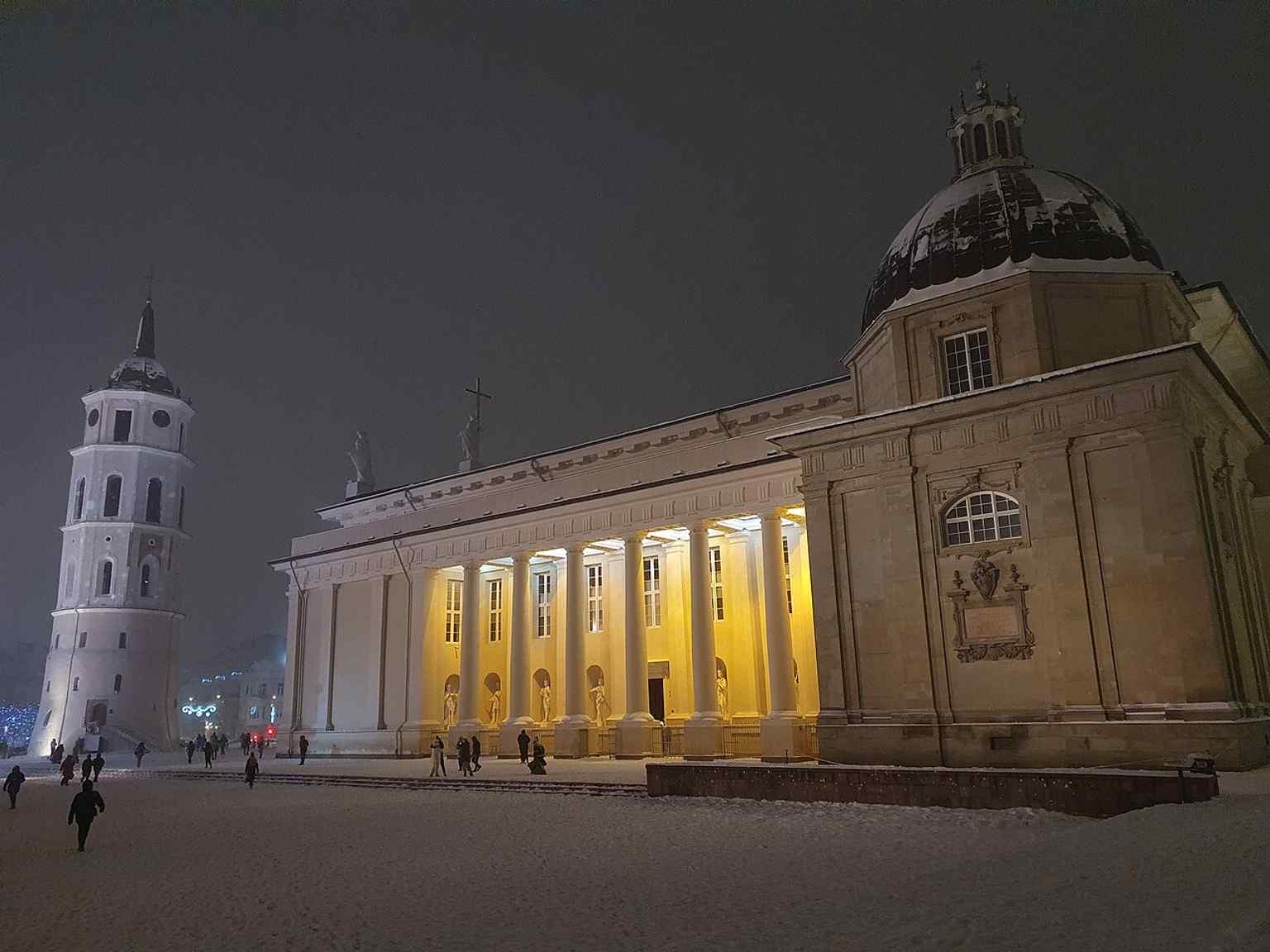
Vilnius Cathedral and its belfry at night in snow — a striking modern cityscape around one of Lithuania’s most important landmarks.
Vilnius Cathedral and its belfry at night in snow — a striking modern cityscape around one of Lithuania’s most important landmarks.Photo: Pofka, Wikimedia Commons, CC BY-SA 4.0. Cropped & resized.
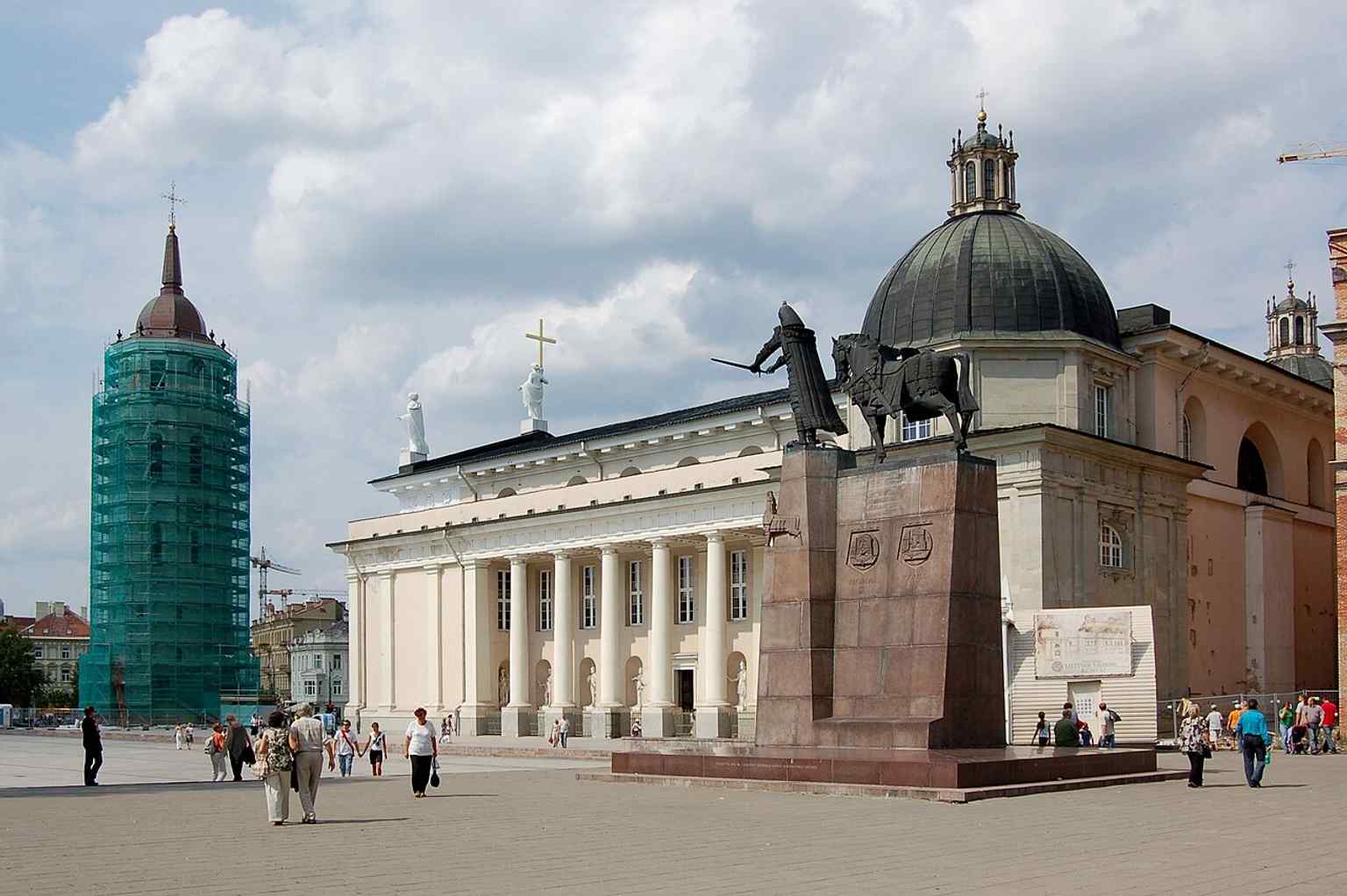
The cathedral during renovation in 2006, with the belfry under work — a reminder of the major post-independence restoration that refreshed the complex.
The cathedral during renovation in 2006, with the belfry under work — a reminder of the major post-independence restoration that refreshed the complex.Photo: Bahnfrend, Wikimedia Commons, CC BY-SA 4.0. Cropped & resized.
A late-19th-century view of the cathedral and square — useful for showing how the landmark looked before modern changes to Vilnius.
A late-19th-century view of the cathedral and square — useful for showing how the landmark looked before modern changes to Vilnius.Photo: Stanisław Filibert Fleury, Wikimedia Commons, Public domain. Cropped & resized.
The crowd gathered after the 1988 mass restoring the cathedral to the Catholic community — a powerful image of the end of Soviet-era suppression.
The crowd gathered after the 1988 mass restoring the cathedral to the Catholic community — a powerful image of the end of Soviet-era suppression.Photo: Photographer Gediminas Svitojus. Lithuanian Central State Archives., Wikimedia Commons, CC BY 4.0. Cropped & resized.
Inside the chapel area of the cathedral — one of the side chapels that became a focal point of devotion and royal remembrance.
Inside the chapel area of the cathedral — one of the side chapels that became a focal point of devotion and royal remembrance.Photo: Derbrauni, Wikimedia Commons, CC BY 4.0. Cropped & resized.
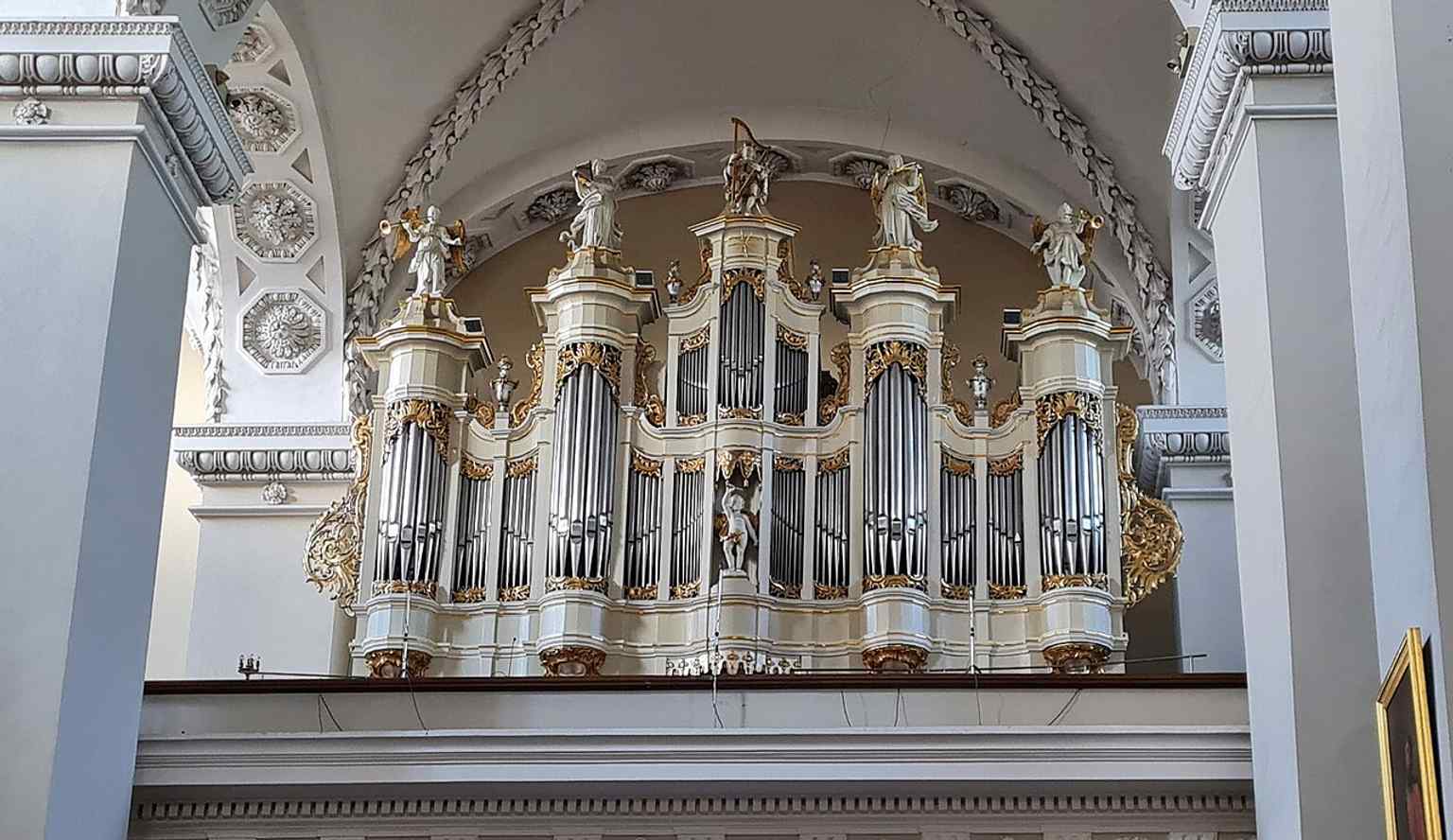
The cathedral’s pipe organ inside the nave — a good interior detail showing the active liturgical life of the basilica today.
The cathedral’s pipe organ inside the nave — a good interior detail showing the active liturgical life of the basilica today.Photo: Derbrauni, Wikimedia Commons, CC BY 4.0. Cropped & resized.
arrow_back Back to Vilnius Highlights Audio Tour: Architectural and Historical Treasures
Loved by travellers

Thousands of tours started.
Plenty of opinions.

4.8 across the App Store and Google Play. Here's a few we keep coming back to.

starstarstarstarstar
This was a solid way to get to know Brighton without feeling like a tourist. The narration had depth and context, but didn't overdo it.
Christoph
Christoph
Brighton Tour
starstarstarstarstar
Started this tour with a croissant in one hand and zero expectations. The app just vibes with you, no pressure, just you, your headphones, and some cool stories.
download Get the app

Pop your headphones in.
Step outside.

Free to download. Tours in every city. Start in 60 seconds — no account, no card.

Download on the App StoreGet it on Google Play
starstarstarstarstar_half
4.8
AudaTours app icon
headphones
~ 4 min until your first tour starts
public
1,000+ cities worldwide
all_inclusive
AudaTours
Unlimited

Every tour. Every city. One subscription.

3101 tours2271 cities138 countries50+ languages